
Metal yard art runs from a flower-shaped bird bath you order online to scrap animals welded from whatever was in the shed, and the right pick depends on whether you want color, motion, or a piece that holds still and catches light.
A 160 cm tall statement letterbox stops being background noise and starts reading as sculpture, which tells you how far the category stretches.
What matters first is whether you are buying finished or building yourself, and whether you want the patina corten steel earns over time or the clean look aluminum keeps from day one.
[link-whisper-related-posts]1. Statement Letterbox Art
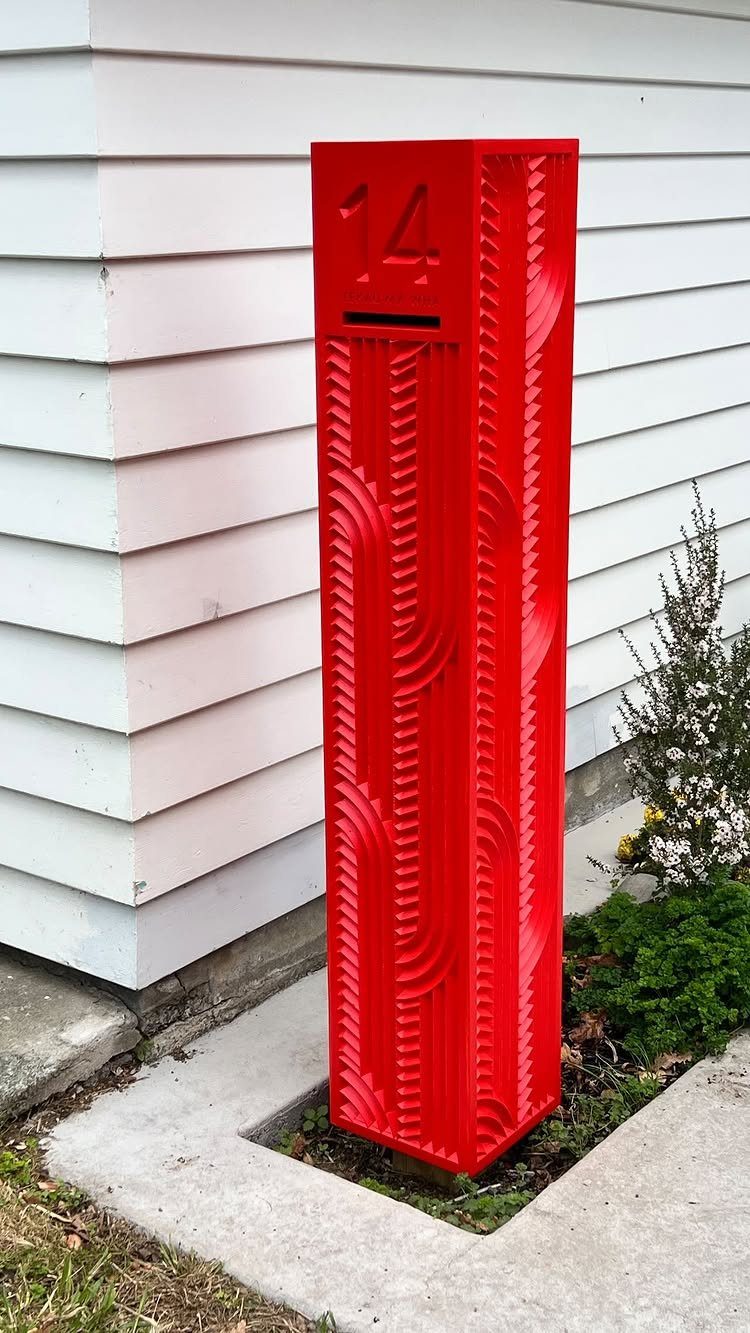
A letterbox that stands 160 cm tall stops being background noise and starts reading as yard art the way a sculpture does.
I would copy this in a color that already shows up somewhere on my exterior, with house numbers front and center where they read from the curb. Powder-coated steel or aluminum holds up to snow load and door-slamming teenagers alike.
The height also keeps the slot dry and accessible without crouching. One tradeoff: a box this prominent needs weeding around its base, or it starts looking like a marker for a neglected grave.
2. Abstract Metal Sculptures
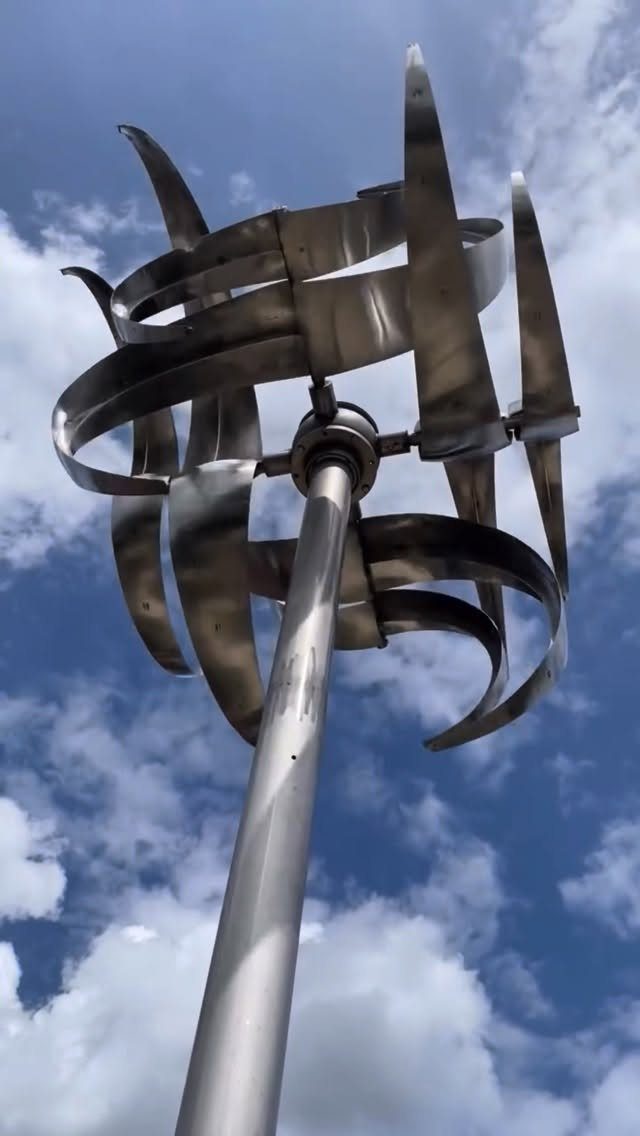
Stainless steel curves that catch the light and shift as you move past solve the problem of sculpture that goes flat from a single viewing angle.
Check that your local code allows kinetic elements that high; some HOAs treat them as signage. The material reads as industrial, which works against raw concrete or painted siding but fights with cottage gardens.
3. Custom Metal Wall Art
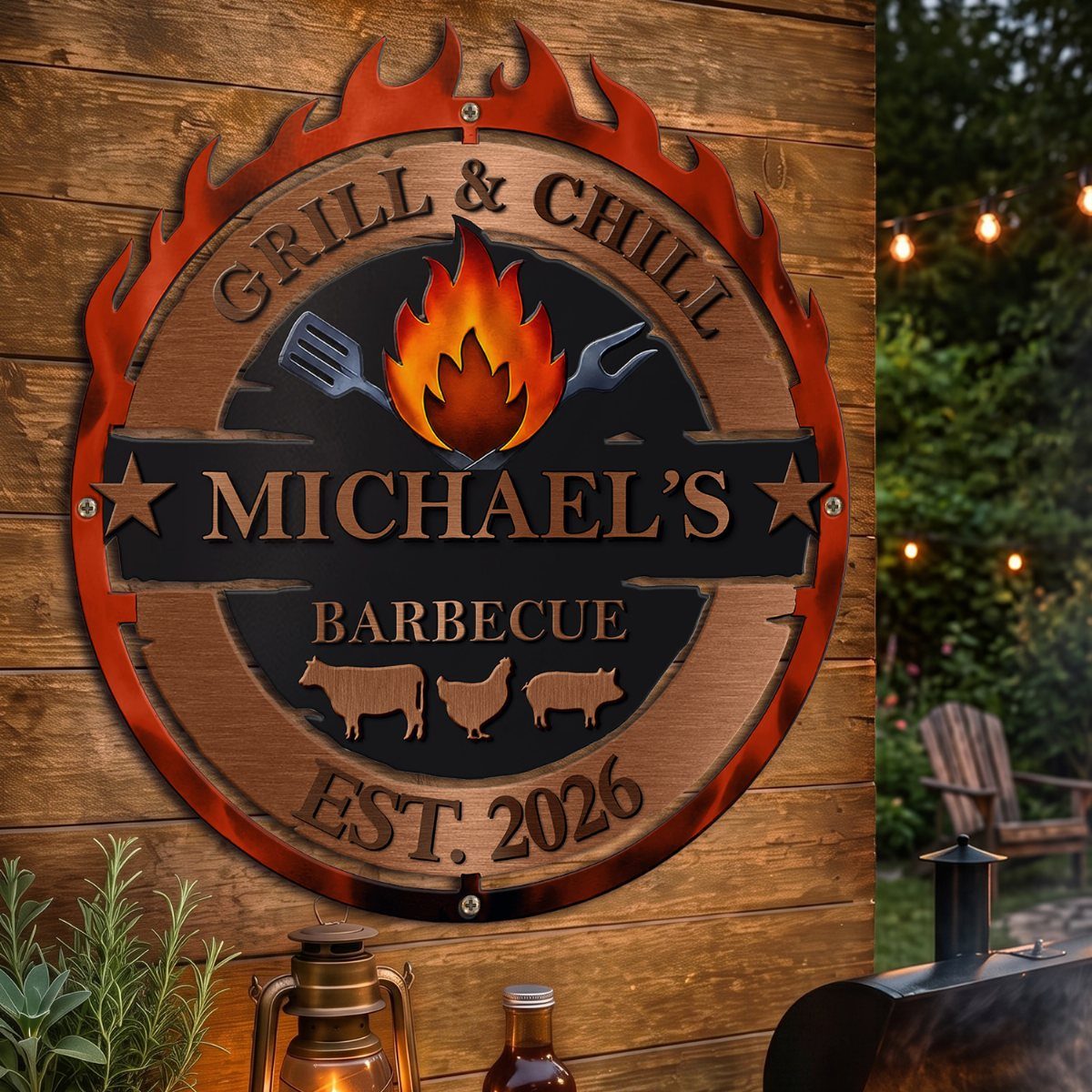
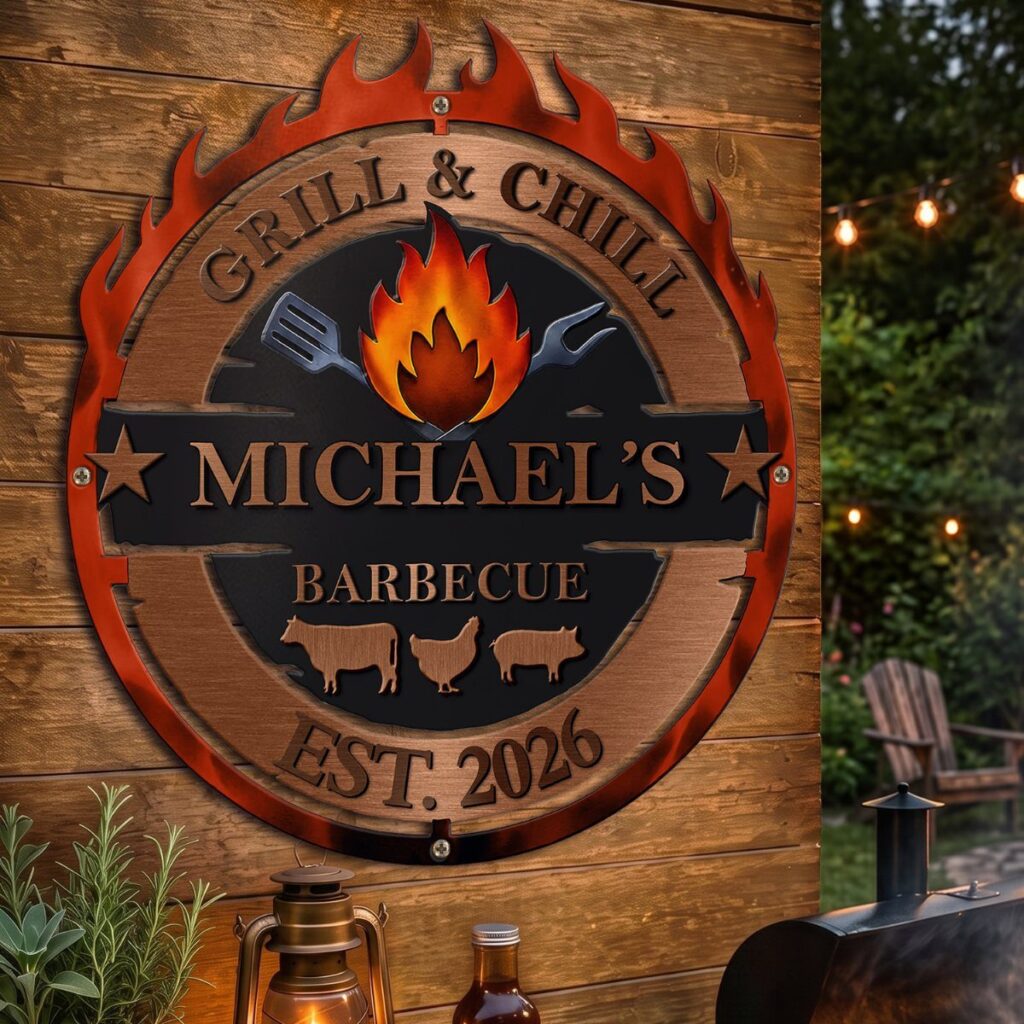
A round metal sign over an outdoor kitchen tells visitors where the party is before they ask.
I would treat the flame-cut edges, utensil silhouettes, and establishment date as a checklist: pick two motifs that match your actual setup, not three that crowd the circle.
Measure your wall first; a small disk needs more clear width around it than the disk itself to breathe.
4. Scrap Metal Animal Sculptures
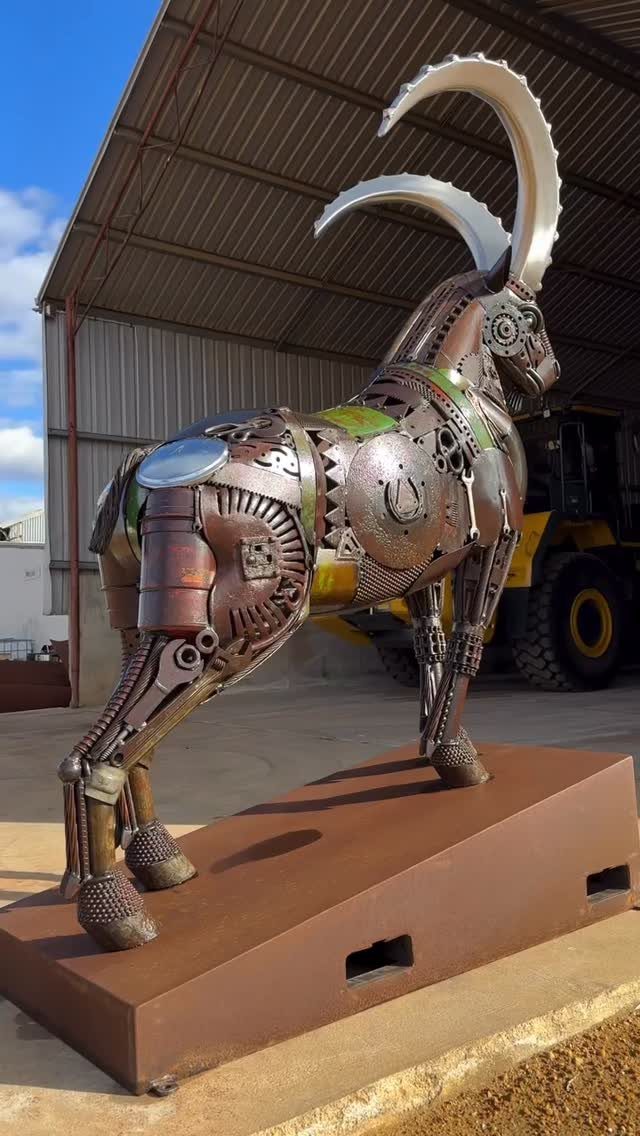
Welded scrap builds animals at a scale that would cost thousands in bronze, and the visible seams are the point, not a flaw.
I would start with a design that keeps the center of gravity low; a top-heavy ram on a narrow base tips in a hard wind.
Galvanized or stainless scrap lasts outdoors; painted mild steel needs regular touch-ups or the rust shows through fast. The skill level here is intermediate welding and a grinder with a flap disc.
5. Flower Shaped Metal Bird Bath
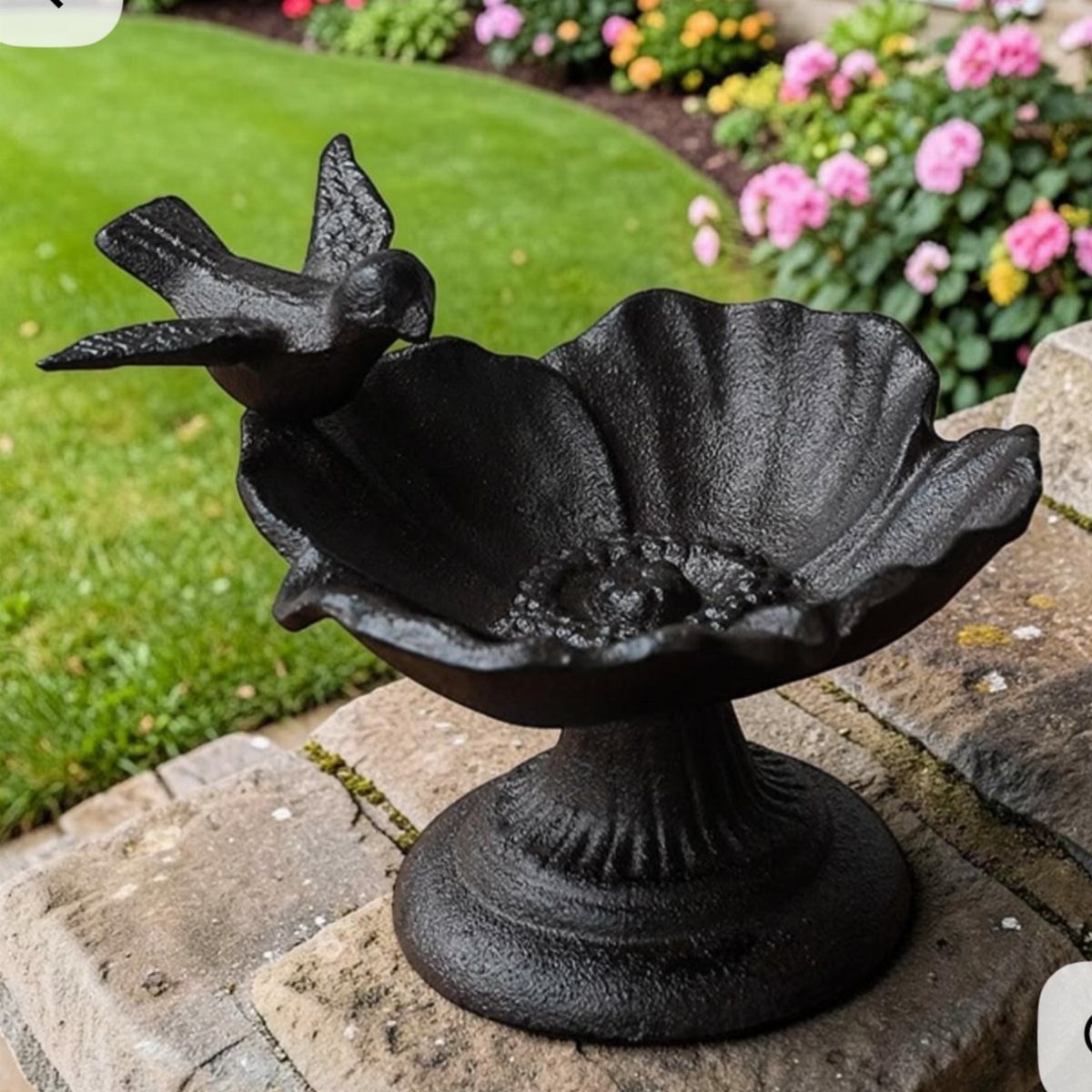
A cast-metal flower bowl with a bird already perched on the rim does 2 jobs: water source and sculpture.
A dark finish hides hard water stains better than bare copper or bright paint would, which matters if your tap water runs mineral-heavy.
I would set it on a stone plinth or ledge rather than a thin metal stake; the weight keeps it upright when raccoons visit, and the stone wicks heat so the water stays cooler in July.
Clean with a wire brush in spring; algae film dulls the petal edges fast.
6. Colorful Metal Wind Spinner
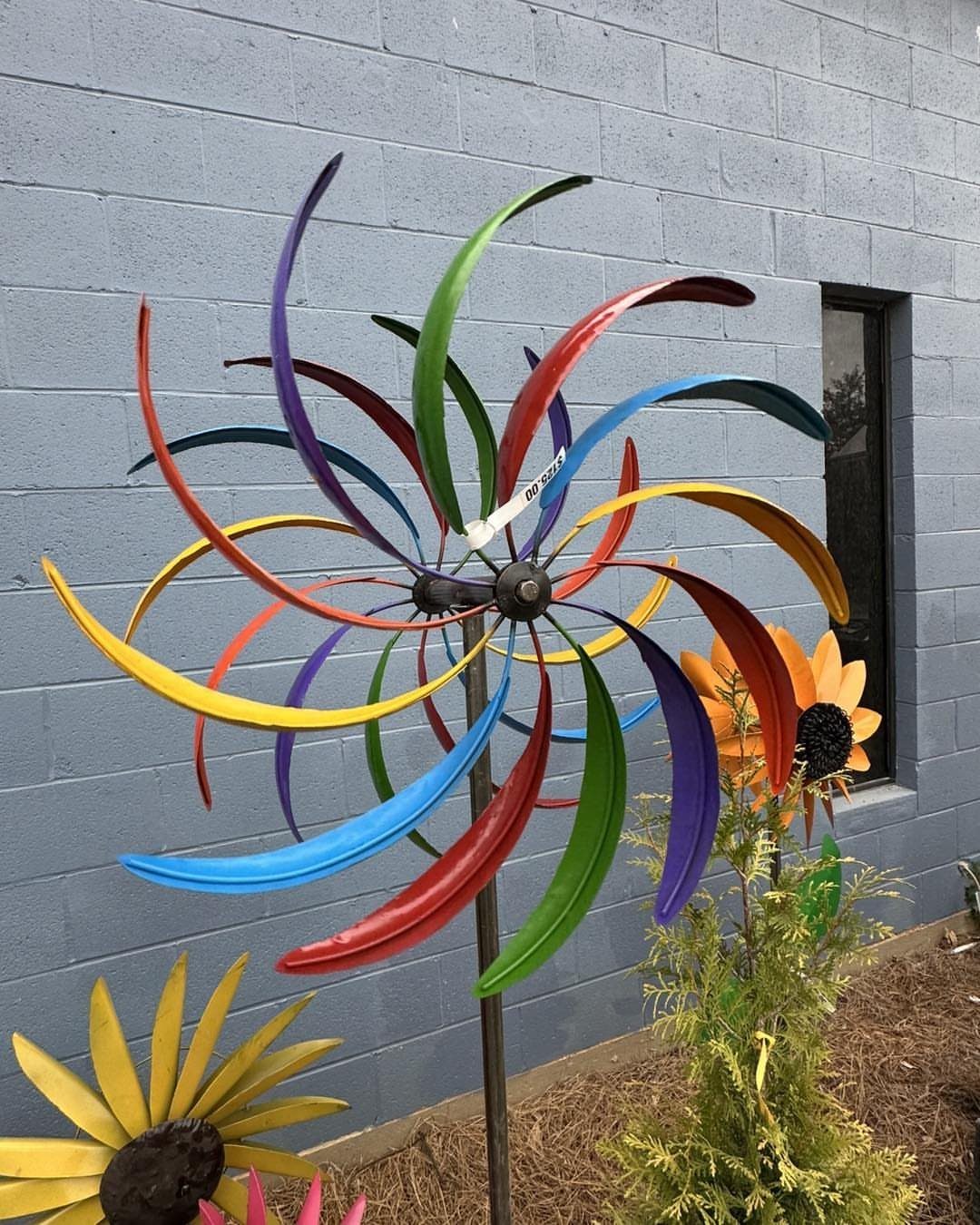
Curved blades in multiple colors spin at low wind speeds and throw moving light across nearby walls after dark, if you add a ground-level uplight.
Check the bearing type before buying: sealed ball bearings last much longer, while bushing types grind to a halt in one hard season.
Stake depth matters more than stake height; go deep in clay soil and deeper still in loose fill, or the first spring storm leans it into a question mark.
7. Rustic Pedestal Bird Bath
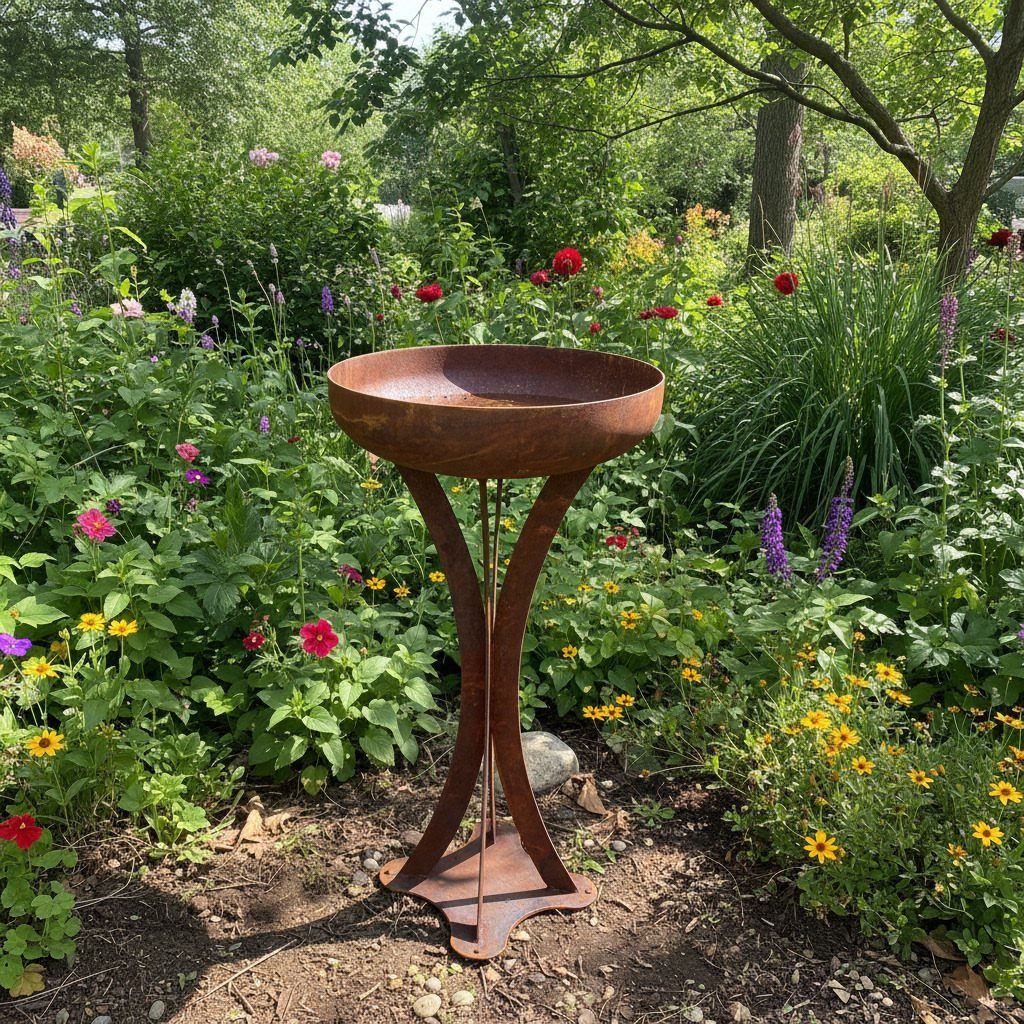
A shallow bowl on a curved pedestal invites birds that won’t perch at deeper fountains.
The patina comes from weathering, not paint, so it keeps changing rather than flaking. I would check how level my ground is first; a narrow base rocks on any slope and spills faster than a broad one would.
Rust stains the stone or concrete beneath it within a season, so set it where that aging fits the look or plan to move it every few months for cleaning.
No finish needed, which saves a step, but the metal heats in direct afternoon sun and stays warm past evening. Partial shade wins here.
Choosing Materials for Metal Art
Steel lasts outdoors because it holds shape under weight and weathers rather than rots. Corten steel in particular forms a surface rust that seals itself, so the piece darkens and streaks but the metal underneath stays sound.
I would not try to slow or stop that patina; choosing corten means letting it run its course to that final color. Powder-coated steel or aluminum skip the rust stage entirely and keep the color you started with.
That coating chips at weld points or sharp edges over years, so I would touch those spots the first spring I see bare metal, not wait for spreading.
Stainless steel costs more but needs no coating and no patina wait; the curves in a polished sculpture keep their shine through salt air and sun alike.
Integrating Art Into Gardens
Metal art in a yard works best when it gives the eye somewhere to land. A single tall piece sets the order of the whole space; everything else arranges around that height.
I would place it where the approach to your door or the main garden path lets you see it head-on first, then from angles as you move.
Lower pieces, the wall disk or the flower bath, belong at stopping points: the end of a path turn, beside a bench, above a grill where hands are busy and eyes wander.
A kinetic sculpture needs space to move, so I would clear at least its own height on all sides; nothing kills the effect like a branch stopping the spin 2 seconds in.
Wall art over an outdoor kitchen works because the wall already frames it; freestanding pieces need their own framing from shrubs or a hedge behind to read as intentional, not stranded.
Shade matters too: a dark bowl in direct afternoon sun steams away its water and warms the metal past comfortable for birds. I would set any water piece where it catches morning light only, or dappled shade through the day.





