
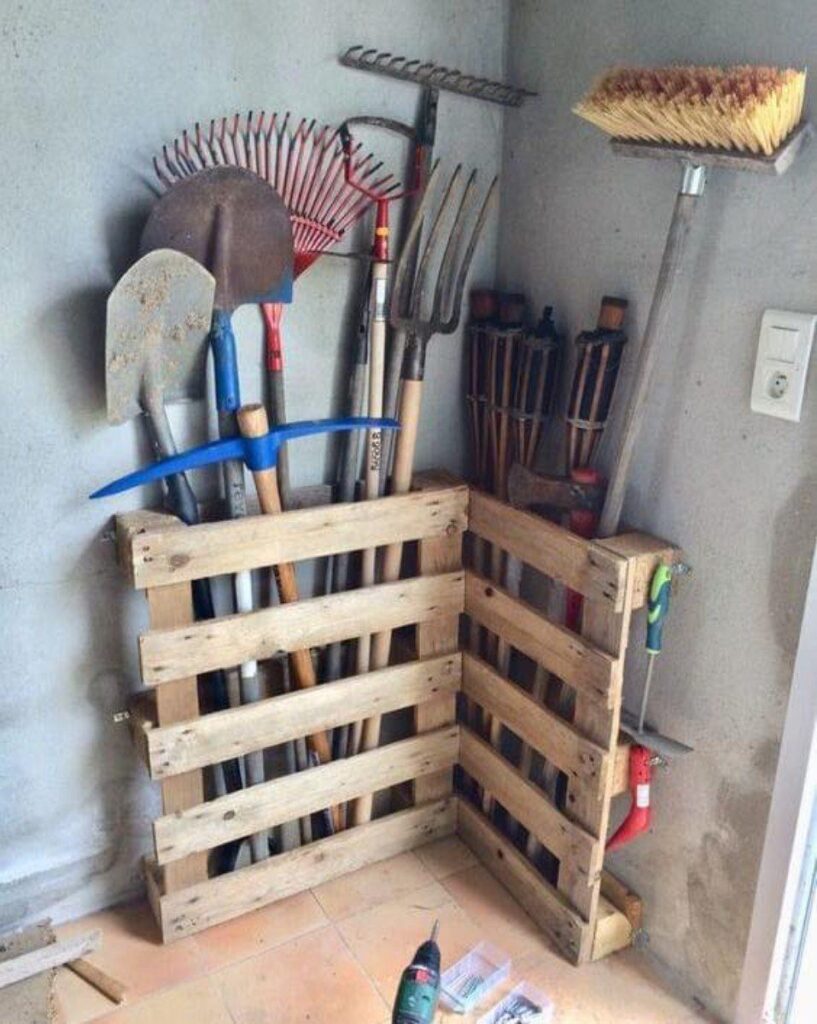
Pallet garage storage can mean a wall-mounted rack for long-handled tools, a set of cubbies for hardware, a full workbench with shelf space underneath, or a two-level unit that holds serious weight, and the right one for you depends on whether you are reclaiming a corner or building out a whole wall.
On a vertical storage rack, a slat spacing of every other board left in or knocked out decides how your long-handled tools sit, vertical or angled.
I let pressure-treated pallets dry a week indoors before mounting, since green wood shrinks and twists once the garage heat hits it.
[link-whisper-related-posts]1. Vertical Storage Racks
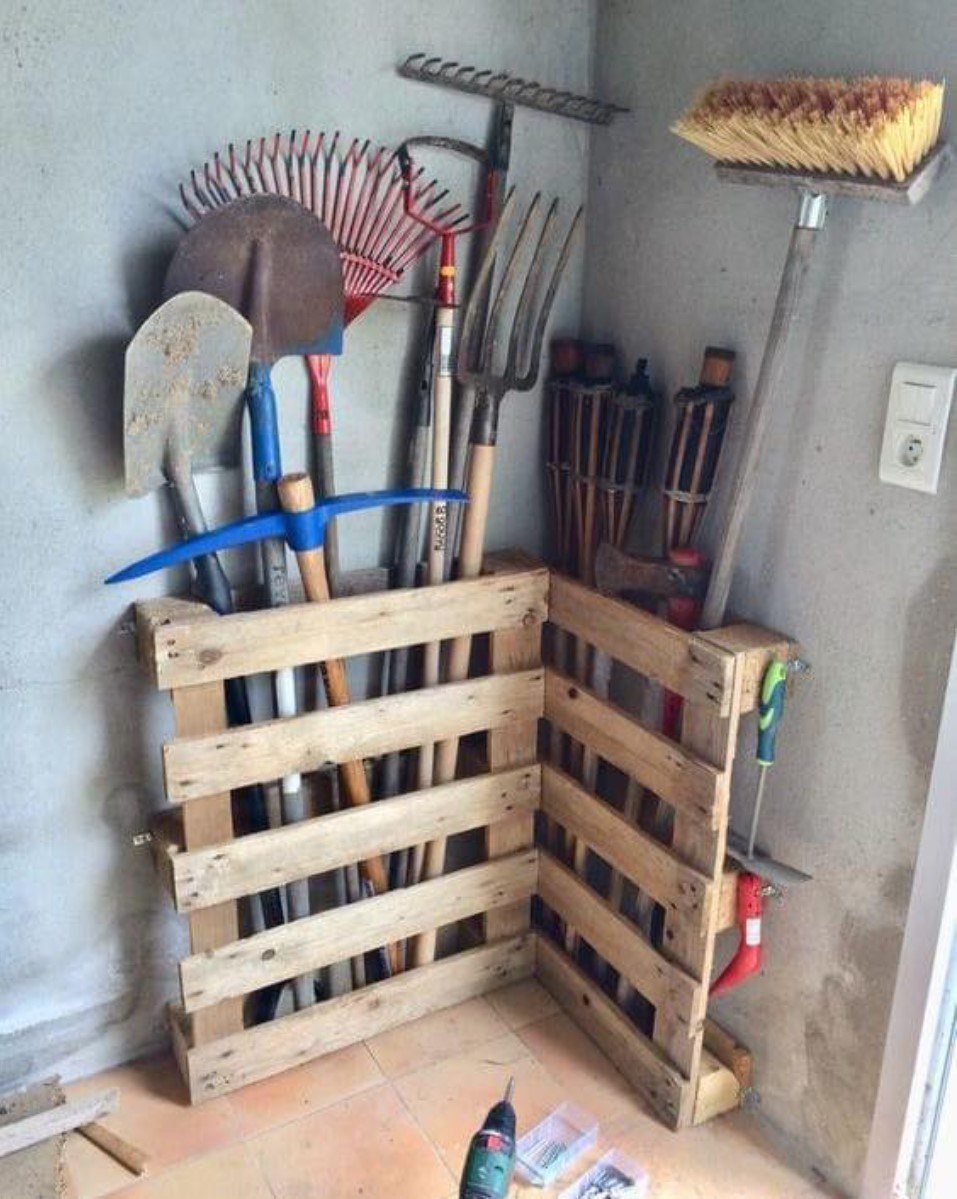
Corner-mounted pallets turn dead wall space into storage for long-handled yard tools without eating floor space. Securing the pallets plumb matters most; a few degrees off and your rakes lean like a drunk against a lamppost.
I check for studs or use toggle bolts on block walls, since soil-packed tools carry real weight. Pressure-treated pallets hold up to garage humidity, though I let them dry a week indoors if they are green from the yard.
Leave the slats as-is for shelf boards, or knock every other one out to hang tools between the stringers.
2. Pallet Tool Organizer
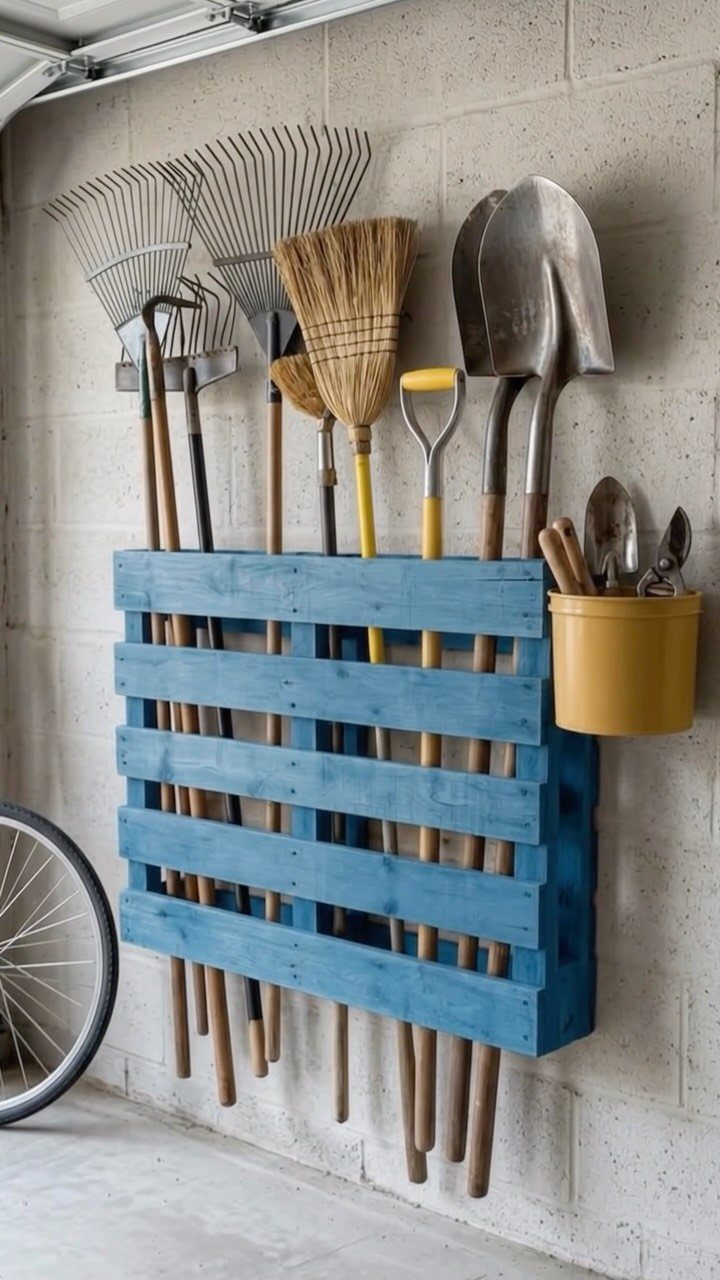
A single pallet painted and wall-mounted becomes a rake-and-shovel rack with the slats already built in. I like the visible blue finish because it hides garage grime better than raw wood, though any exterior paint works if you sand first.
The height matters more than the color: mount it with the top slat high enough that long handles slide in at a natural angle without catching the floor.
Short tools need a hook on the bottom rail or they sit too low.
3. Pallet Hardware Storage Cubbies
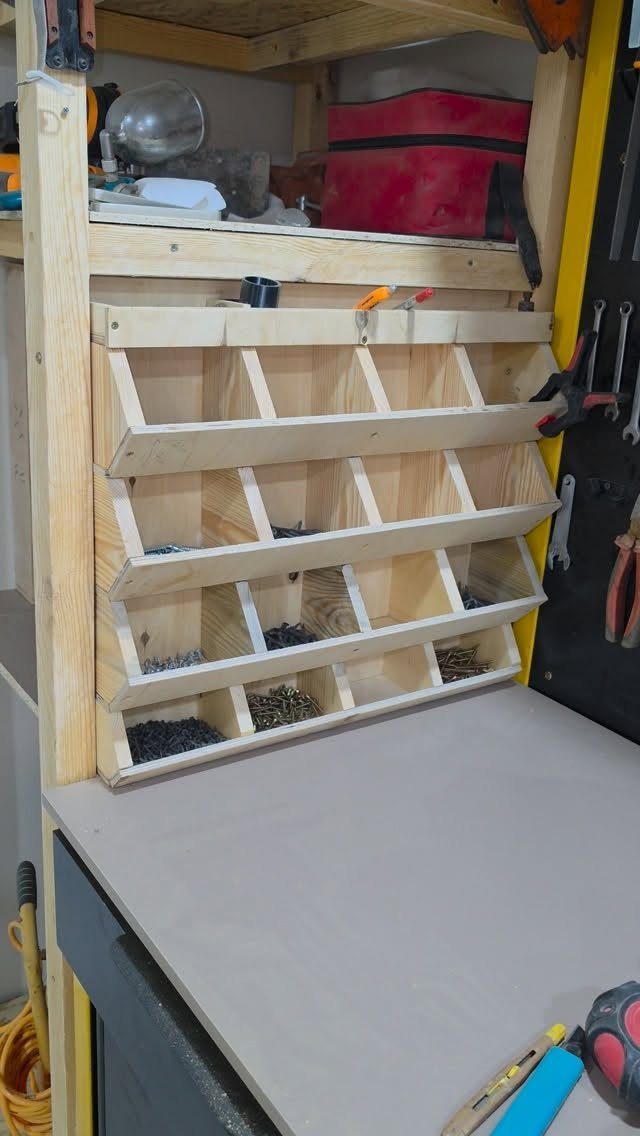
The angle lets you read screw heads at a glance; vertical sides would hide everything behind the front row.
I build these with 1×3 pine dividers, not pallet slats, since the thin stock splits when you drive nails too close.
The spacing is the decision: narrow slots for bolts, tighter ones for screws, one bigger tray for tape and markers. Mount it high enough that you are not banging your head leaning over the bench.
4. Pallet Garage Workbench
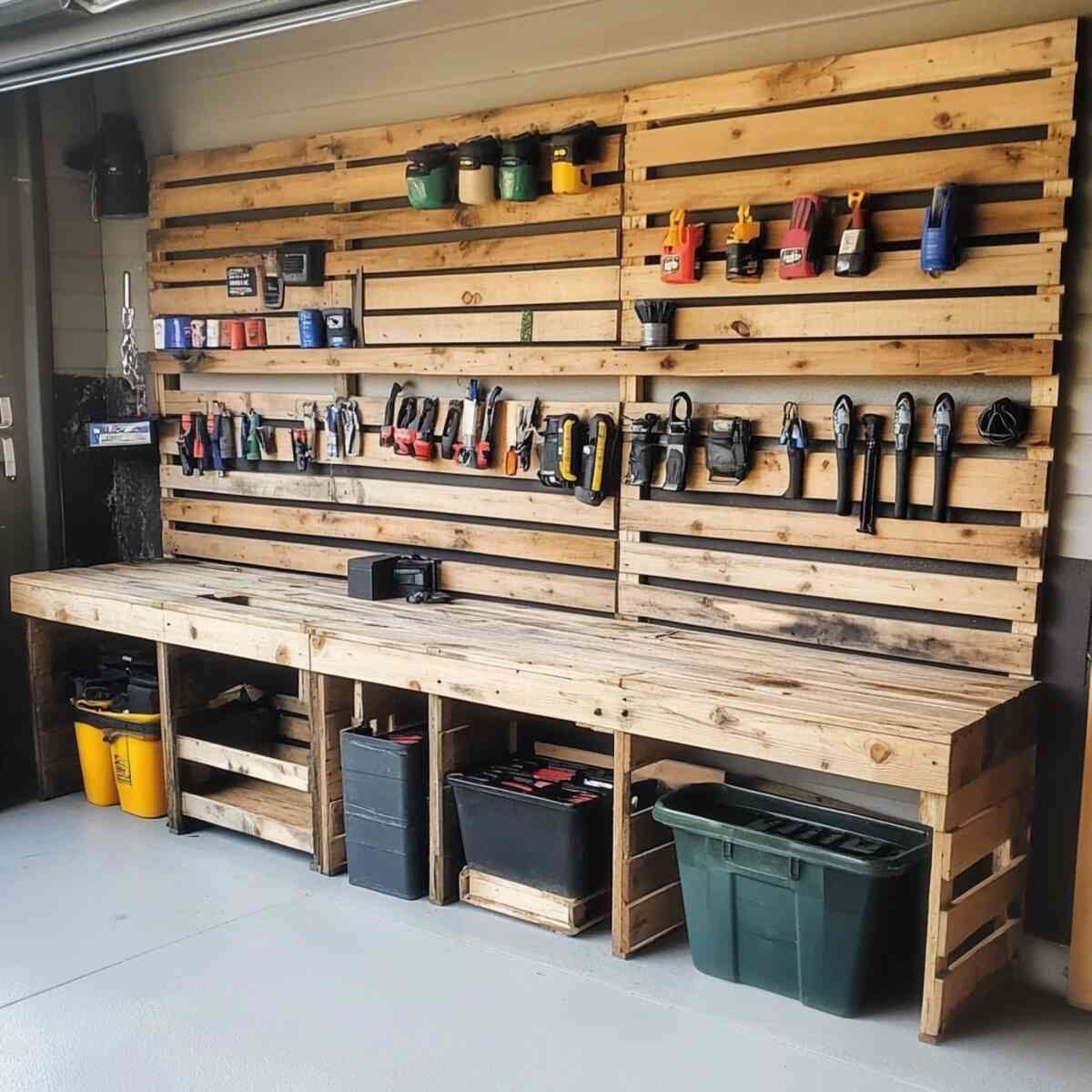
A pallet-built bench with matching wall storage gives you a workspace and a place for everything above it.
The flat top needs a layer of 3/4-inch plywood or MDF screwed down; pallet boards alone leave gaps that swallow pencils and let sawdust through.
I add a back rail to keep tools from pushing off the rear edge, and sturdy legs if the pallet itself is not full enough height.
The open slats underneath hold storage bins from the hardware store; measure before you buy, since bin widths vary by an inch or two.
5. Large Pallet Storage Shelf
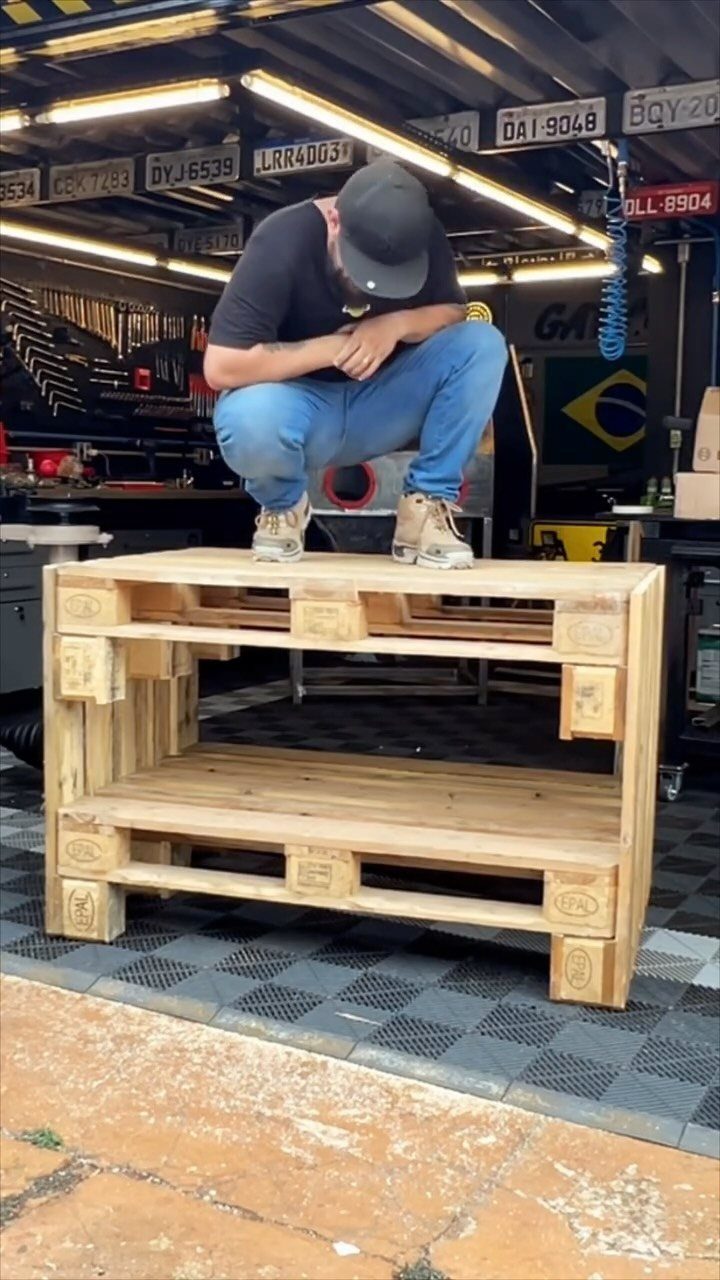
2 levels of pallet-built shelving take the weight of a grown person sitting on it, which means it handles a mower battery, paint cans, and the shop vac without breathing hard.
I build these with the pallet decks as shelves and legs at the corners, checked square with a framing square before I screw anything.
The open sides invite sliding bins or stacking by category: automotive left, gardening right.
License plates on the wall behind are a cheap garage flourish; I screw mine to a strip of wood first so they sit flat and do not rattle.
Maximizing Garage Space
Vertical storage is where pallets earn their keep in a garage. Floor space is what you drive and walk on; wall space is cheaper real estate most people leave empty.
A pallet rack or organizer hung at working height puts tools where you reach for them without bending past clutter or shifting boxes to clear a path.
The real gain comes from keeping long-handled yard tools off the floor. Leaning rakes and shovels in a corner turns into a pickup-sticks mess the first time you brush past; wall storage means they stay put.
I hang these so the pocket sits high enough that a tool drops in handle-first, letting gravity do the work of settling it in place instead of fighting to wedge it tight.
Instead of just leaning them up against the wall in a corner of your garage, turn an old wood pallet into a garage organizer.
— Hunker
Finding Free Pallets
Free pallets change the math on a garage overhaul. Local businesses, warehouses, and construction sites often stack them outside for pickup; I ask at receiving docks where trucks unload daily.
Some places heat-treat pallets for export and mark them with an HT stamp; those are cleaner wood and easier to work. Pallets with an MB marking were methyl bromide fumigated, and I leave those for industrial use.
Recycling centers and pallet yards sell castoffs for a few dollars if the free supply dries up.
Either way, a storage system built from salvage beats retail pricing by a wide margin. The cost shifts to hardware, finish, and your time, which is where the customization happens.
DIY Customization Tips
Fit the pallet to the space before you fit tools to the pallet. I measure wall height, tool length, and pallet size together; a saw can shorten a pallet, but stretching one is harder.
A bottom board screwed across the lower opening keeps short tools from sliding through, though mounting flush to the floor works too.
Sanding is worth the time for anything you grab regularly.
Splinters from rough deck boards turn a quick handoff into a tetanus shot memory. Exterior paint or stain buys more than looks; it seals grain that swells in garage humidity and freezes the wood harder.
Tiered heights from multiple pallets turn a flat organizer into something you read at a glance rather than sort through.
Frequently Asked Questions
What are some creative DIY pallet storage ideas for my home?
Pallets work well as vertical tool racks, wall-mounted organizers, hardware cubbies, workbench bases, and two-level shelving for heavy items like paint cans and shop vacs.
The slats already function as dividers for long-handled tools, and you can knock every other one out to create wider slots.
How long before pallets rot?
Pressure-treated pallets handle garage humidity for years, though green wood from recent outdoor use needs a week indoors to dry before you start building.
Exterior paint or stain seals the grain against moisture that would swell and split the boards, which buys more life than raw wood in a damp garage.
The hardware and fasteners usually rust or loosen before the wood itself fails if you seal it right.
Are the pallets behind stores free?
Yes, local businesses, warehouses, and construction sites often stack pallets outside for pickup; I ask at receiving docks where trucks unload daily.
Either way, a storage system built from salvage beats retail pricing by a wide margin, with your cost shifting to hardware, finish, and time.





