
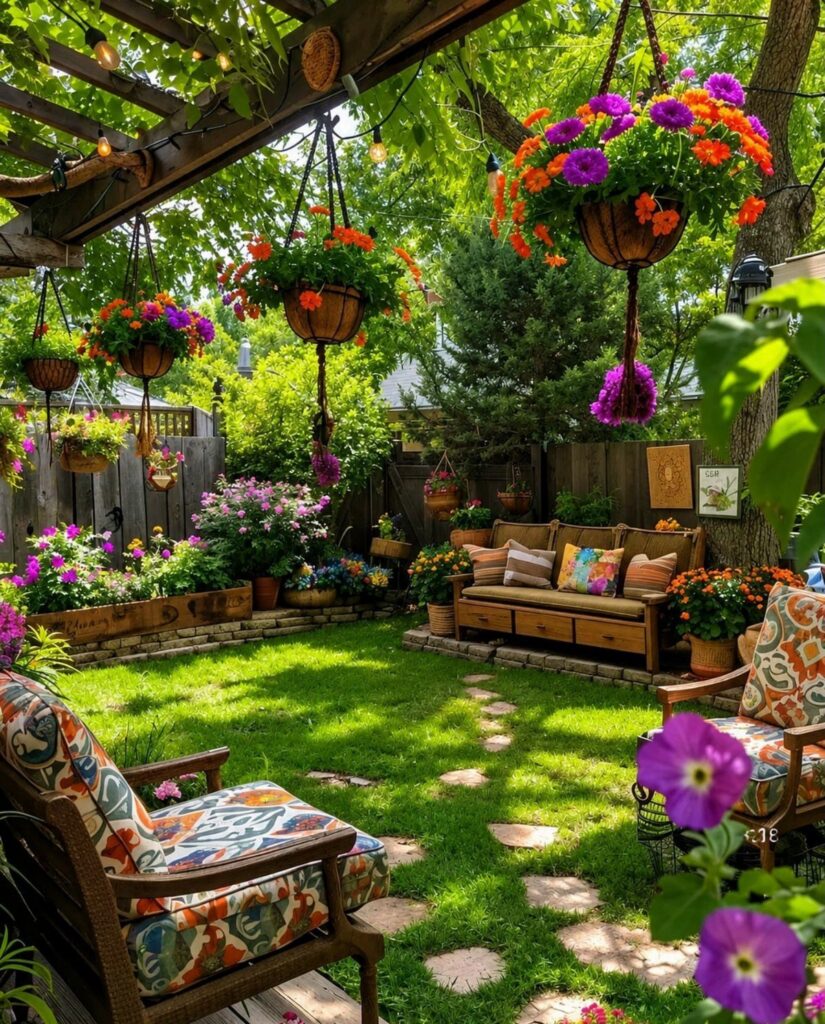
These 18 ideas run from a weekend potager bed to a multi-year espalier project, and the one that fits your yard depends on how much of the work you plan to do yourself.
A raised bed with hinged greenhouse top takes a Saturday and a few hundred dollars in cedar; trained fruit trees against a wall need annual summer pruning to three leaves beyond the basal cluster and patience through year three before the first real harvest.
[link-whisper-related-posts]1. Raised Bed in a Small Garden
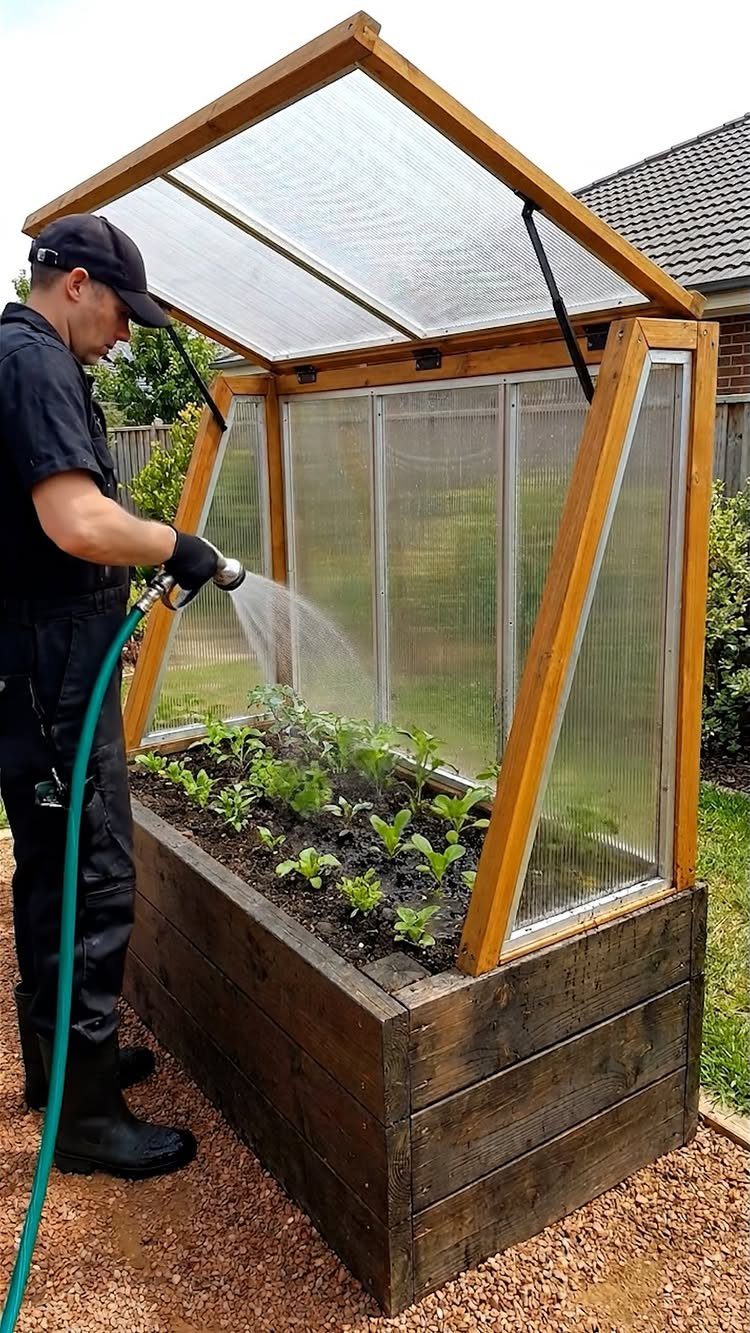
A raised bed with a hinged greenhouse top turns a corner of backyard into a season-extending plot. Make sure the hinged side faces your path and the prop rod locks solid in wind.
The wood frame visible here looks like cedar, which I would pick over pine for rot resistance even at the higher price per board foot.
2. Vertical Gardening
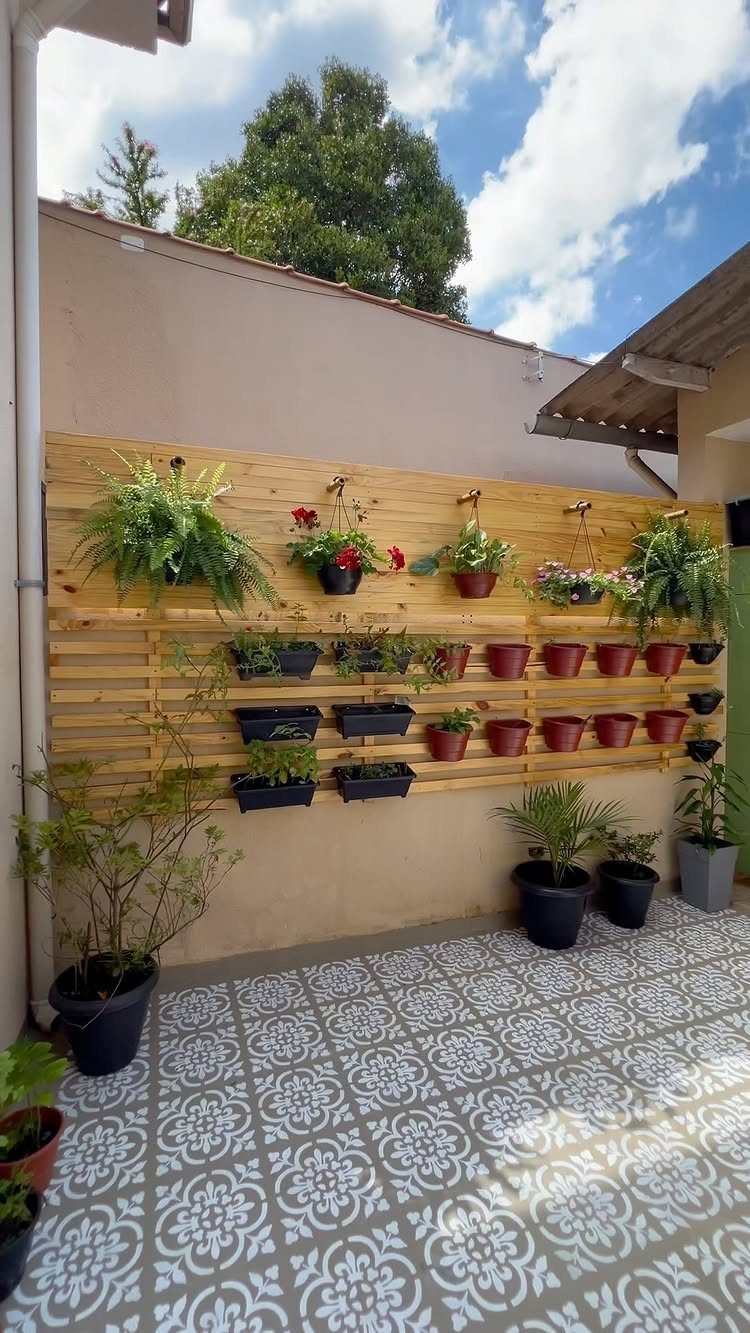
Trellis-mounted planters let a footprint stay empty while the wall carries ferns, herbs, and trailing vines. Terra cotta will crack on a hook; resin or fiberglass wins here.
3. Gravel Pathways
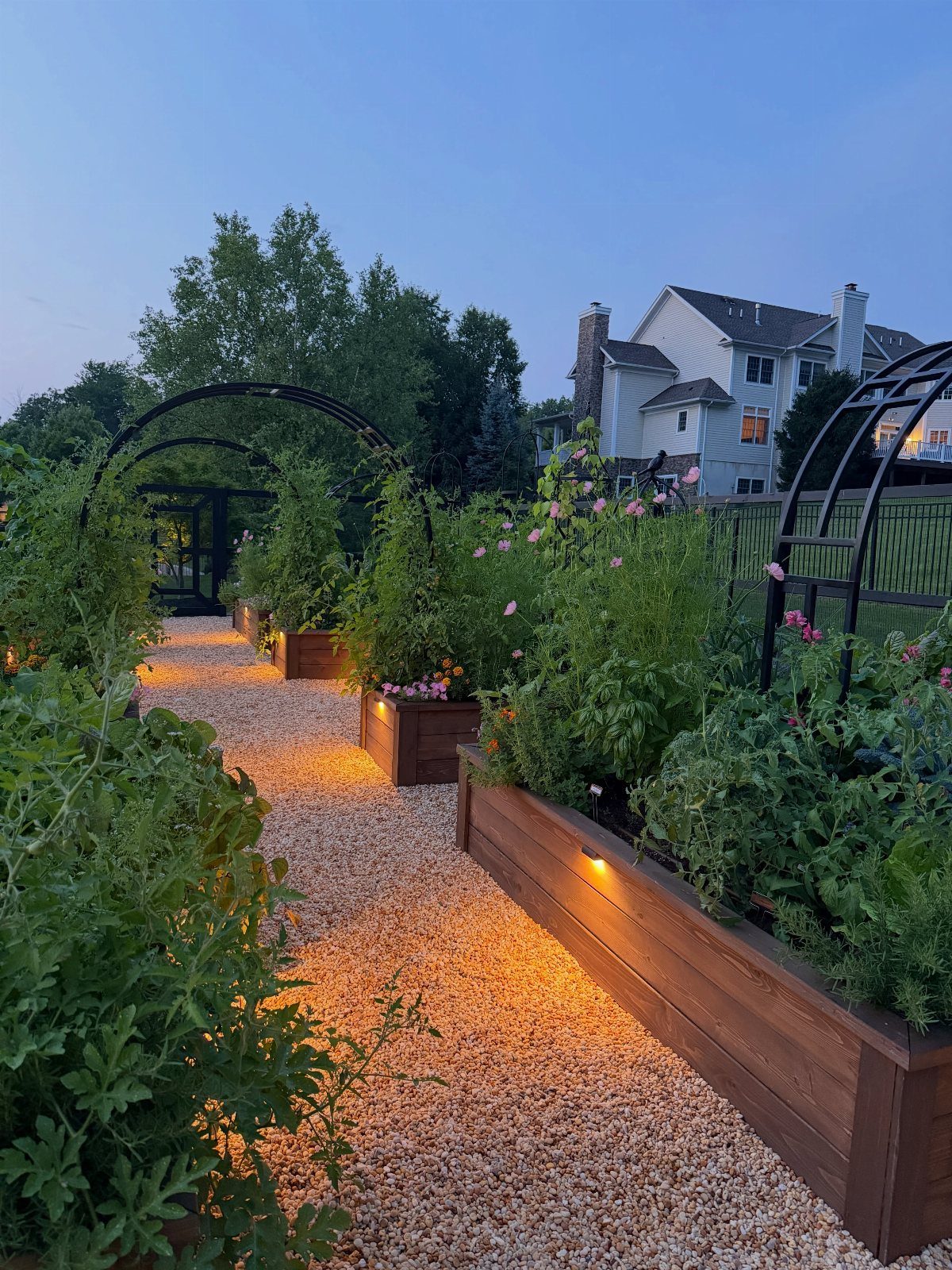
Crushed gravel paths drain fast and forgive uneven ground better than pavers in a cramped layout. A compacted bed of crusher run beneath gives you a stable base without the cost of poured concrete edging.
4. Simple Lighting
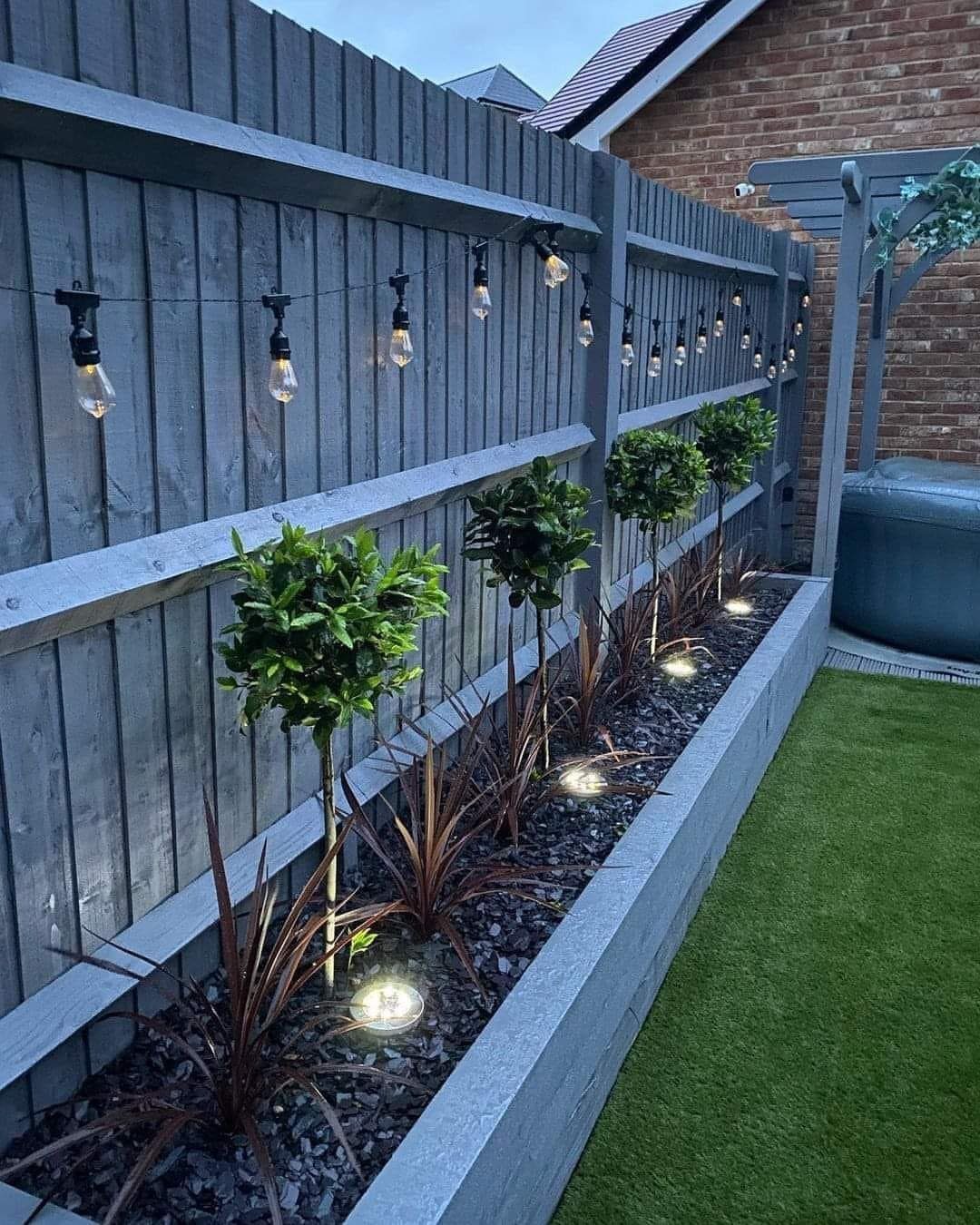
Two kinds of light do different jobs in one narrow bed: ground-up spotlights graze trunk texture from below, while overhead string lines mark the space boundary for people walking through.
Warm white at 2700K flatters plants better than daylight color temperature.
5. Natural Stones for Edging
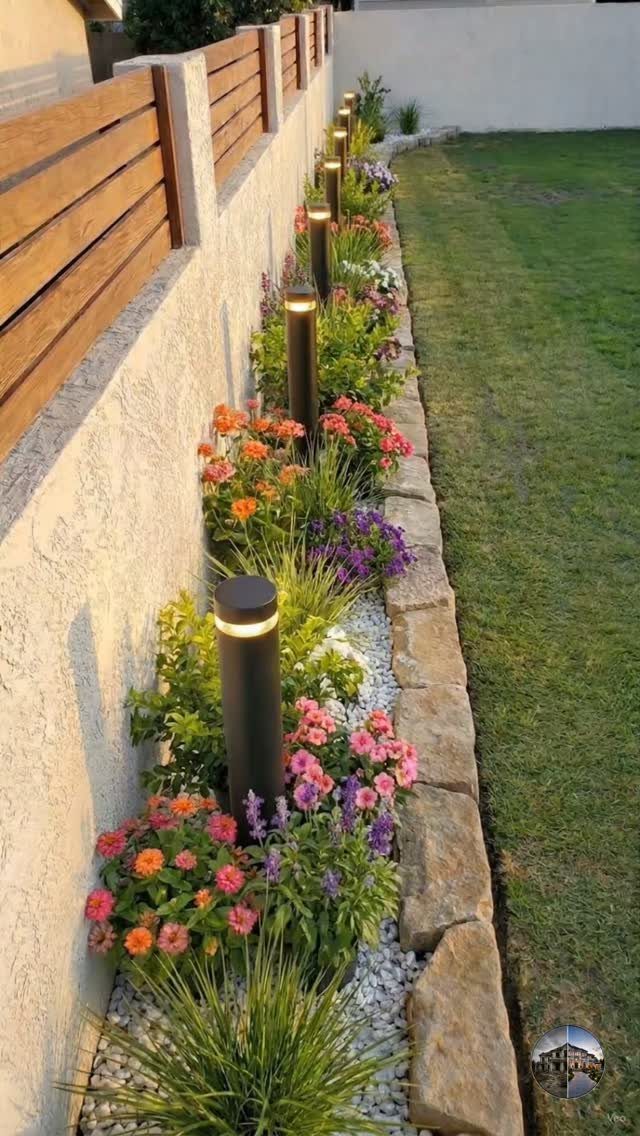
Rough-cut fieldstone edging breaks up a long bed into readable sections and keeps white gravel out of the lawn mower’s path.
The blocks in the photo sit partly buried, roughly half their height; I would dig a 4-inch trough, lay gravel for drainage, and set stones with the flattest face up and slightly tilted toward the bed.
6. Layered Landscape
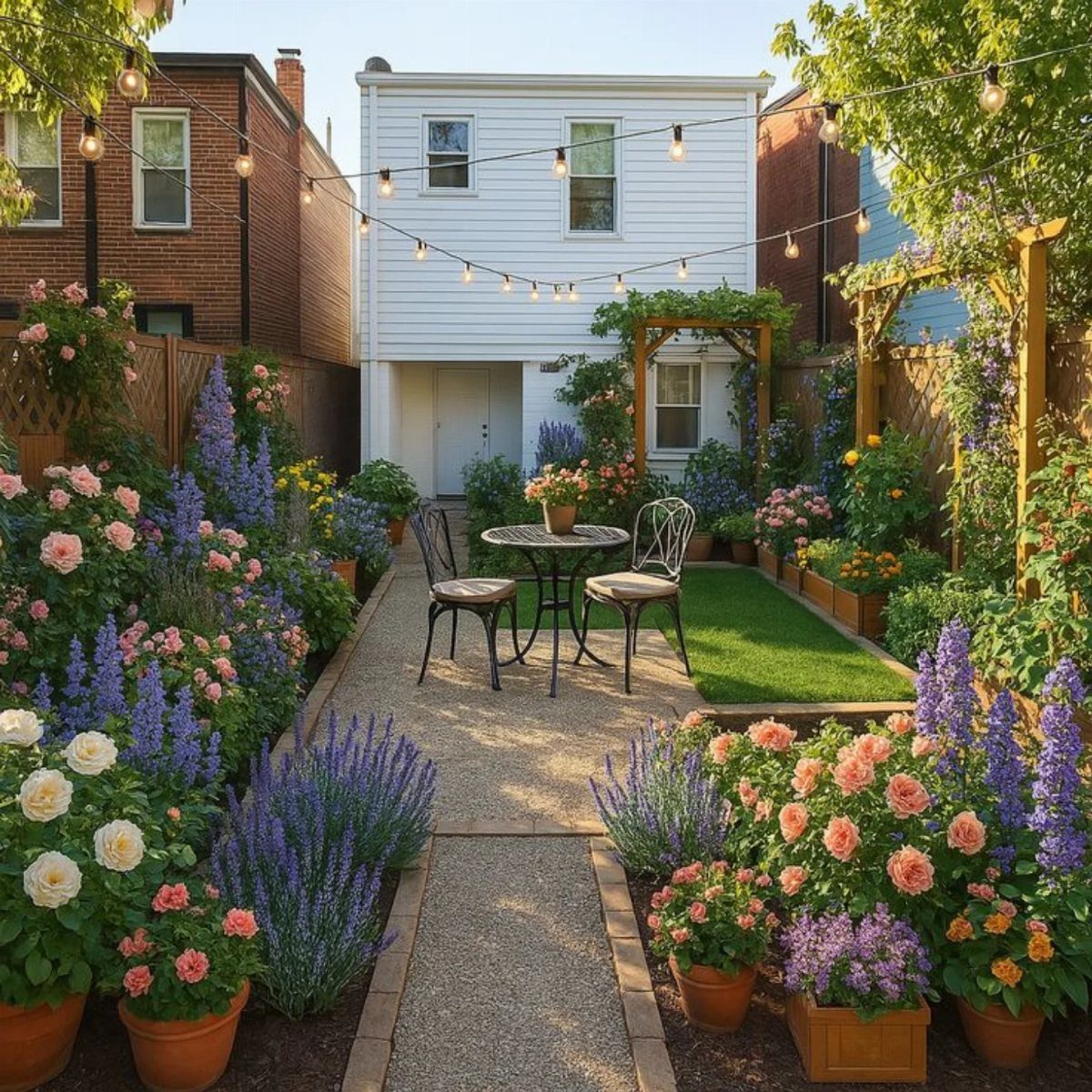
Varying plant heights in narrow depth forces the eye to travel upward and makes the garden feel deeper than it is.
The photo layers ground cover, knee-high blooms, a potted shrub on a stand, and small trees against the fence; I would budget for at least 3 distinct tiers, even in a modest bed depth.
7. Slim, Space-saving Furniture
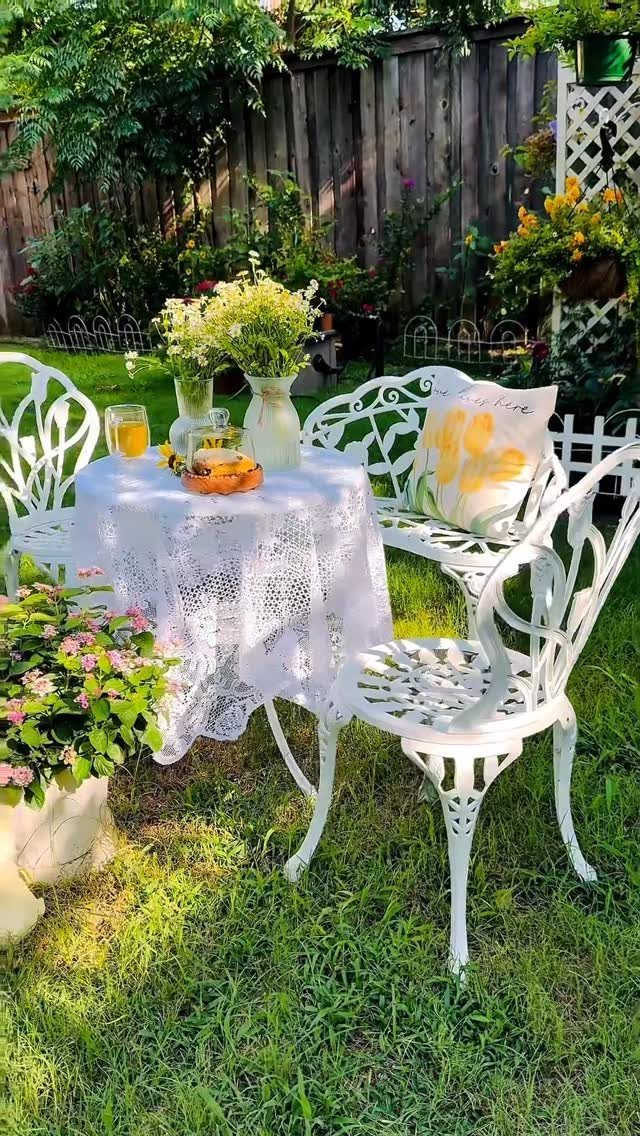
A bistro set with a slim metal frame packs more seats into tight space than a standard table allows.
The white powder coat here resists rust better than painted steel; I would check that legs taper inward so chairs push fully beneath the tabletop when not in use. Foldable versions store against a shed wall between dinners.
A vinyl-backed cotton stands up to spills and still drapes soft.
8. Built-in Seating
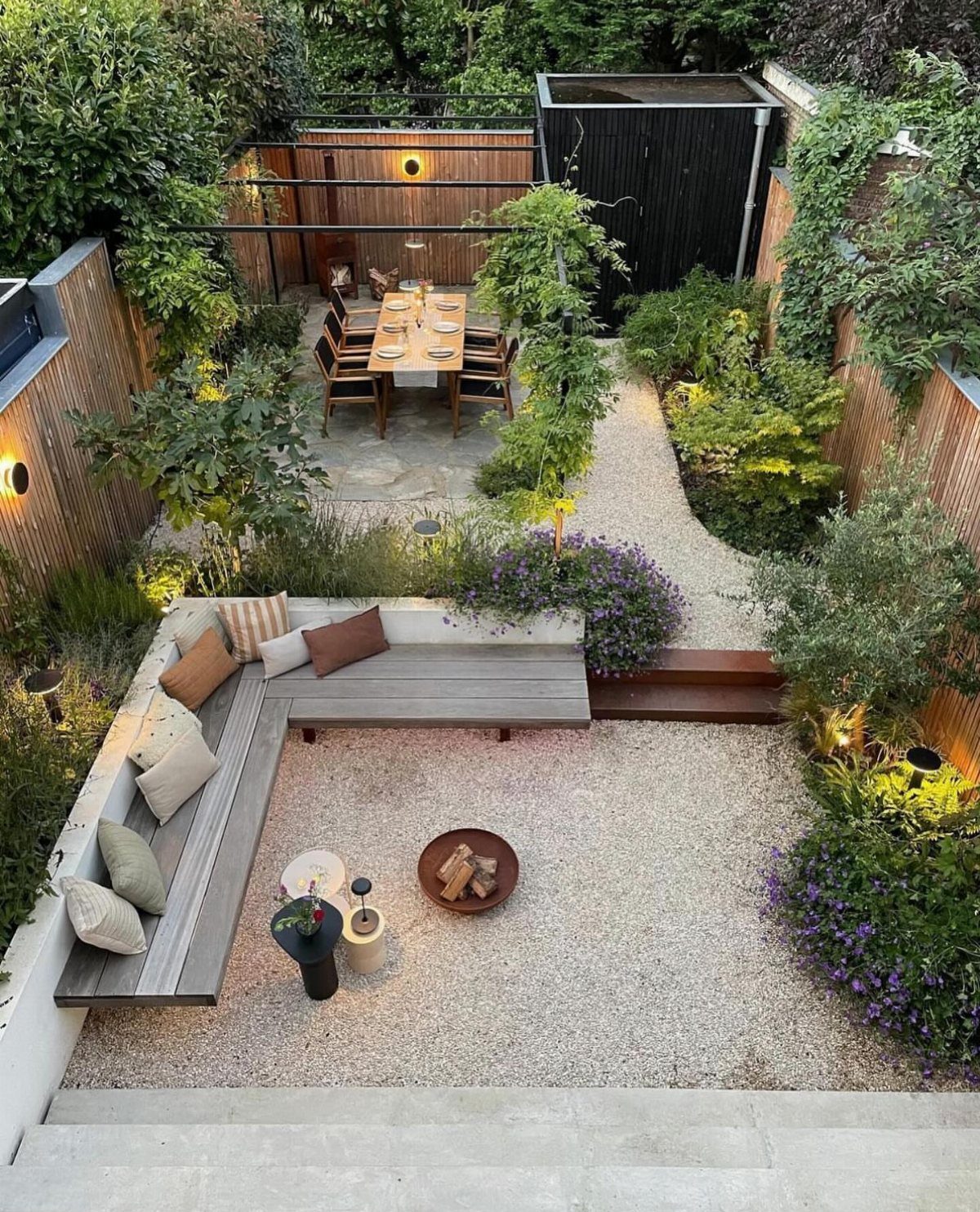
Built-in benches wrap fixed seating around a fire pit without the bulk of freestanding pieces.
The L-shape here uses the corner a chair would waste; I would measure my own fire pit diameter first, since the clearance you need for safe ember drift is wider than most people guess.
Wood slats run horizontal, which lets rainwater through rather than pooling. Open gaps of half an inch mean cushions stored underneath need a bin, not loose fabric.
One trade: you cannot move the bench when the party size changes.
9. Privacy Screens
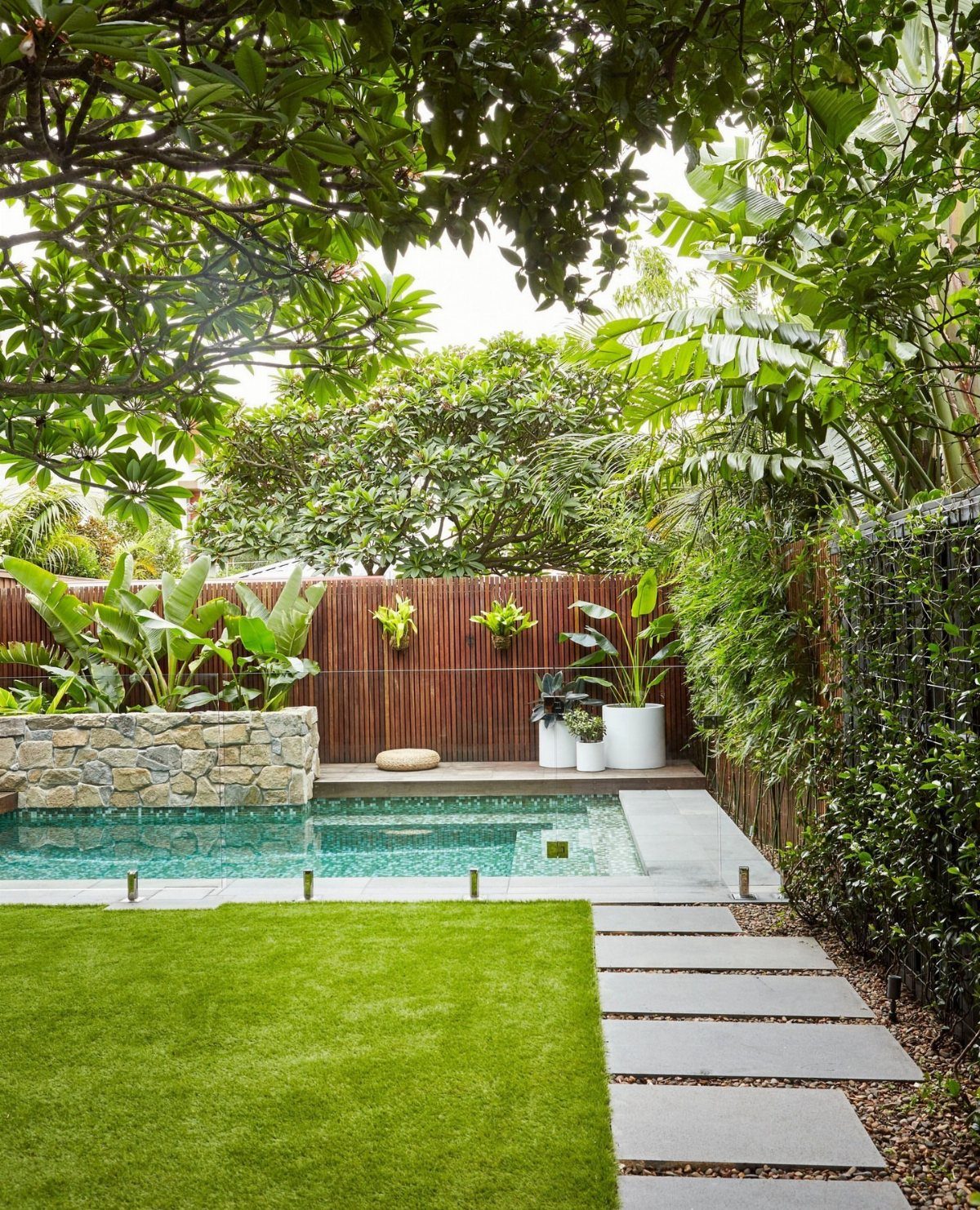
Vertical slat fencing blocks sightlines without the solid mass of a stockade panel, and the gaps let air move through on still summer evenings.
Check your setback: many towns require fences set back from property lines or permit approval past that. Pool code is separate and stricter; this height may not satisfy both rules at once.
Tropical plantings at the base soften the edge where fence meets lawn.
10. Ground Covers
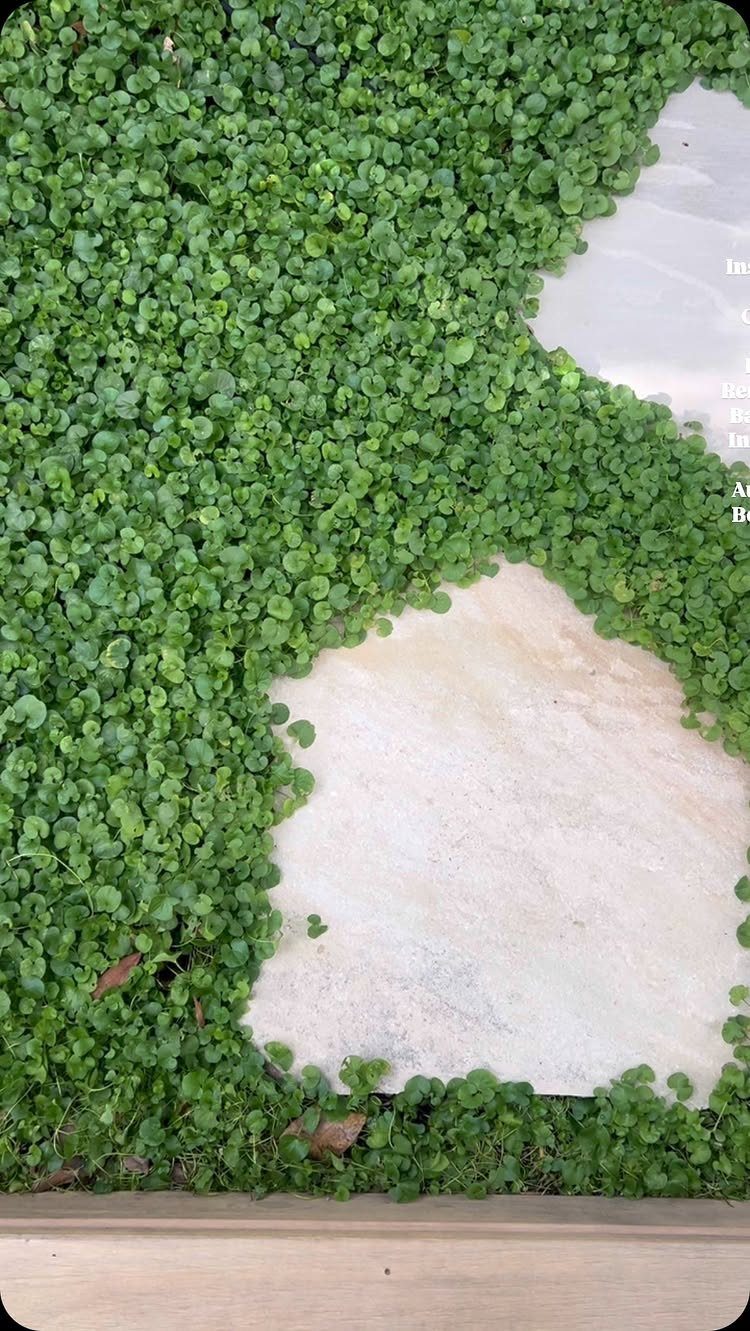
Dense ground cover threaded between pavers keeps soil in place where turf struggles in shade. The variety here fills gaps completely; I would match my light conditions, since woolly thyme wants full sun and creeping Jenny tolerates much less.
Set pavers half an inch above soil level so mower decks clear stone without scalping foliage. The paver edge visible here is smooth cut, which is kinder to bare feet and string trimmer line both.
11. Small Fountain
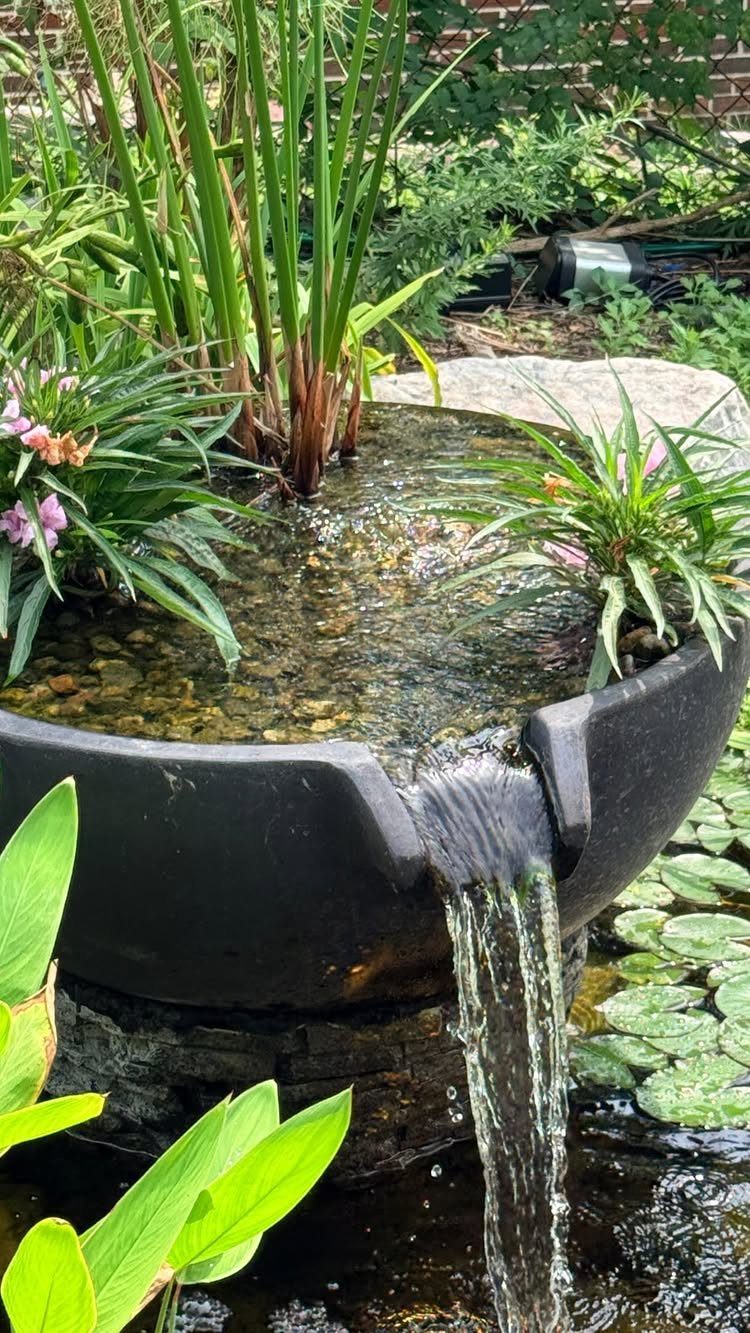
A recirculating bowl fountain needs no plumbing line; a small pump in the basin moves the same water continuously.
I would site a bowl on level packed gravel, not lawn, since a basin sinks unevenly in soft turf and the water line shows the tilt immediately.
Solar pumps cost nothing to run but stop when clouds hit; an outdoor cord to a GFCI outlet stays reliable for daily use.
12. Herbs in Pots
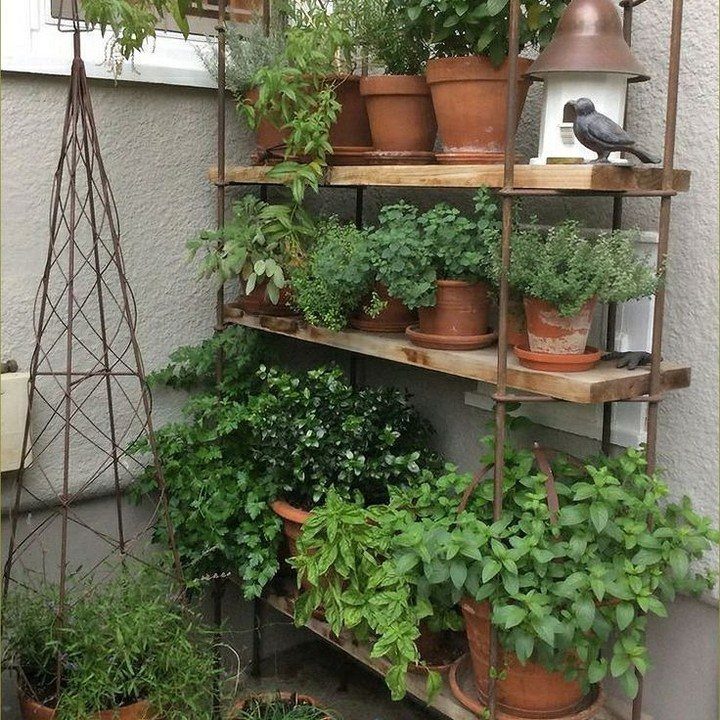
Tiered shelving stacks herbs vertically where a single potting bench would sprawl.
The metal frame here looks powder-coated; I would check that shelves lift out for winter storage, since terra cotta cracks when wet soil freezes and thaws against fixed rails.
Terracotta breathes well and dries fast, which rosemary and thyme prefer. Basil and parsley want more consistent moisture; I would set their pots on the middle shelf where I notice thirst sooner than the top row.
Direct sun is non-negotiable for compact growth, or the leggy stretch begins within days.
13. Use Light-coloured Landscaping
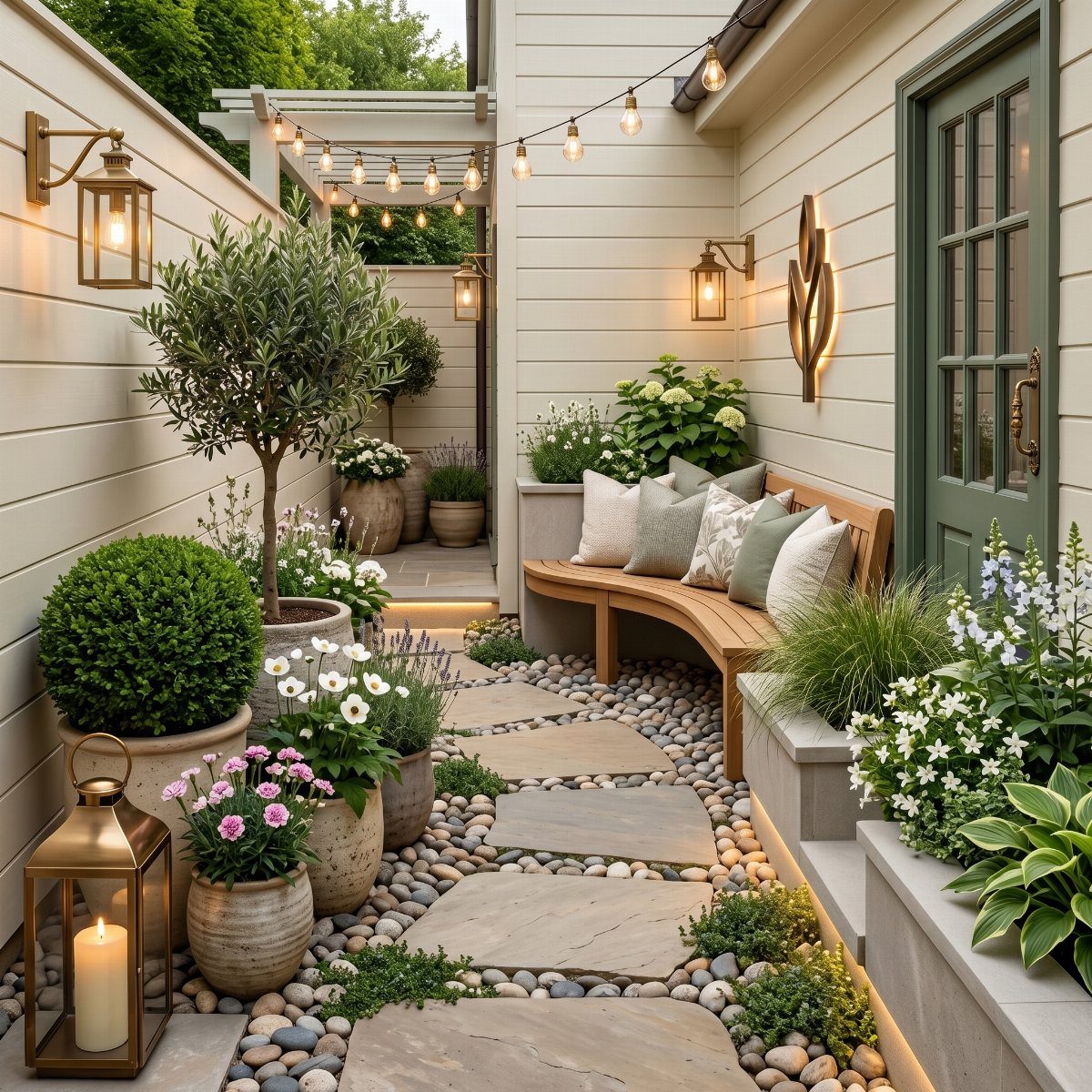
Pale stone pavers set in river pebbles bounce light into a narrow yard that would otherwise pool shadow.
The pebble surround drains fast without mud; I would check that the subgrade beneath both pavers and pebbles is compacted equally so nothing settles unevenly in the first season.
The contrast between warm wood seating and cool stone keeps the space from reading flat. String lamps overhead continue the warm note after dusk.
One limit: light stone shows leaf litter fast. I would keep a blower handier than the bench cushion.
14. Miniature Gardens
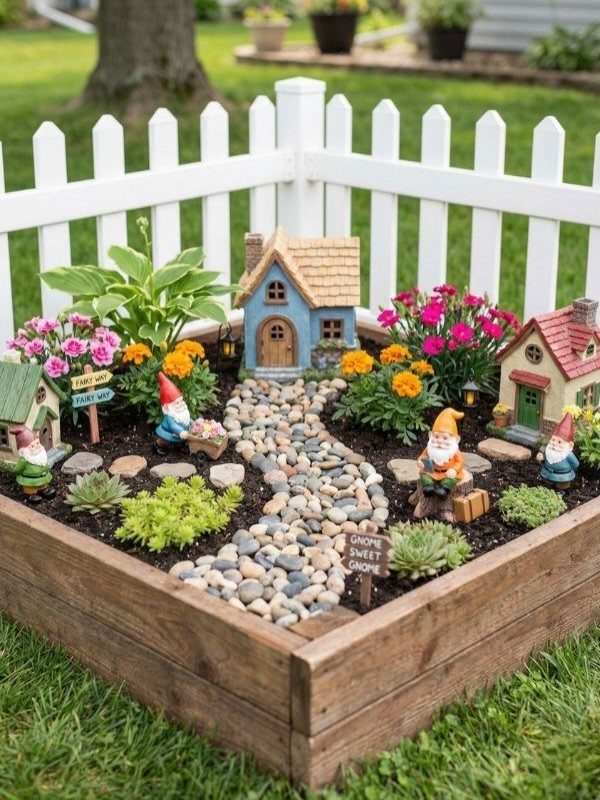
A wooden planter box set to table height turns a corner into scaled terrain for moss, pebble paths, and dwarf succulents.
Signs and figurines read cute at first but resin gnomes weather poorly and date fast; I would skip them and let the plant form carry the story.
Pea gravel paths need a lip or the stones scatter into soil with the first rain. A half-inch frame rebate around the bed box keeps that edge clean.
This suits renters who can lift the whole box onto a truck when the lease ends.
15. Plant a Potager Bed
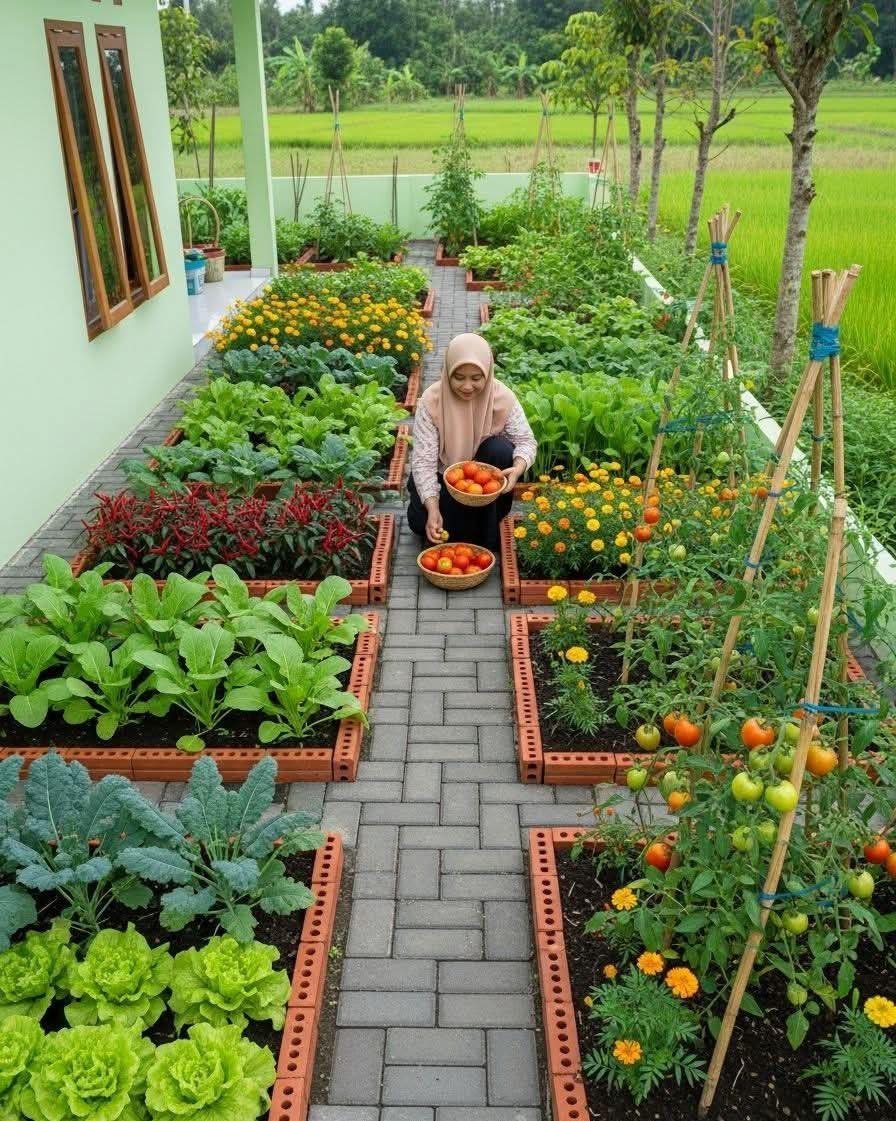
Brick-lined beds alternate vegetables and flowers in a pattern that reads as garden, not farm row.
The marigolds here edge tomatoes; that pairing works because marigolds root shallow and do not compete for the same water band, and their scent confuses some tomato pests.
Lettuce between bricks stays cleaner than field-grown; the wall warms soil earlier in spring. I would run the long axis north-south so both sides see midday sun, not just one.
Harvest timing differs: lettuce in 6 weeks, tomatoes in 10. Plan succession or the bed turns bare patch by August.
16. Plant Trained Fruit Trees
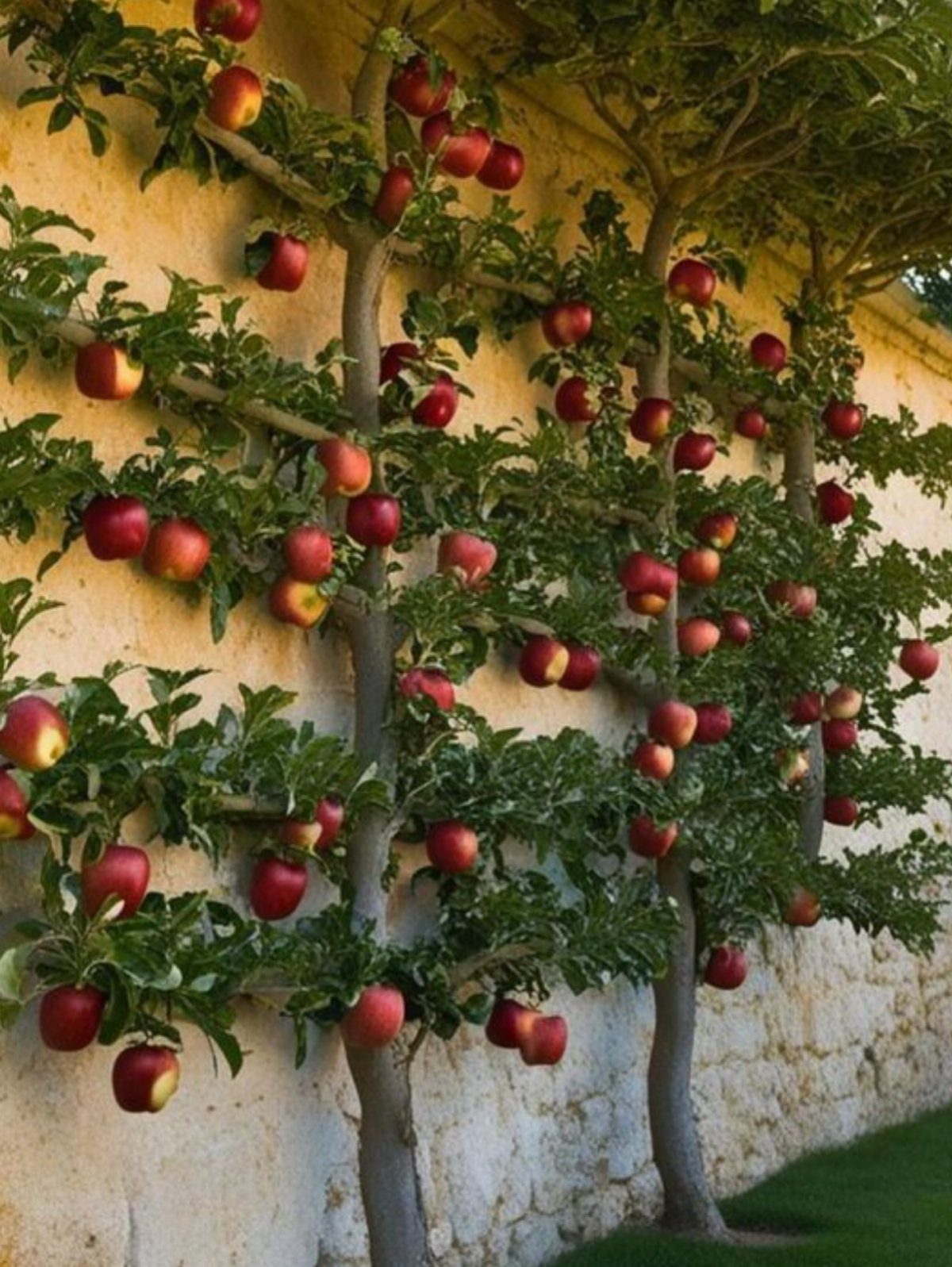
Espaliered apples pinned flat to a stone wall bear full-sized fruit on horizontal arms that stay close to masonry and out of the way.
The pruning is annual and specific: summer shorten new growth to 3 leaves beyond the basal cluster, winter thin to the planned spur network.
Stone absorbs day heat and radiates it back at night, which advances ripening; south-facing is ideal, east tolerable, north wastes the effort.
The wall must support wind load from leaf sail in storm; heavy iron brackets set into mortar, not vine eyes into pointing.
First harvest comes year three or four from whip; buy pre-trained on two-tier cordon if you want fruit sooner.
17. Repeat Selections
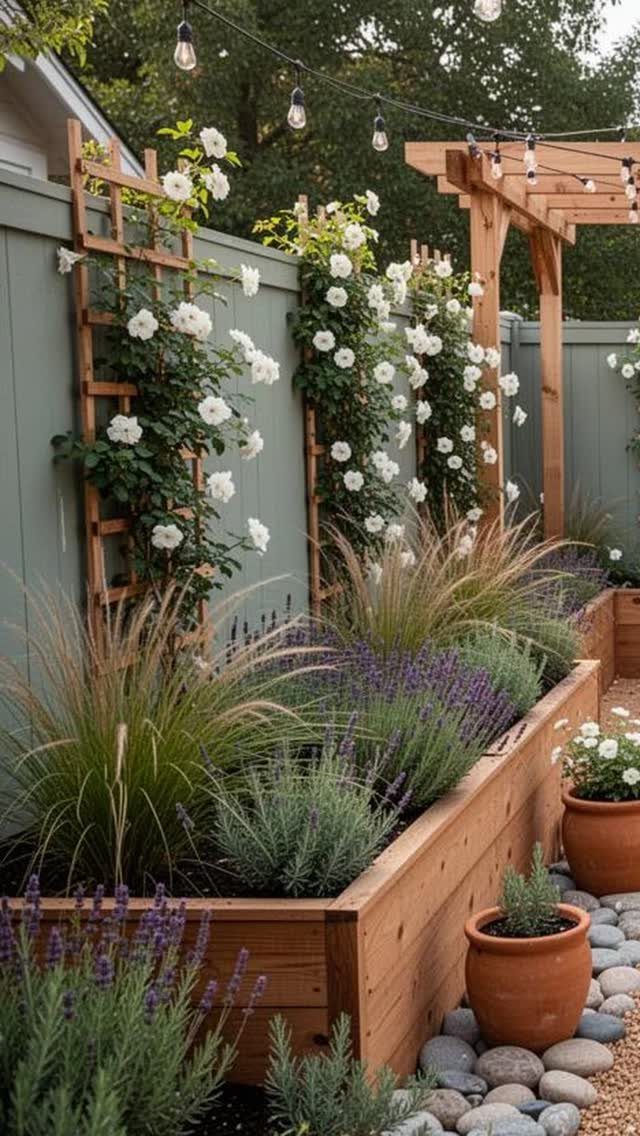
Raised wooden beds and matching trellises carry the same plant through a long yard so the eye reads one gesture, not clutter.
A single repeat looks accidental; you need several to make rhythm, and the gap between them matters as much as the match.
I would keep the plant palette tight across the whole run, letting a few species do all the work.
Cost drops when you buy multiples of one variety. One trade: diseased stock hits every copy if you repeat too narrowly; I would source from different nurseries for identical labels.
18. Create a Focal Point
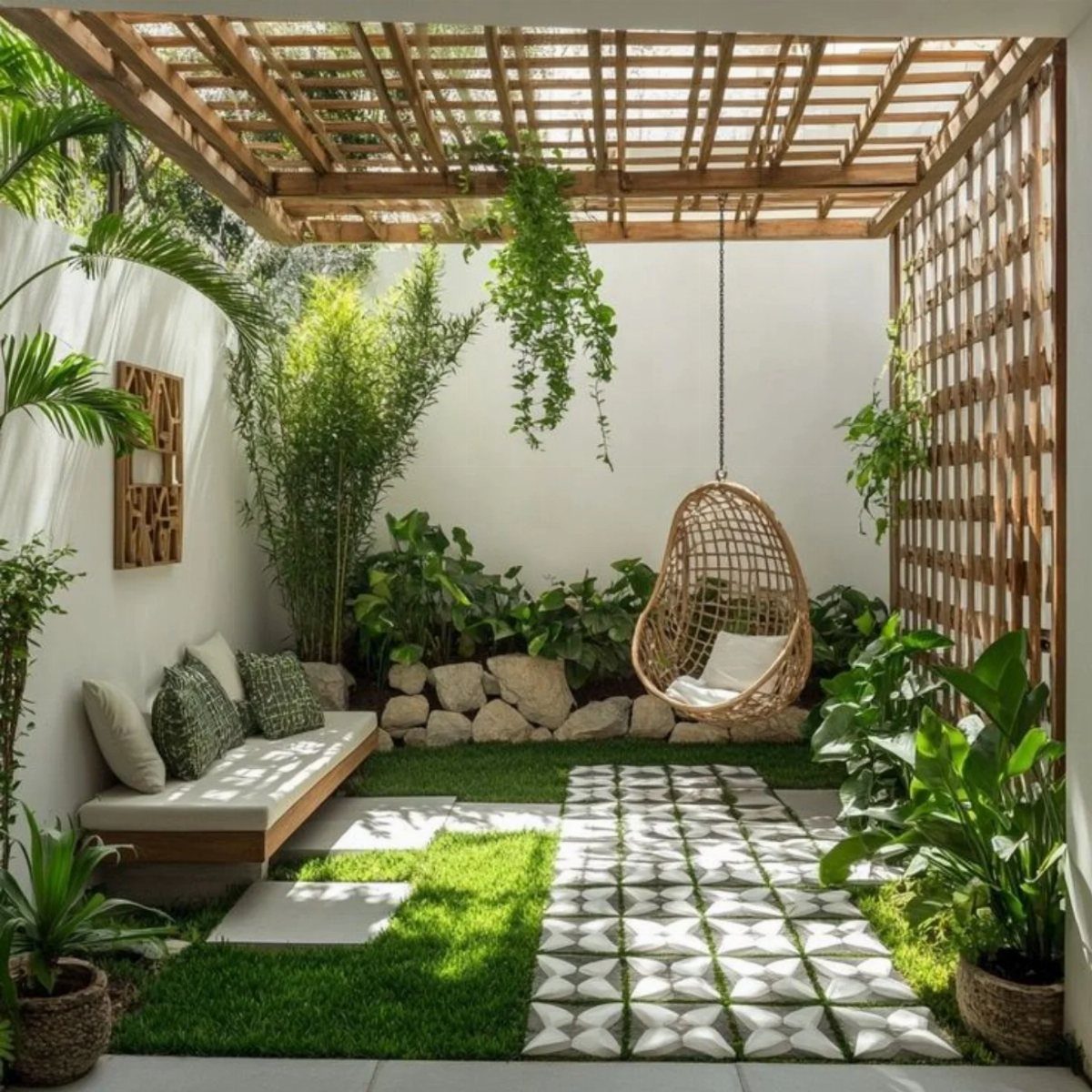
A hanging chair swung from a pergola beam stops the glance at the far end of a short garden and stretches perceived depth.
The rattan weave here looks natural; synthetic would last longer but reads as patio catalog. I would check the beam is lintel-grade, not decorative rafter, since a seated adult plus dynamic swing loads higher than static furniture.
A pergola this size wants corner posts on concrete piers below frost line, not deck blocks.
The geometric tile path leading to it gives the eye a track to follow; its pattern should be simple enough to read at a glance, busy enough to reward stopping.
Night lighting from the pergola rafters turns the chair into destination after dark.
Maximizing Small Spaces
A small backyard falls apart faster from too much choice than from too little. I would rather see five well-placed things than fifteen competing for attention.
Vertical space pays back twice: once in floor area saved, once in grouping plants by need.
Drought-tolerant species on top rows catch the driest air, thirstier ones below where water lingers. That pairing of plant to position matters more than the plant itself.
Repeating one or two planter colors across a wall reads as calm, not clutter. In tight quarters, varied pot shapes and bright colors stack up fast.
Multi-functional pieces earn their footprint.
A bench that stores cushions, a table that folds flat, a trellis that carries vegetables and shade both. Each item should answer at least 2 needs or it competes with something that does.
Choosing Plants
Shade is not a problem to fix; it is a condition to match.
Ferns, hostas, foxgloves and epimediums read lush where sun plants would straggle. In containers without borders, an acer with dicentra underneath layers height in a single pot.
North-facing gardens with deep shade want specific workhorses: hostas, lilyturf, or Euphorbia amygdaloides var. robbiae.
Dwarf cultivars change the math entirely.
A pine that stops at 1 foot leaves room for companions; the same genus at 80 feet swallows the bed. When the label says dwarf, I still check mature spread, since growers differ on what the word means.
Growth habit shapes your maintenance calendar.
A shrub that wants annual hard pruning needs access space you may not have. I would walk the mature width before I dig the hole.
Budget-friendly Options
Native plants cut 2 costs at once: less water, less replacement.
They have already adapted to your season length, your summer highs, your pests. That is not virtue signaling; it is fewer dead plants in the trash.
Low-maintenance perennials compound the savings. Spirea runs cheap at purchase, tolerates drought once established, and asks little between springs.
Salvia reblooms through summer on the same root; the sage scent is free. False spirea fills space fast for less than a shrub border of annual swaps.
A borrowed view counts as budget landscaping if your neighbor maintains it. A water feature you hear but do not own or pump or clean is the best kind.
Repeated plant colors and forms read as intentional design, not straitened circumstances.
Frequently Asked Questions
How can I plan a year-round garden?
Stagger planting times and pair long-season plants with quick-turn crops like lettuce, which harvests in 6 weeks against a tomato’s 10. Marigolds pair with tomatoes well because their shallow roots draw from a different water band than the deeper tomato roots.
What are things you commonly see in a garden?
Paths, seating, vertical planters, lighting, and some kind of water or focal point tend to appear in most small gardens I have seen done well.
Raised beds, ground covers, privacy screens, and trained fruit on walls also belong on the list of solid small-garden moves. What matters more than the list is that each piece earns its footprint by doing at least 2 jobs.
Can AI design my backyard for free?
I have not used AI design tools myself and cannot say how well they handle small-space constraints like setback rules, frost-line depths, or the way a south-facing wall advances fruit ripening.
A plan that looks right on screen may still miss load ratings for a swing chair or the gap a mower needs above a paver. I would treat any free AI output as a mood board, not a build list.





