
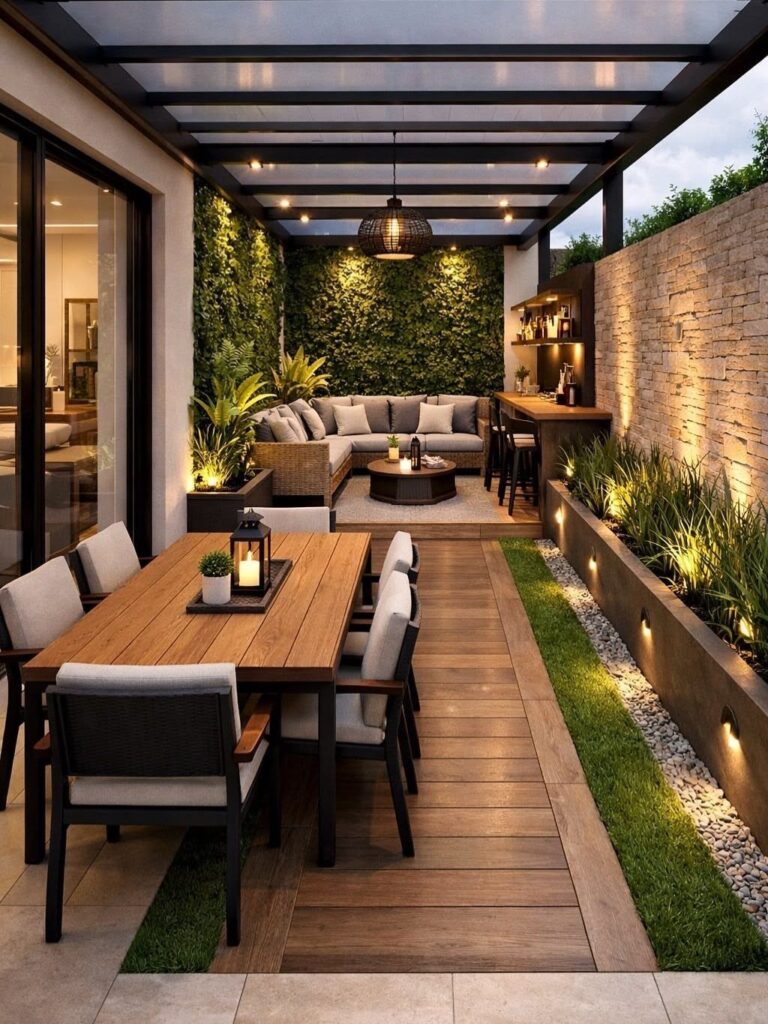
These outdoor lounge areas run from a weekend’s worth of cushions and canvas to a formed-and-poured concrete platform with a kitchenette and glass walls.
The deciding factor is how long you need the space to stay usable after sunset; some ideas pack up in October while others carry you into November on strip lighting and a fire pit table at the right height.
[link-whisper-related-posts]1. Landscaping for a Lush Environment
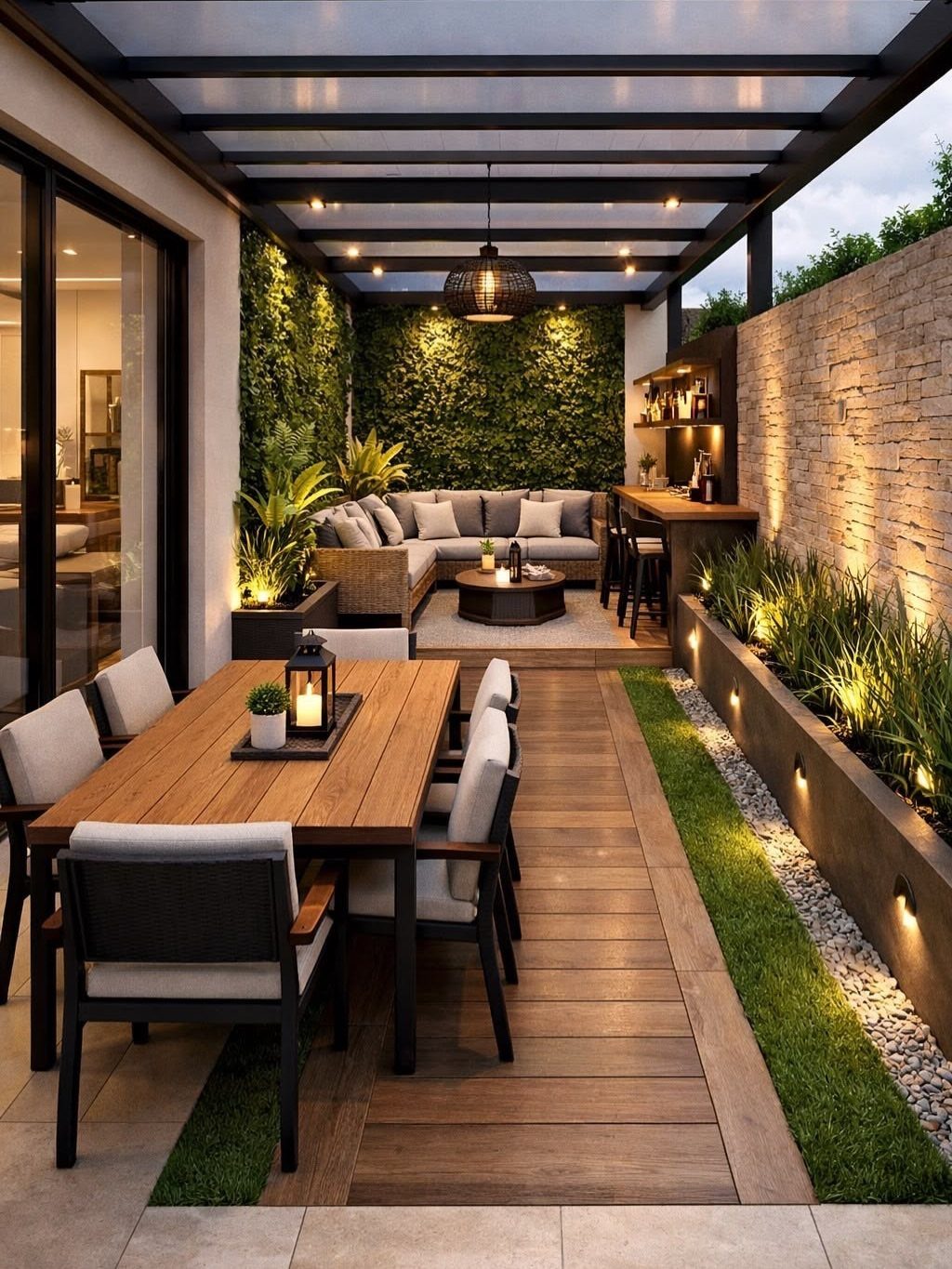
A living wall turns a covered patio into something that feels tucked into greenery rather than pushed against it.
I would check the wall’s weight limit first; a mature system with irrigation needs more depth than standard siding can hold, so the surface has to be structural.
Raised planters along the base catch what the wall cannot hold and give you herbs or low shrubs at hand height. Upward lighting on planters matters more than the plants themselves after dark.
2. Choosing the Perfect Outdoor Furniture
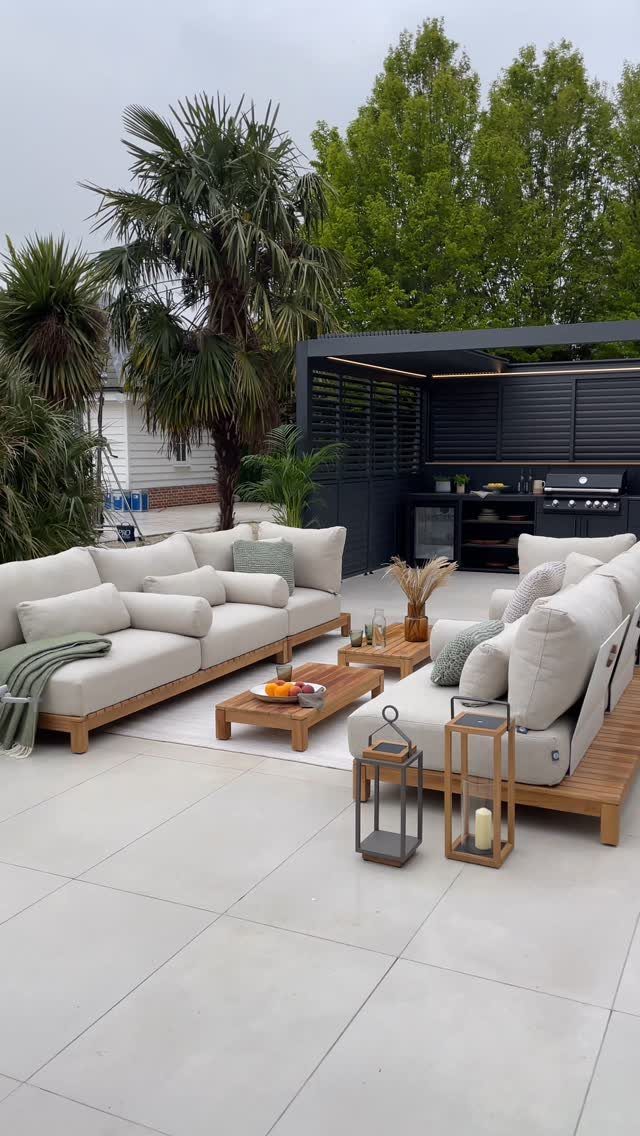
Low-profile sectionals keep sightlines open across a patio and suit renters who may need to squeeze through a standard doorway later.
The visible frame is teak or a similar hardwood; I would re-oil every season or verify it was harvested sustainably.
Light cushions read as fresh but show pollen and dust fast; solution-dyed acrylic covers remove for washing and hold color longer than standard outdoor fabric.
The small tables move where you need them, which I prefer to one central piece that traps everyone in place.
3. Thoughtful Tablescape
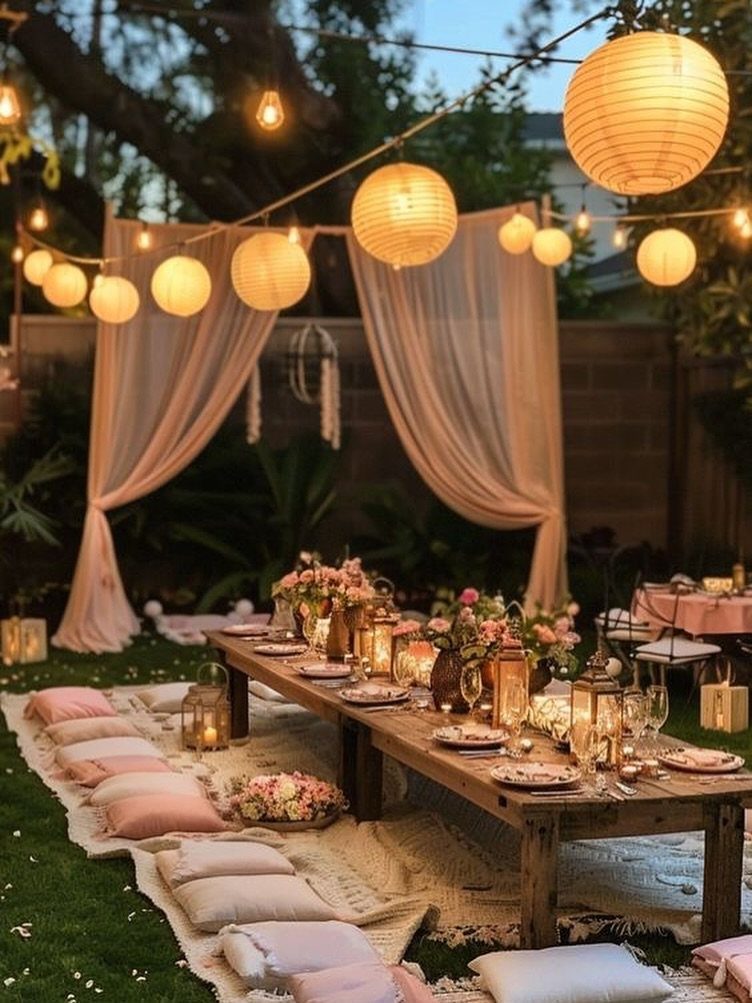
A floor-level tablescape works only where the ground stays dry and level; I would skip it on anything sloped or root-heaved. A low table running the length of the gathering lets dishes pass hand to hand rather than across.
Floor cushions need storage or they become sodden overnight; a bench with hidden space beneath, or a deck box kept close, saves the evening.
Paper lanterns overhead need battery cells or a covered outlet, and I would test the glow before guests arrive; too warm and faces disappear, too cool and the lawn looks clinical.
4. Outdoor Lounge Ideas
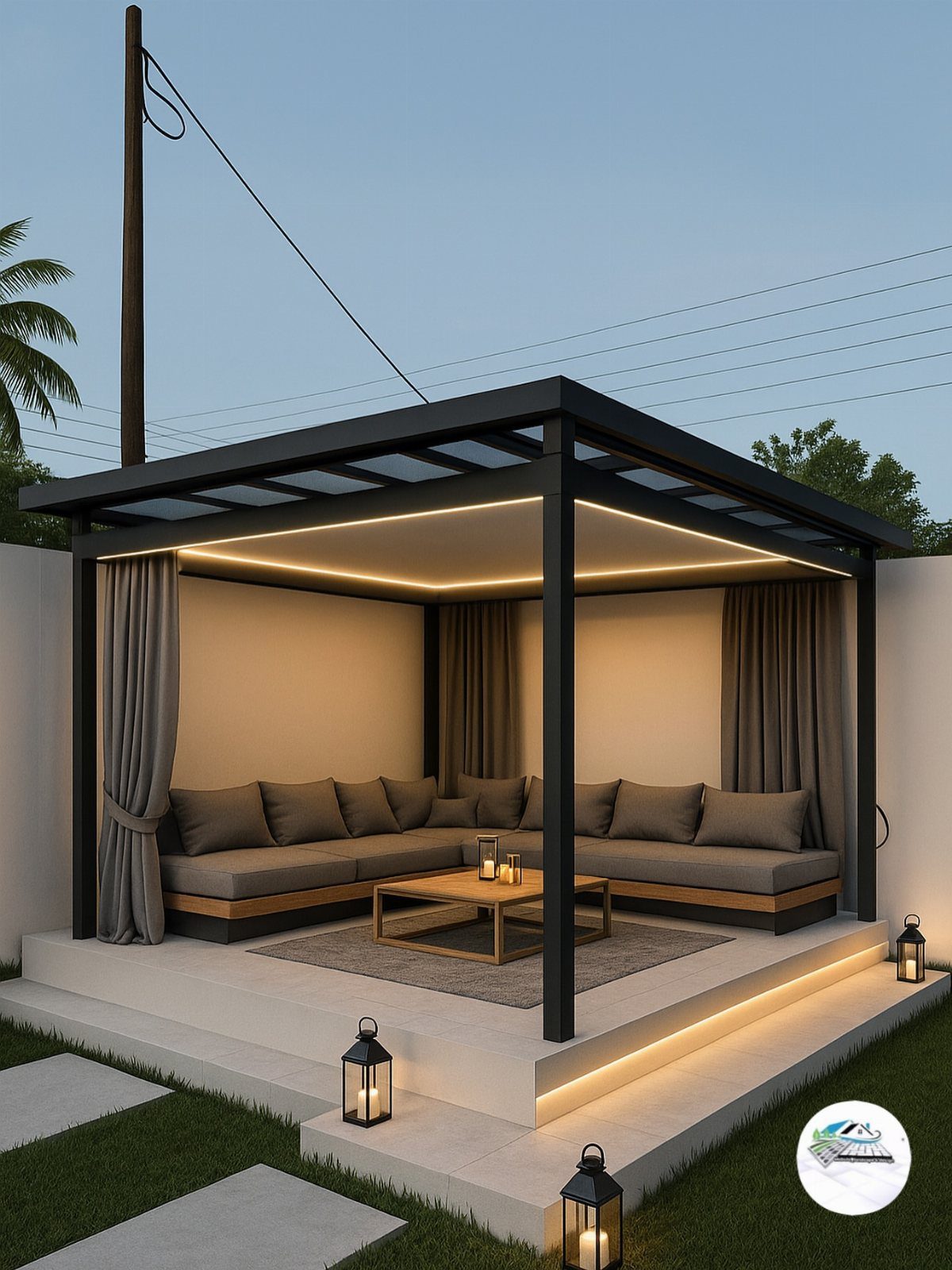
A raised concrete platform separates the lounge from the lawn without railings that block the view.
A dark pergola frame absorbs light rather than reflecting it; I would add strip lighting run on a dimmer, or the space turns cavernous once the sun drops. Curtains need a track that drains, or the hem rots in weeks.
This setup asks for a level yard and a day of forming and pouring; on sloped ground, a wood deck on piers achieves the same lift with less excavation.
5. Fire Pit Lounge with Built-In Lighting
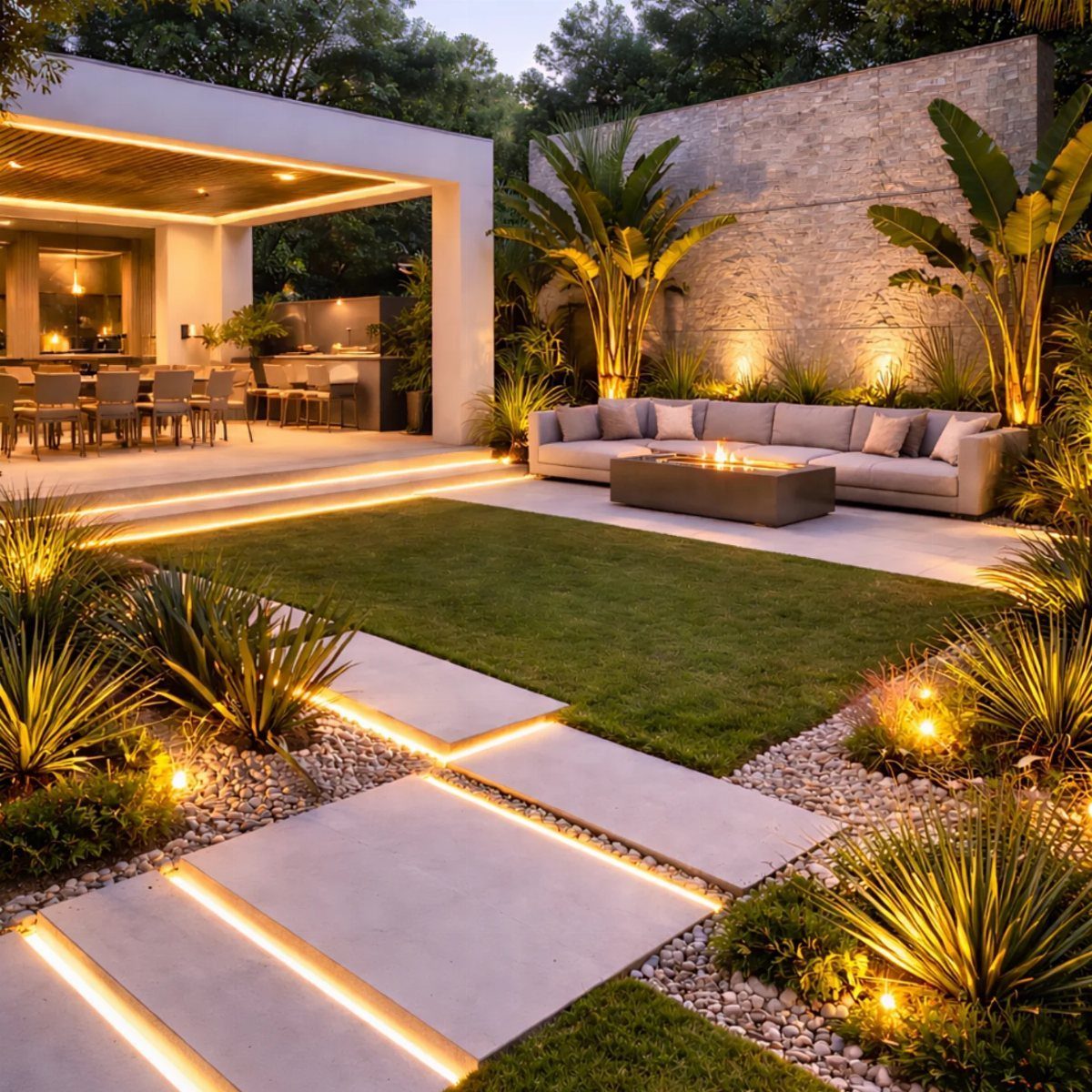
A fire pit table puts the flame at coffee-table height, so the heat reaches seated guests without the smoke chase of a ground-level bowl.
The LED strips set into the paver steps are the detail I would copy first; they cost less than the furniture and matter more for how long the space stays usable after sunset.
Stone or concrete pavers around the pit need thermal rating, not just any patio paver; a sudden crack from heat stress ruins the geometry.
I would leave clear perimeter room, enough for chairs to shift and for the one guest who always backs up mid-conversation.
6. Full Outdoor Kitchen and Bar Lounge
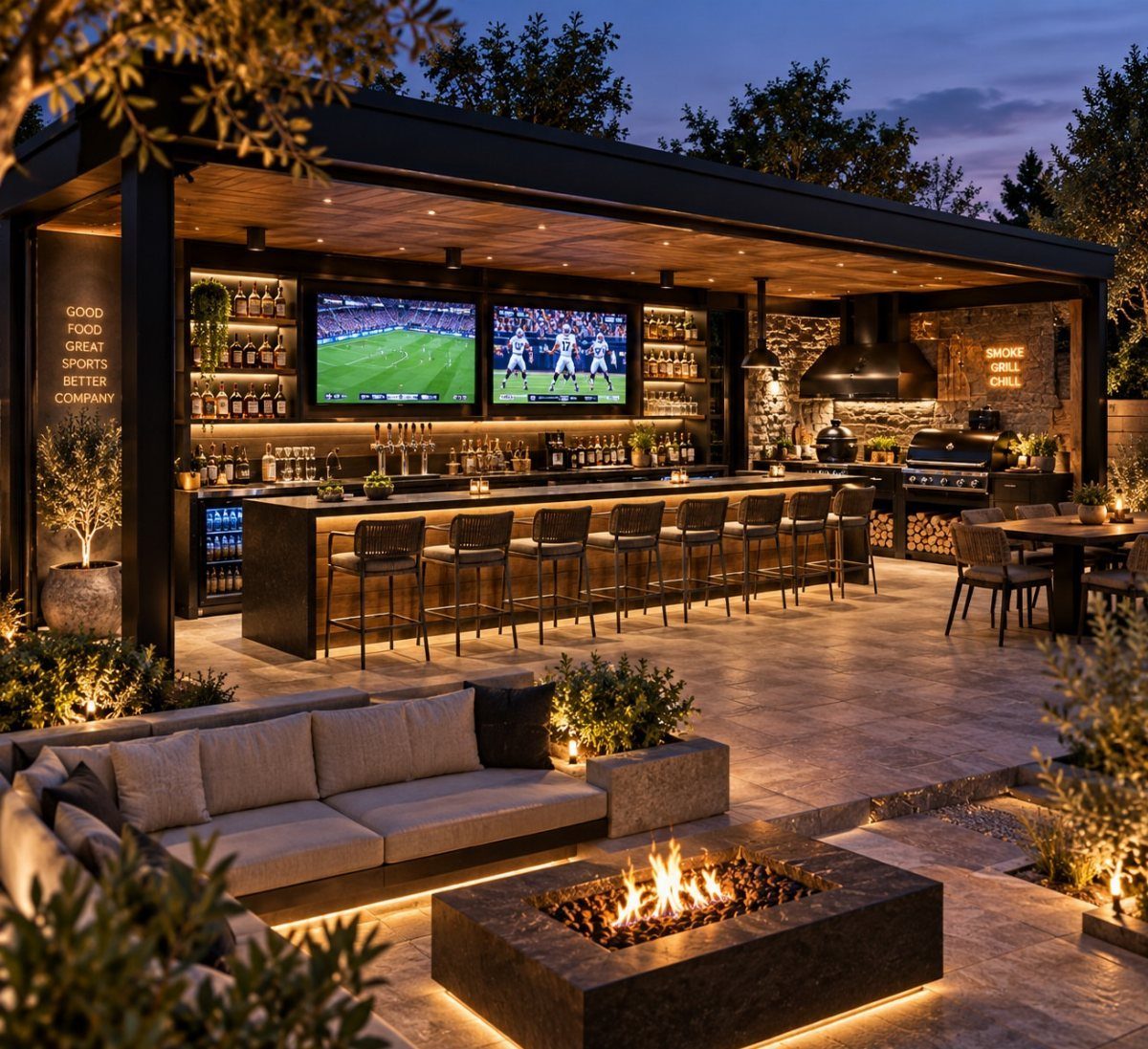
A full outdoor kitchen with bar seating turns the cook into the host instead of the exile.
A grill station under cover protects the ignition system and keeps grease smoke from drifting into the seating; I would not skip that roof.
2 TVs read as luxury but matter for afternoon games that run past dark; mount them where glare from the west does not wash the screen out at the hour you will want them.
The rectangular fire pit doubles as a coffee surface when off, though I would choose a model with a lid for the food-and-drink overlap this layout invites.
7. Modern Glass-Enclosed Garden Room
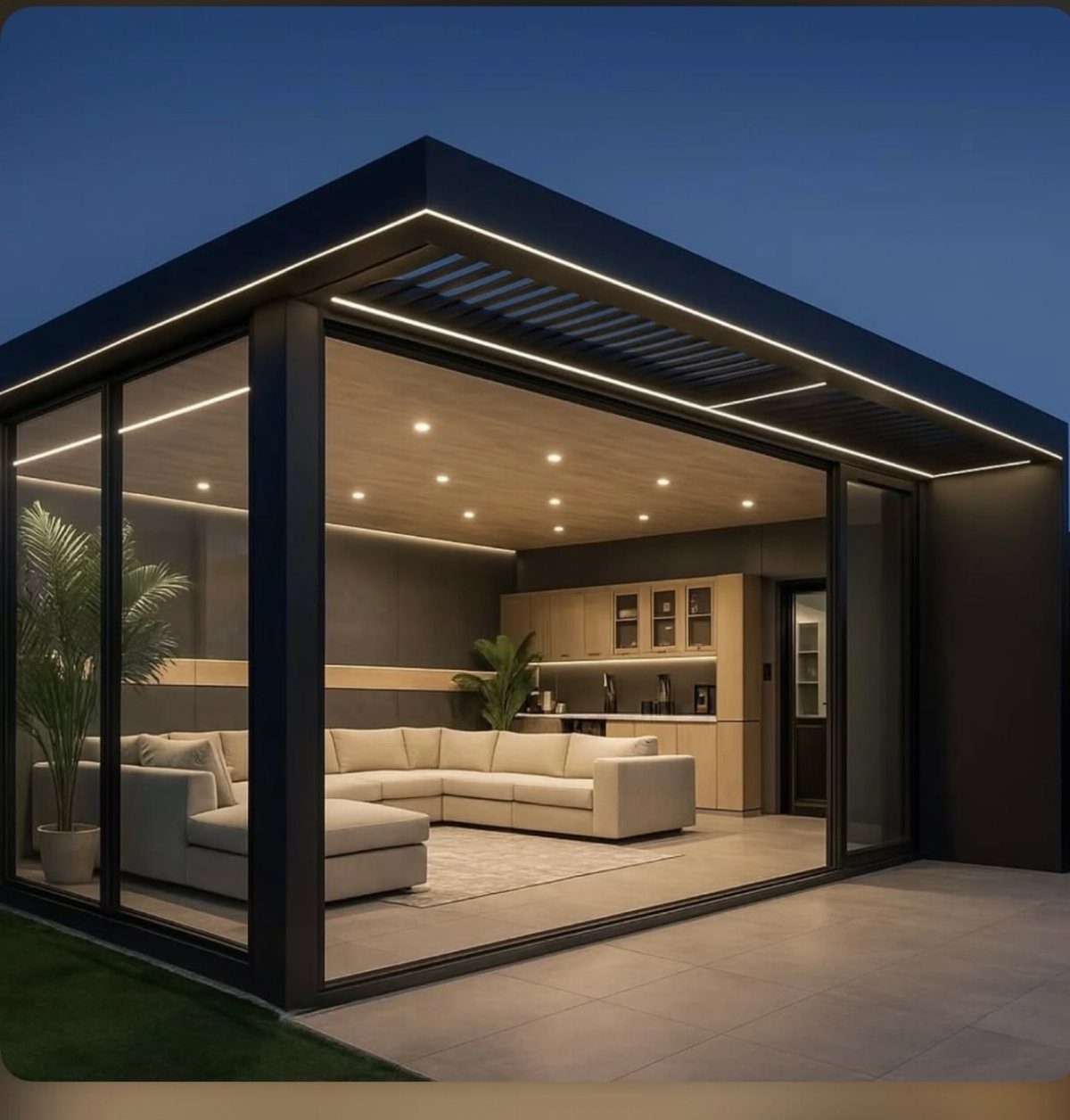
Glass walls let you use indoor-grade furniture and fabric without the mildew risk that kills ordinary sectionals left outside.
A dark aluminum frame hides the seams better than white or wood tone; I would check the thermal break specification, or the metal becomes a radiator in July and a chill sink in January.
Recessed ceiling lights need an IP rating above IP44 for humidity exposure; standard indoor housings corrode in 2 seasons.
The kitchenette visible is compact, but any running water here means drains sloped to prevent standing water and a shutoff accessible from inside.
A glass-enclosed garden room lands somewhere between a sunroom and a greenhouse, and it works best when you treat it as neither one. On a tight budget, a three-season porch with removable vinyl panels gets three-quarters of the use.
Importance of Comfort
Plush cushions and throws read as inviting, but the fill underneath decides whether they stay inviting.
High-resilience foam wrapped in down alternative keeps its shape through a season of sitting and stores better wet than raw foam, which turns to brick.
I would unzip a floor model and press the insert; slow recovery means it will flatten before the season is out.
Throws for outdoor use are cotton or linen only if you bring them in after every evening.
Solution-dyed acrylic or marine-grade Sunbrella costs more upfront and survives forgotten dew. I keep one throw per seat, folded where it dries, not stacked where the bottom one mildews.
The indoor-outdoor rug underfoot matters as much as the seat. Polypropylene flatweave hosed off on Sunday is more comfortable in practice than a shag that traps pollen and needs beating.
Creating a Cohesive Look
The color palette I would pull from the room that opens onto the patio, not from the garden.
Green competes with green; a sofa in the same warm gray as the living room wall reads as intentional continuation rather than a new decision you guessed at.
Outdoor pillows are where mixing prints actually works, because the scale is small and the originals are right inside for reference.
I would limit to 2 patterns plus a solid, the same ratio I would use on a sofa indoors. A graphic stripe with a soft floral and one textured neutral bridges exterior and interior without matching too precisely.
The coffee table or side table material should speak to the interior too.
Teak if the dining table inside is oak; powder-coated aluminum if the metal finishes inside run cool. I would not introduce rattan outside if every piece inside is clean-lined; the mismatch calls attention to the threshold instead of dissolving it.
Artwork on a covered exterior wall extends the gesture. Pieces rated for humidity, or vintage finds sealed behind glass, mean the eye travels past the doorframe without a jolt.
Seasonal Considerations
Weather-resistant materials are the baseline; what extends the season is heat and shelter from wind. I would keep the tank in a side table or hollow ottoman, accessible for swap-outs, not crawling under furniture mid-October.
Overhead protection matters more than the heat source.
A pergola with a retractable canopy blocks the low autumn sun and holds warmth from the fire; an open sky radiates heat straight up. I would track the sun angle at 4 pm in October before deciding coverage, not July.
For three-season use without a glass room, outdoor curtains in canvas or acrylic add walls you can add or subtract.
They stall wind across a seating area more effectively than a higher backs on chairs, which only protect the person in them. Grommets need to be marine-grade brass; steel rusts in one coastal season and stains the hem.
Storage for cushions decides whether you open the space on the first warm March afternoon or wait until May. A bench that swallows 2 seat cushions each, close enough to carry without a cart, means the routine is sustainable.
Frequently Asked Questions
How to create an outdoor lounge area?
Start with a level surface and furniture that fits through doorways if you rent.
Light the space for after dark: strip lighting on a dimmer under a dark pergola frame, or LED strips set into steps, matter more than the furniture for how long you stay outside.
What furniture is best for outdoor lounges?
Teak and similar hardwood sectionals sit close to the ground and work for most rental layouts. FSC certification is what I check for; without it, re-oiling becomes a seasonal habit you cannot skip.
What sits inside the cushion cover matters as much as the fabric: high-resilience foam with a down alternative wrap bounces back and survives damp storage far better than bare foam.





