
These ideas run from gravel and string lights you can spread in an afternoon to a stone outdoor kitchen that needs a footing poured below frost depth.
What separates one project from another is not budget alone but how much of the yard you are willing to give up to a single purpose, whether that is cooking, growing, seating, or simply walking through.
The fire pit setup reads as one room on a gravel pad; the hammock area asks only for two beams strong enough to carry a swinging load.
[link-whisper-related-posts]1. Build an Outdoor Kitchen
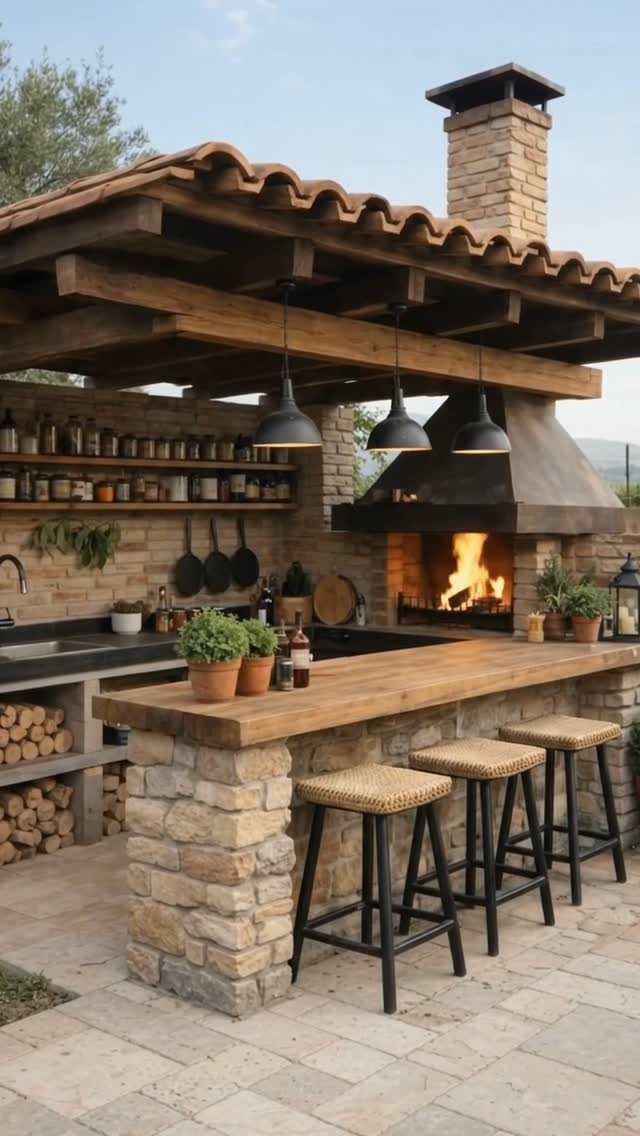
A covered kitchen built from stone and timber turns the back corner of a yard into the place people gather.
I would check 2 things before committing: whether local code requires a setback from the property line, and whether the clay tile roof you might want weighs more than the structure can handle.
A stone fireplace extends the season but needs a solid footing poured below frost depth; skip that step and the first winter will crack it.
2. Vertical Planters
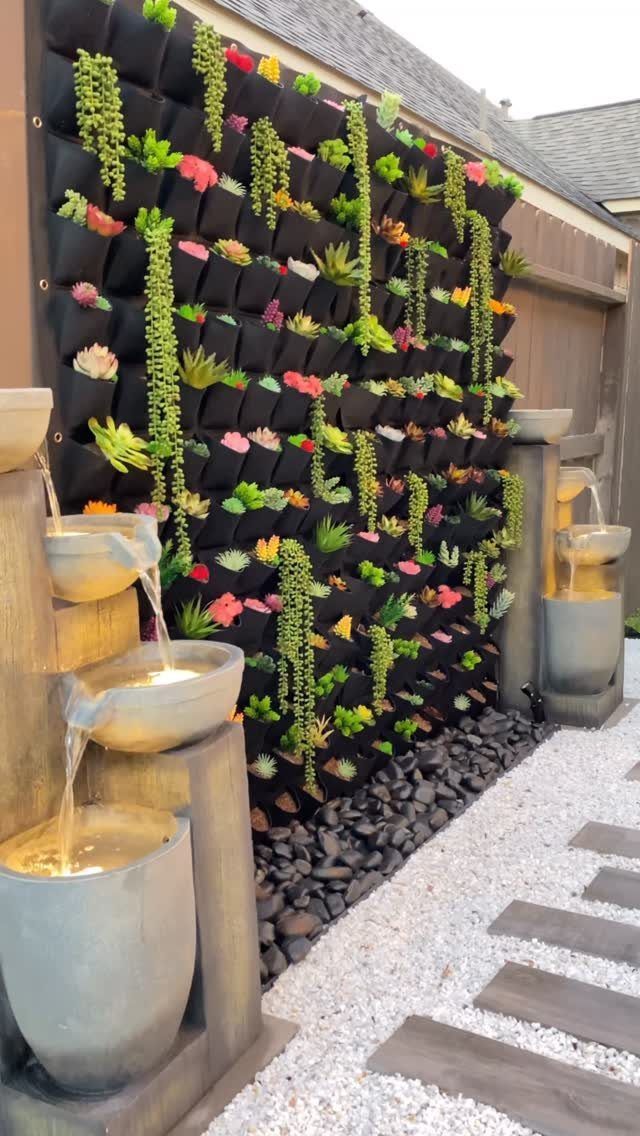
Pocket planters hung on a fence buy back floor space a ground bed would eat. 2 vertical columns with shallow pockets work well for succulents, since their roots do not need much depth.
I would line the back of each pocket with felt or burlap so the fence stain does not wick into the soil over a season.
A gravel base below handles the drip, and the tiered fountain nearby masks the pump hum.
3. Install a Fire Pit
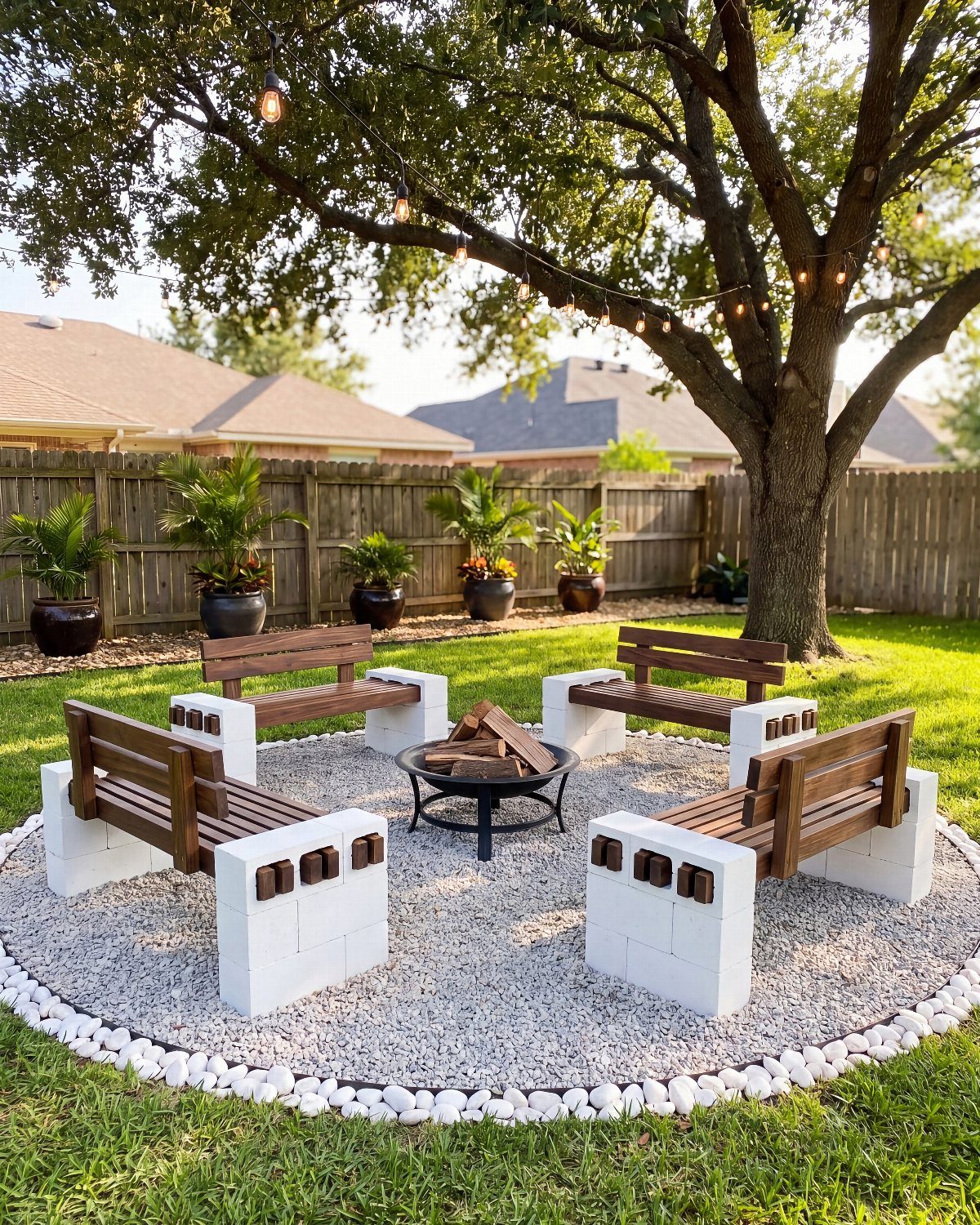
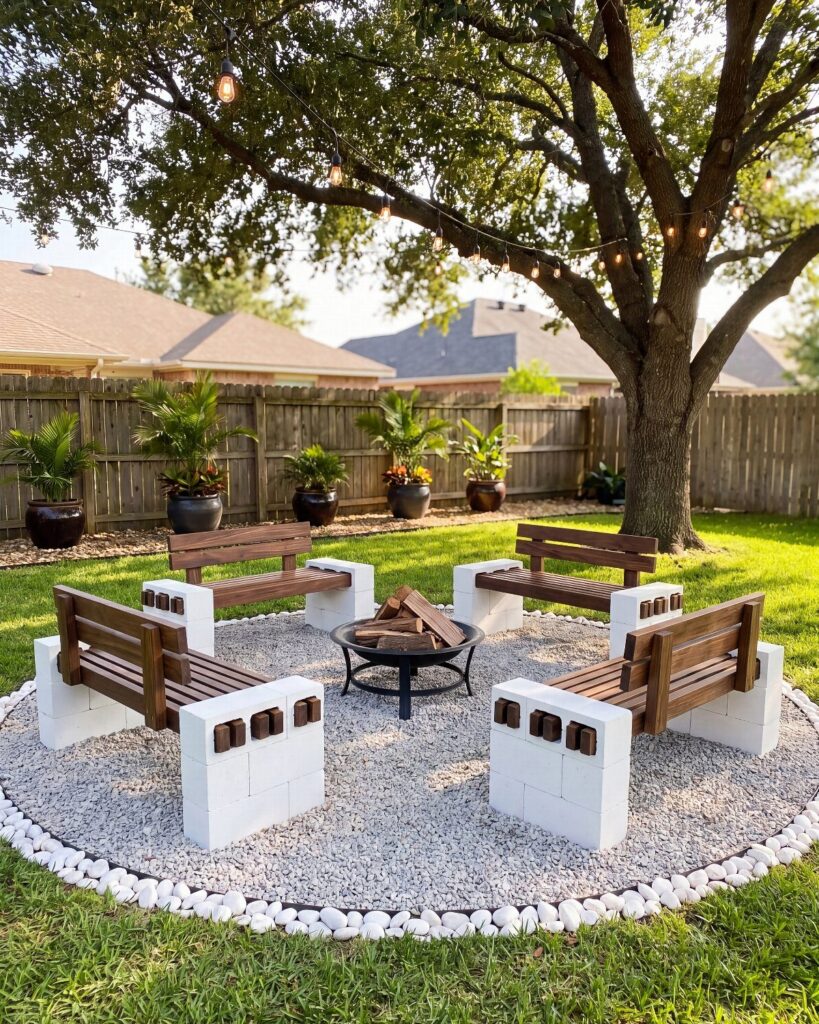
Four benches ring a metal fire bowl on a gravel pad; the whole setup reads as one room.
I would use small crushed stone graded fine enough that it locks solid underfoot barefoot. String lights in the overhead branches stretch the usable hours without costing more than the bulbs.
4. Add an Outdoor Water Feature
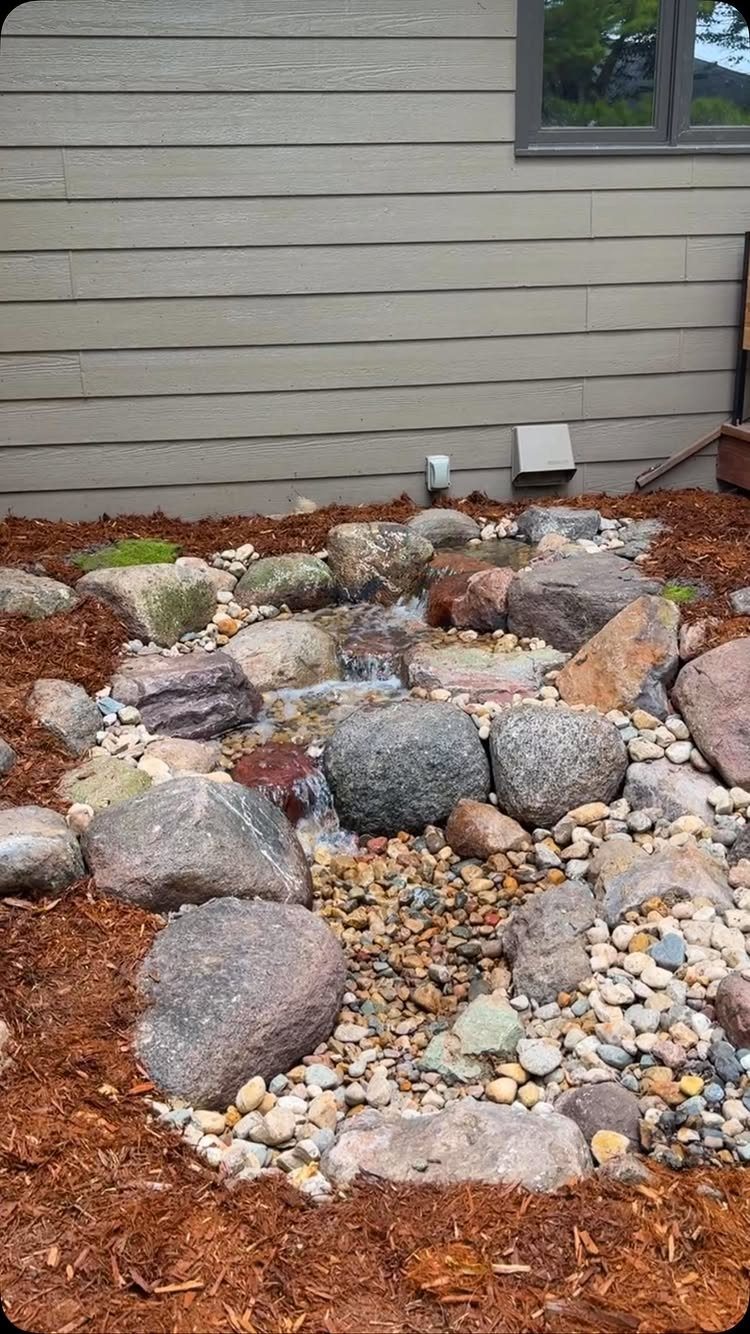
A recirculating stream built from stacked stone and river pebble gives the small yard its own sound.
The liner and pump run the cost, not the rock; I would budget for a reservoir-kitted system that handles the flow without running the meter dry.
Wood mulch against the house siding is fine here because the water stays below the grade line, though I would keep it well back if the grade runs toward the foundation.
Solar pumps work only where the stream sits in sun most of the day; shade means a cord.
5. Raised Beds Vegetable Garden
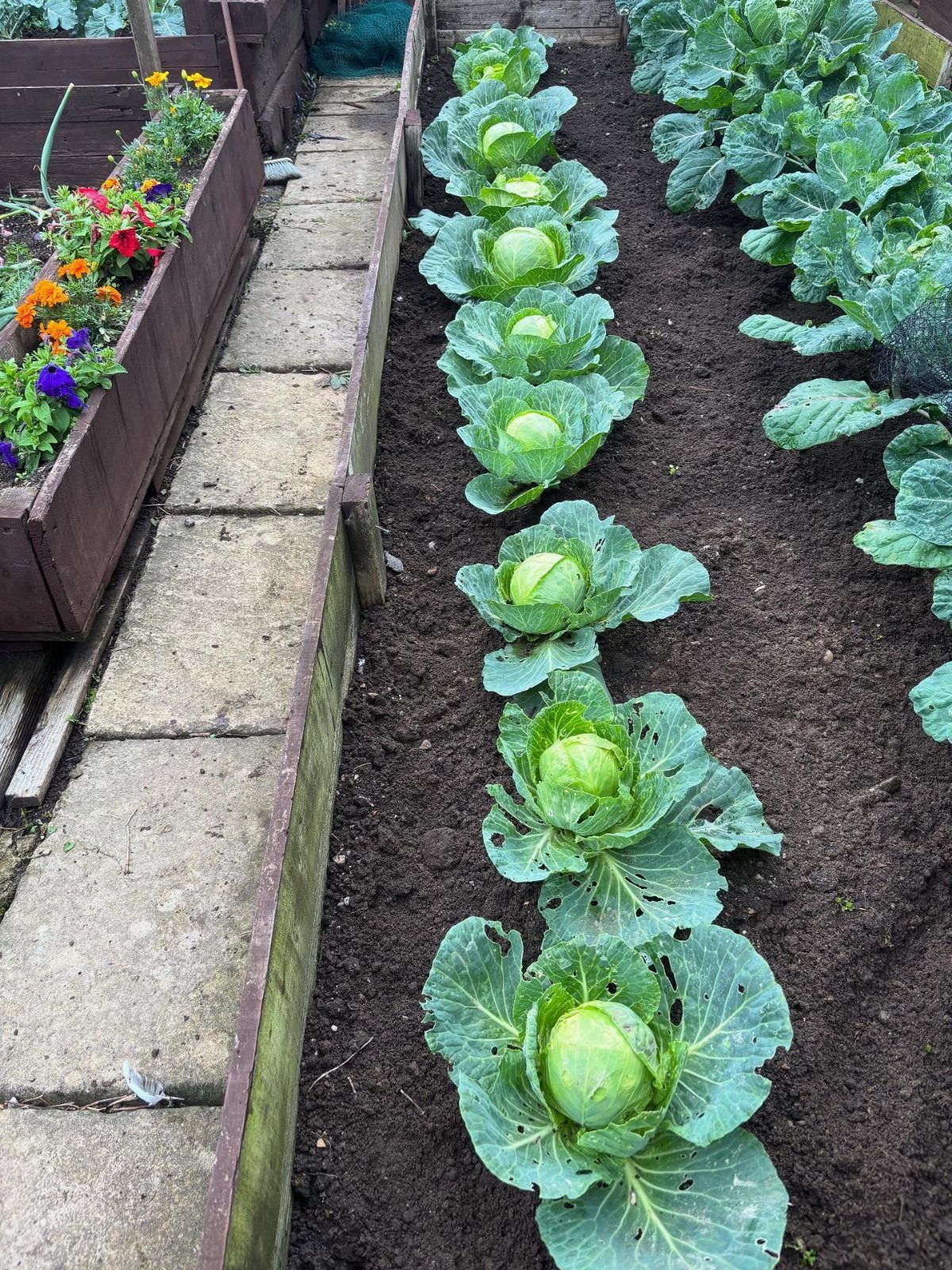
A single raised bed of cedar or a rot-resistant equivalent gives cabbages the soil depth they need without bending the gardener.
I would build narrow enough to reach the center from either side; anything broader and you step in, compacting what you loosened.
Dark soil absorbs spring heat faster than the lawn around it, so planting goes in noticeably earlier. The stone walkway between bed and flowers keeps mud off shoes and should sit an inch above grade so it drains.
6. Install a Pergola
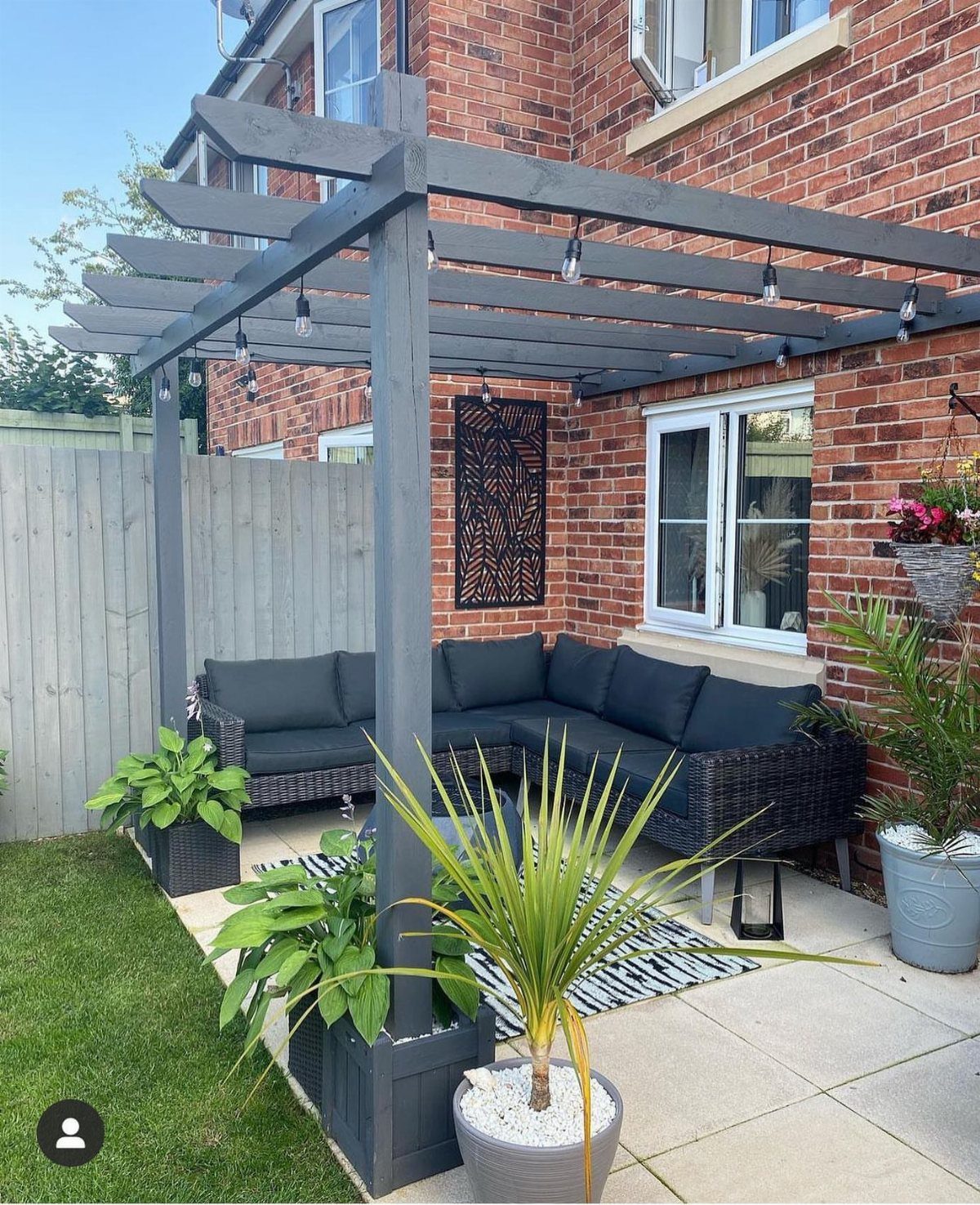
A freestanding pergola of stained grey timber defines a patio without blocking the light.
The brick wall behind means no anchor worries, but an open-yard build needs posts set deep in concrete and plumb in both directions before the beam goes up.
Wicker seating under it will last far longer with a waterproof cover offseason.
7. Hang String Lights
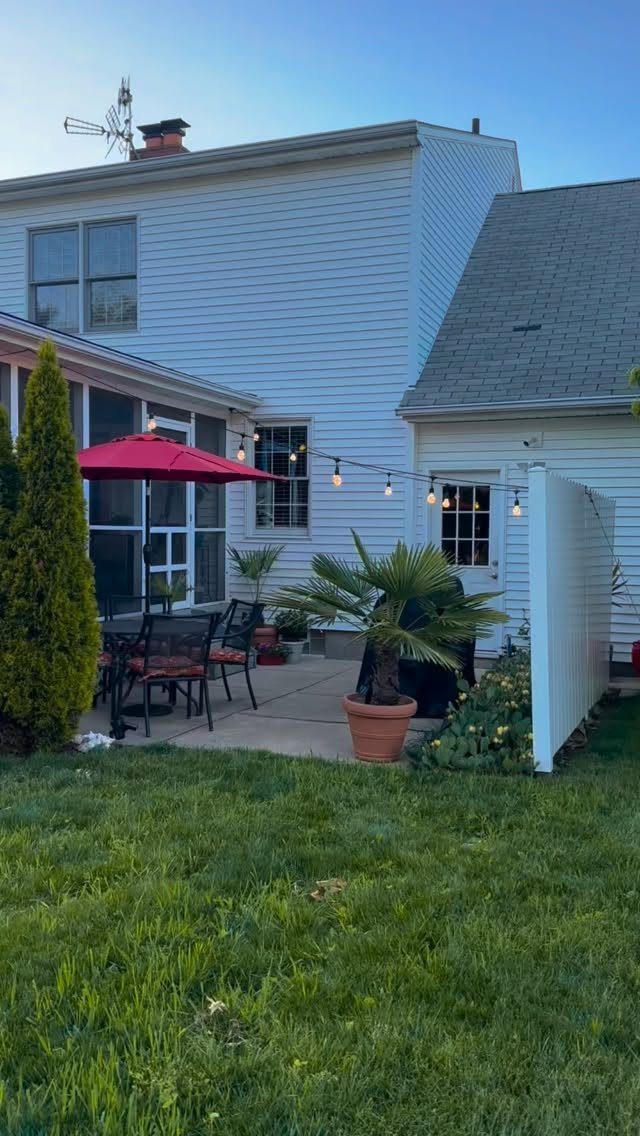
A single warm strand turns a plain fence and patio into usable space after dark. I would mount a guide wire first, tight enough that the catenary does not sag into the umbrella canopy on still nights.
LED bulbs draw little enough that a 15-amp outdoor receptacle handles several strands; incandescent means watching the total load.
Check whether the house eave or a fence post can take the anchor stress, or whether you need a tension pole sunk in concrete at the far end.
Timer outlets save the walk outside when you would rather be heading to bed.
8. Concrete Pavers Path
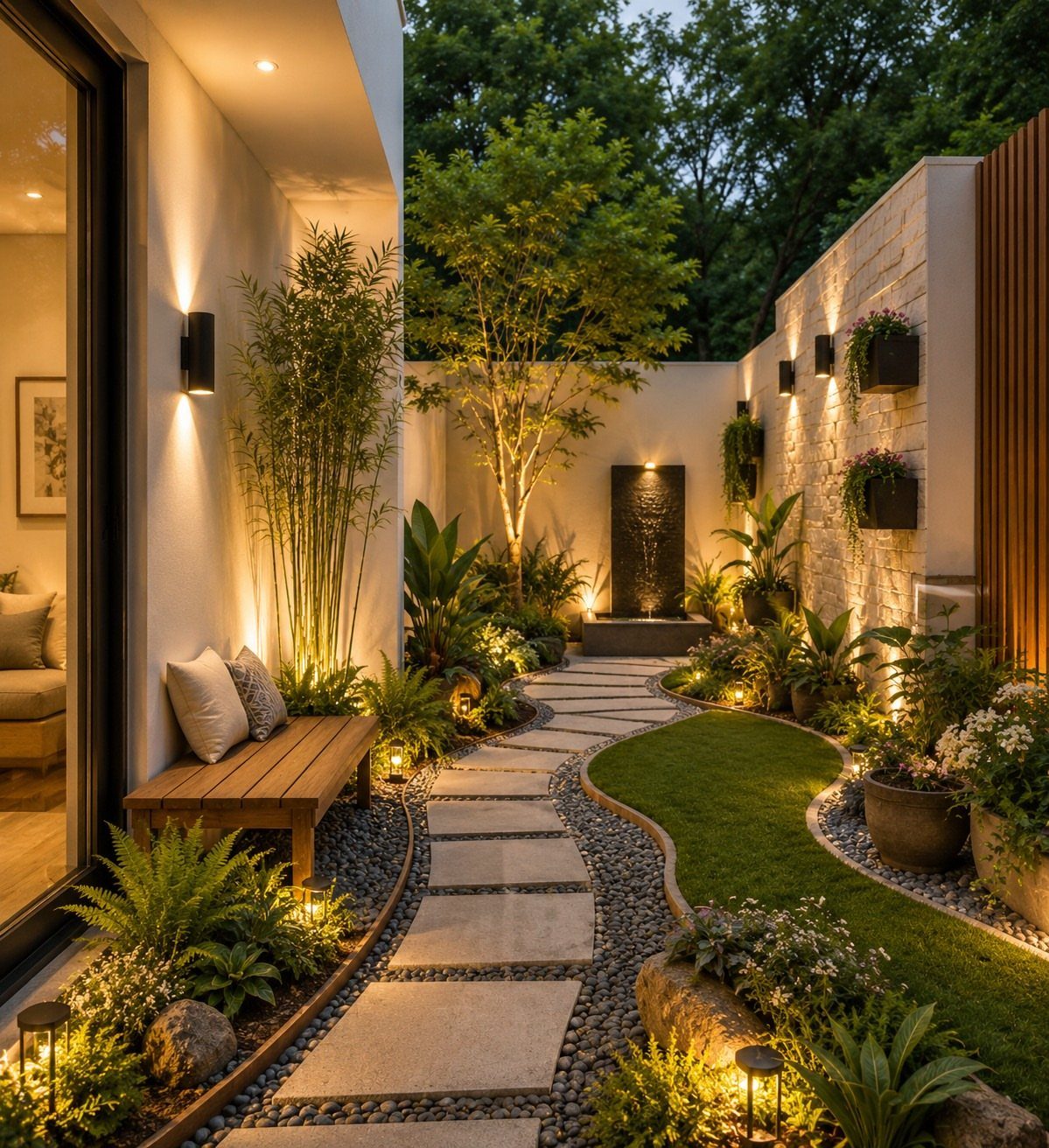
Large rectangular pavers set in pebble let you walk the yard without tracking mud. I would leave a gap between stones for groundcover to knit through; too tight and water pools, too loose and the gravel migrates.
The base matters more than the paver: compacted road base deep enough to take foot traffic without shifting, then bedding sand leveled with screed pipes.
Moving the path during layout costs nothing; moving it after the first stone sinks does not. A winding line slows the walk and suits a garden; straight reads faster and fits a narrow yard better.
9. Stone Planter Focal Point
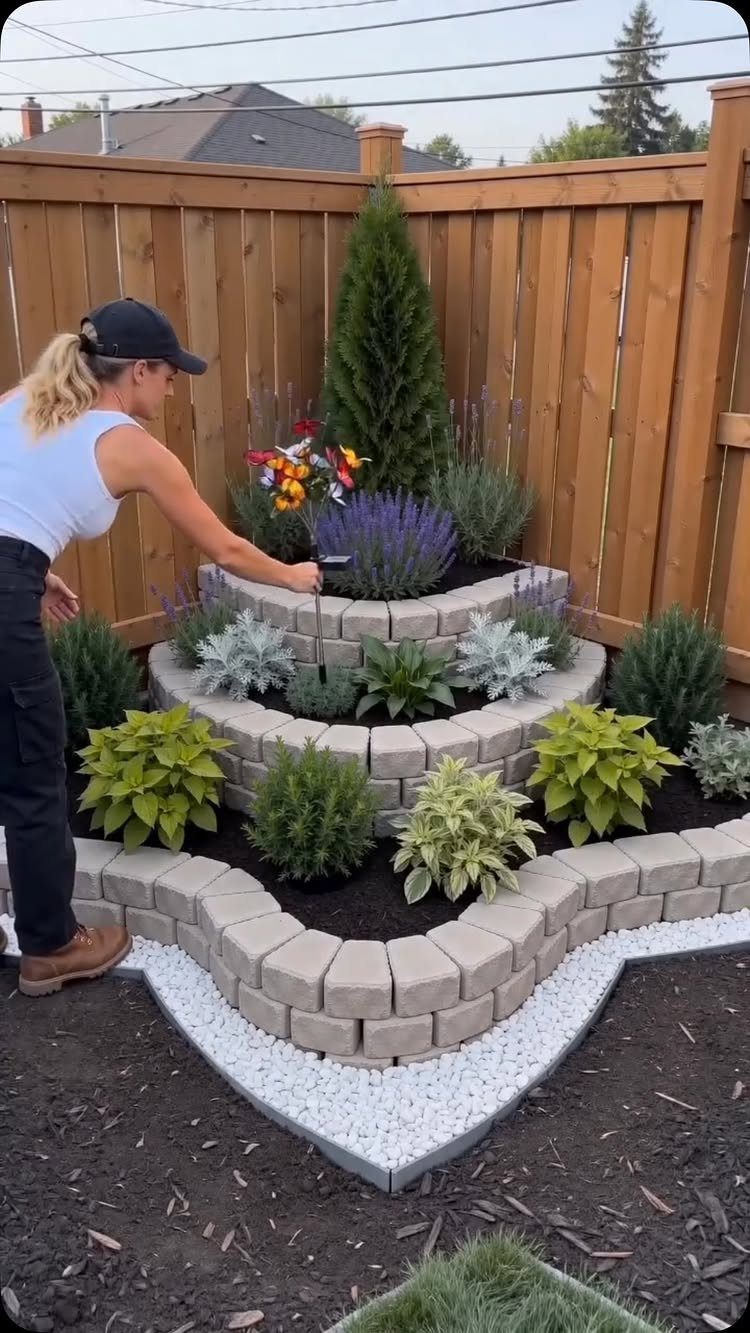
Tiered stone built into a corner turns fence line into something worth looking at. I would stack dry or use construction adhesive between courses, not mortar, so the whole thing shifts with frost without cracking.
The curve visible in the tiers steps the planting depth: shallow soil up top for succulents or annuals, deeper below for shrubs that want root room.
Set the base course on compacted gravel, not bare soil, or the first winter of freeze-thaw walks the stack out of plumb. A liner of landscape fabric behind keeps soil from staining the fence through the gaps.
10. Outdoor Movie Theater
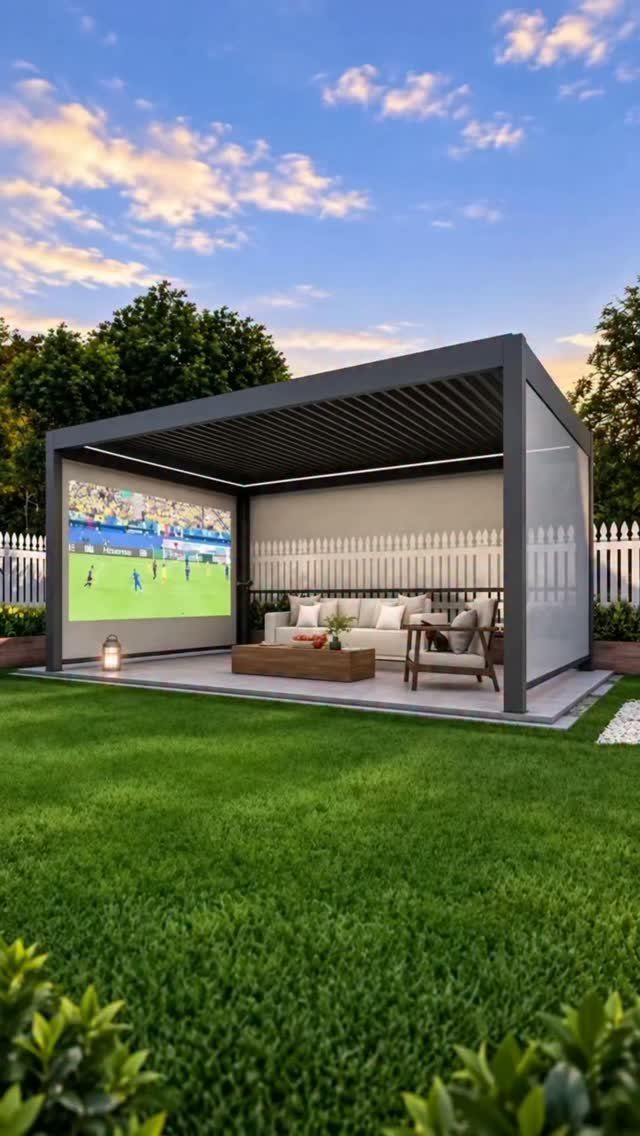
A projector screen hung from an existing pergola and a set of lounge chairs equals theater seating without building anything permanent.
I would check the throw distance before buying; a short-throw projector sits close for a big image, standard throw needs the full depth of most patios.
The pergola slats may need a plywood backing strip to carry the screen mount without flex.
Audio through a Bluetooth speaker works until a leaf blower starts next door; a wired outdoor speaker pair costs more but keeps the soundtrack where you need it.
Twilight starts the show; any earlier and the picture washes out even on a good screen.
11. Hammock Area
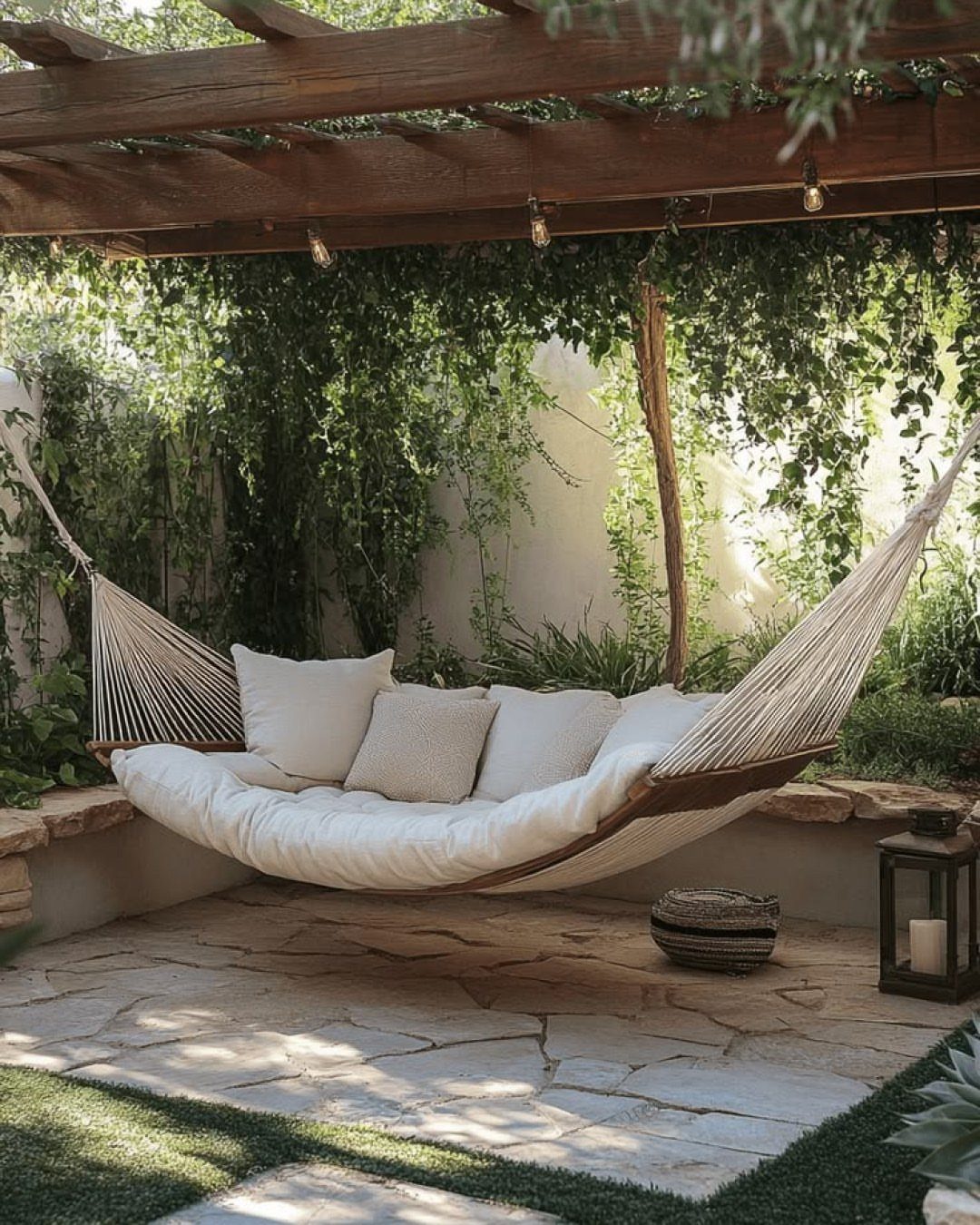
A rope hammock under a vine-draped structure gives one person a reason to stop moving.
I would hang it with enough arc that the lowest point clears the stone when occupied; flatter and the body rolls the wrong way, deeper and entry becomes a climb.
The pergola beams must carry dynamic load, not just the static weight: someone swinging generates more force than someone heavier just sitting still.
Eye bolts through the beam, backed with washers, beat rope wrapped around timber that bark beetles have hollowed. Store the cushion stack inside or under cover; sun rots fabric faster than rain.
12. Introduce a Theme-Based Landscape
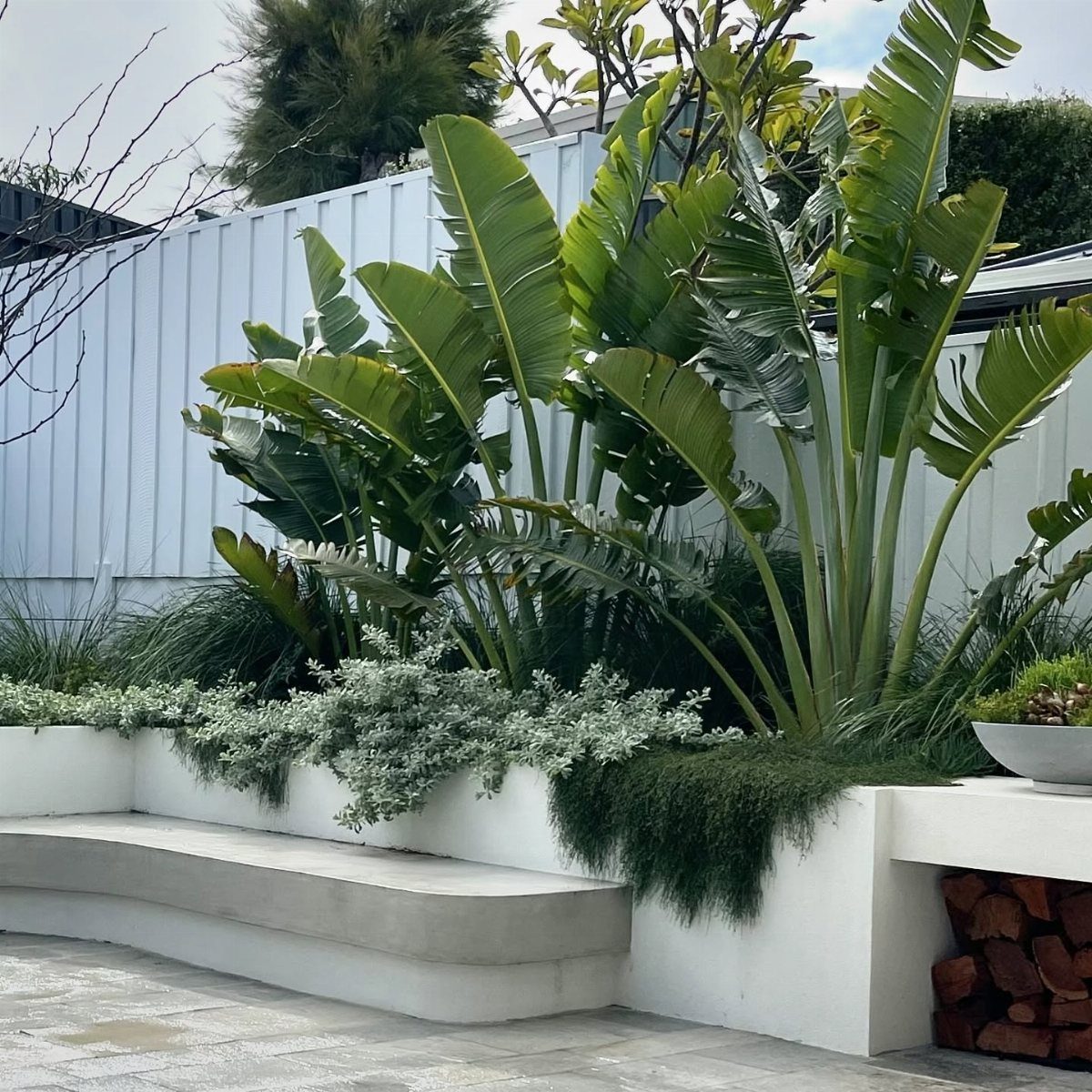
A single plant choice repeated in a built planter gives the whole yard a direction. Bird-of-paradise wants afternoon sun and winter protection from hard frost; in warm coastal zones it stays out year-round, colder and you are container-moving or substituting.
The white concrete planter and bench forms one piece, so the color decision is the hardscape, not the foliage.
I would pick the theme from what grows without heroic effort in your climate, then match the hardscape finish to that mood.
Tropical means pale stucco or white concrete; desert means rusted steel and decomposed granite. Starting with the look and forcing the plants to match is the expensive route.
13. Use Outdoor Mirrors
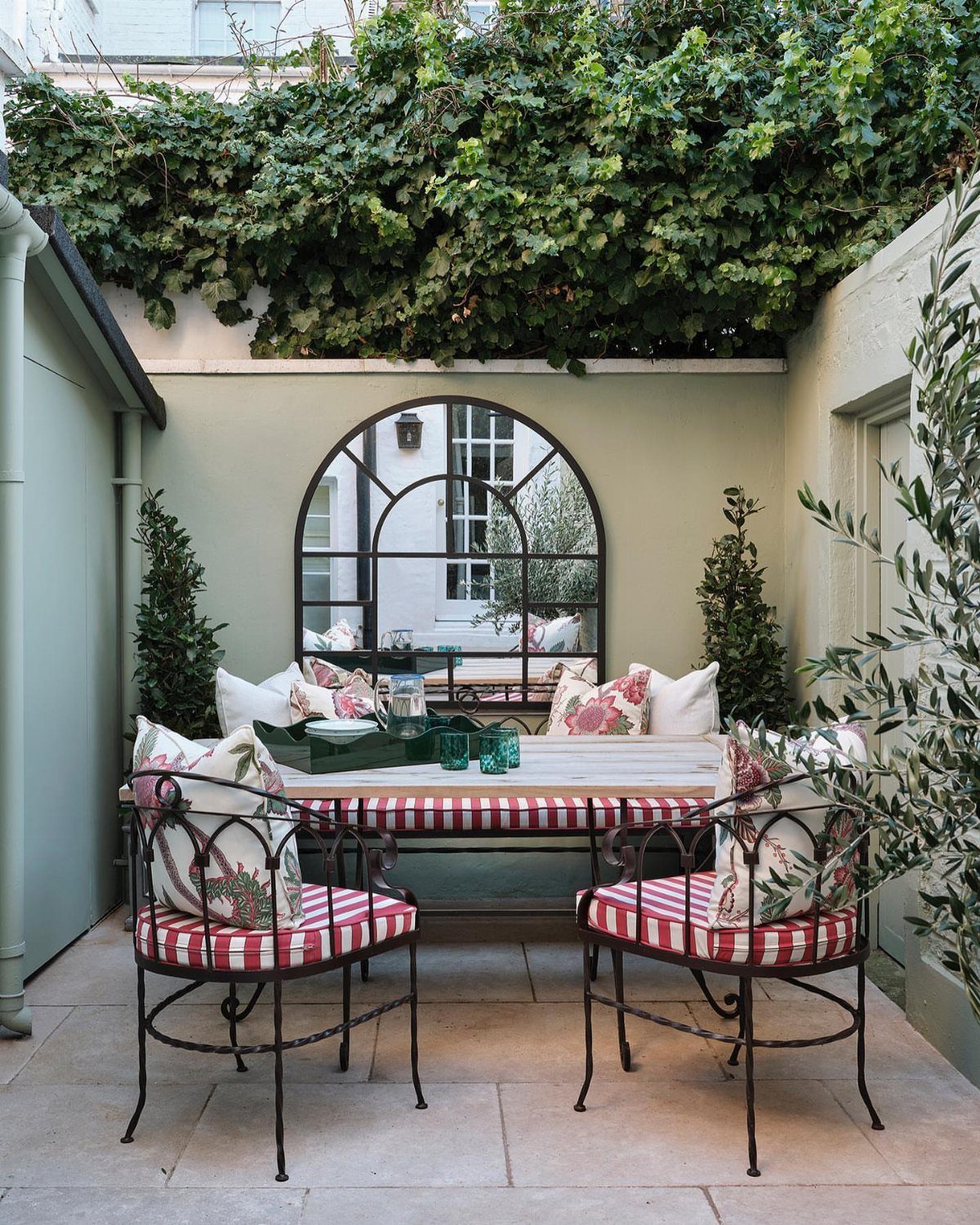
An arched mirror with window-pane mullions hung on a patio wall reflects the planting opposite and doubles the sense of depth.
I would fix it with a bracket rated for outdoor wind load, not an interior hook; glass against stone in a gust is expensive.
The frame needs a true outdoor finish or steel will rust and timber will swell at the joints. Place it where it catches greenery, not the neighbor’s windows.
14. Gravel Courtyard with Wooden Deck
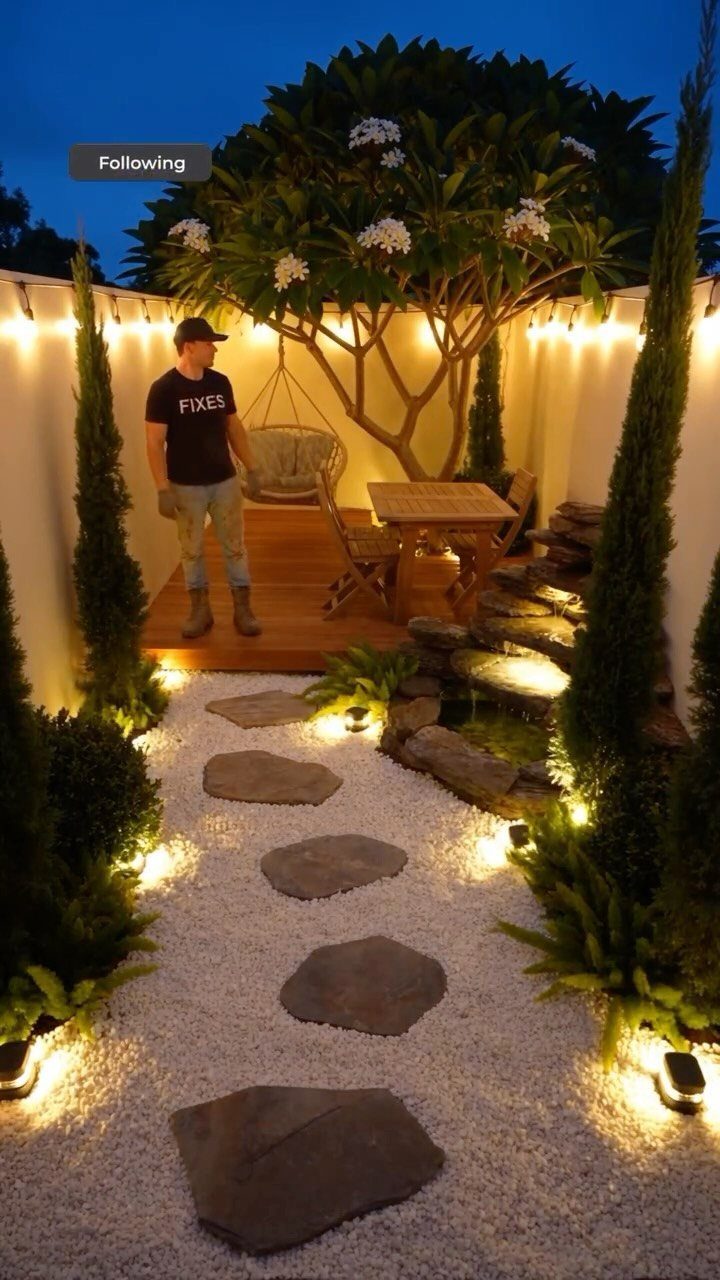
A raised timber deck set into one corner gives level dining space; white gravel handles the rest without the mud.
I would set the deck on posts with concrete footings, not skids on gravel, so it stays flat after wet seasons.
The gravel wants edging to contain it; steel strip or a buried course of brick keeps the boundary crisp. Step lighting along the deck stair and a small fountain in the gravel courtyard extend the hours without adding size.
15. Artificial Turf with LED Lighting
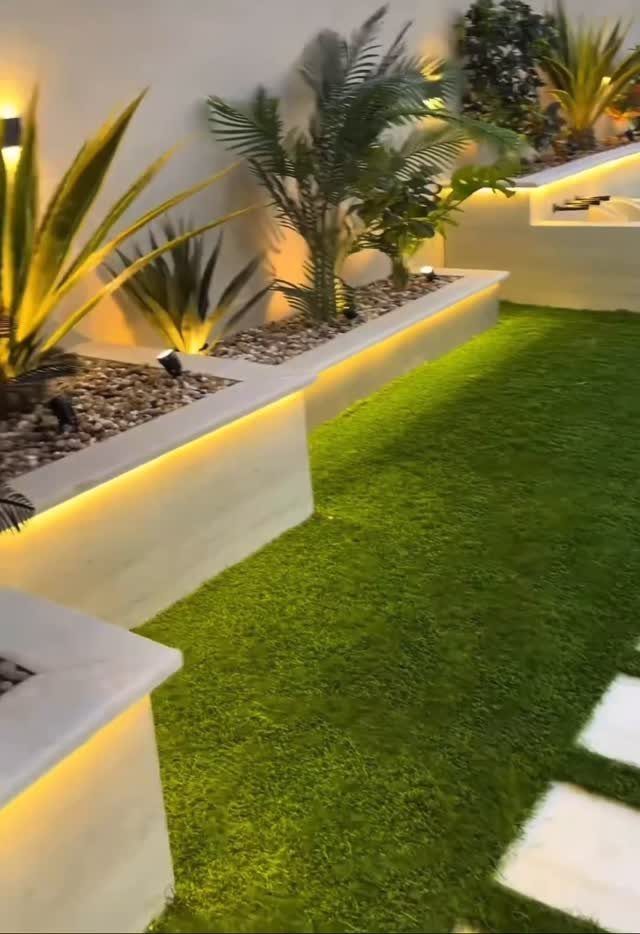
Warm LED strips tucked under the lip of raised concrete planters wash upward through tropical foliage after dark.
The turf itself needs infill that drains; piled on clay, it puddles and smells. I would run the lights on low-voltage cable with a transformer sized for the total wattage, not individual solar cells that fade before the evening ends.
The concrete planters need weep holes or root rot follows the first month of summer rain.
16. Potted Plant Privacy Border
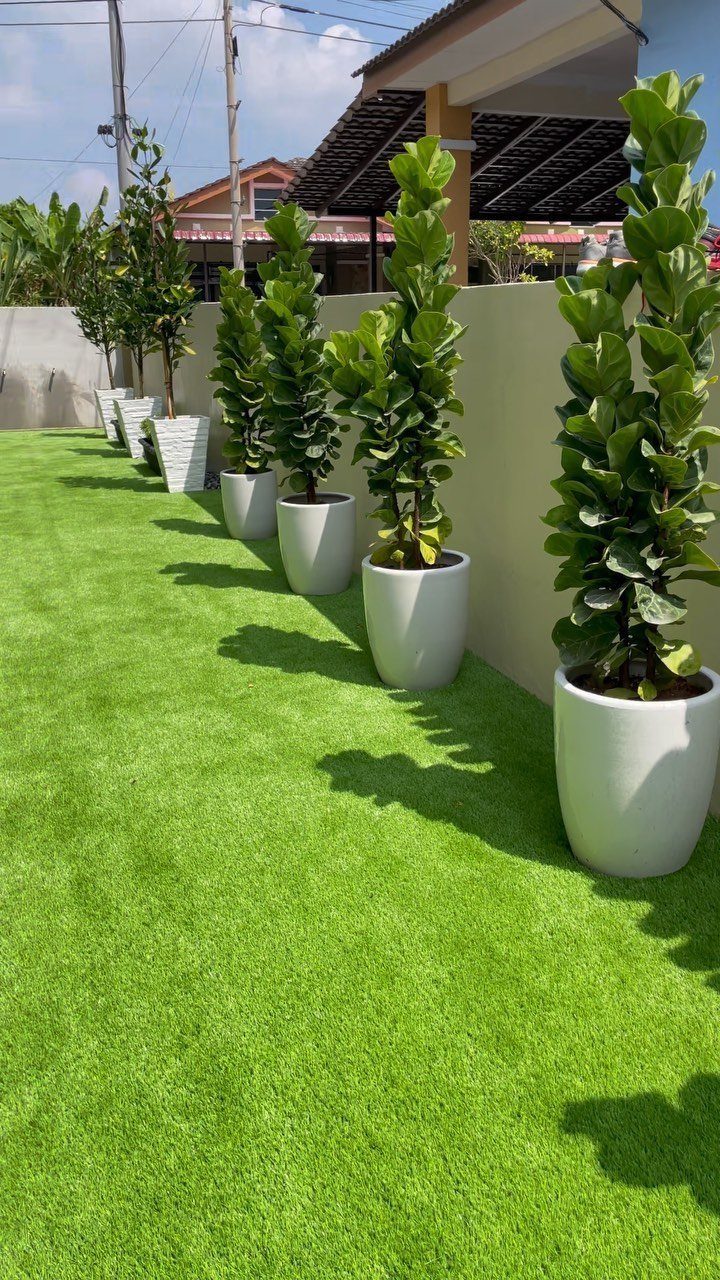
Tall fiddle-leaf figs in matching white cylinders line a wall and read as architecture, not clutter.
I would check that the planters drain; standing water rots these trees from the base up. On artificial turf the weight concentrates, so a broad base plate spreads the load and stops the pot from sinking or tipping.
The look depends on repetition; one different pot or one shorter plant breaks the rhythm and the whole row looks accidental.
17. Cozy Outdoor Rug and Lounge Seating
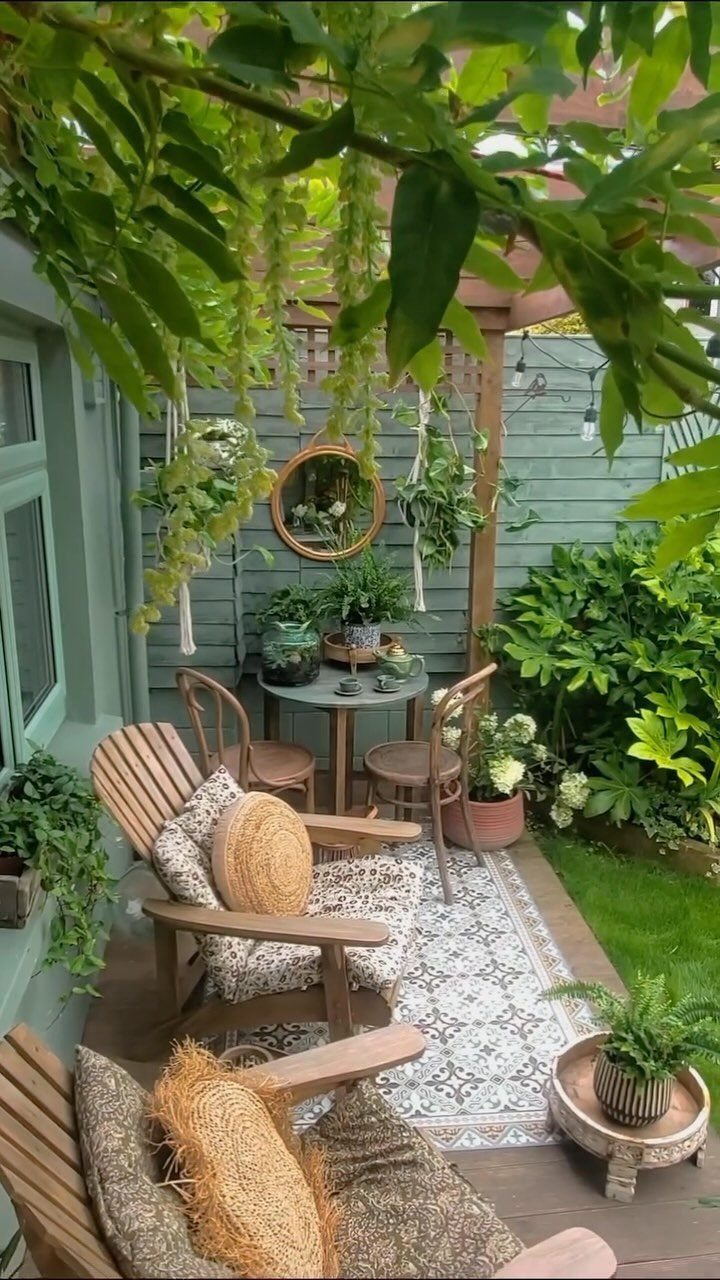
A patterned rug under wooden armchairs with cushions turns a fenced corner into a room. I would choose a rug labeled for full outdoor exposure, not just "covered patio," or mildew sets into the backing by August.
The wood wants a penetrating oil finish, not film-forming polyurethane that peels in sun. A round mirror on the fence behind catches light the same way the mirror entry does, but here it sits among greenery rather than replacing it.
18. Narrow Flower Bed Border
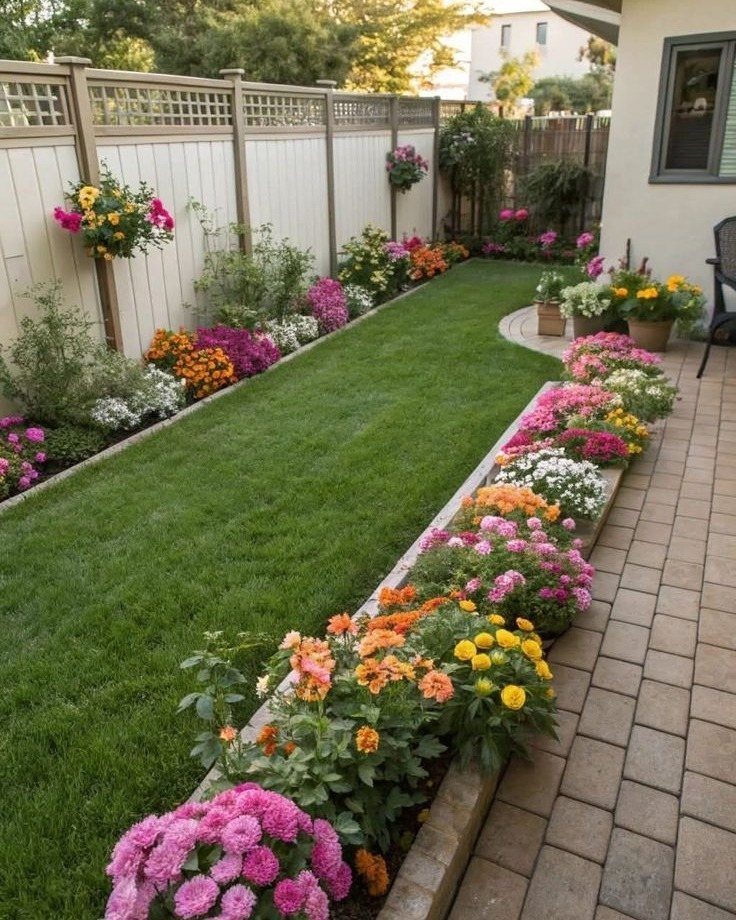
Slender beds running both sides of a narrow lawn strip give color without stealing usable width.
I would keep the bed shallow enough to reach across from the grass; wider and maintenance means stepping on the grass, which wears a path.
Mulch between plants cuts weeding but should stop below the crown or stems rot. A paver edge against the lawn keeps grass from migrating in and saves the annual re-cutting of a ragged boundary.
Small gardens have a lot more potential than you may realize. Whether dealing with a long narrow space behind a vintage home, a cramped backyard that lacks privacy, or a shabby garden at the rear of a brownstone the possibilities are endless.
19. Compact Metal Bench Seating
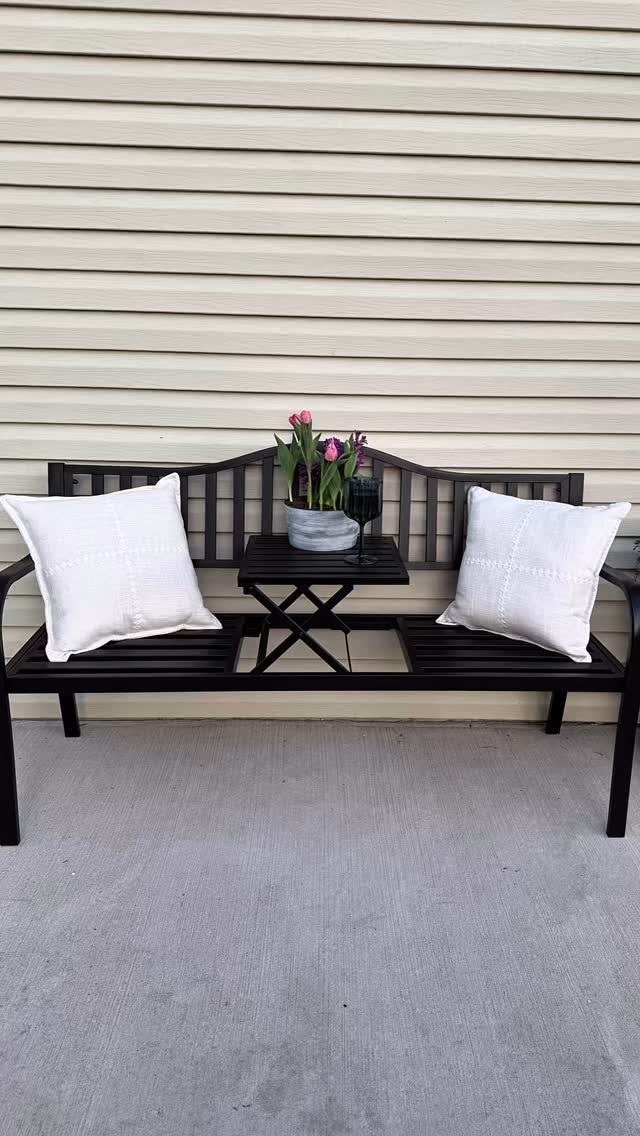
A black metal bench with a hinged center leaf that flips up to a table surface turns one piece of furniture into two. The maker says it seats three, or two with drinks between them.
I would set this against a wall or fence, since the back is unfinished and the sight line runs one way.
Light cushions in a light color stay cooler than dark vinyl in July because metal conducts heat; I would stick with white or pale gray fabric if I had my pick.
The narrow footprint, maybe 24 inches, leaves walkway clear where a full table and chairs would crowd.
Check that the wall behind can take the lean; vinyl siding flexes and marks. A concrete paver or two under the legs stops sinking into mulch or lawn.
Planning Your Space Wisely
Measure the yard before buying anything. I would pace the length and width, then transfer that to a sheet of graph paper at 1 inch to 4 feet so furniture cuts to scale sit where real pieces will go.
Know where the property line sits, where the utility lines run, and where the driveway and existing walks already are. That base plan keeps the fire pit legal and the pergola posts out of the cable run.
In a small yard, every inch of scale actually matters, more than it ever would in a sprawling lawn where a mistake just gets swallowed up. Frame the house with compact tree shapes that do not swallow the roofline.
Balance the planting so one corner does not carry everything.
A focal point helps: the tiered stone planter, the recirculating stream, the fire bowl. Pick one, sized to the space, and let the rest support it.
Choosing the Right Plants
Native plants need less water and less fuss than imports pushed outside their range.
Climbing plants on a fence or trellis add green and privacy without subtracting from the usable yard.
Mix textures, colors, and bloom times so something carries the bed when the spring flowers finish. Space for the size it will be, not the pot it came in.
Seasonal Changes and Their Impact
A small backyard asks for different work in different months. In warm seasons, the raised beds want water more often than lawn because dark soil drains faster and heats more.
Winter means checking what sits above grade. The stone planter shifts with frost if the base course rests on bare soil; the pergola posts set in concrete below frost depth stay plumb.
I would drain and store the hammock cushions before the first freeze, and cover the wicker seating if the pergola roof leaks.
The recirculating stream needs the pump pulled and reservoir emptied where hard freezes come. Solar pumps already quit when days shorten, so the switch to corded or the full winterize happens earlier.
LED string lights handle cold fine; incandescent filaments weaken faster with temperature swing.
Frequently Asked Questions
How do I make a small backyard look bigger?
I would run one surface across the entire floor, paint the fence a dark color, and train greenery upward on a trellis or in vertical planters instead of letting it spread outward into the space you actually use.
An arched mirror hung outside reflects whatever is planted opposite it, and the doubled image adds depth you would not get from the planting alone.
A single visual anchor carries more perceived size than scattered features; I would pick one clear function and let every element support it.
What is the rule of 3 in landscaping?
Group plants in odd numbers, usually three, because the eye reads an odd grouping as a single natural cluster rather than a counted pair with an extra.
One different pot or one shorter plant breaks the rhythm and the whole row looks accidental.
Can AI design my backyard for free?
Some AI tools can generate a layout from a photo and your dimensions at no cost, though the free tier usually limits revisions or export quality.
What is the cheapest way to landscape my backyard?
Do the work yourself with native plants that need less water and less fuss than imports pushed outside their range.
The real savings come from knowing your climate and picking what grows without heroic effort, not from buying the cheapest pot on the shelf.





