
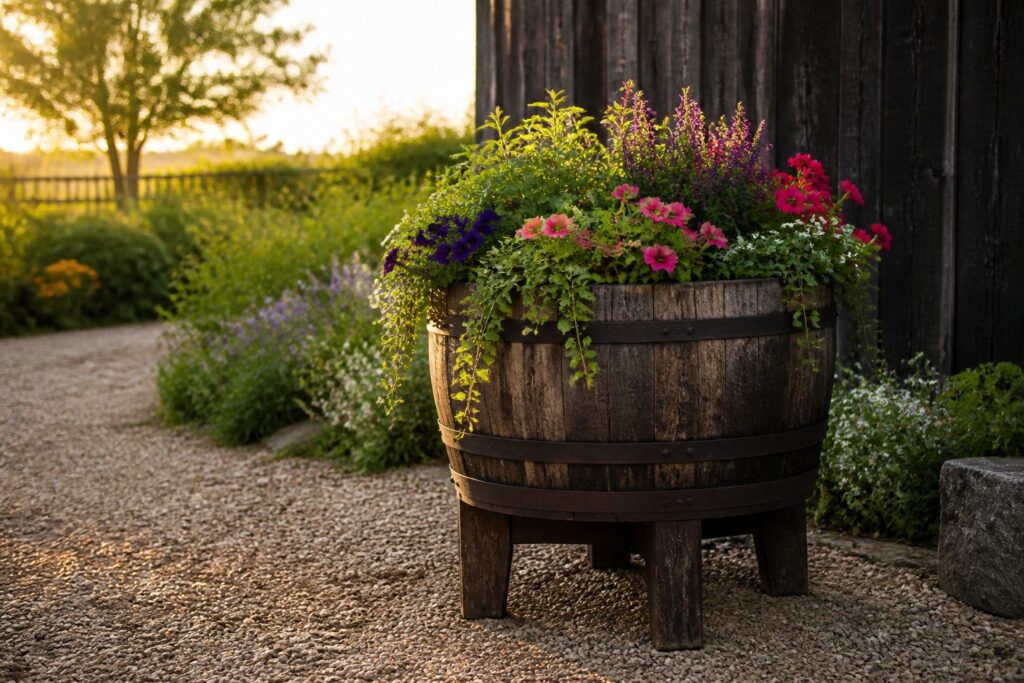
A raised wooden barrel planter is a half-barrel mounted on legs or set on the ground, filled with soil and planted like any large container.
The raised version sits 30 inches high, which saves your back but weighs about 50 pounds empty and runs roughly $199. Oak holds up longest; the charred interior from whiskey aging actually helps the wood survive outdoors longer than untreated alternatives.
[link-whisper-related-posts]1. Choose the Barrel
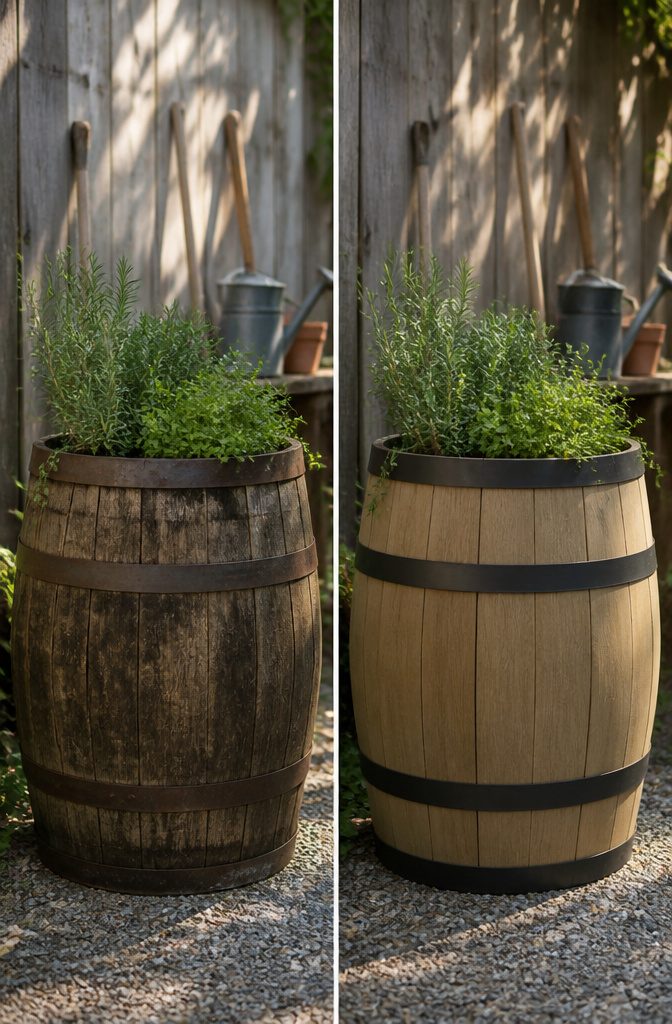
Half barrels turn up at garden centers, flea markets, and big box stores like Home Depot or Lowe’s.
The first thing I check is whether the wood has gone dry and shriveled; if it has, the staves loosen and the whole thing falls apart faster than you’d think.
A barrel that still feels solid and smells faintly of its original contents is the one worth carrying home.
Oak holds up longest against weather and rot, which is why real whiskey barrels are worth the hunt.
The charred interior that whiskey makers use to release oak flavor into the spirit also helps the wood survive outdoors longer. Wine barrels carry a cleaner, lighter look if you prefer that aesthetic, though functionally they behave much the same.
Faux wood barrels exist too, sold at places like Tractor Supply. They’re lighter, cheaper, and easier to move around a patio or balcony.
The visual difference is real, though; up close the texture reads as plastic, and they lack the irregular grain and metal banding that make actual barrel planters feel like found objects rather than garden-center purchases.
For a weekend project on a tight budget, they’re workable. For the look that stops someone walking past, I’d pick real oak every time.
2. Drill Drainage Holes
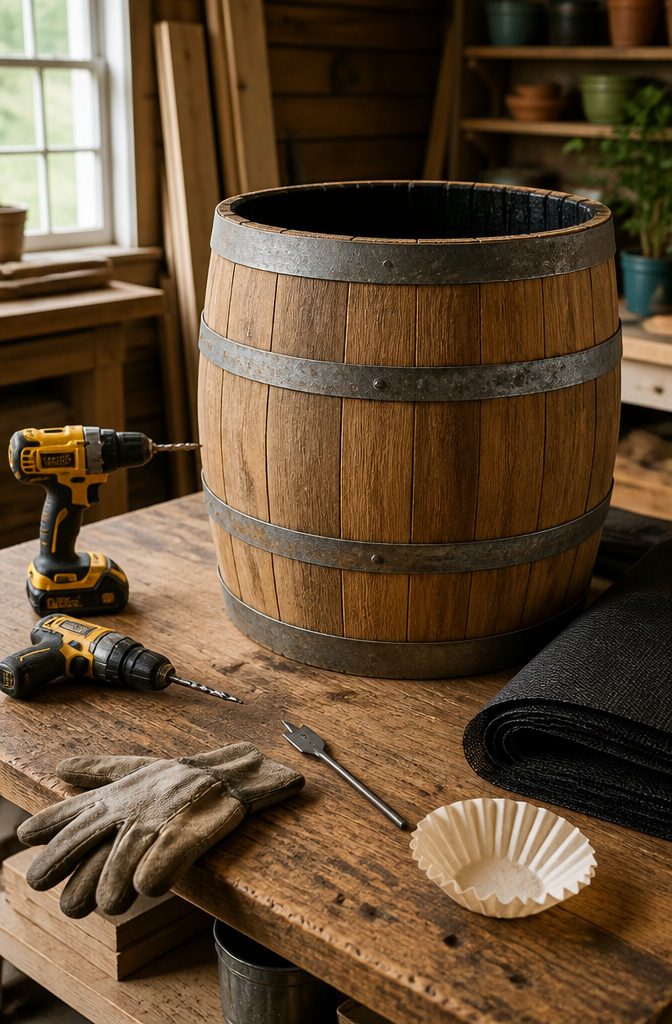
A half barrel from Home Depot or a local nursery sometimes arrives without drainage holes, and that gap is what turns a planter into a root-rot trap.
I would drill several holes at the bottom before adding any soil, spaced so water exits evenly across the base rather than pooling in one corner.
Reach for a larger spade or paddle bit and test on a scrap first; the hole only needs to be big enough that water runs free, not so large that soil washes through with every watering.
Once the holes are drilled, I lay a coffee filter or a scrap of landscape cloth over each opening.
Either one lets water pass while holding the potting mix in place, and both are cheap enough to replace when they eventually break down.
I skip the plastic liner some tutorials suggest. It traps moisture against the wood, which speeds rot rather than preventing it, and I would rather not have synthetic material pressed against soil where I plan to grow food.
3. Add a Base Layer
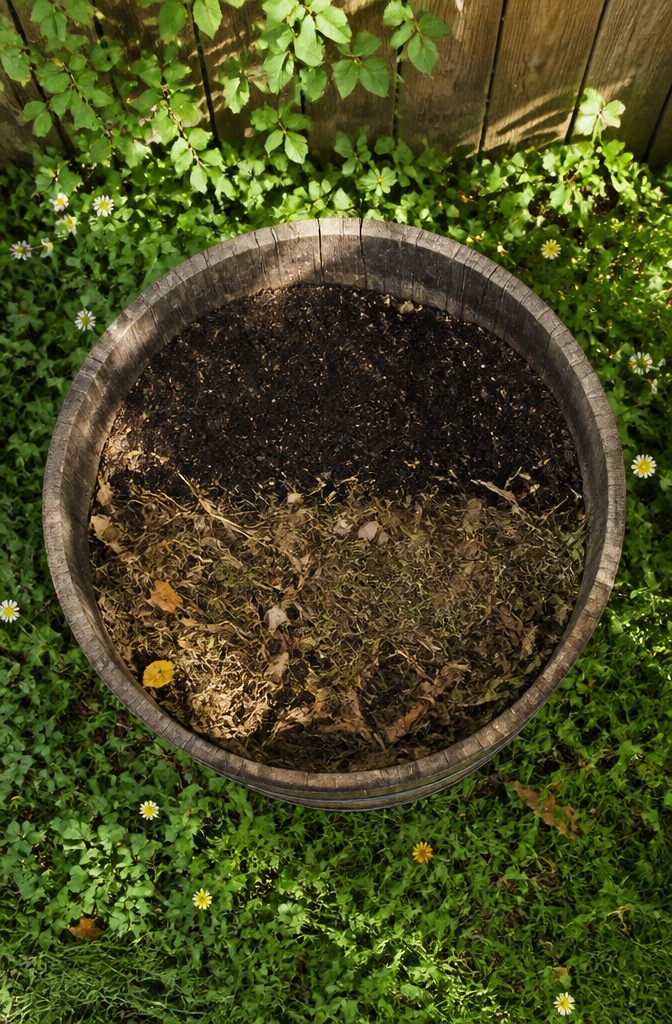
A raised wooden barrel planter holds more soil than most people expect, and filling the whole thing with bagged potting mix gets expensive fast.
The bottom third is where I put the organic stuff that was already in the yard anyway: fallen leaves, small twigs, grass clippings from the last mow, the stems and leaves left after deadheading.
It breaks down slowly, keeps the structure open for drainage, and shaves real money off the soil bill without starving the roots above it.
What I would skip entirely is the advice that still circulates about stuffing the bottom with plastic bottles, packing peanuts, or empty nursery pots.
That trick lightens the load, but it does not lighten it in a way that helps the plant. Those materials sit there creating air pockets where water pools and roots rot, and they never decompose into anything useful.
Organic garden debris does the same weight-reduction job while it actually feeds the soil structure as it breaks down. The barrel still drains, the roots still reach, and you are not fishing plastic out of the dirt three years later.
4. Fill With Potting Mix
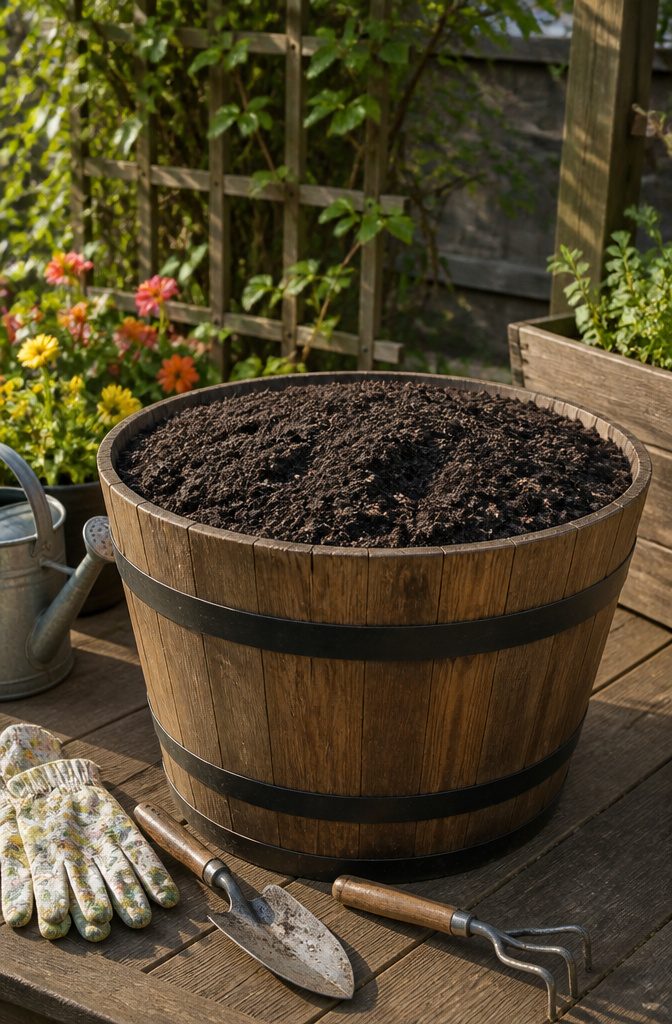
A raised wooden barrel planter needs high-quality potting mix matched to the specific plants you are growing, not generic garden soil scooped from the yard.
Garden soil compacts too easily in a confined barrel, choking roots and blocking the drainage holes you drilled two steps back. Potting mix is formulated to stay light, hold moisture without waterlogging, and feed plants from day one.
The temptation is real: fill the bottom with empty bottles, packing peanuts, or other junk to cut the soil bill.
Skip it. That trick creates perched water tables and unhealthy root zones.
If the barrel sits deep and potting mix costs sting, organic garden debris like composted leaves or spent plant trimmings work as honest filler lower down, where roots from most annuals and herbs will not reach.
Self-watering is an option worth weighing. An Olla buried in the mix releases moisture slowly and cuts daily watering to occasional refills.
The upfront price stings, but you get years out of it if you handle the clay carefully through winter storage. For weekend gardeners who travel or forget, consistent soil moisture beats heroic rescue watering.
5. Plant Your Selections
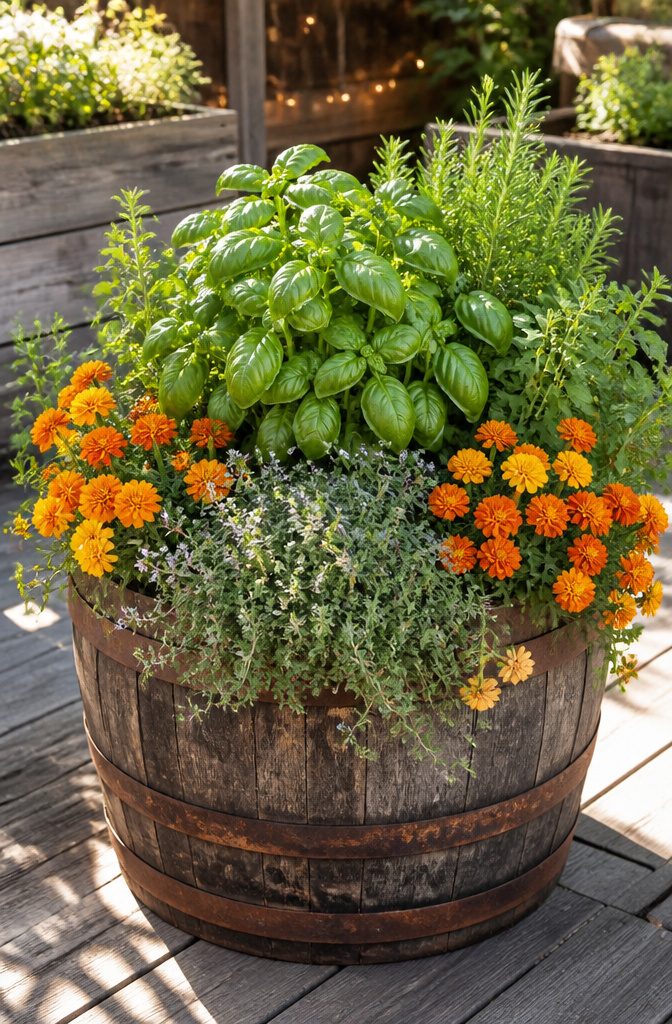
A raised wooden barrel planter at roughly 26 inches wide and deep gives you enough soil volume for a determinate tomato, a couple of pepper plants, or a compact cucumber trained up a small trellis.
I would skip vining varieties that sprawl; the barrel looks generous but footprint matters once the foliage fills out.
Herbs are where these planters earn their keep. Basil and thyme share the same sun but want different moisture, so I plant basil toward the center where water collects and thyme at the edge where it drains faster.
The setup keeps both alive without the fuss of separate pots.
For flowers, marigolds handle the heat that builds in wooden walls, and petunias spill over the rim to soften the barrel’s bulk.
A mix of edible and ornamental works too: Swiss chard with basil and a ring of marigolds is a combination I have seen hold up well.
The 30-inch height with legs, or 16 inches without, is the detail that decides this for anyone with a stiff back.
Bending to ground level gets old fast. The planter weighs about 50 pounds empty, so position it before you fill it; you will not shift it later without help.
6. Water and Maintain
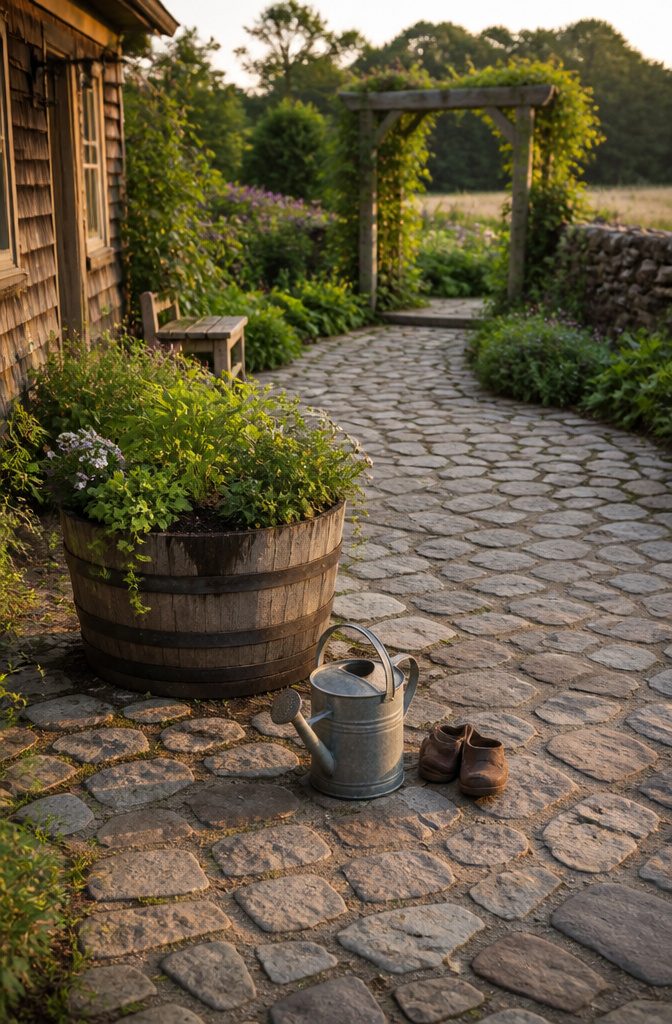
Watering a raised wooden barrel planter works best when you keep the soil consistently damp rather than cycling between soaked and dry.
The oak staves swell when they’re moist, tightening the joints and helping the barrel hold its shape over time.
Letting the soil level drop too far exposes the interior wood to air that dries it out faster, which is where most planters start to split.
I top the soil off once or twice a season as the mix settles, using a quality potting blend rather than garden debris that hasn’t broken down.
A self-watering olla buried in the center cuts daily watering to a weekly refill and keeps moisture steady at the roots, though the upfront cost runs higher than a standard drip tray.
Fertilize on the same schedule you would any container, since barrel volume limits how much nutrition the soil holds.
The charred interior from the barrel’s first life won’t harm vegetables; the National Gardening Association confirms there’s nothing to leach out but residual whiskey character.
Real oak needs almost no protective treatment. The base goes before the staves do, so setting the barrel on paving tiles that support the rim, not the center, adds years without any coating.
The gray weathering that comes with age is part of the look; I wouldn’t fight it. Minimal maintenance keeps oak barrels lasting many years, and I’ve never found a cold-weather protocol that improves on that simplicity.
What Raised Means for Your Back
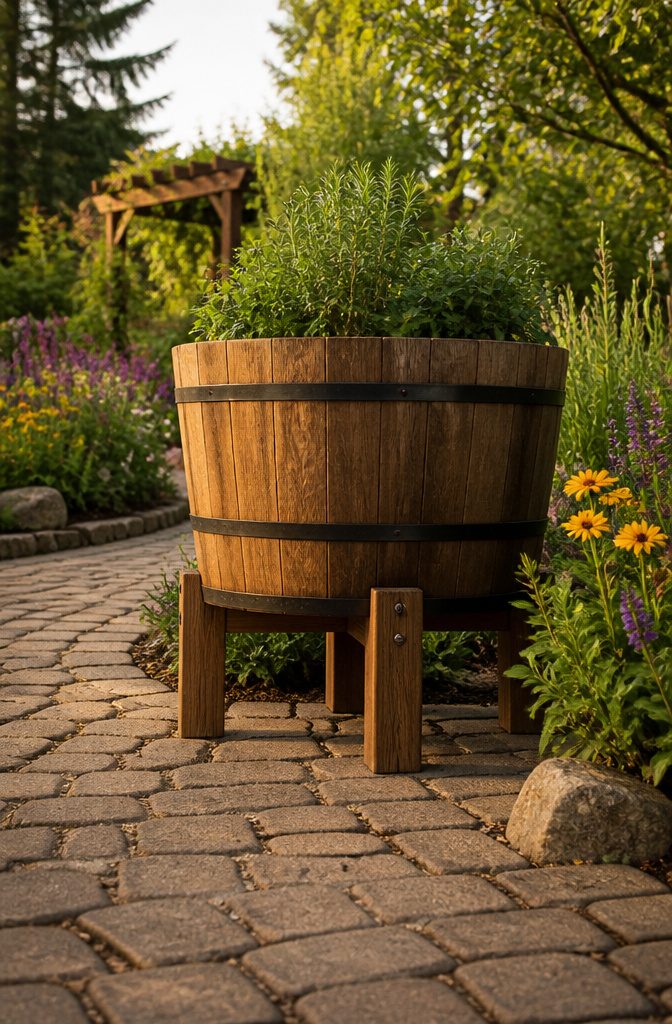
A raised wooden barrel planter sits roughly 30 inches high with its legs, compared to about 16 inches for a half-barrel left on the ground.
That 14-inch difference is where the back relief lives. At 30 inches, the soil surface hits near thigh level for most adults, so deadheading herbs or pulling a radish becomes a matter of reaching forward rather than folding at the waist.
The trade-off shows up in two practical numbers.
Weight runs ~50 lbs, which is manageable enough to empty and move between rentals but heavy enough that two hands are safer than one. Price lands around $199, roughly double what a basic ground-level barrel costs.
For a renter who gardens on weekends, I would take the raised version every time; the posture improvement compounds over a season, and the legs lift the oak clear of standing water that rots the base.
A first-home owner planning to stay put might feel differently if budget is tight, though I would still argue the upgrade pays for itself in comfort by July.
Barrel Materials Compared
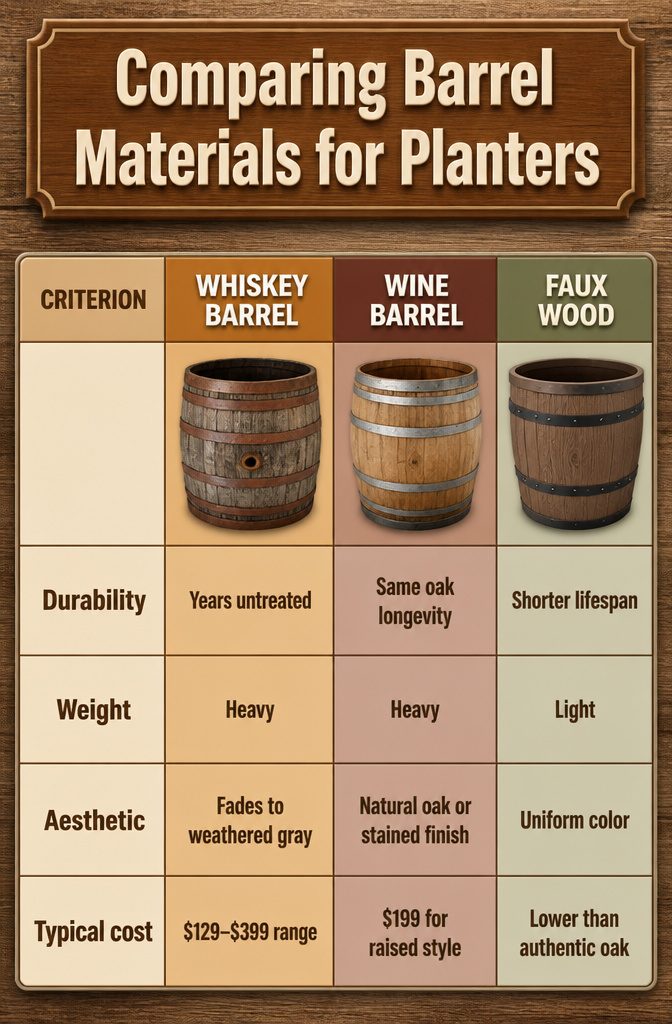
Authentic oak barrels weather for years with almost no upkeep; the staves swell when damp and seal themselves tighter, and even untreated wood fades to a soft gray most gardeners prefer.
Faux wood gives up that longevity for lighter weight and a lower price, though it will never age the same way.
A raised wine barrel planter in reclaimed oak runs about $199, while standard half-barrel garden pots start closer to $129 and climb past $399 for specialty finishes.
| Whiskey barrel | Wine barrel | Faux wood | |
|---|---|---|---|
| Durability | Years untreated; base may soften if left on soil | Same oak longevity; charred interior resists rot | Shorter lifespan; UV damage likely |
| Weight | Heavy | Heavy | Light |
| Aesthetic | Fades to weathered gray | Natural oak or stained finish | Uniform color; no aging |
| Typical cost | $129–$399 range | $199 for raised style | Lower than authentic oak |
For a planter you will move only once, I would pick authentic oak every time.
The weight is a one-time cost, and the material actually improves as it sits outside. Faux wood only makes sense if you need to shift the planter seasonally or you are buying on the tightest possible budget.
Creative Uses Beyond Standard Planting
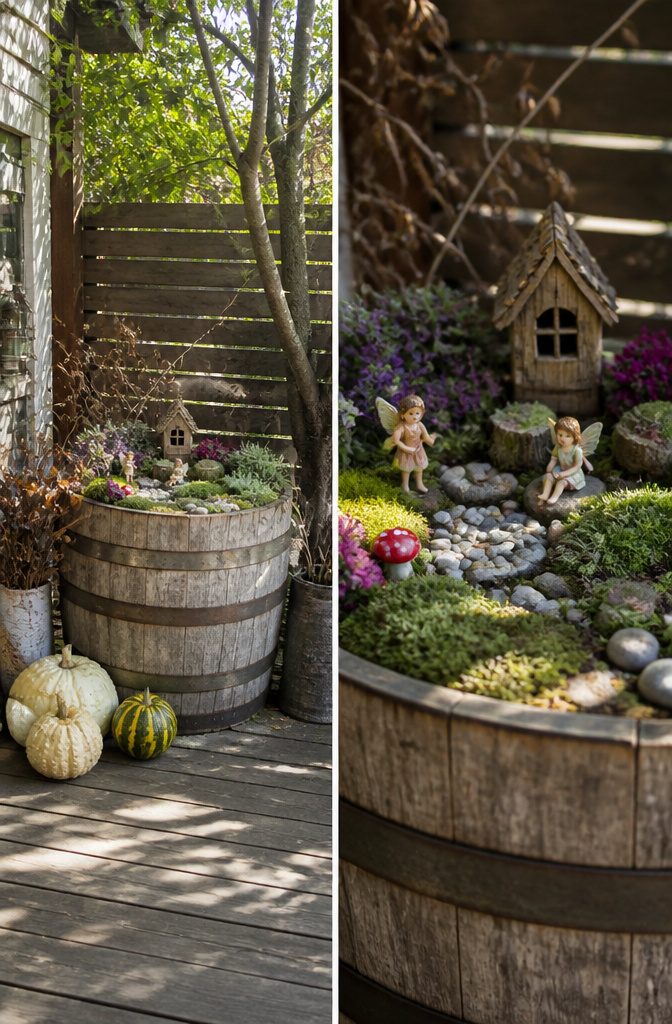
A raised wooden barrel planter earns its keep when your lease or your mood changes. I would rather own one versatile piece than store three seasonal ones.
- Fairy gardens sit at a height kids notice without bending down, and the barrel’s curve hides the edge of a shallow soil tray so the scene looks self-contained. Move it to a patio table when the weather turns; the weight is manageable empty.
- A small water feature needs a liner and a cheap solar pump, nothing more. The wood disguises the hardware better than a plastic tub, and the height keeps leaves from falling straight in. Drain it before frost or the ice splits the staves.
- Decorative displays, dried branches in winter or gourds in fall, need no soil at all. A false floor of scrap wood 6 inches down saves you filling the whole depth.
Renters get the most from options that store flat or serve double duty. A barrel that holds annuals in June and a pumpkin stack in October justifies the floor space year-round.
Repurposing and Sustainability
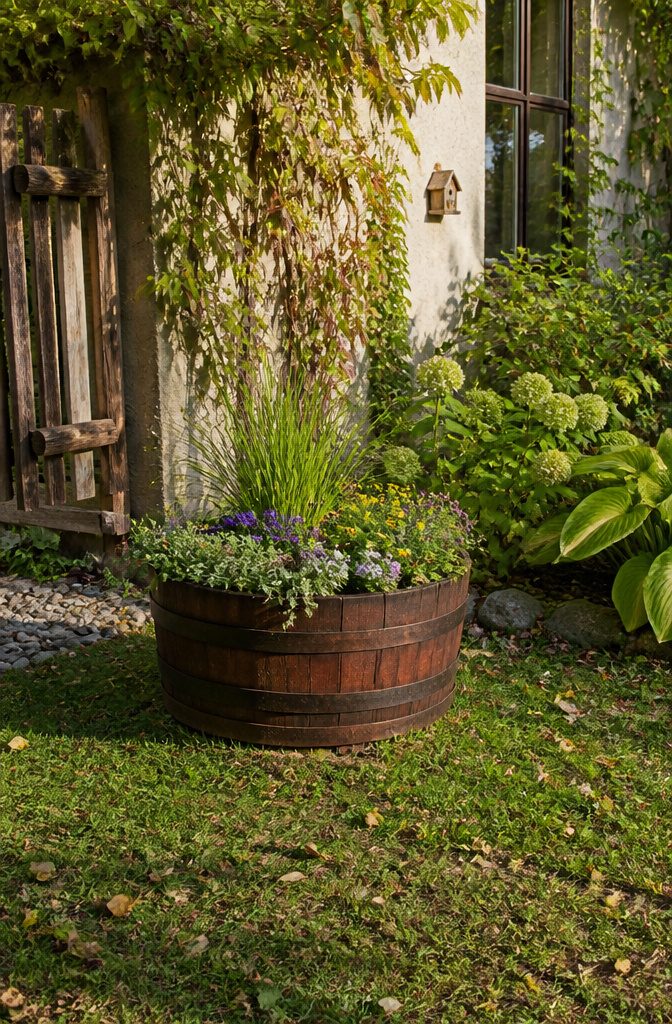
Repurposing an old barrel into a raised planter keeps material out of the waste stream and gives it a second working life.
I like that the reclaimed oak models carry the burgundy stain from actual wine aging; it is a detail you cannot replicate with new wood, and it tells you the barrel already served a long career before it reached your patio.
The sustainability claim is modest but real.
A reclaimed half barrel mounted on stave legs uses the full structure rather than discarding the curved staves, and the galvanized steel bands that held it under pressure stay in place instead of becoming scrap.
At roughly 50 lbs finished weight, you are moving solid material that would otherwise decompose or burn.
I would not overstate the environmental math. One barrel planter does not offset your garden’s footprint, and the shipping weight to the continental U.S. still carries a fuel cost.
But choosing reclaimed over new-cut cedar or plastic resin sends one less item to landfill, and the weathered look needs no stain or sealant to read as intentional.
For a project you will see daily, that honesty in the material matters more than a label.
Frequently Asked Questions
What types of plants can I grow in a barrel planter?
Vegetables, herbs, and flowers all work well. A half barrel at roughly 26 inches wide handles determinate tomatoes, peppers, compact cucumbers, basil, thyme, marigolds, and petunias.
Match the plant size to the soil volume and keep thirsty plants toward the center while placing drought-tolerant ones at the edge where water drains faster.
How do I prepare a barrel planter for planting?
Drill several drainage holes in the bottom first, then cover each with a coffee filter or scrap of landscape cloth to block soil without trapping moisture.
Fill the bottom third with organic yard debris like leaves and grass clippings, then top off with quality potting mix matched to your specific plants. Skip plastic liners; they hold moisture against the wood and speed rot.
What maintenance do barrel planters require?
Keep soil consistently damp so the oak staves swell and seal themselves, top off settled soil once or twice a season, and fertilize on the same schedule as any container.
Setting the barrel on paving tiles that support the rim rather than the center adds years to the base. Real oak needs almost no protective treatment; the gray weathering that comes with age is part of the look.
Are wooden barrel planters good?
Oak barrels hold up for years with minimal upkeep, and the charred interior from whiskey aging actually helps the wood survive outdoors longer.
The 30-inch raised height saves your back compared to ground-level planting, and the rustic look improves as the wood weathers. The main downside is weight at about 50 pounds empty and a higher price than faux wood alternatives.
Should you line a wooden barrel planter?
No. A plastic liner traps moisture against the wood, which speeds rot rather than preventing it, and introduces synthetic material into soil where you might grow food.
Coffee filters or landscape cloth over the drainage holes do the actual job of holding soil in place while letting water escape freely.
How long do wood barrel planters last?
Real oak lasts many years with almost no treatment. The staves swell when damp and tighten their own joints, and even untreated wood fades to a soft gray most gardeners prefer.
The base goes before the staves, so raising the barrel on rim-supporting tiles rather than letting it sit flat on soil or concrete is the one move that noticeably extends life.
Does Home Depot sell a barrel planter?
Yes, Home Depot and similar big box stores carry half barrels in their garden centers, though availability varies by location and season.
Flea markets, local nurseries, and garden centers are other places to check. Real whiskey barrels are worth hunting for the oak durability, while faux wood versions cost less but read as plastic up close.





