
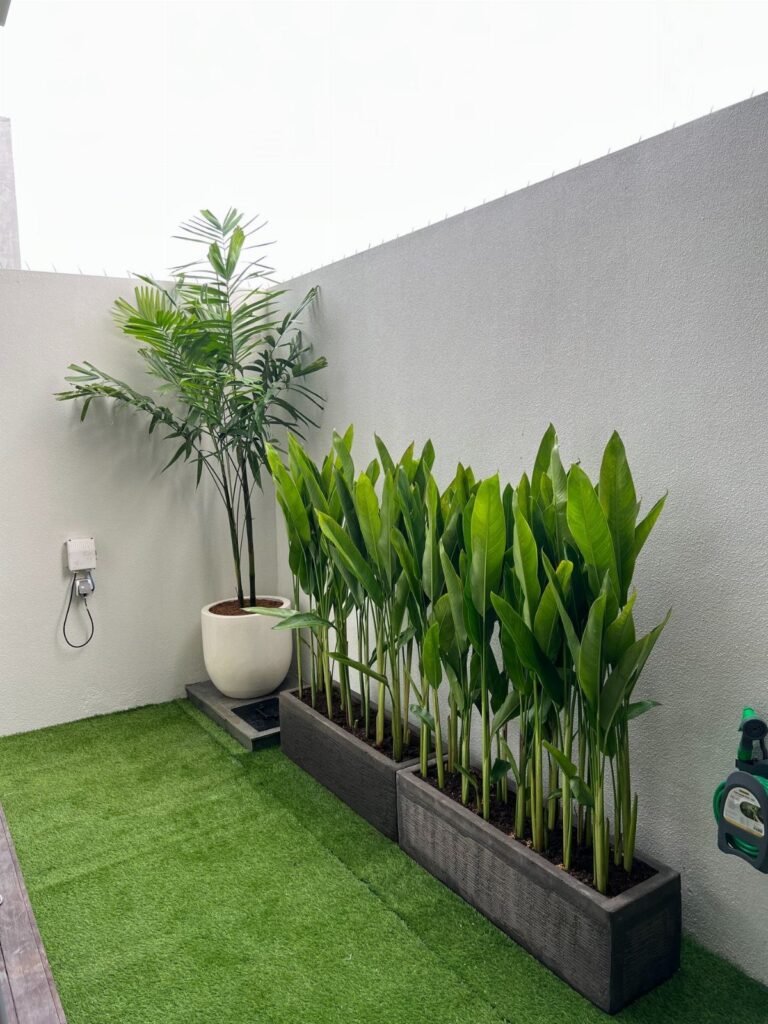
The setups below run from a basic rose transplant and starter pot to a ceramic planter and dwarf tree pairing that asks a real investment, and the deciding factor is not money but water.
How often you are willing to walk out with a can or hose, in July, when the heat sits heavy and the soil is dust on top, is what sorts these ideas into yours and not-yours.
The yucca in the first slot needs almost nothing for stretches at a time; the hydrangea several sections later can ask for water daily at peak summer, and that spread of demand is what the list is built around.
[link-whisper-related-posts]1. Low-Maintenance Outdoor Potted Plants
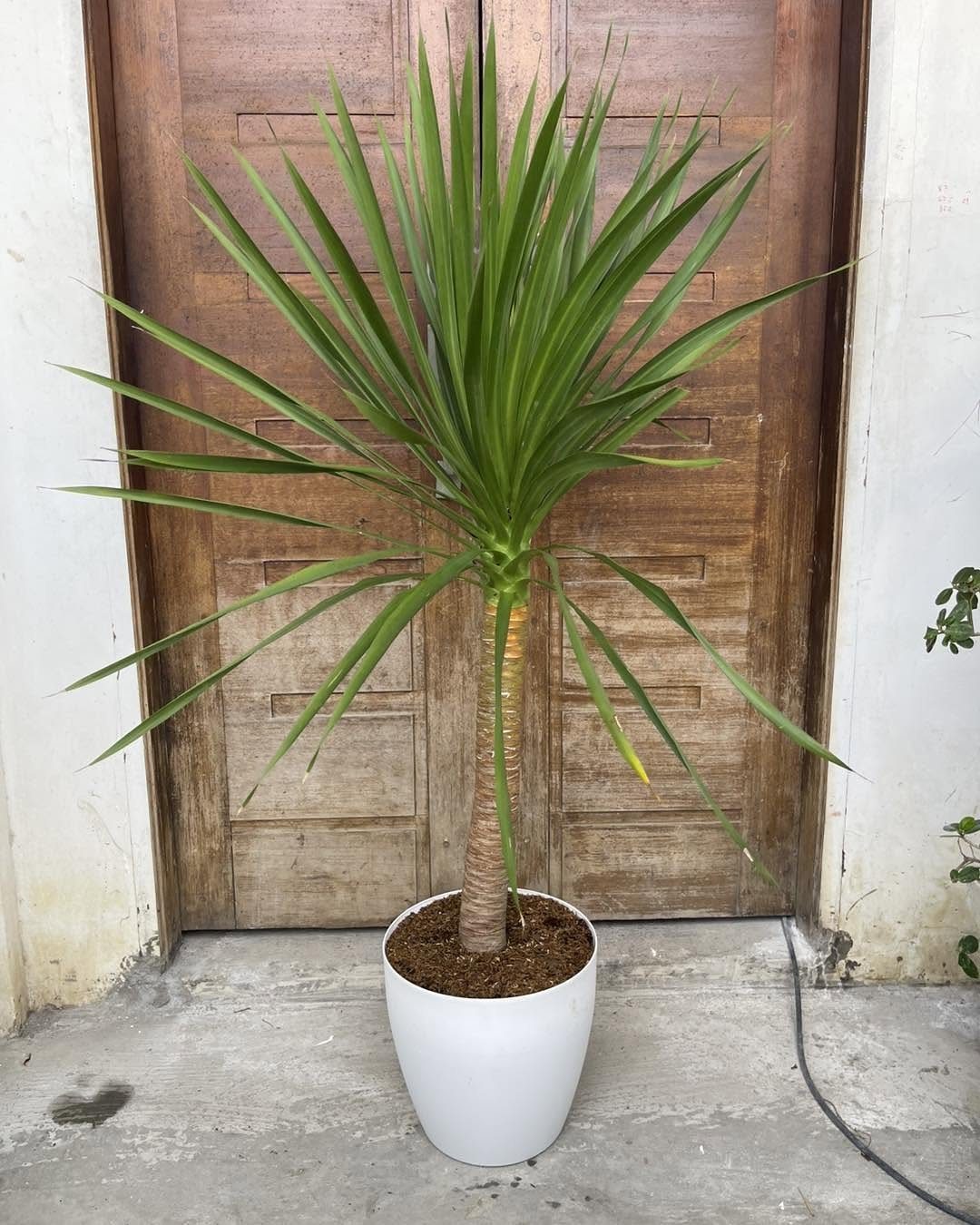
A yucca in a plain white planter against wood doors is about as forgiving as outdoor potted plants get.
I would check 2 things before buying: that your spot gets half a day of direct sun, and that the pot has a drainage hole, since yucca rots faster than it dries out.
Water when the soil feels dry past your first knuckle; in most climates, that means once a week in summer and almost nothing in winter.
2. Easy-Care Roses
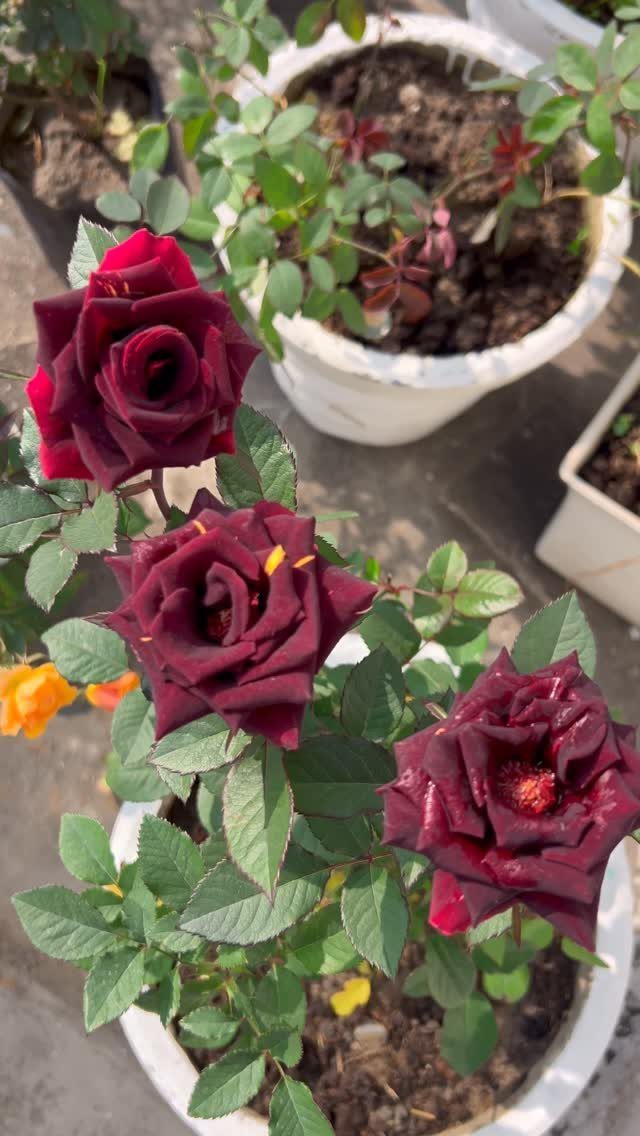
A modern shrub rose in a basic plastic nursery pot is the kind I would actually plant: same color range as the fussy varieties, none of the spraying.
Knock Out and similar cultivars were bred for this: no spraying, no deadheading required to keep flowering, and winter hardiness down to zone 5.
Check the tag for mature spread before you cluster pots; 3 feet is common, and crowding kills air circulation fast.
3. Fuchsia
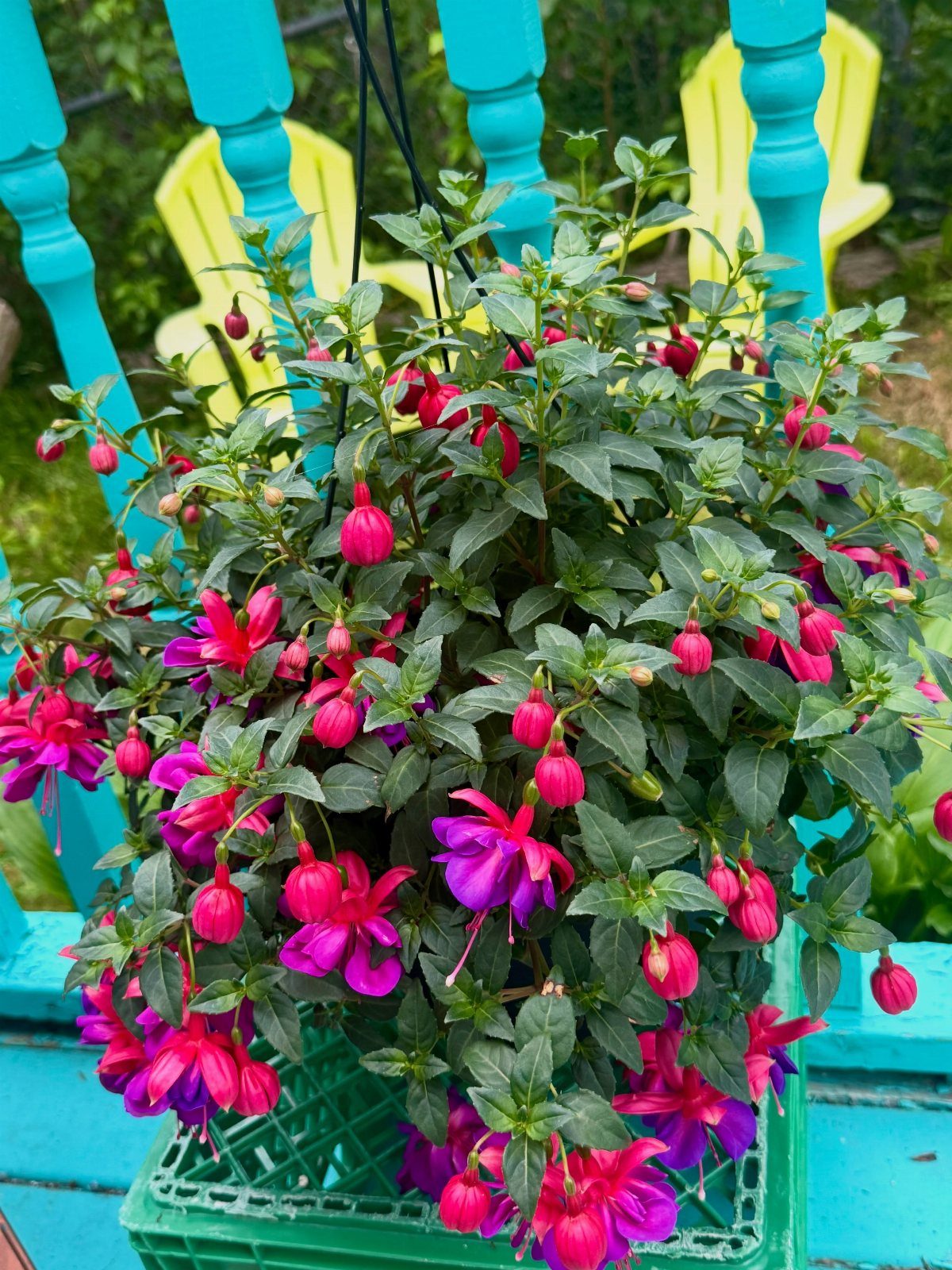
Fuchsia hangs best where mornings stay cool and the afternoon heat never gets brutal; above 85 it starts dropping buds and looking miserable.
That turquoise porch with the overcast light tells me this is a Pacific Northwest or coastal setup, not a place with scorching summer afternoons.
In hotter zones, I would keep fuchsia in dense shade and accept that it pauses in July and August. The basket itself is the decision point: plastic holds moisture longer, coir dries faster and needs daily checking.
4. Rosemary
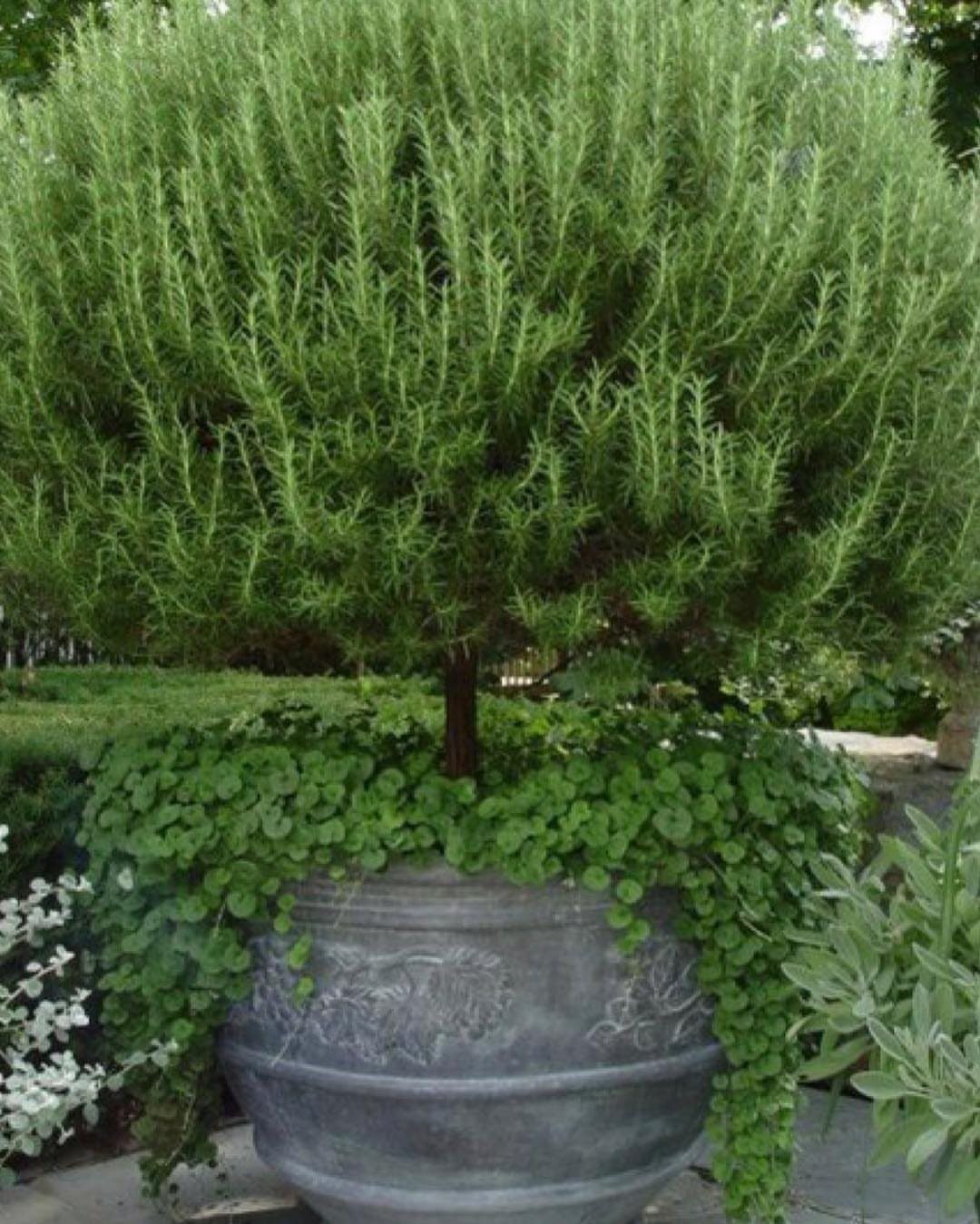
Rosemary trained into a sphere like this one wants the same treatment as a Mediterranean shrub: sharp drainage, full sun, and soil that dries between waterings.
The grey stone pot helps; it does not hold heat like black plastic, and the weight keeps a top-heavy plant stable.
I would use cactus mix cut with half regular potting soil, not straight potting mix, or the roots sit wet and rot.
5. Thrillers, Fillers, and Spillers Arrangement
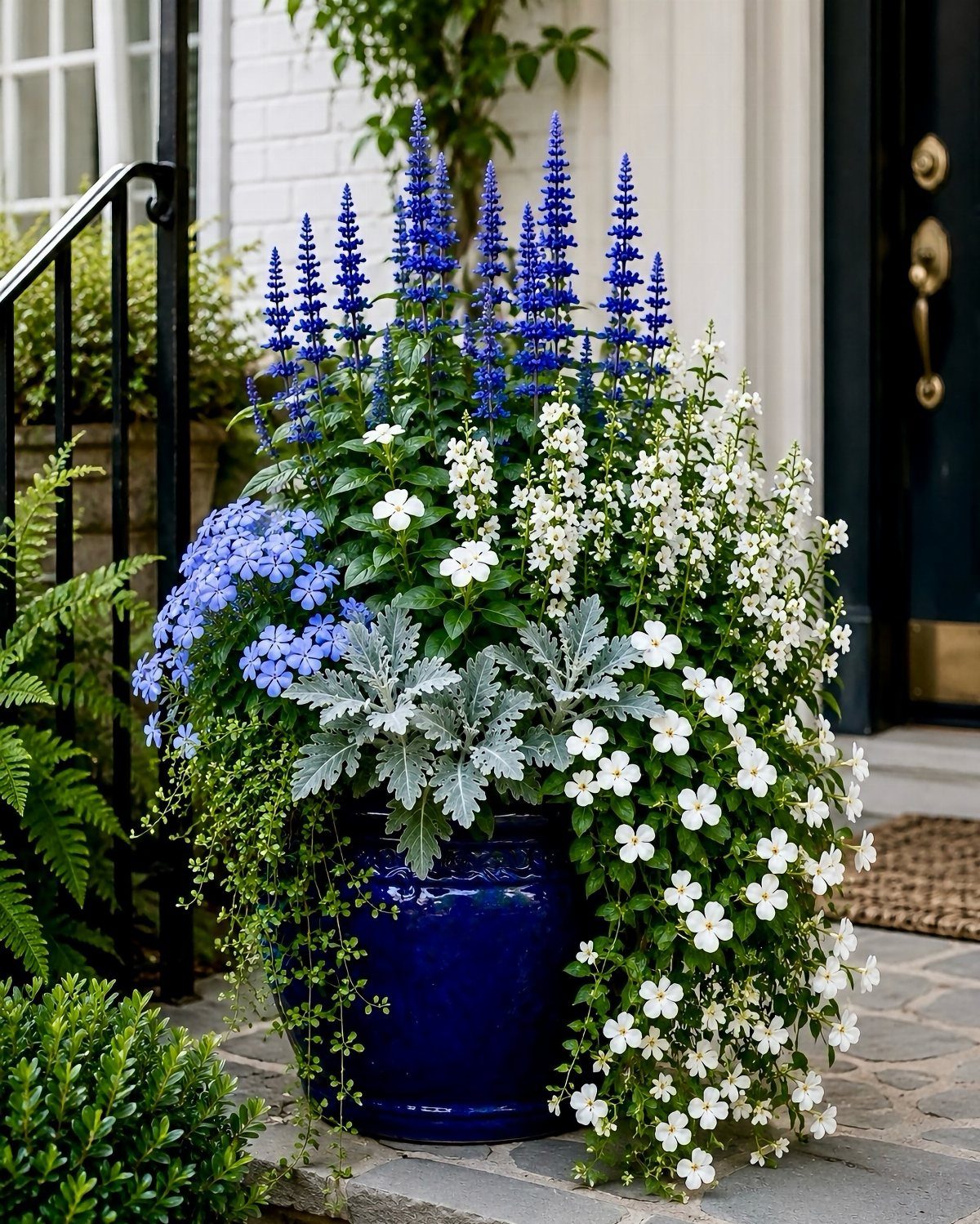
A thriller-filler-spiller arrangement in a glazed planter shows the formula clearly: tall purple salvia draws the eye up, dusty miller and white blooms fill the middle, and trailing stems break the rim to soften the edge.
I would pick the thriller first, since its height fixes the scale, then shop for fillers that handle the same light and water. The spiller is last and easiest to swap.
6. Hydrangeas in Containers
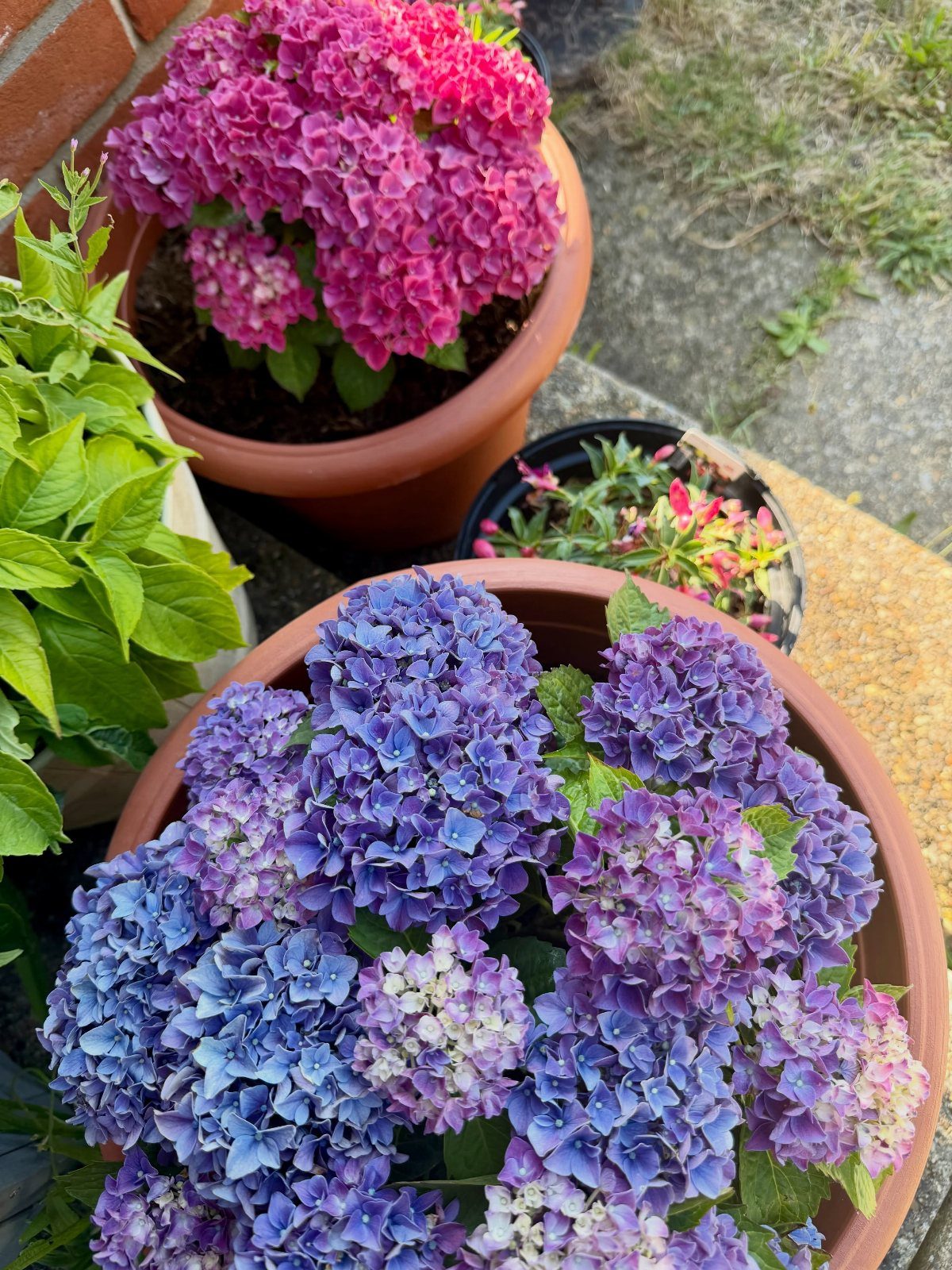
Hydrangeas in terracotta-colored plastic this size need water often, sometimes daily in peak summer, because their root ball is small against their leaf mass.
I would check the variety before buying: mopheads like these change color with soil pH, blue in acid, pink in alkaline, and that is a fun choice to make.
Smooth hydrangeas tolerate more sun and less water if you want lower maintenance.
7. Caladium in Containers
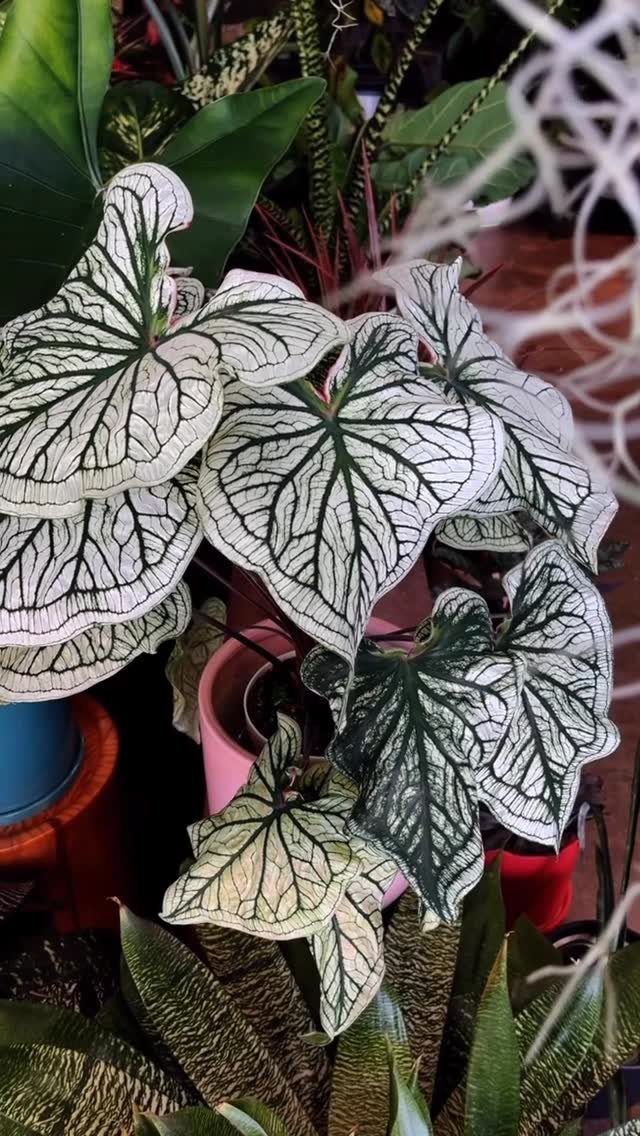
Caladium ‘Candidum’ in a pink pot is a foliage plant that does its showiest work in shade, which is rare among container plants.
I would treat it as an annual in zones below 9; the tuber rots in wet soil and takes too long to come back in cool springs to bother storing.
Check that your spot gets bright indirect light or morning sun only. The white and green variety loses contrast in too much shade and scorches in full afternoon sun.
In fact, many plants don’t just tolerate container life—they flourish in it. “Many plants thrive in containers,” says Barbara Wise, author of Container Gardening for All Seasons.
8. Chili Peppers in Containers
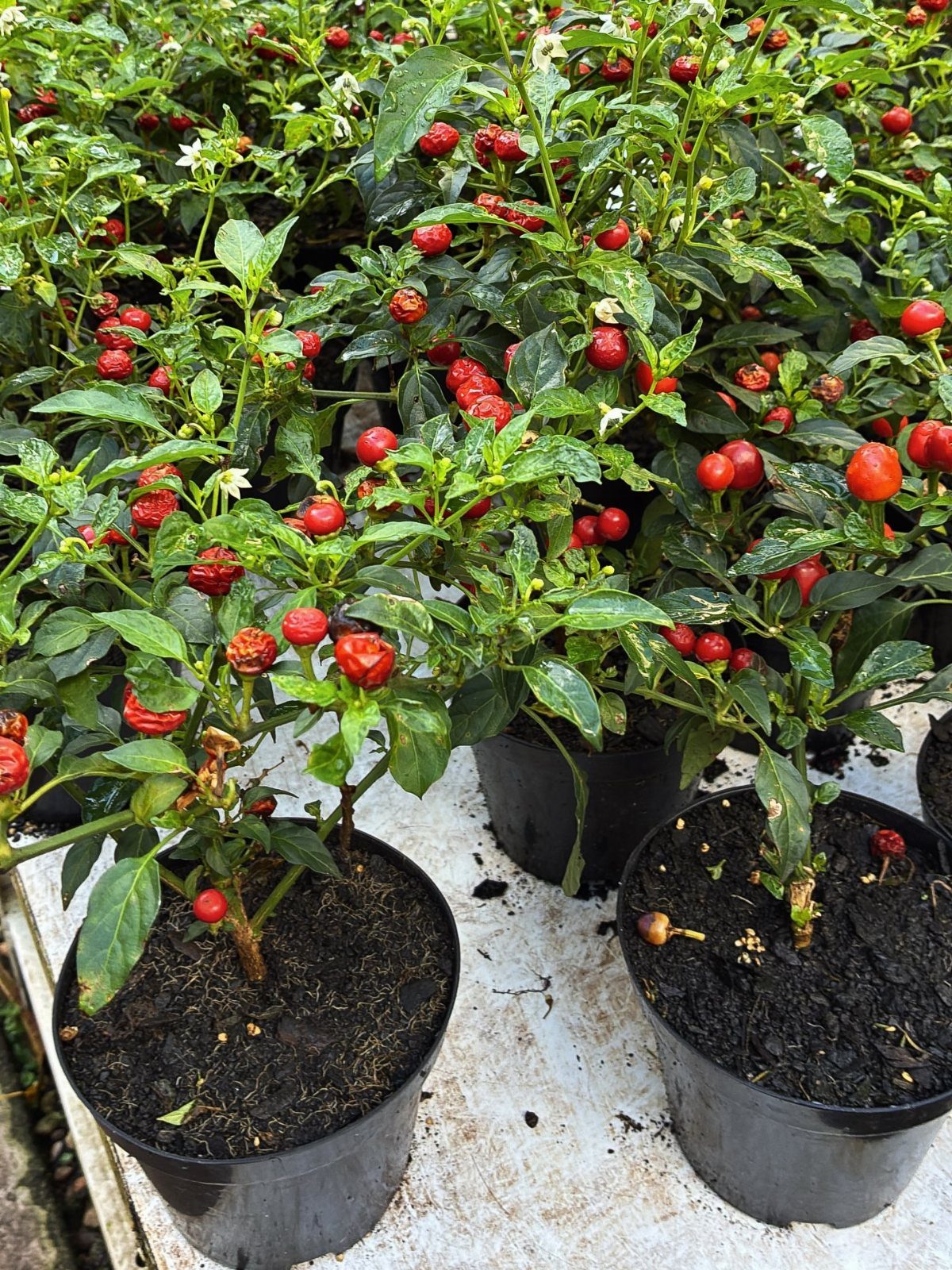
A chili pepper in a black nursery pot this size will fruit on a deck or balcony with 6 hours of sun and consistent water.
I would start with a transplant rather than seed; the season is short and peppers need a long runway from germination to first harvest.
Ornamental and small-fruited hot varieties both color up to bright red and stay compact enough for a pot.
Check mature height before buying; container cultivars stay small enough to stand on their own, but larger types need staking once wind picks up.
9. Violas and Pansies
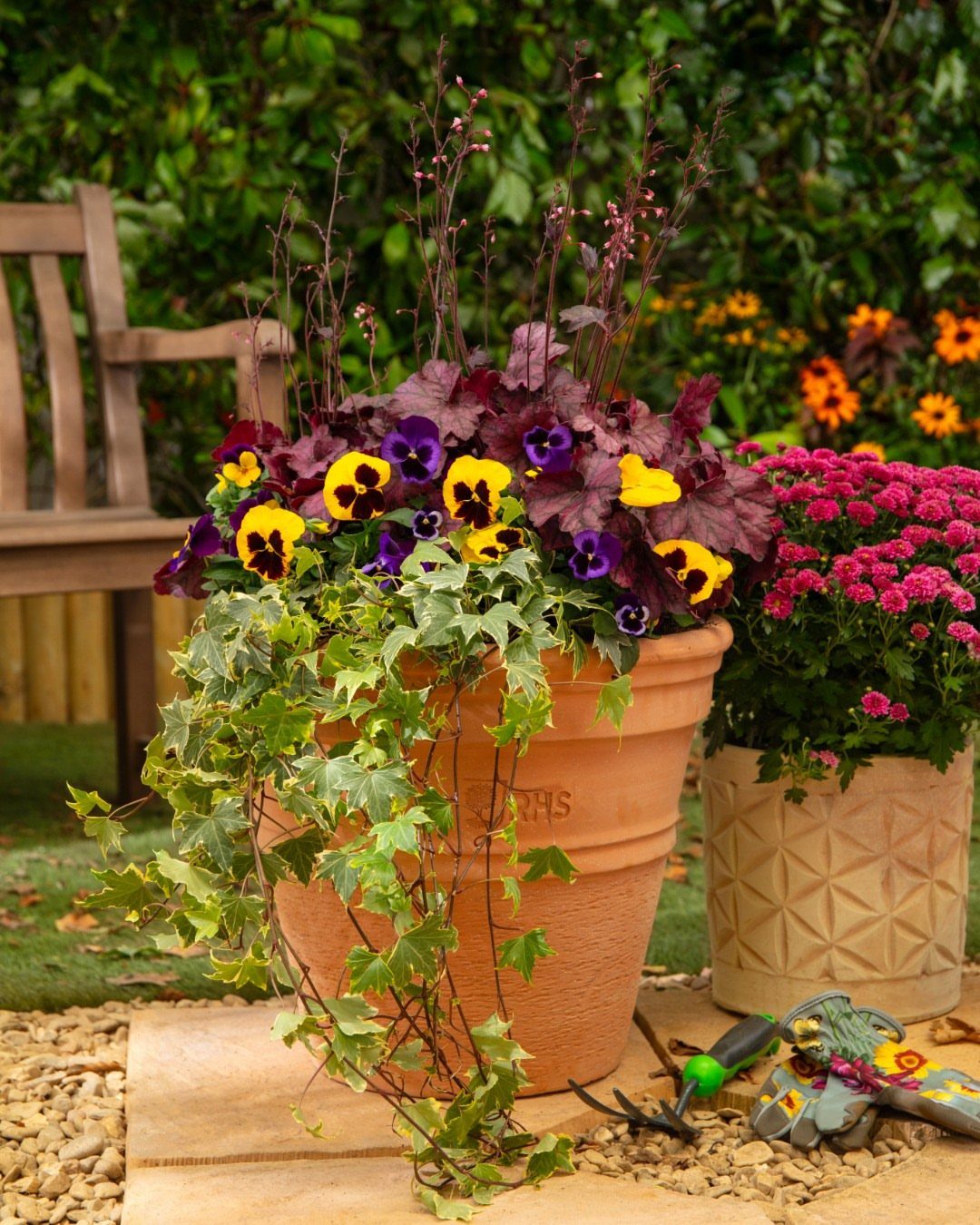
Violas and pansies in terracotta are the earliest color you can put outside, handling frost that would kill most annuals. I would plant in March in northern zones, September in the south; they fade once nights stay above 65.
The heuchera and ivy in this pot share the same light requirement, which is the pairing decision. Terra-cotta breathes and helps prevent the root rot that finishes off pansies in plastic during wet springs.
10. Hardy Hibiscus in Containers
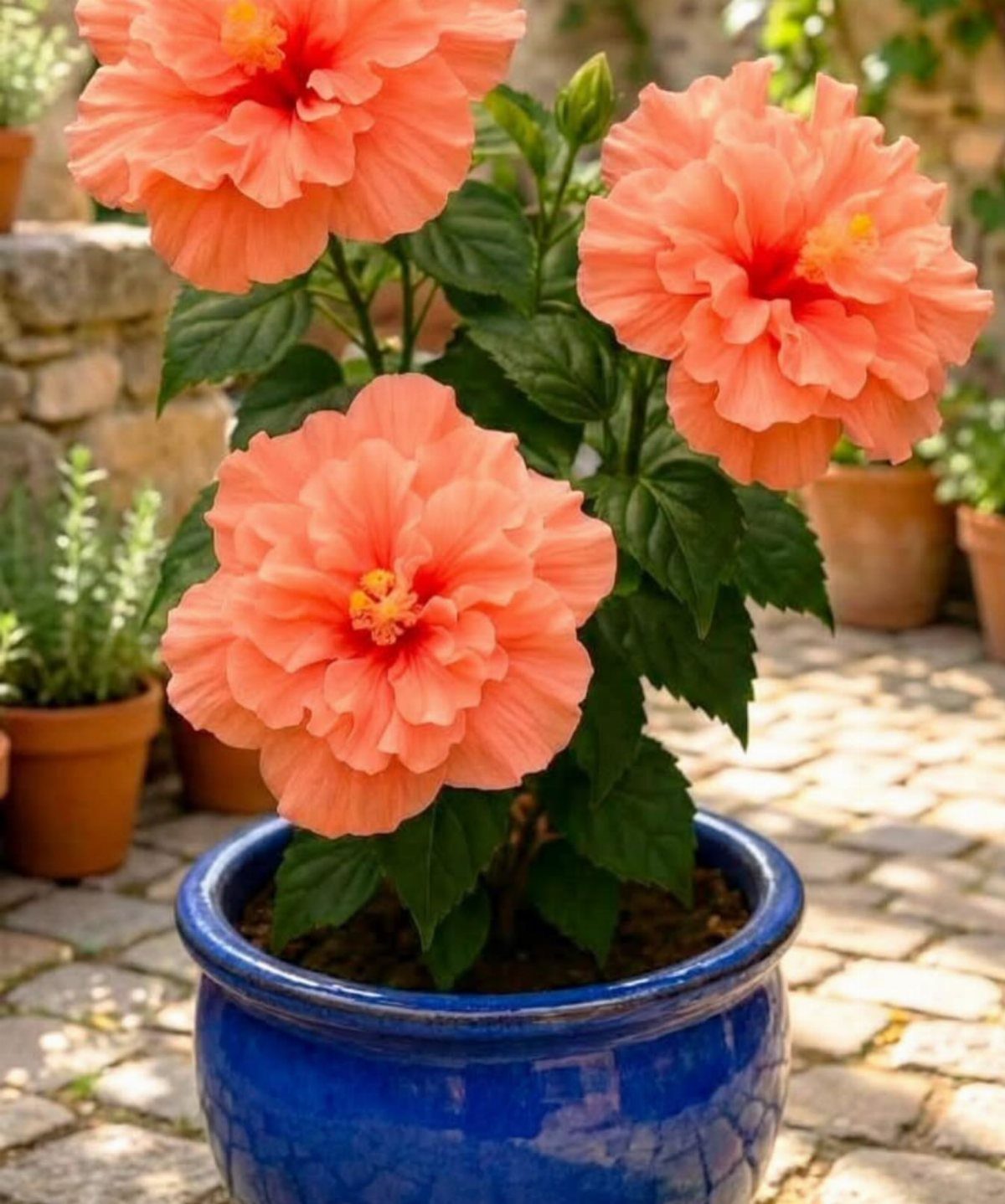
A hardy hibiscus in a blue ceramic pot gives dinner-plate blooms from July to September on a plant that dies back to the ground and returns next spring.
I would check the variety: some labeled hardy hibiscus are root-hardy to zone 4, others only to 6, and a tag that just says "tropical hibiscus" will not survive a northern winter even if the pot is moved indoors.
The glossy pot has no drainage visible. I would drill a hole; this plant drinks heavily in summer and rots fast in standing water.
11. Potted Shrub in Tall Planter
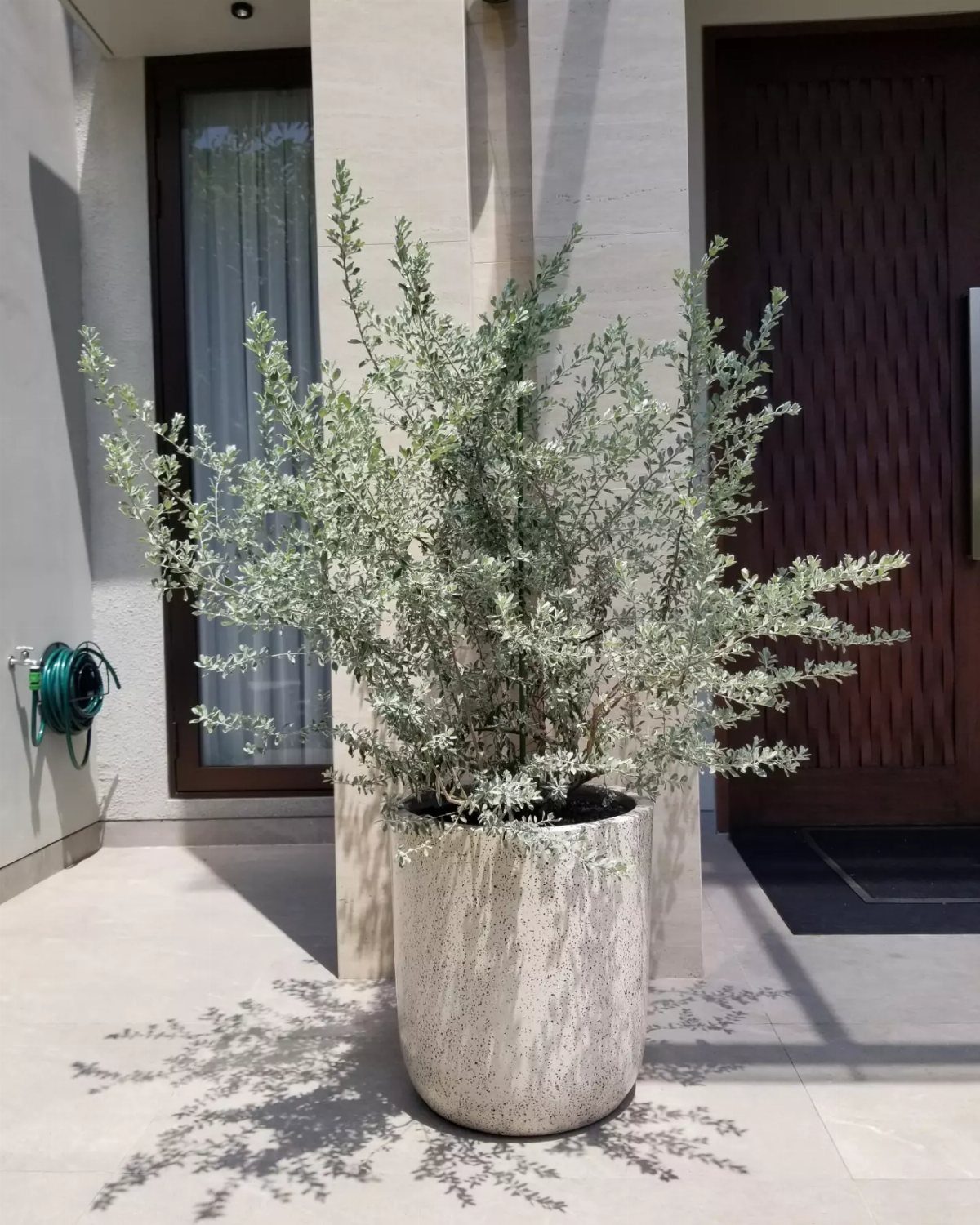
A tall cylindrical planter by an entry is structure and height where beds would take years to fill.
I would pick a shrub with year-round presence, since the pot itself offers no seasonal change. The silvery-green foliage here looks like lavender cotton or dwarf senecio, both drought-tolerant and slow enough not to outgrow the container in a season.
The speckled finish hides hard water marks and dust; white matte would show every splash. Weight matters more than you think in a tall pot: soil plus wet root ball can topple narrow bases in wind.
12. Tiered Potted Plant Shelf
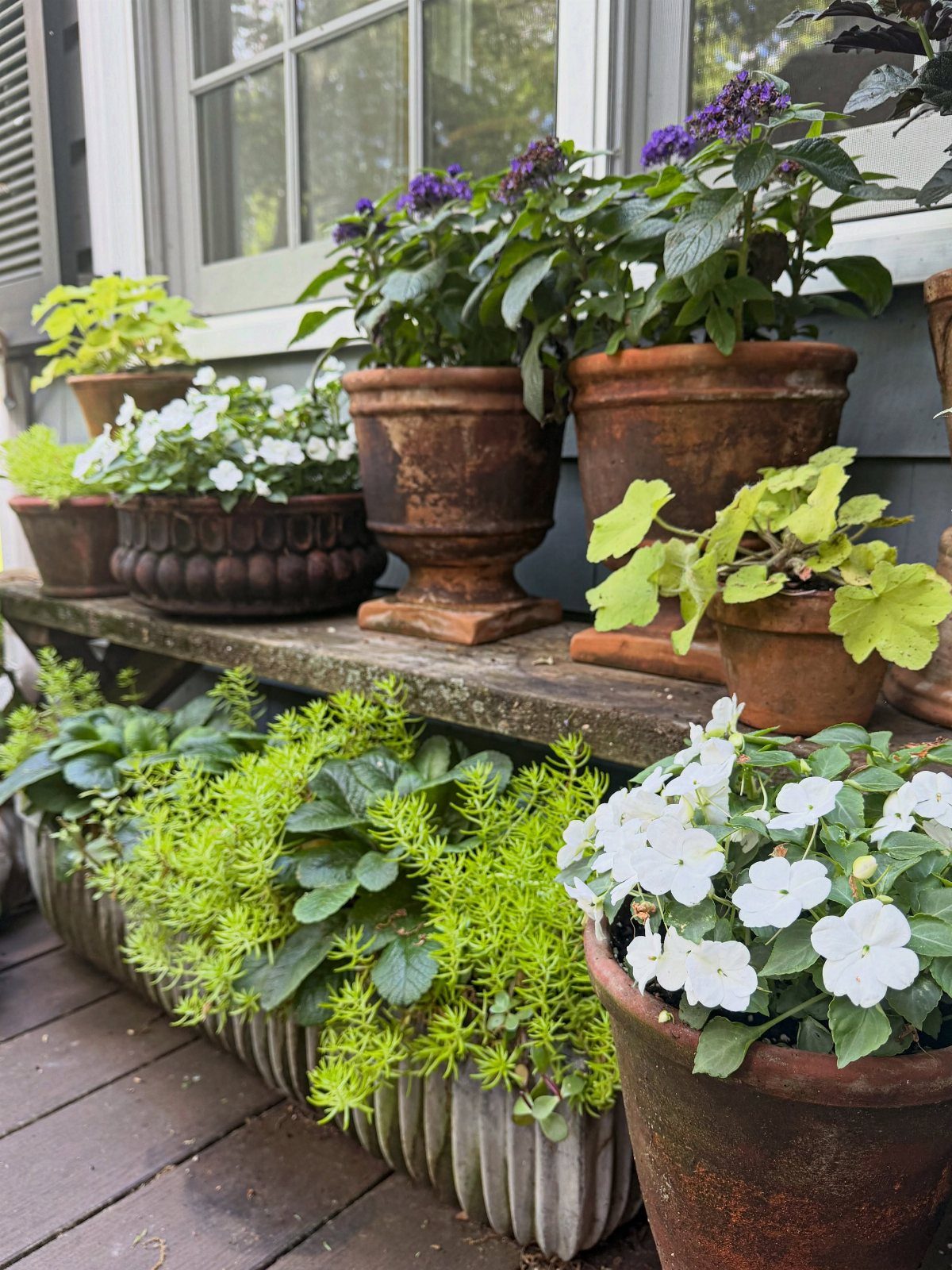
Weathered shelving at staggered heights turns a flat wall or railing into a garden without the floor space.
I would put thirstiest plants on the lowest shelf, where runoff collects and afternoon shade lingers; succulents and herbs go up top to bake.
Unglazed terra-cotta dries fast and suits plants that want sharp drainage; glazed or stone pots hold moisture longer for leafy things. Do not cluster only terra-cotta or you will water twice as often.
13. Potted Herb Table Display
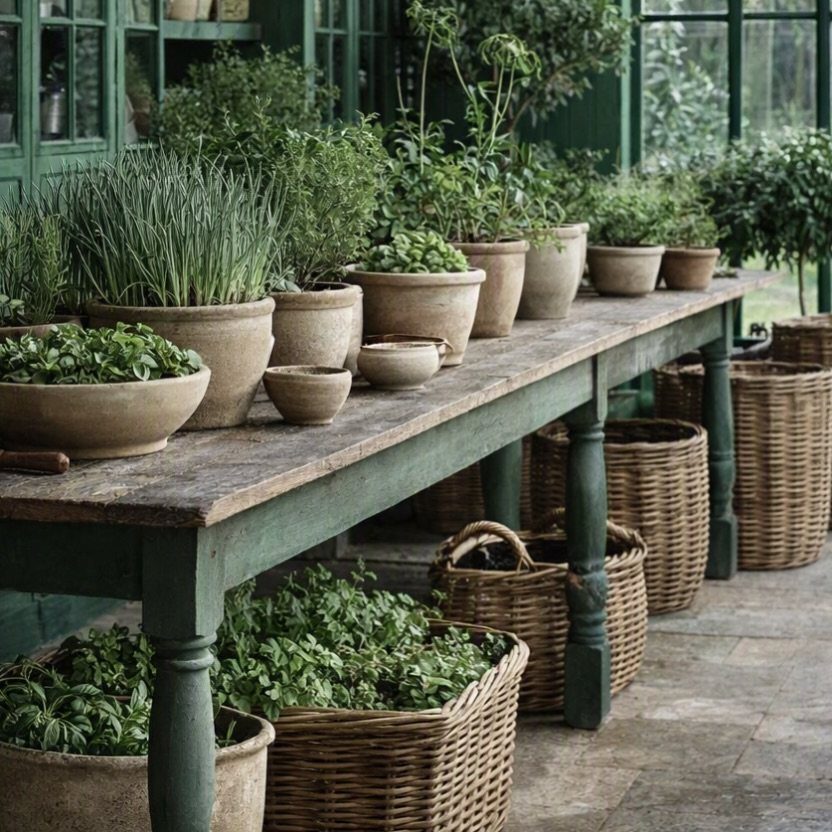
A weathered potting table becomes outdoor prep space and display in one.
I would put thyme and trailing rosemary up front where they can spill over the edge, sage and chive clumps behind where height shows, and tuck a small basil between them for the scent when you brush past.
Terra-cotta and glazed stone mix well here; the clay breathes while the heavier bowls anchor taller plants against a knock.
Check the table slats for drainage gaps or drill a few, since herbs rot faster in standing water than they dry out.
The wicker below is dead storage; I would keep empty pots and a watering can there, not soil, or it turns to nesting in wet weather.
14. Succulent Bowl Planter
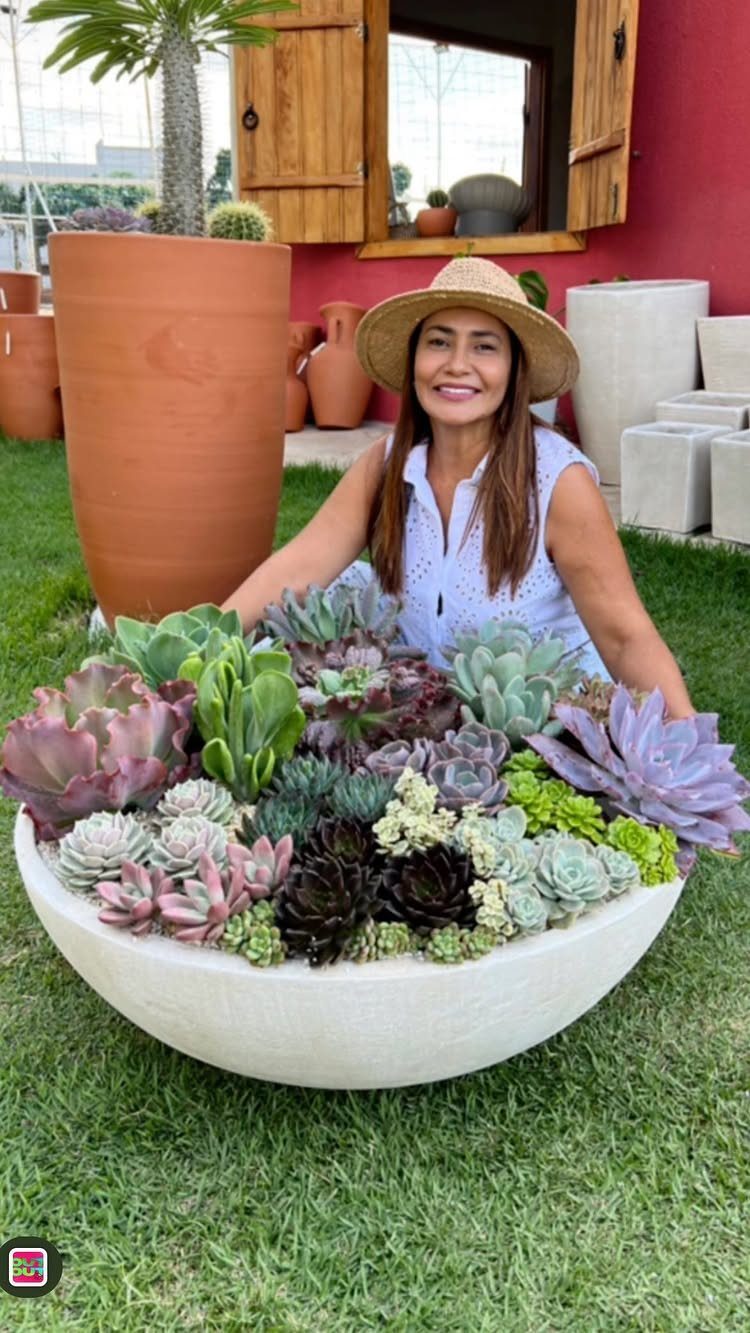
Succulents in a wide bowl this size look fullest when packed almost touching, since they grow slowly and the arrangement holds shape for a season or more.
I would start with one large echeveria or aeonium as the visual anchor, then fill gaps with sedums and trailing strings of pearls or burro’s tail.
The white bowl is glazed, which holds moisture longer than unglazed terra-cotta; that works in your favor in summer but means checking soil with a finger before any water hits it.
A layer of coarse grit or perlite mixed through the bottom half of the potting mix gives the sharp drainage these plants need more than fertilizer or rich soil.
Frost ruins most of these varieties. In zones below 9, I would treat this as a spring-to-fall display and shift the bowl under cover before the first hard freeze.
15. Japanese Maple in Large Pot
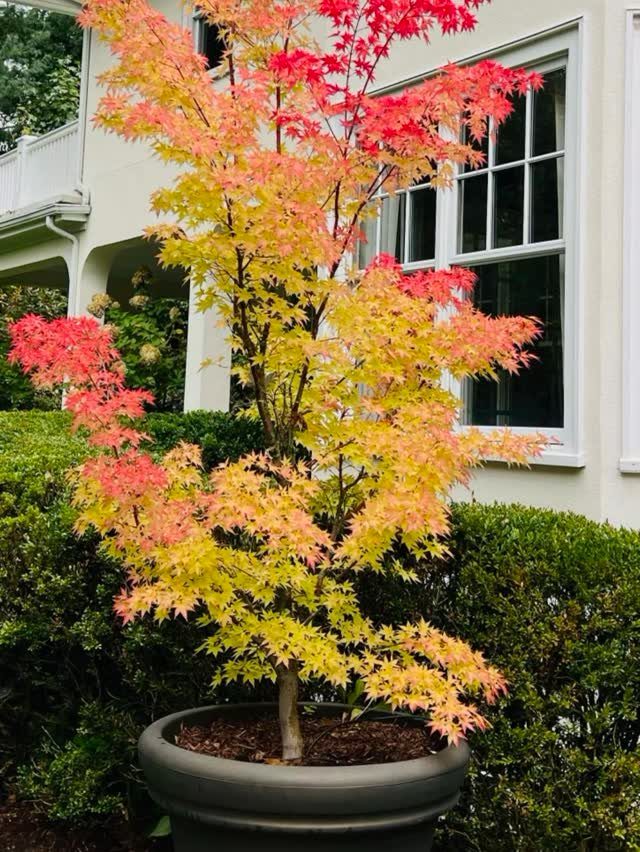
A Japanese maple in a container this size is a patio tree you move once, then leave to root in.
I would pick a dwarf or dissected variety; full-size acers outgrow even a large pot quickly and the root-pruning to keep them small is skilled work most renters will not tackle.
The dark grey finish absorbs heat, which can cook roots on a south-facing patio in July.
I would check how hot the surface gets at noon; if it burns your palm, slip the nursery pot inside the decorative one to create an air gap, or switch to a lighter color.
Morning sun and afternoon shade keeps the leaf color vivid without the scorch that turns margins brown by August.
Repot every other spring before bud break, not mid-summer when stress sets the leaves.
16. Potted Plumeria Tree
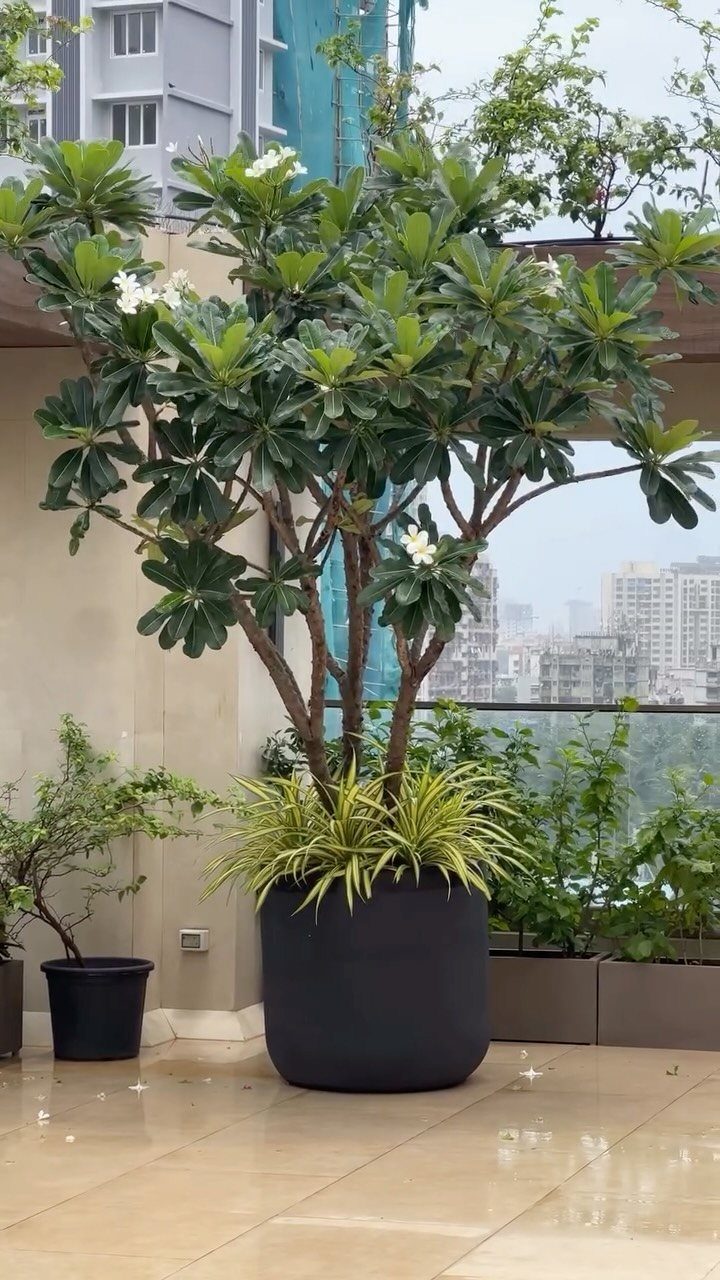
A plumeria on a balcony this high is living in a microclimate: windier, drier, and with reflected heat off glass and concrete.
I would check that the species handles the summer humidity of your city; some Hawaiian cultivars mildew in Gulf Coast air where Thai varieties stay clean.
The cylindrical pot has no taper, so the root ball will circle rather than deepen; I would go wider rather than taller at next repot, since plumeria roots spread shallow.
The grass underplanting is decorative only; it competes for water and nutrients I would rather direct to the tree.
Bring it indoors before nights drop below 50, and cut water to almost nothing in dormancy.
It will look dead all winter. That is normal.
17. Potted Patio Trees Along Fence
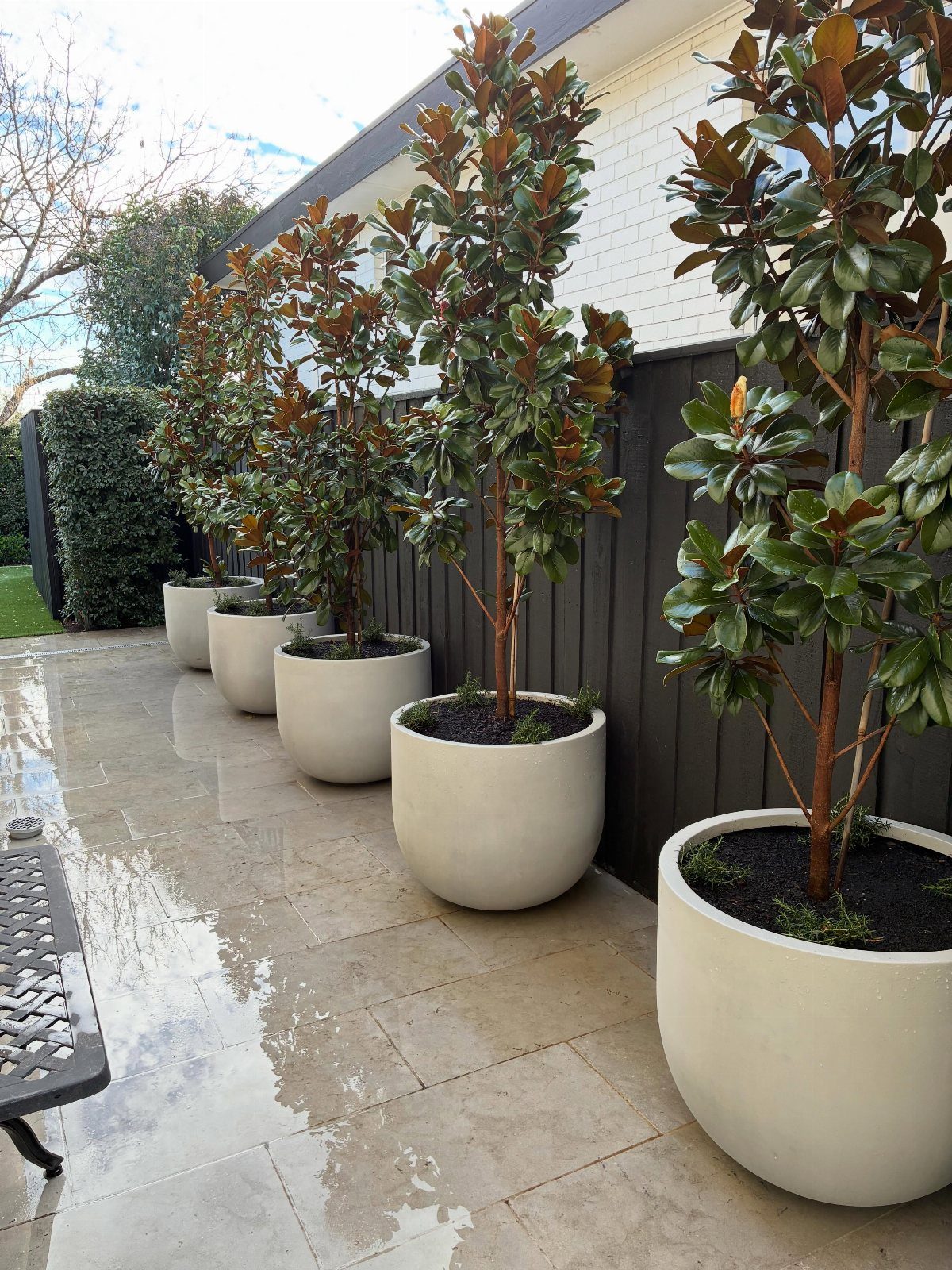
A row of tall container trees turns a fence from boundary to backdrop in one morning’s work.
I would pick evergreens with dense leaf if the goal is year-round screening; deciduous magnolias give two weeks of bloom and ten months of bare sticks.
The round white planters are fiberglass or resin, not stone; at this scale, real terracotta would crack in the first frost and weigh enough to need a pallet jack to shift.
Check that the base is wider than the pot’s midsection, or the first strong wind sends a heavy tree onto your patio furniture.
Spacing is the decision that stays with you. At wide spacing these will never close into a hedge; at tight spacing they look crowded right away and fight roots soon after.
Plant Care Advice
Pots dry out faster than soil in the ground, and the gap widens in July and August when mature plants fill their containers and drink hard.
A full pot in midsummer can dry out fast enough to need watering twice in one day.
Self-watering planters cut that frequency with a reservoir below the soil line. I would use them for thirsty plants in exposed spots, not as a reason to stop checking.
Nutrients wash out with every drainage hole drip, so feeding matters more in pots than in beds. A slow-release fertilizer at planting and a liquid feed mid-season keeps bloomers producing.
Move pots to track the sun; 6 hours is the threshold for "full sun" on a tag, half that for "part sun," and shade means morning light only or none at all.
Choosing the Right Pot
A fast-growing plant in a too-small pot needs repotting sooner than you want; a slow grower in an oversized one looks lost and stays wet too long.
Match root mass to container, and ask at the nursery if you are unsure.
Drainage holes are non-negotiable.
Without them, roots sit in water and rot. The base deserves a look before you buy; some decorative pots come sealed shut and need a drill bit taken to them.
Weight and material shape the maintenance.
A base wider than the midsection keeps tall plants upright in wind. Narrow cylinders look sleek but topple once the root ball is wet and the tree is tall.
Frequently Asked Questions
What are the best plants to grow in pots outside?
Yucca, modern shrub roses, rosemary, and herbs are my picks for containers because they forgive the limits of a pot better than fussier choices.
Yucca only asks for half a day of sun and a drainage hole; Knock Out roses skip the spraying and deadheading that keep other roses tied to a schedule.
Rosemary and thyme handle dry soil and ignore a missed watering in a way annual flowers cannot.
What is the easiest outdoor potted plant to keep alive?
Common thyme is about as forgiving as it gets: it wants sun, sharp drainage, and not much else.
Rosemary survives drier soil and tighter root space than almost anything else you can cook with, and the woody stems do not collapse if you skip a weekend of watering.





