
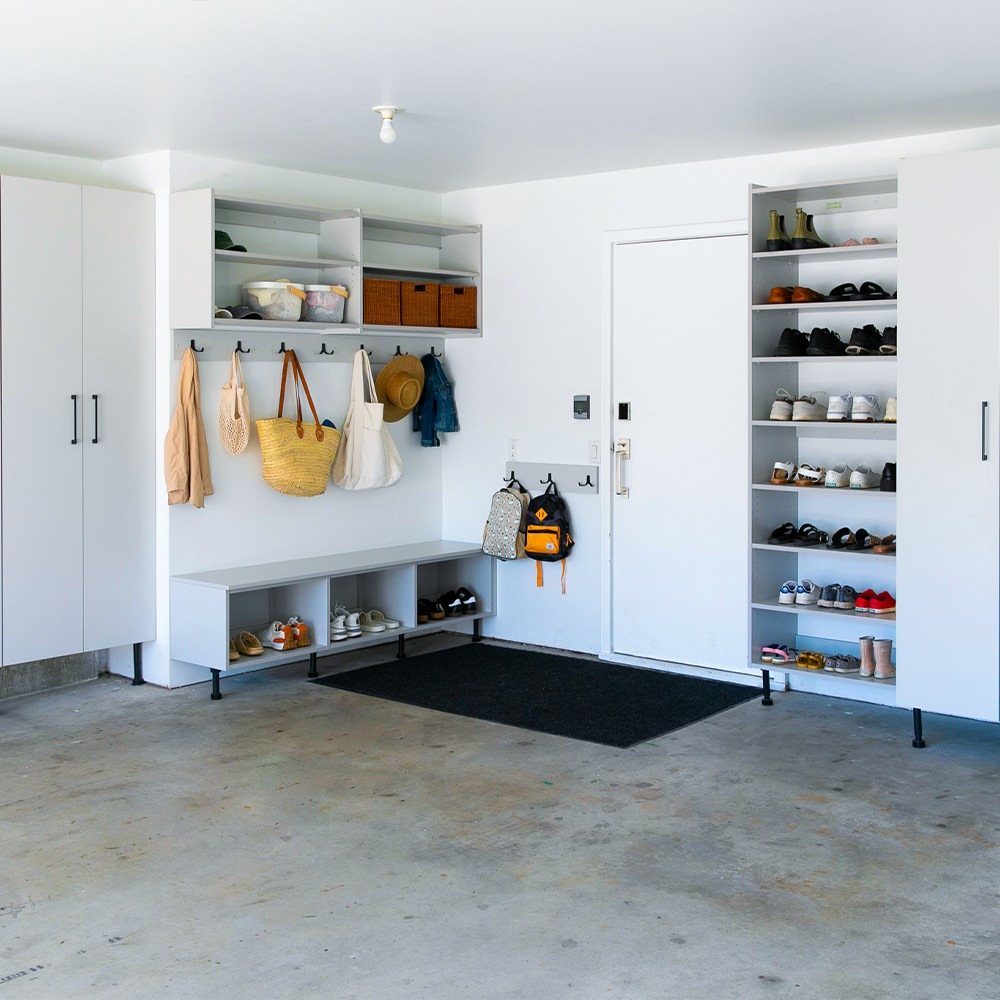
These garage shoe storage ideas range from a wire rack you can hang in an hour to a full cabinet system that takes most of a Saturday to install.
What matters more than the price is whether your garage still needs to fit a car or handles bikes, tools, and the rest of what you store there.
Slatwall panels anchor into studs and let you shift baskets and hooks as the seasons change, which is the kind of reconfiguring most renters and first-home owners actually end up doing once they’ve lived with the setup for a year.
[link-whisper-related-posts]1. Slatwall Shoe Storage Systems
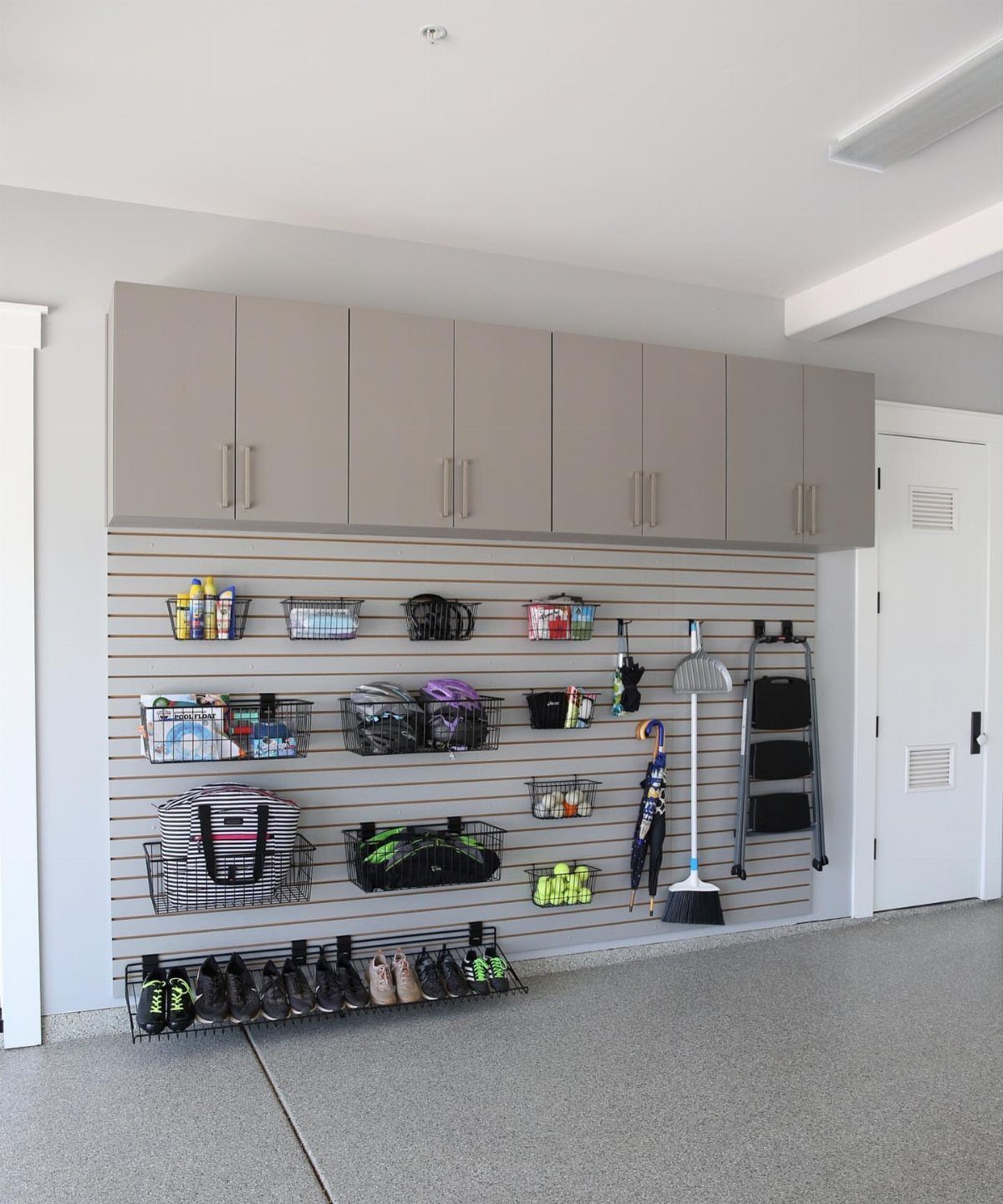
A slatwall panel turns any garage wall into a grid you can reconfigure as your storage needs shift.
I like that the shoes sit in a wire rack at the base, easy to grab on the way out, while the same panel holds baskets and hooks above for gear that changes with the season.
Check whether your wall has the studs to carry the load; a panel mounted under cabinets hides the mounting points and the whole thing looks built in.
Slatwall comes in different slot spacing, and the accessories from one brand do not always fit another, so I would stick with one manufacturer for the rack, baskets, and hooks.
2. Vertical Shoe Racks
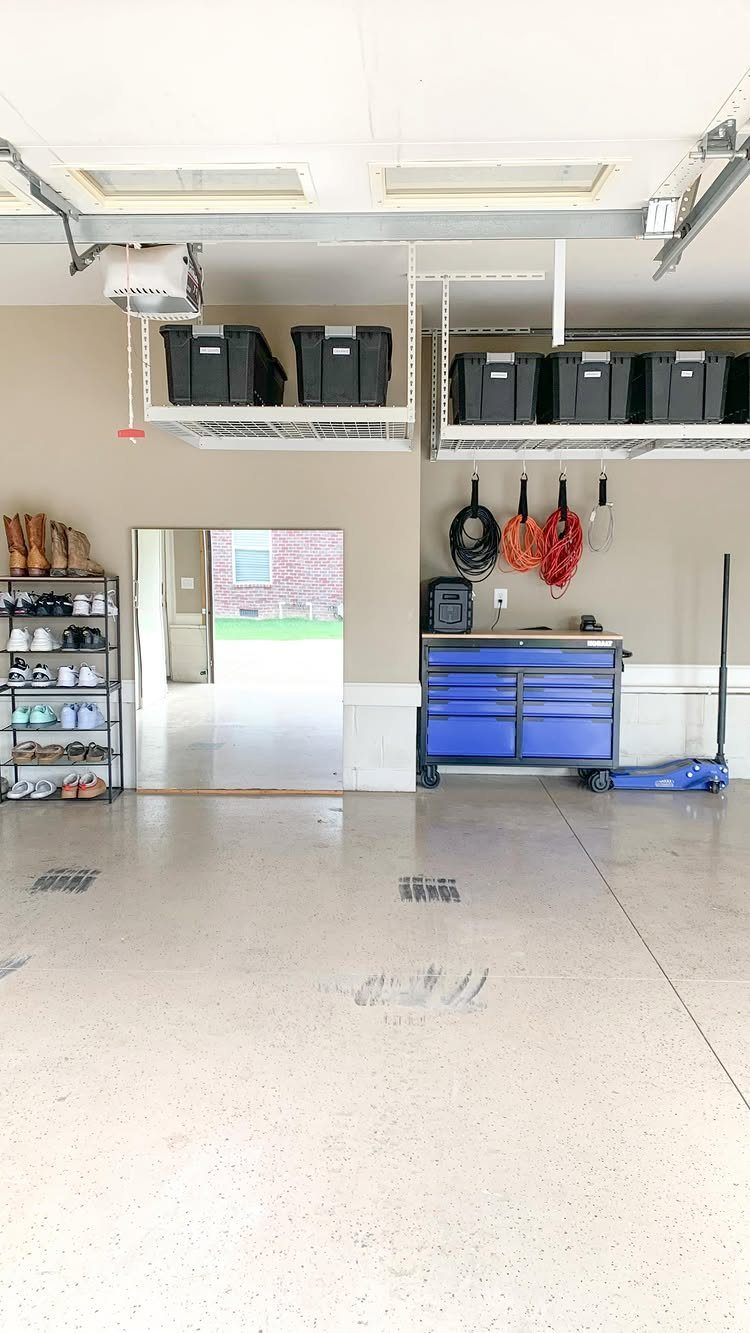
Tall, narrow racks squeeze a lot of pairs into the gap between a tool chest and the wall, which is exactly where most garages have dead space.
Holding boots on the upper tiers and shorter shoes below keeps the whole footprint shallow so you can still walk past it.
I would measure the tallest boots or heels you own before picking a height; a rack that clears each shelf by plenty of headroom handles most men’s work boots, and anything too cramped leaves the top row unused.
The black metal frame looks like it ships flat and bolts together, so set aside time and a level for assembly.
3. Shoe Storage Benches
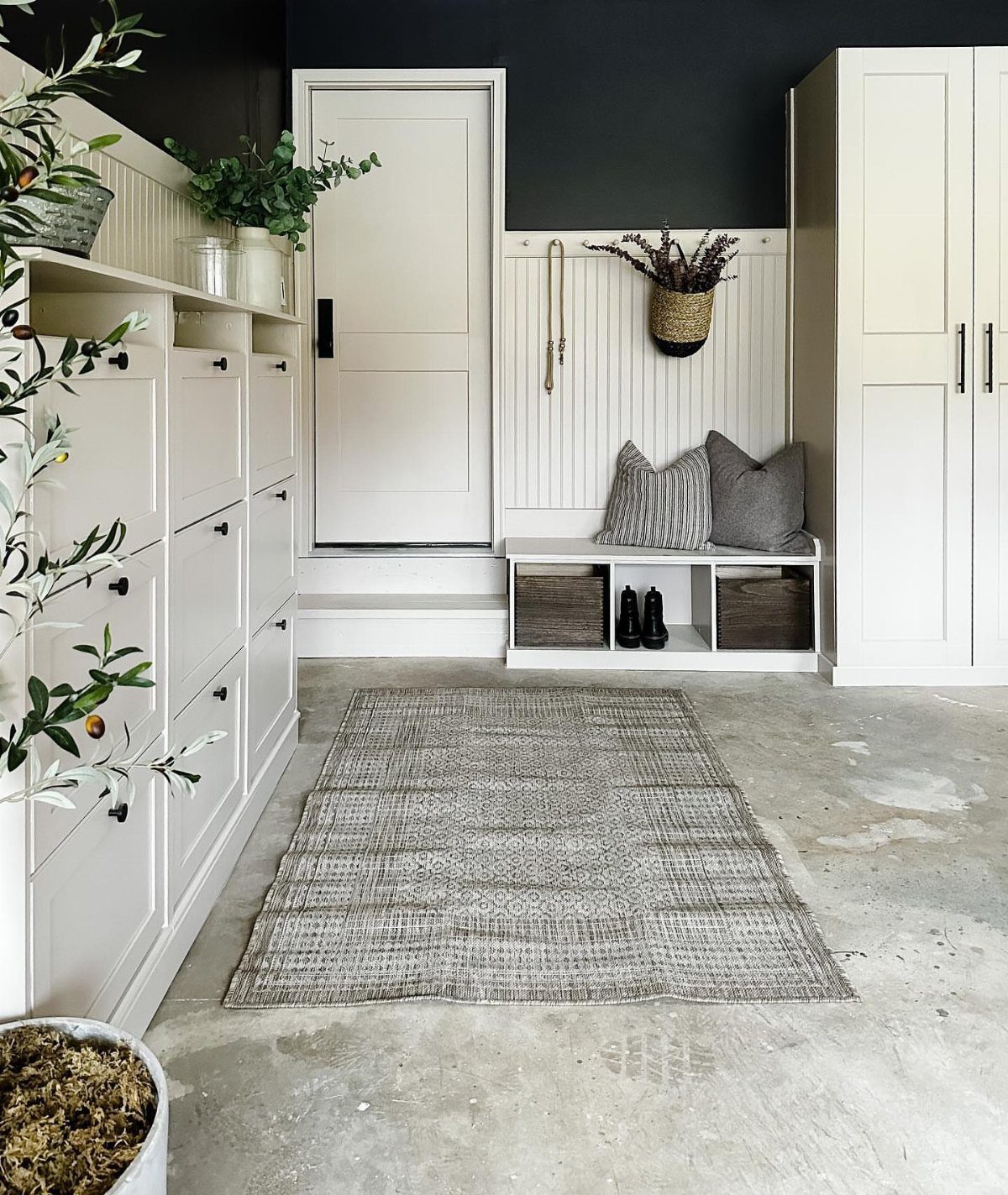
A bench with cubbies underneath gives you a place to sit while you lace up, and bins keep gloves, dog leashes, or seasonal gear from drifting across the seat.
I would put this near the door you actually use; a runner rug and dark wall make it feel like a mudroom even on bare concrete.
If you build one, size the cubbies to your boots; shorter cubbies fit most sneakers, medium ones for ankle boots, and anything taller needs its own bin pulled out onto the floor.
4. Elfa Classic Platinum Shoe Wall
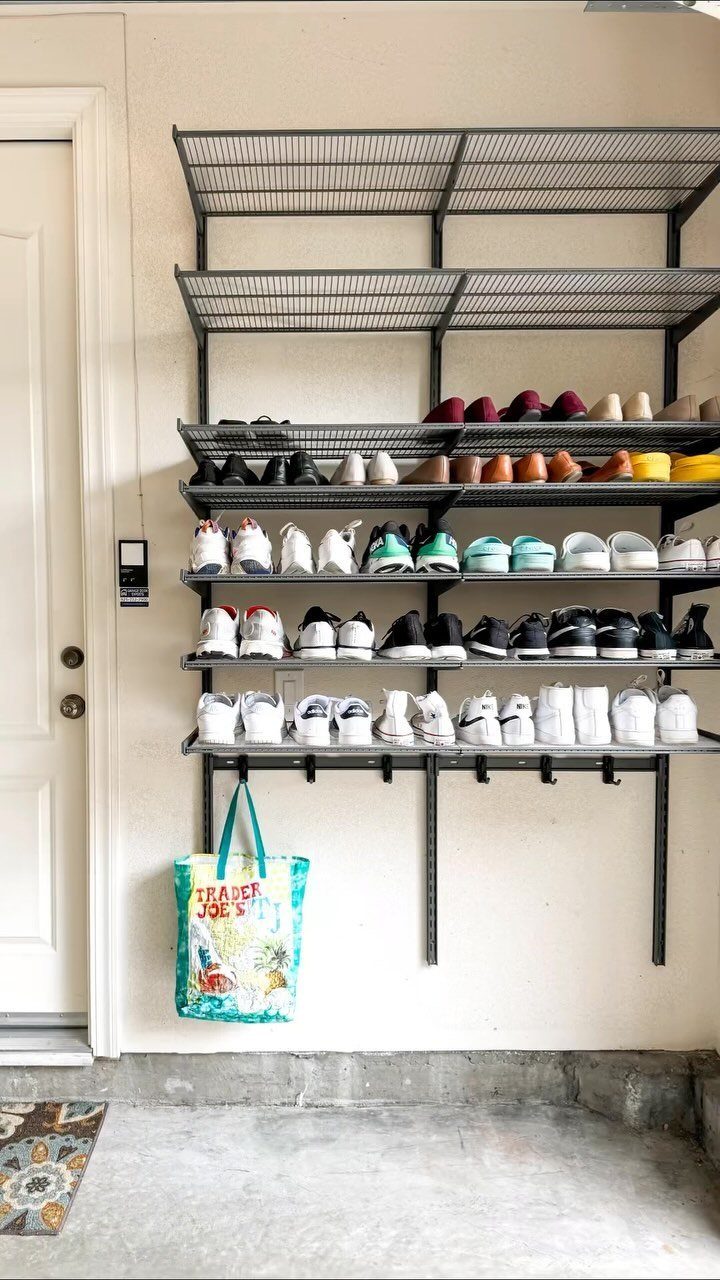
Platinum-colored wire shelves mount flat against the wall and hold two dozen pairs in the depth of a picture frame, which matters when your garage is also parking space.
A reusable Trader Joe’s tote hanging underneath is a nice touch; I would add a hook for bags or a small mirror by the door.
These systems anchor into studs, and vertical standards run floor to ceiling for strength.
I would check the weight rating per shelf before loading it with boots; wire bends more than solid laminate, and the narrow lip on these shelves is meant for shoes, not heavy storage bins.
5. Built-in Garage Shoe Shelving
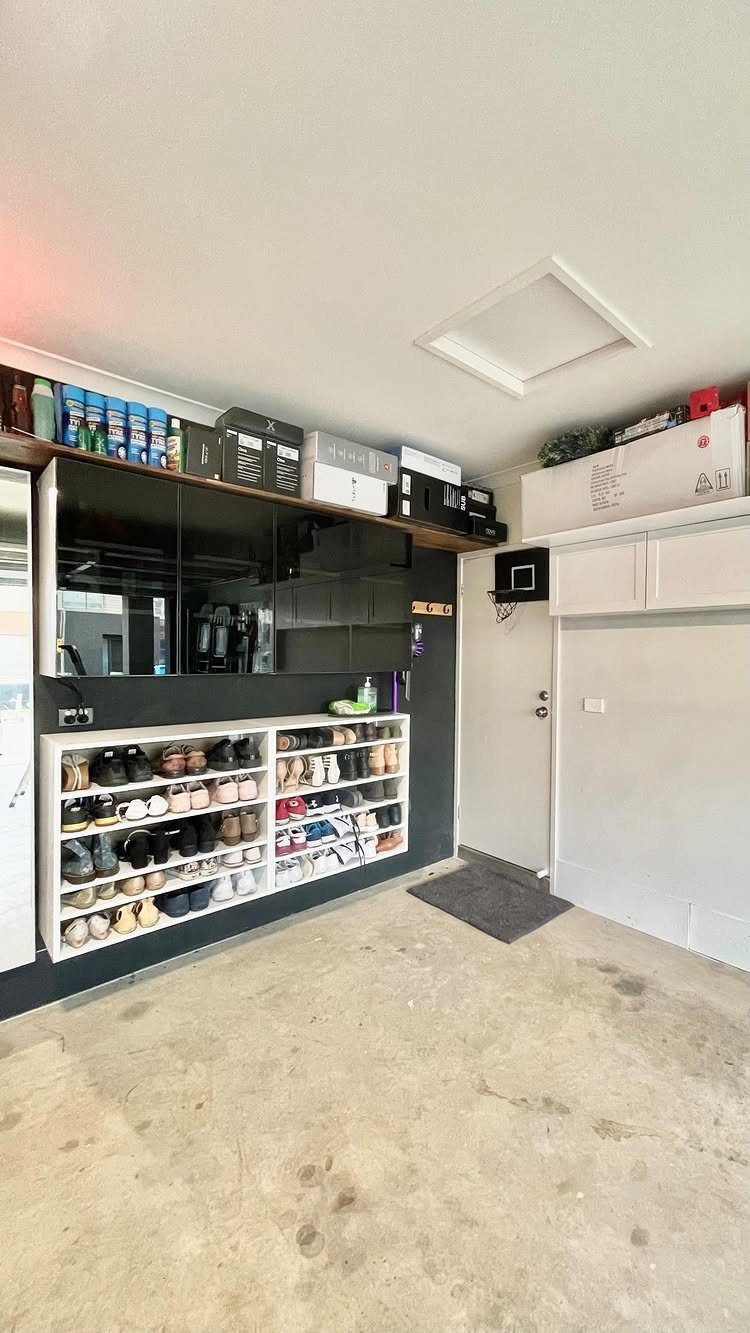
White cubby shelves built under black cabinets use the wall space that usually goes empty between counter height and the floor.
I would count your shoes before you build; a modest row of cubbies looks great in photos, but if you own more, the overflow ends up on the floor.
The concrete here is bare, so the white paint on the shelves brightens the whole corner; in a busier garage, I would still choose white for the same reason.
6. Clear Stackable Shoe Boxes
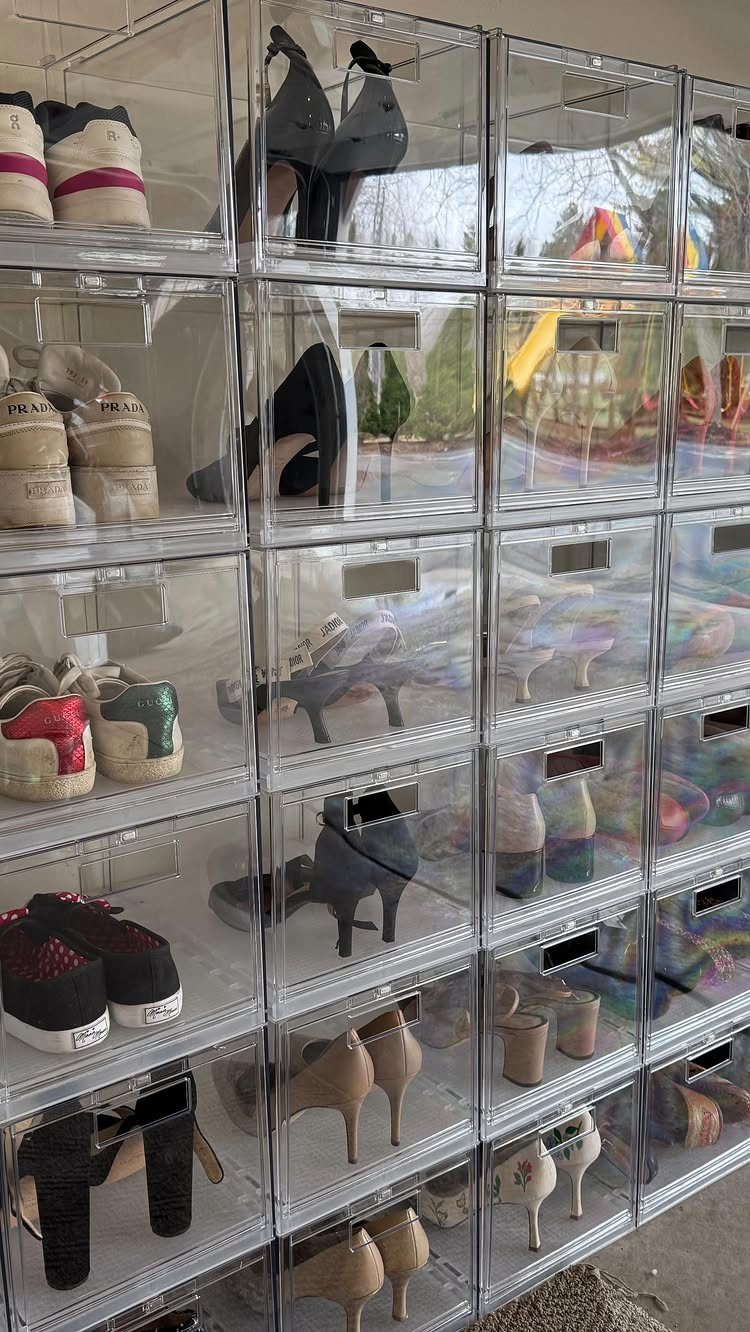
Drop-front boxes stack into a solid wall you can rearrange, and the clear sides let you find the right pair without unstacking.
A big grid only works if you have the floor space and the discipline to put them back; I would start with a column of six and add as the collection grows.
These add up fast per box, so a full wall is a real investment.
The acrylic is thicker than the budget versions, and the drop-front hinge is the part that breaks first; I would buy one box to test the latch before committing to a whole set.
Labels on the front help when the stack gets above eye level.
7. Wall-Mounted Wire Shelving
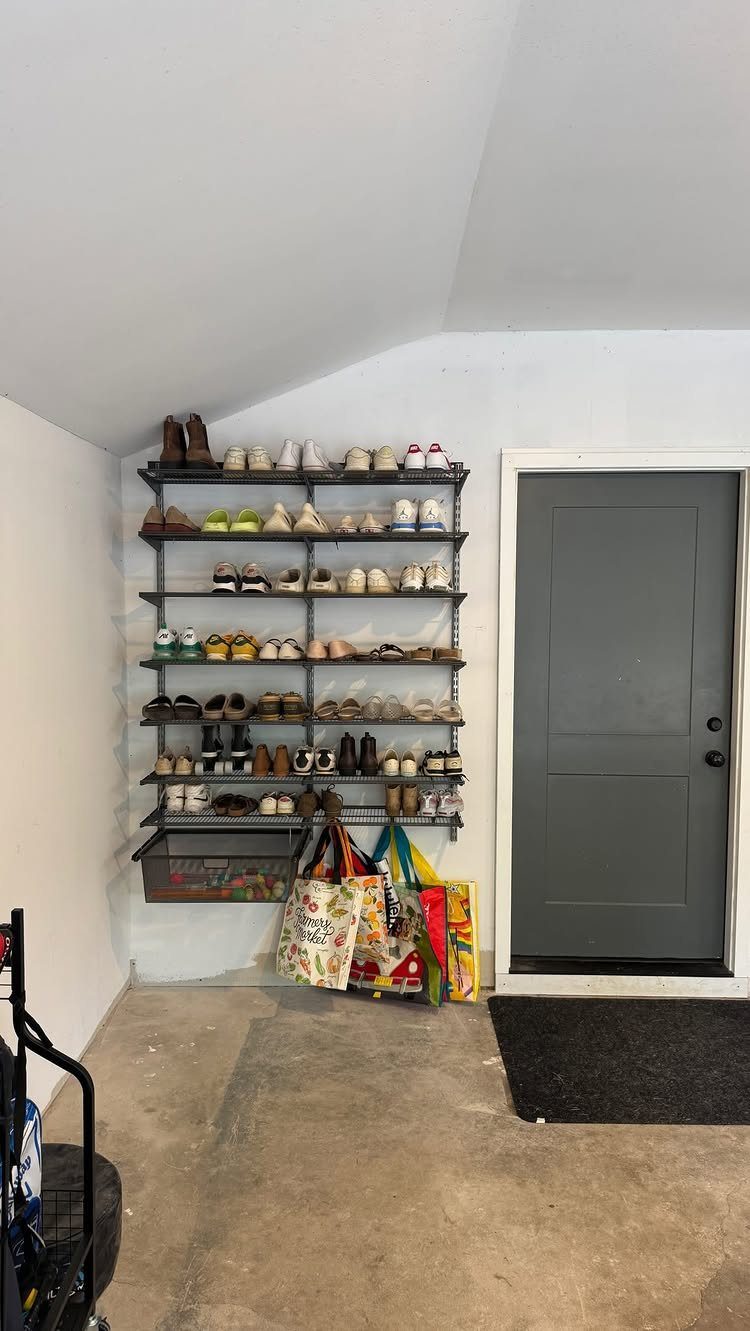
Metal wire shelves bolt to studs beside the door and give you 3 tiers of open storage in the depth of a coat hook.
The pull-out basket below is a smart add-on; I would use it for single gloves or shoe polish rather than a second pair.
Check the bracket spacing against your stud layout before you buy.
The finish here is powder-coated grey, which hides dust better than white wire, and the lip on each shelf is low enough that tall boots lean rather than stand upright.
8. Open Garage Utility Shelving
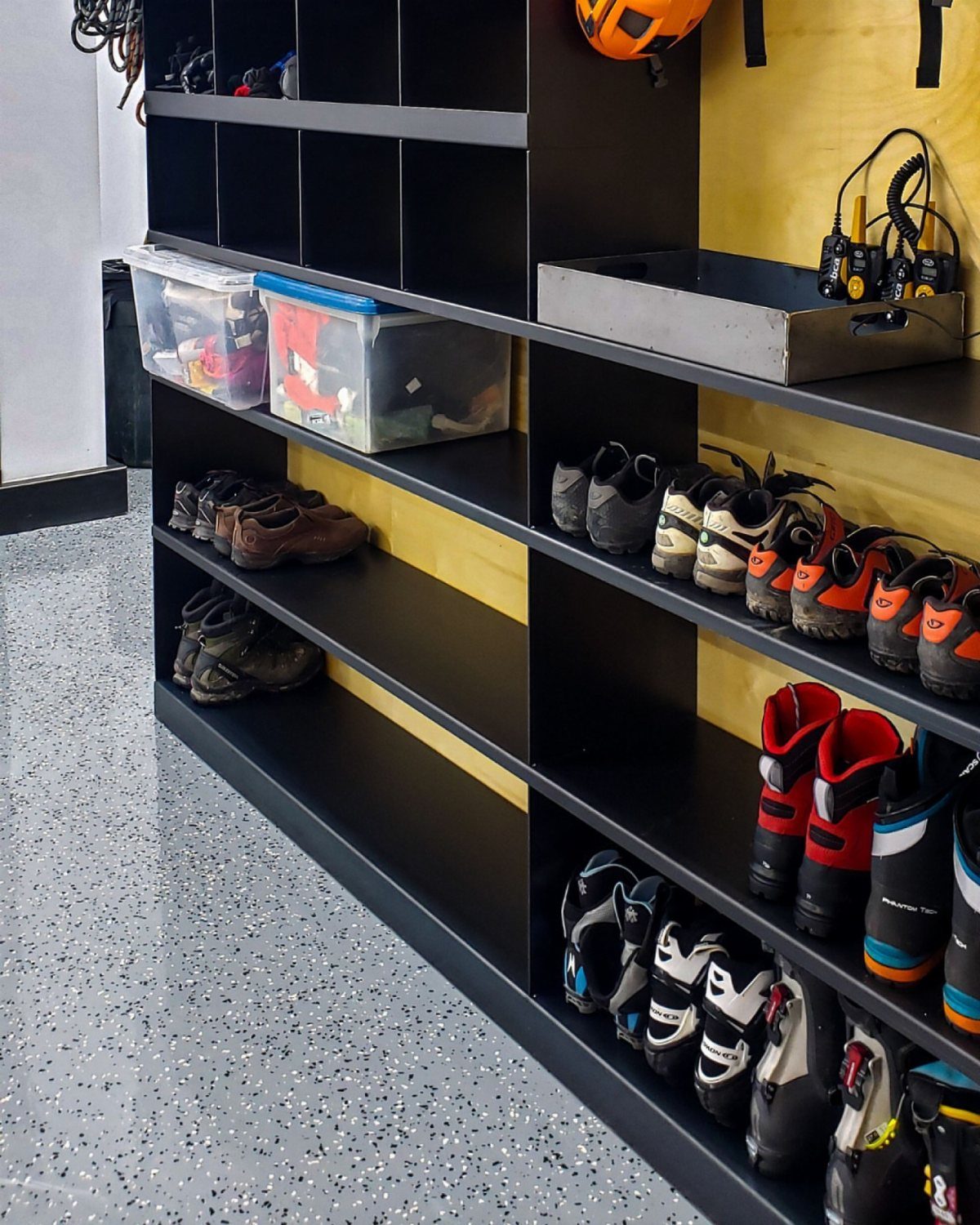
A black steel utility shelf stands on the floor and handles both shoes and the bins that swallow everything else.
The speckled epoxy floor underneath is doing half the visual work; on bare concrete, I would paint the wall behind it a solid color so the black frame does not disappear into shadow.
These units come in a few standard widths, and the four-shelf height fills most garage walls without blocking a window.
Load the heaviest bins on the bottom to keep the center of gravity low; athletic shoes weigh little, but a full bin of camping gear does not.
9. Tall Shoe Storage Cabinets
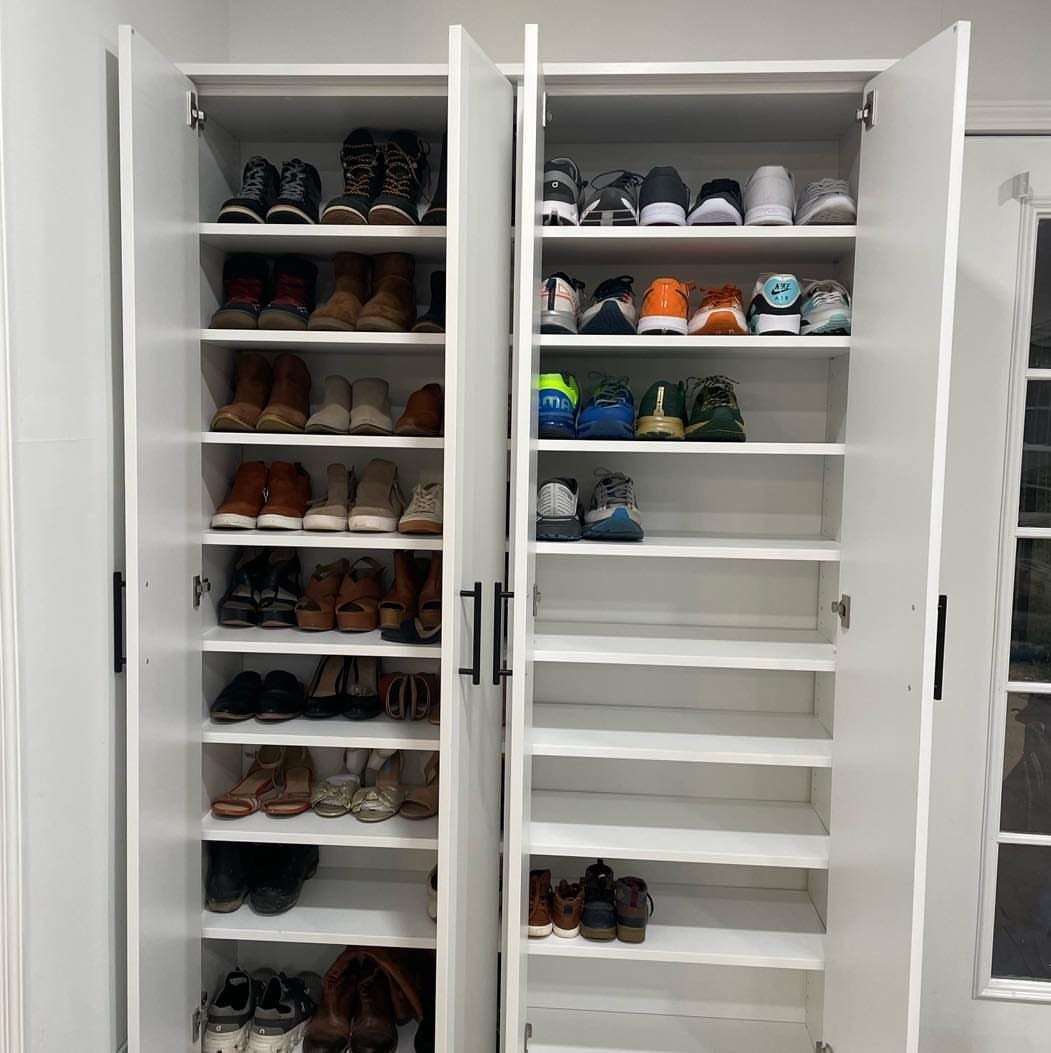
Two tall white cabinets close off the clutter entirely, which matters when the garage opens to a driveway you share with neighbors or an HOA that notices.
The interior shelves adjust in small increments; I would set one cabinet for ankle boots and sneakers, the other for knee-high pairs that need the full height.
Cabinet depth is the spec to watch. These look shallow, which keeps the doors from swinging into car doors but rules out storing bins behind the shoes.
Mount them to the wall even if they stand on the floor; a loaded cabinet tips forward when both doors are open.





