
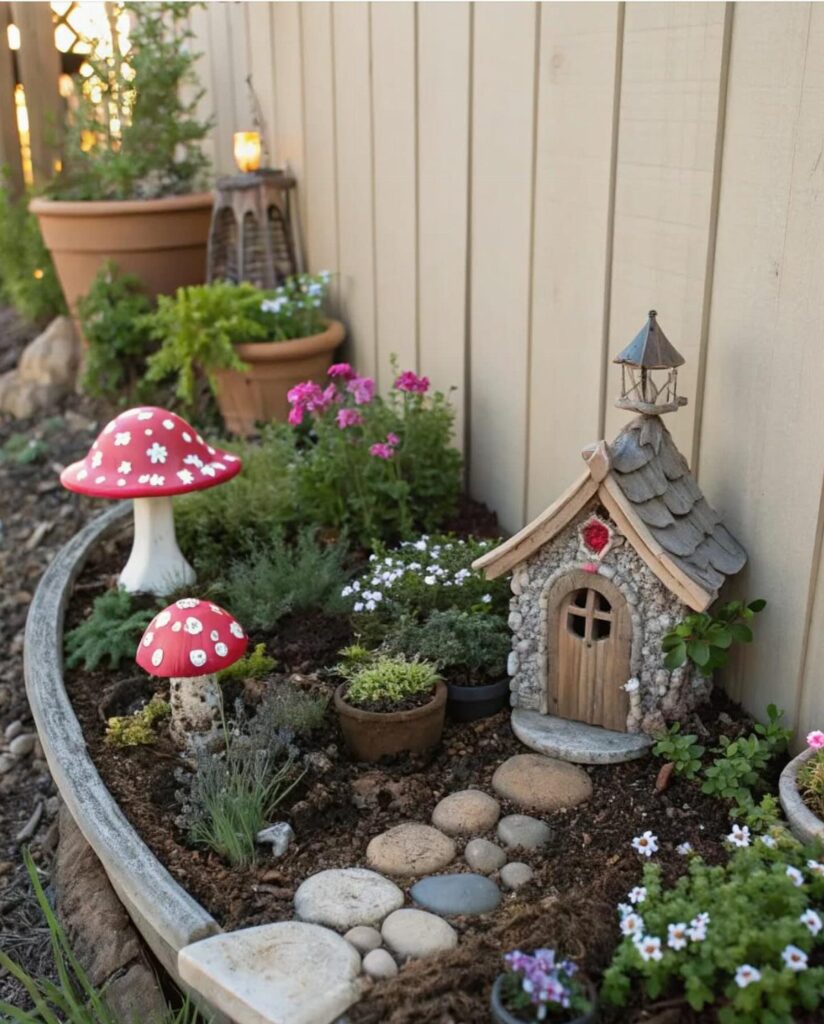
The ideas below run from a teacup on a windowsill to a wheelbarrow you can roll around the yard, and the one that fits you depends on whether you need the whole thing to move before dinner or stay put for years.
A wine cork bridge costs nothing if you already keep corks around the house, while a mushroom pedestal needs its painted cap sealed with a clear coat or the color will chalk within a season.
[link-whisper-related-posts]1. Twinkly Lights
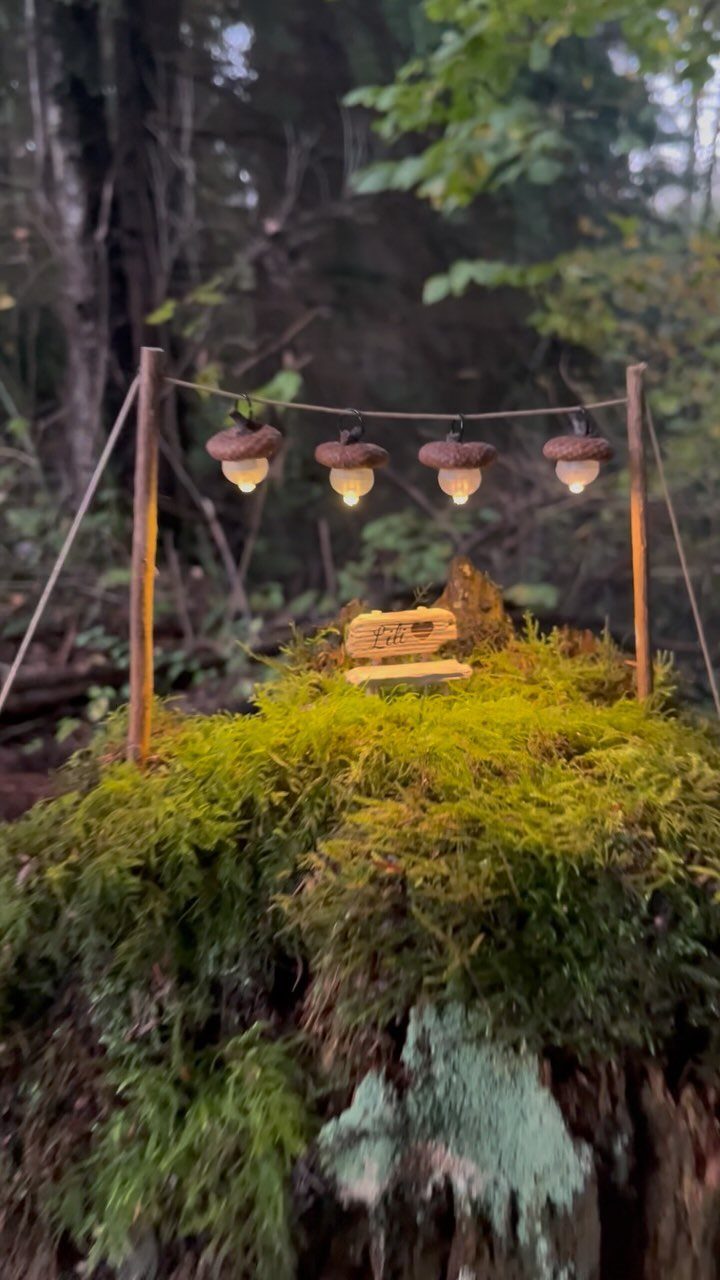
A string of acorn-cap lights turns a shaded corner of the garden into something that glows after dark.
Tiny battery-powered balloon lights inside real acorn caps hang on hemp string between magnets. Battery life on those lights is short enough that you will want a plan for where to switch them off or let them fade.
2. Wheelbarrow Fairy Garden
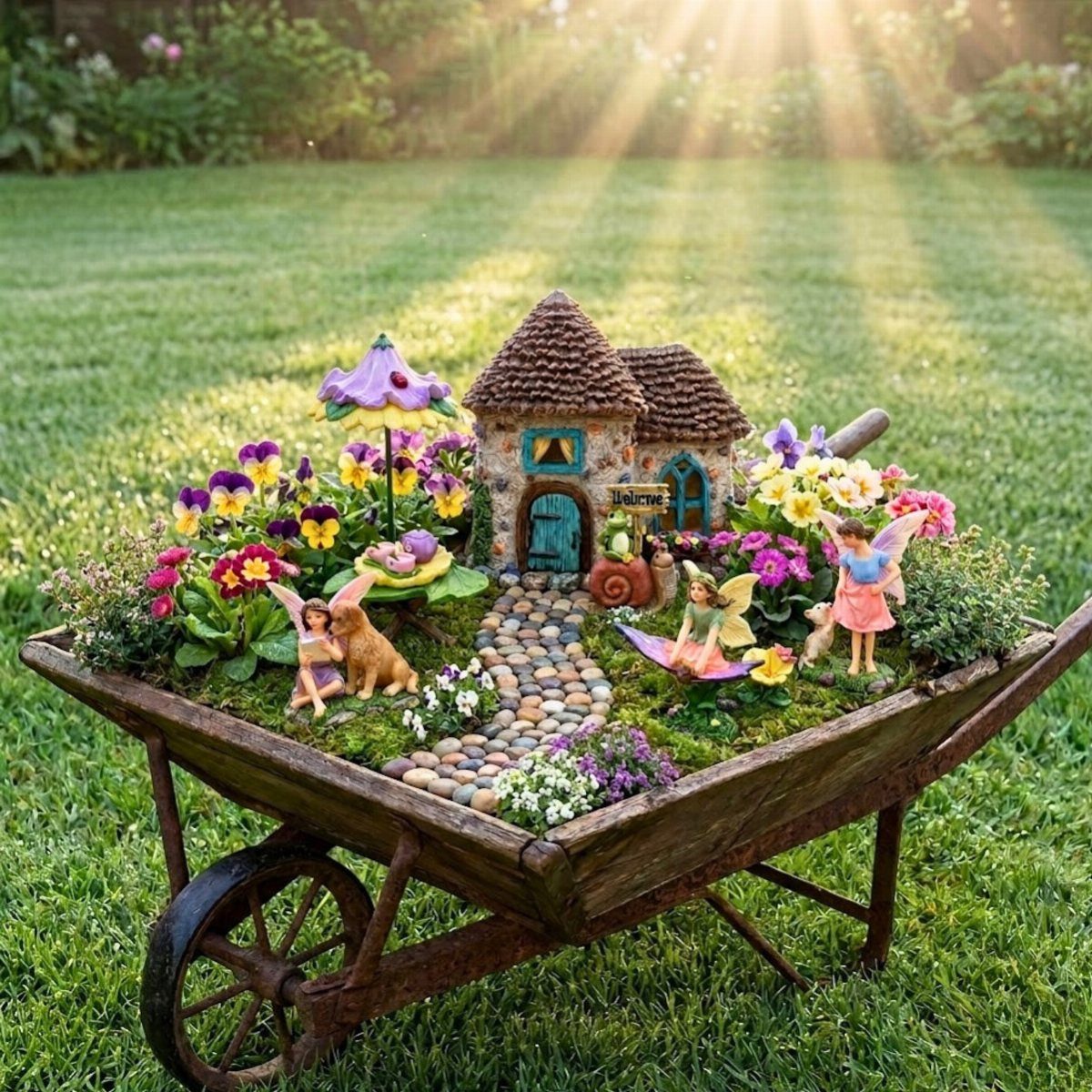
A wheelbarrow gives you a fairy garden that moves.
Park it in sun or shade depending on what you plant, roll it onto the porch when the weather turns, and you have a contained space that never needs weeding into surrounding ground.
The wooden and metal versions both work; wood drains better but rots eventually, metal lasts longer and heats up faster in summer sun.
Either way, drill drainage holes if they are not already there, and line the bottom with mesh to stop soil washing out.
3. Beach and Coastal Theme
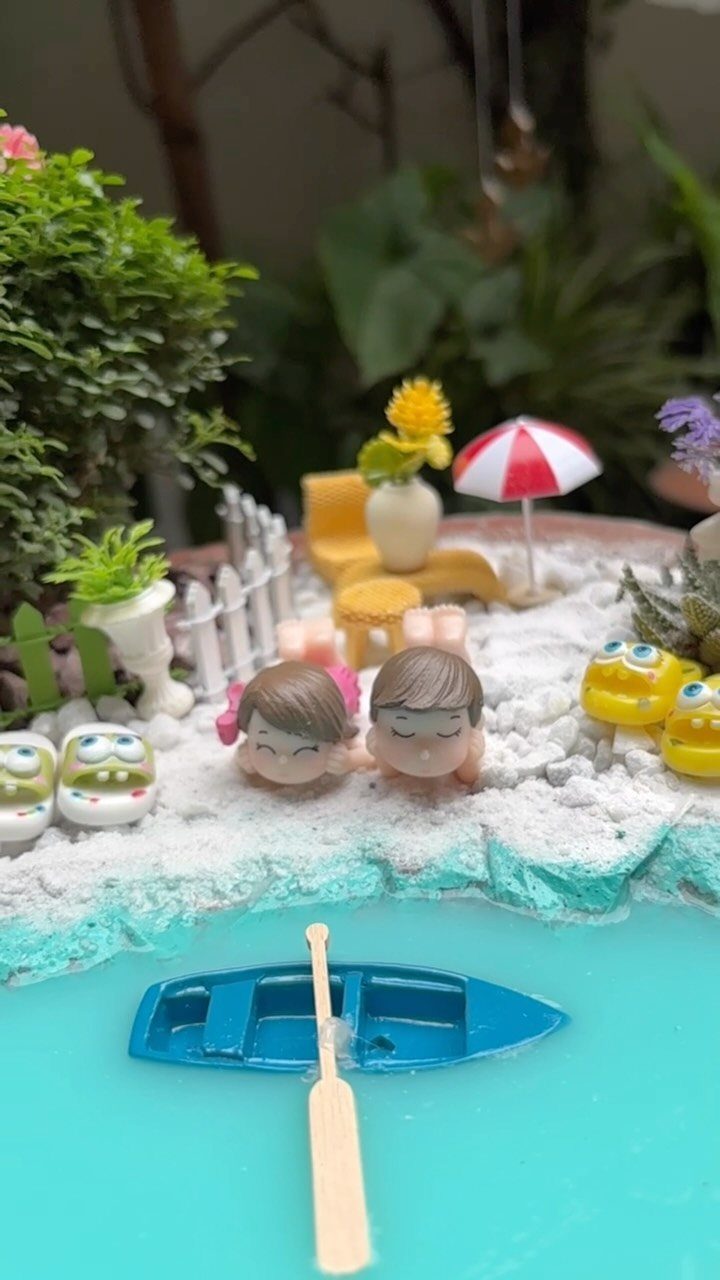
White sand, a strip of blue resin for water, and a tiny boat turn a shallow planter into a beach scene that needs no watering.
This is the theme I would pick for a first attempt: the materials are cheap, the plants are few or fake, and the whole thing sits happily on a balcony where a soil-heavy garden would weigh too much.
Plastic cake toppers, like the umbrella and reclining figures here, hold up fine indoors or under cover but bleach and crack in full sun.
4. Mini Fairy House
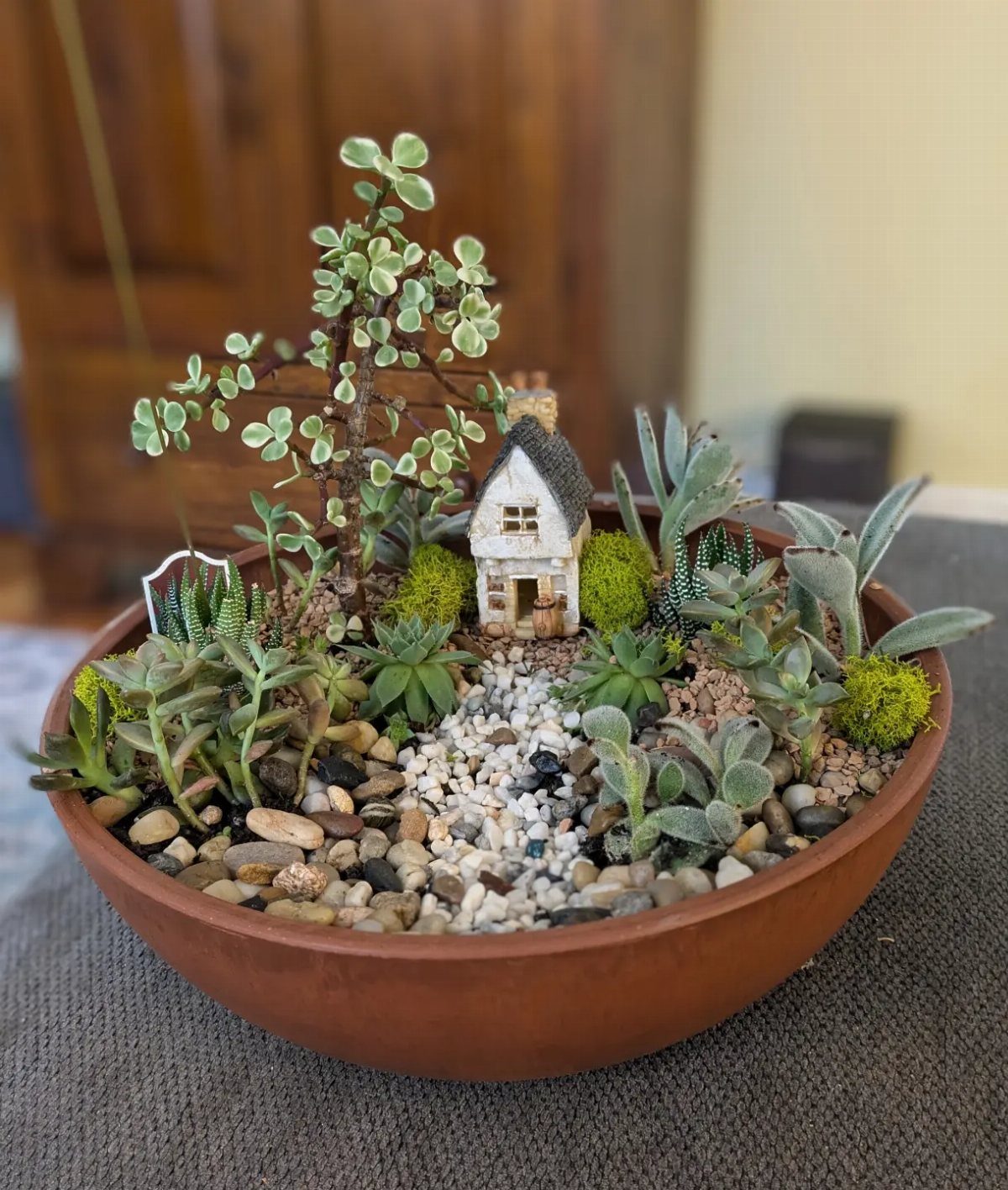
A single house in a terracotta bowl keeps the project focused. Succulents need bright light and dry soil, so a house among them belongs indoors on a windowsill or outdoors where rain cannot pool.
I would choose a house with a removable roof or open back if you want to tuck a battery light inside, and seal the terracotta with a clear coat if you are using it outside, or it will darken and flake within 2 winters.
5. Miniature Plants
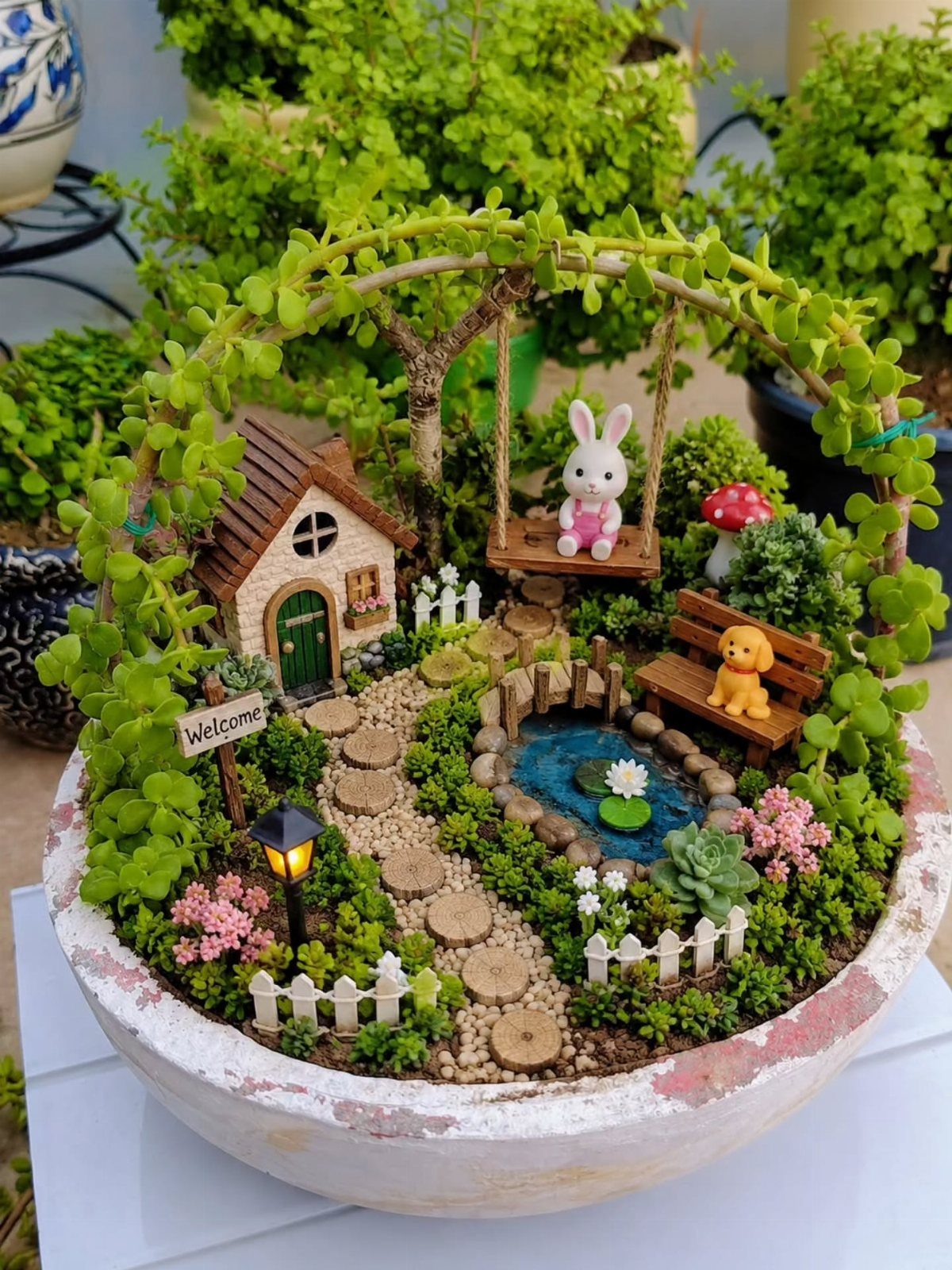
Small-leafed plants, the kind sold as fairy garden or railroad varieties, read at scale better than full-sized plants trimmed down.
Miniature plants grow, and grow out of scale, so you are committing to trimming or replanting every season. I would set aside time twice a year to keep the proportions right.
6. DIY Fairy Garden Kits
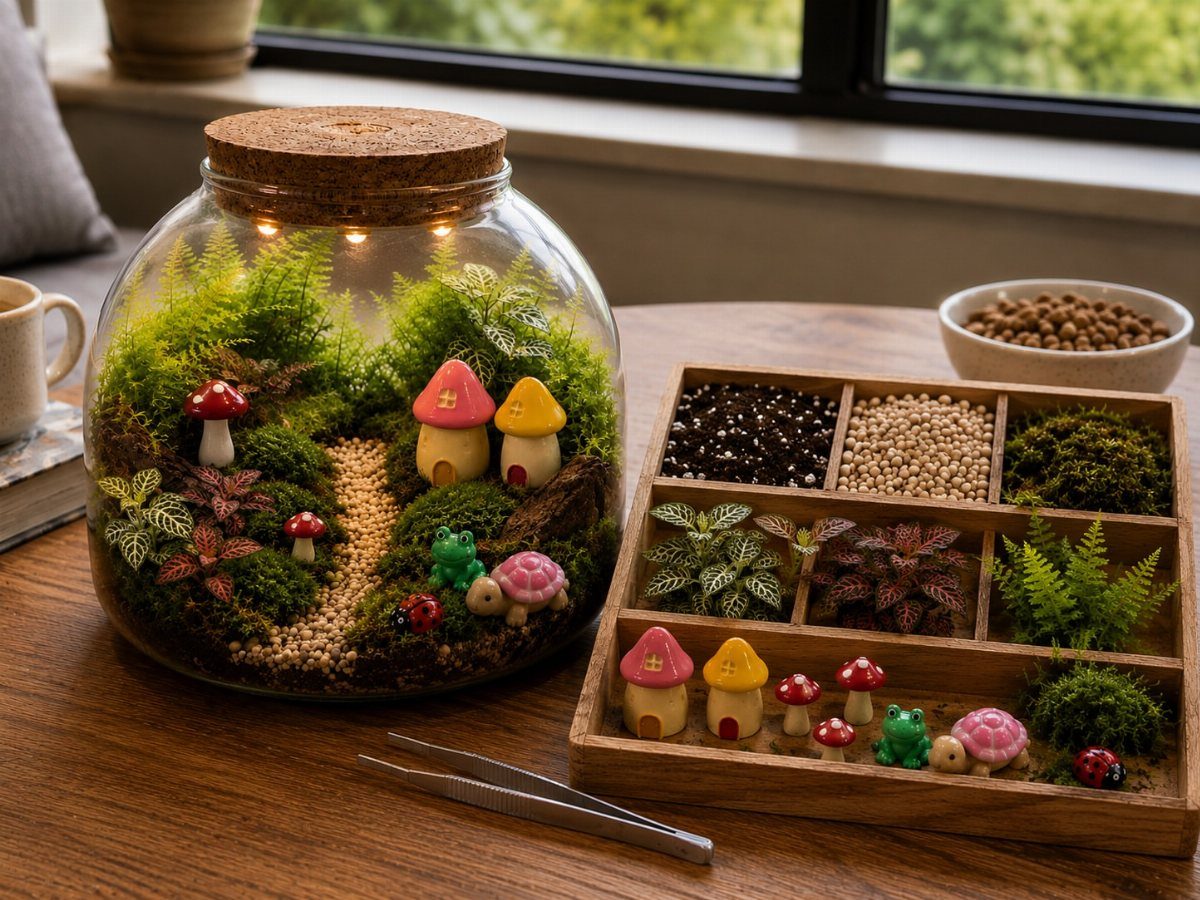
A kit bundles the basics: soil, pebbles, moss, a few plants, and figurines in a tray with compartments. The tray pairs with a finished glass terrarium, which shows you what the parts become together.
I would check what is actually included before buying; some kits are mostly craft supplies with no living material, others ship plants that may not suit your light.
The compartment tray itself is useful storage long after the first build, so this option makes sense if you plan to rearrange or expand later.
7. Fairy Village
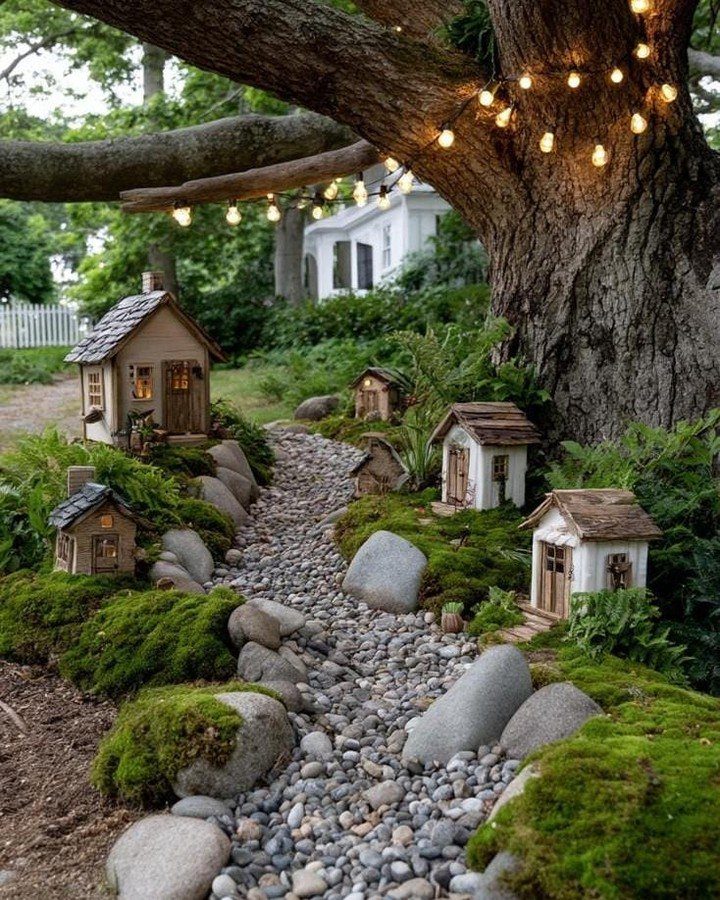
Several houses together read as a village only if the paths between them are clear. Pebble routes or moss channels let you walk the scene with your eye; without that connective tissue, it is just figurines in a pile.
I would start with 2 houses and the path between them, then add a third only when that first relationship feels settled.
String lights overhead tie the scene together after dark, but battery boxes need hiding, so plan one house with a lifted roof or hollow base.
8. Fairy Doors
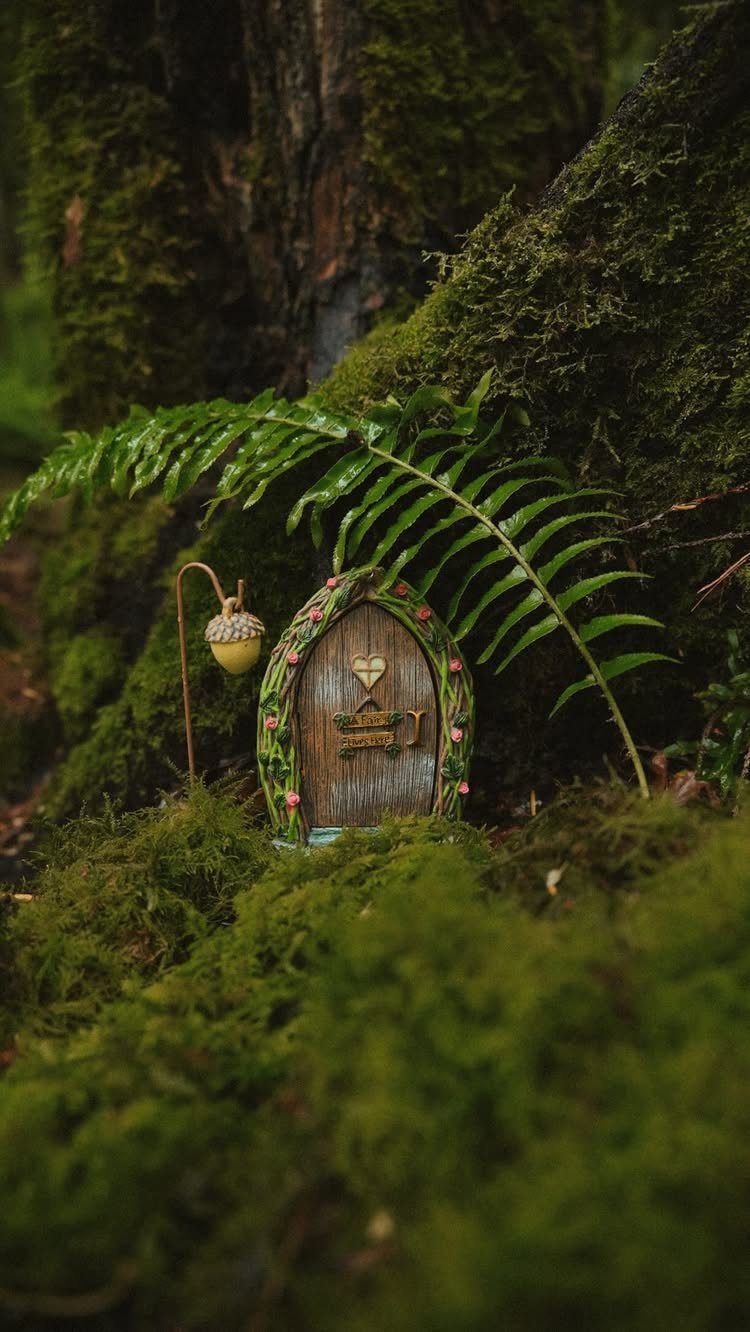
A door at the base of a tree or wall suggests a house continuing out of sight, which is the whole charm.
A real door needs a gap to swing; fairy doors do not, so mount them flush or nearly so.
I would weather the paint before installing it, since raw acrylic bright reads as craft project and aged gray or moss-stained reads as found object.
Lampposts beside the door, like the acorn-cap version here, need wiring only if you want them lit; most of the effect is in the silhouette.
9. Mushroom Decor

Mushroom lights on a bark structure give you glow without hiding the build. Resin or silicone caps handle weather better than glass, so they travel between indoor shelf and covered porch without worry.
I would check whether the light string is battery or USB before buying; USB keeps cost down but needs a port nearby, and battery sets need a plan for reaching the switch behind the moss.
Real mushroom-shaped stones or ceramic figurines are the daylight-only alternative, and they handle full sun where any plastic light housing would yellow.
10. Flower Arch
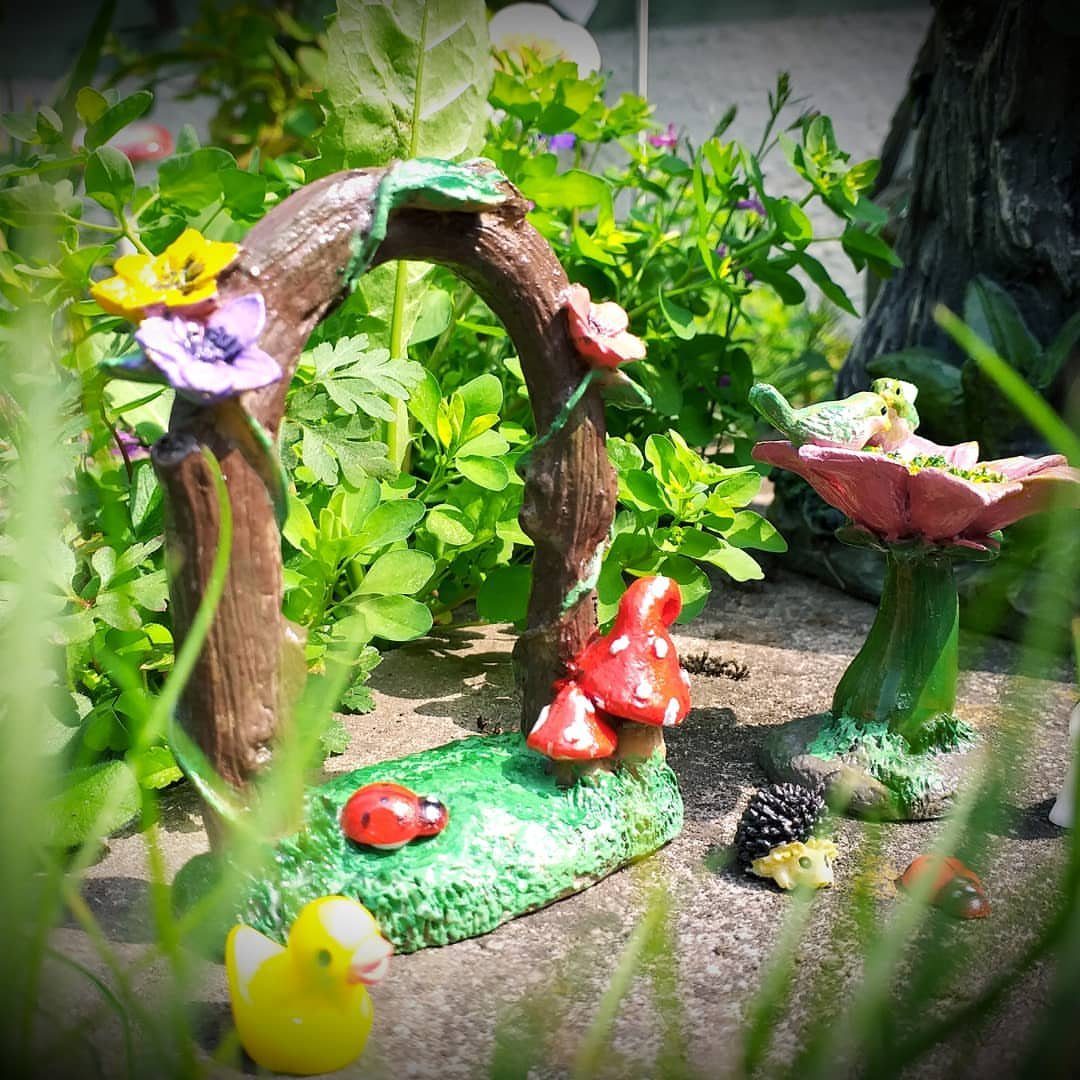
An arch frames whatever sits beneath it, so its value is in what you stage there. The bark-and-blossom version here uses wired faux flowers, which means no watering around the structure and no petal drop to sweep.
I would anchor the feet in pebbles or floral foam hidden under moss, since a freestanding arch in a breeze becomes a domino.
Painted wood or resin arches are lighter and cheaper; bark is heavier and more convincing, but check it for insects if you are bringing found wood indoors.
11. Mini Fairy Garden in a Teacup
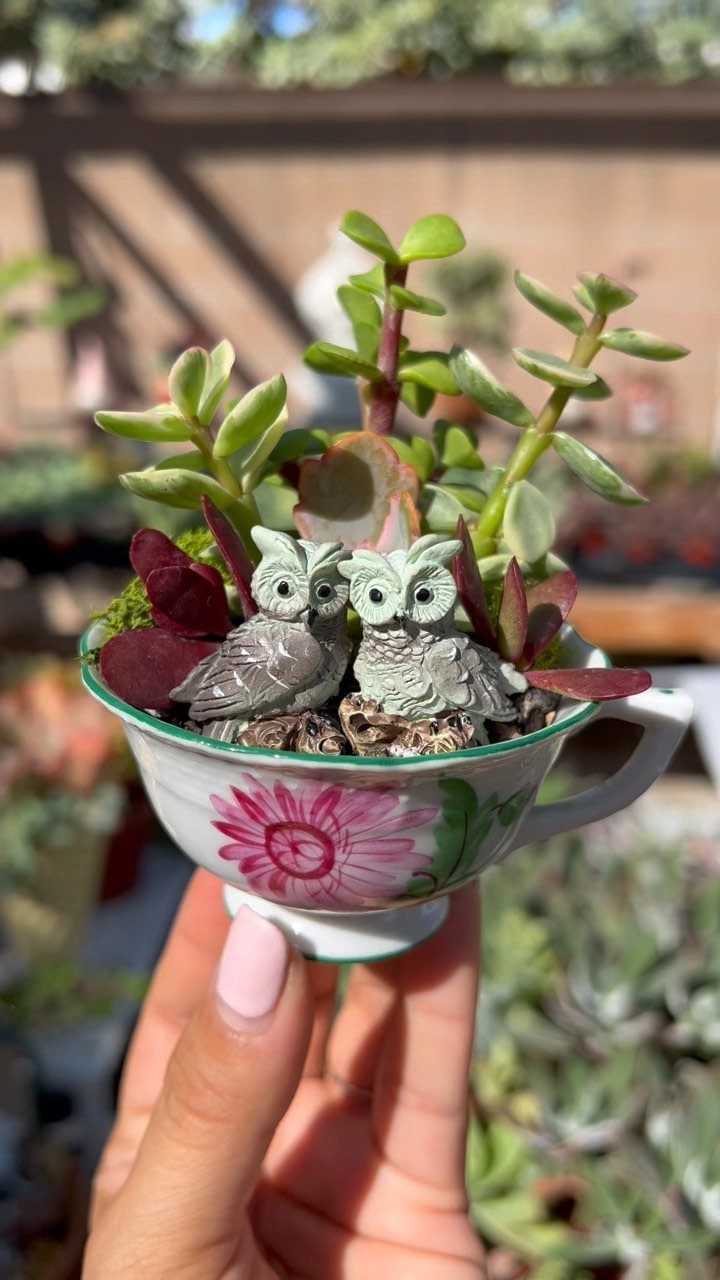
A teacup gives you a container with handle and foot already built in, which is more architecture than most small gardens get.
Succulents and moss are the reliable pair, since drainage is absent and overwatering will crack the porcelain from inside.
I would choose a cup with a hairline crack or chip from a thrift shelf, both for cost and because perfect china looks like a waste of good dishware.
Owl figurines, like the pair here, or any small animal, need glue or a pin to stay put when the cup tilts during watering.
12. Upcycled Birdbath Garden
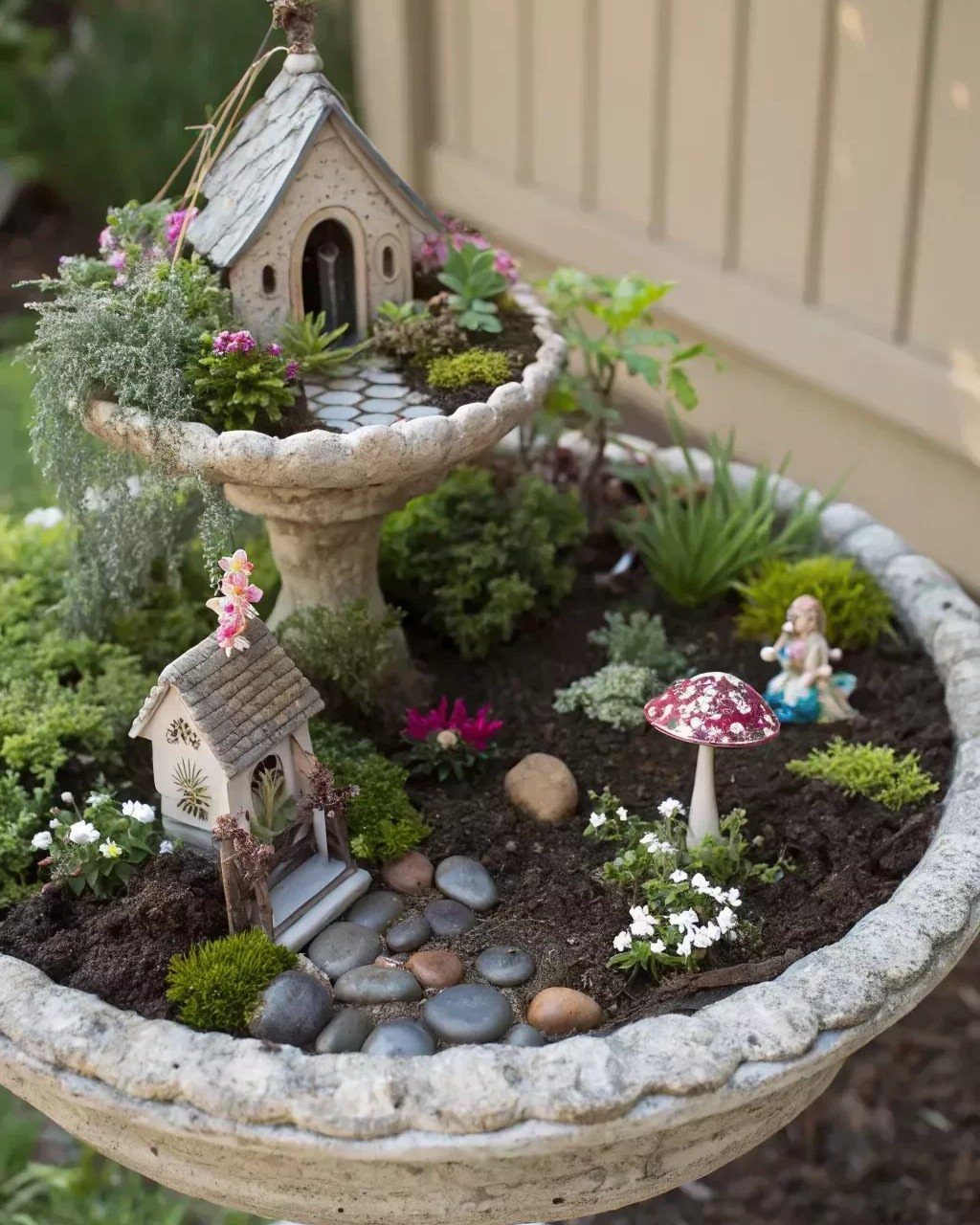
A cracked or leaking birdbath is already a planter waiting to happen; the bowl shape holds soil and the pedestal lifts the scene to eye level.
2 tiers give you upper and lower neighborhoods, but water still pools in the joint between them, so drill or fill that seam if the bath is staying outdoors.
Stone or concrete birdbaths run heavy even empty; I would check the pedestal base for stability before adding soil, and set the whole thing on level ground rather than trusting a table that might tip.
13. Miniature Windmills

A working windmill catches breeze and turns, which is more life than most fairy garden pieces get.
Leaf-shaped blades are light enough to spin in a light wind, but that same lightness means they can snap if the windmill sits in open gusts.
I would place it in a sheltered corner or among taller plants that break the wind. The open door detail is charming from the viewing side, so angle it toward the path or patio where you will sit.
Check that the axle turns freely before you buy; a stuck windmill is just a statue with extra parts.
14. Shallow Bowl Fairy Garden
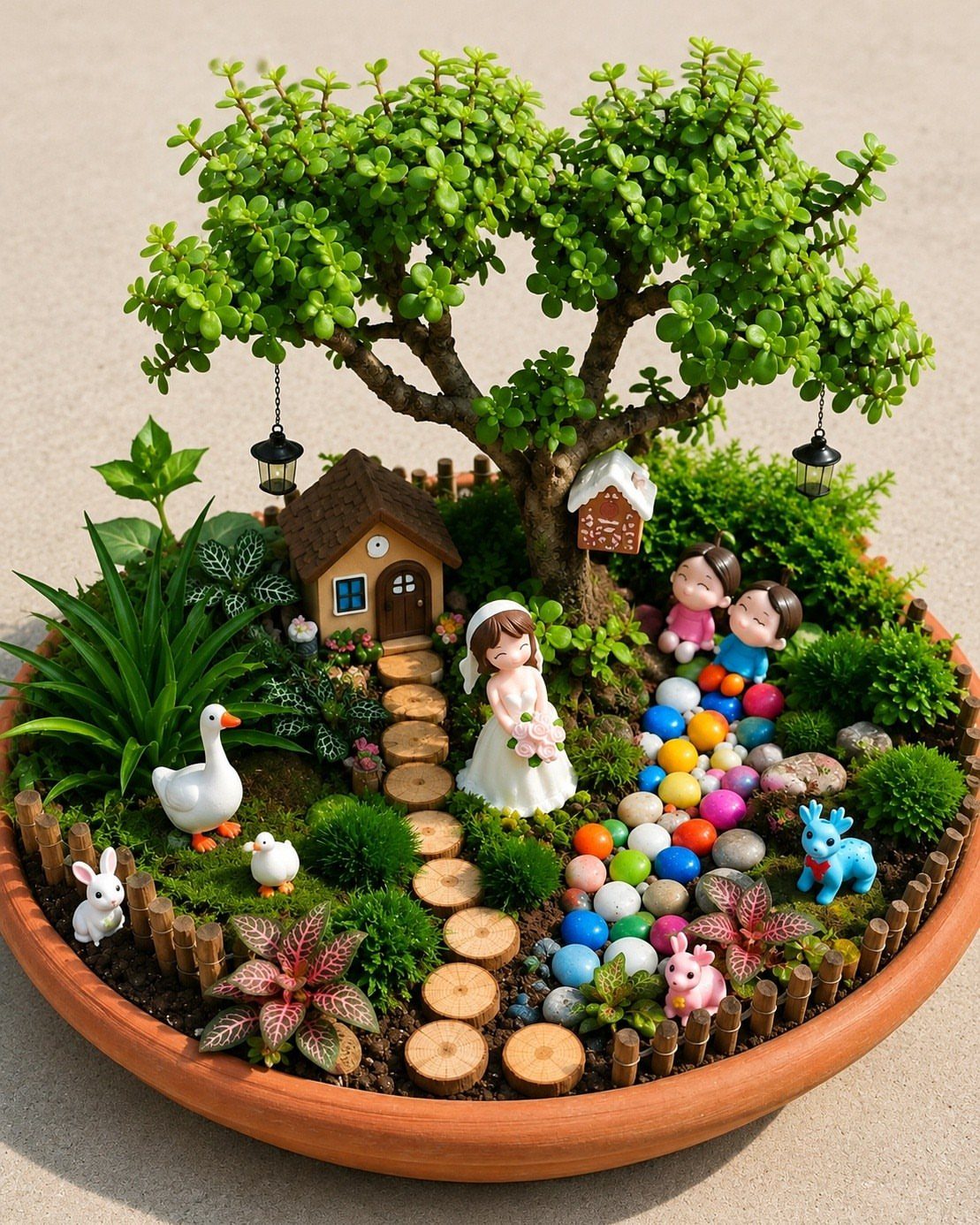
A shallow bowl keeps the scene low and wide, which suits a windowsill or a table center better than a tall terracotta pot.
The bride and children figurines here give the garden a story, but any small figures work; scale matters more than theme, so match them to the house and tree.
Without drainage holes, this lives indoors or needs watering with a dropper. I would seal the bowl if it is unglazed terracotta, or soil moisture will wick through and mark the surface beneath.
15. Wine Cork Miniature Bridge
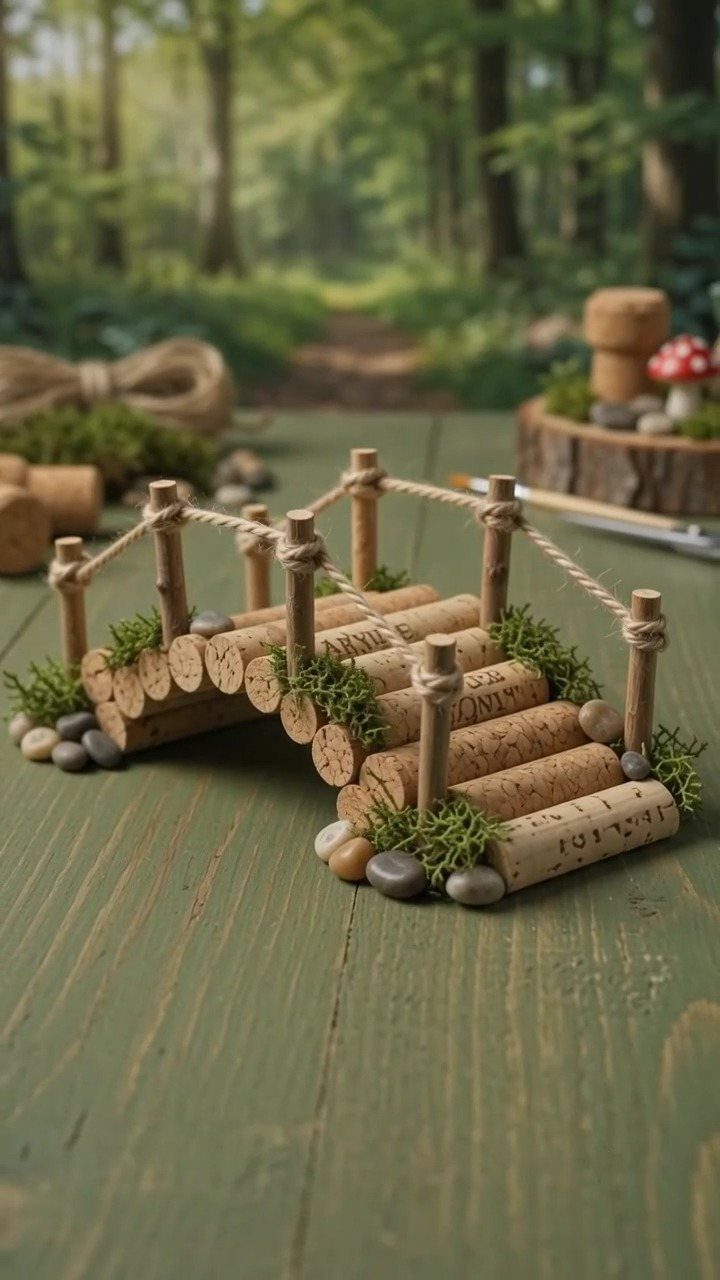
Wine corks bridge a gap with the color and texture of real bark, and they are free after the last glass.
The dowel posts and twine railings here are light enough that the whole bridge needs anchoring; I would pin the feet into floral foam or hot-glue them to a flat stone base.
Cork floats, so this version stays clear of actual water features unless you seal the bottoms with a coat of polyurethane. Wine corks and twine cost next to nothing if you already keep them around the house.
16. Galvanized Tub Fairy Garden
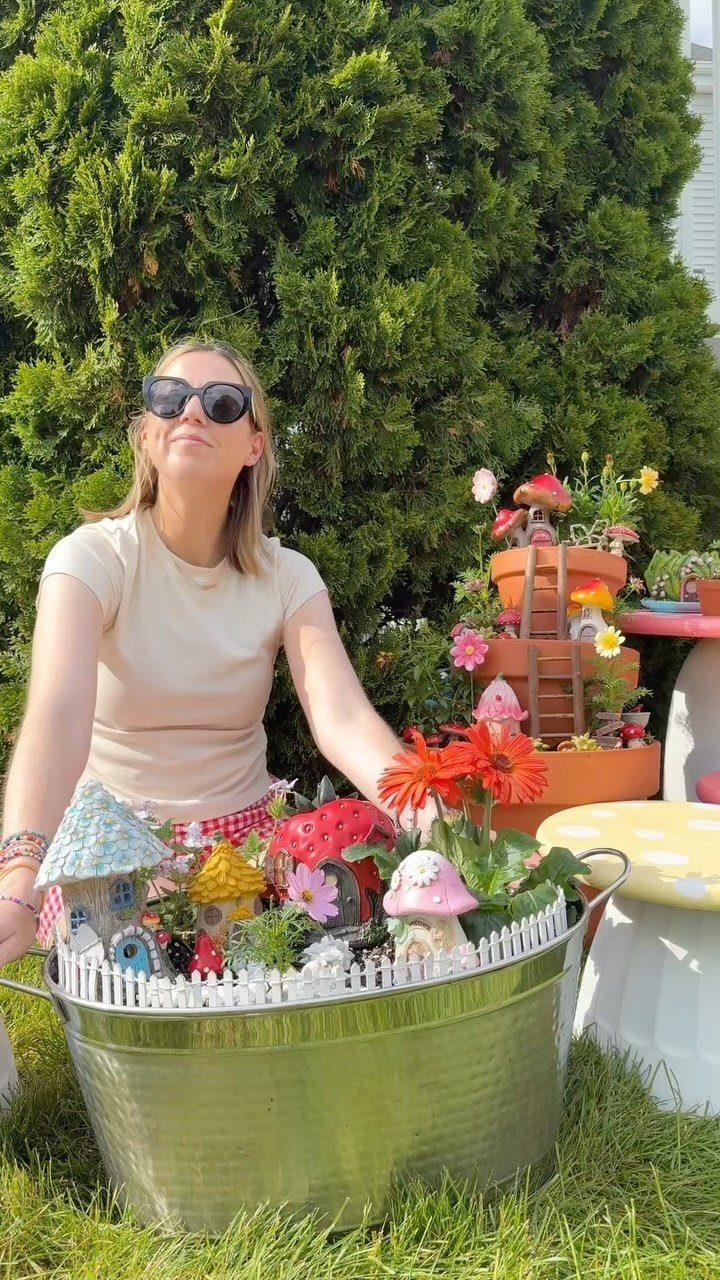
A galvanized tub gives you the footprint of a small pond without the water. The white picket fence here sections the space into rooms, which helps a large container read as a village rather than a clutter.
Metal heats in sun and holds heat into evening, so plant choices need to tolerate warm roots; succulents and portulaca handle it, moss does not.
I would set this directly on ground or pavers, not a deck; full of soil and damp, it weighs enough to stress boards.
17. Handmade Fairy Figurines
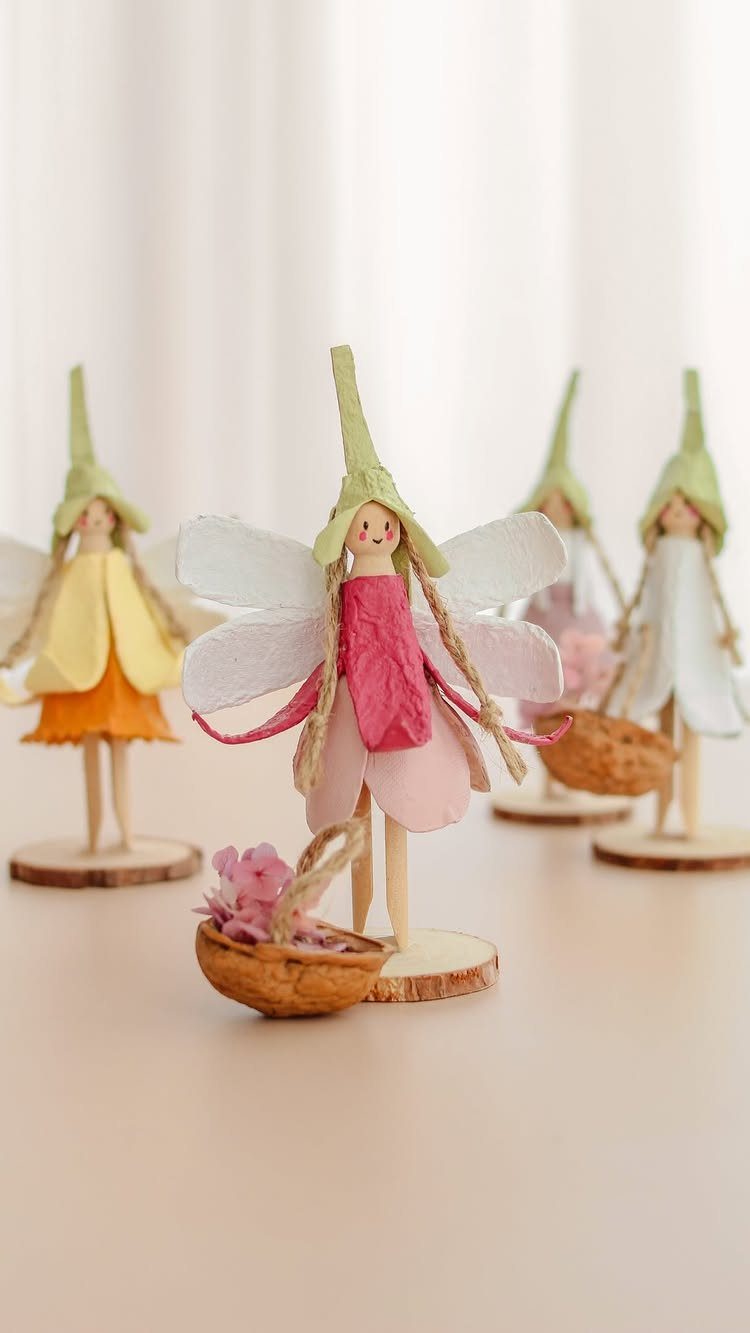
Clothespin bodies and paper wings make figurines light enough to stand on thin wood slices without tipping. A walnut-shell basket sells the handmade look, but any small container, acorn cap or bead, works for a prop.
I would paint faces before assembling, since a brush between paper wings and fabric skirt is awkward. These suit indoor gardens or covered porches; craft glue softens in rain, and paper petals run in humidity.
18. Fairy Garden Sensory Bin

Dyed rice and glass gems turn a plastic tray into a landscape a child can rearrange every afternoon. The wooden bowls and scoops here are part of the play, not just storage; pouring and sorting is most of the activity.
I would keep this indoors or on a covered porch, since dyed rice bleeds color when wet and glass gems scatter on grass.
A lifted lip on the tray contains most of the mess, but a sheet underneath still saves cleanup time.
19. Tree Trunk Fairy Garden
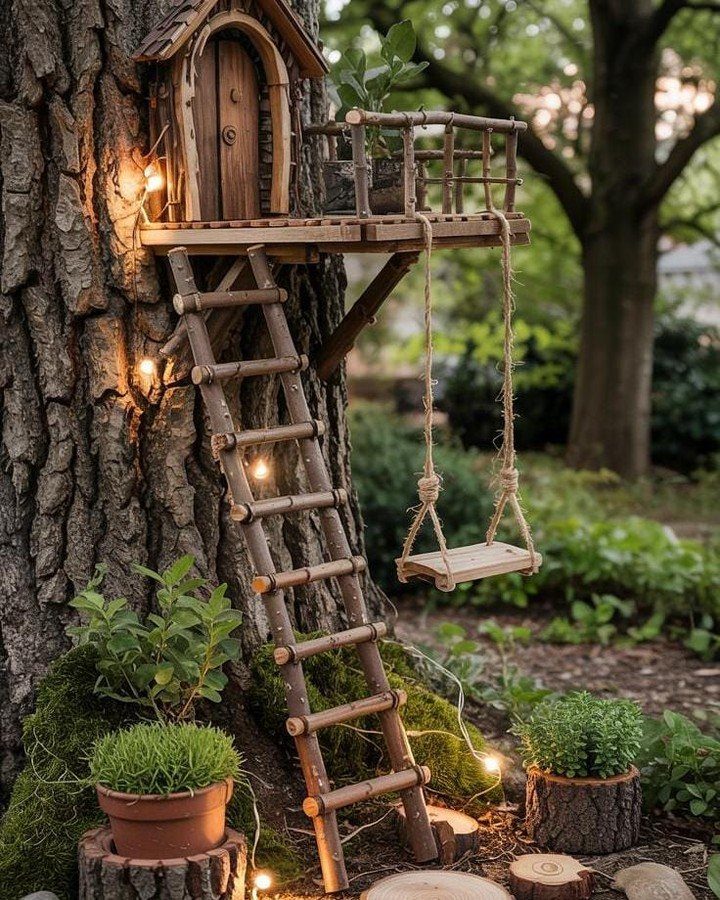
A tree trunk with the bark still on gives you vertical real estate and a built-in woodland setting. Mount a small house with a rope swing and ladder using exterior screws into solid wood, not the soft outer layers.
The LED string lights here are warm white battery sets; I would run the wire behind the ladder rails so the battery box hides against the trunk. Check the trunk for rot or insect holes before attaching anything heavy.
20. Terracotta Pot Fairy Garden
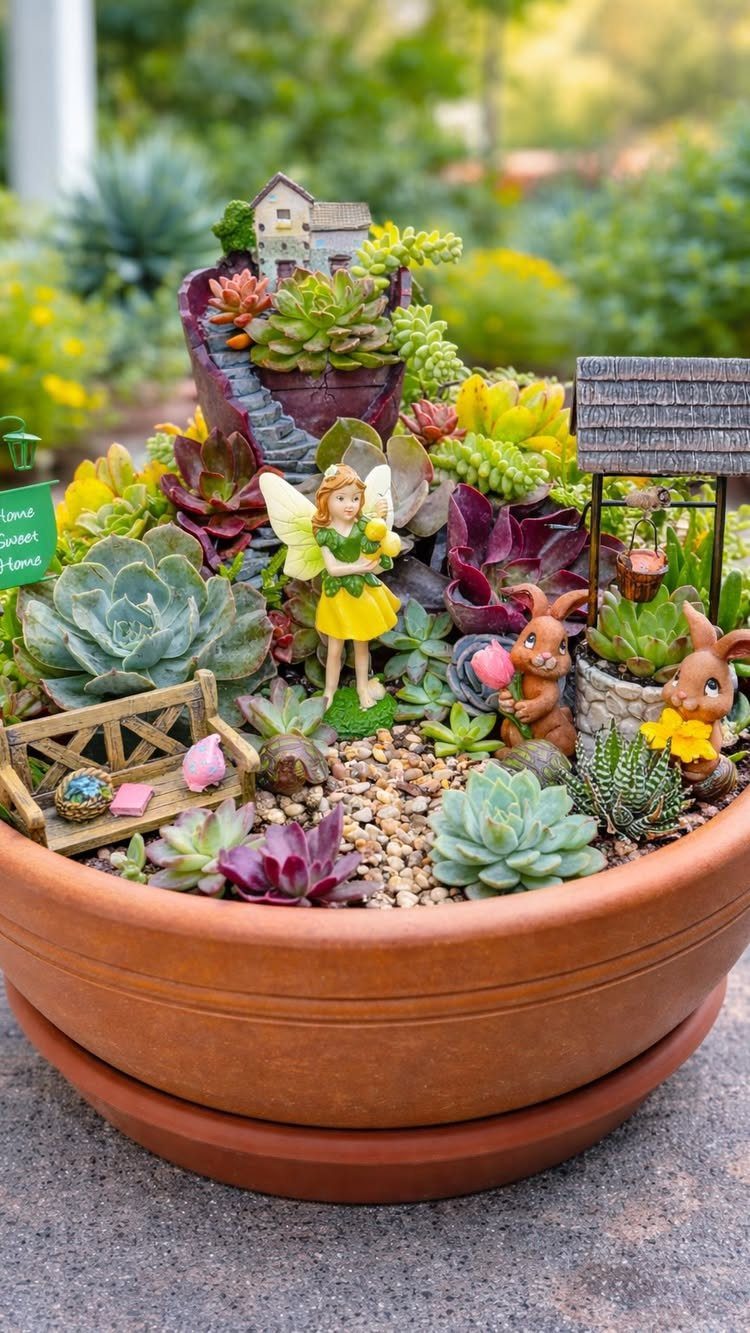
The bowl shape and drainage hole make terracotta forgiving for succulents, which is why this pairing shows up so often.
A shallow bowl needs less soil depth than a standard pot, so the figurines stay proportional and the pebble path sits near the surface.
I would skip the "Home Sweet Home" sign if this lives outdoors; painted wood letters swell and crack. A bench and small animals read as garden even without text.
21. Wooden Barrel Fairy Garden
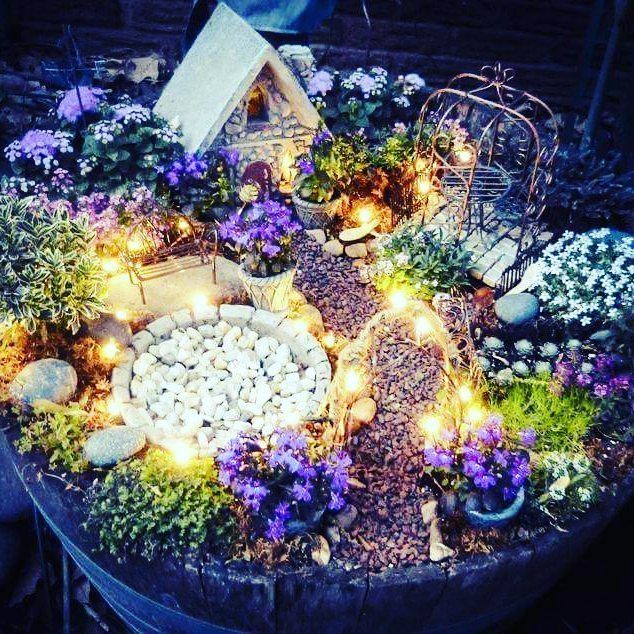
A half-barrel keeps the rustic look of whiskey aging without needing a full cooper’s setup. The stone cottage and stone pathway here echo the barrel’s weight; mixing in resin figurines would feel light against all that wood and rock.
I would line the interior with landscape fabric before soil, since barrel staves gap and drain fast. Fairy lights along the rim define the space after dark without needing to hide much wiring.
22. Mushroom Pedestal Fairy Garden
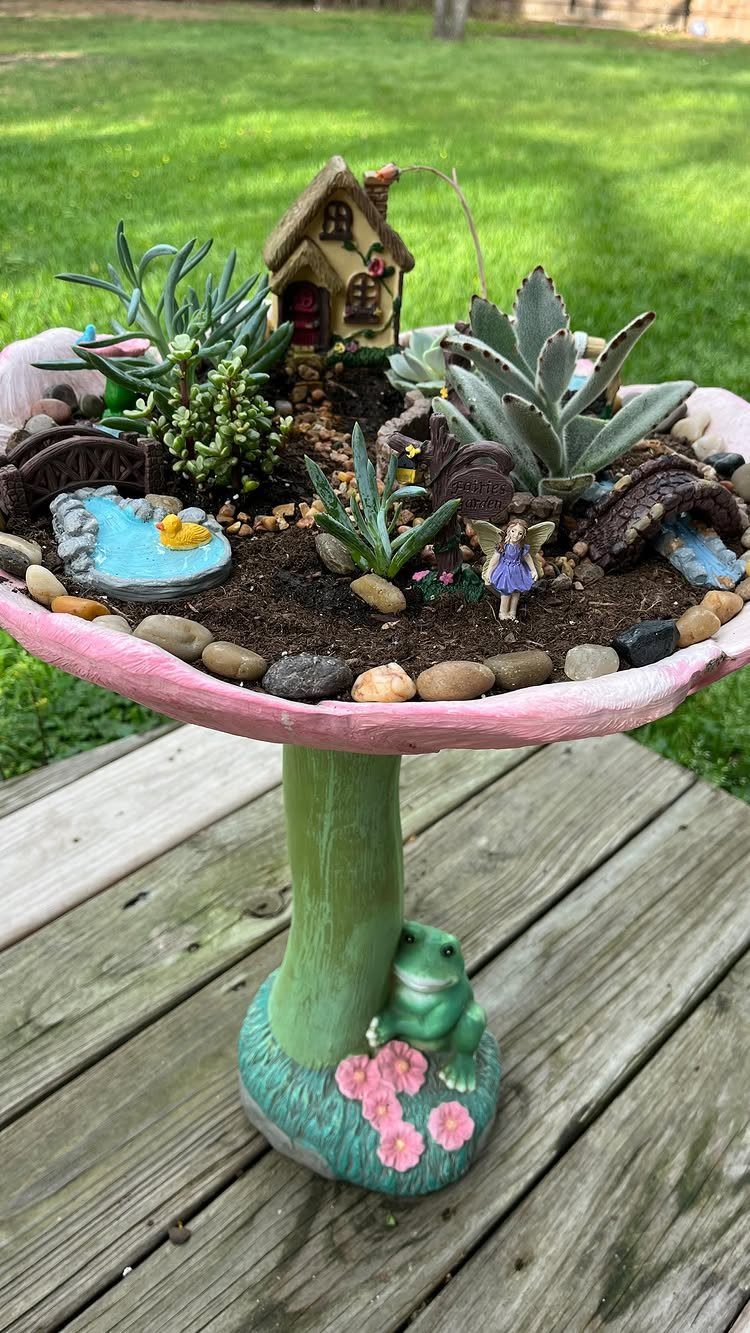
A mushroom-shaped pedestal turns the container itself into a character, which saves you one figurine. The wide cap holds soil like a birdbath bowl; the narrow stem means a lighter load than a solid pedestal of the same height.
A shallow dish suits succulents fine, though the bridge is purely for show and I would skip it in a spot that gets heavy rain.
I would seal the painted cap with a clear coat if this stays outdoors, or the pink and green will chalk within a season.
23. Log Fairy Garden

A fallen log already belongs in the scene, so the garden reads as discovered rather than placed.
The miniature house, wishing well, and mushroom cluster here sit along the log’s length; the mulch and white stone path fill the gap between.
I would use the log’s natural hollows or split areas to anchor the well, since wind or curious hands knock loose pieces into the grass.
Check the log for ants before you build; a colony will recruit the fairy house as shelter.
Choosing Plants for Fairy Gardens
6 hours of sun means creeping thyme, sedum, dwarf dianthus, or small grasses; these stay low enough to read as lawn or path, and the taller ones among them pass for trees and hedges.
Pack them tight so soil does not show through.
Shade calls for moss and the same spreading habit. Succulents belong where sun hits and drainage is sharp; anywhere else they stretch and rot.
Small pots dry fast in sun, so check the top of the soil with a finger before you decide it needs water.
Trim as growth pushes out of scale; once a season is usually enough. Cover bare soil between plants with pea gravel or colored stone, which reads as path and cuts down on evaporation.
Planning Your Fairy Garden
Buy the container first, then sketch the layout with a stick or on paper.
A tiny tree or woody herb, sage or rosemary or lavender, gives you a focal point to build around. Everything else arranges from there.
A plan matters because fairy gardens clutter fast.
One accent plant, low growers for filler and spillers, and room left for growth: that is the proportion. Leaving gaps between plants at planting time is a mistake; these spread and fill in, but bare soil until then looks unfinished.
Theme and location decide each other. A balcony garden needs weight limits and no drainage mess; a porch garden moves for weather; ground soil means checking what runs underneath.
Decide that before you shop for houses and figures, or you end up with accessories that fit no container you own.
Caring for Your Fairy Garden
Water when the soil needs it, not on a schedule. Clean accessories when they look dusty; paint and resin hold up longer without grime worked into the surface.
Seasonal swaps keep the scene from going stale, though that does not mean redecorating for every holiday. A spring refresh and a fall one is enough for most gardens.
Indoor gardens in shallow trays or terrariums skip the weather problem entirely.
Outdoors, shelter from direct rain and wind extends the life of anything not rated for it. Weatherproof materials help, but placement matters more.
Found wood and bark brought indoors need checking for insects first.
A colony that was dormant outside wakes up in house heat. Dyed materials and paper anything stay under cover; water bleeds color and softens glue.
From whimsical displays to greenery and roses galore, fairy gardens will transform any space into something magical.
Frequently Asked Questions
What exactly is a fairy garden?
A fairy garden is a miniature landscape built in a container or small garden bed, with tiny plants and accessories scaled to look like a full-sized world.
A fairy garden lives on the charm of smallness, whether you add figurines or let the scene suggest unseen visitors. Most use a container with drainage, a few low plants, and small structures or paths to give it story.
Where can I buy stuff for a fairy garden?
Garden centers and craft stores stock the basics: small plants, pebbles, moss, and figurines.
Online retailers and kits bundle soil, stones, plants, and accessories in a compartment tray, though I would check whether the kit includes living material or just craft supplies.
Thrift shelves and your own house are sources too: chipped teacups, wine corks, and found bark cost little and look more personal than factory-new.
What materials work best for fairy houses?
Wood, ceramic, stone, and resin each suit different placements. Stone and ceramic handle weather but weigh more; wood looks rustic but swells and cracks unless sealed; resin is light and detailed but can bleach in full sun.
For outdoor houses, I would pick solid walls over paper or unsealed craft materials, and check that any light inside is accessible for battery changes.
Bark, twigs, and pinecones work for roofs and fences if they are dried and insect-free first.





