
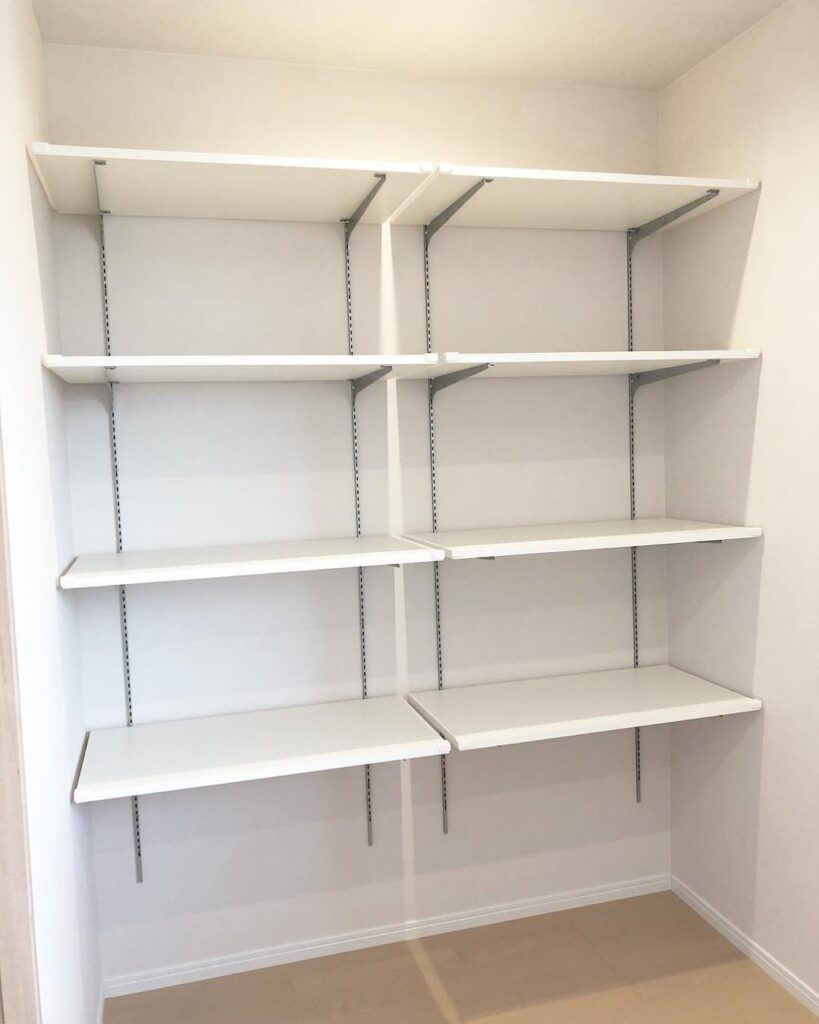
Kitchen pantry storage fixes range from an over-the-door rack you can find for the price of a takeout lunch to a walk-in closet with a butcher block counter built in.
The one that fits depends on whether you rent and what the door and shelves can actually hold; a hollow-core door will sag under heavy cans, while spackle patches over the anchor holes when you move.
[link-whisper-related-posts]1. Use Clear Containers
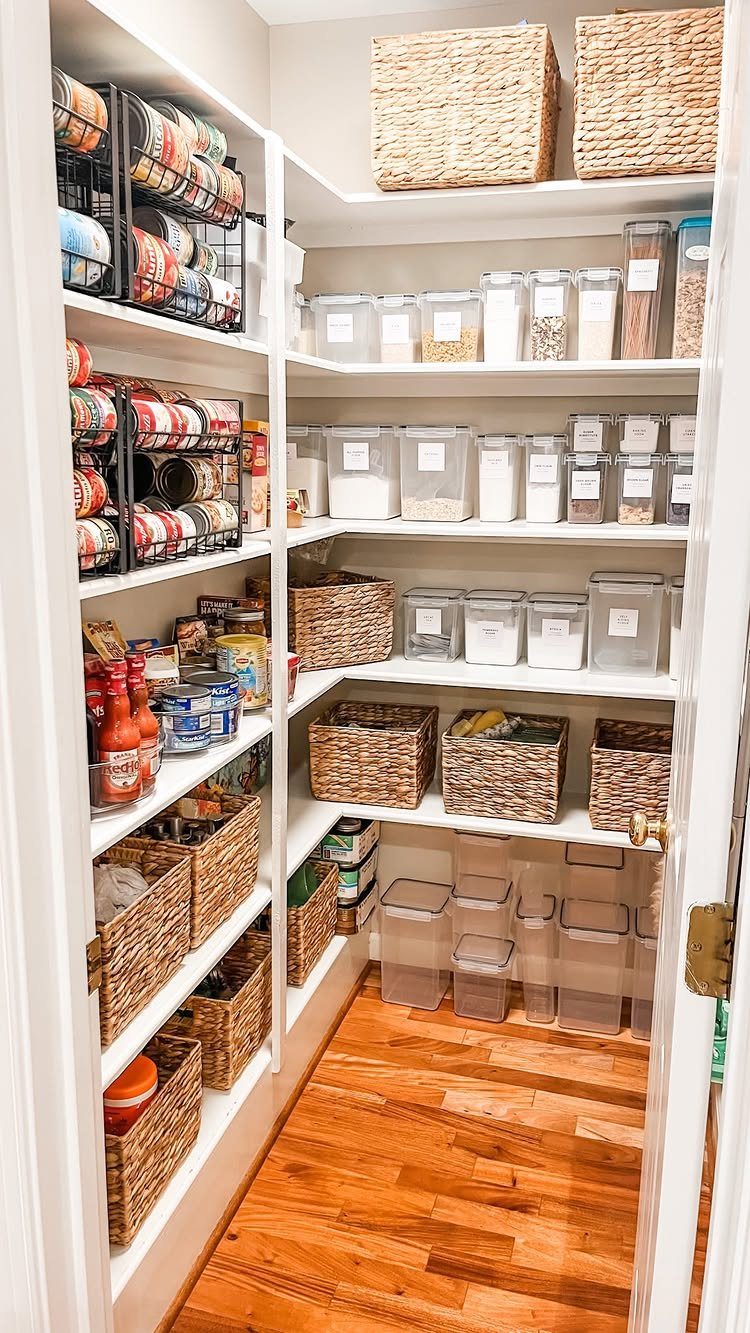
Clear containers turn a quick glance into inventory taken. I keep the ones I own square rather than round; they sit flush against each other and waste no shelf depth between them.
Check the lid seal before you buy. A container that looks tidy but lets moisture in costs you the cereal or flour it was supposed to protect.
I buy one size for grains, a shorter one for snacks, and I skip the fancy brand labels. Masking tape and a marker work fine and peel clean when I change what goes inside.
This works in any pantry, even a rental where you cannot change the shelves themselves.
2. Install Adjustable Shelves
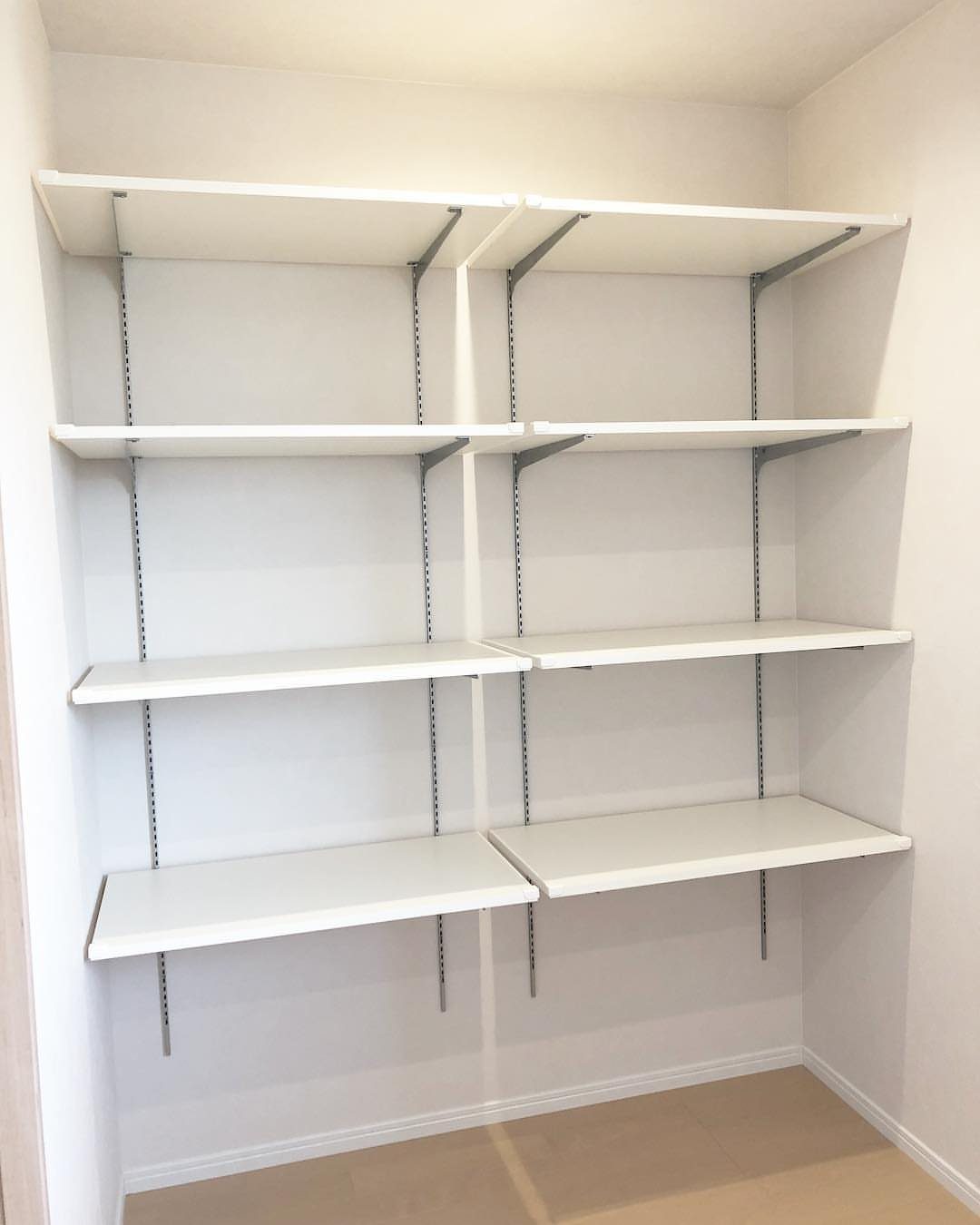
Metal track shelving lets you move a shelf up or down in small increments without tools.
I have adjusted mine twice in 4 years: once when I bought taller mixing bowls, once when I gave them away and needed space for appliance boxes instead.
Measure the tallest item you store before you mount the tracks. A cereal box needs more clear height than its own height; the lip of the shelf and a box lid will jam you if you cut it close.
I leave one shelf taller for the awkward stuff, one shorter for canned goods.
Renters can install these with wall anchors that patch over with spackle when they move.
3. Use Over-the-door Organizers
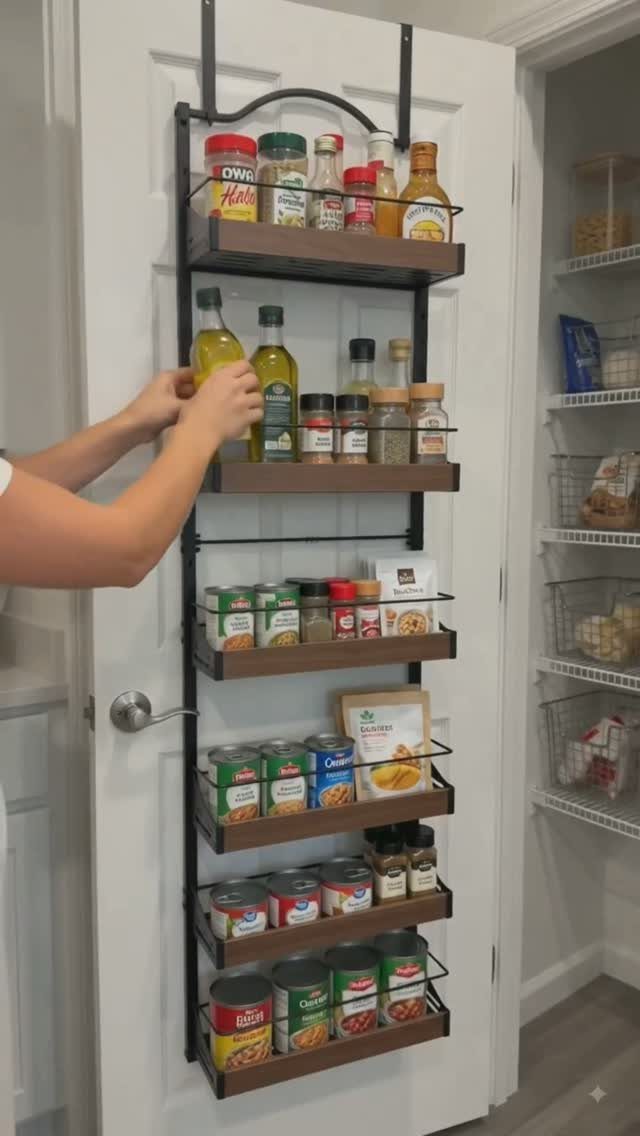
An over-the-door rack buys back the dead air behind a pantry door. The one I like runs narrow shelves top to bottom, not wide baskets that stick out and bang the door frame.
Weigh the door before you load it.
A hollow-core interior door sags under heavy cans; a solid door handles more weight without the hinges pulling. I keep my heaviest items, oils and vinegars, on the bottom shelf to keep the center of gravity low.
This is a same-day project. The hooks that hang over the top need no drilling, and when I move I lift it off and the door is untouched.
4. Use Wood Shelves
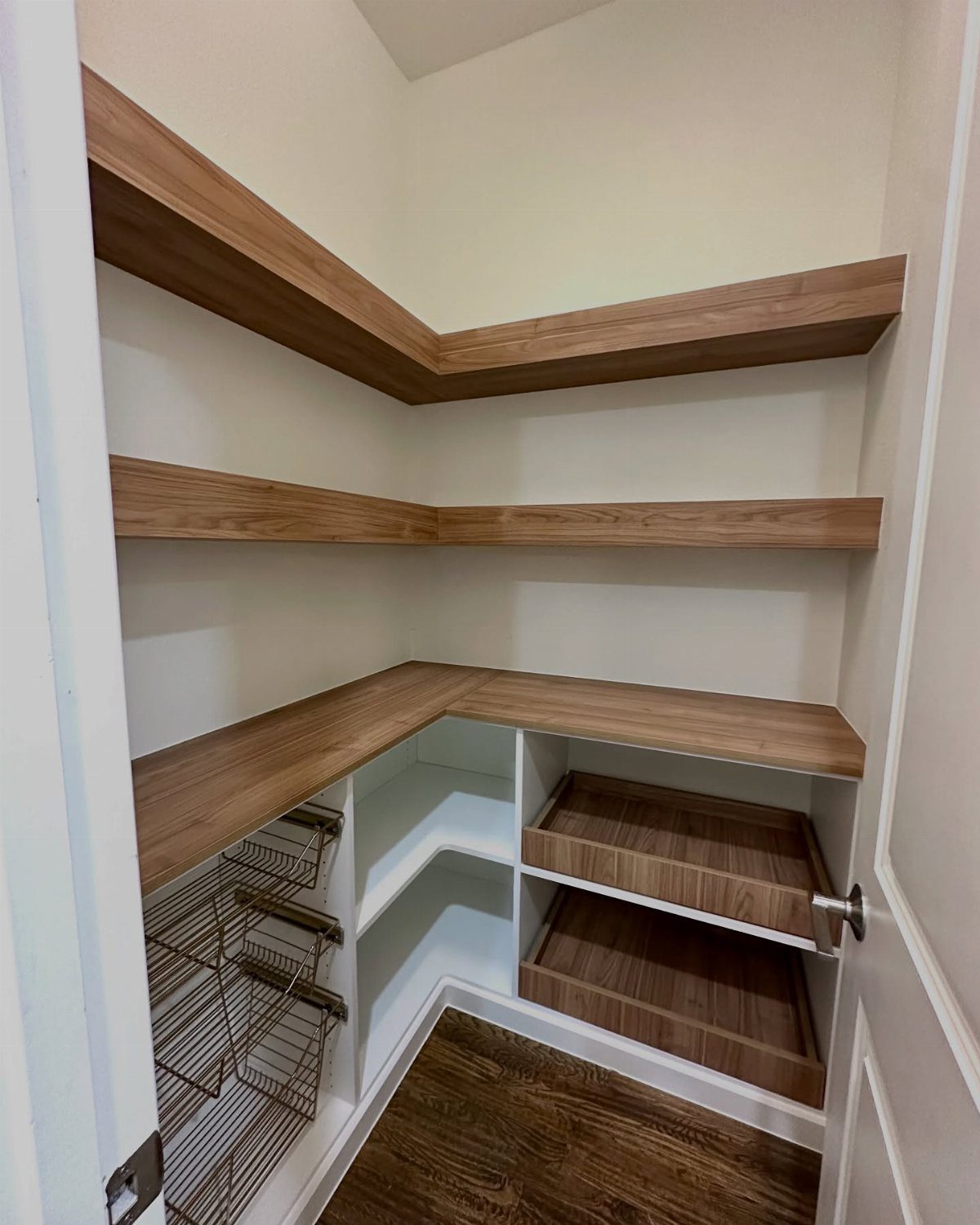
Wood shelves carry more visual weight than wire, which is why I would not put them in a pantry smaller than a closet.
The wood here is light in tone, not the yellow oak I grew up with. Maple or birch takes stain if you want to darken it later; pine dents too easily for a shelf that holds a stand mixer.
I would poly the surface even if I left the rest natural; flour dust wipes off sealed wood, it grinds into open grain.
This option trades some storage height for looks. The wood itself is thicker than wire or laminate, and every shelf costs you usable height below it.
5. Invest in a Pantry System
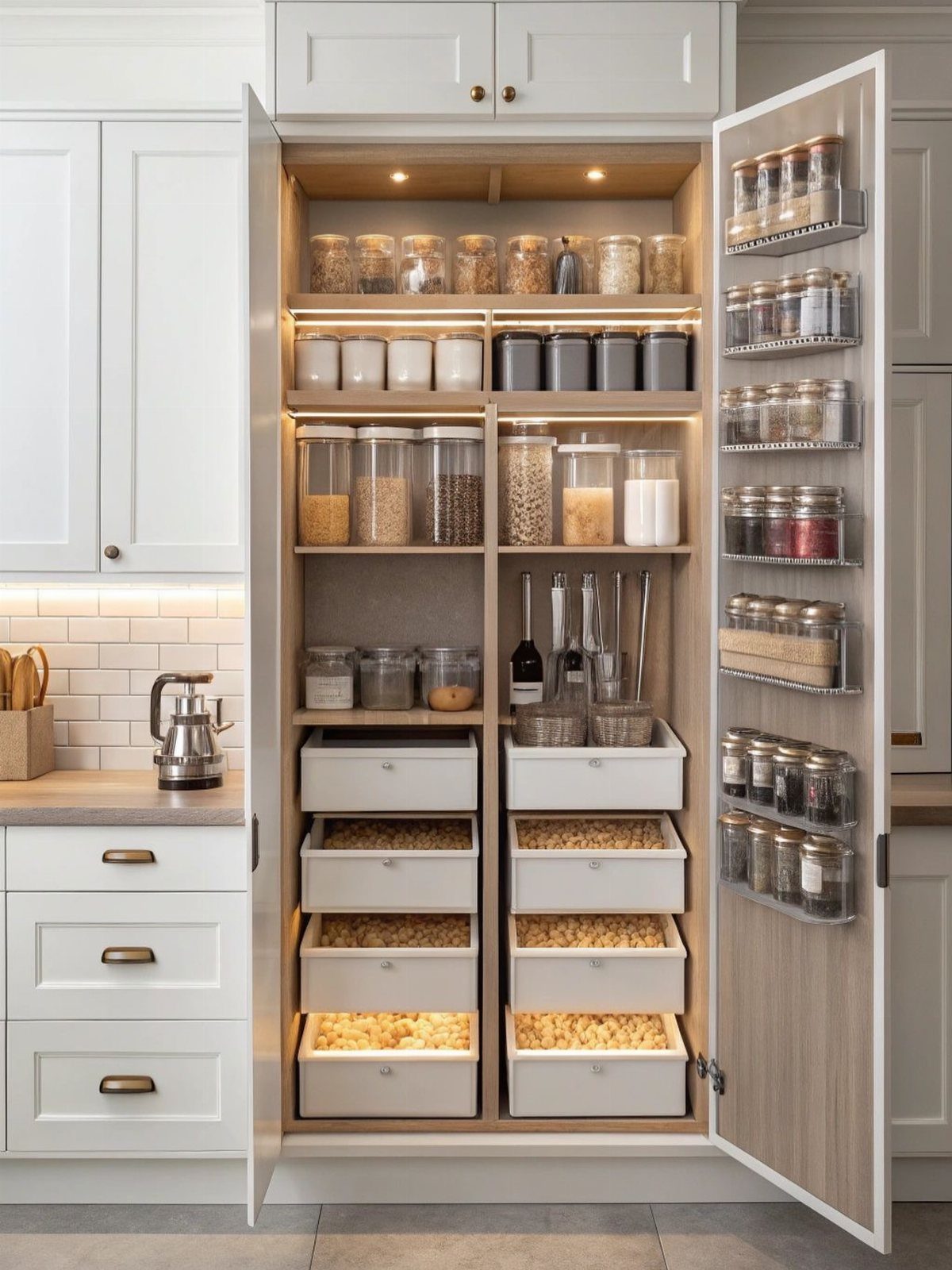
A full pantry system pulls together what I would otherwise buy piece by piece.
I would check the interior depth before ordering. A system built for deep closets wastes space in a shallow recess, and one built shallow leaves cereal boxes sideways.
The door racks in particular eat clearance; I need space between the shelf edge and the door interior or the jars scrape.
The value is in not having to guess whether the bins fit the shelf they sit on.
6. Add Pull-out Pantry Drawers
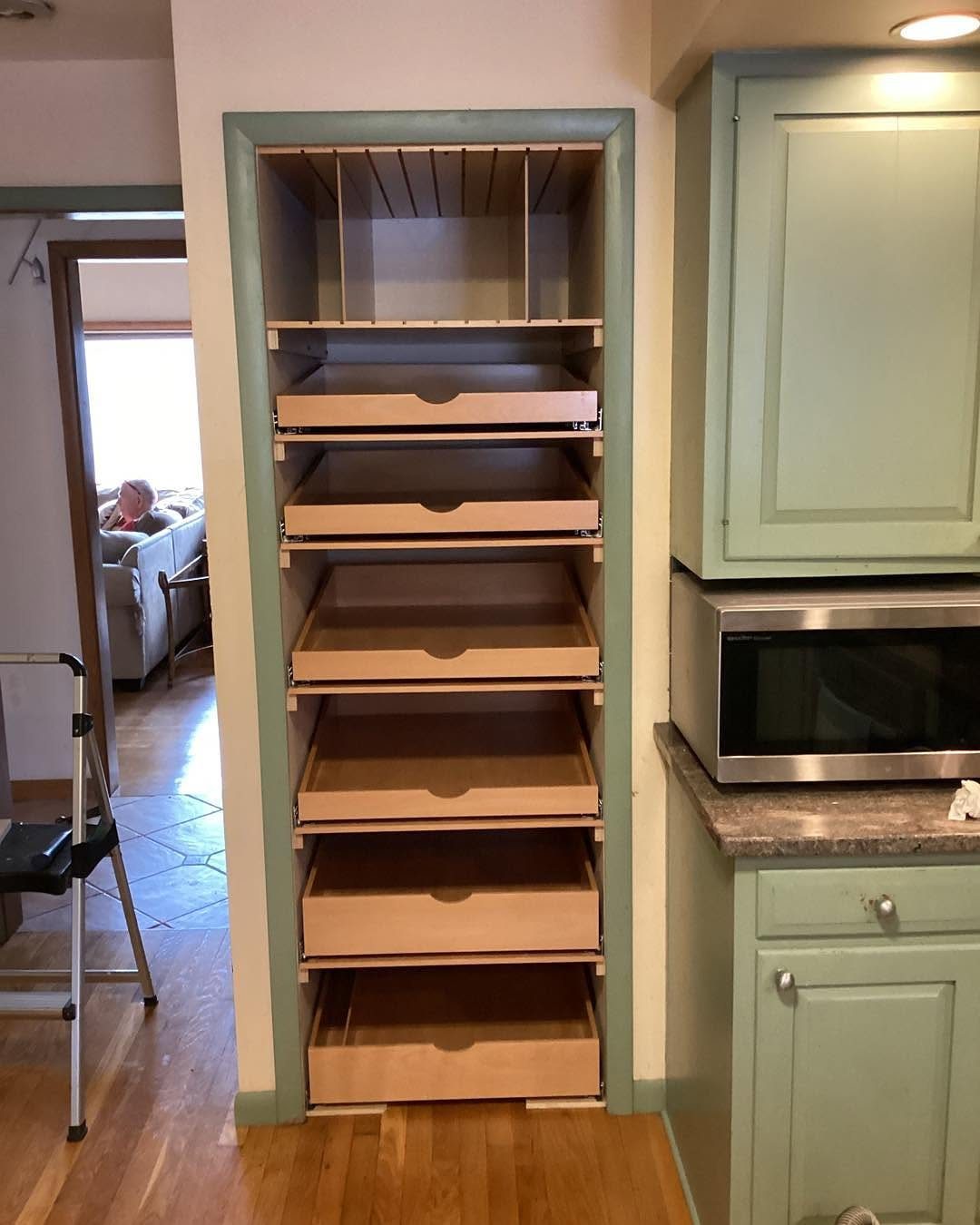
Pull-out drawers in a tall, narrow cabinet turn the back half of a deep shelf from black hole into usable space.
The top drawers here are shallow tray dividers, good for packets and flat boxes that slide back on a regular shelf.
Below are deeper boxes for bulk goods. I would run a full extension slide on every drawer, not three-quarter; the back is where I always need to reach.
A unit this tall needs to be anchored. The center of gravity loaded is high, and a child pulling the second drawer can tip the whole thing if it stands free.
7. Built-in Pantry Closet Counter
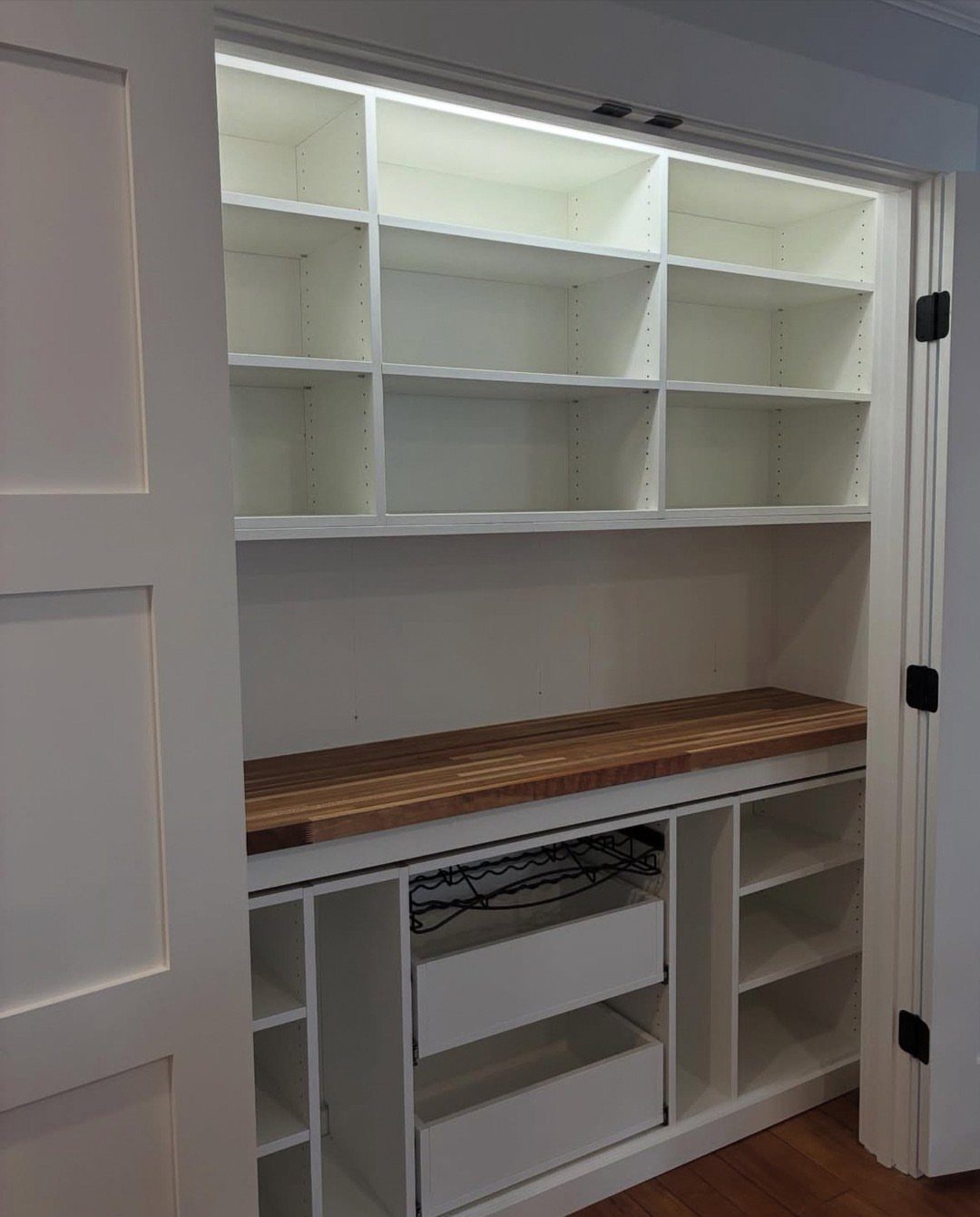
A butcher block counter in the middle of a pantry turns the space from storage room into prep station. I would plane the block thick, because a thin slab warps under humidity and the weight of a KitchenAid.
Check your door swing before you build anything fixed.
Folding doors need full arc clearance; a counter that sits too proud blocks them. Open shelving above, lit and shallow, keeps tools in reach without leaning over the work surface.
This setup eats floor space a small pantry cannot spare. I would use it only where the closet is already walk-in width, not where I am trying to carve pantry space out of a wall.
8. Integrated Pantry Shelf Lighting
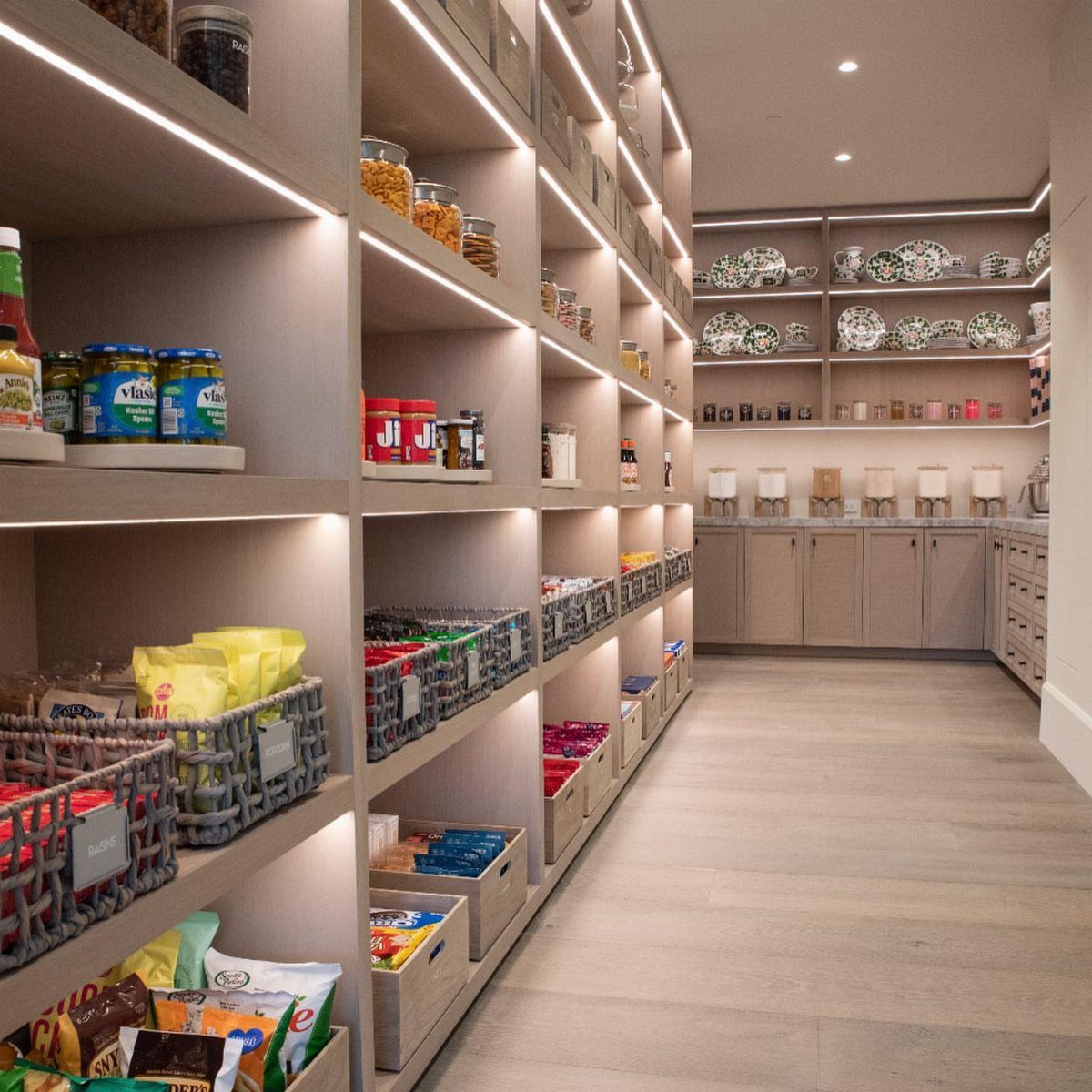
LED strip lights mounted under each shelf turn a dark pantry into a space where you can read labels without borrowing light from the hallway.
Strips that run the full shelf depth, not just the front edge, send light to the back row of jars.
Plan for the driver location before you commit to a shelf height.
The transformer box needs air and access; tucking it behind a fixed top shelf means tearing things apart when it fails. I would leave a false back panel or a clip-on cover.
Hardwiring is cleaner but requires an electrician where I live. Plug-in strips with a cord channel down one corner are the renter path; the cord is visible but the light works the same.
9. Tiered Cabinet Shelf Risers
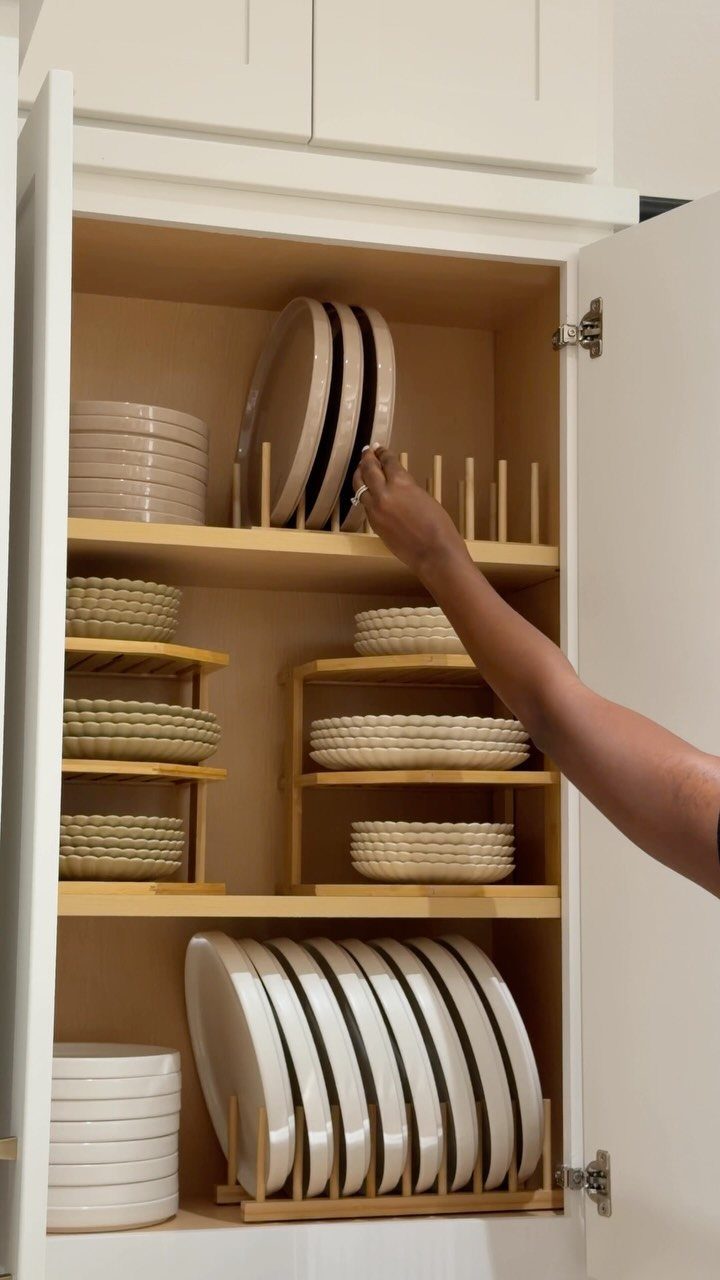
Tiered risers inside a cabinet put every plate on display instead of stacking them into a leaning tower that blocks the one you need.
The wood versions here match the drying racks beside them; bamboo is cheaper but checks and splits faster in steam from a dishwasher nearby.
Measure your cabinet depth before buying.
A riser built for deep shelves overhangs on standard built-ins and the door will not close. I would leave half an inch of air behind the riser for crumbs to fall through rather than jam against the back wall.
This is a single-Afternoon change that needs no tools. The weight sits on the cabinet shelf itself, so load limits stay the same.
10. Dedicated Spice Drawer Organizers
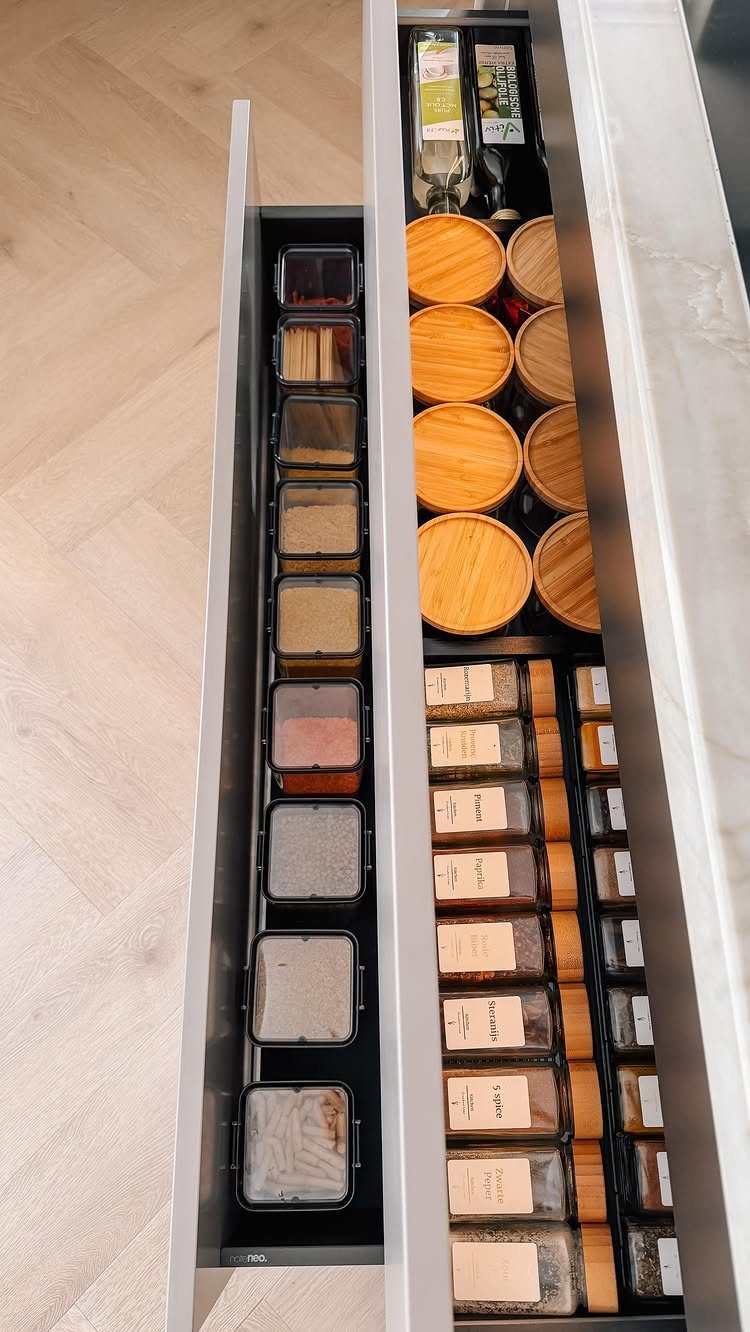
2 narrow drawers, each filled with a grid of uniform jars, end the hunt for cumin behind a forest of mismatched bottles.
The glass and wood-lid combination here looks finished from above, which matters because you are looking down into the drawer.
A drawer organizer lives or dies on its grid spacing.
Jars smaller than the slots rattle and tip; jars larger than the slots do not fit at all. I would buy the jars first, then the organizer, or measure the grid against what I already own before ordering.
This only works with a free drawer to give up. A kitchen light on utensil drawers leaves none for spices unless I am willing to move them to a cabinet and reach down instead of across.
11. Corner Pantry Shelf Setup
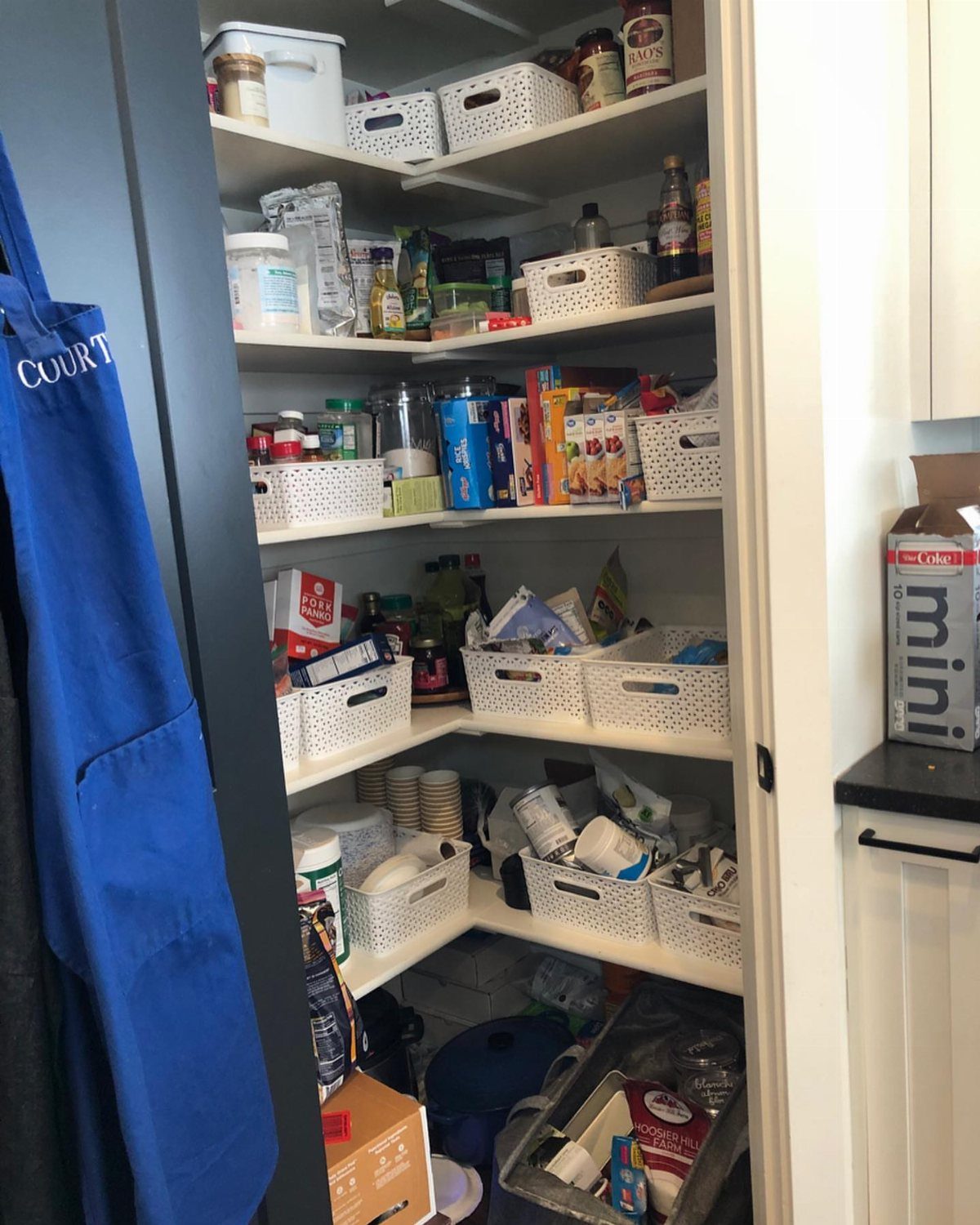
A corner pantry wastes less space than a walk-in because the walls themselves are the shelves; the door opens onto the stockpile, not an aisle.
The perforated white baskets here hold small items that would slide back into the blind angle where shelves meet.
Perforated plastic sheds weight and moisture better than woven; I would not use fabric in a pantry where a syrup bottle might leak. The holes also let me see what is inside without pulling the basket.
Corner shelves need custom cuts or a triangular filler piece where 2 walls join.
A flat board leaves a dead triangle behind it; baskets sit better on a pie-cut shelf that follows the wall angle. I would build or buy that shape rather than pretending the corner is square and losing the space.
Purge Before Organizing
Pull everything out before you buy a single bin.
I make three piles: keep, donate, and the third one that stays in the kitchen but not in the pantry.
A door organizer that worked in one kitchen often fits better in a closet once you see what the new space actually needs. Deciding what the space is for comes before anything goes back in.
I do not buy containers until I see what is returning.
The OXO bins and baskets already in the house get reassigned first. A can holder or clear jar only makes sense once I know what size and how many.
One year is the cutoff I use for pantry items, same as clothes.
The unexpired stuff I never reach for goes to the donation pile too. An empty shelf is easier to plan than one crowded with things I am pretending to use.
Consider Functionality
Put the things you grab daily where your eyes land first.
The shelf at arm height, no stretch or bend, is where I put everyday drinks. Tall items need height mapped to their actual measurement, not to a guess; a fixed shelf built too short wastes the whole bay.
Stackable bins or floor baskets corral the bulky stuff that never fits upright. A large bag of chips fits the floor better than a shelf edge it overhangs.
I think of pantry shelves in layers, top to bottom, so a quick scan tells me what is on hand and what needs restocking. The cereal bowls do not go above the things I need for dinner tonight.
Adjustable shelves earn their keep when your household changes. The soda habit passes, the water bottles arrive, and the shelf moves up or down without a project.
Budget-friendly Options
A two-hundred dollar budget covers more than most people assume.
Copper pipe rods and clear handbag dividers come from the hardware store, not the closet specialty shop. Wicker baskets from a secondhand store work as well as new for small items.
I would rather spend on the one thing that matters, like the seal on a grain container, and scrimp on the label that is coming off anyway.
DIY starts with what is already in the house.
The door organizer from the linen closet gets a new job before I buy a pantry one. The baskets from last year’s project get measured against the new space before anything gets ordered.
I edit first, then hang shelves, then label. Buying storage for stuff I will not keep is how a small project turns expensive.
Find inspiration for every budget, whether it’s investing in a closet organization system or trying a DIY hack, like clear dividers for handbags, small items corralled in wicker baskets or rods built from copper pipes.
Frequently Asked Questions
How do I organize my kitchen pantry?
Group like items together and put what you use most at arm height, where you can grab it without stretching or bending.
Clear containers let you take inventory with a glance, and adjustable shelves handle changing item sizes without a new project.
Start with what you are actually keeping before you measure for bins; a kitchen pantry shrinks fast once the expired sauce and duplicate spice jars are gone.
What are some tips for closet organization?
Pull everything out and sort into keep, donate, and relocate piles before you hang a single shelf.
Shelves that shift without a screwdriver pay off the moment your habits change; one year it is tall oil bottles, the next it is stacked cans, and the height follows.
I apply the same one-year test to canned goods as I do to sweaters: if the date is still good but I have not touched it, it goes to the food pantry too.





