
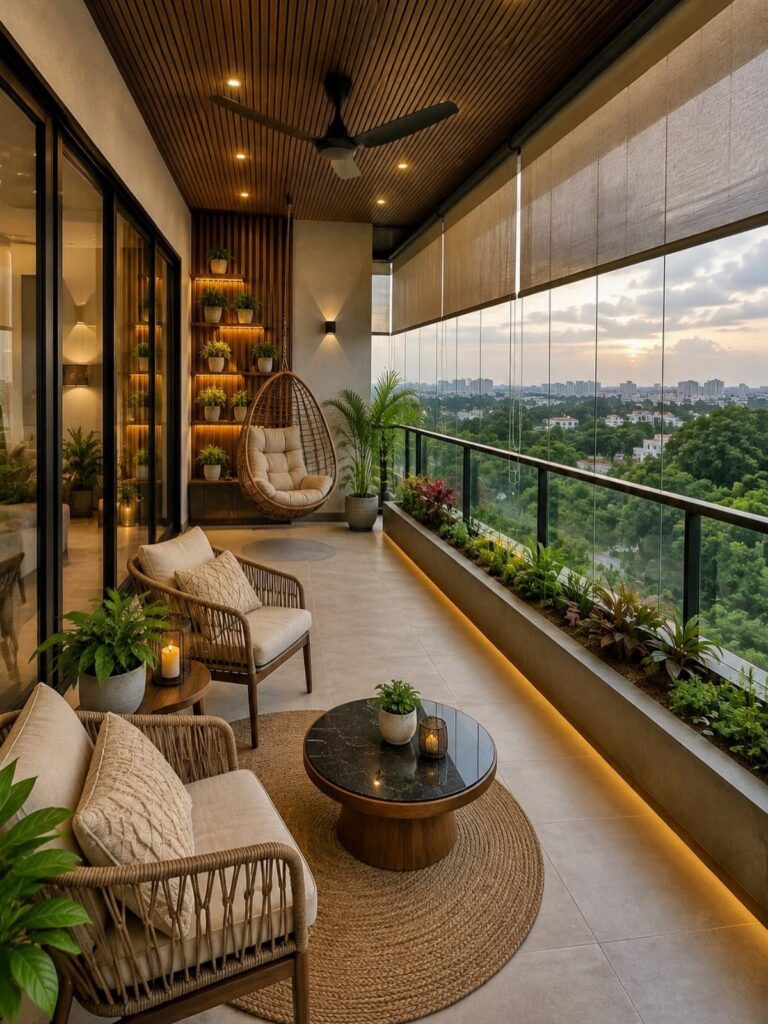
These 16 ideas run from a single folding lounge chair to a storage bench that doubles as your coffee table, and your budget plus your balcony’s depth and door swing decide which one earns the floor space.
Most of the pieces here, from bistro sets to bean bags, stay light enough to haul up to a 14th-floor unit and compact enough to clear the 24–30 inch path you’ll still need to walk.
That same aisle width shows up again when we get to maximizing small spaces, because even the most styled balcony fails if you can’t carry a drink or a laundry basket through it.
[link-whisper-related-posts]1. Lounge Chair
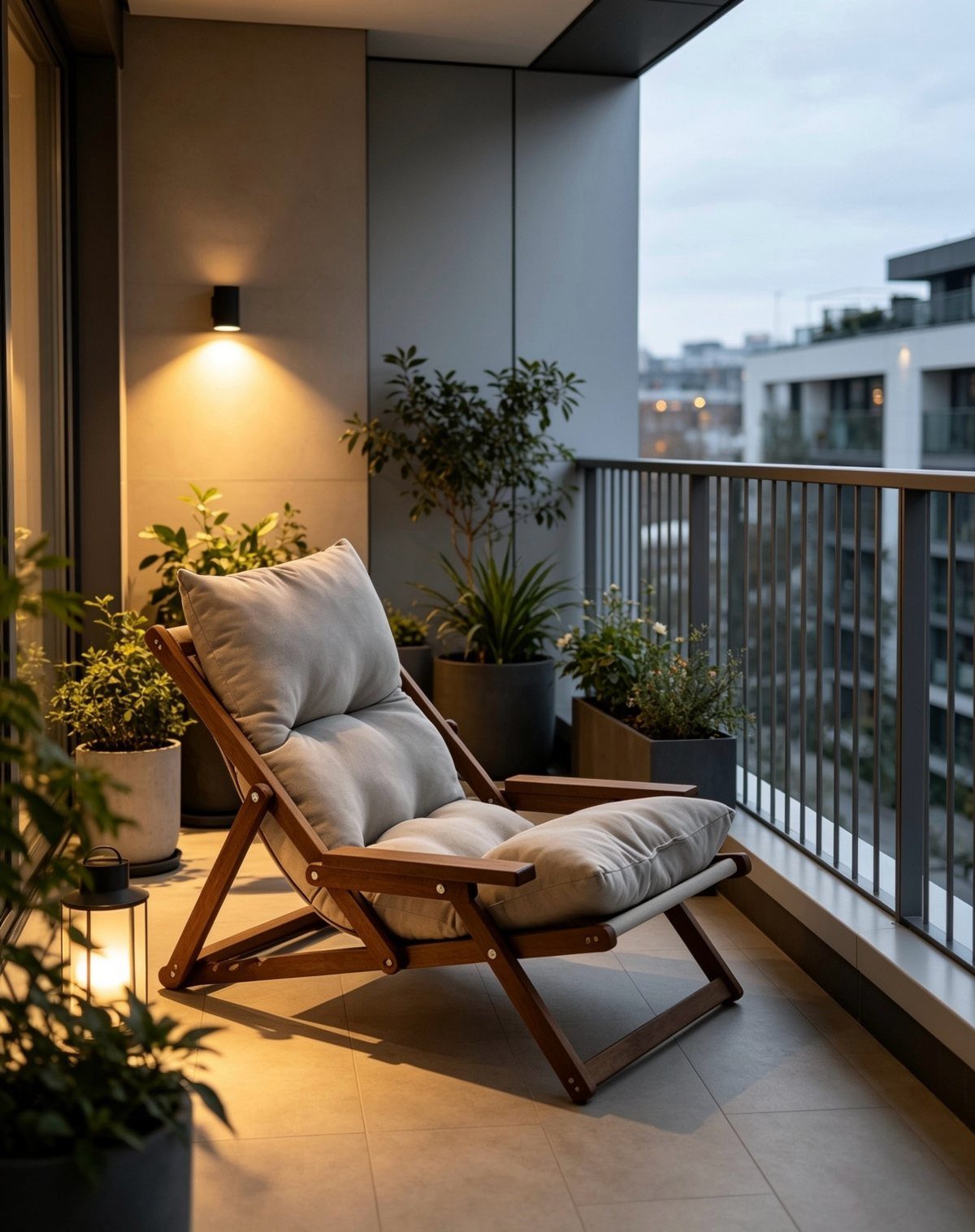
A single lounge chair turns a narrow balcony into a spot you actually use instead of just passing through.
I look for one with a slatted base so rainwater drains instead of pooling, and a cushion thick enough that the frame doesn’t press through.
Check your door swing before ordering; a chair with a reclining back needs serious depth, and many apartment balconies run tight. If space is tight, a fixed upright back saves noticeable room and still reads as lounge seating.
2. Bistro Set
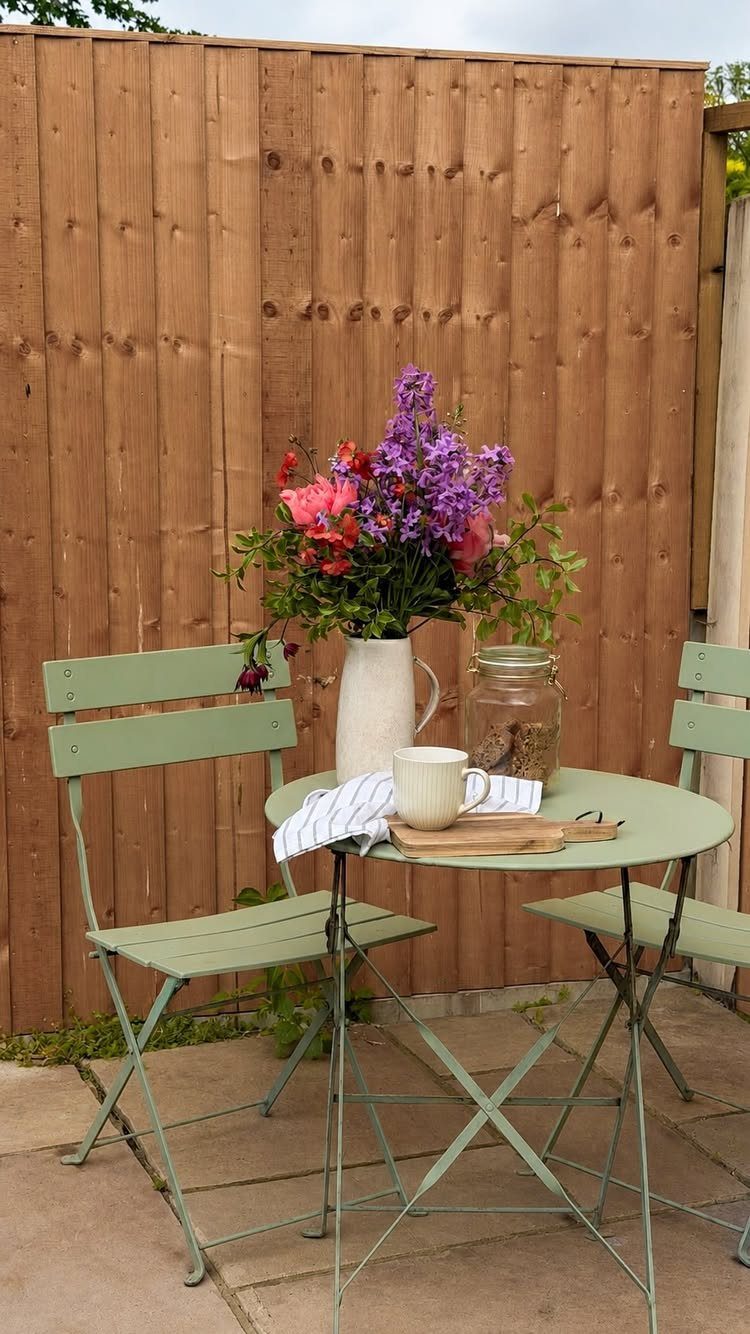
Folding bistro sets suit renters because they leave with you and store flat in a closet between moves.
I would check the seat height before buying.
Many bistro chairs sit low for their table, and you end up reaching up for your coffee. Check seat height against what you already have or are buying together.
A set sold together avoids that mismatch. The folding joints are the wear point; I look for steel pins rather than aluminum, since they take the open-close cycle without ovaling out.
3. Rail Table
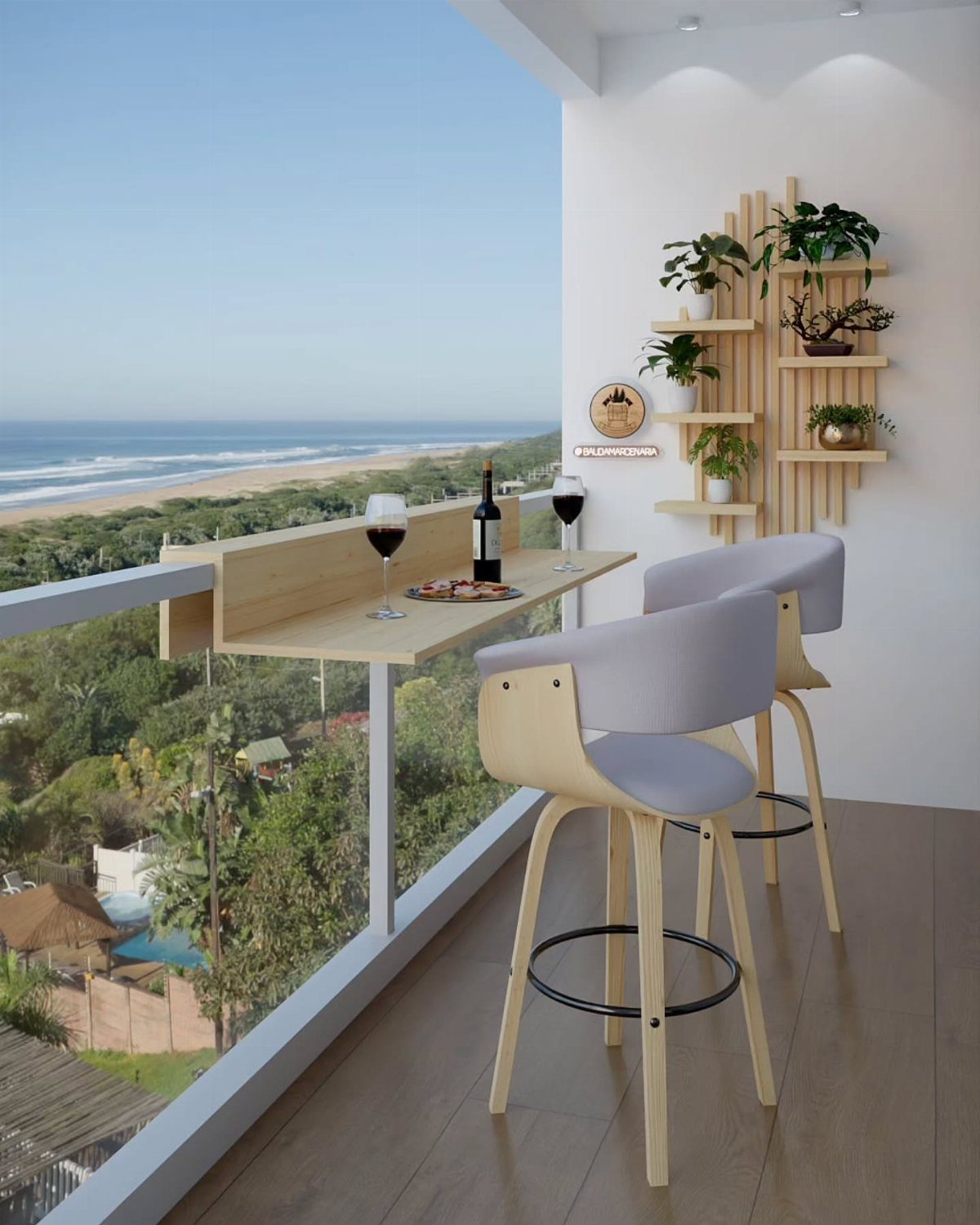
A rail table clips onto the balcony railing and gives you a surface without eating floor space you don’t have.
I would measure my rail width and shape before ordering.
Round rails, square rails, and glass panels each need different brackets, and "universal" fits usually mean universal frustration. The table needs to lock tight; any real wind turns a loose rail table into a projectile.
Most hold enough for drinks and a laptop, not a full dinner service. Check the stated weight limit against how you actually eat outside.
4. Bean Bags
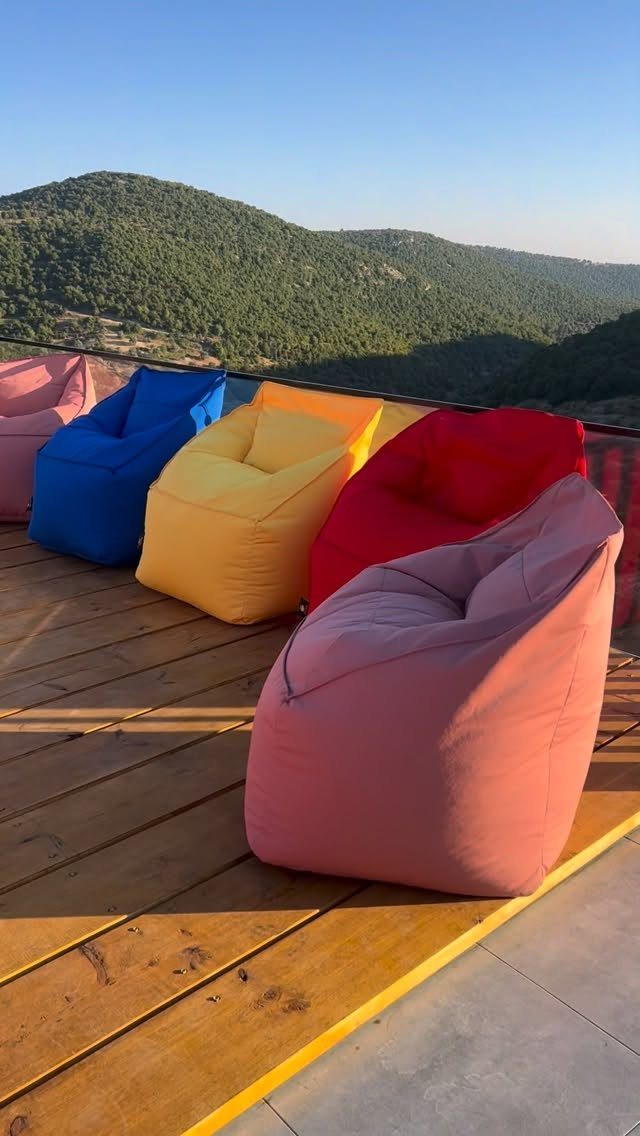
Bean bags read as indoor furniture moved outside, which is exactly the mood a balcony sometimes needs.
Outdoor bean bags need EPS bead fill, not shredded foam, since foam holds water and molds.
I would check whether the cover zips off for washing, because it will need it. Storage is the tradeoff: they don’t stack or fold, so you need a corner or a bin for rain days.
5. Hammocks
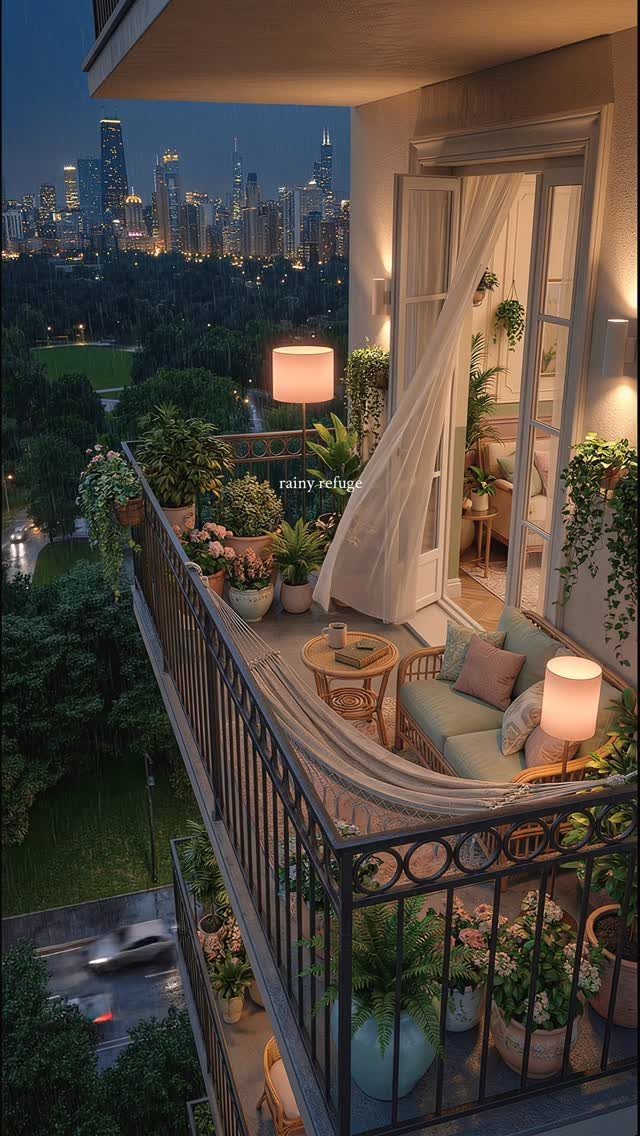
A hammock on a balcony is a commitment to doing nothing, which is sometimes exactly what I want out there.
I would skip the spreader bar style for balcony use; it needs more width and catches wind like a sail.
The gathered-end fabric hammock packs smaller and sways instead of tipping. Check your lease before drilling wall brackets; tension-mounted stands exist but eat floor space most balconies don’t spare.
6. Woven Macrame Chairs
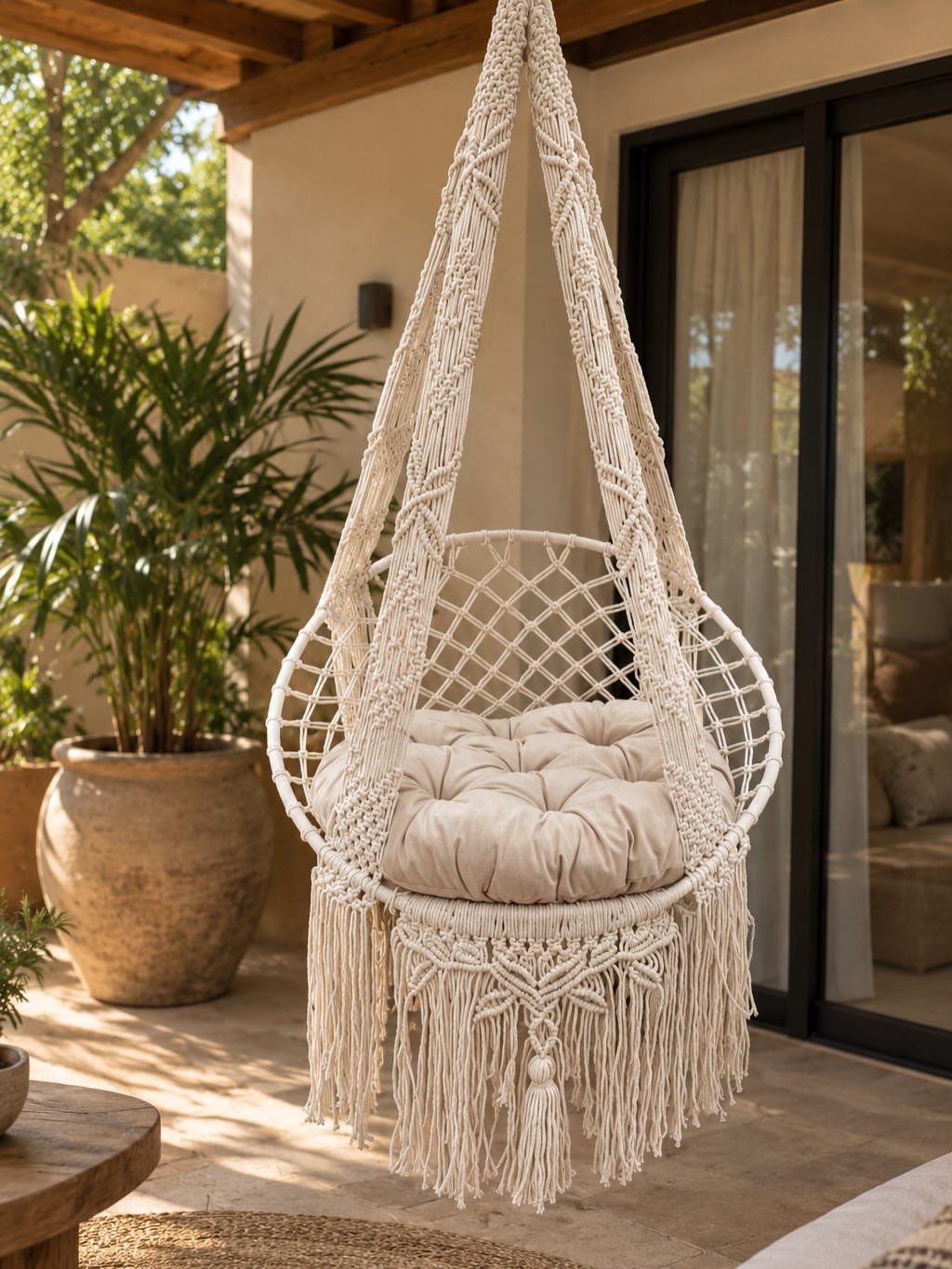
A macrame hanging chair brings texture that hard apartment surfaces usually lack.
I would check the ceiling or beam rating before hanging one; a standard drywall anchor won’t hold a person plus swing force.
A proper install needs a lag bolt into a joist or a rated ceiling hook with a toggle through blocking. Indoors in winter, this chair moves inside and reads as bohemian instead of outdoor leftover.
7. String Lights Lounge Area
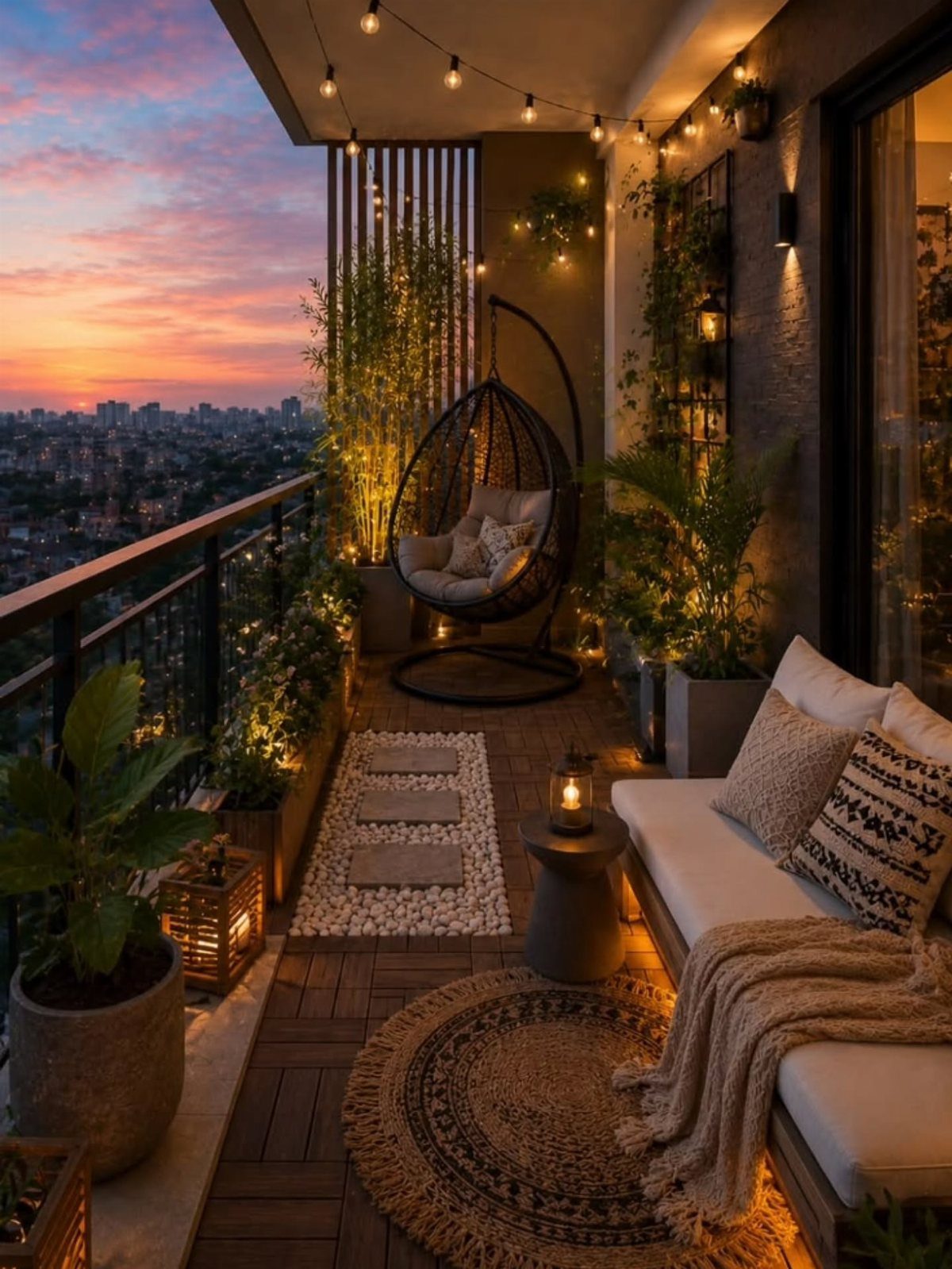
String lights turn a balcony into usable space after sunset, when most people actually get home to enjoy it.
I would use LED globe bulbs on a black cord; they throw warmer light than bare filament and the cord disappears against railings or walls after dark.
The main decision is power source: battery packs avoid outlet hunting but need regular swaps, while plugging in means weather-rated cords and usually a light timer so you aren’t running extension math every evening.
Check your lease or HOA for rules on visible cords; some buildings ban anything that reads as permanent installation.
Take the lights down for winter if your balcony sees real weather; the cord lasts years longer and you skip the ice-weight gamble.
8. Wall-mounted Planters
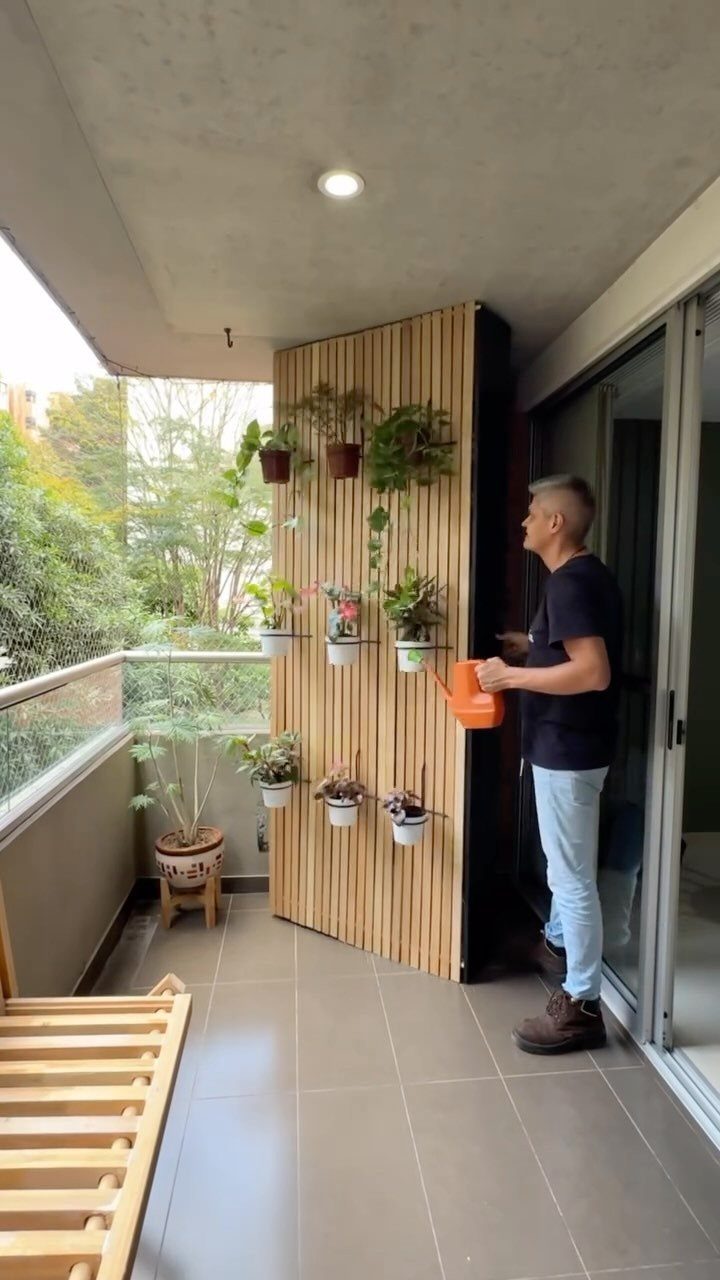
A vertical slat wall mounted to your balcony surface turns empty side walls into garden space without eating floor area.
Treated cedar or composite slats hold up better than raw wood where irrigation drip hits the same spot daily; plain pine softens and stains fast.
Before drilling, check whether your balcony wall is concrete, stucco over block, or facade; each needs its own anchor type, and a wood slat wall hung wrong is a safety issue in wind.
Wet soil in small pots adds weight fast, so a full column needs more wall anchoring than a single hanging planter.
9. Hanging Egg Chair
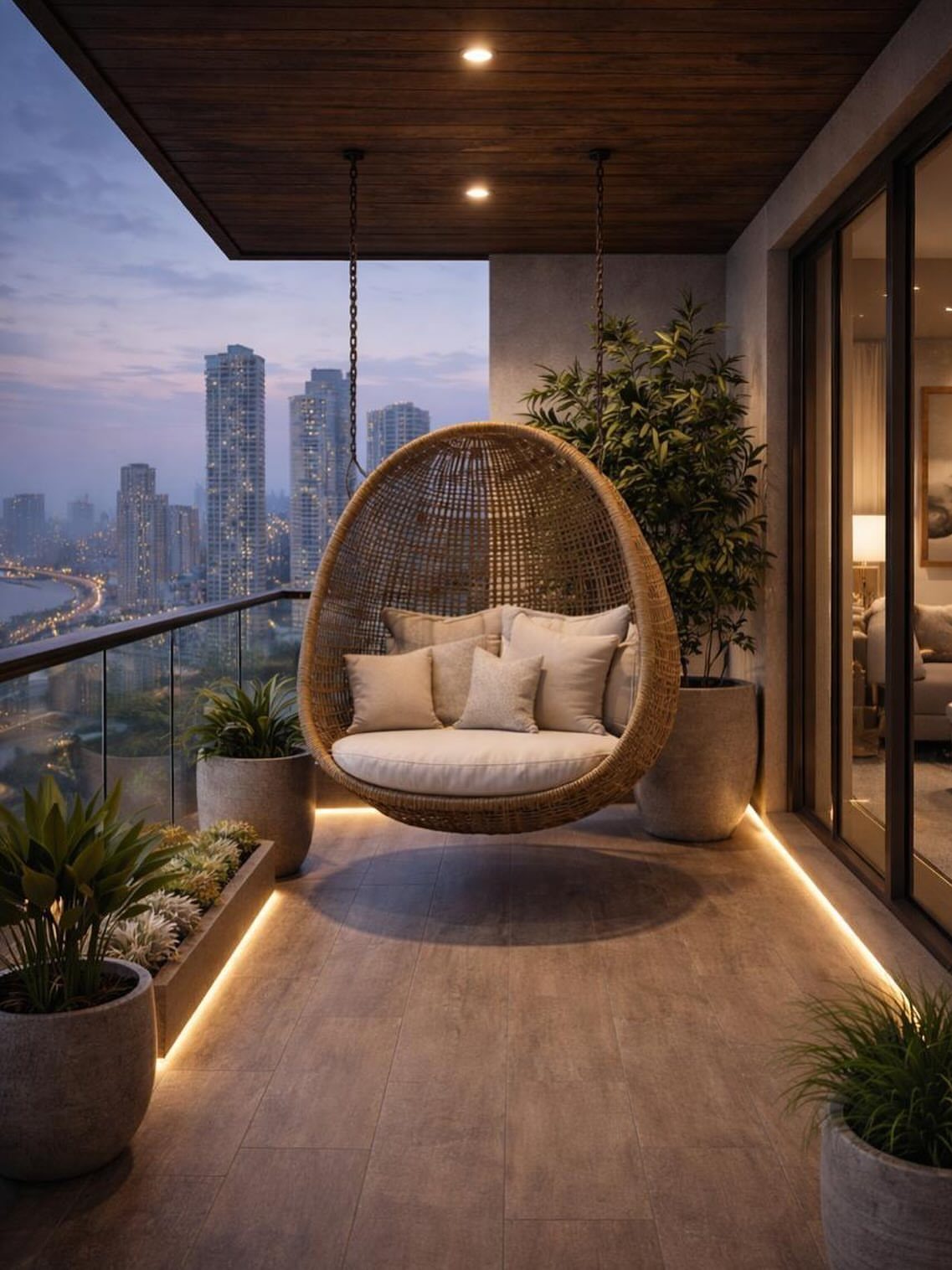
The egg chair visible here is a suspended wicker pod with a deep cushion, hung from an overhead point so it swings rather than rocks.
I would check 3 things before ordering: ceiling or beam capacity, cushion fabric rating, and whether the included chain length clears your railing sightlines.
Resin wicker holds shape through wet seasons but can get brittle in serious UV after a few years; natural rattan cracks and splinters outdoors.
The footprint reads small in photos, but the swing arc needs clear space in every direction; I’d mark out the circle before buying.
A hanging egg chair asks for a side table within reach, since setting a drink down means stopping the swing.
10. Wicker Sectional Sofa
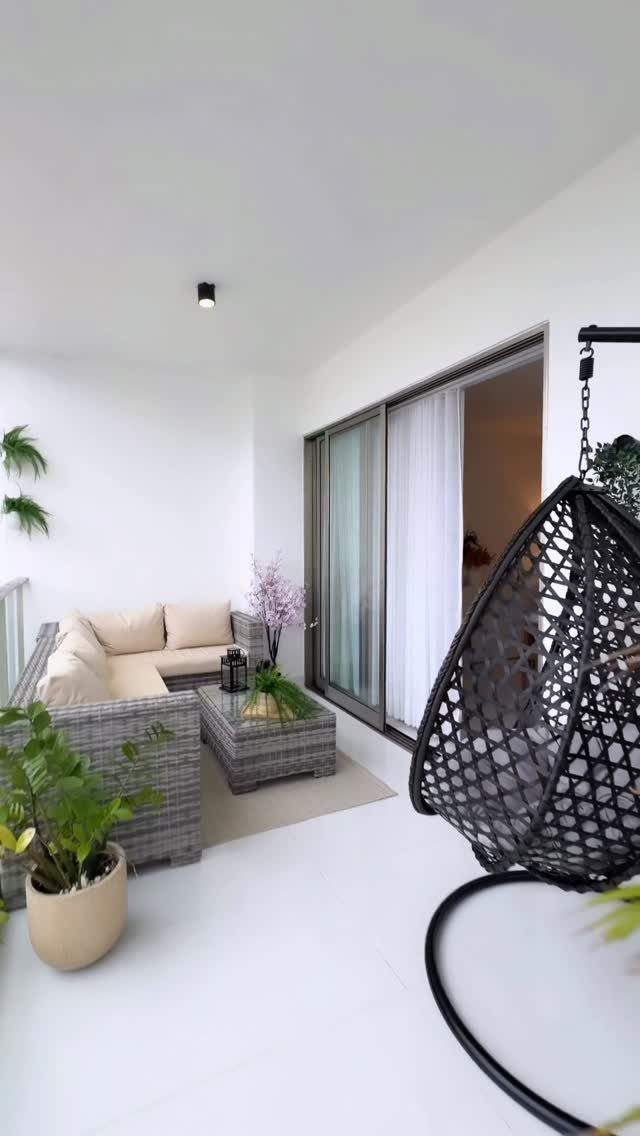
An L-shaped sectional, even a compact one, dominates a balcony and makes the space read as outdoor living room rather than afterthought.
Sectionals don’t reconfigure for a party or move inside for a storm, and getting one up to an apartment means measuring stairs and turns, not just the balcony door.
I’d look for powder-coated aluminum frames under the wicker; steel rusts from the inside out and shows only when the weave loosens.
Cushion storage is the real friction point with sectionals this size; if you don’t have a closet or waterproof box, the daily cushion shuffle becomes the reason you stop sitting out there.
11. Rattan Armchair Seating
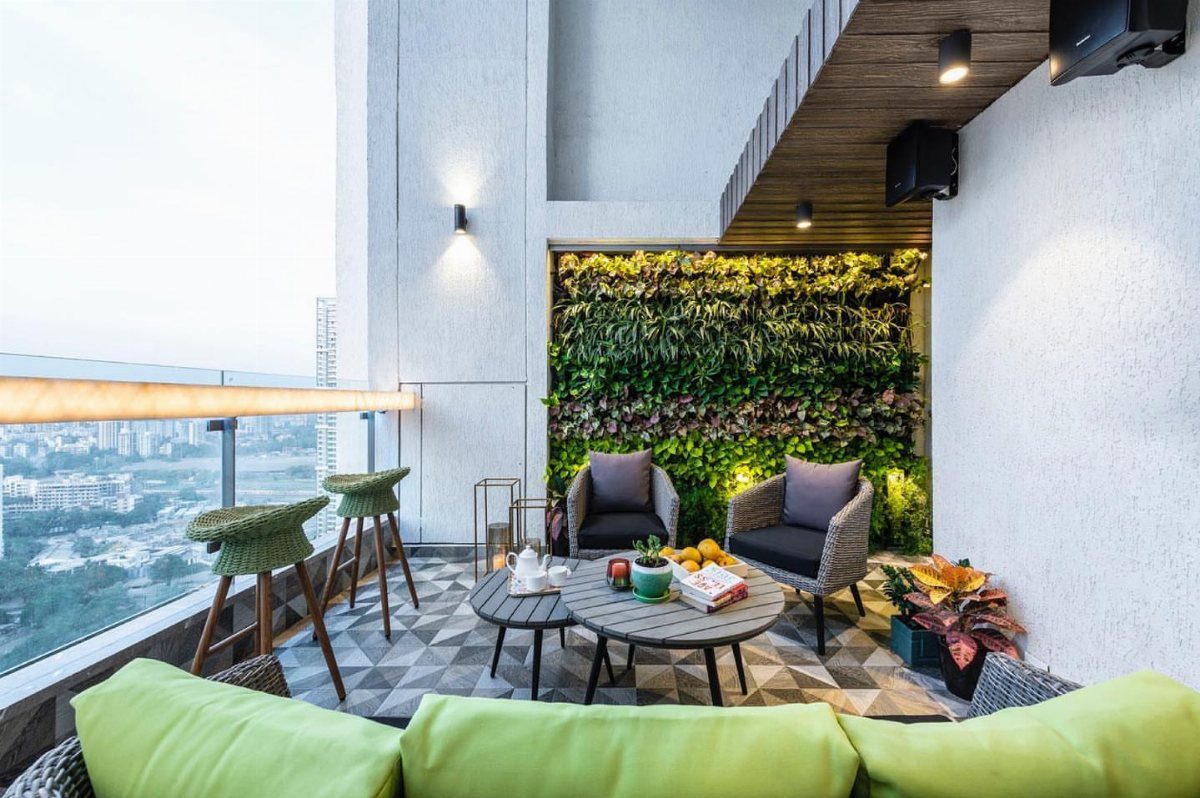
2 armchairs and a low coffee table suit a balcony where you want conversation more than stretching out.
Grey-toned rattan with an open weave reads modern where honey rattan reads coastal; I’d pick the tone based on what your building exterior already says.
A wood low table next to wicker seating avoids the showroom-set look. I’d go with a hard surface for the table top; the low height means it catches cups, books, and feet, and soft material dents fast.
2 chairs need less depth than a sofa or sectional, so this setup fits balconies where the door swing and the railing compete for the same floor space.
12. Modern Fabric Sling Chairs
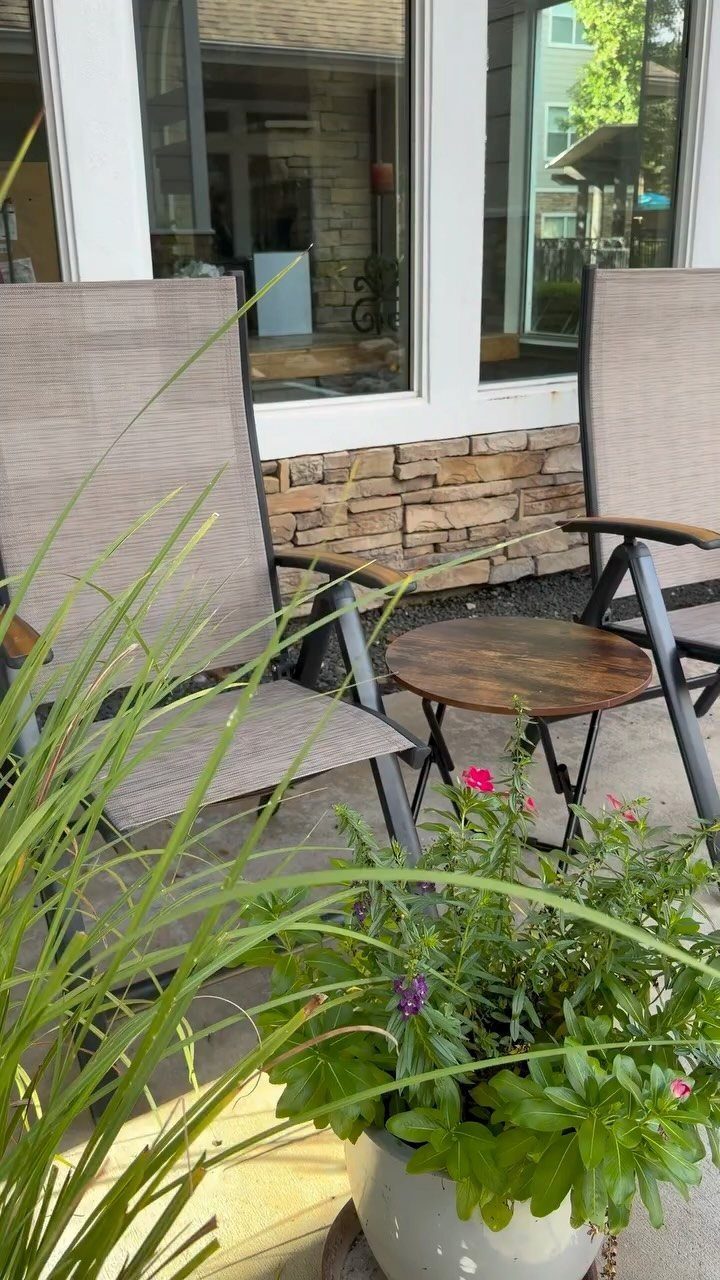
Sling chairs with high backs and metal frames store flat and carry inside in one trip each, which matters more than it sounds when summer storms roll in fast.
The fabric tension does the work of cushioning, so I’d test sit before committing; some slings hold too firm for long coffee sessions, others go slack after one season.
The dark metal frame on these reads as aluminum or powder-coated steel. Either works, but aluminum won’t rust if the coating chips at a weld.
I’d match the flexibility of a folding table rather than add a fixed surface. 2 sling chairs and a small table fit a balcony too narrow for depth-hungry furniture, and the whole setup reads as intentional rather than temporary camping.
13. Compact Loveseat and Coffee Table
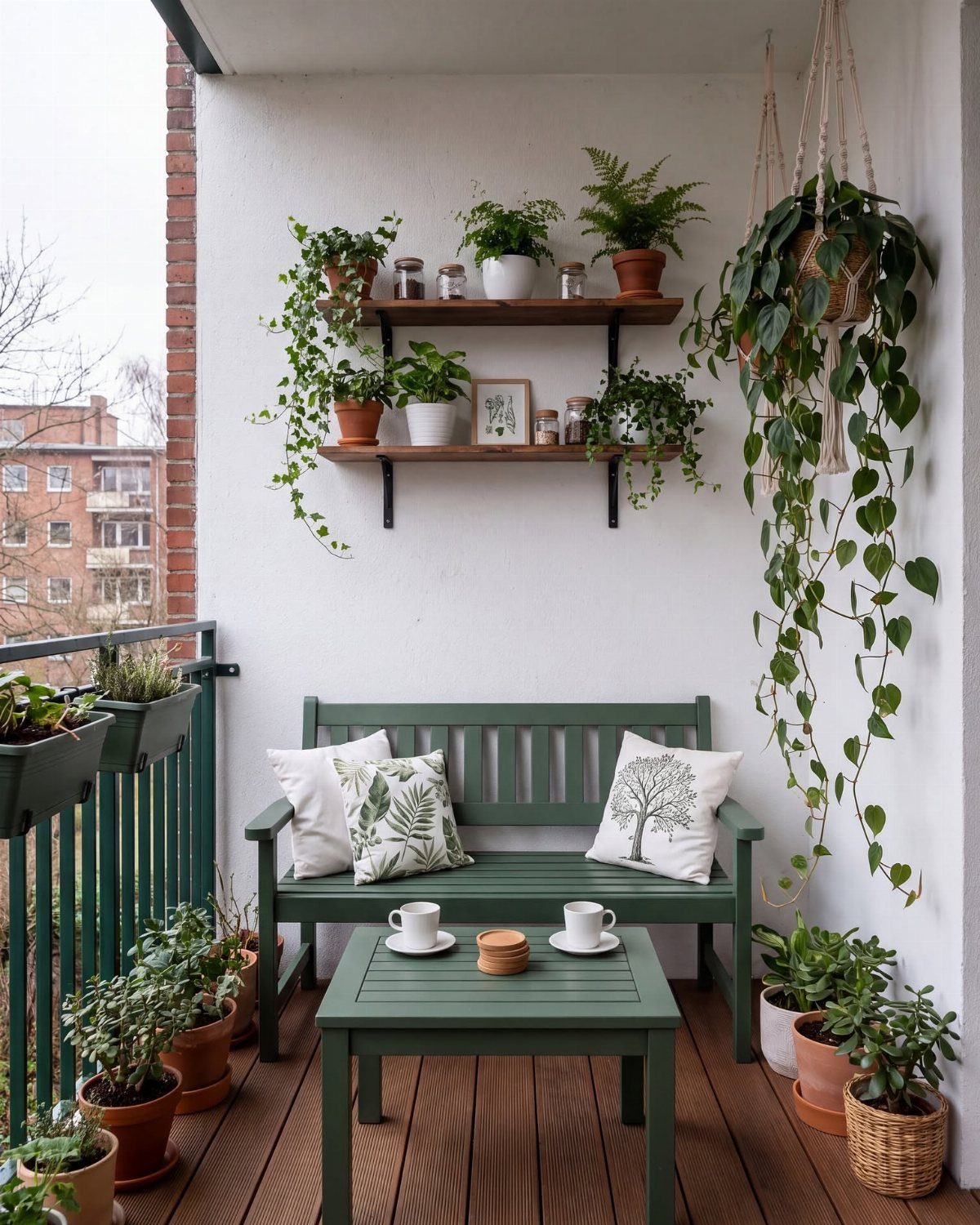
A loveseat instead of full seating buys you room to move around it, which matters on balconies where the door and the railing fight for space.
I’d match the finish to something already present; the green paint here ties to the planters and reads as intentional rather than a set bought as-is.
The square coffee table needs to be low enough that your knees clear it sitting down, and small enough that you can still open the door past it.
The wall shelves and floor plants around the seating turn the balcony into a garden room; I’d keep the plant heights below seated eye level so the space still feels open.
For a small outdoor space, like this Soheil Nakhshab–designed San Diego home’s deck, employ slim furniture, rather than bulky cushiony furniture, to best utilize your square footage.
14. Wooden Slat Chairs and Table
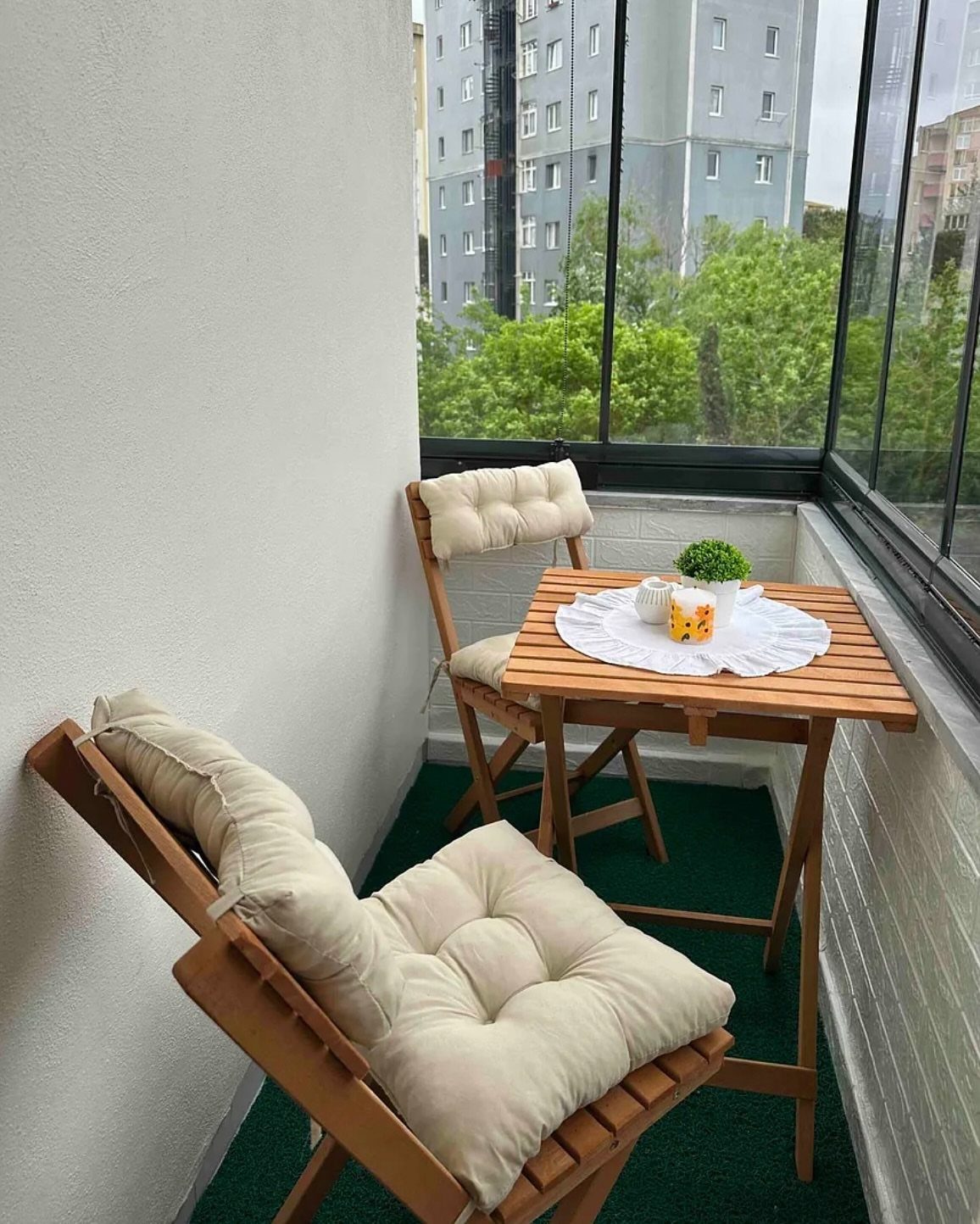
Folding slat chairs store flat against a wall when you need the balcony clear, and the natural wood reads warmer than metal against faux grass or concrete.
I’d check the slat spacing; too wide and small items fall through, too tight and water pools instead of draining.
The cream tufted cushions here look thick enough for real sitting, but I’d verify they tie on or have weight; balcony wind turns loose cushions into neighborhood litter.
A candle and small plant on the table turn it into a destination, not just a surface. I’d pick a battery candle for wind, or accept that real ones stay inside on gusty evenings.
15. Built-in Bench Seating
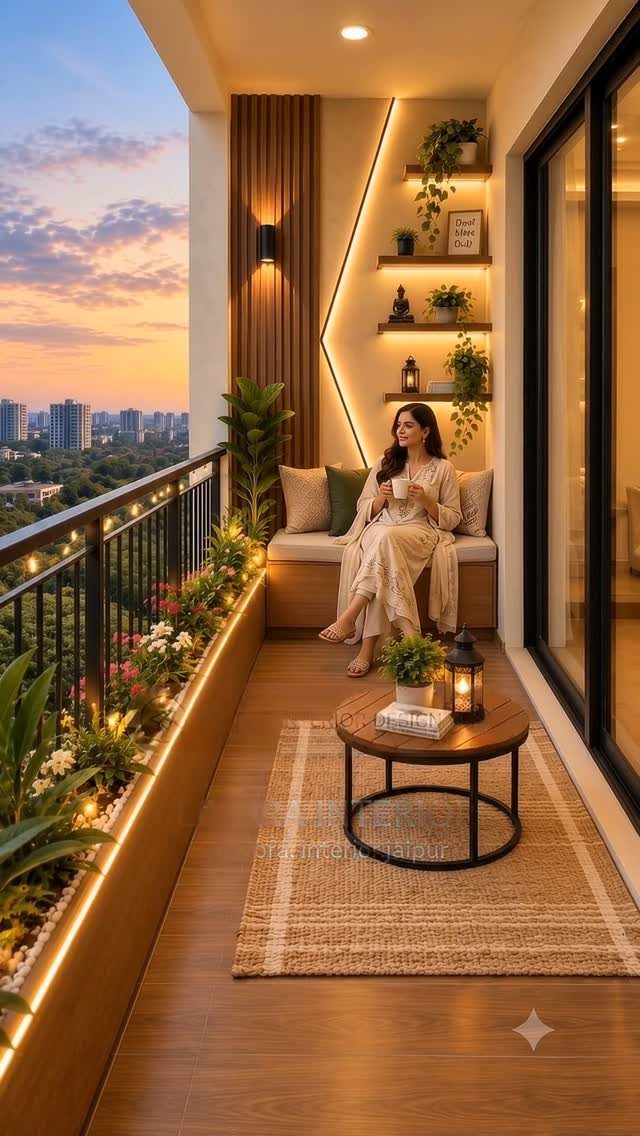
A bench fixed to the wall uses depth that freestanding furniture can’t, since you don’t need clearance behind it to walk.
I’d build the seat height with cushion included to land between lounge and dining height; too low reads as lounge, too high as dining, and this setup sits in between.
The planter boxes along the railing need drip trays or drainage built in, or the bench cushions take the runoff.
Wall shelves above keep plants at eye level without blocking the view, which matters on any balcony where you came for the outlook.
The real commitment is the cushion fabric; I’d budget for Sunbrella or equivalent, since standard outdoor fabric fades to grey in one summer of direct sun.
16. Storage Bench Seating
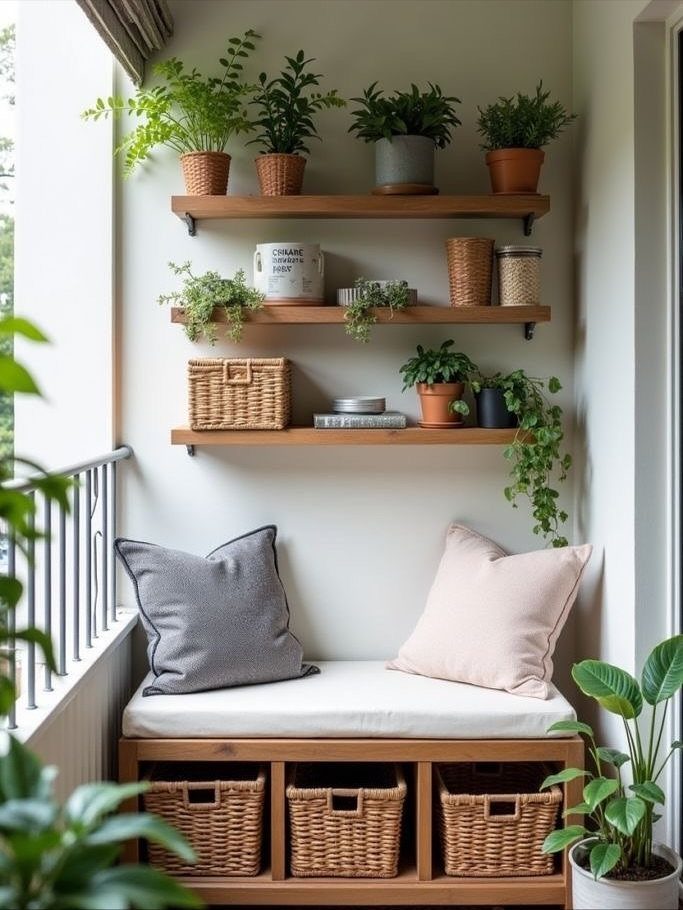
Baskets under the seat turn the dead space beneath a bench into the only enclosed storage most balconies offer.
I’d measure the basket height against the bench skirt; too tall and they read as clutter, too short and you waste volume. Wicker or rattan baskets breathe, which matters if you’re storing cushions that might hold damp.
The white cushion here shows dirt fast, but it also reflects heat better than dark colors. I’d keep a spare cover, or pick a light grey that hides city dust without baking in July.
Choosing Durable Materials
Start with the material and the rest follows from there. Style, price, and brand only matter after you know what it is made of.
Choose wrong and you will be hauling pieces to the curb before the paint fades. Choose right and a good outdoor piece outlasts anything in your living room.
Aluminium is the classic balcony workhorse: it is light enough to drag around one-handed, it will not rust, and beyond a quick wipe now and then it asks nothing of you.
If you are on the 14th floor, that weight difference stops being a detail and starts being the whole decision.
Teak is what you move up to when the budget opens up.
Synthetic wicker gets a bad rap because the cheap stuff is piled high at every big box store.
Ethimo and RODA treat aluminum and teak the same way, with engineering that matters and design that holds up.
Those pieces are built to stay outside for years and still look considered. If you are shopping Italian outdoor furniture, start your search with those 2 names.
Steel is fine under an overhang, but anywhere humid or near salt air and the rust will show through. Solid wood needs more maintenance than most balcony owners will give it.
Maximizing Small Spaces
Leave yourself a 24–30 inch path clear whenever the floor plan allows it.
The width of your balcony door path matters more than you think if you carry a drink, a plant, or a laundry basket through. A skinny clear aisle feels bigger than a packed floor where nothing can move.
I would measure the usable floor space before buying anything that claims to fit small spaces. Tape out the footprint on your floor before ordering.
Styling Tips for Balconies
A small rug, cushions that can handle a shower, and one lantern after dark finish the space without crowding it.
Warm light reads cozier than bright white on a balcony at dusk.
Vertical greenery matters more on balconies than ground-level patios because you have less floor to work with and usually share at least one wall with the building.
A railing planter or mounted slat wall brings life in without eating the 24–30 inches you need to walk.
For upholstery, I would look at weather-resistant fabric in cool blues or soft pastels if you want the space to feel serene. Dark colors absorb heat; on a south-facing balcony in July, that difference in surface temperature is real.
A rattan or wrought iron accent adds texture that painted surfaces usually lack. I would mix one natural material against whatever your existing railing and floor are made of; two reads as theme, one reads as intentional.





