
The ideas below run from a cutlery tray you drop in a drawer to a cabinet rebuild with toe-kick drawers and appliance lifts that takes a saw and some patience.
What decides which one belongs in your kitchen is whether you own the cabinets or answer to a landlord: renters stick with carts and freestanding bins, owners cut into toe kicks and mount pull-out hardware.
[link-whisper-related-posts]1. Kitchen Island
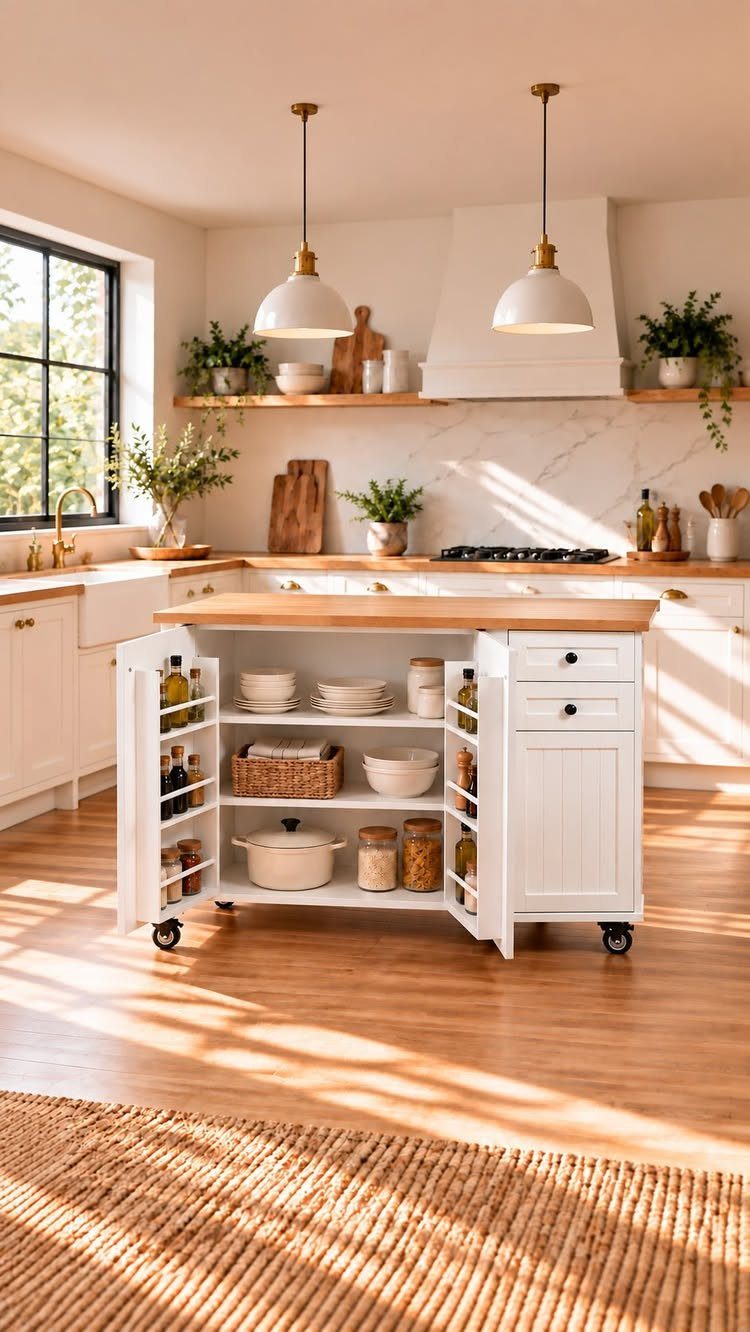
A rolling island cart gives you prep space and storage without committing to a built-in.
Castors mean you can push it aside when you need the floor cleared, and the open shelves keep dishes or spices where you see them, not where you forget them.
Before you buy, check the height against your existing counters: a surface that sits below your counter line is awkward for rolling out dough or sliding a hot pan.
A natural oak veneer top takes a cutting board better than painted finish.
I would pick castors that lock; an island that drifts while you chop is a hazard, not a help.
2. Cutlery Tray
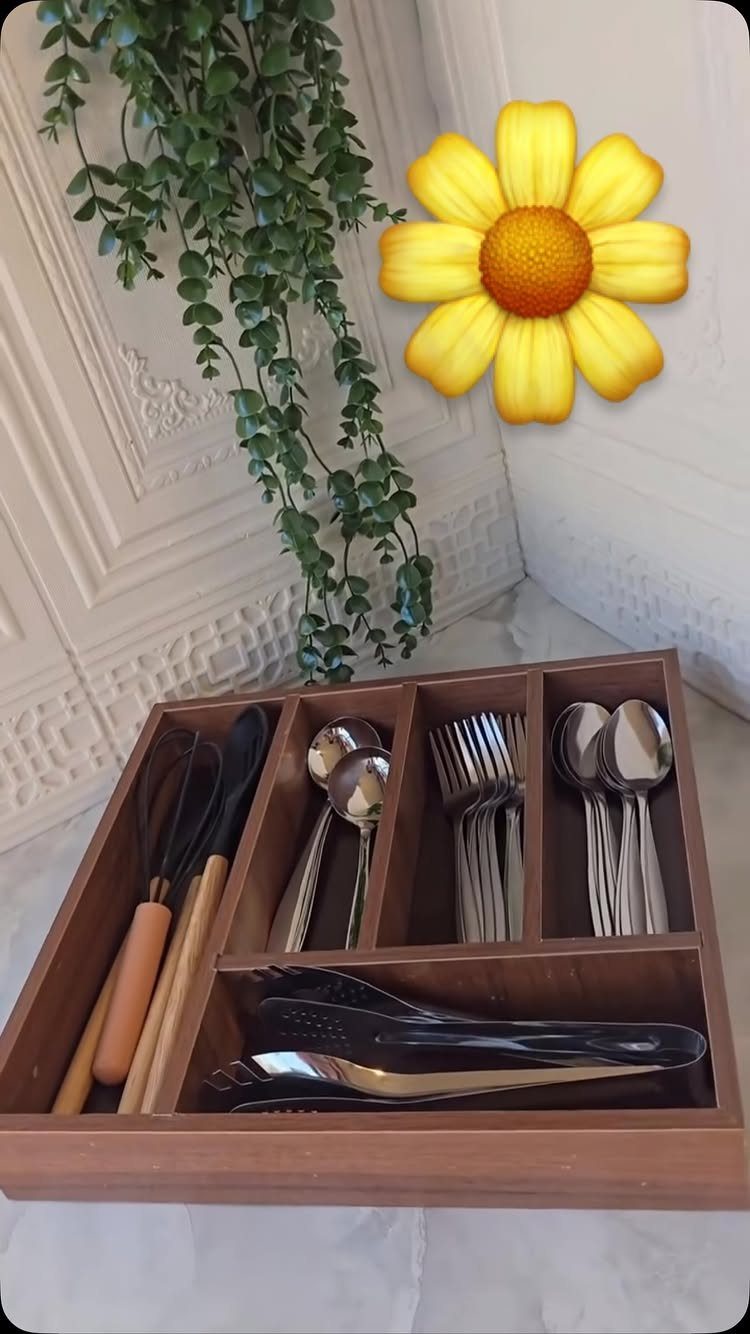
A dedicated cutlery tray turns the drawer you already own into compartments that stay sorted.
A cutlery tray on the counter works for rental kitchens with shallow or damaged drawers, but I would use it inside the drawer: counter space is what you are trying to reclaim.
Wood trays split and warp if you let them sit wet; bamboo holds up better to a still-damp spoon.
Check the width of your drawer before ordering: a tray that floats on its sides rattles every time you pull it, and one that wedges in binds.
3. Pull-Out Drawers
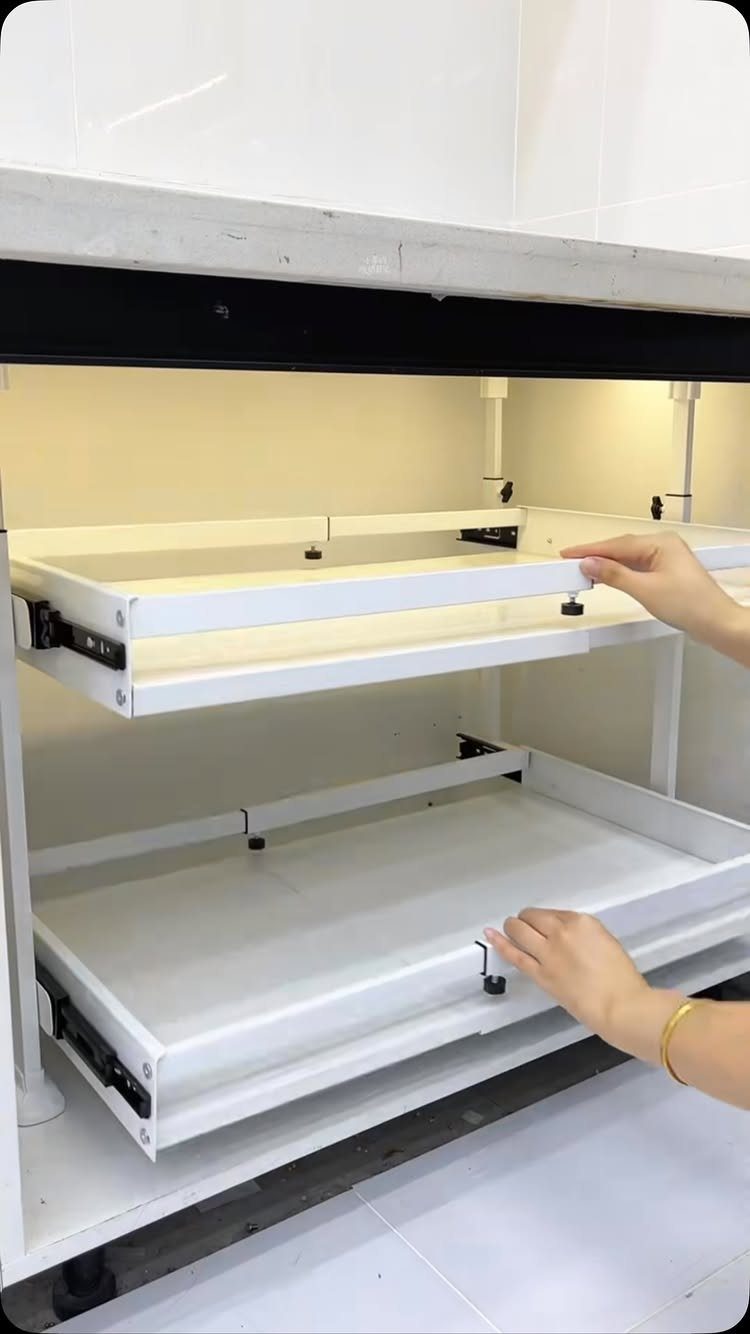
Pull-out drawers inside a base cabinet bring the back corner to you instead of sending you crawling after it.
The two-tier metal frame shown fits into the cabinet box you already have; you remove the fixed shelf and mount the sliding hardware to the sides.
Full-extension slides cost more but open the full depth; shorter slides leave the back of your canned goods in shadow. For a weekend project with basic tools, I would take the full set.
4. Built-In Spice Organizer
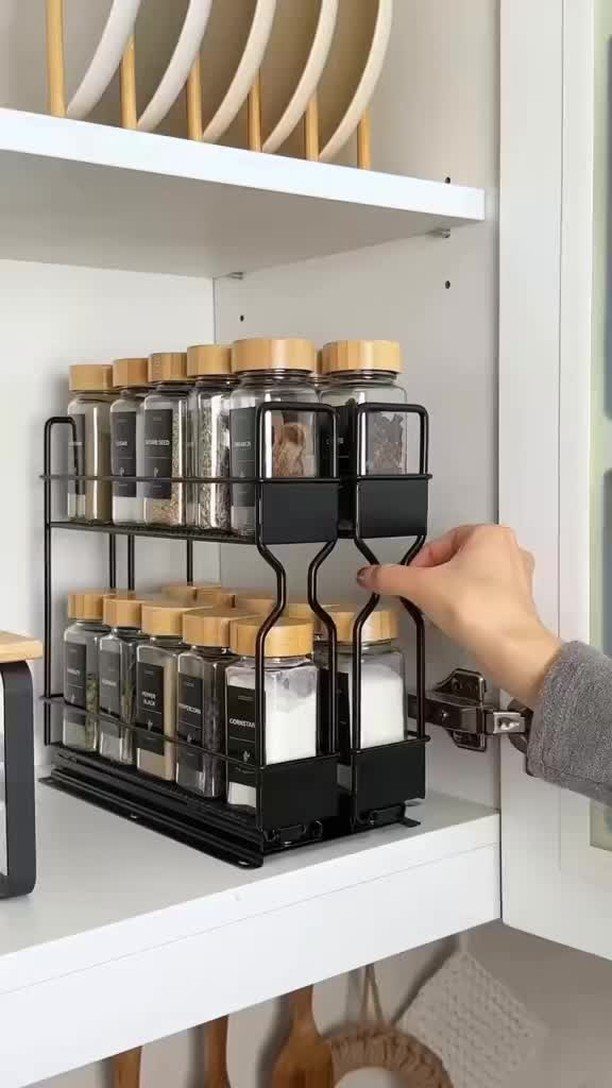
A pull-out spice rack mounted inside a cabinet keeps jars vertical and readable, not stacked in a dark carousel where you buy cumin twice because you cannot see the first jar.
The black metal two-tier frame shown screws to the door or to a side wall; check your door thickness before you buy hardware.
Standard cabinets take a shallow rack; go deeper and the door will not close over a countertop bin.
Glass jars with matching lids look uniform, but I would keep the label on the lid, not the side: you read spices from above when the rack is below eye level.
5. Hanging Pot Rack
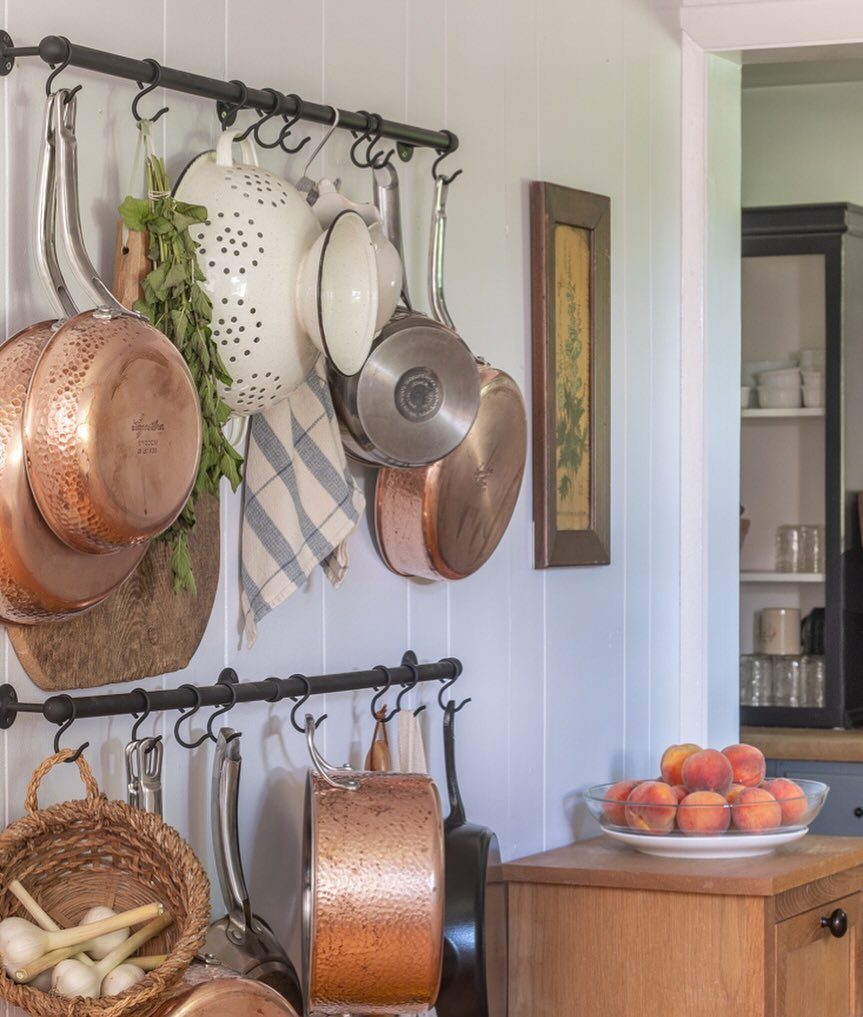
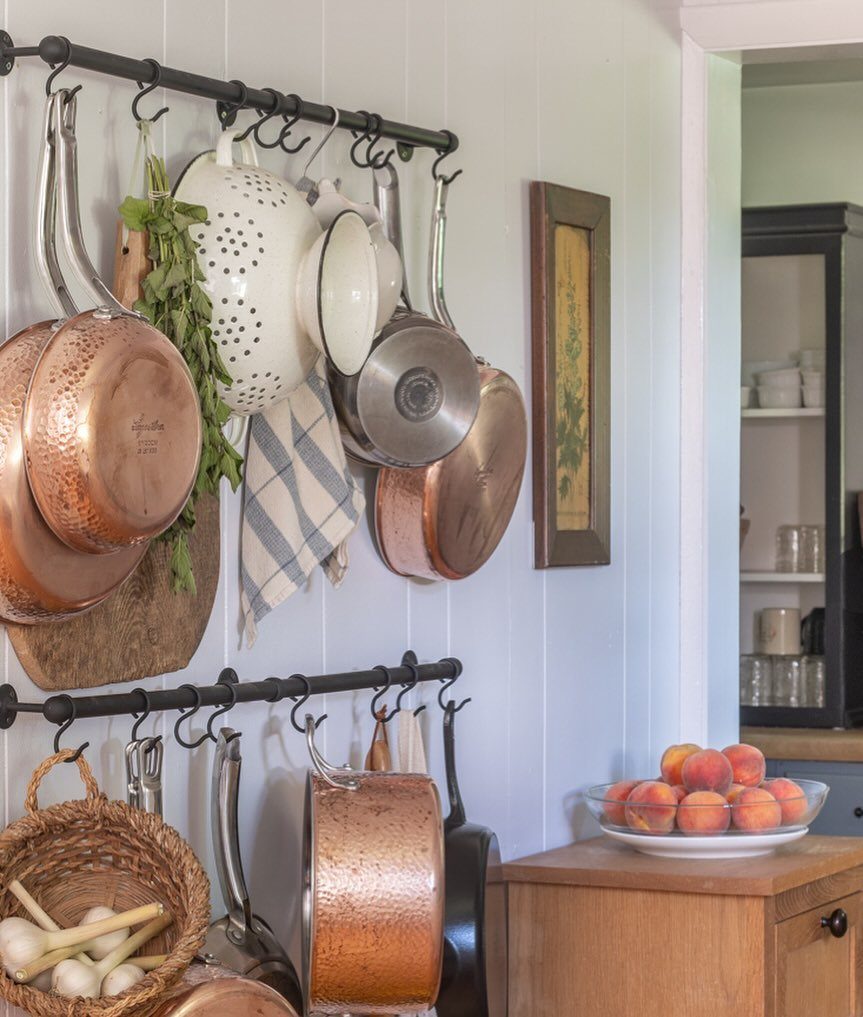
Wall-mounted rails with S-hooks move pots from the cabinet where they stack badly and scratch nonstick to the wall where they hang open and dry.
The black metal rails shown sit on a paneled wall; if your backsplash is tile, use a masonry bit and anchors rated for the weight of a full stockpot, not just a saucepan.
I would mount the lowest rail high enough that the longest pan clears the counter, or every rim bumps the surface you are trying to keep clear.
6. Under-Sink Storage
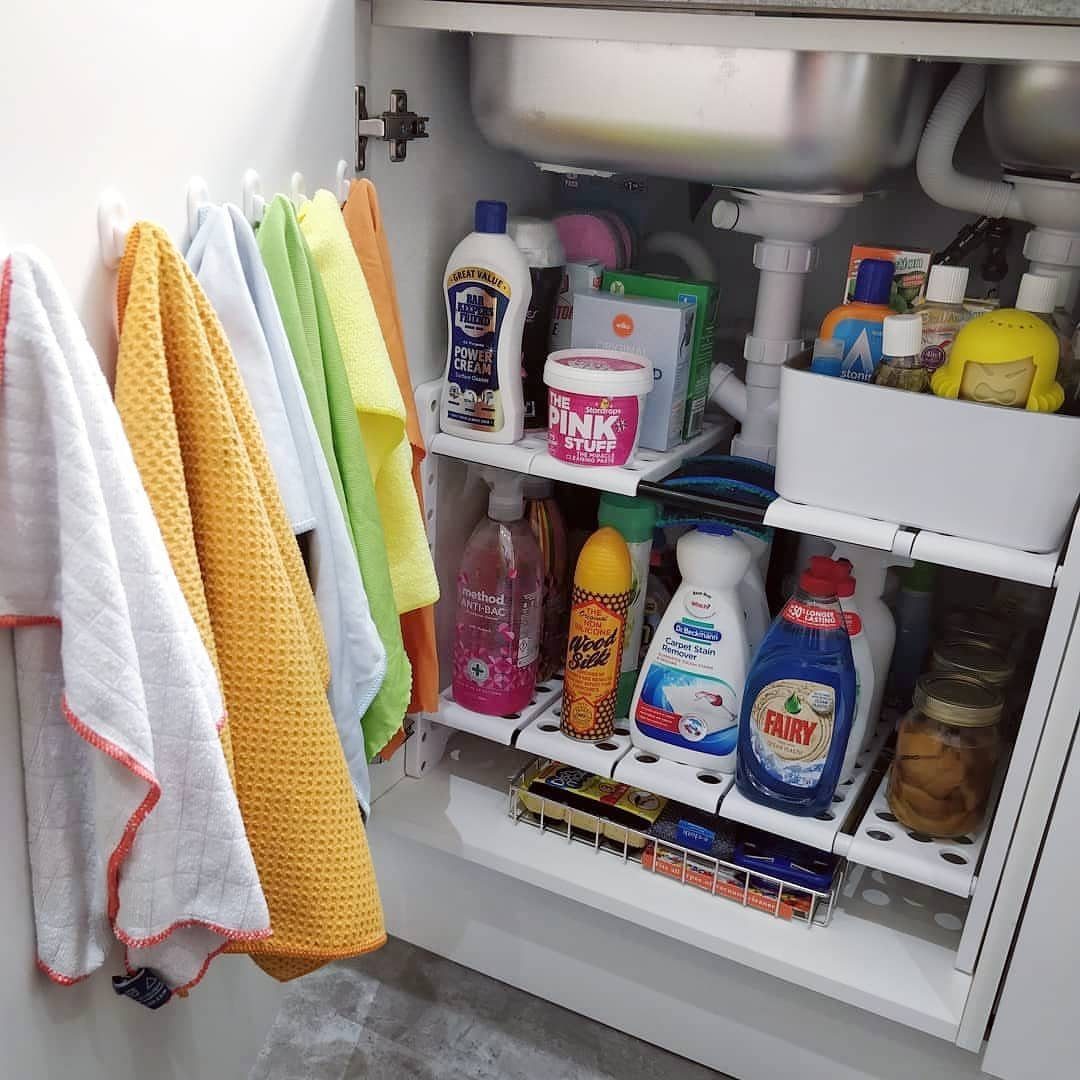
The space under a sink is awkward height, a fixed pipe, and damp air: exactly where a stepped shelf organizer earns its place.
The expandable white tiered unit shown works around the drain pipe, with taller bottles on the adjustable side and cloths on hooks inside the cabinet door.
Measure your vertical clearance first: a shelf that fits under one sink hits the shutoff valves on another.
I skip wire mesh for this spot; it rusts where drips land. Solid plastic or coated metal survives longer, and routed edges keep a sponge from sliding off when you open the door fast.
7. Cabinet Door Storage
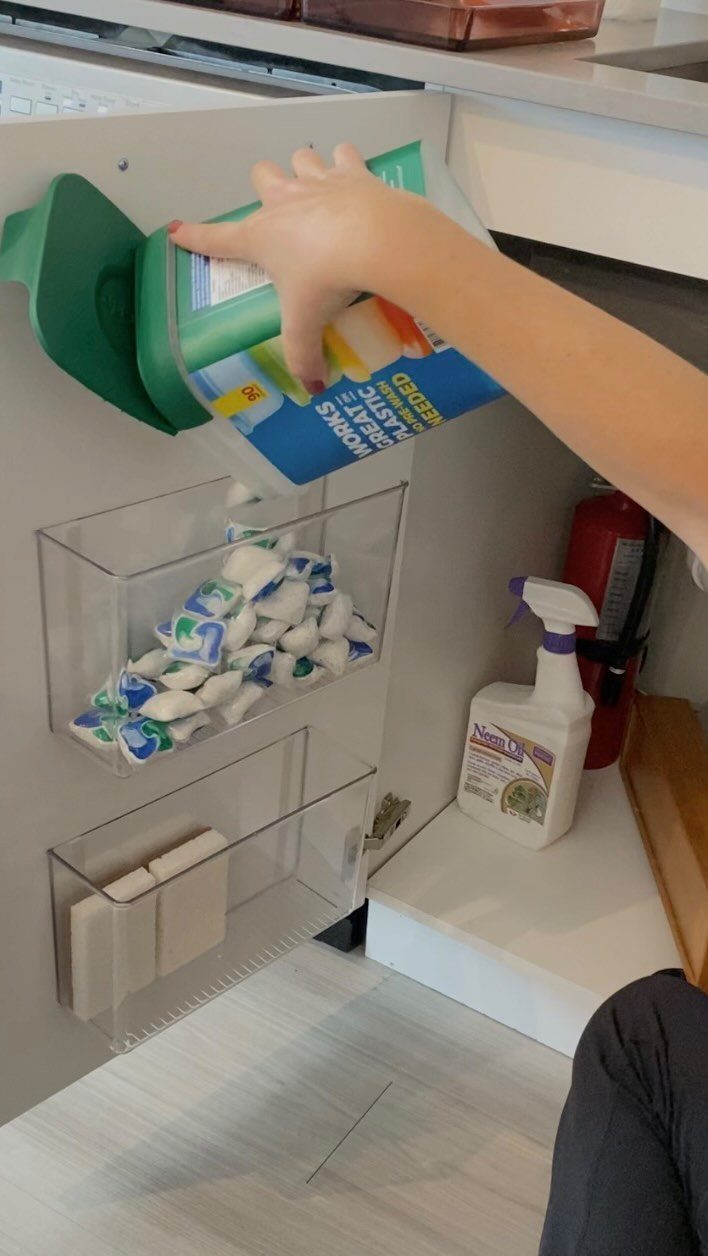
Clear bins screwed to the inside of a cabinet door turn dead space into real storage for pods, sponges, or wrap you reach for daily.
I would mount them on a lower door you open often; upper doors swing wide and spill.
Check clearance: a bin an inch too deep keeps the door from closing over the counter edge. Screw into solid wood or a backer plate, not just the panel, or the weight of a full detergent container rips free.
8. Magic Corner
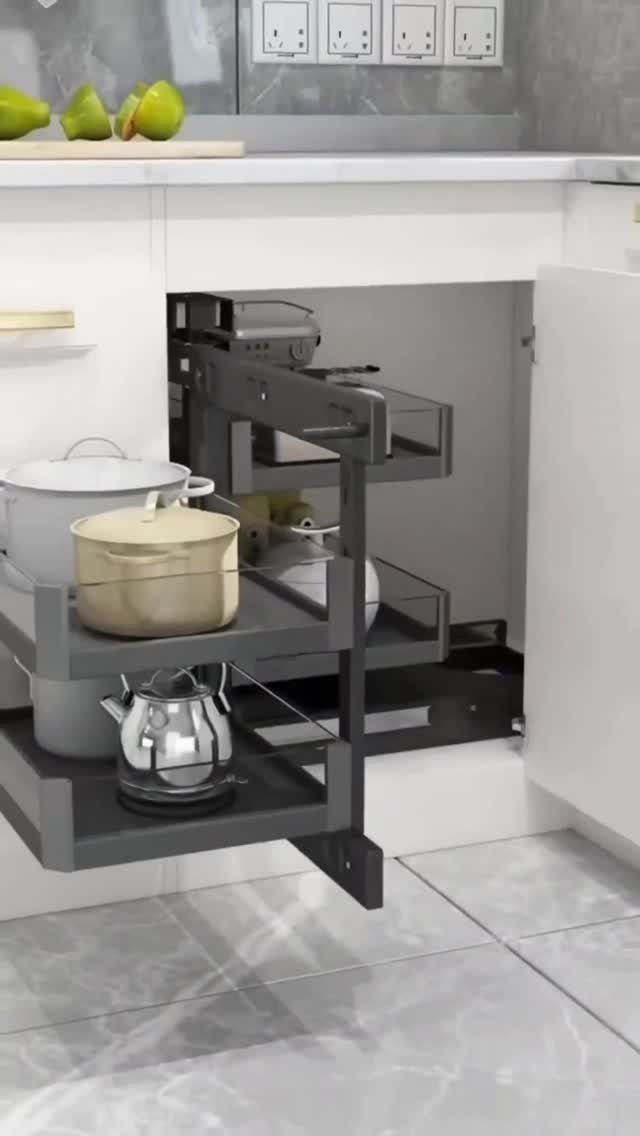
A blind corner pull-out swings shelves into reach where a standard cabinet leaves the last few inches buried and useless.
The dark grey two-tier frame shown slides out, then pivots toward you, bringing pots or a kettle you would otherwise forget.
This replaces the lazy Susan I grew up with; no more knocking items off a spinning tray to reach the one behind.
Measure your diagonal corner depth before ordering: a unit built for a larger cabinet binds in a smaller box, and one too short wastes space you paid to reclaim.
9. Toe Kick Drawers
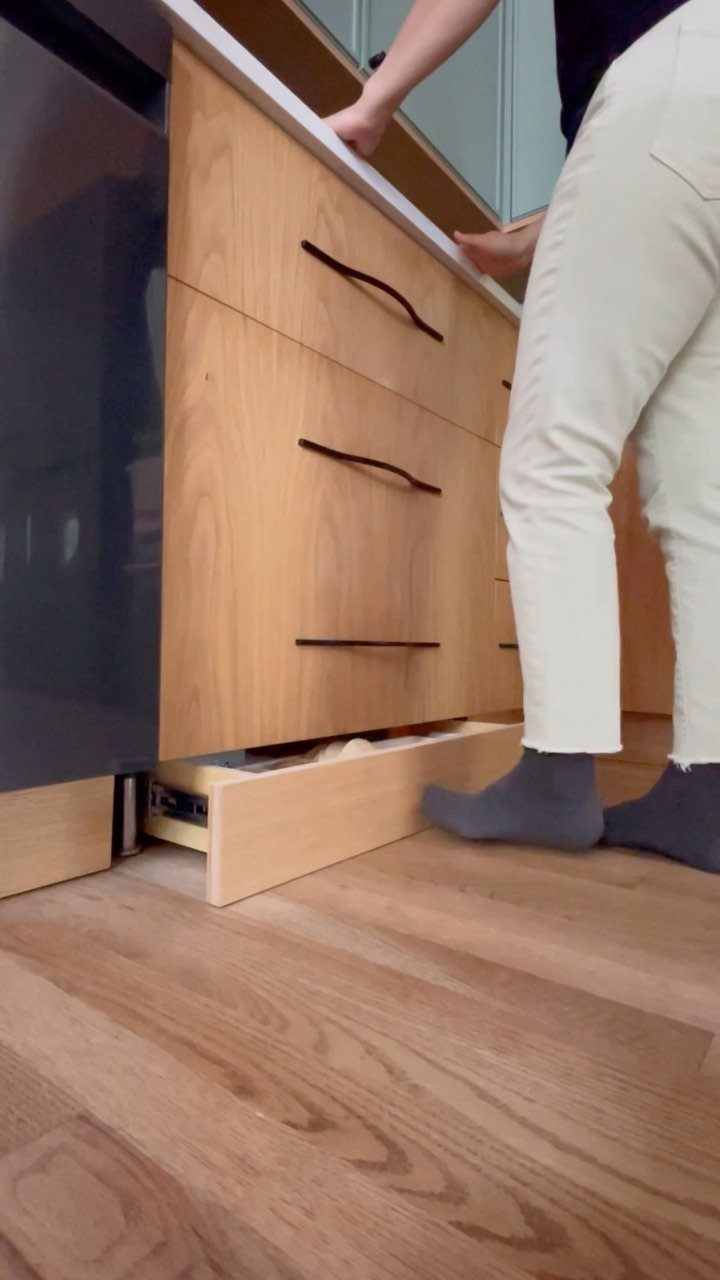
A toe-kick drawer at the base of your cabinets stores flat items: a folded step stool, baking sheets, or linens you use twice a year and never know where to put.
I would keep the front flush with the cabinet base, not proud, or it catches every pass with the mop.
Existing cabinets need the toe-kick panel cut out and the floor given a platform for the slide hardware; a cabinet on legs may not sit low enough to hide one at all.
10. Appliance Lifts
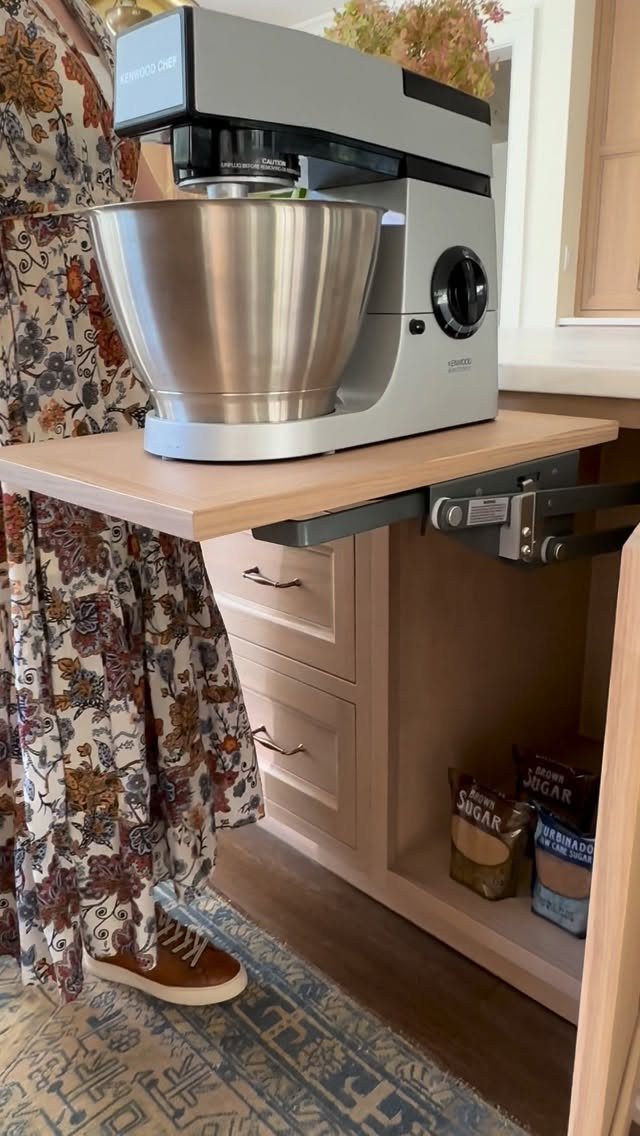
A mechanical lift brings a heavy stand mixer up to counter height from inside a base cabinet, then lowers it back out of sight when the batch is done.
I would check the lift capacity against my heaviest machine before buying, and measure the cabinet interior height: a mixer with a bowl-lift head needs extra inches above the shelf to clear the cabinet box on the way up.
A cabinet with an interior shelf must lose it, or the lift cannot sit low enough to hide.
Maximizing Vertical Space
Open shelves above the counters hold dishes and glasses you reach for daily, keeping cabinet space free for the stuff you do not. Mount them into studs, not just drywall, or a row of heavy plates will sag the span.
Pegboards work for utensils and small pots because you can move the hooks when your needs change; a fixed rack does not forgive a new electric kettle.
Wall-mounted racks for pots and pans I covered in the list, but the principle extends to anything heavy you grab often: a rim clamped on a hook dries faster than one nested in a damp stack.
Hanging baskets for produce only work if you eat what you see; a banana going brown in air is faster waste than one in a drawer.
I would not stack vertical solutions floor to ceiling. You need some wall open for a cutting board leaned, for a pot lid drying, for the plain fact that a kitchen with every surface occupied feels smaller, not larger.
Adding a hanging wine glasses rack, silverware or knife drawer, mug hooks or a storage rack under your cabinets is an inexpensive and easy way to make more room for your kitchen essentials.
— CNET
Choosing the Right Cabinets
Raised-panel cabinets go the other direction, with a center panel that steps forward and often carries a routed edge.
They cost more to build and more to keep looking right, since the joint between panel and frame moves more as seasons change.
I would pick Shaker for a kitchen where function leads. The simpler profile tolerates a wider range of hardware, and replacing a pull down the line means finding a match is easier than with an ornate paired set.
Raised-panel reads more formal; in a kitchen that opens to a dining room with tradition in its bones, the extra detail earns its place.
Door thickness matters for swing-in bins and rack-mounted hardware, so check the specs before you buy.
Frequently Asked Questions
What is the best kitchen storage?
Pull-out drawers that bring the back corner to you, and door-mounted racks that keep spices vertical and readable instead of stacked in shadow.
I would spend the extra for full-extension slides on drawers; anything shorter leaves your canned goods buried where you cannot see them. Vertical storage only works if you use what you see, so mount shelves where you actually reach.
What should not be stored in kitchen cabinets?
I would not store heavy stand mixers inside base cabinets without a mechanical lift; the weight is awkward to lift daily, and the machine needs extra height to clear the box.
Cleaning supplies and other non-food items belong under the sink with a stepped organizer around the pipe, not mixed with dishes.
Anything you grab constantly, like spices or wrap, does better on a door rack or open shelf than hidden where you forget it.





