
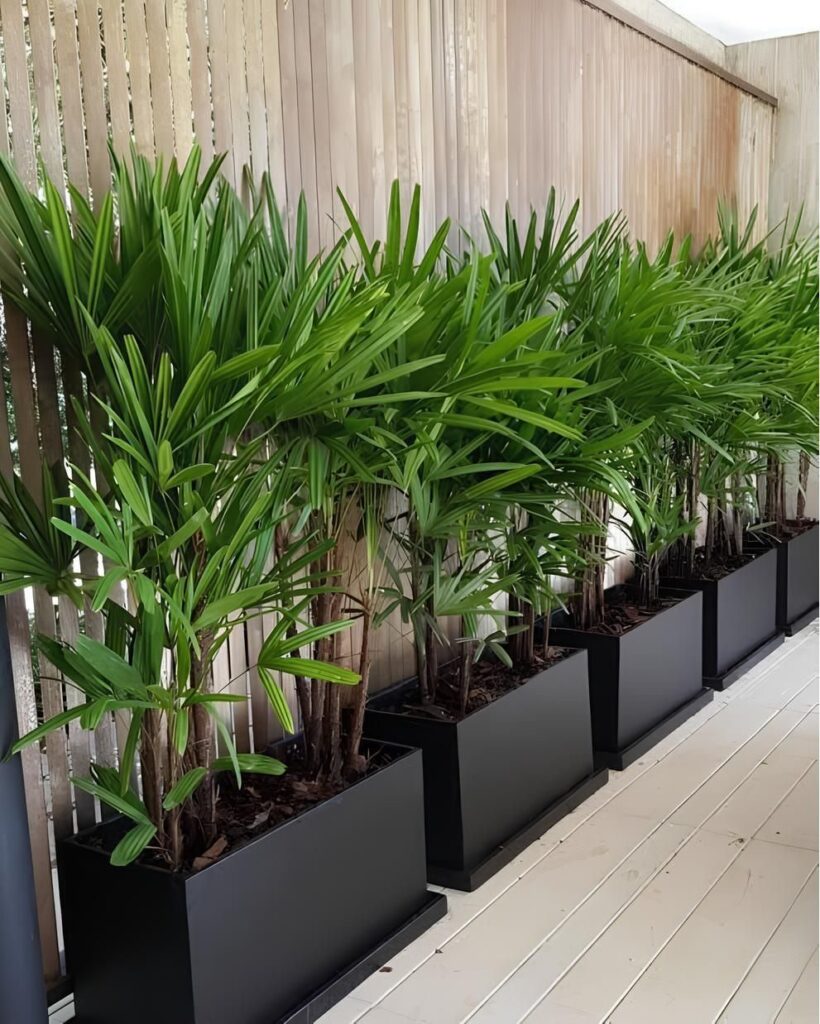
Outdoor planter boxes range from a simple self-watering kit to a lighted border piece that needs low-voltage wiring and its own transformer.
The deciding factor is where the box will sit and what that spot demands: a balcony with a weight limit needs a different answer than a ground-level bed in full sun.
[link-whisper-related-posts]1. EarthBox Container Gardening System
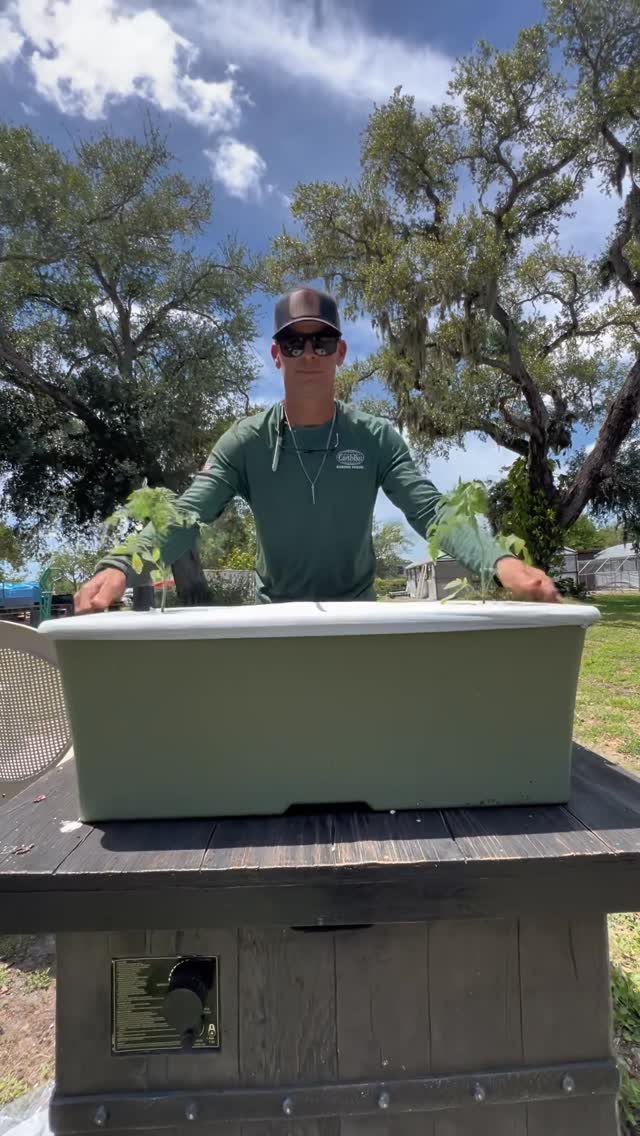
An EarthBox is a self-watering container that handles daily watering for you through a bottom reservoir and a soil-less mix that wicks moisture up to roots.
Set it where it gets full sun most of the day, since the box itself is too heavy to move once the reservoir is full.
2. Outdoor Wooden Garden Planter Boxes
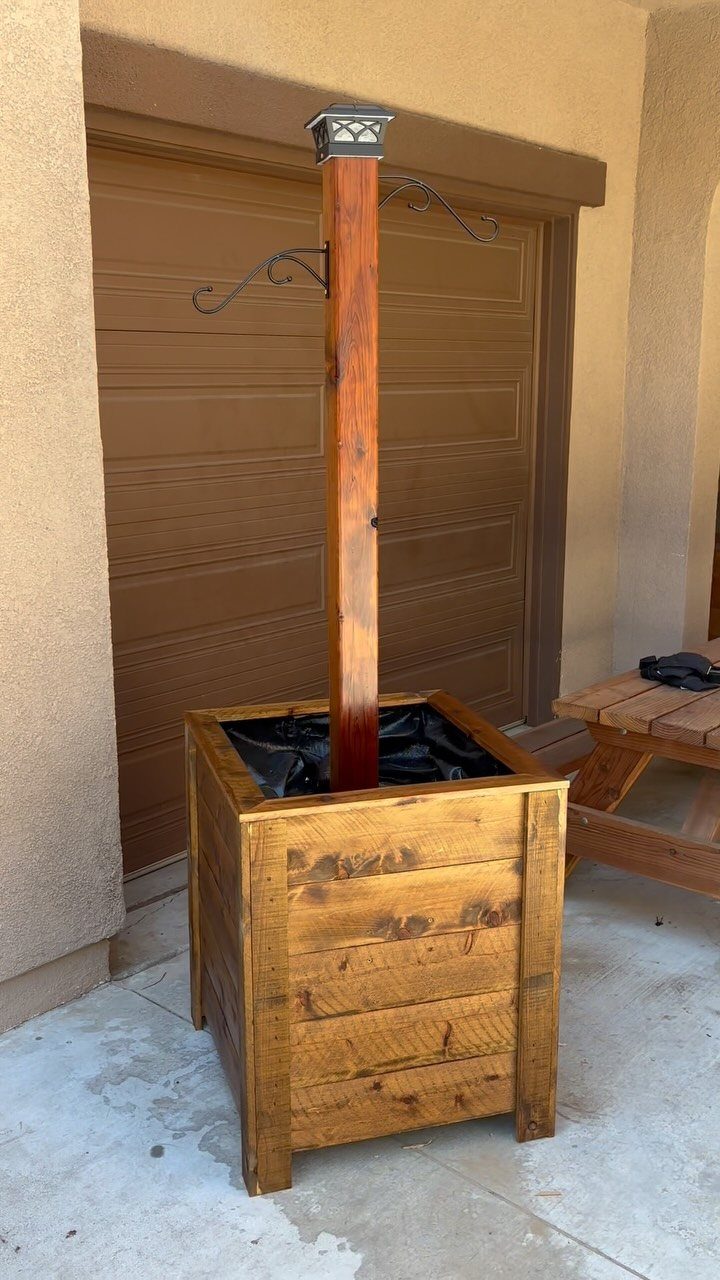
Stained wood planters with a built-in post hit 2 jobs at once: structure for hanging baskets or a solar cap, and a planting box below.
The wood here looks like cedar or a similar rot-resistant species, probably stained rather than painted so it can be re-coated when the finish starts to wear without stripping.
I would confirm the hanging hardware rating before loading it with trailing plants; a full basket in wet soil runs heavier than it looks.
The solar cap means no wiring, but you will want the post facing where it actually collects afternoon sun.
3. Balconies and Patios Outdoor Planter Boxes
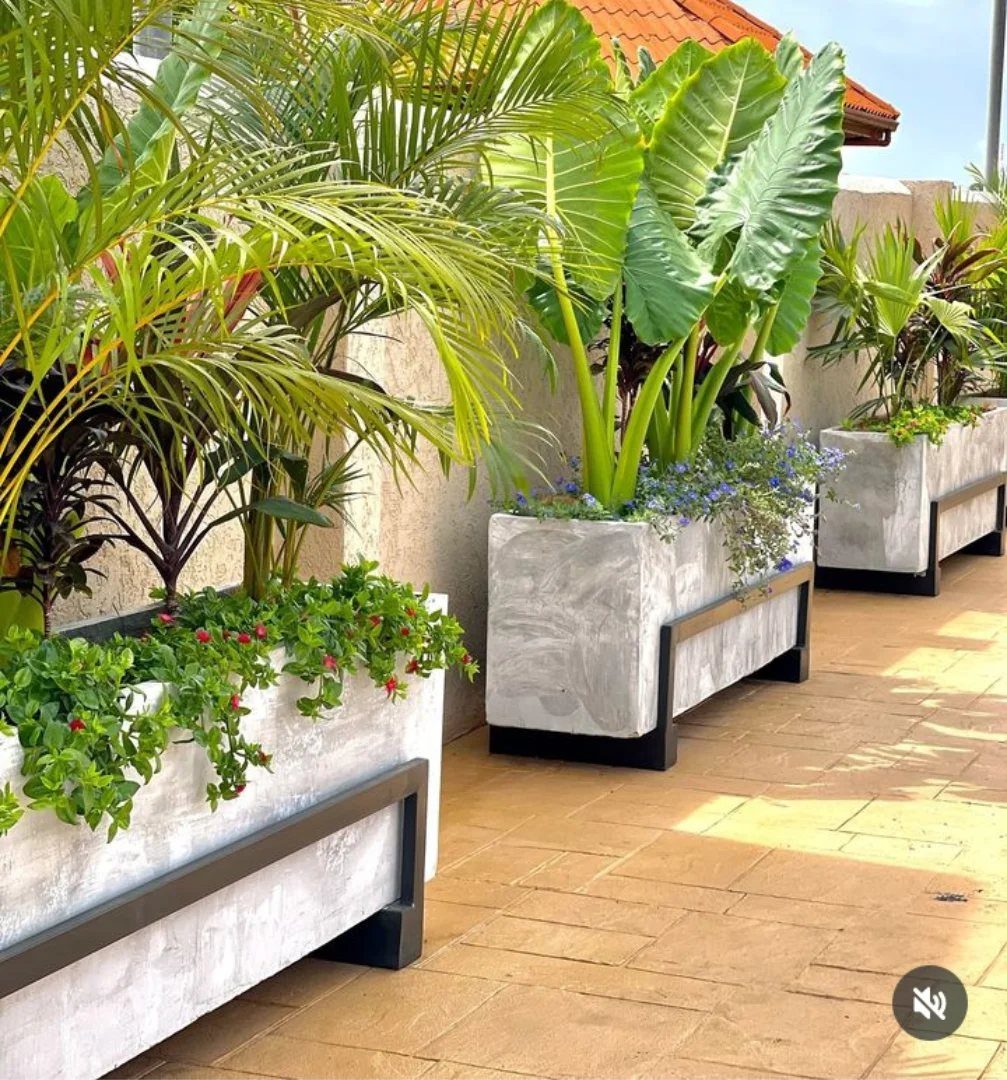
Planters that look like concrete on slim metal frames give you the visual weight of stone without the actual floor load, which matters on a balcony with weight limits or sloped drainage.
The black legs here lift the box off the surface; that gap is what lets you sweep underneath and stops wood decking from staining.
I would line these up where they block the least wall space, since tropical plants this dense need room to spread.
The frame looks powder-coated, but I would still check screw points yearly for rust if you are near salt air.
4. Modern Lighted Rectangular Planter Box
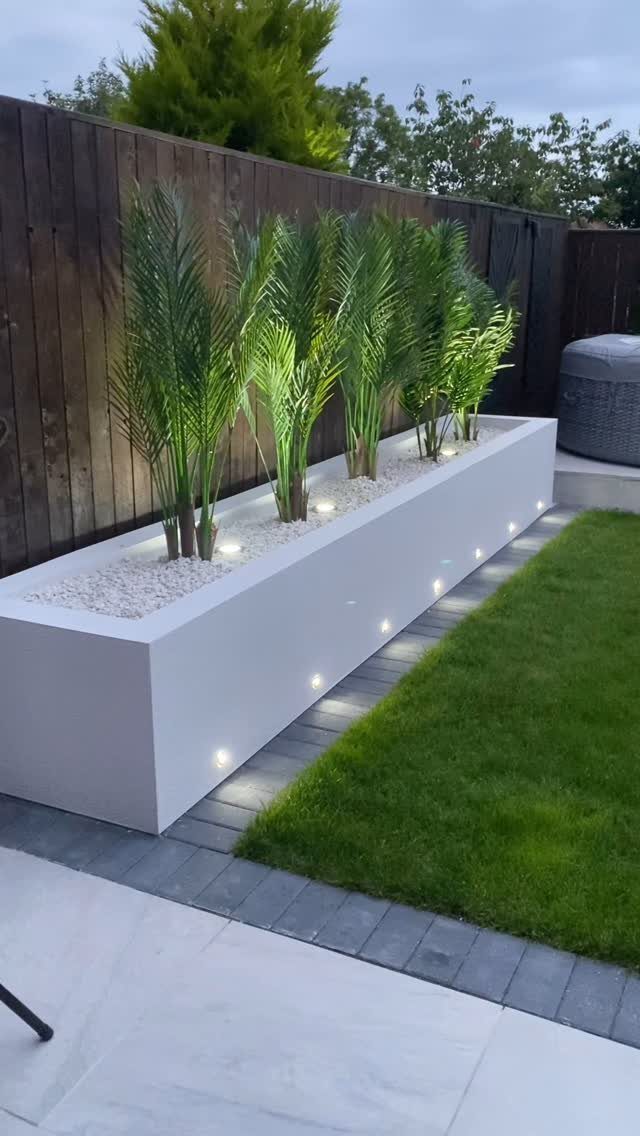
A long white planter with integrated ground lighting turns a border into a night-time feature without separate path fixtures.
The wash lights are set into the box sides and aimed at foliage from below; the gravel base is doing the drainage work, not just looking clean.
I would run the low-voltage line on the lawn side before positioning the box, since this length likely needs more than one transformer tap.
White fiberglass or resin boxes this size scratch and soil easily; I would keep a Magic Eraser grade cleaner on hand, not a stiff brush.
5. Black Rectangular Planters
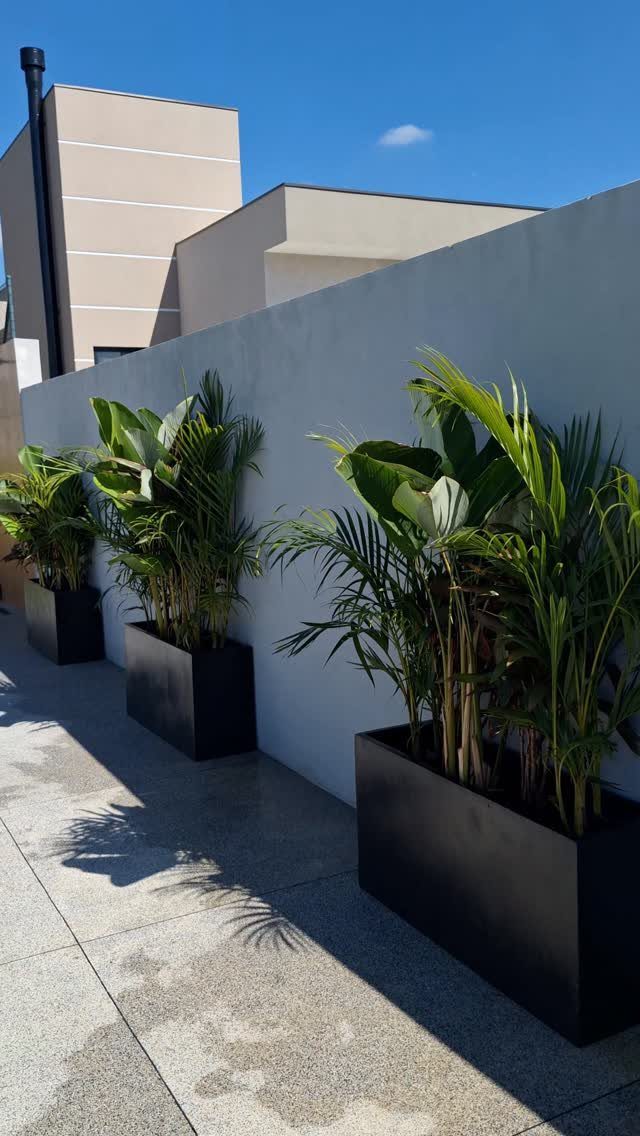
Black rectangular planters read as shadow against a light wall, which makes green foliage pop and hides soil lines between waterings.
The matte finish here hides fingerprints better than gloss, but it will show hard water spotting; I would rinse with distilled or let rain handle it.
Set in a row, the eye reads them as a single hedge, so spacing matters: touching reads formal, a small gap reads relaxed.
I would run irrigation to one end if you are doing three or more; hand-watering a row gets old fast by August.
Gardening Tips for Success
Watering in container gardening works best when you match the method to the box type. For standard planters without a reservoir, I water early morning so leaves dry before evening and cut down on mildew pressure.
Plant selection starts with sun hours, not just looks. Full-sun boxes need plants that can take 6+ hours of direct light without wilting; shade-tolerant varieties in a sun box cook by July.
Root depth matters too: shallow boxes suit lettuces and herbs without trouble, while tomatoes and peppers need enough room to stretch or they stall out.
Soil in boxes compacts faster than ground beds.
I replace or refresh the top third each season rather than amending the whole volume; the lower layers stay dense and drainage slows over time. A light mix with perlite or vermiculite holds air better than bagged topsoil alone.
Weight adds up fast on balconies and raised decks. Most building codes give a range for balcony live load, but the actual limit on your lease or HOA paperwork is the number that governs.
Frequently Asked Questions
Where can I get cheap planter boxes?
EarthBox containers are made in Lancaster, PA from BPA-free polypropylene that lasts decades, so the cost spreads out over years of reuse.
For cheaper wood options, I look for cedar or rot-resistant species that can be re-stained rather than replaced; painted planters often need full stripping once water gets under the finish.
Big-box stores carry the economy end, but I check screw points and wall thickness in person since thin plastic warps in full sun by the second season.
Is it cheaper to build or buy a raised garden bed?
For a weekend timeline and a real budget, buying usually wins if you need rot-resistant wood and hardware that survives outdoor cycles.
A built box with decent joints and line takes lumber, screws, stain, and a Saturday minimum; a store box in cedar or powder-coated metal skips the tool investment.
I would build only if I already had the lumber and the cuts were simple rectangles.
What do you put in the bottom of a planter box?
For standard planters without a reservoir, I want drainage, not filler.
Built-in reservoirs like the EarthBox or a gravel base that handles runoff are the setups I would actually use; stacking rocks or broken pottery in a modern container just steals root depth and I would skip it.
For the EarthBox specifically, the soil-less mix wicks moisture up from the bottom reservoir, so the bottom stays open to water, not blocked.





