
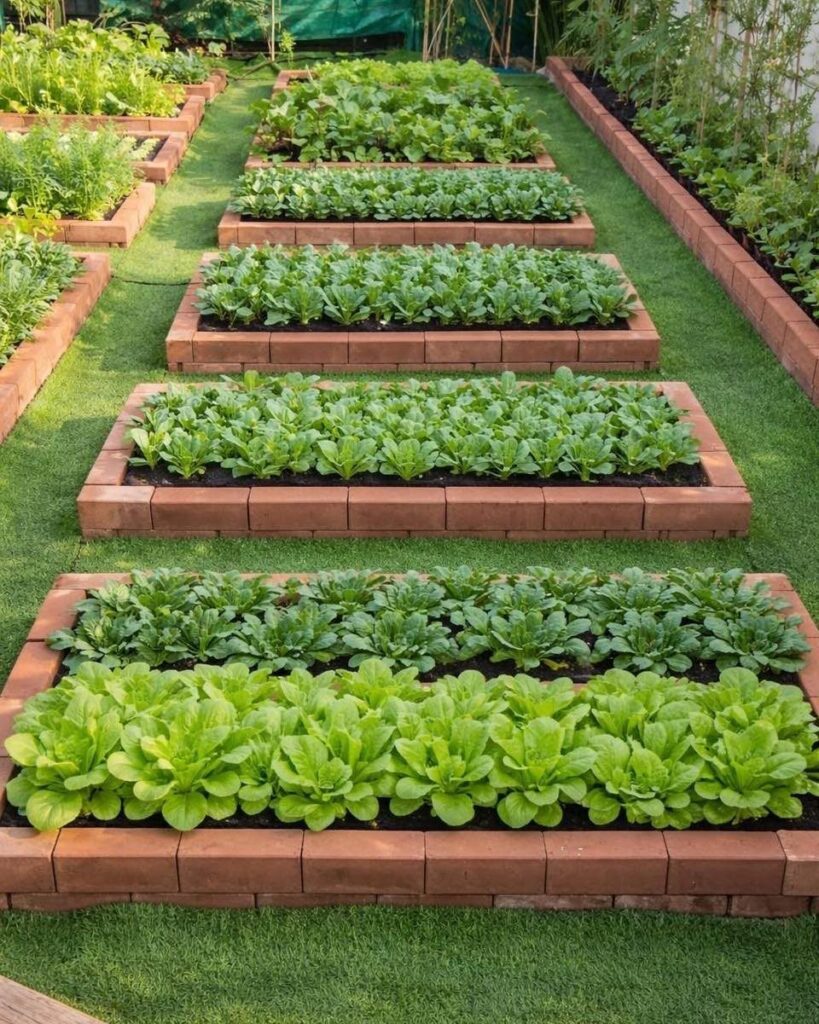
These 21 garden bed ideas run from cinder blocks you can stack in an afternoon to mortared stone walls that need a skid-steer and a pallet delivery.
What settles the choice is how much you want to bend and how long you need the bed to last before rebuilding it.
I would check whether corrugated steel corners are rolled or sharp before ordering; that detail alone decides whether the box holds its shape once filled with wet soil.
[link-whisper-related-posts]1. Use Brick
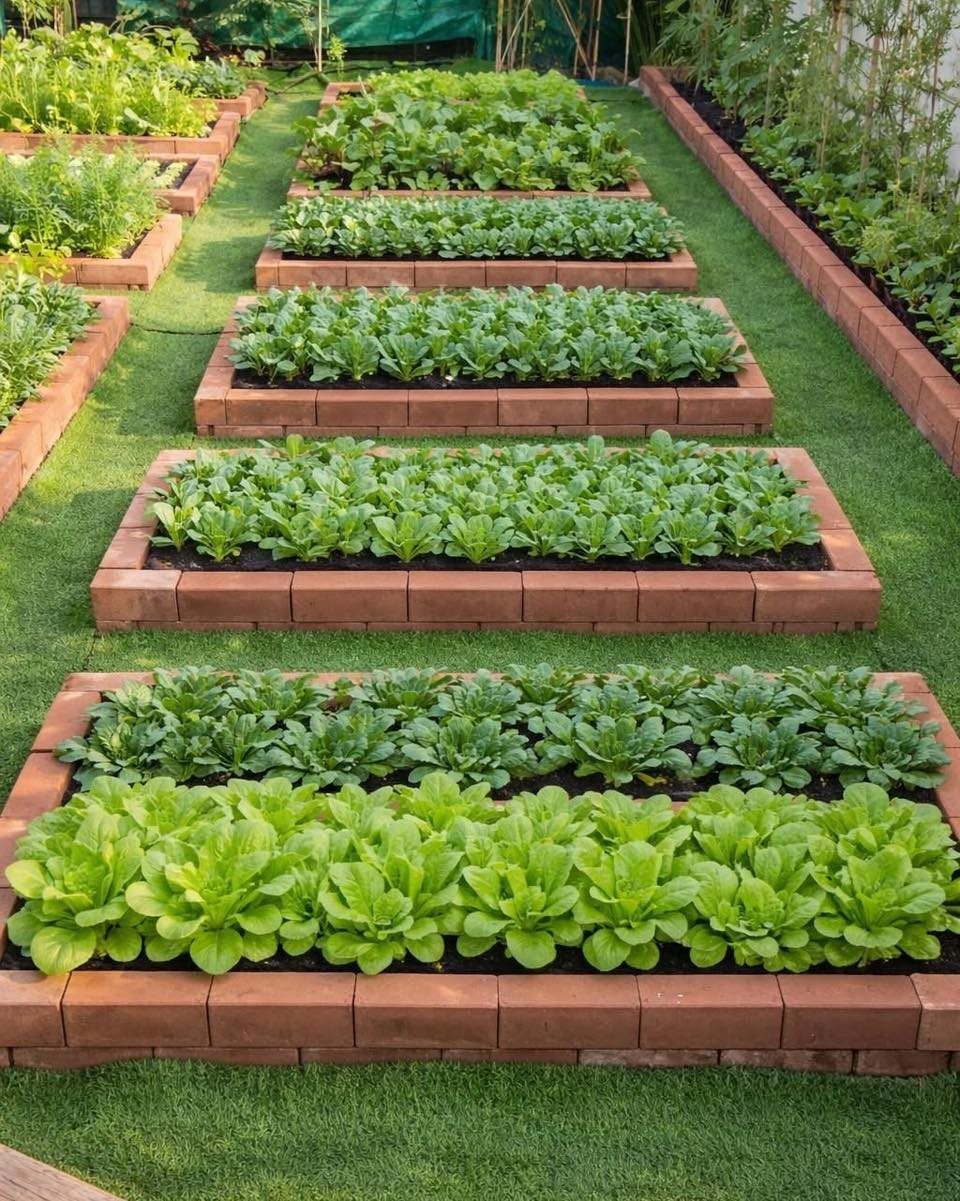
Brick borders give a raised bed clean edges and some thermal mass that warms soil slightly earlier in spring.
Brick holds water at the base, so I’d cut weep holes or set the first course on gravel if the ground doesn’t slope.
Red clay brick like this is cheap used and still reasonable new; a small bed takes surprisingly few bricks for one course.
2. Galvanized Steel Raised Beds
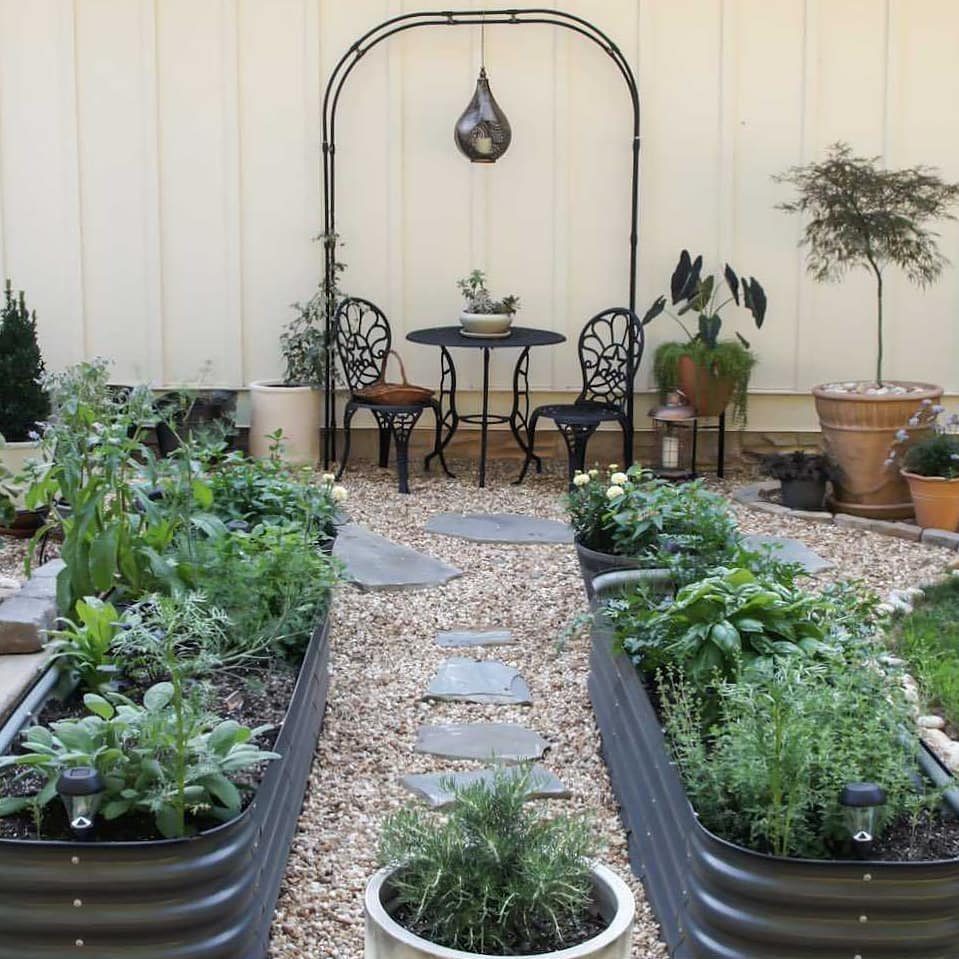
Corrugated galvanized steel outlasts wood by years and weighs far less than concrete. The metal’s industrial look suits modern backyards better than cottage gardens.
I check 3 things before buying: whether the gauge holds its shape once filled, whether the corners are rolled or sharp (rolled is safer and stiffer), and if the kit includes a bottom or if I need to add hardware cloth against gophers.
Most run reasonable money for a standard box.
3. Cut Flower Garden Bed
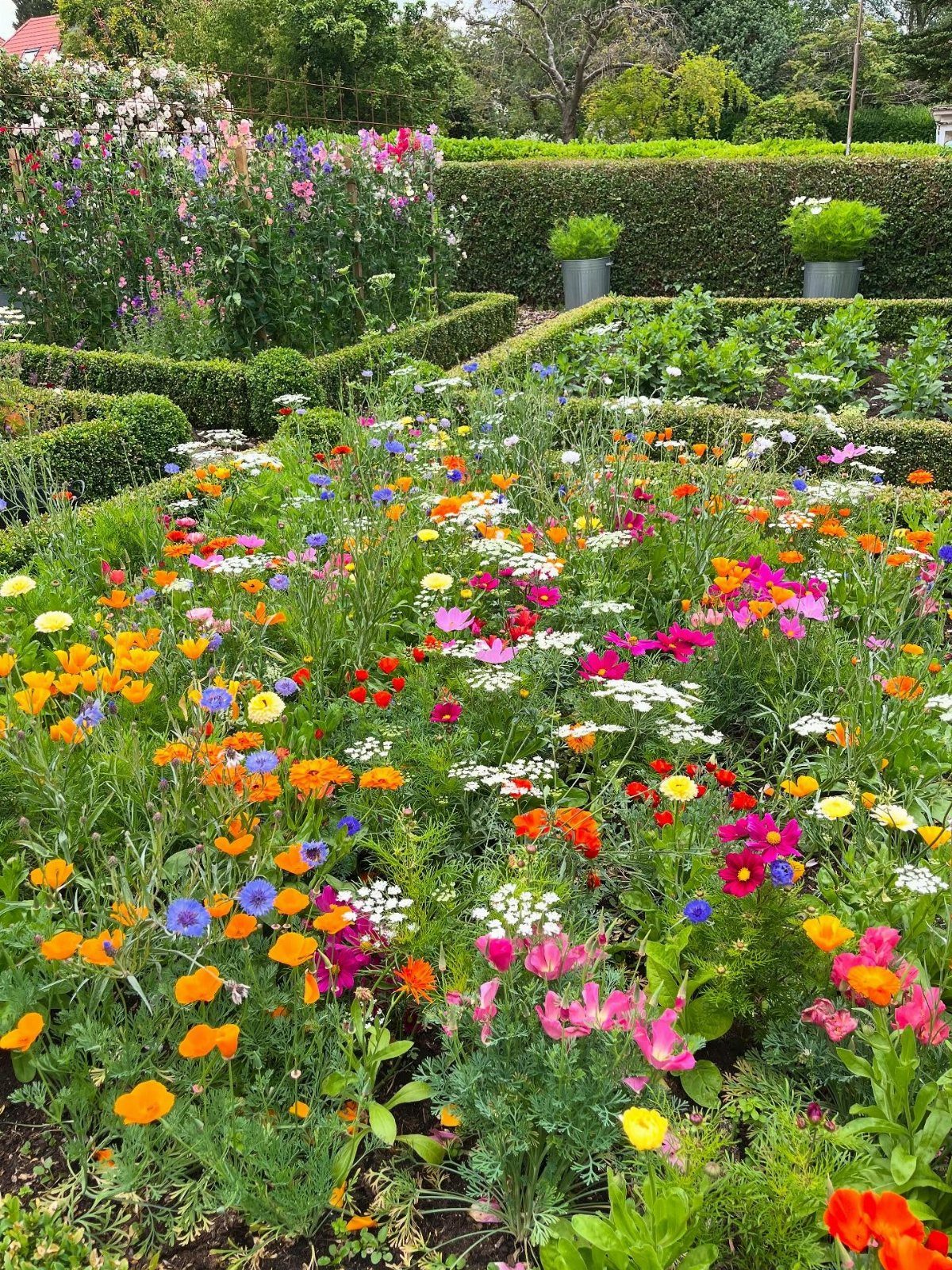
A bed cut specifically for the vase means choosing annuals that bloom all season and hold up after cutting.
Zinnias, cosmos, and poppies keep producing if you harvest at the crack of dawn and strip lower leaves immediately; dahlias and sunflowers stretch the season but need staking.
I’d plant in rows, not drifts, to make cutting easier and replacement simpler. One bed yields a generous weekly bouquet through the warm months if you succession-sow on a steady rhythm.
4. Wooden Raised Bed Garden
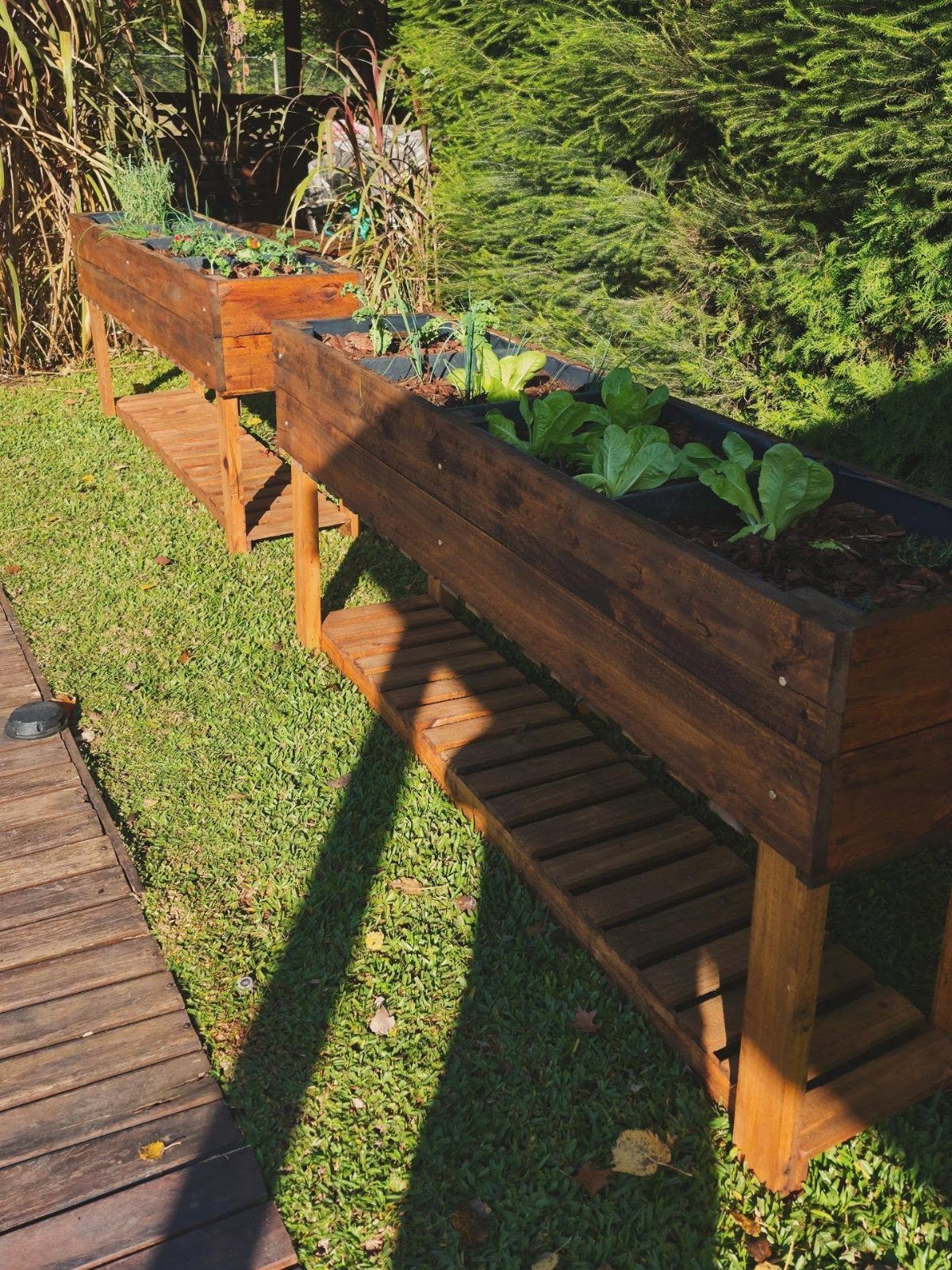
Wood still wins for beginners because it cuts with a circular saw and screws together in an afternoon.
That height saves bending and the shelf stores tools; it also limits root depth, so I’d stick to lettuce, herbs, and dwarf tomatoes rather than carrots or potatoes.
Cedar and redheart hold up years untreated; pine costs far less but rots fast. I’d spend extra on cedar for anything touching soil.
"Taller raised beds are easier to tend to, which can be especially important for aging gardeners or those with limited mobility," says Jonathan Paetzel, a landscape designer with Marshall Paetzel Landscape Architecture.
5. Metal Raised Bed Garden
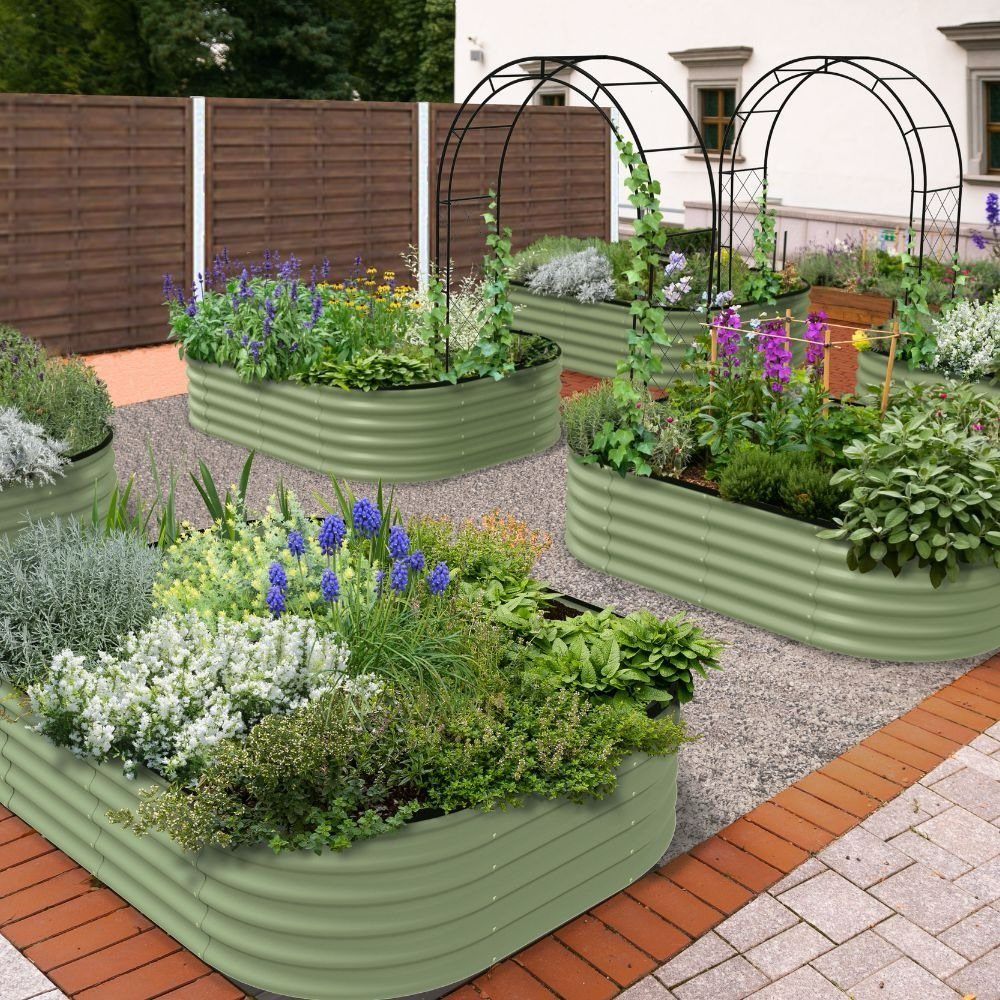
The sage green paint on these corrugated beds softens metal’s usual industrial glare and nods to the garden’s own palette. Combined with wood corner posts or a wood top rail, steel cuts material costs against all-cedar construction right now.
I’d paint before assembly with direct-to-metal exterior paint; brush-touching up on a regular schedule beats spray for control. The arches in some beds suit cucumbers or pole beans; use real height for anything climbing legumes.
6. Trellises for Vertical Gardening
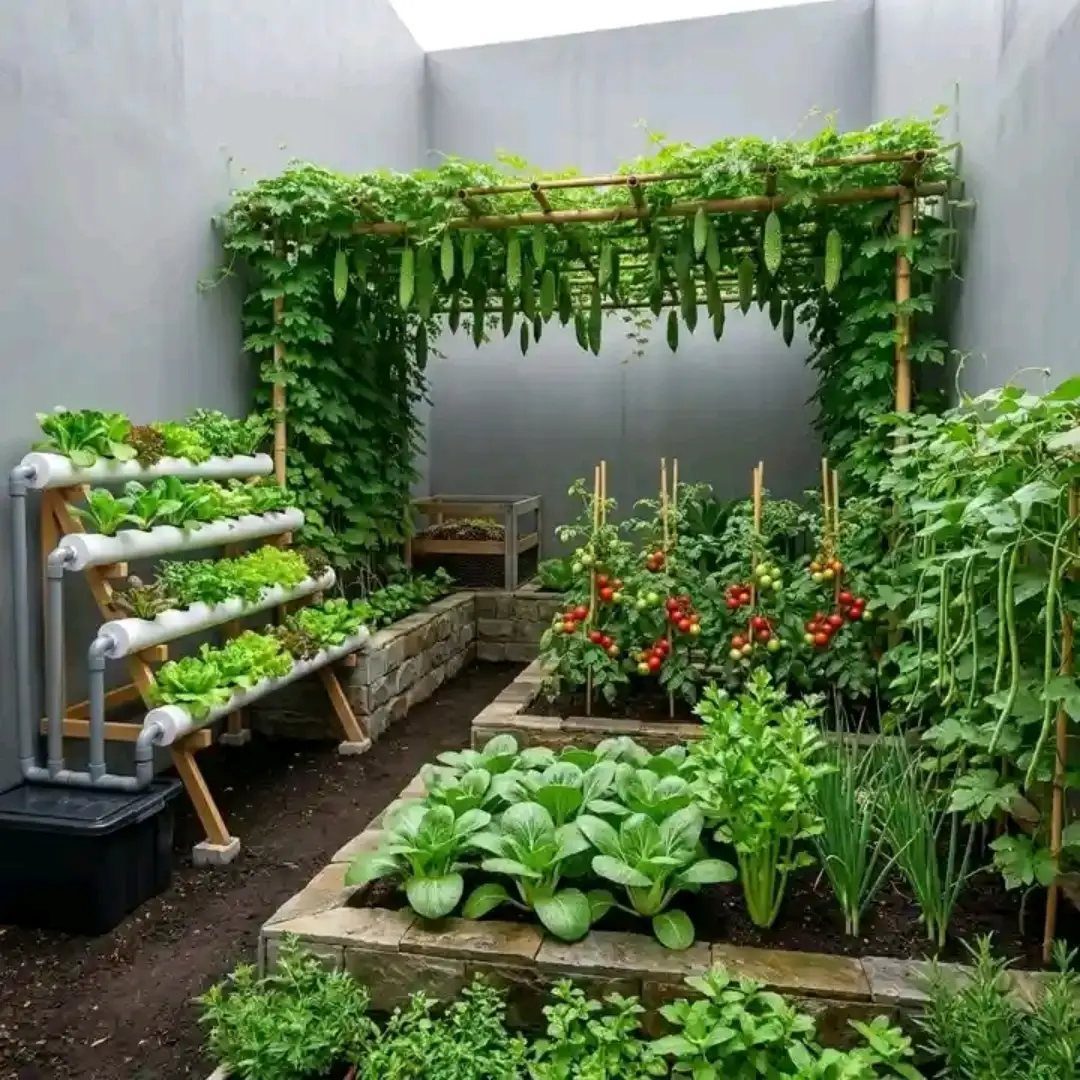
A bamboo trellis arch trains climbers overhead and frees bed space for lower crops beneath.
I’d harvest the bamboo green in late summer when sap runs low, let it cure until stiff, then lash joints with jute rather than screwing; it breathes and holds as the poles shrink.
Cucumbers dangle straight for picking; gourds need wider spacing between posts minimum. One warning: bamboo left in contact with soil rots fast; I’d set posts in concrete sleeves or metal stakes.
7. Cinder Block Raised Bed
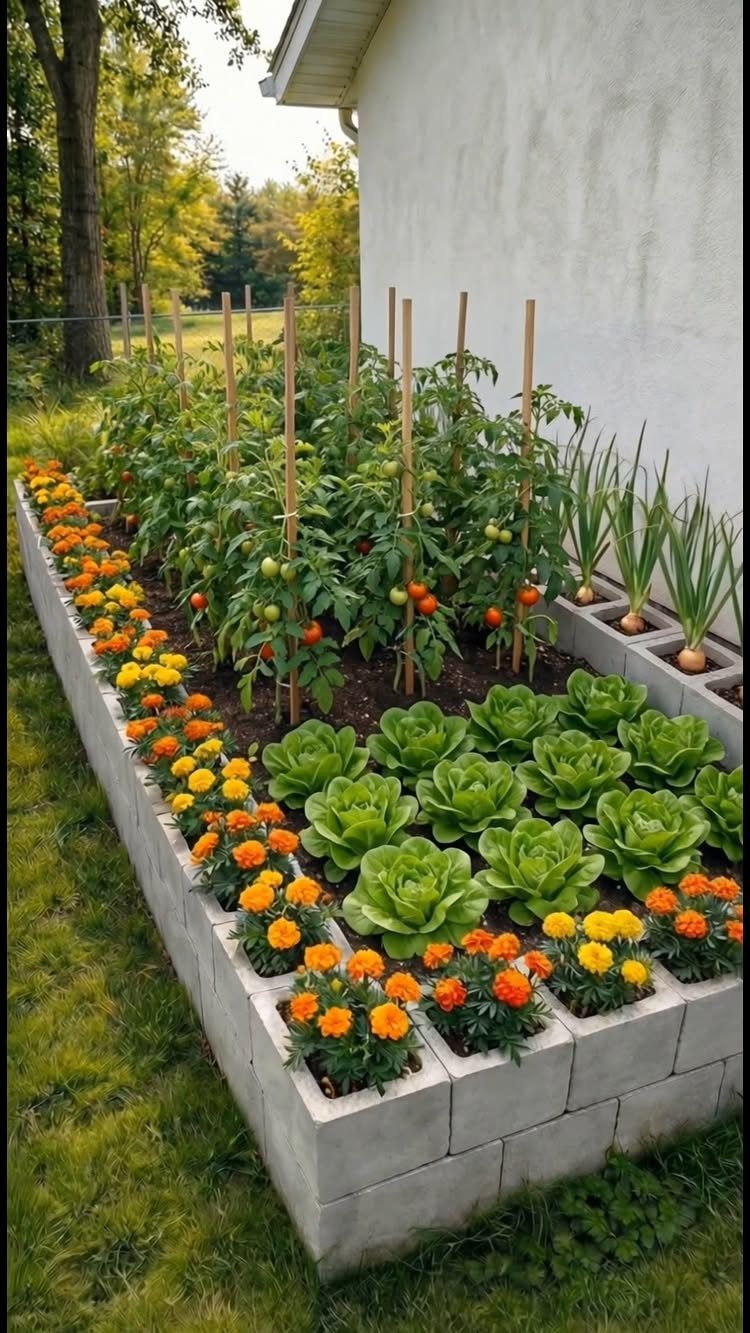
Concrete block beds go up fast and cost almost nothing if you scavenge leftovers from a construction site, though buying new adds up faster than you’d think.
The holes make neat pockets for marigolds or bunching onions that’d otherwise need their own space.
I’d line the inside with cardboard or landscape fabric; blocks wick moisture and can leave roots dry.
The rough finish suits vegetables more than front-yard flowers, and the thermal mass warms early but bakes late-season plants against a south wall. I’d shade that side with a quick-growing vine or pick a northern exposure instead.
8. Pollinator Flower Bed
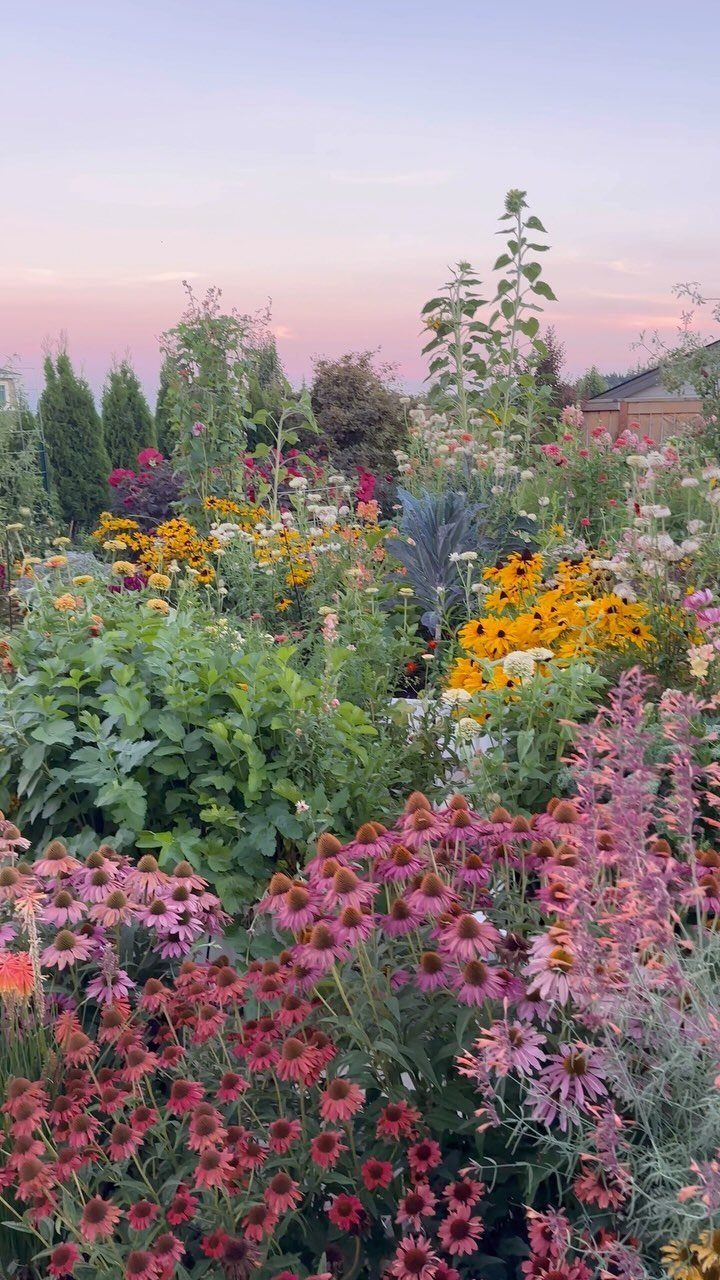
Coneflowers and black-eyed Susans bloom straight through summer with almost no care once established, and their flat landing pads suit butterflies better than frilly doubled blooms. I’d mix heights so smaller bees can reach lower layers without fighting bumblebees overhead.
This style needs patience; first-year plants look sparse and many annuals pollinators prefer, like cosmos, reseed aggressively.
I’d add one clump of native grass for overwintering insect shelter and resist cutting back until late spring. A bed this dense suppresses weeds naturally after 2 seasons.
9. Perennial Flower Bed
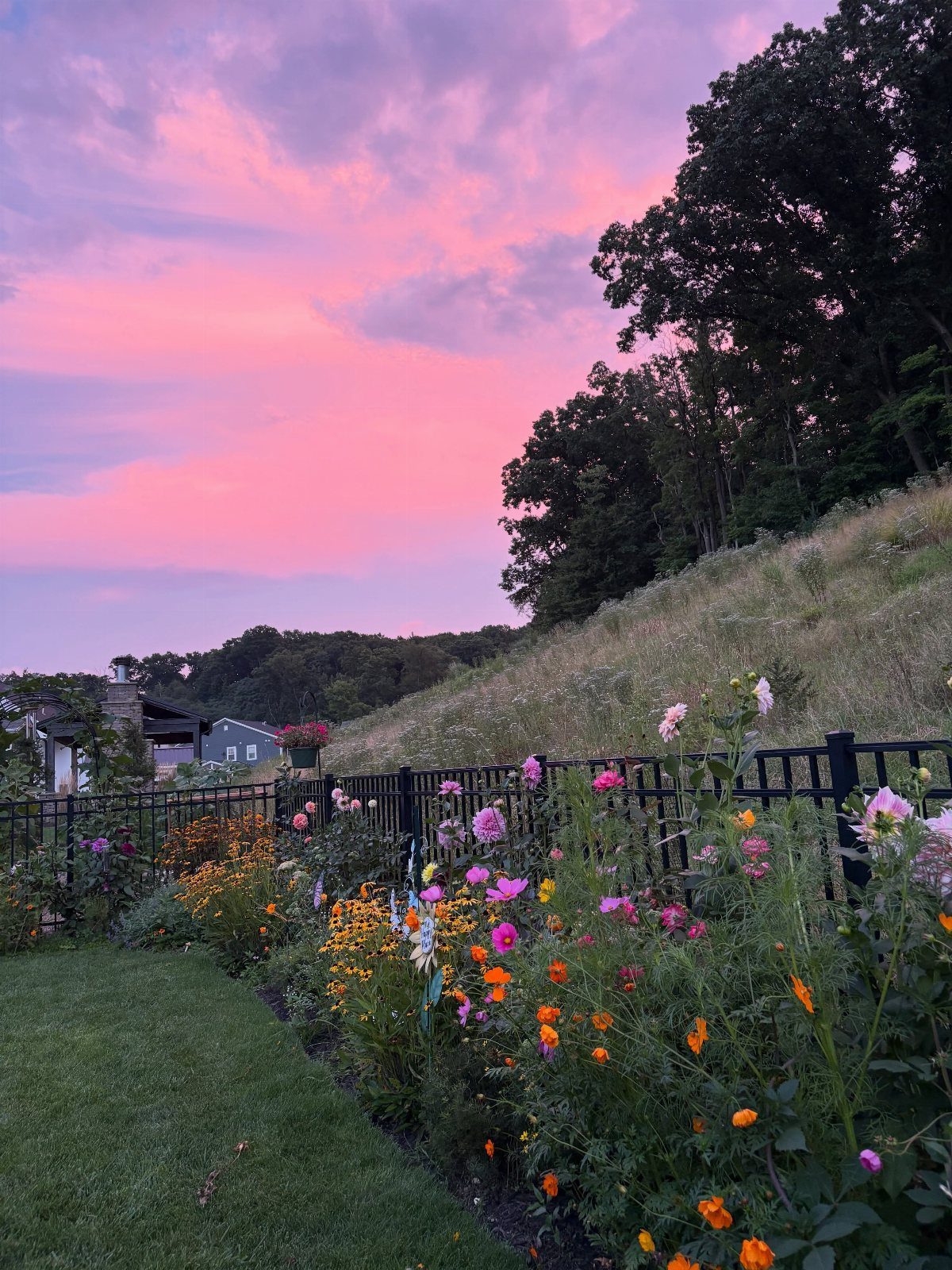
Perennials spread the cost across years; buy small divisions in fall when garden centers discount and you’ll outspend annuals once, then mostly stop.
Dahlias technically need lifting in hard frost zones, though I’ve left them in with heavy mulch and lost maybe one in three.
Against a fence, tall delphiniums and foxgloves read as a backdrop; I’d stage shorter coneflowers forward and edge with something knee-high that blooms early, like catmint, while the warm-season plants fill in.
A perennial bed accepts that early spring looks like bare dirt; I’d tuck a few bulbs to cover that gap.
10. Garden Beds Along a Slope
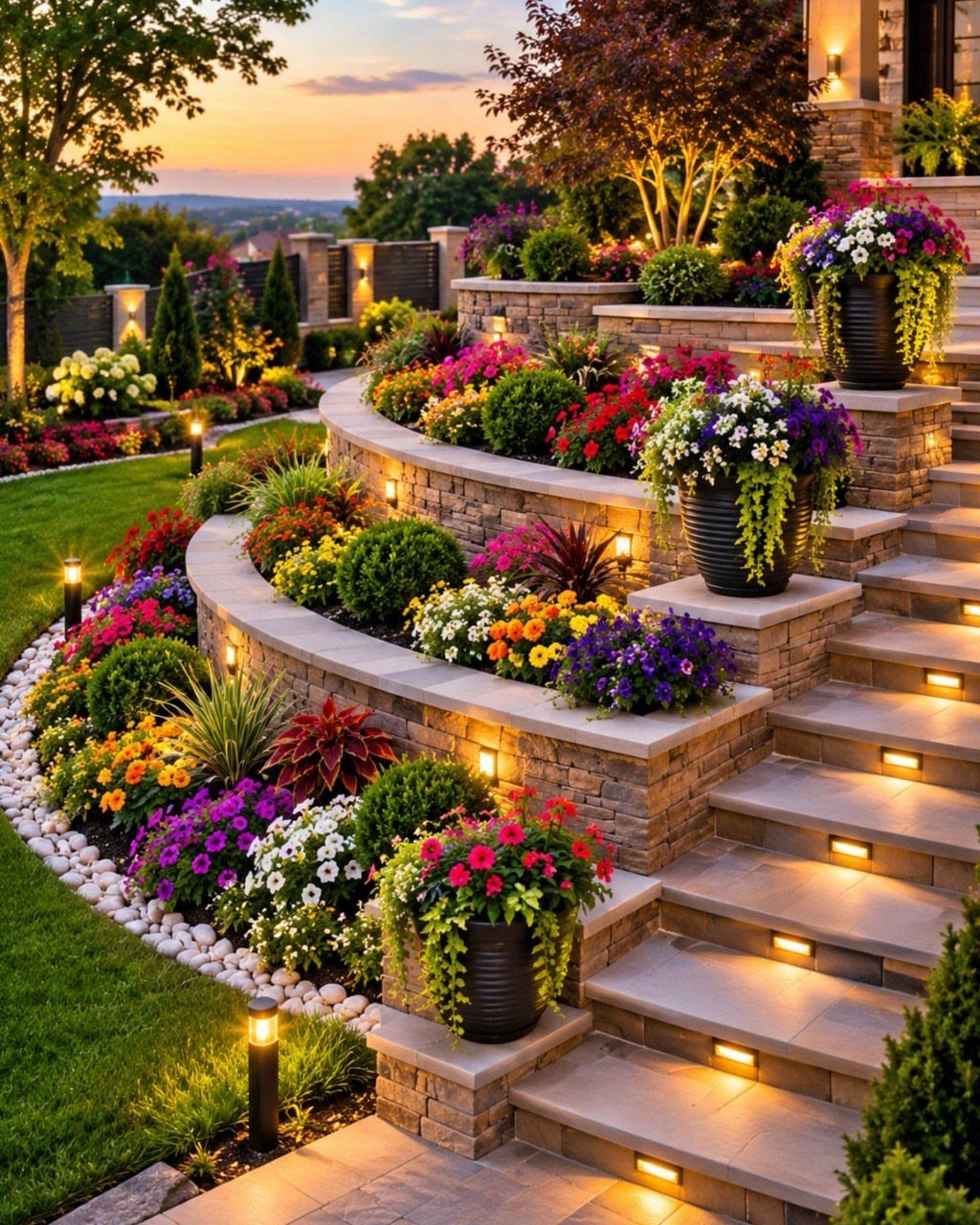
Stone retaining walls turn a useless grade into planted square footage, but the engineering matters more than the plants.
I’d step each tier level, not follow the slope, or water runs straight through without soaking roots; integrated lighting like this means planning conduit during construction, not after.
Dry-stacked walls drain better but shift in freeze-thaw; mortared holds firm with weep holes drilled low.
Either way, I’d set the first course below grade or the base slides out before long. The steeper your slope, the deeper that footing goes.
11. Boulders and Rocks Garden Bed
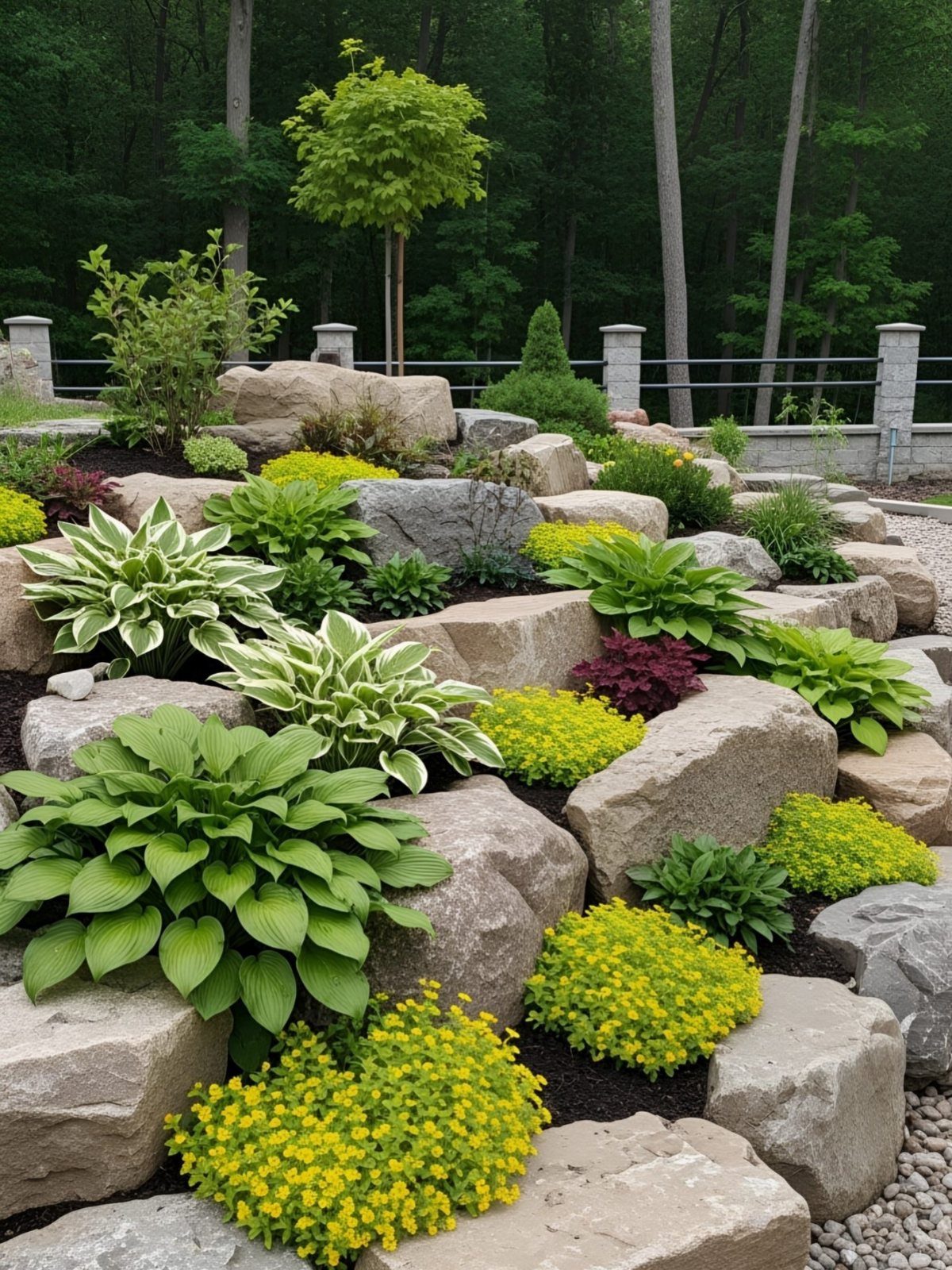
Fieldstone or limestone boulders anchor a bed on a grade that’d otherwise wash out, and their mass means you build once.
I’d set the largest stones first, slightly buried for stability, then tuck soil pockets around them; hostas and ferns root shallow enough to thrive in thin crevices.
The scale matters more than the stone type.
Two boulders read as accident; three or more, grouped odd and staggered in height, read as intention. I’d spend money here on delivery and placement; a skid-steer saves a day’s digging and your back.
12. Layered Flower Bed
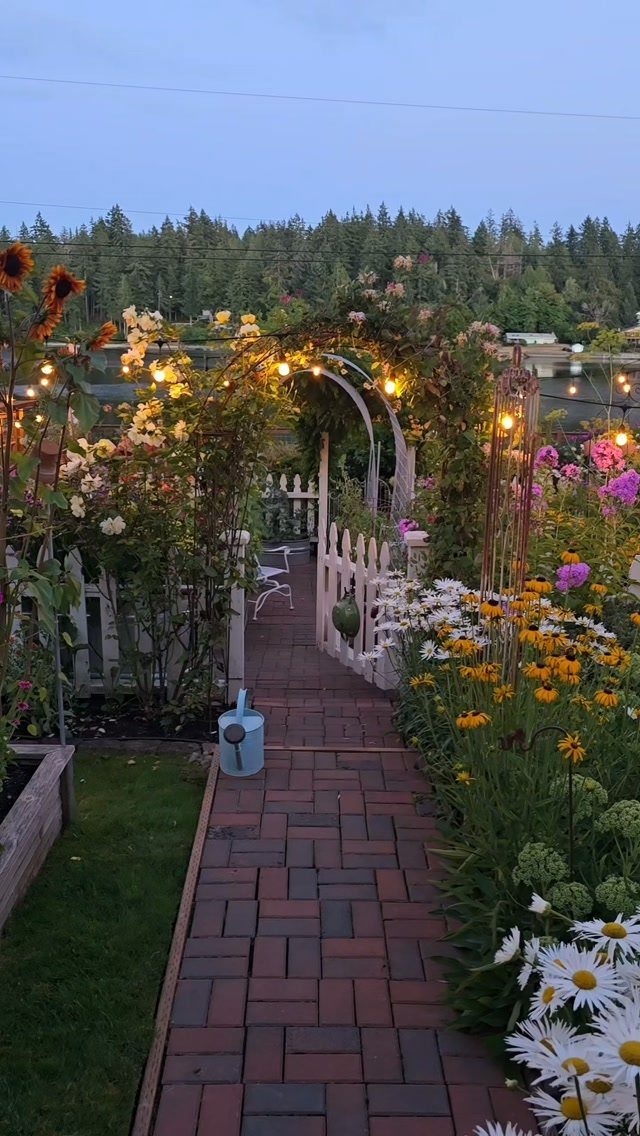
Tall sunflowers and towering coneflowers at the rear, mid-height daisies filling middle ground, and lower blooms along the path edge create depth without a blueprint.
I’d actually work backward from the viewer’s sightline: what reads from the brick path, not what faces the house.
The arch of roses and lights turns a functional walk into a destination, though I’d use low-voltage LED and bury cable in conduit; outdoor outlets trip constantly without it.
String lights last 2 seasons of weather if you’re lucky; I’d buy replacements on sale after Christmas and store dry.
13. Garden Bed Edging
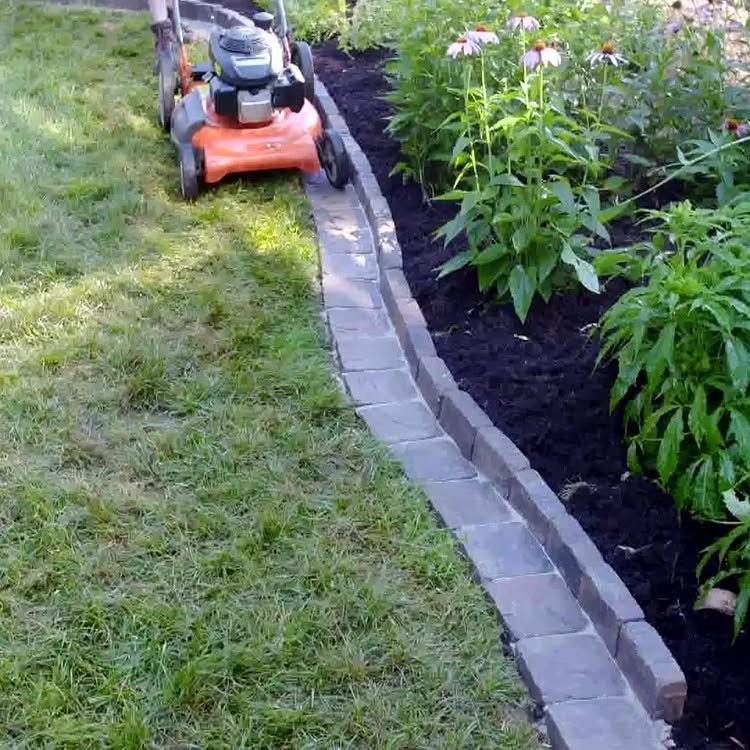
A stone edge keeps lawn grass from creeping into soil and gives the mower a solid wheel to ride.
I’d set pavers flush with the turf, not raised above it; a lip catches the blade and means edging with shears anyway. This strip costs more than plastic or metal but stays put for decades if bedded on packed sand.
14. Calm Retreat Garden Bed
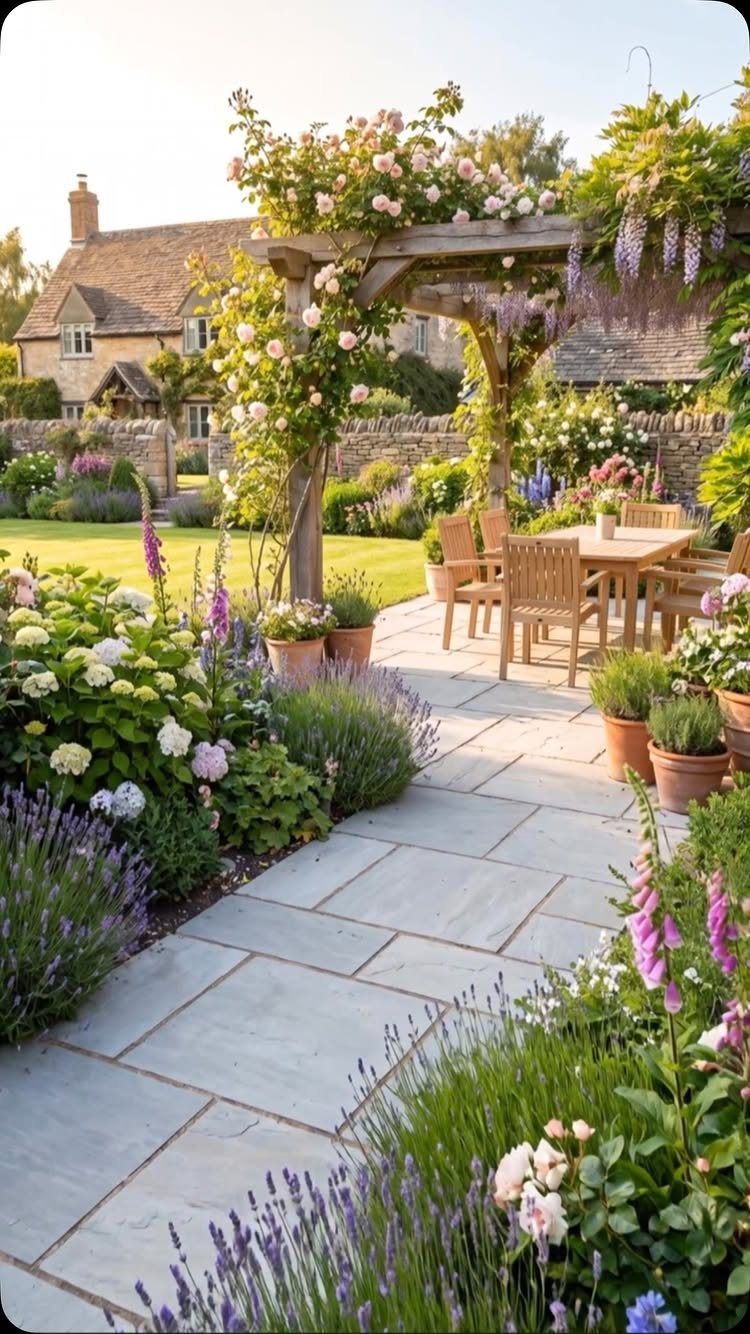
Soft purple and white, repeated enough to read as a palette, settle a garden into somewhere you’d sit past the useful hours.
The pergola overhead means planning for dappled shade, not full sun plants; roses take it once established, and I’d fill the edges with coral bells or hardy geranium rather than lavender.
I’d pick a single metal for any furniture and stick with it; mixed finishes fight the calm this style needs.
15. Wildflower Garden Bed
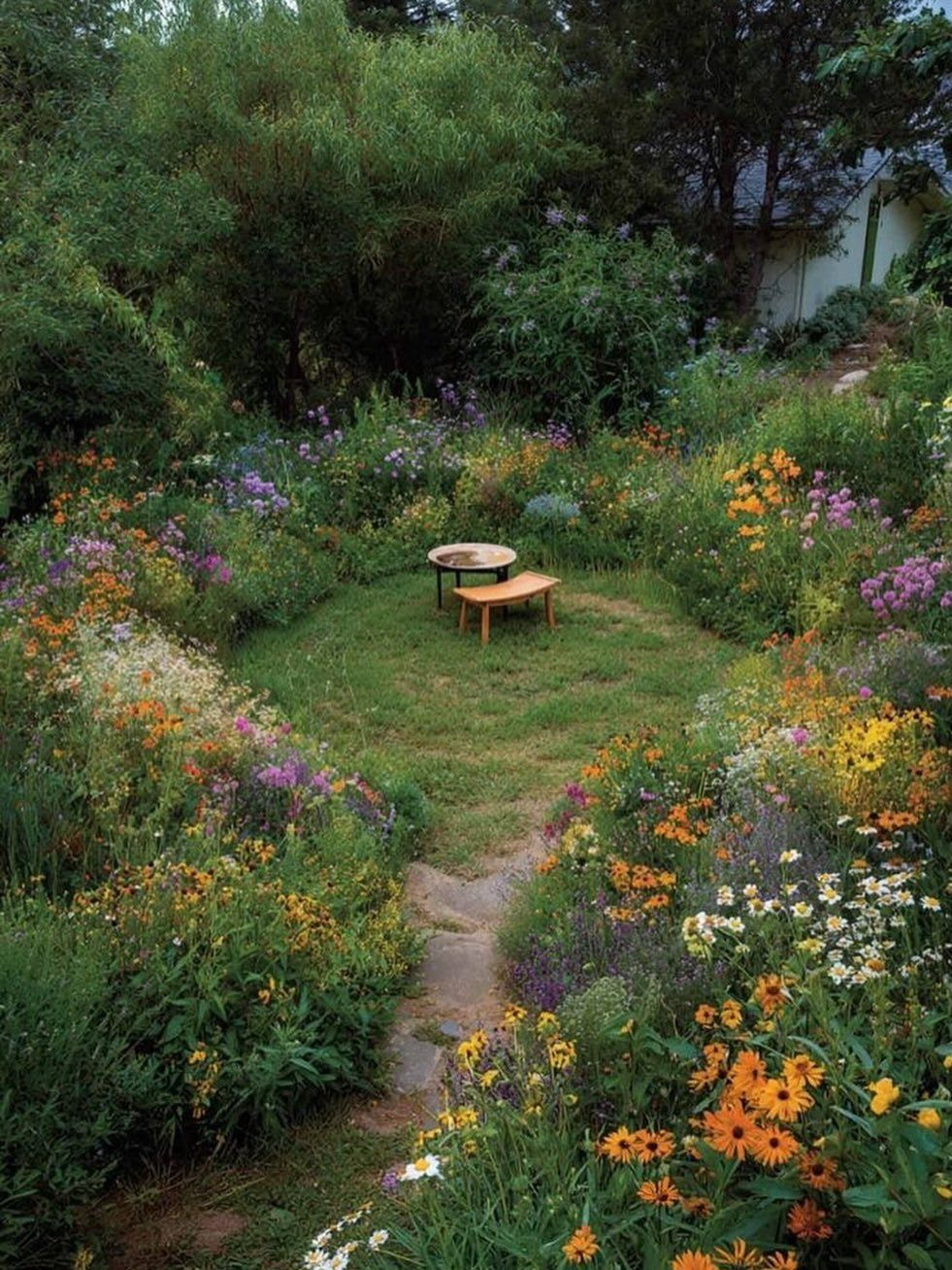
Native wildflowers seeded thick make a bed that needs almost nothing after the first year and fills with insects you’d otherwise never see.
I’d skip the meadow-in-a-can mixes; half the species won’t suit your zone and the annuals fade after one flashy season. A regional native mix costs little more and establishes with patient watering through a couple of growing seasons.
16. Cottage Garden Bed
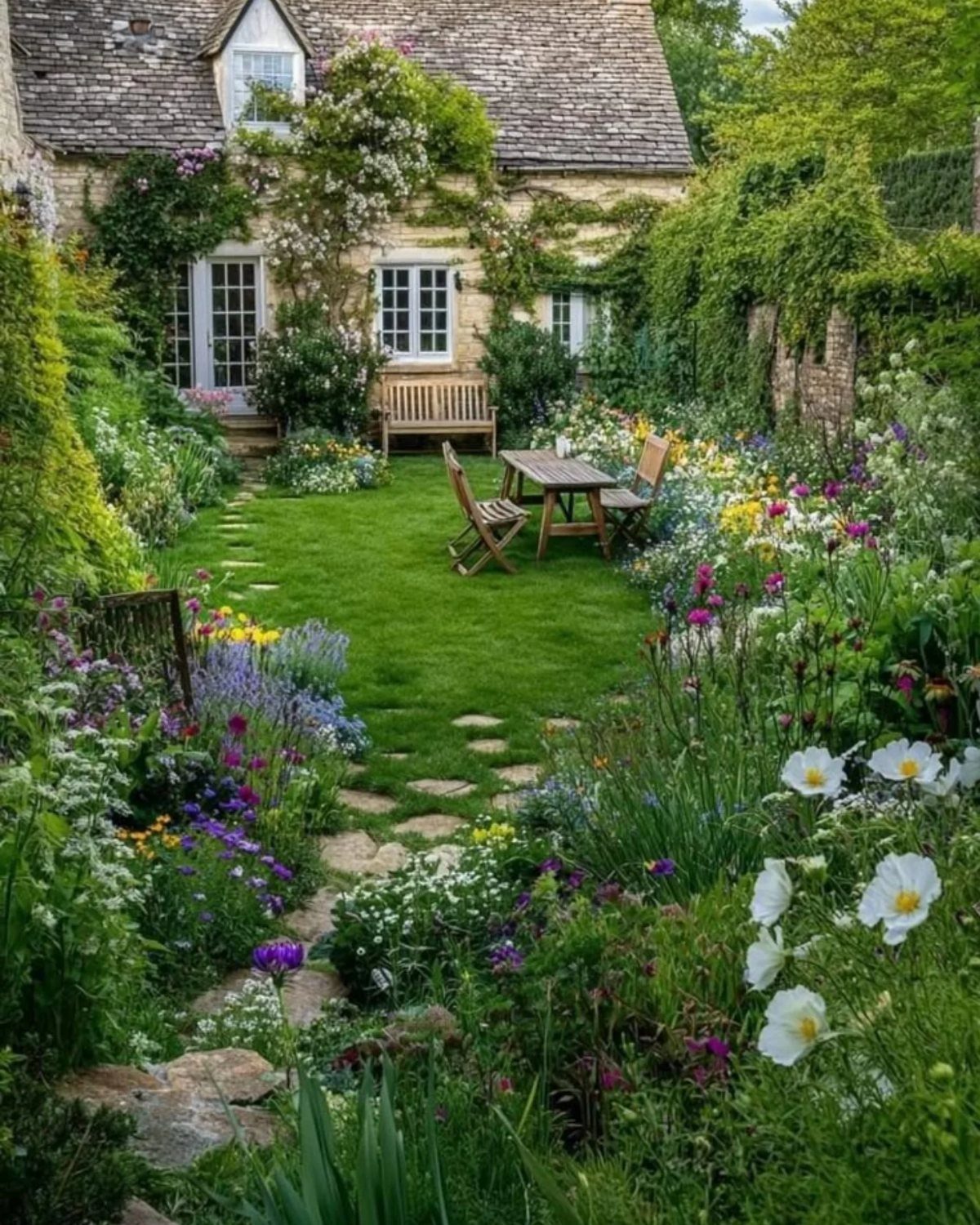
Tight planting that spills onto paths, no bare soil showing, creates the casual abundance that reads as cottage style.
I’d start with dependable workhorses: catmint, geranium, foxglove; add one self-seeding annual like nasturtium to fill gaps the first season. The stone cottage backdrop helps, but dense, mismatched height does most of the work against any fence.
17. Edible Garden Bed
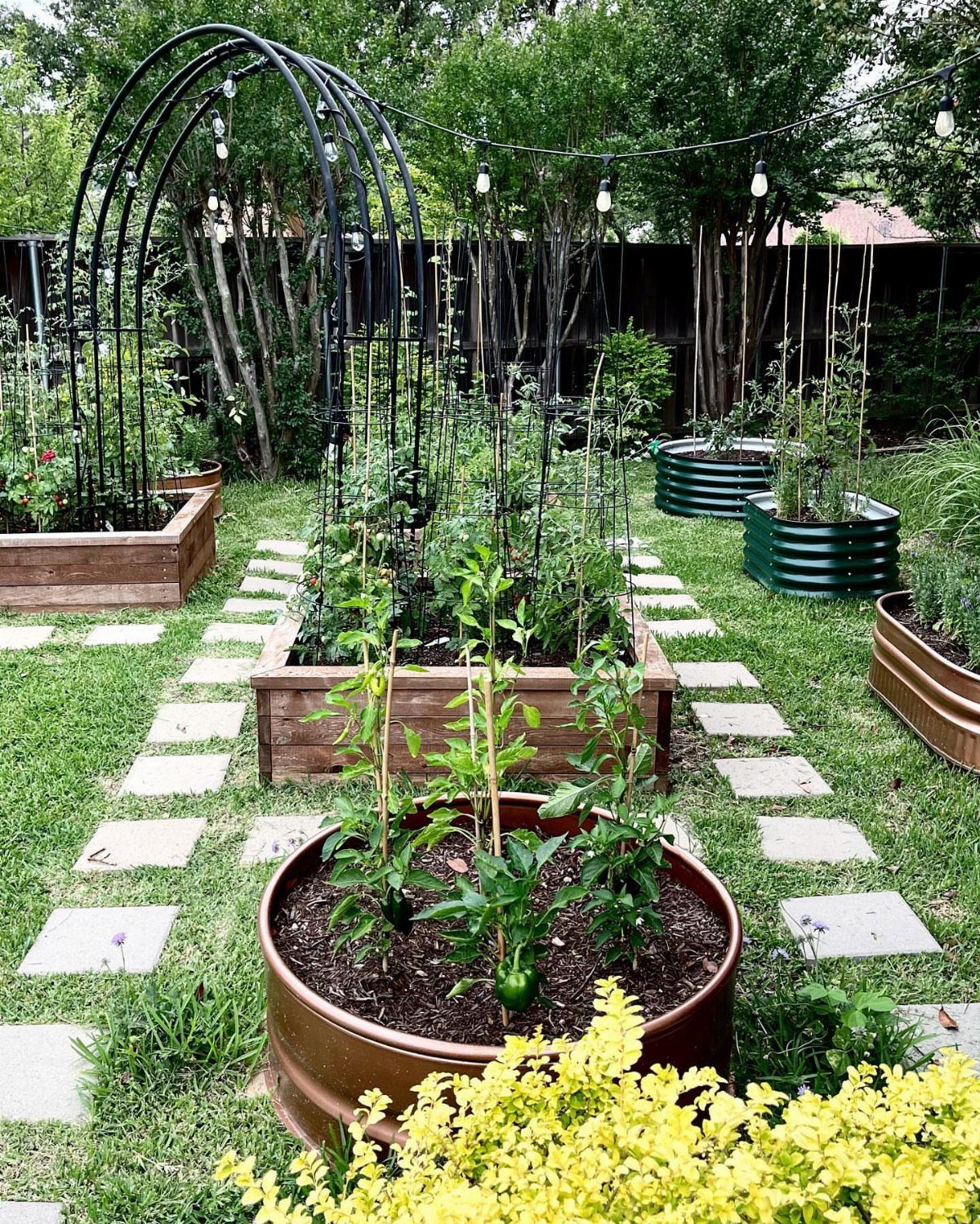
Raised beds with stepping stone paths keep feet out of growing soil and leave room for sprawling tomatoes on stakes.
The metal and wood mix in the frames is cost-driven; I’d match corner posts to the bed material if the budget stretches, or paint all one color to unify.
Pepper transplants go out after nights stay reliably warm; tomatoes handle slightly cooler air than that.
18. Tiered Pyramid Planter Bed
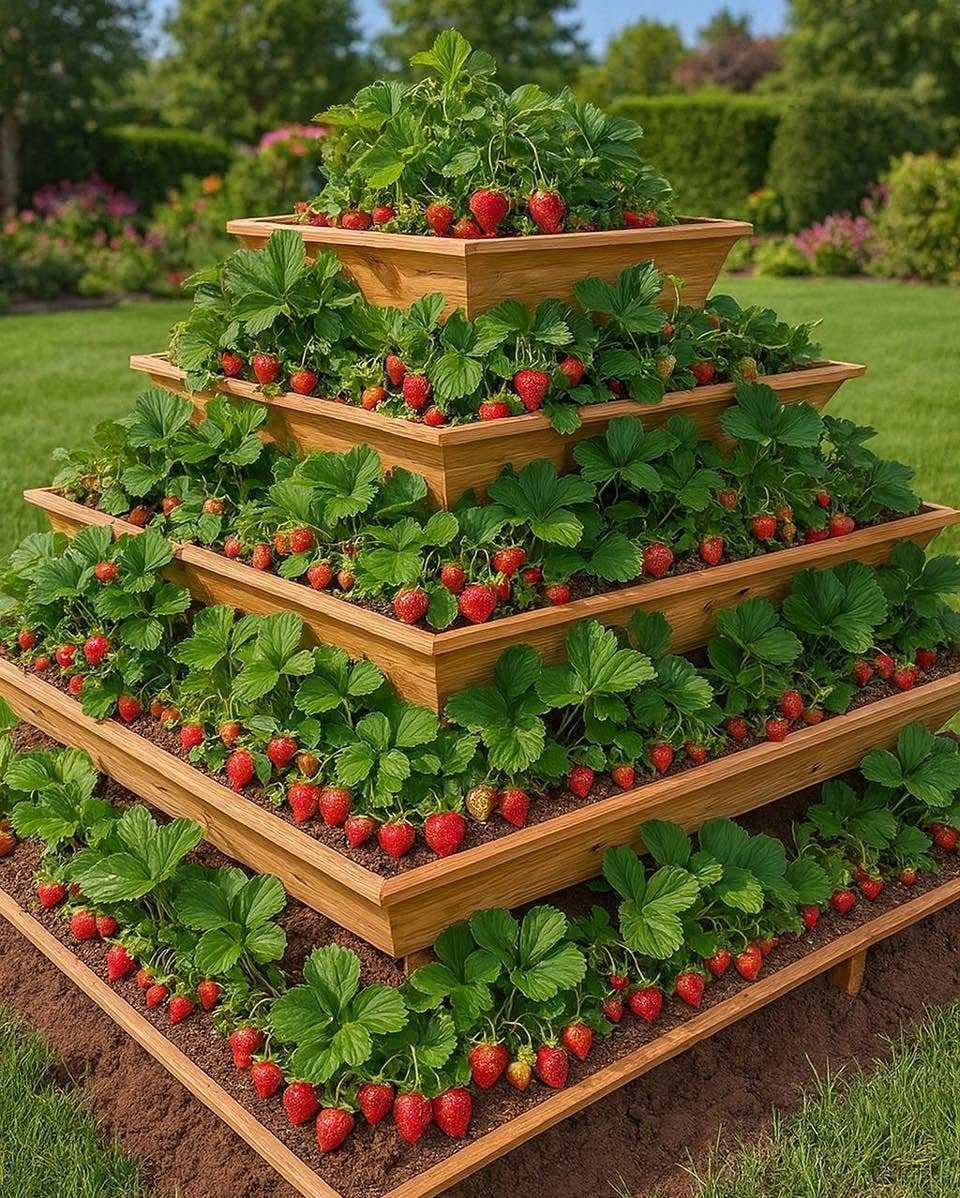
A pyramid packs strawberry plants into vertical space that’d otherwise need a whole bed, with the ripest fruit hanging clear of soil and slugs.
I’d build each tier wide enough to walk around for picking; 2 feet per side at the base is the practical minimum.
Soil settles fast in a stack this high; I’d overfill by an inch at assembly and refresh the top tier yearly.
19. Stone Block Raised Bed
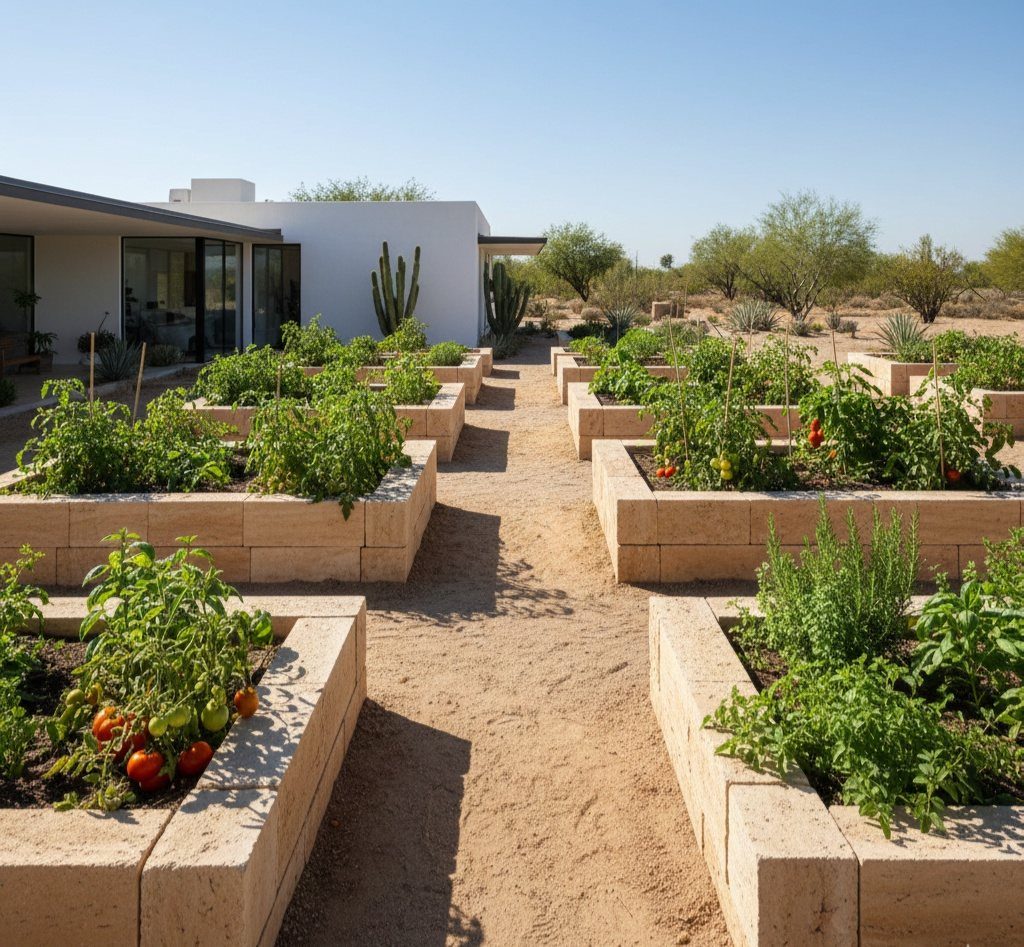
Stone blocks give a raised bed weight that won’t shift in freeze-thaw and a face that looks finished from day one.
I’d check whether the blocks are hollow-core or solid; hollow takes less muscle to set but needs filling with concrete or packed soil to hold.
Mortar between courses locks the wall, though dry-stacked with gravel fill drains faster in wet climates.
Light stone like this reflects heat, which helps tomatoes in a desert yard but calls for afternoon water. I’d budget for delivery; a bed this size needs a pallet minimum and the weight justifies the truck fee.
20. Covered Greenhouse Garden Bed
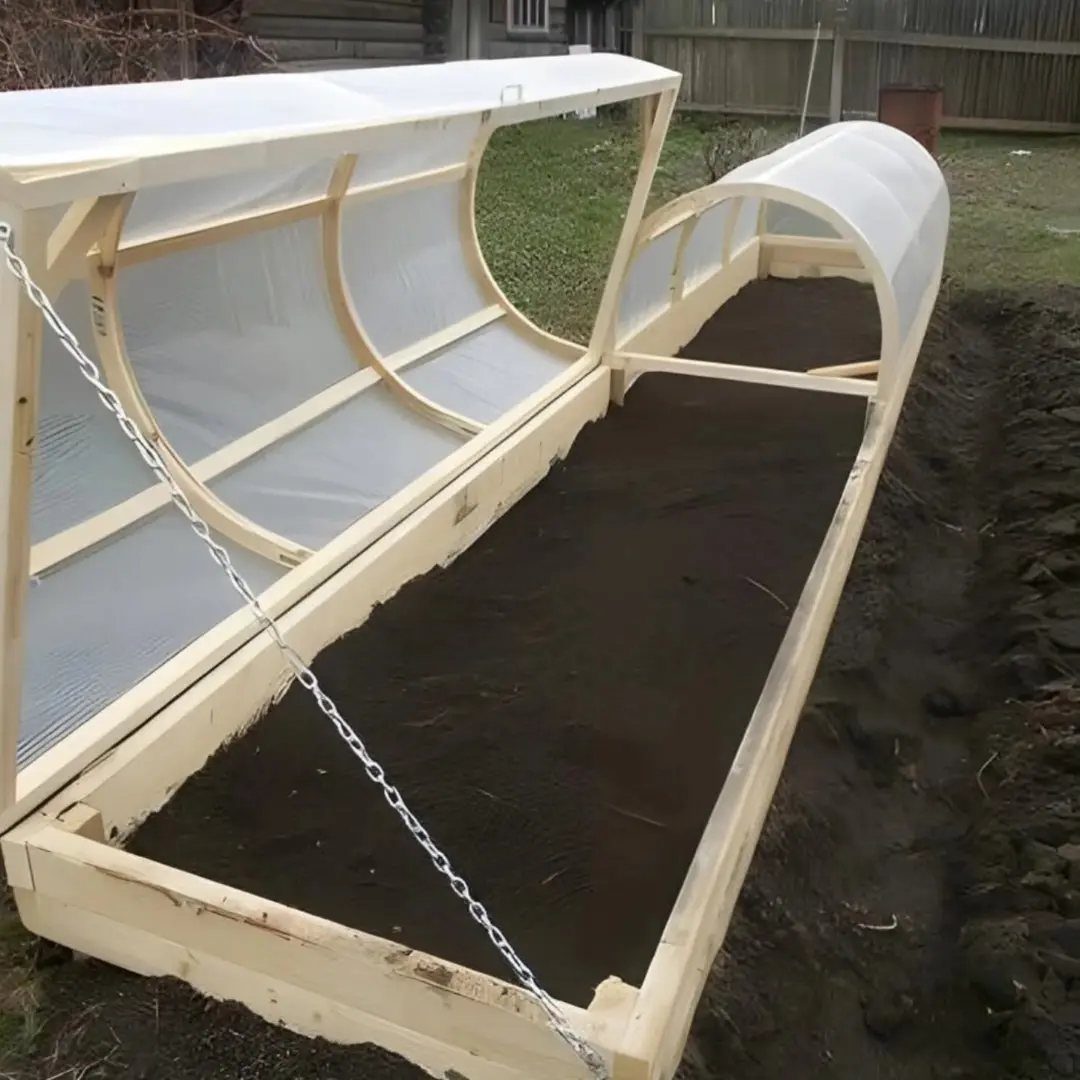
A hinged hoop cover turns a simple raised bed into a season extender that opens for weeding and closes against frost.
Arched greenhouse film held to wood with UV-resistant staples or channel lock clouds and brittles with sun exposure; I would plan on replacing it before the light transmission drops enough to matter.
A chain prop like this beats a stick that blows away, though I’d add a second chain for wind days.
Soil in a covered bed dries slower and warms faster, so I’d pull the cover off entirely in high summer or cook the roots. For salad greens, I’d sow in late August and keep it closed through first frost.
21. Mulched Shrub Garden Bed
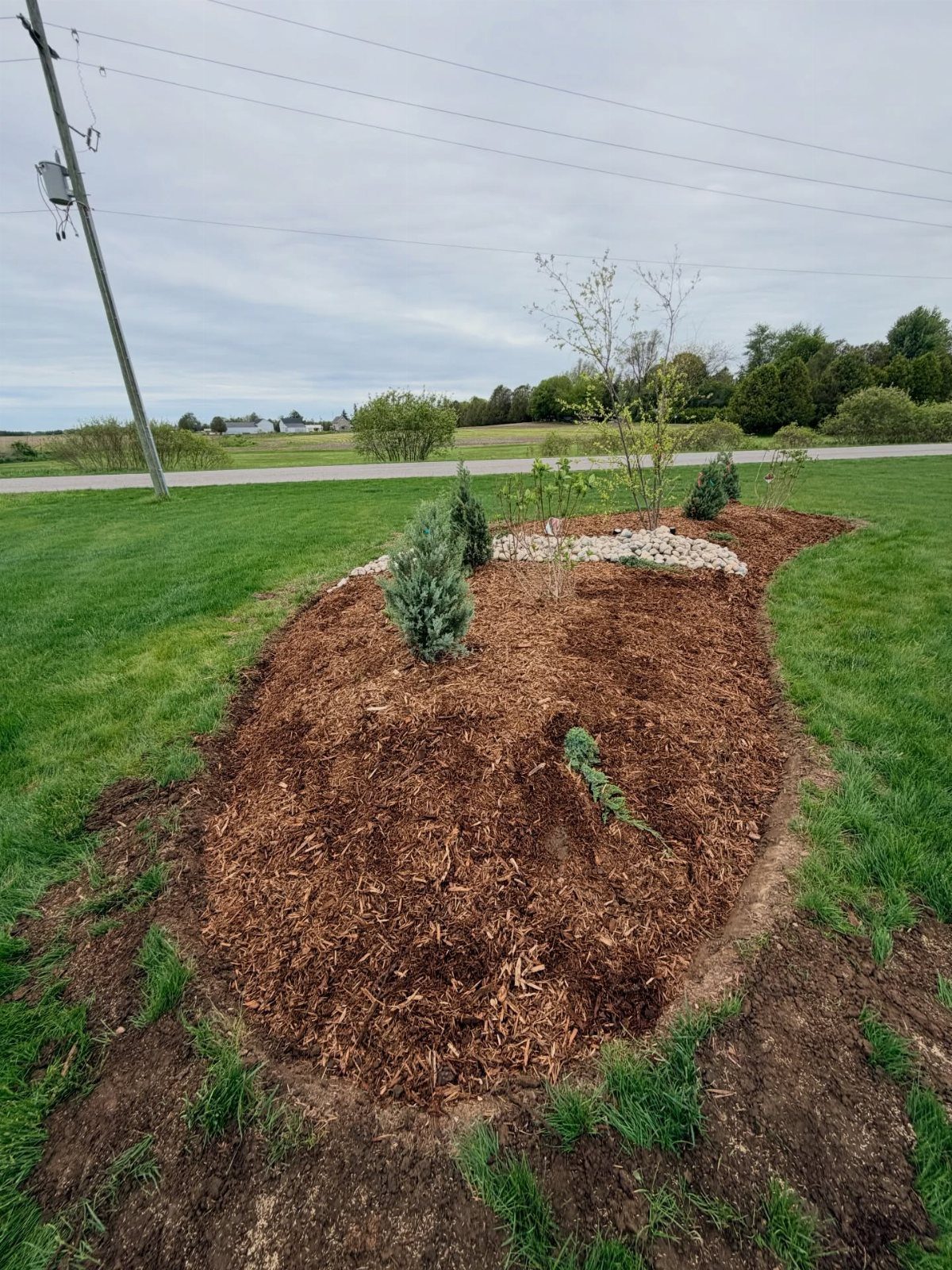
Fresh mulch around new shrubs keeps weeds down while roots establish and signals where the bed edge actually sits.
I would spread it deep enough to suppress weeds and hold moisture, keeping it an inch back from each trunk; piled mulch breeds rot where bark meets soil.
Brown hardwood chips like this break down in a couple of seasons and rob nitrogen on the way, so I’d fertilize lightly in year one.
A curved bed reads softer than straight lines against lawn, though mowing the edge takes more attention; I’d consider a steel strip below the mulch line if the curve gets tedious.
Choosing Materials for Raised Beds
Raised bed material comes down to what won’t bleed chemicals into soil you’re eating from.
Scavenged lumber from a demolished deck or fence looks like free building material, but I’d skip it for anything edible; the chemical history is guesswork, and cedar or redwood earns back its price against pine that turns to spongy pulp in 3 seasons.
Brick, natural stone, or corrugated metal with drilled drainage holes all work if you check gauge on steel and fill hollow block cores.
Scavenged beats bought when you can find it; yard sales and that corner behind the shed where things disappear to both turn up containers with enough depth and a bottom you can punch holes in.
Soil is the hidden cost no chart of board prices includes; a 4×8 bed two feet deep swallows more cubic yards than most people picture, and bagged mix from the garden center adds up fast at that volume.
Plan for that before you size the bed.
Maintenance for Garden Beds
A bed that runs itself starts with drought-tolerant natives and varieties that don’t need shearing or feeding to look alive.
Seasonal planting matters less for continuous bloom than seasonality in your actual picks: stagger bloom times so something’s turning heads when the last flush goes green.
Deep watering beats frequent misting once roots are in; shallow wetting keeps them near the surface and thirsty in July.
Tips for Successful Flower Beds
I turn the top few inches of soil with a digging fork rather than a tiller for beds this size; it aerates without pulverizing structure, then I work in whatever fertilizer the soil test called for.
Planning is the step I’d spend longest on: what faces full sun, what tolerates the maple’s afternoon shade, and whether I want a restrained palette or a scramble of color.
Height order from back to front is the textbook rule, but I also step to where people actually approach from, the path or the driveway, since that angle decides what hides behind what.
Evergreens carry structure through winter when perennials sleep and annuals are compost; I’d budget for at least one in every bed so the yard doesn’t read abandoned from November to April.
Frequently Asked Questions
Is it cheaper to build or buy a raised garden bed?
Building your own is usually cheaper than buying a kit, and scavenging materials drops the cost further. A DIY bed can stay under $100, and some cost nothing beyond soil and plants if you upcycle what you already have.
What vegetables should not be grown in a raised bed?
I’d skip deep-rooted vegetables like carrots or potatoes in shallow raised beds, since the height limits how far roots can go.
Wood beds built for lettuce, herbs, and dwarf tomatoes simply don’t have the soil depth for crops that need to tunnel deep.
Match the bed height to the crops you want before you cut a single board; shallow-rooted lettuce needs 6 inches, tomatoes want twice that.
What is the cheapest way to make a garden bed?
Concrete blocks rank cheapest if you scavenge leftovers from a construction site, and the holes even plant marigolds or bunching onions without extra containers.
Logs from a fallen tree or collected branches also cost nothing and slowly break down like living compost. I’d line block beds with cardboard inside; bare concrete wicks moisture away from roots.
How should I layout my garden beds?
Beds stay narrow enough to reach the center without stepping into soil, and sit where light actually falls for the hours each crop needs. Curved edges read softer against lawn than straight lines, though mowing takes more attention.





