
These 23 ideas run from a weekend with a shovel and a bag of mulch to a pergola build that needs concrete and a permit check.
That wet spot points you straight to a rain garden lined with river rock and native grasses, or tells you to build up with a gravel path instead of a raised bed.
[link-whisper-related-posts]1. Cactus Border
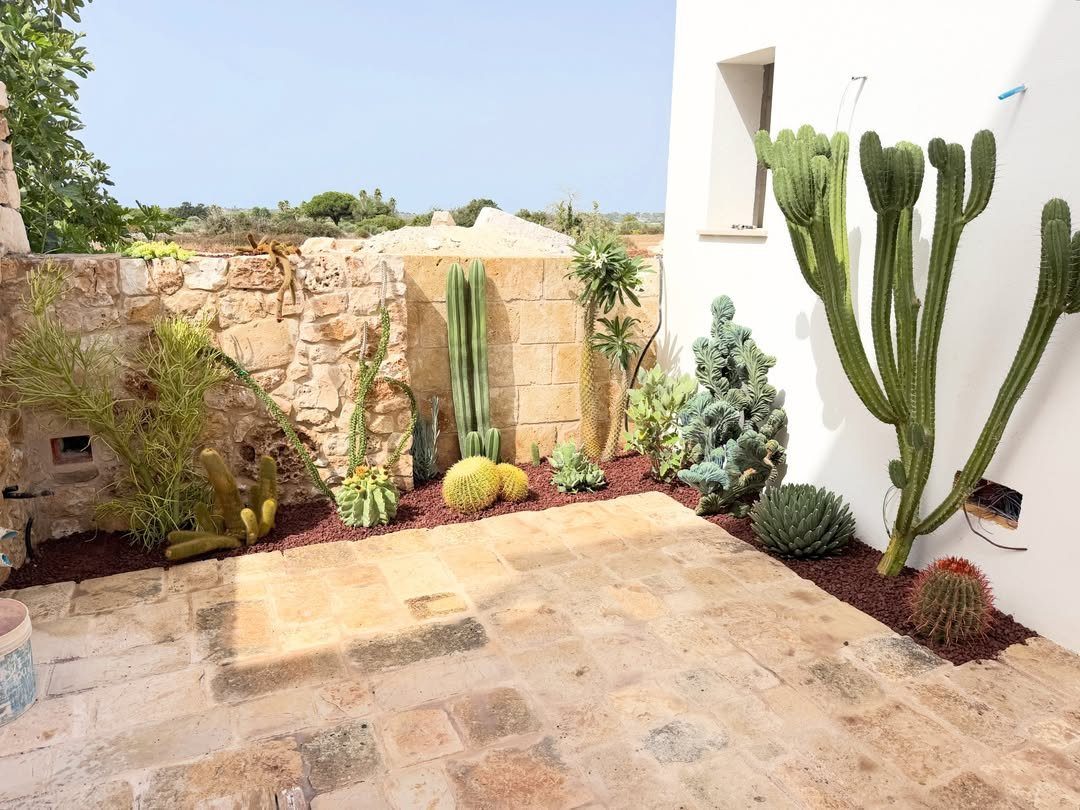
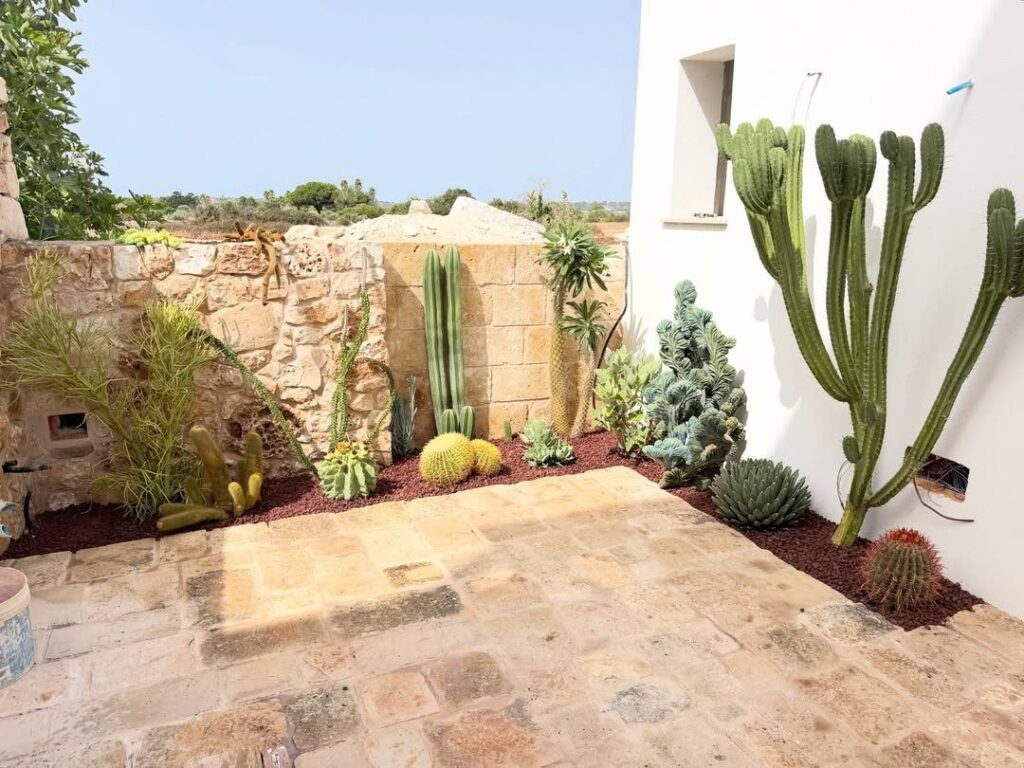
A cactus border frames hot, dry spaces where thirstier plants struggle.
Pick cold-hardy types if you are in zone 5 or colder; prickly pear and certain cholla handle winters to zone 5, while zone 9 and warmer lets you grow softer varieties year-round. Set them in well-draining soil or they rot fast.
Wear thick gloves, not cloth ones spines punch through. Gravel mulch around cactus keeps crowns dry and weeds down.
2. Tall Grasses
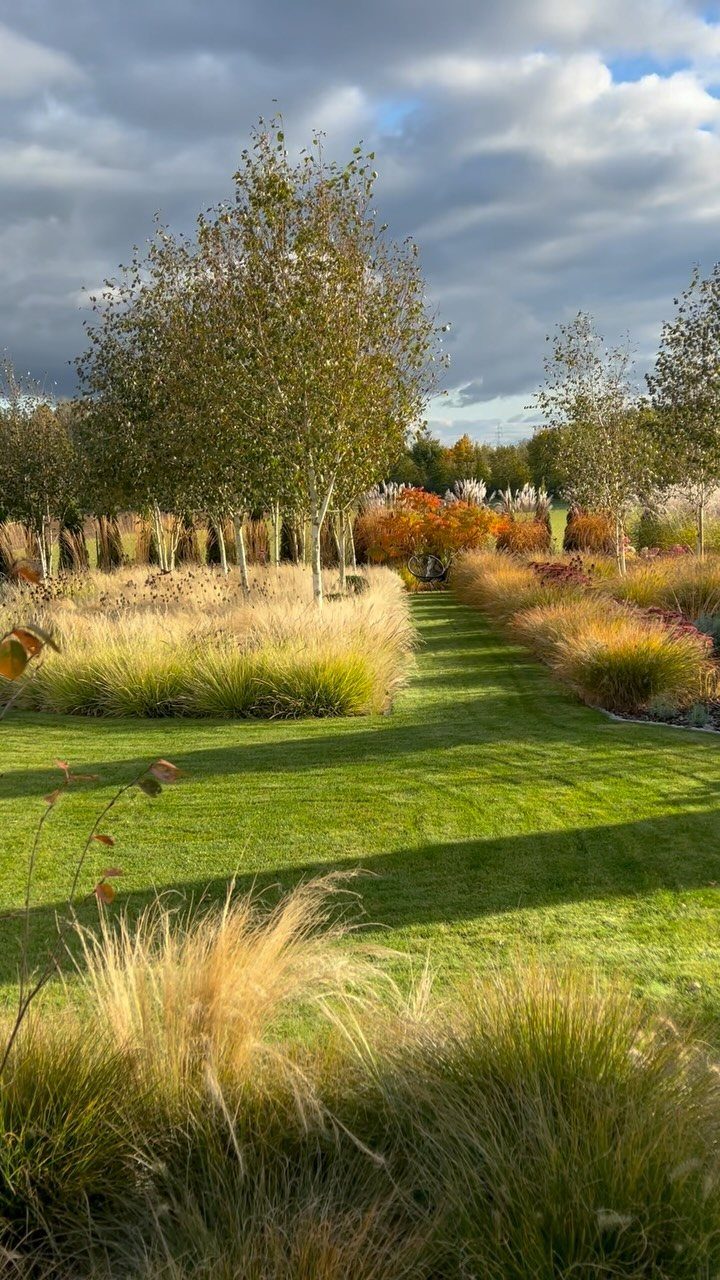
Ornamental grasses add height without blocking sight lines the way a solid hedge does. Miscanthus, feather reed grass, or switchgrass hits full height by late summer, then stands through winter for structure.
I would plant them where afternoon light catches the plumes; the back of a border, or a sweeping curve beside the lawn, reads as intentional rather than accidental.
Cut clumps back hard before new growth starts in spring; a hedge trimmer speeds this up on big plantings.
3. Gravel Garden
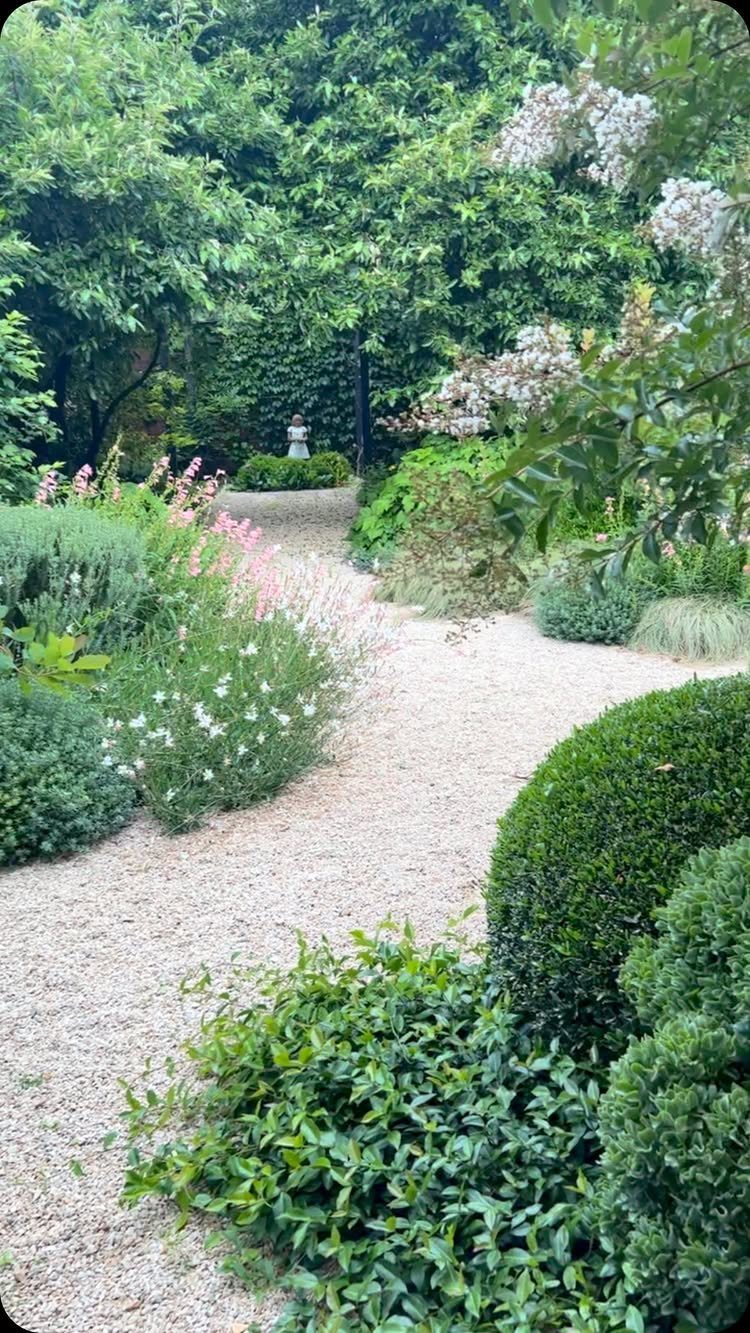
Pea gravel paths keep feet dry and mud off, and they cost far less than pavers over large areas.
A solid layer over landscape fabric handles walking traffic; you will need edging to keep gravel from migrating into lawn or beds. I would order extra for that reason.
4. Focal Tree
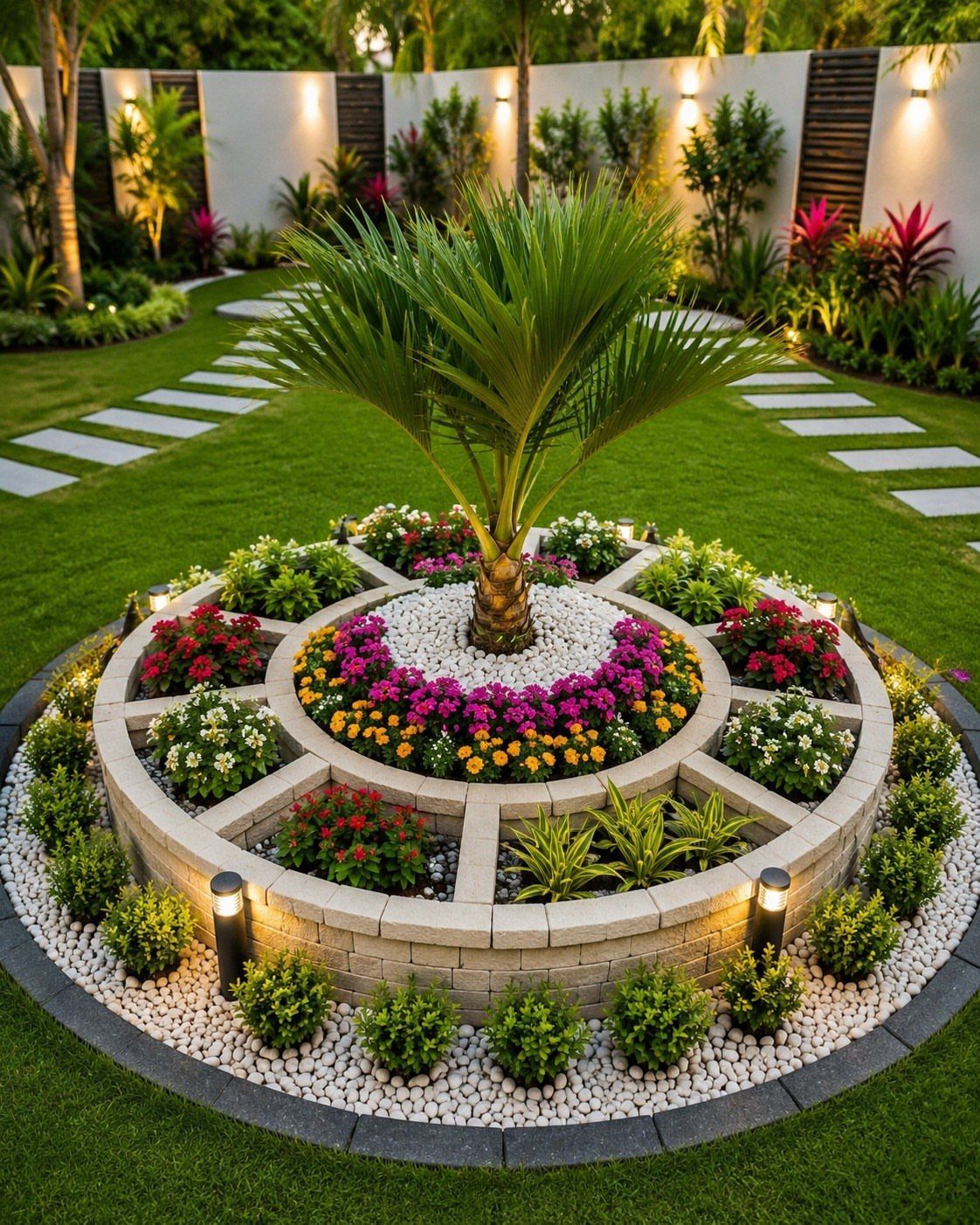
One dominant tree fixes the eye and gives a garden its sense of place. A raised bed builds the soil up for drainage and sets the tree apart from mower and foot traffic.
I would choose a species at mature height that matches the rest of the yard; a palm too tall for its space looks silly well before it reaches full size.
Check overhead lines and local setbacks before you dig; utility clearance rules vary by town.
5. Install a Vertical Garden
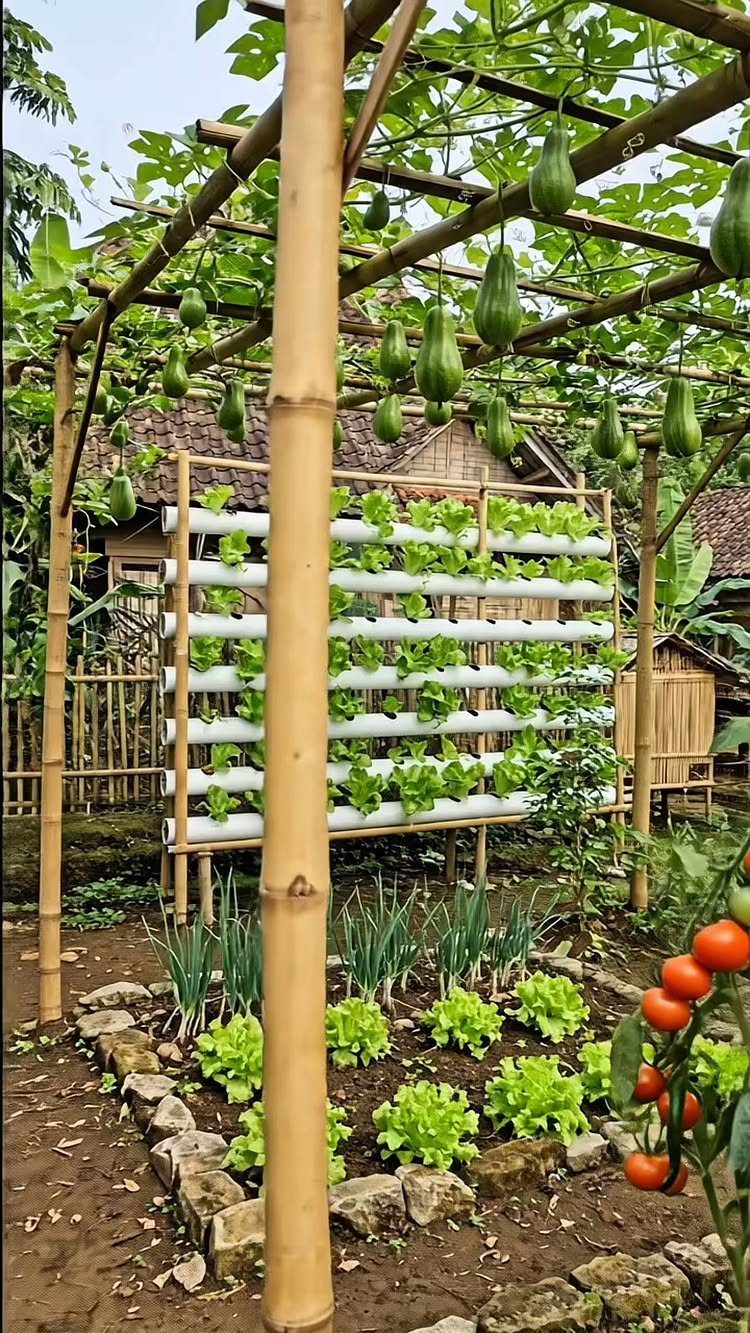
Vertical gardens squeeze production into footprints too small for ground beds.
PVC pipe routes water through stacked tiers: drill fill holes, cap the bottoms, and mount the assembly on a frame anchored to resist wind load. Bamboo cross-pieces above support climbers.
I would start with leafy greens in the pipes; tomatoes and heavy squash need soil depth these pipes lack. Sun hits vertical plantings unevenly; rotate the stand if you can, or accept that one side produces less.
6. Ground Cover
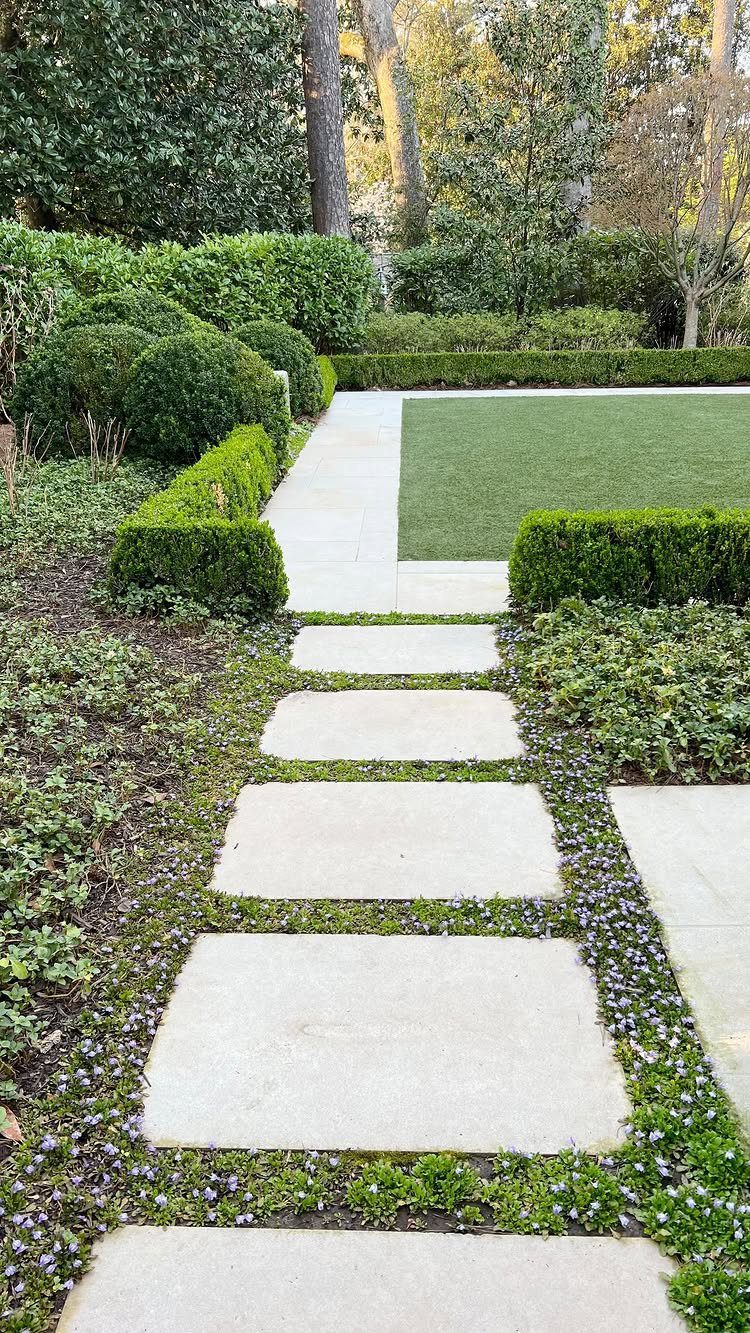
Ground cover knocks out weeds where grass grows thin or where mowing is a hassle.
Small purple flowers, likely creeping thyme or similar, fill gaps between stepping stones without lifting them out of level. Plant close for fast fill, or wider if you are patient and want to spend less.
Keep it watered the first season; once established, most spreads without help. Check hardiness against your zone before you buy flats; labels ship nationwide and not every variety survives northern winters.
7. Add a Lawn Patio
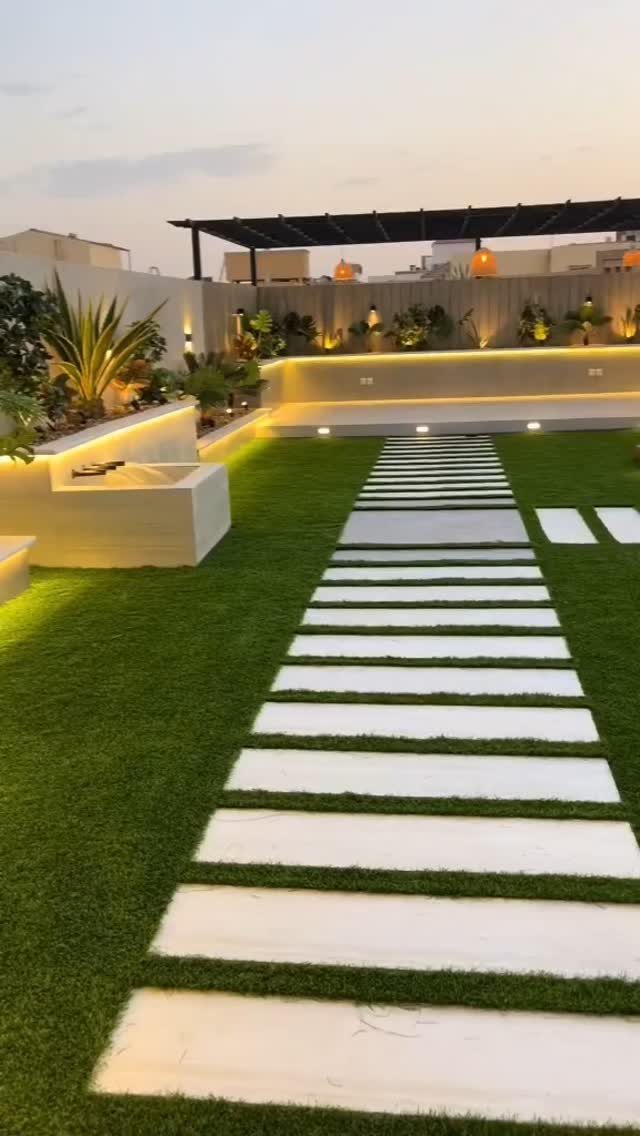
A lawn patio carves out hard surface from grass without losing the green view. Artificial turf handles foot traffic and pool splash without turning to mud, which is why I would pick it for a kid or dog yard.
Real grass needs solid sun to stay thick underfoot, so shade-heavy backyards suit synthetics better. Check your slope: puddles on flat lawn can be fixed, but it is easier to grade before you set the path.
8. Climbing Veggies on Arbors
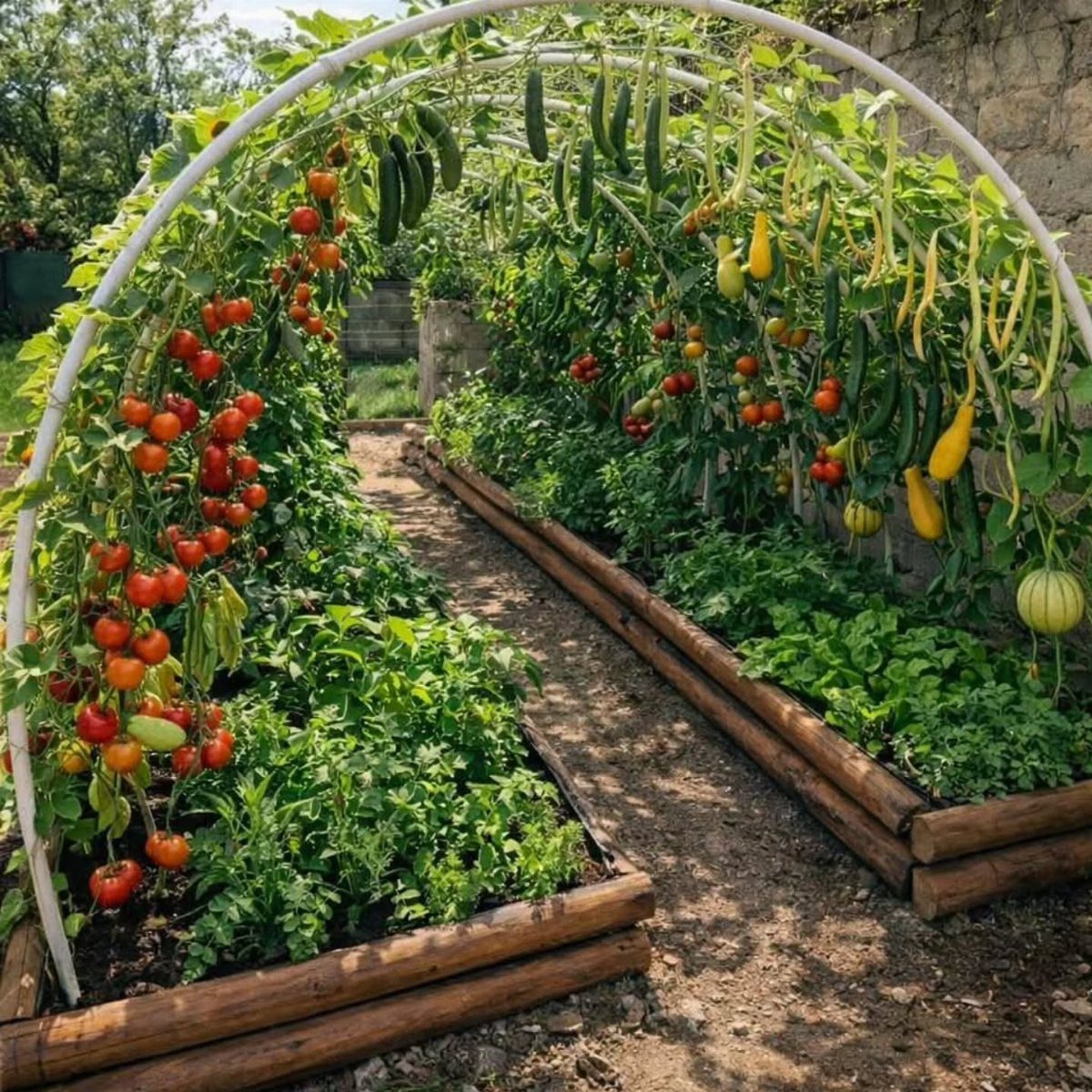
Curved white hoop trellises over raised beds turn vertical space into harvest.
Cucumbers, pole beans, and indeterminate tomatoes climb willingly; squash needs tying at first or it sprawls. Pressure-treated 2x2s bent into arches last a few seasons in dry climates, less where rot sets in fast.
I would set hoops closer for pole beans and wider for tomatoes, then weave twine between them so vines have something to grab. The soil in raised beds warms sooner, which matters in short-season zones.
9. Paver Patio
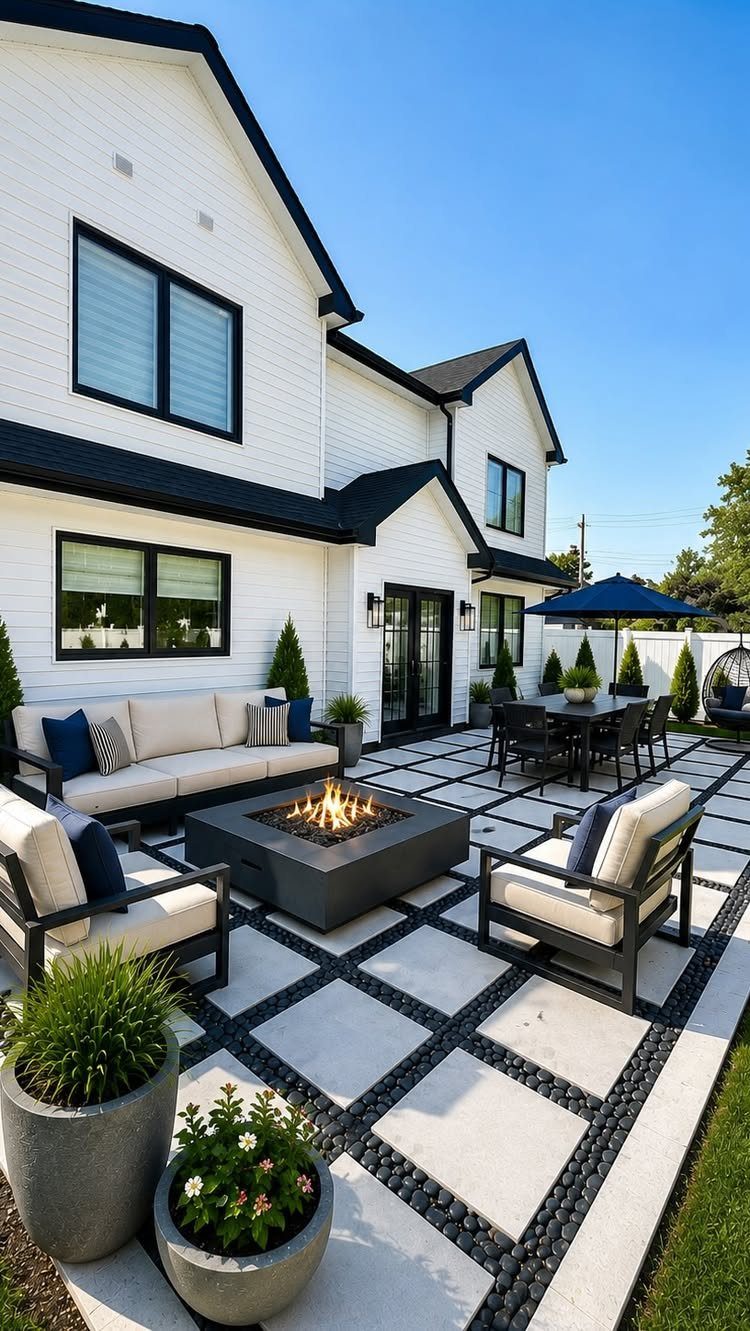
Large square pavers separated by dark pebbles read as deliberate, not leftover.
The gap drainage matters; without it, water pools and winters crack concrete in freeze zones. I would lay pavers on a bed of compacted crusher run, not sand alone; the edges still wander over time, but slower.
Black pebbles show dust and pollen; gray or tan hides more. Cost runs roughly paver price plus half again for base and gravel, so a mid-size patio gets expensive fast if you do not DIY.
10. Add a Stone Walkway
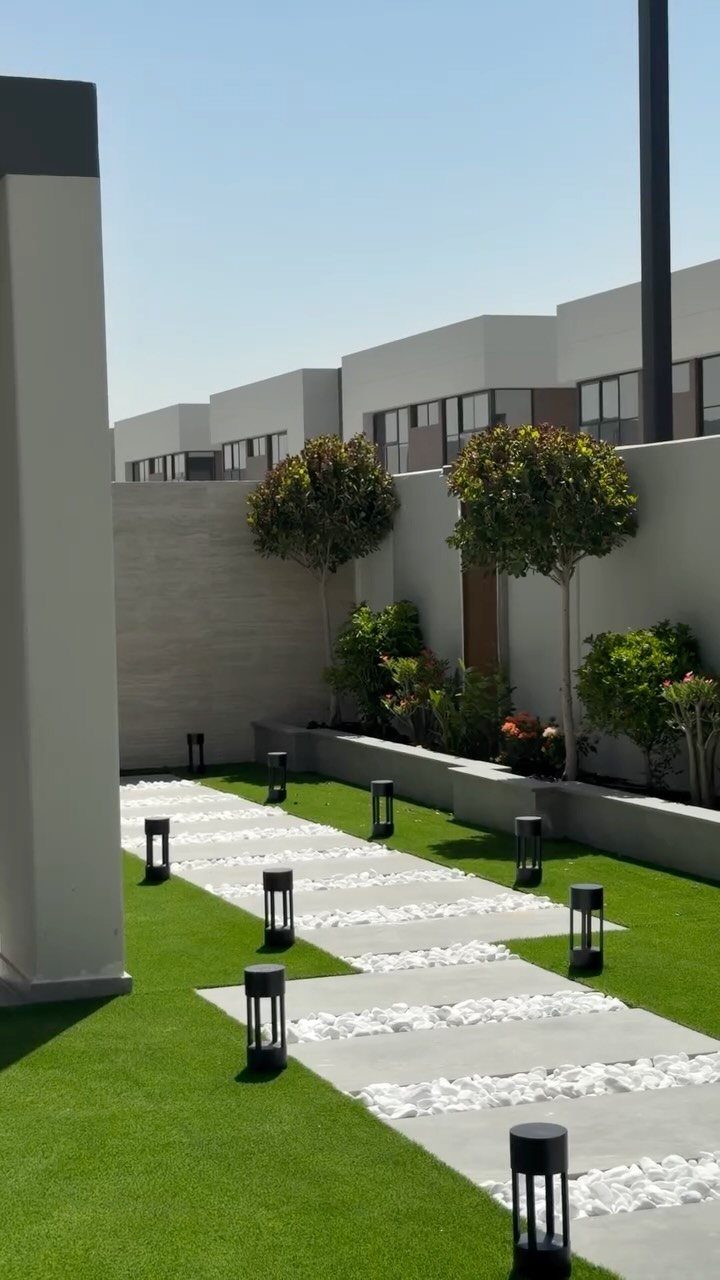
Flat stones interspersed with white pebbles give a path that stays level without full paving.
The geometric spacing here is regular; I would measure it once and cut a spacer board so the rhythm does not wander. Artificial grass borders mean no mower edge to maintain, which is the practical appeal.
Bollard lights at ankle height mark the way without glare; low-voltage LED kits plug into a transformer and do not cost much per fixture. Set stones slightly above grade so they do not cup water.
11. Mismatched Flowers
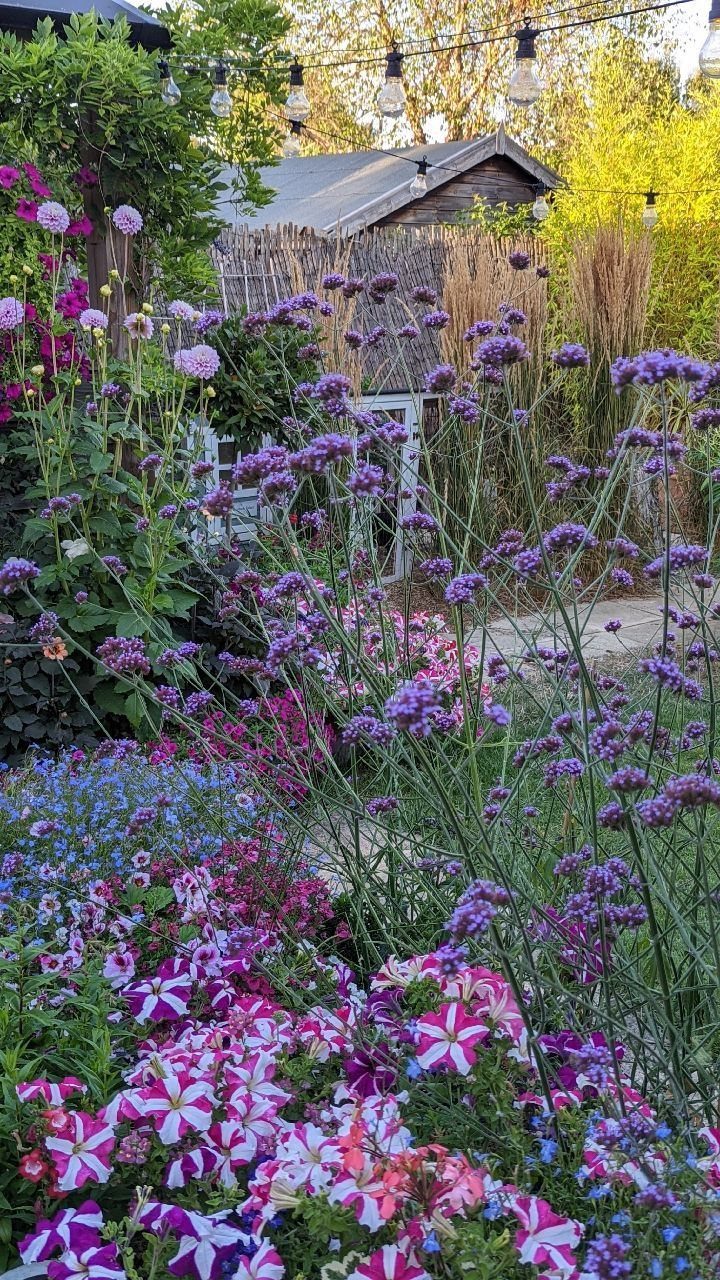
Verbena is perennial in zones 7 and warmer, annual in colder ones; that difference decides whether you replant yearly or divide clumps. I would cluster each color in drifts rather than ones and twos; polka-dotting reads as restless, not joyful.
Deadheading petunias on a regular schedule keeps them blooming into fall. The shed string lights are a separate project; day color and night glow are 2 different gardens to plan.
12. Add a Bench
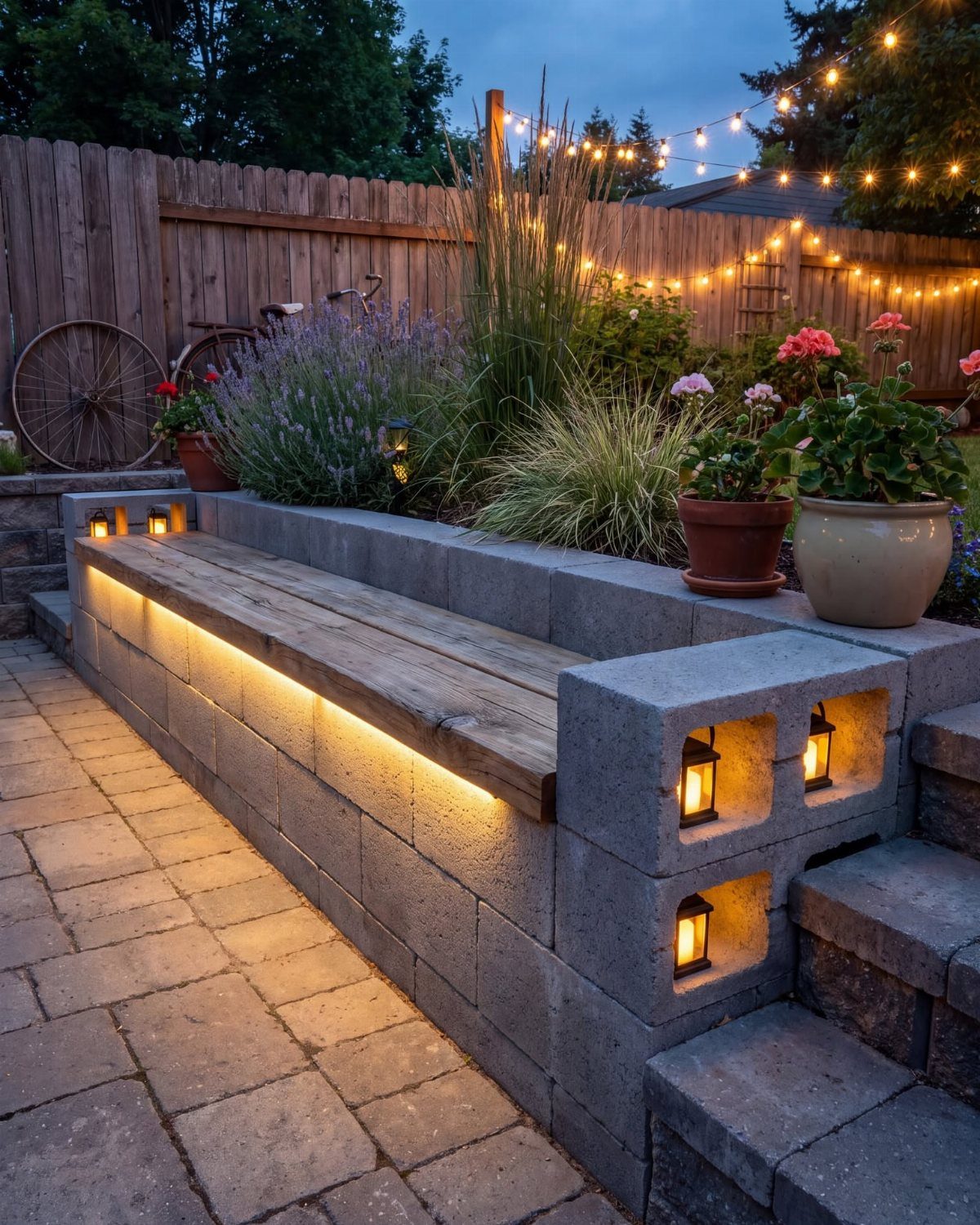
A built-in bench takes seating out of the traffic flow and, done right, does not need hauling in for storms.
Stone block walls with wood tops match the photo; the wood flexes to a more comfortable sit than stone alone. I would pick cedar or white oak, not pine; rot starts in 2 years on softwoods at ground contact.
Under-bench lighting needs a GFCI outlet and conduit rated for burial; solar fixtures are easier but dim after cloudy weeks. The retaining wall doubles as back support, which is why this works against a slope better than on flat ground.
13. Layered Planting
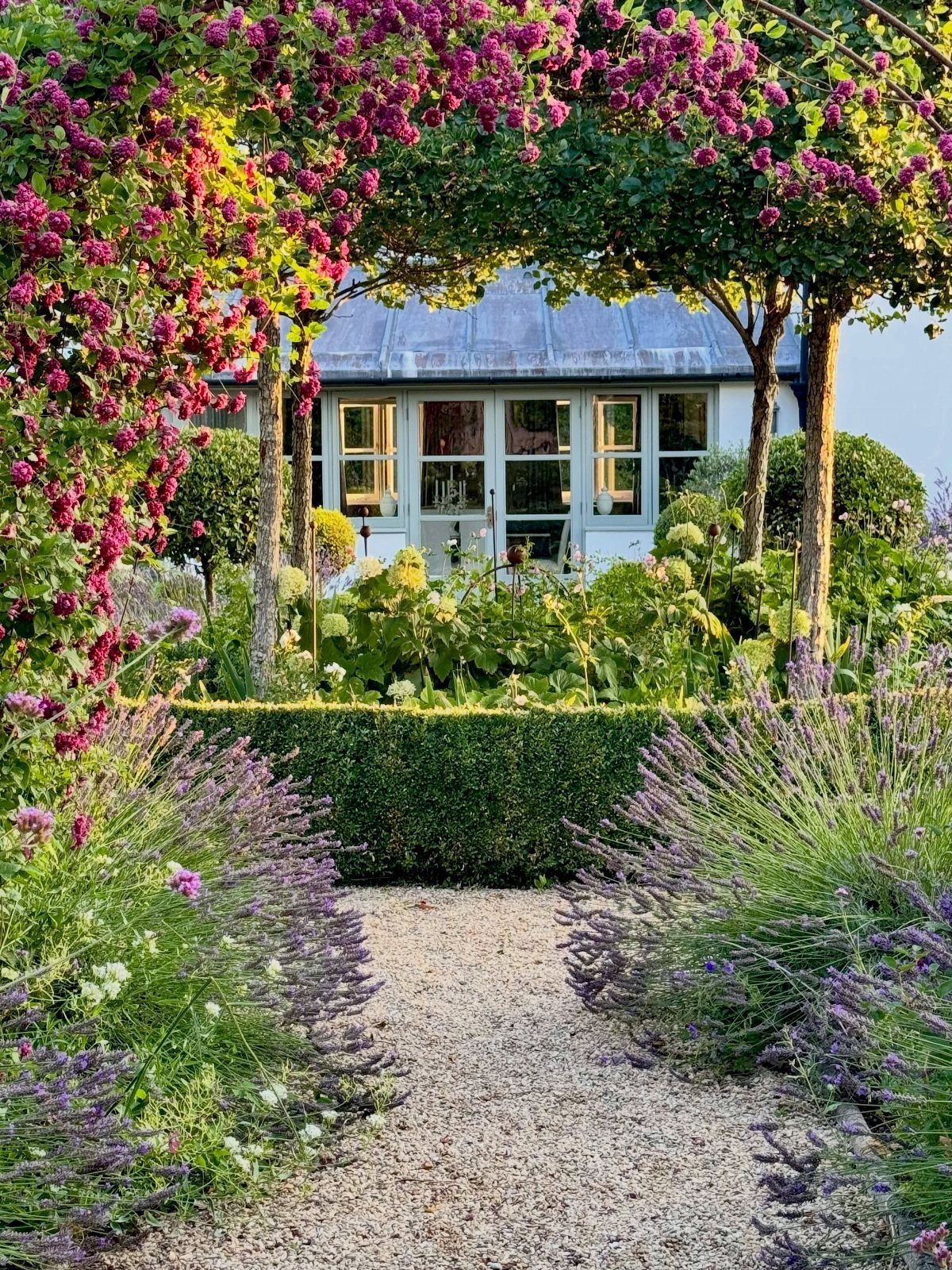
Depth in a small yard comes from stacking plants vertically, not spreading sideways. Low lavender spikes against a clipped hedge already gives you 2 planes; add an arched climber overhead and the eye travels instead of stopping.
I would keep the palette tight, maybe two flower colors plus green, so it reads as one composition rather than a plant collection. Repeat each layer enough times that the pattern holds; 1 of anything disappears, 3 anchors a rhythm.
Gravel paths between layers keep feet and foliage separate. Check mature heights before you buy; a hedge overtaking an arch ruins the framing fast.
14. Build Raised Garden Beds
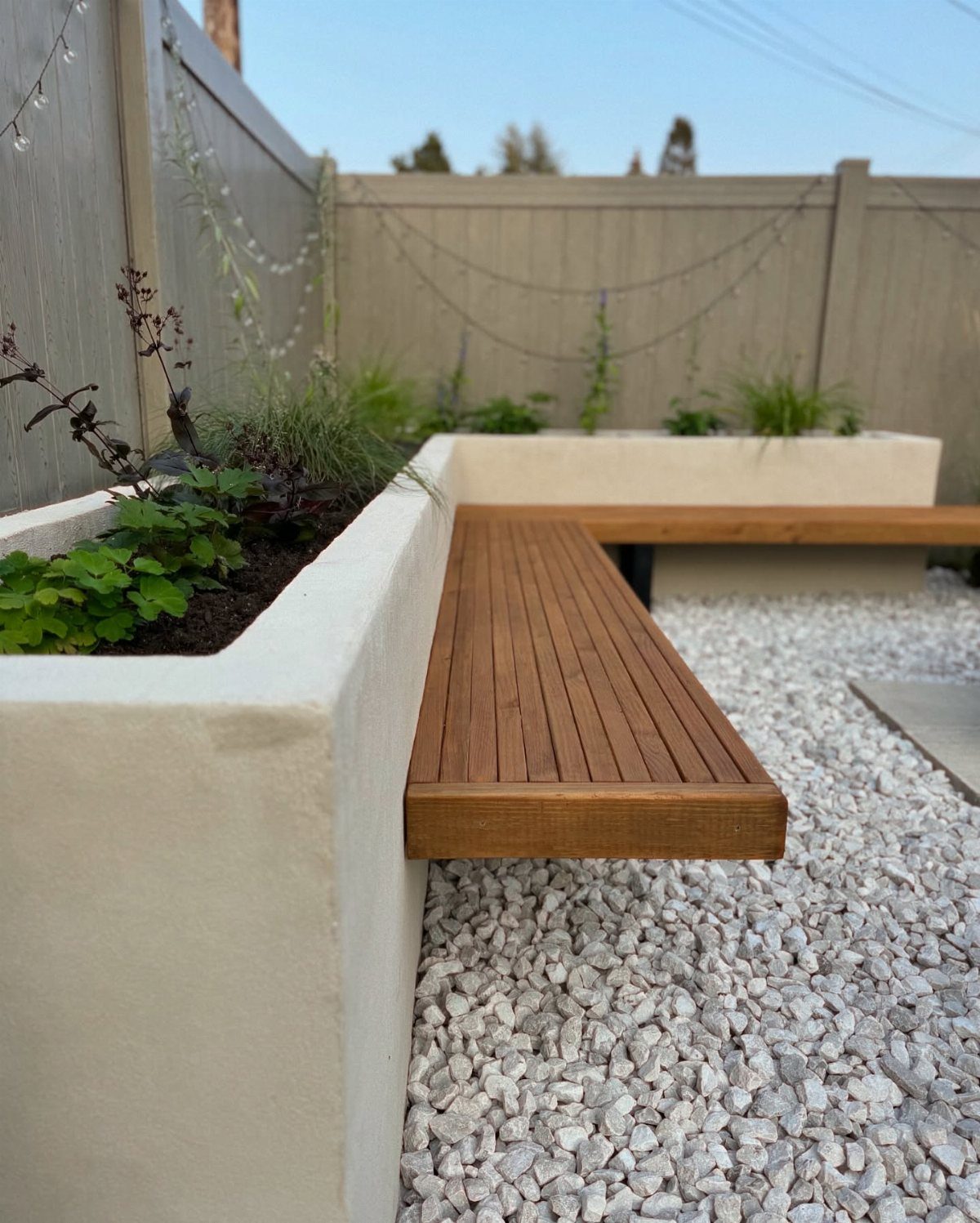
Raised beds warm faster in spring and save your back, which is why I would build them wherever the soil is poor or paved.
The white rendered walls here match a modern fence; stained wood suits a rustic yard better. Integrated bench slats turn the bed into seating, but the wood at the seat line rots first from soil moisture wicking up.
I would use a gap or a moisture barrier there, or plan to replace the slat board once it starts rotting.
Floating bench brackets need solid anchoring; a bed wall filled with wet soil is heavy, and the weight pops screws loose. Check the hardware rating.
15. Install a Fire Pit
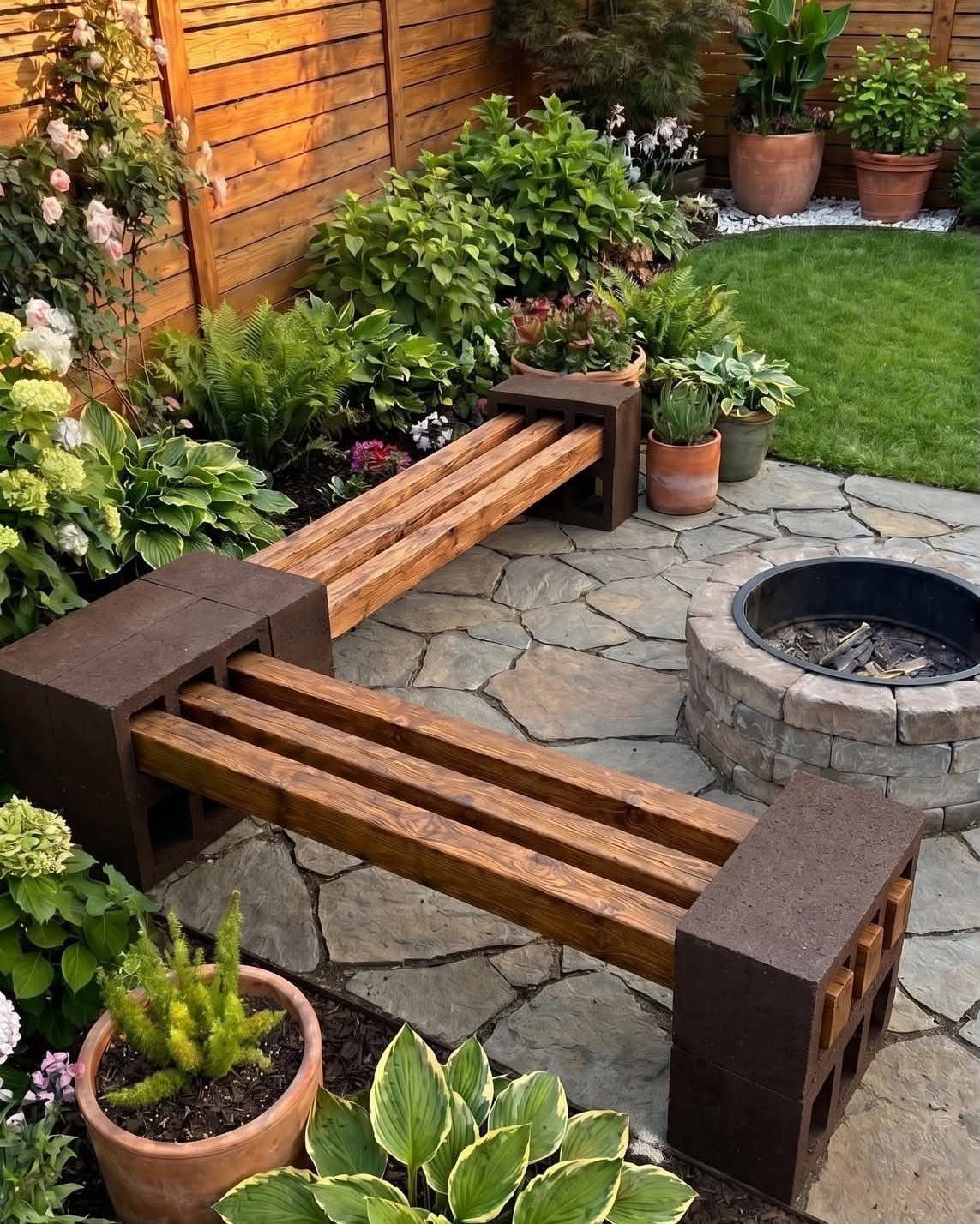
Stone ring fire pits need no plumbing and sit anywhere level, which is their practical advantage over gas. The cinder block and timber bench here is a weekend build; pressure-treated 4x4s span the cores and overhang for leg room.
I would seal the wood yearly, not the stretch deck stain gets; ash and heat dry it faster. Potted plants around the edge soften the hardscape but need watering more often than in-ground plantings.
Check your town’s burn rules; many limit open flame during dry spells. Wood smoke drifts, so place downwind of windows and the neighbor’s line.
16. Gardening in Pots
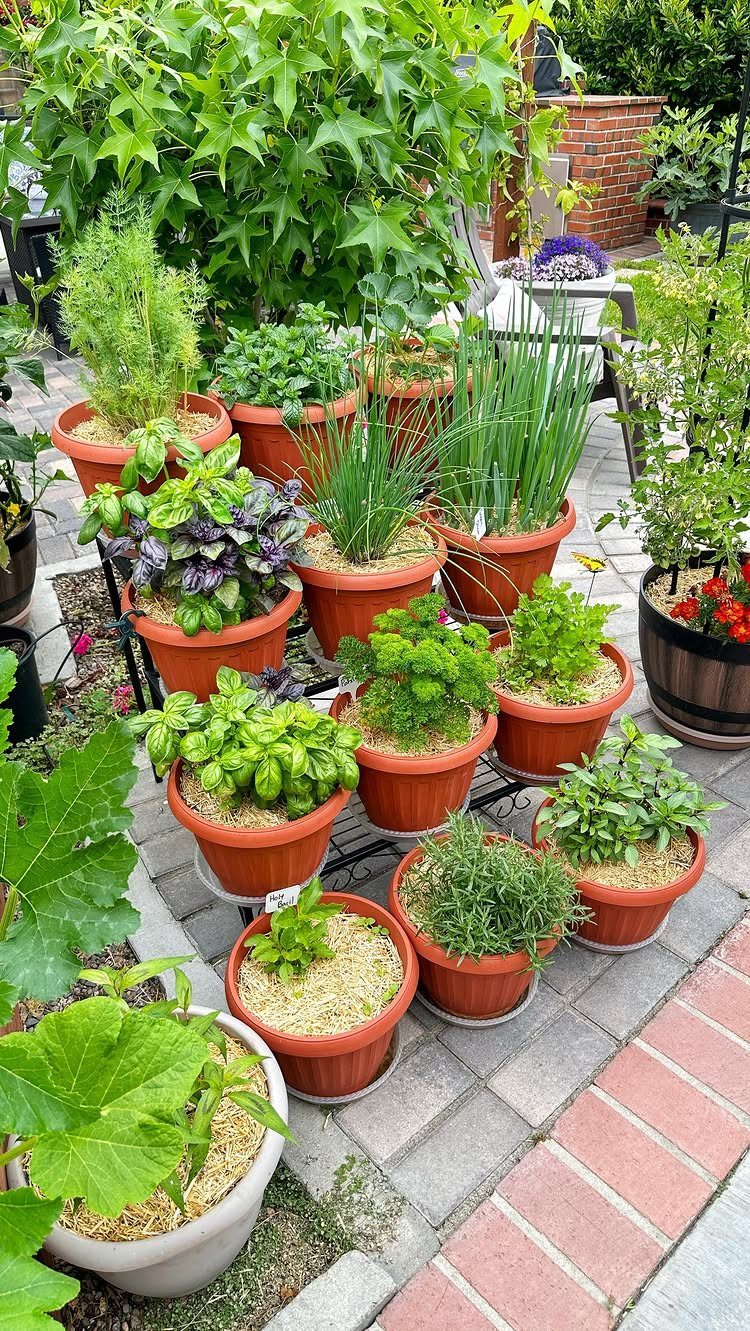
Pots move with the sun and come inside for frost, which is why I use them for basil that dies back in my zone.
Terracotta-colored plastic keeps the look without the weight; real clay cracks in freeze cycles and dries out faster.
I would group by water need, not by looks, or the thirsty basil suffers beside drought-loving rosemary. A tiered stand saves ground space on a brick patio where digging is not an option.
Refresh potting soil yearly; roots exhaust nutrients and the mix collapses. A 5-gallon pot holds enough root mass for a full-size basil bush; smaller and you are harvesting twigs.
17. Add a Pergola
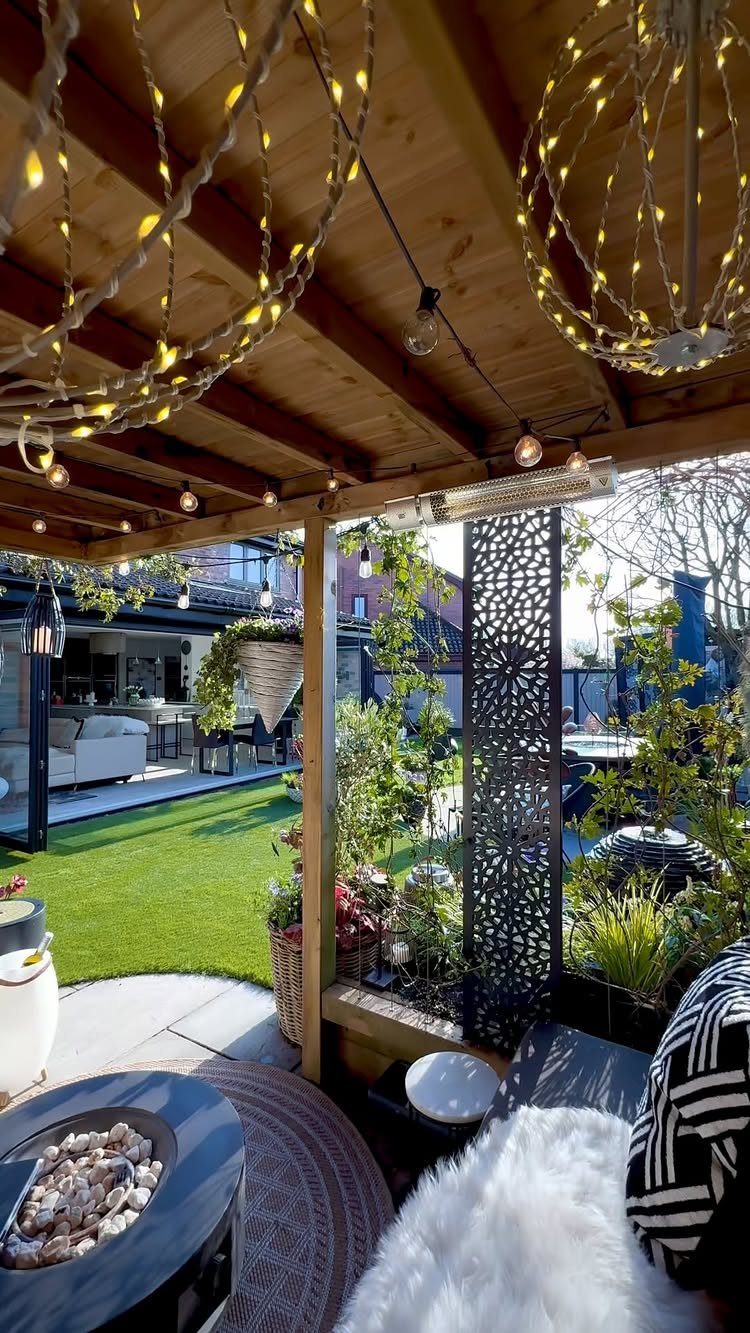
A pergola gives partial shade without blocking breeze, which matters more in humid zones than dry ones.
Wood beams this size carry string lights and a heater; add outlet circuits at build time, not after, since conduit through posts is easier then.
Artificial turf underneath stays green where real grass fails under shade and foot traffic, though it heats up in direct sun.
I would set posts in concrete below frost line; frost heave tilts a pergola quick if you do not. Check lateral loads if your area sees storms; a sail-loaded pergola is basically a kite.
18. Incorporate Water Features
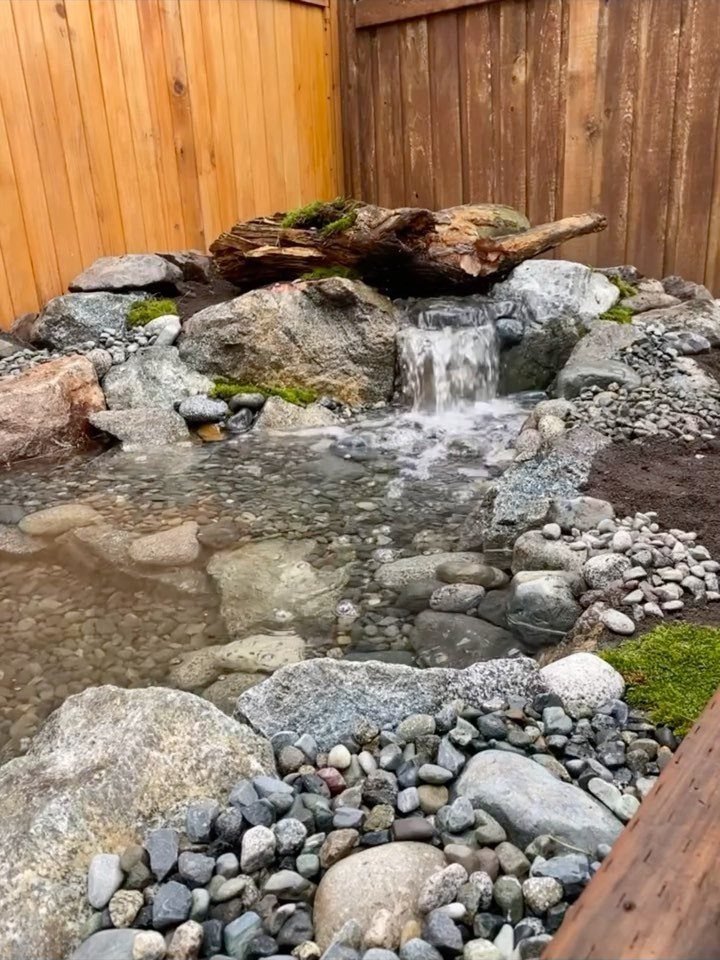
Small recirculating pumps run on a single outlet and need no plumbing hookup, which keeps the project manageable.
River pebbles and a cut log give a streambed its natural look; use a flexible rubber liner under everything or water leaks to exactly where you do not want it.
I would set the pump intake behind the largest boulder, screened, so leaves do not clog it weekly.
Mosquitoes breed in still water; the moving surface here prevents that, but a power outage on a hot weekend changes the equation. A small bubbler costs less than a waterfall pump and keeps water alive with less flow.
19. Create a Rain Garden
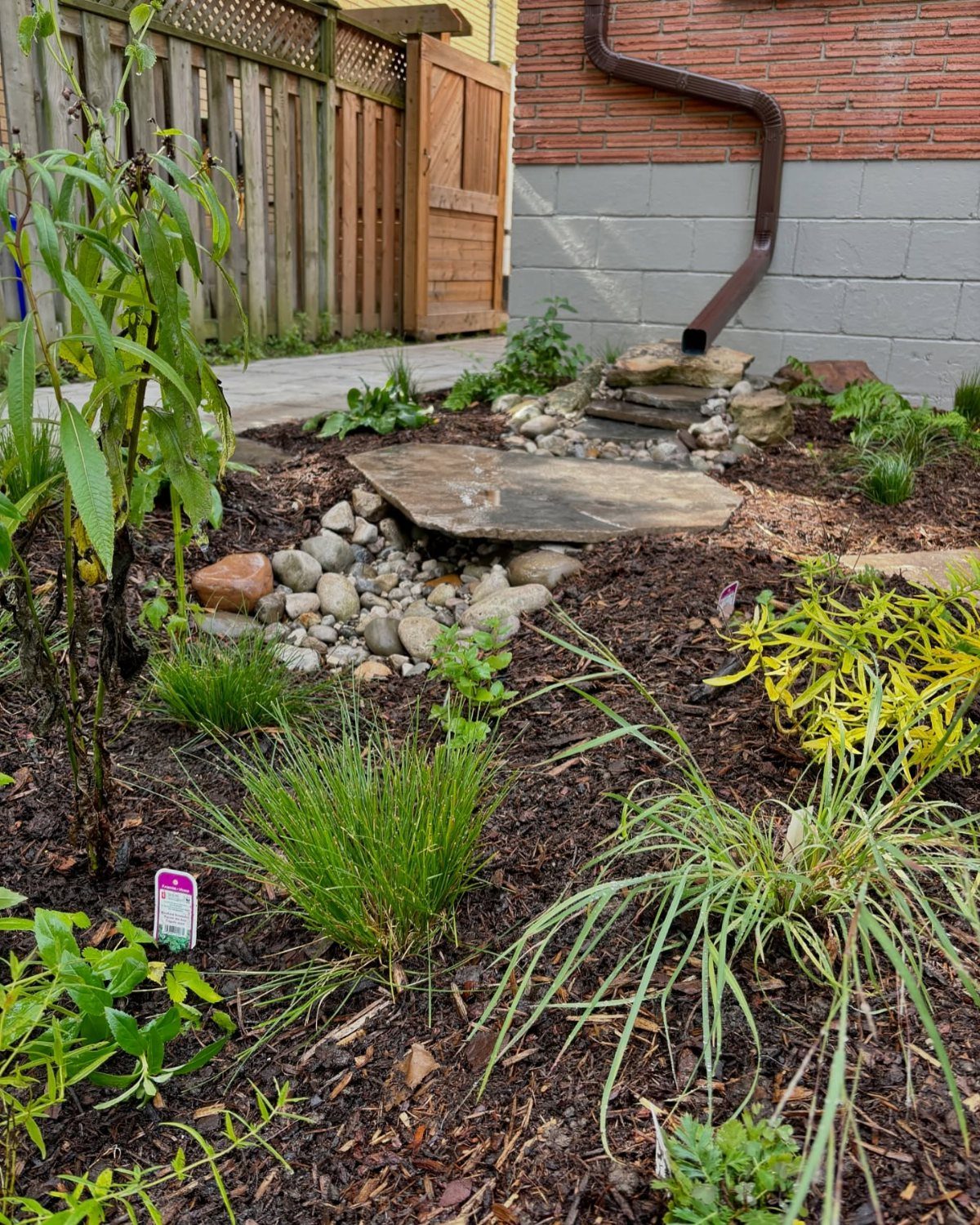
A rain garden turns the wettest spot in your yard into something that drinks its own runoff instead of breeding mosquitoes.
The downspout feeds a shallow basin lined with river rock so water spreads slowly instead of pooling; native grasses and perennials root deep enough to survive dry spells between storms.
I would check your soil percolation first: dig a hole, fill it, and see how long it drains.
Clay that holds water for days needs more amendment and a wider basin. Local extension offices list plants proven for your county; those lists save you from replacing drowned specimens.
20. String Lights
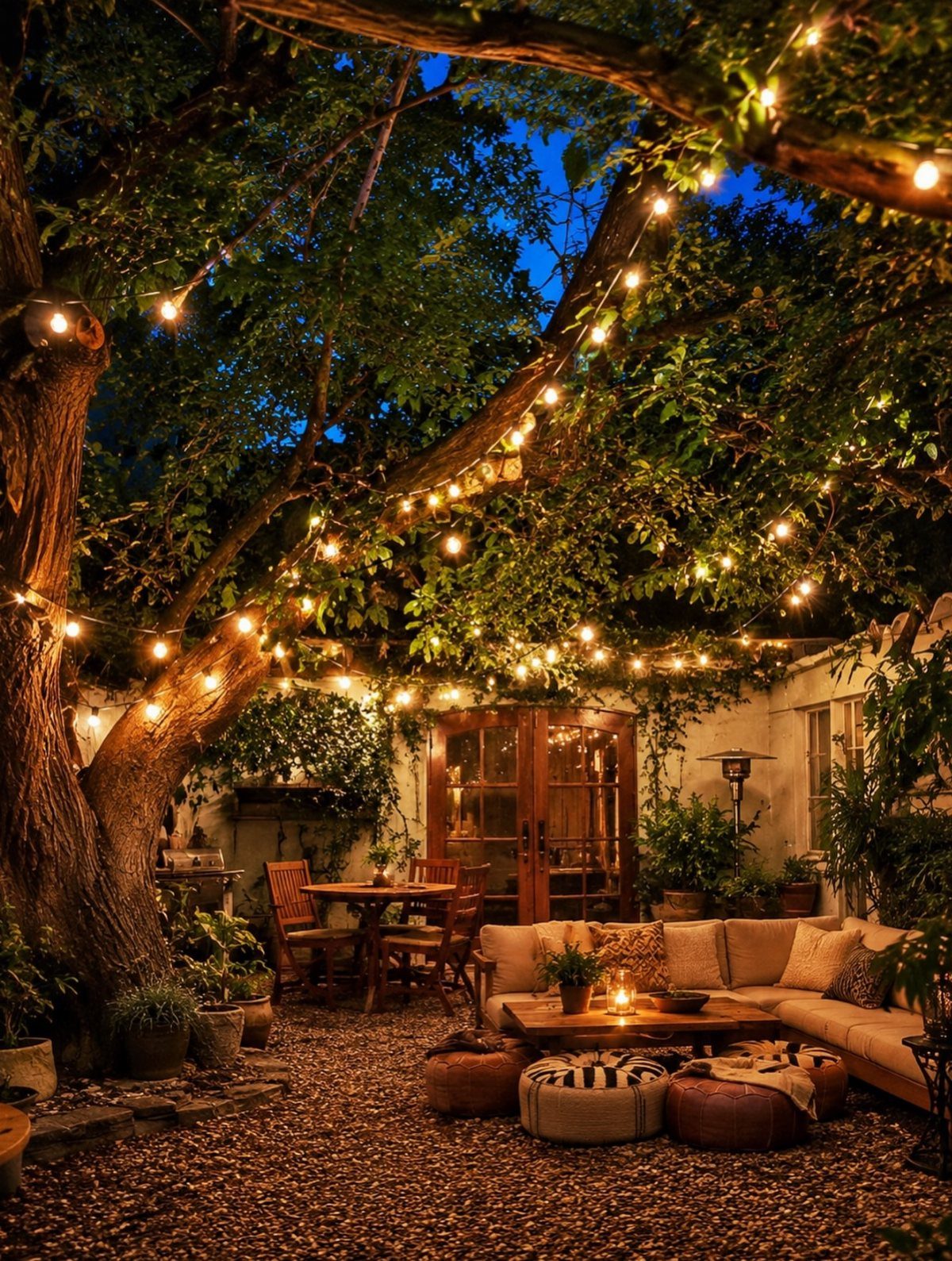
String lights through tree branches extend evening use without the cost of hardwired fixtures.
The bulbs hang far enough apart that one dark socket does not kill the whole run; that redundancy matters when you are up a ladder for replacements.
I would buy commercial-grade strands, not the seasonal ones: thicker wire and sealed sockets last 3 seasons instead of 1.
LED draws less amperage, so you can chain more per outlet without voltage drop dimming the far end. Check the tree health first; lag bolts into decayed wood pull free, and nobody wants a branch landing on the sofa.
21. Fresh Layer of Mulch
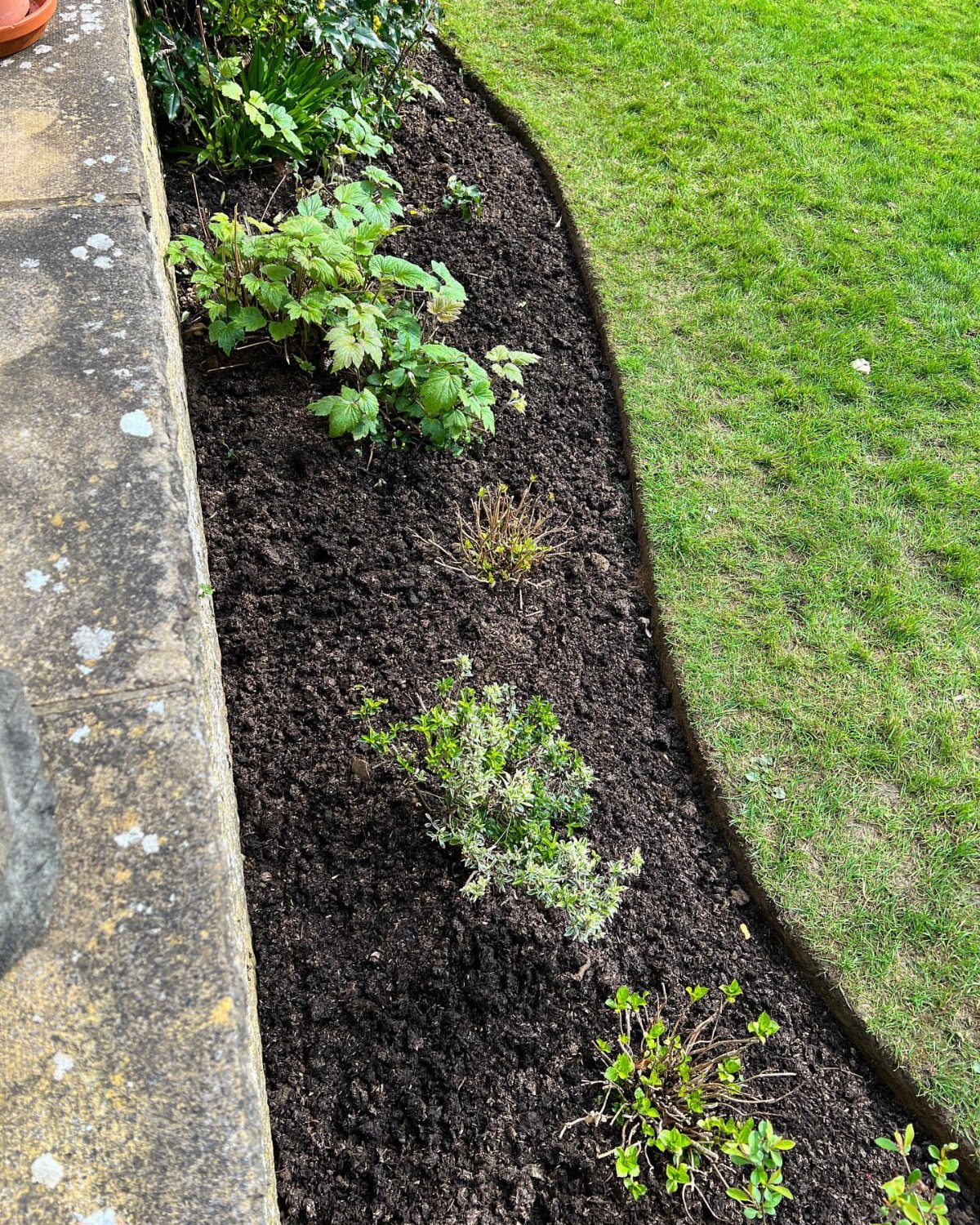
Fresh mulch knocks down weeds before they seed and holds soil moisture through July heat. A shallow layer is the useful depth; more starves roots of air and breeds the fungus that smells sour.
I would pull it back from woody stems; the rot that mulch prevents in soil causes collar rot against bark.
Dark hardwood mulch fades to gray by fall; dyed brown or black holds color longer if that matters to your border.
Figure roughly a cubic yard per bed at useful depth; order a half yard extra if your beds are irregular.
22. Evergreen Trees for Privacy Screening
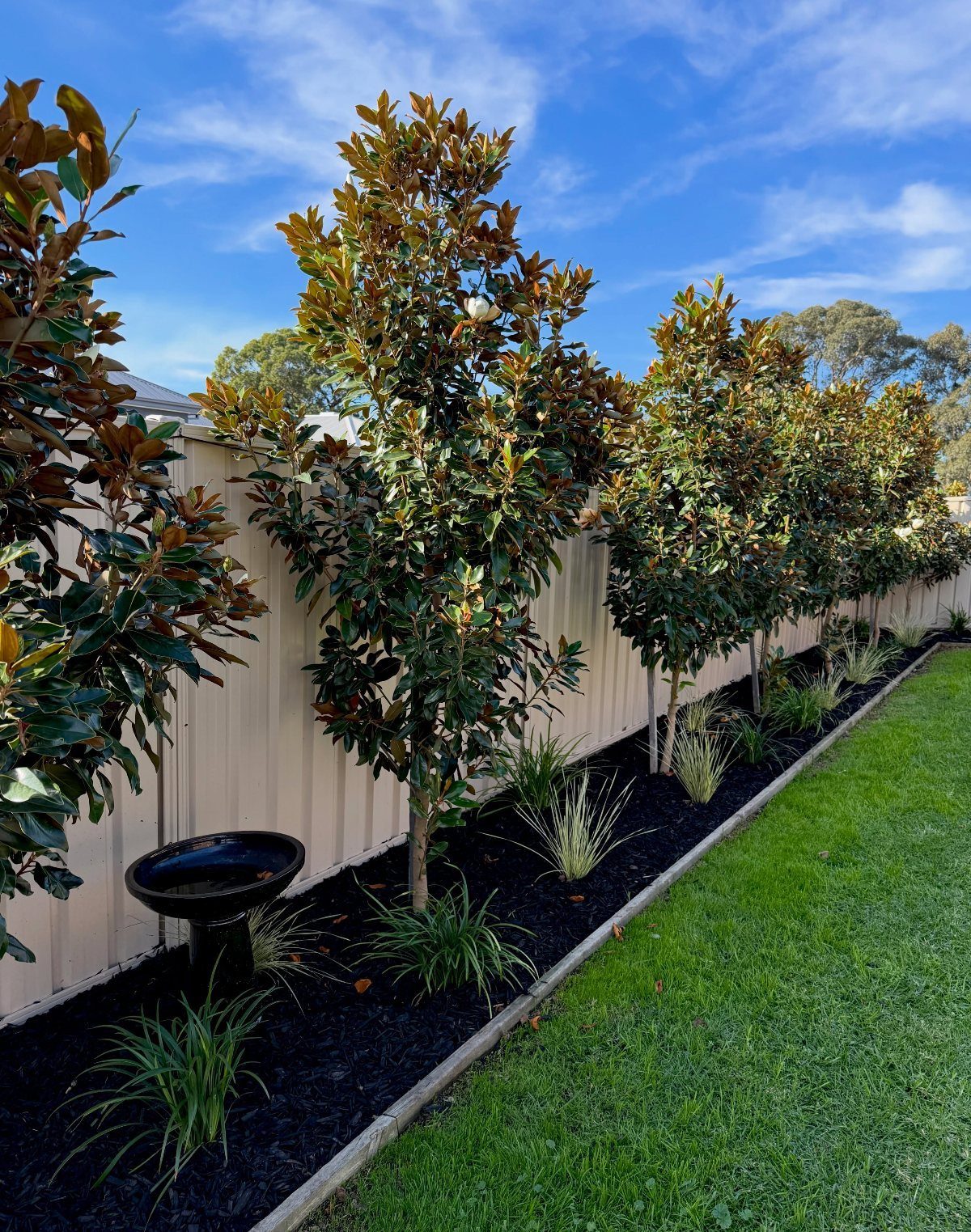
Evergreen magnolia planted tight along a fence gives privacy faster than a hedge can match. The dark mulch bed keeps mowers away from trunks and shows where the root zone ends.
I would space at two-thirds mature width, not half; air circulation between trees prevents the leaf spot that dense magnolia gets in humid summers.
Check your line clearance; power companies trim hard against their easement and ruin the screen shape. A soaker hose the first 2 summers prevents the drought stress that evergreens hide until browning shows; by then recovery is slow.
23. White Stone Garden Bed Edging
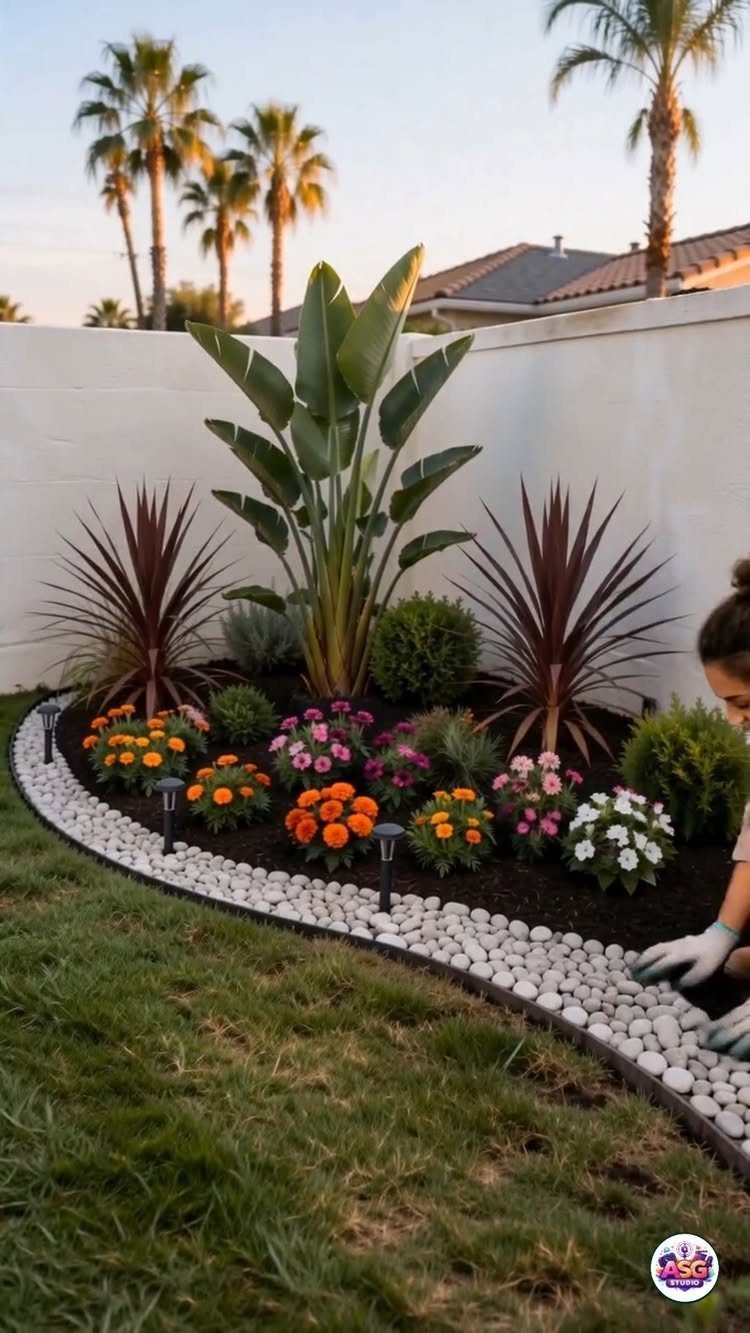
White stone edging defines a bed without the rotting edge that wood brings. Pebbles this size stay where you put them; smaller migrates into soil and larger is hard to nest around curves.
I would install strip edging buried 4 inches deep behind the stone; soil washes under and pebbles spill without it.
The white reflects summer heat and keeps soil cooler, which tropical plant roots usually prefer; dark stone absorbs heat and warms the bed more.
Gloves matter less for planting here than for moving stone; a short-handled cultivator saves knuckles when you are working inside the border.
Budget-friendly Landscaping Tips
Native plants cost less over time because they do not need the watering schedule that imports demand.
I would start with a soil test to see what you already have; local extension offices run these cheap or free, and the results keep you from buying amendments you do not need.
Mulch and gravel are the cheap hardscape.
A pressure wash on existing patio or deck surfaces costs almost nothing and reads as new better than half the projects you could build. String lights and a fresh pillow or two finish the refresh without touching a tool.
I would pick one project per year and fund it properly rather than stringing together temporary fixes. Repeated cheap solutions add up to more than the permanent one you delayed.
Planning Your Garden Layout
Walk your site after a hard rain before you draw anything. Waterlogged spots need drainage work or a switch to permeable ground cover, not the raised bed you planned there.
Note every existing tree and its drip line.
Roots you cut now mean a tree you lose down the line, and mature specimens take too long to replace. Established shrubs can be potted and held during work if they are worth keeping.
Soil type decides what grows without constant intervention: clay holds water and starves roots of air, sand drains fast and leaches fertilizer. Six main soil groups cover most of the US, and each wants different plants and different amendment.
I would plan for at least two seasons of interest, not one peak week.
Spring bulbs, summer perennials, and grasses that stand through winter give structure when color is gone. Built-in seating against a fence or wall doubles function in small yards where every square foot matters.
DIY Gardening Projects
A raised bed needs sun and a level site; add drip irrigation on a timer and you have cut your summer maintenance in half. I would run the lines at build time, not after, since retrofitting means disturbing roots.
Vertical gardens and pallet projects suit renters or anyone who cannot dig.
I would use local or upcycled material wherever possible. Salvaged wood for a bar or bench costs less and weathers in with the yard faster than new lumber.
One finished project beats three half-started ones; pick the single change that matters most to how you use the space, and build it right.
Lindsey Hyland, a gardening expert and founder of Urban Organic Yield adds, "Make the most of your budget with low-cost, high-impact projects, like a rock wall or cedar privacy fence. Upgrade existing structures to make them better looking and sustainable".
Frequently Asked Questions
How can I plan a year-round garden?
Plan for at least two seasons of interest, not one peak week. Bulbs open first, perennials take over, and grasses stay upright through frost to catch the low winter light.
Before you draw any beds, walk the yard after a soaking rain: soggy patches need drainage fixes, not the raised bed you sketched there.
What are some DIY landscaping ideas for my backyard?
Where soil is thin or buried under concrete scrap, a raised bed thaws out faster and bends at your waist, not your knees. Install a stone ring fire pit on any level spot; it needs no plumbing.
A vertical garden with PVC pipe tiers squeezes production into small footprints. Gravel paths and a paver patio with pebble gaps handle hardscape without the cost of full paving.





