
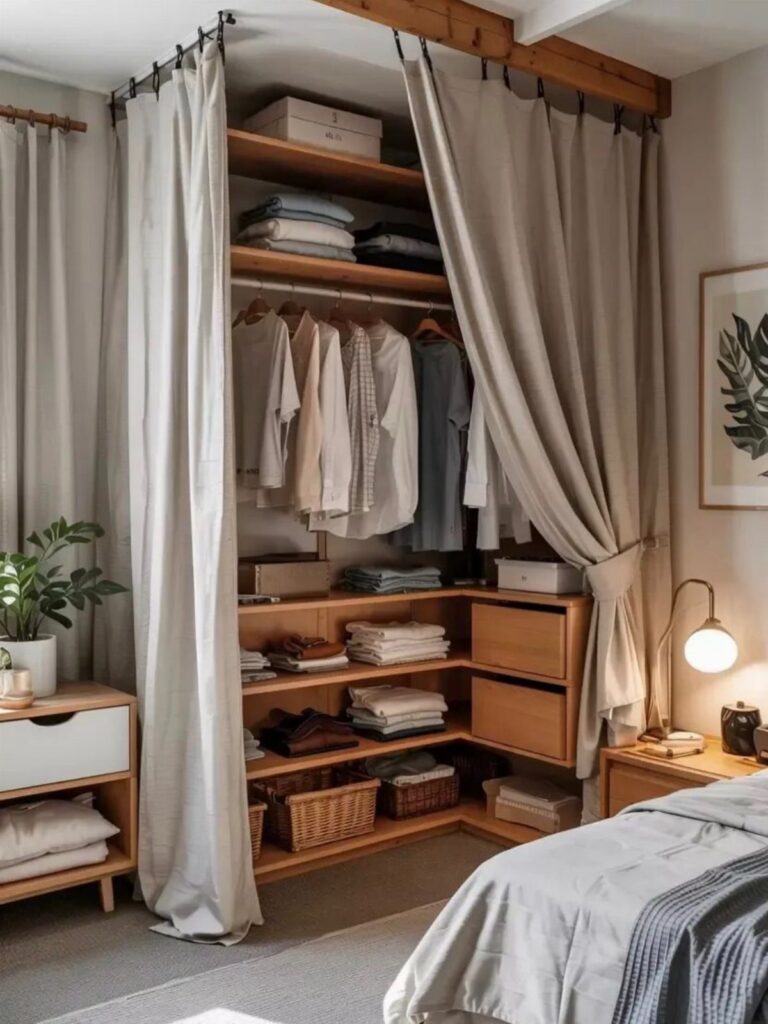
The ideas below run from a tension rod you install on a lunch break to a ceiling track with custom-cut panels and hardware that costs more than the fabric itself.
What picks one over another is your closet depth and how much of the contents you need to hide: a walk-in that reads as its own room tolerates sheers and prints, while a shallow reach-in with daily traffic needs opacity and minimal stack.
[link-whisper-related-posts]1. Neutral Closet Curtains
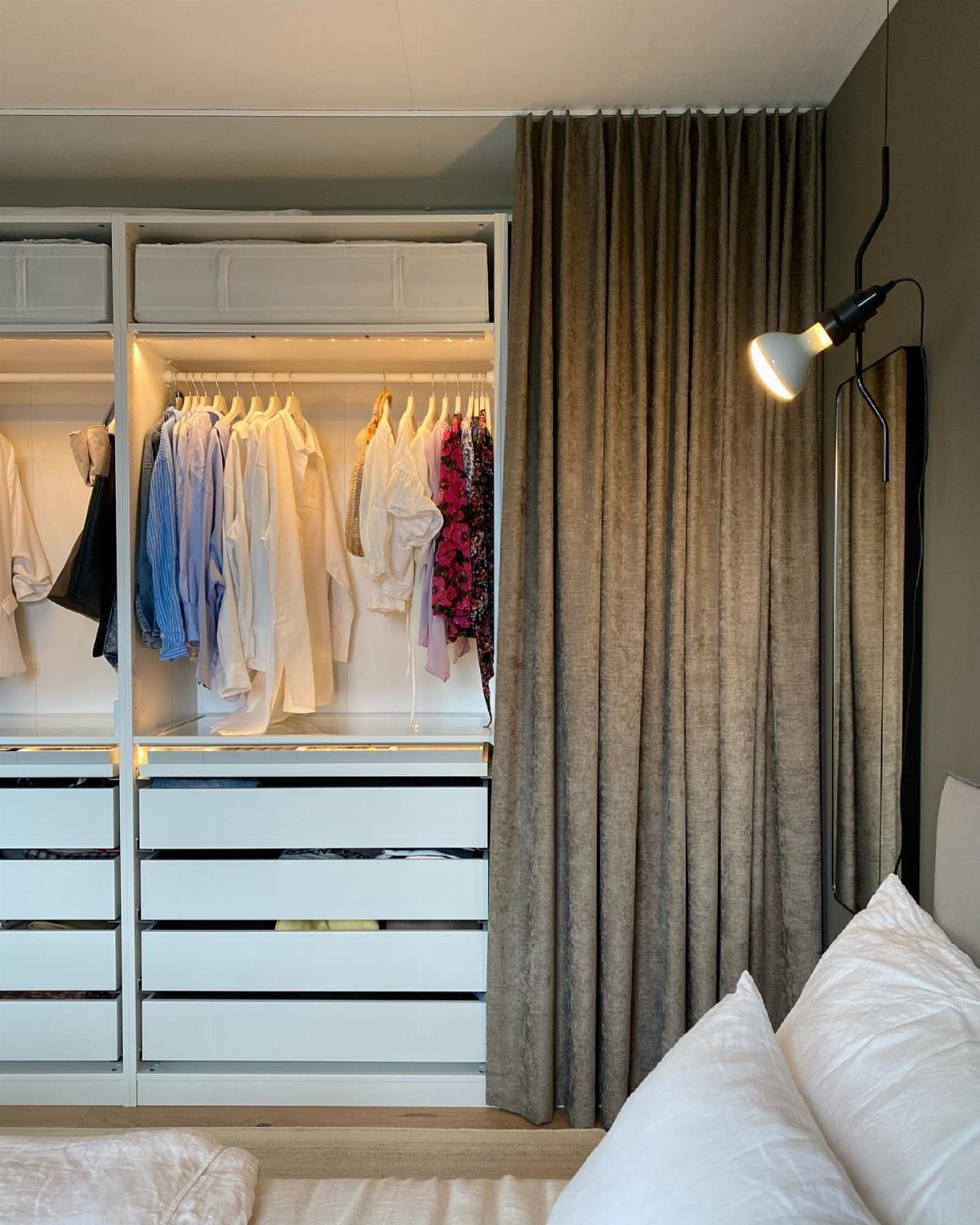
Taupe panels against white built-ins disappear into the architecture rather than announcing themselves. I would check your wall color before buying: hold a fabric swatch against the paint in morning and afternoon light, since neutrals shift more than you expect.
This works best when you want the storage to recede and the room to feel larger.
2. Ceiling Curtains as a Room Divider
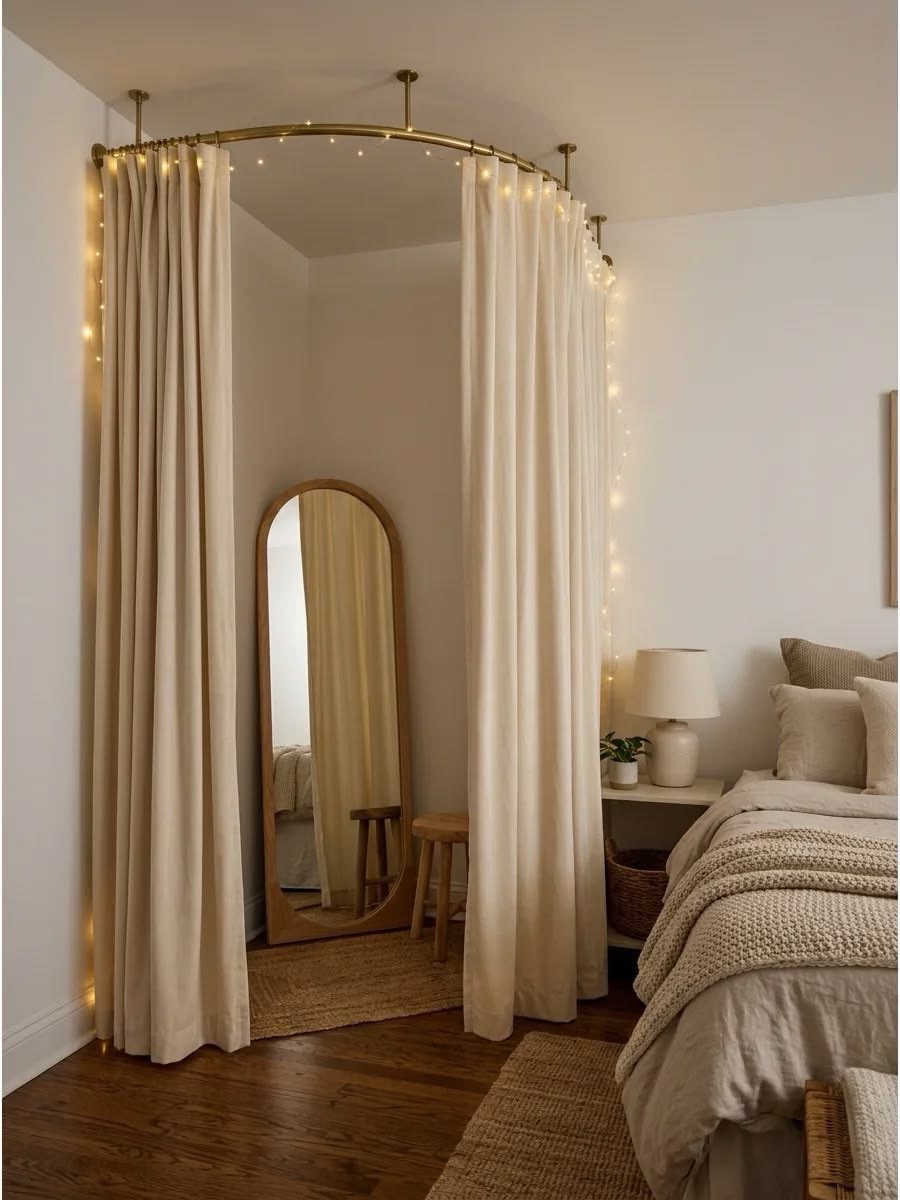
A curved brass rod turns a curtain wall into something intentional, almost like a stage set. Fairy lights strung along the top edge buy a lot of atmosphere for a rental you cannot paint.
I would measure your ceiling height twice; curved rods need precise mounting or they sag at the center. This suits studio apartments where you need sleeping and living zones without losing the borrowed light.
3. Sheer Closet Curtains
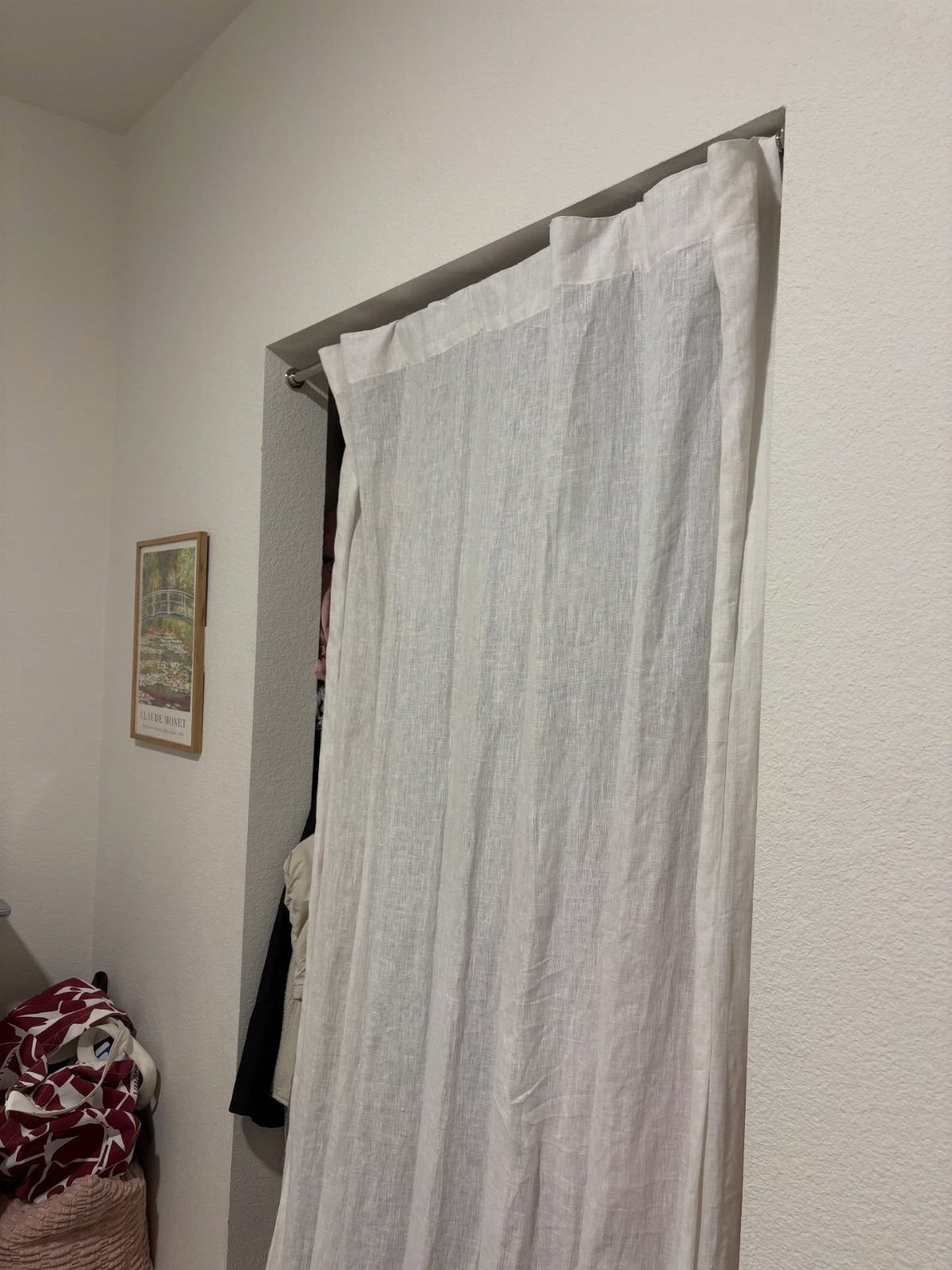
Semi-sheer fabric keeps dust off folded clothes while letting you see what you own at a glance. A tension rod installs with no drilling if your closet has a solid frame.
I skip sheers for closets with bright windows; the contents read as visual noise from across the room. The Monet print nearby tells me this reader already thinks about what the curtain looks like from outside the closet too.
4. Double Panels Closet Curtains
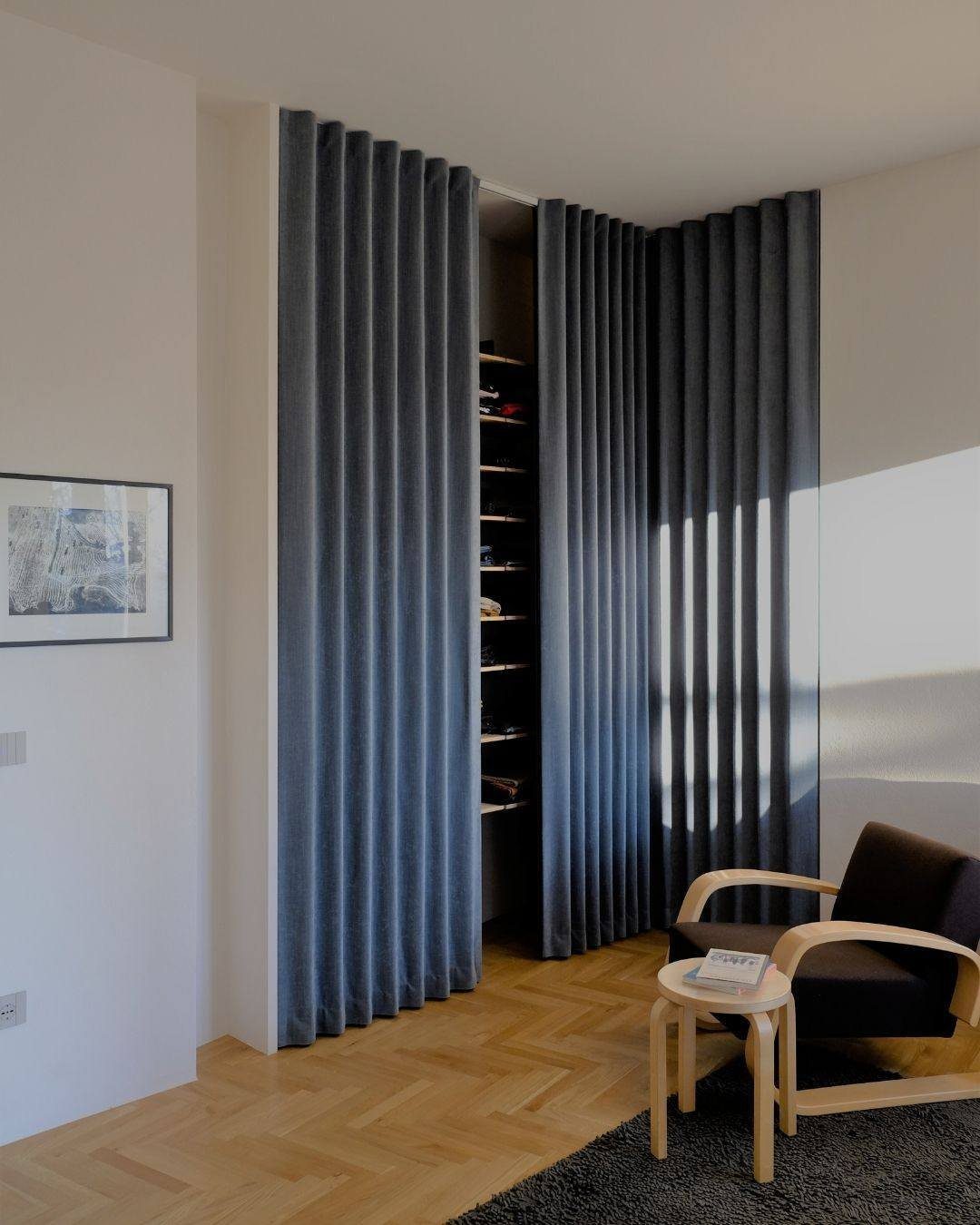
Two panels meeting in the middle read more finished than a single sheet, but they need 1.5x the fabric and overlap to stay closed.
I would avoid double panels on narrow closets; the stack looks bulky and you lose half your opening. For wider closets, the split lets you access either side independently.
5. Ceiling-mounted Rods
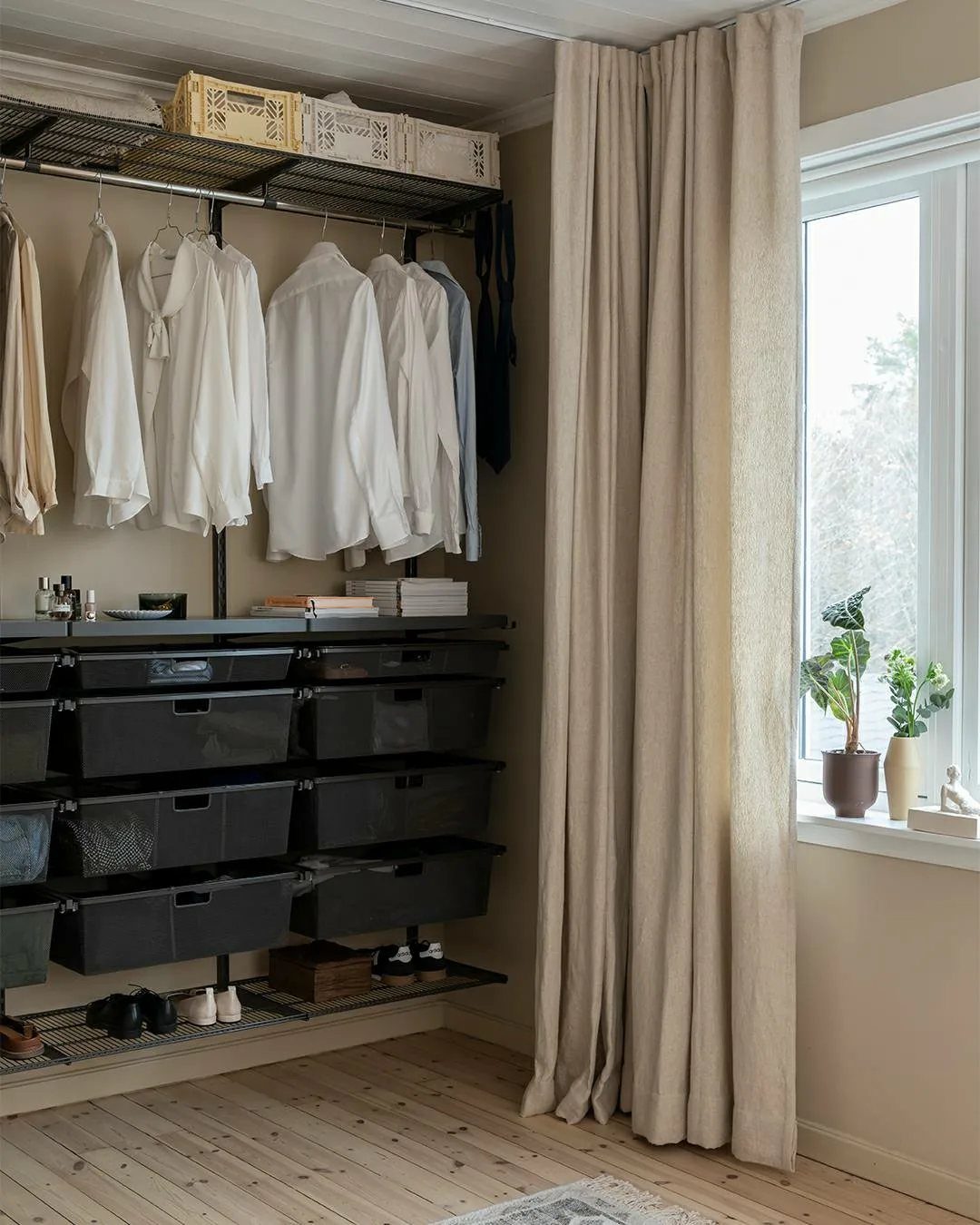
A ceiling track sits flush with the surface and hides the hardware entirely, which matters when your rod runs parallel to a window frame like this one.
Installation means finding joists or using toggle bolts rated for the weight of your fabric plus the pull; tracks bind if they sag even slightly.
6. Linen Closet Curtains
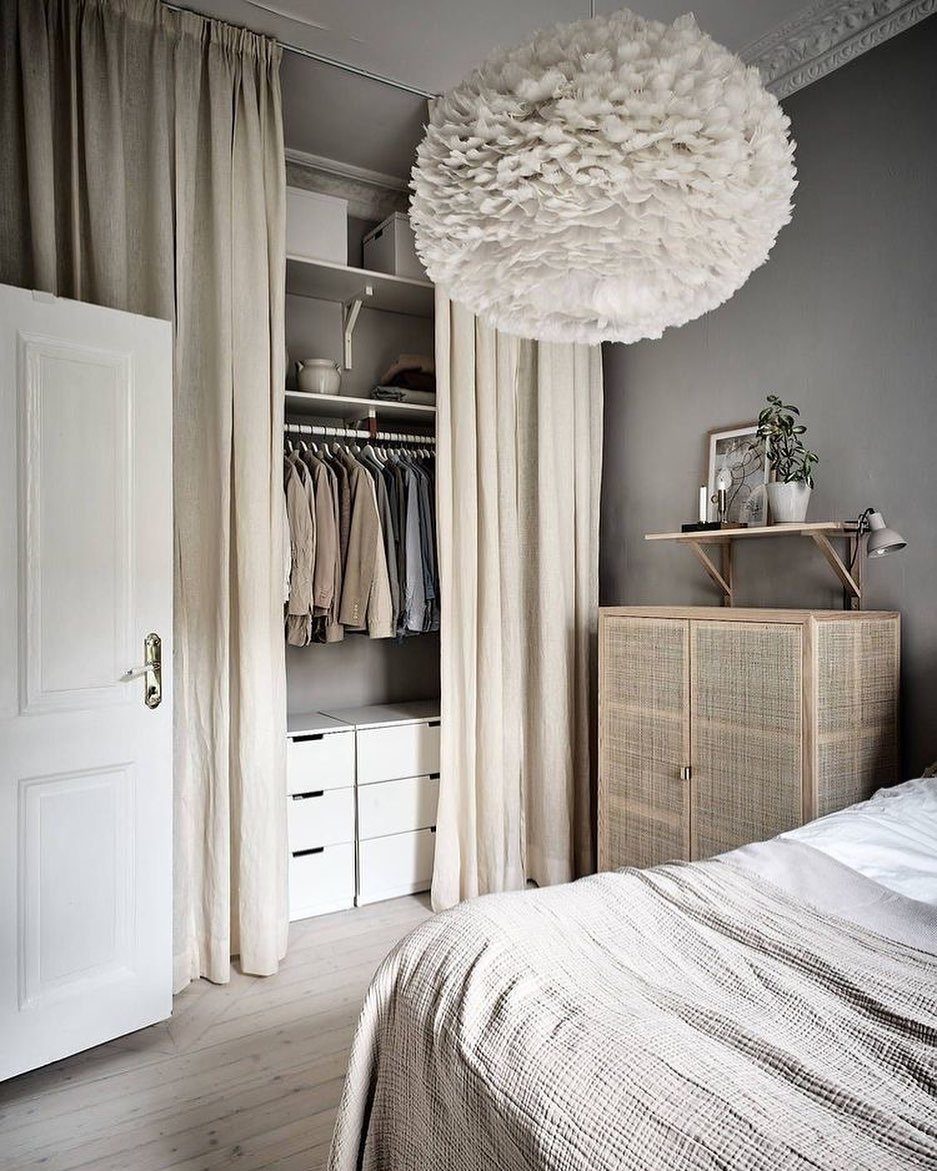
Linen wrinkles the moment you look at it, which is exactly the relaxed texture this bedroom leans into.
The visible weave filters light softly and weighs enough to hang straight without lining. I would preshrink yardage before hemming; linen shrinks noticeably in the first wash.
7. Colorful Teal Closet Curtains
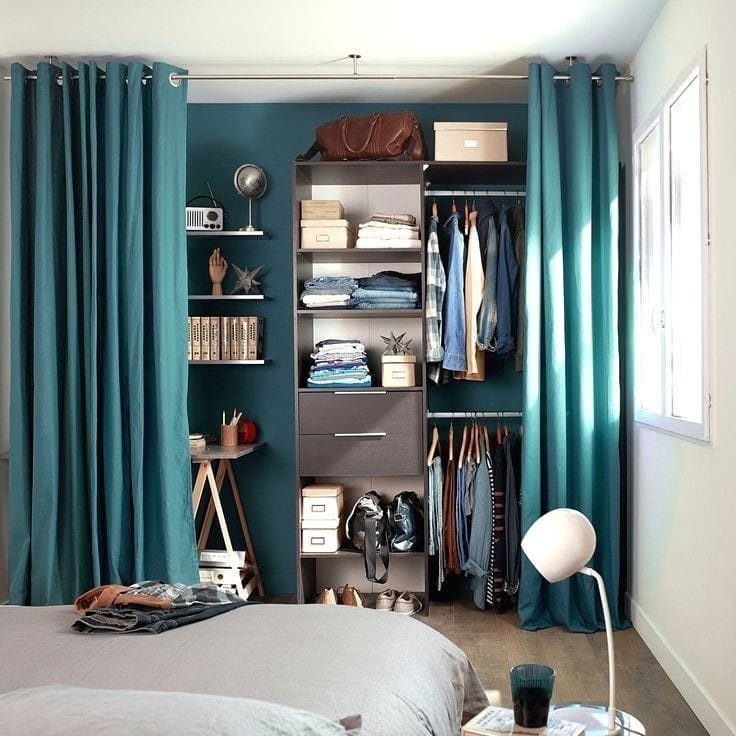
Matching the curtain to the wall paint makes the closet read as built-in millwork rather than a storage afterthought.
I would test the fabric under your actual bulb temperature; teal shifts between green and blue depending on the light source, and a mismatch looks accidental.
This suits renters who can paint but cannot install doors, since the grommets and ceiling rod come down in minutes.
8. Striped Fabric Closet Curtain
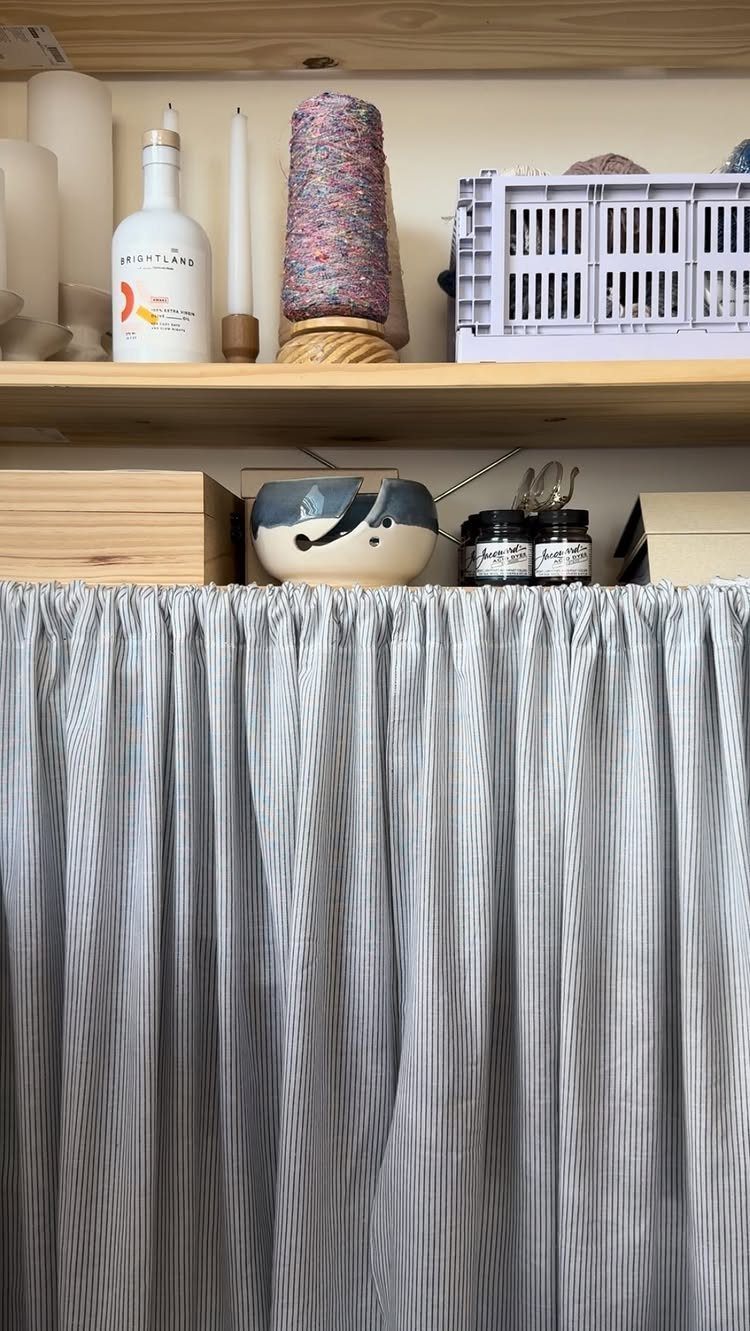
Pinstripes running vertically draw the eye down and make a low shelf feel taller than a solid panel would.
The rod sits directly on the shelf underside, so depth matters: allow at least 12 inches from front to back or the gather bunches forward and blocks the walkway.
I like this for craft room storage where the curtain itself becomes part of the display.
9. Floral Patterned Closet Curtain

A large repeat pattern needs clearance to read properly; this ceiling treatment only works because the closet is walk-in depth with a sight line from the doorway.
I would scale down the motif for a reach-in closet or the flowers cut off mid-petal and look like a mistake. The red ground hides dust better than a pale background, which matters on a surface you brush past daily.
10. Wardrobe Section Curtain Panel
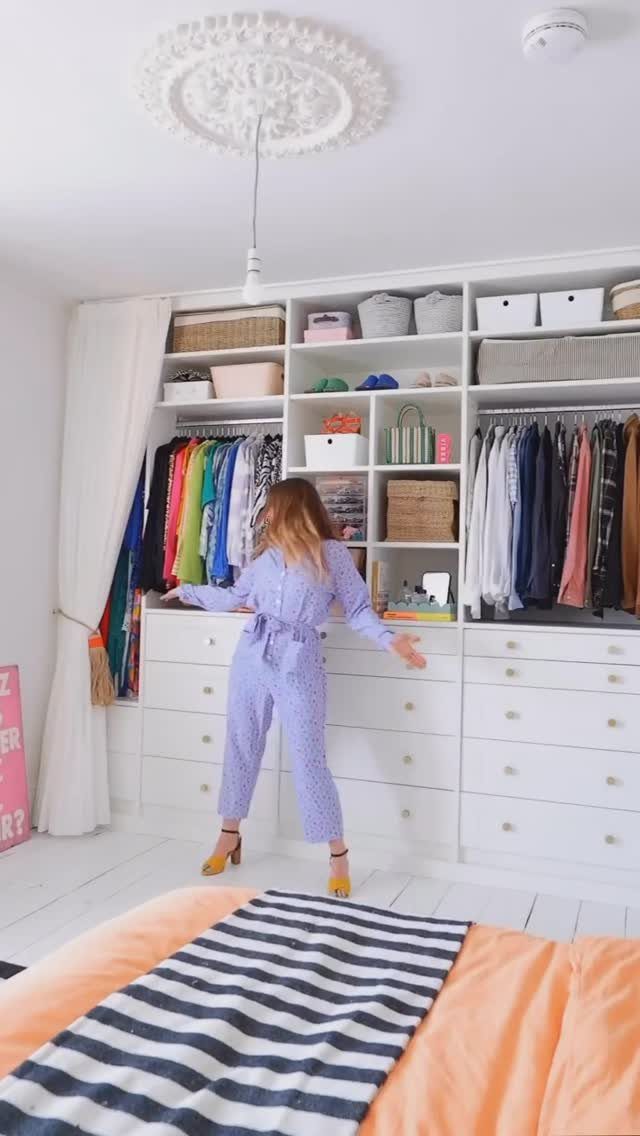
A single tied-back panel gives selective coverage: open for daily use, drawn when guests visit.
The tie height determines how much is concealed; this one sits at shoulder level, which hides the bulk of hanging clothes without hiding the system entirely.
I would add a weight to the hem if your fabric is lightweight; an open wardrobe creates a chimney effect that makes light curtains billow.
11. Dark Brown Fabric Closet Curtain
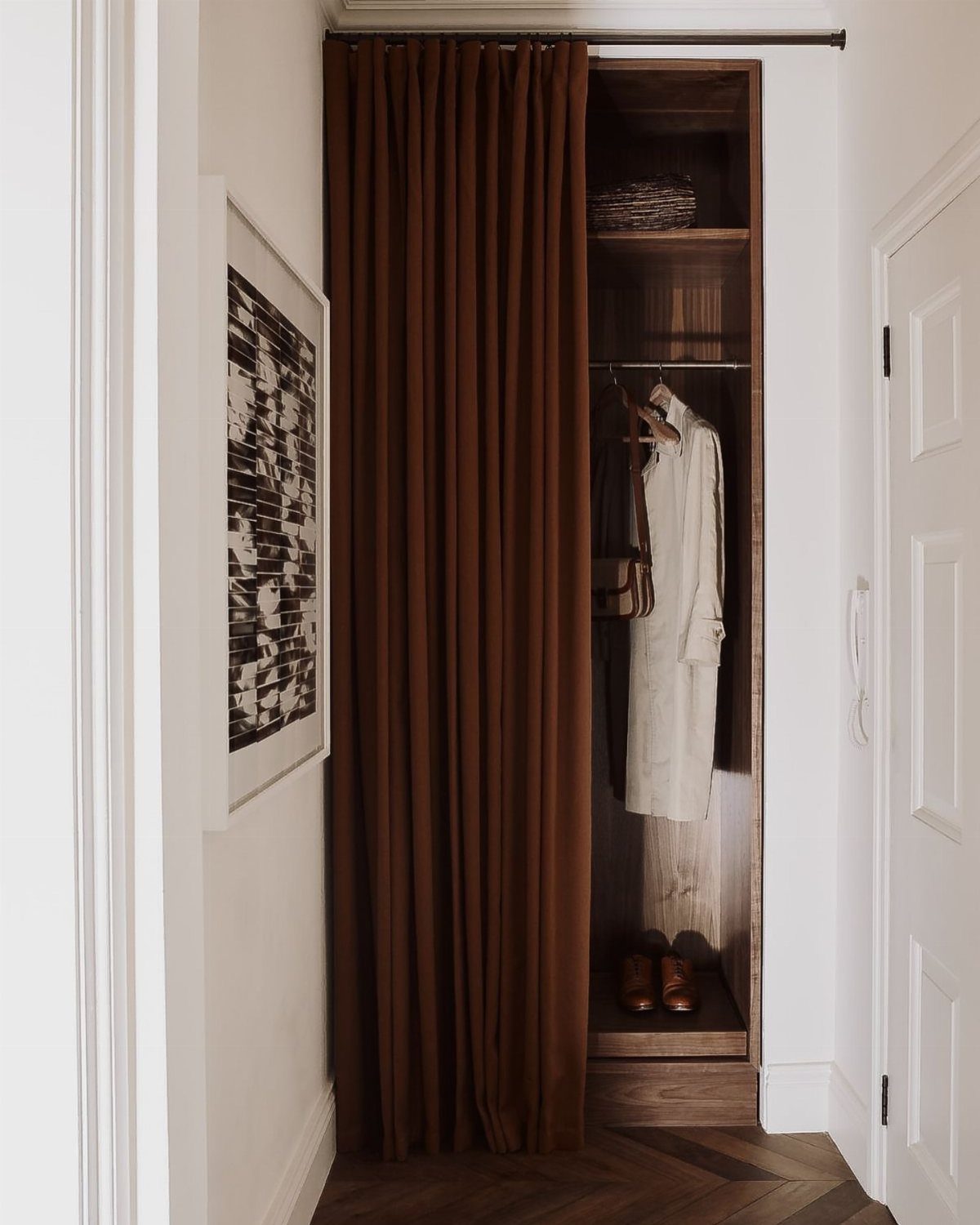
Pleats and a deep tone make this read as conventional drapery rather than closet camouflage, which helps when the closet opens directly into a hallway.
The wood rod matches the interior finish, so the eye carries across instead of stopping at a metal rail.
I would check your shoe placement; dark fabric against dark wood swallows detail, and a lighter mat or a single pale accessory breaks it up.
Choosing the Right Fabric
Thick woven fabrics protect clothes from dust, heat, and the sunlight that fades color over time.
I would hold the fabric up to a bulb in the store: if light passes through, it will not hide clutter or block dust from settling on folded items.
Sheer fabrics do fine if you just need a visual screen, though they won’t hold up where the closet gets hard use.
They let dust drift in and keep your closet contents visible from across the room, which defeats the purpose of hanging a curtain at all.
For a closet with a bright window, opacity matters more than texture. A blackout lining adds weight and helps the panel hang straight without a separate interlining, though it does add bulk at the rod.
Linen and cotton blends breathe better than synthetics in a small enclosed space, but they wrinkle and may need hemming after a first wash. Preshrink yardage if you plan to launder rather than vacuum seasonally.
Hardware Options
Metal finishes run from brass and gold through chrome, bronze, and black.
Match the rod to existing hardware in the room, or choose one finish level and repeat it on curtain rods, drawer pulls, and light fixtures so nothing sits alone.
The spring compresses to fit inside a door frame, but a wide span or heavy fabric makes the center sag. I would limit tension rods to narrow openings and lightweight panels.
Wall rods mount with brackets above or beside the frame. They handle more weight than tension rods and suit closets where you open and close the curtain daily.
Ceiling rods free you from existing architecture. Mount one anywhere to carve a closet from a corner or alcove, though you still need solid backing or toggle bolts rated for the pull.
Ceiling tracks hide hardware entirely. Internal hooks run inside a low-profile channel that sits flush with the surface.
Measuring for Curtains
Custom sizing pays off here because standard lengths rarely land exactly at floor level. Floor-touching is the target: longer drags and frays, shorter exposes shelf contents.
For width, fullness determines how the panel behaves.
Drapery convention calls for 2.5x to 3x the opening width, which gives deep folds and visual weight. That heft works against you on a closet you open every morning.
I would order closer to 2x fullness for closet duty. The pleats stay minimal, the panel stays lighter, and the curtain slides without fighting you.
Measure the opening width, then multiply by your chosen fullness to get the total fabric needed. For length, measure from the rod or track mounting point to the floor in 3 places: left, center, and right.
Ceilings and floors are rarely perfectly parallel, and the shortest measurement is the one that prevents pooling if you are ordering exact.
Frequently Asked Questions
What are some ways to maximize space in my closet?
Replacing swing doors with curtains frees the floor space a door needs to arc open, which lets you push storage right to the closet edge.
For a deep closet, I would add a dresser or narrow shelving unit where a door would have blocked it.
How do you make curtains look classy?
Quality fabric matters more than hardware cost: linen, cotton blends, or a textured weave read as intentional drapery rather than a temporary fix.
A double panel with proper fullness, a curved rod, or a brass finish matched to the room’s existing metal all signal that the curtain belongs there.
I would avoid thin sheers on a closet that sees daily traffic; they tend to look temporary and they don’t stop much dust.
How to hang a curtain for a closet door?
No tools needed for a tension rod slipped inside the frame; I would save it for narrow openings with lightweight fabric that will not drag the center down.
Wall-mounted rods handle daily use better; mount brackets just outside the frame or above it.
Ceiling tracks disappear completely and let you put a curtain wall almost anywhere, provided you hit joists or use toggles that can take the pull without tearing out.
What is the trend for bedroom curtains?
Bedroom closets are losing their doors in favor of fabric panels that soften the room’s hard edges and keep the mood relaxed.
The trend pairs neutral, textured fabrics with existing wall colors so the storage recedes visually. I see ceiling-mounted treatments and curved rods turning the closet curtain into a deliberate design move rather than a compromise.





