
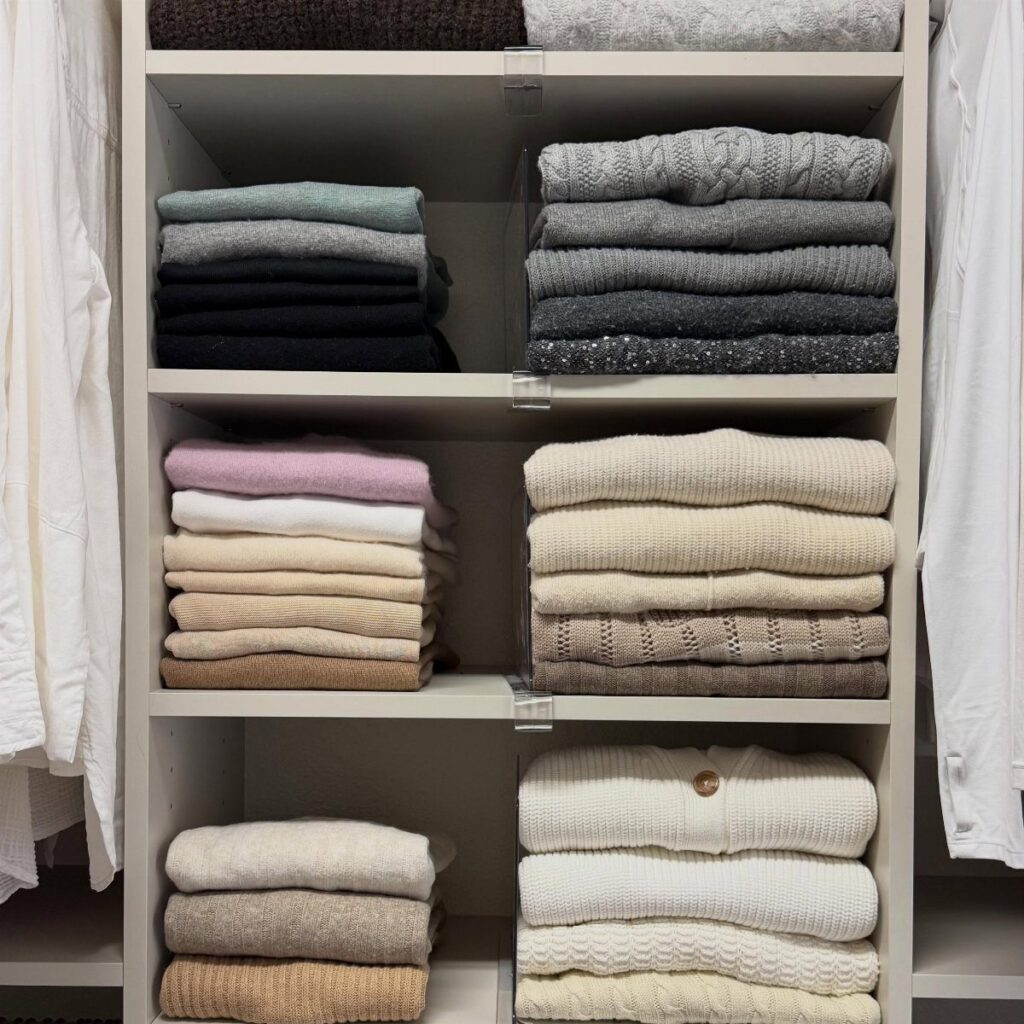
These 8 sweater storage ideas run from under-bed containers to stackable drawer organizers, and the right pick depends on whether you reach for knits daily or pack them away until next fall.
Short-term access favors hanging on closet rods, open shelf stacks with acrylic dividers, or clear bins you can see into; long-term storage means under-bed containers, fabric bins that keep dust out until sweater weather rolls back around, or vacuum-sealed bags for thin knits only since bulky cable knits need their loft.
The fold-over hanger method halves rod capacity against shirts, so I would separate knits to their own rod rather than mix and waste space.
[link-whisper-related-posts]1. Under-Bed Storage Containers
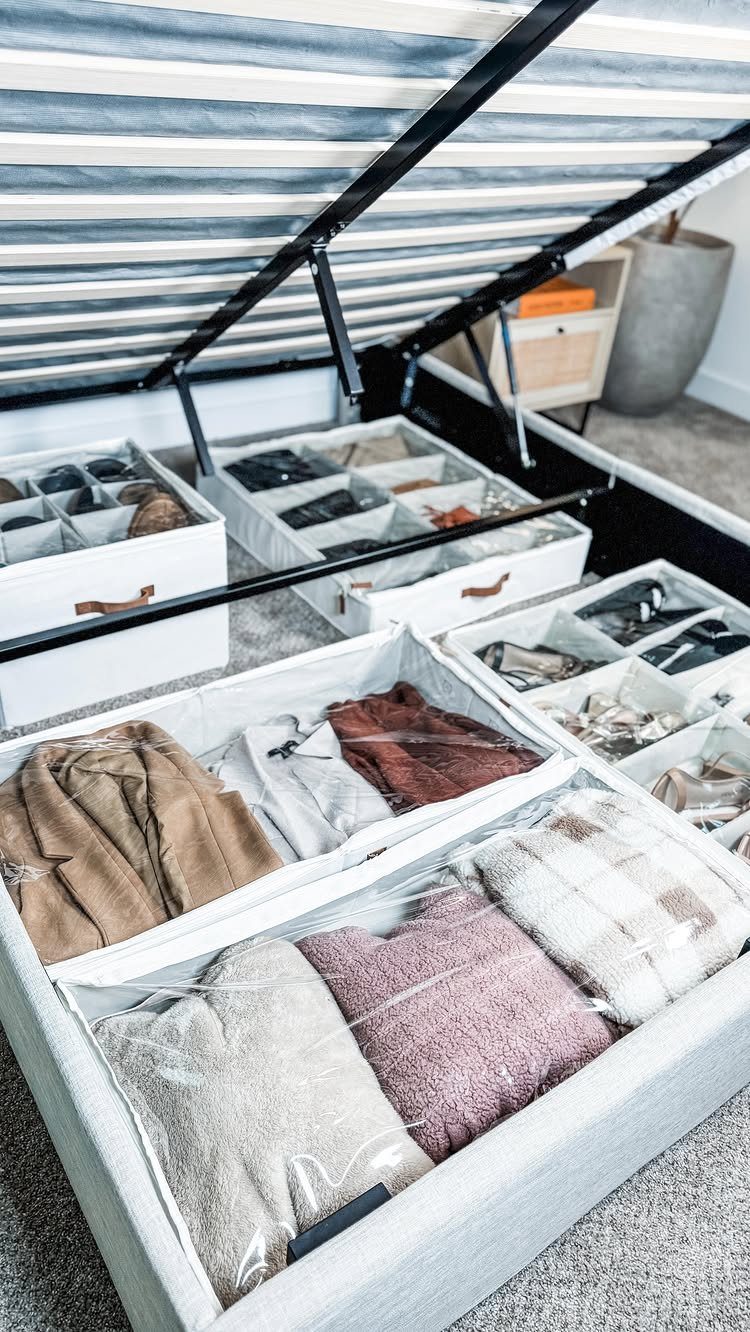
Off-season sweaters disappear neatly under a lift-up bed frame in zippered fabric containers, the kind with clear tops so you spot what you need without unzipping every bin.
I would check the container height against your bed’s interior depth first; a stuffed bag needs room to fit inside the lift-up base without compressing against the slats.
What you give up is access. This only works for sweaters you will not need for months, since pulling out the bins means clearing the bed.
If you store shoes down there too, I would bag those separately; leather finishes can transfer onto knit fibers over a summer.
Fabric containers breathe better than plastic, which matters for wool and cashmere that can mildew if sealed damp.
2. Vacuum-sealed Bags
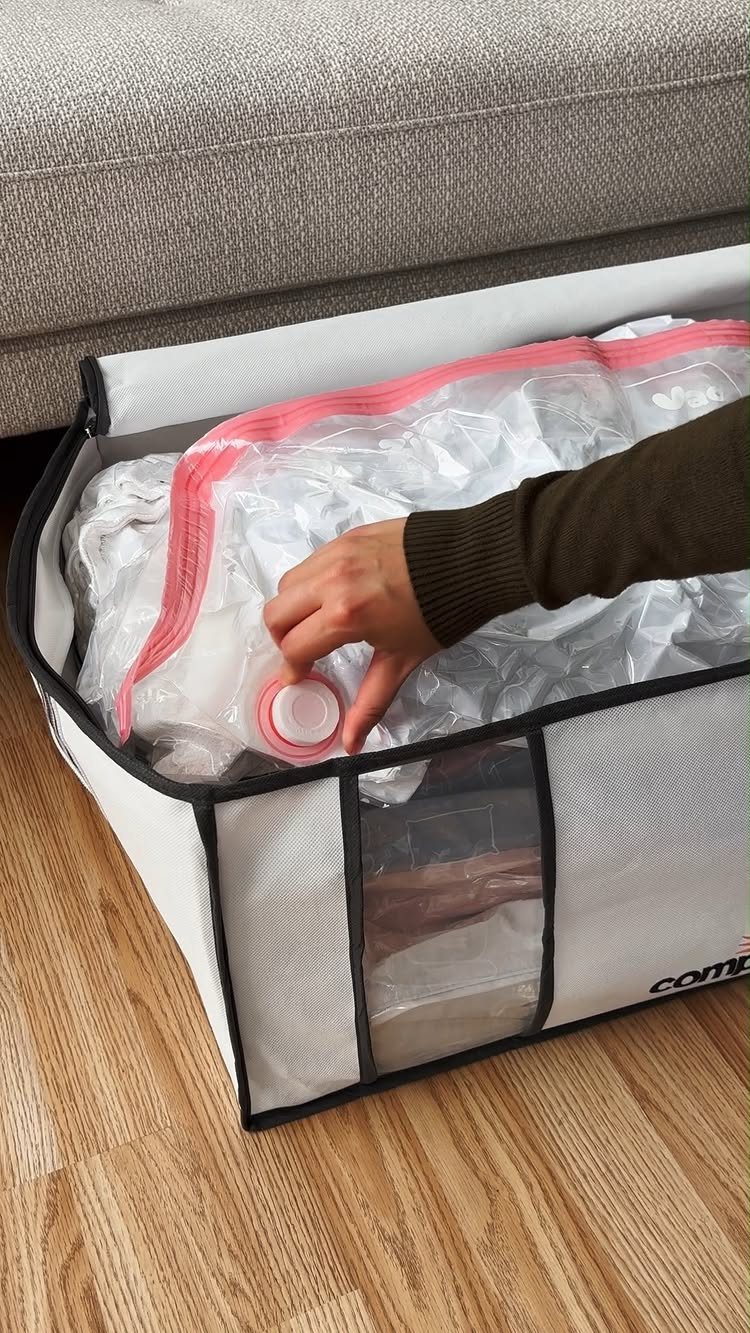
A hand-press vacuum valve on a compressed bag, tucked inside a fabric bin, squeezes bulky cable knits down to board-flat packets that stack deep in a closet or slide under furniture.
I would reserve this for long-term storage only; the pressure creases fibers and can flatten lofted yarns permanently if you leave them sealed for months.
Check that your bag is fully dry inside before sealing. Any trapped moisture breeds mold in that anaerobic space, and you will not smell it until you open the bag next fall.
I would skip the electric pump and use the manual valve or a vacuum hose attachment. The electric ones save a little time and cost more; the seal is identical.
3. Lay Sweaters Flat
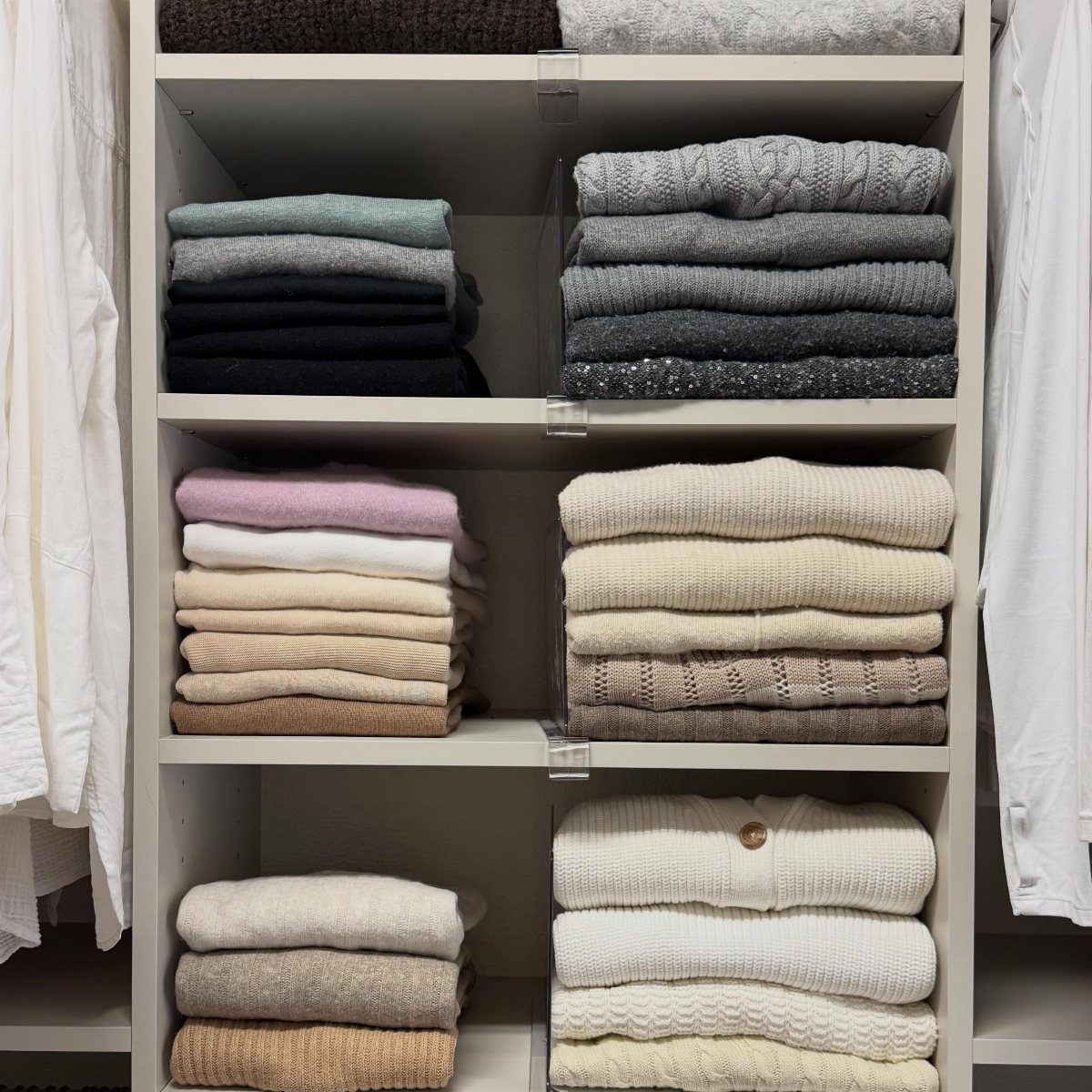
Horizontal stacks on open shelves keep heavy knit sweaters from stretching under their own weight, the way gravity pulls shape out of a sweater on a hanger.
I would add those dividers if your shelves are deep, since stacks tend to topple forward or lean into each other without a backstop.
Fold with the arms crossed flat behind the body, not doubled over the front, so the stack sits level and the shoulder seam does not bulge.
This costs nothing extra and works in any closet with a shelf, but it eats more square footage than hanging. I would use it for my best knits and hang the cotton blends I replace faster.
Don’t feel you always have to hang your sweaters or stuff them into your drawers. Stacking folded sweaters on open shelves will clear out a ton of space in your closet.
4. Shelves with Acrylic Dividers
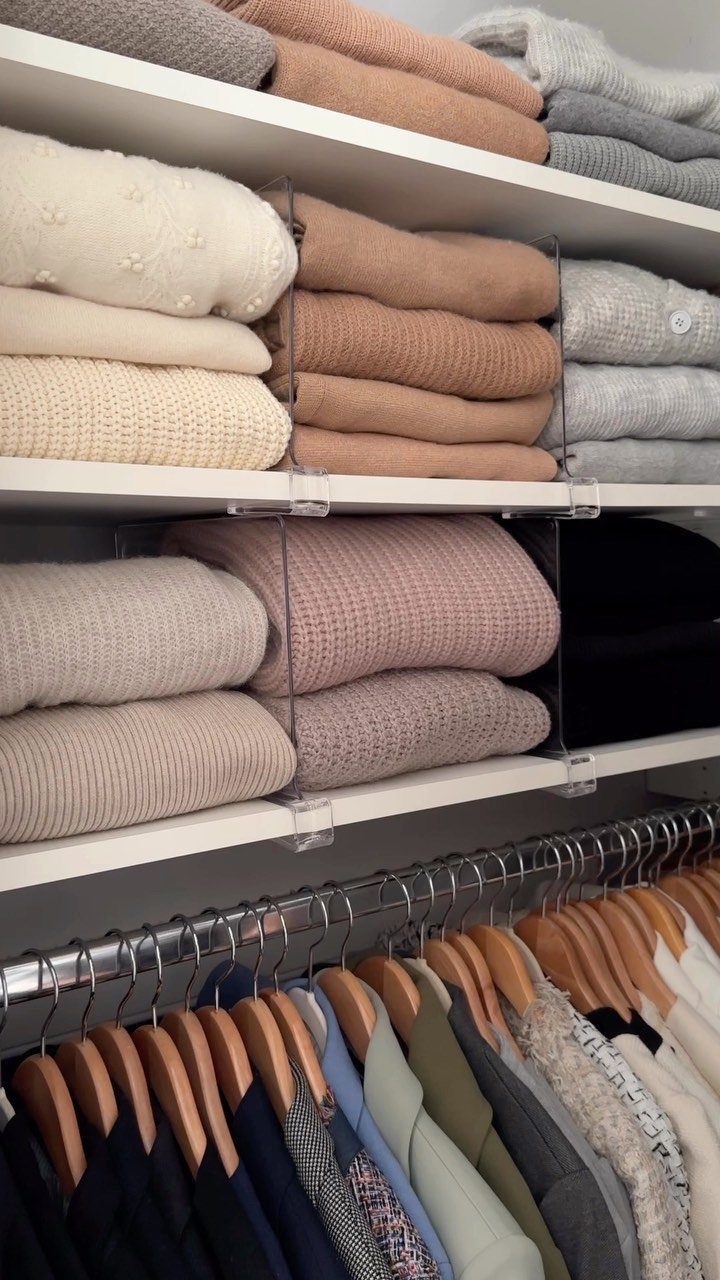
Acrylic dividers turn a single open shelf into labeled bays for sweater stacks, so a pulled-out navy does not avalanche the whole neutral column.
I would measure shelf depth and buy dividers that match. A divider shorter than the shelf leaves a gap behind; longer, and it warps or rocks.
The acrylic scratches over time but stays transparent enough to see labels through.
5. Hanging on Closet Rods
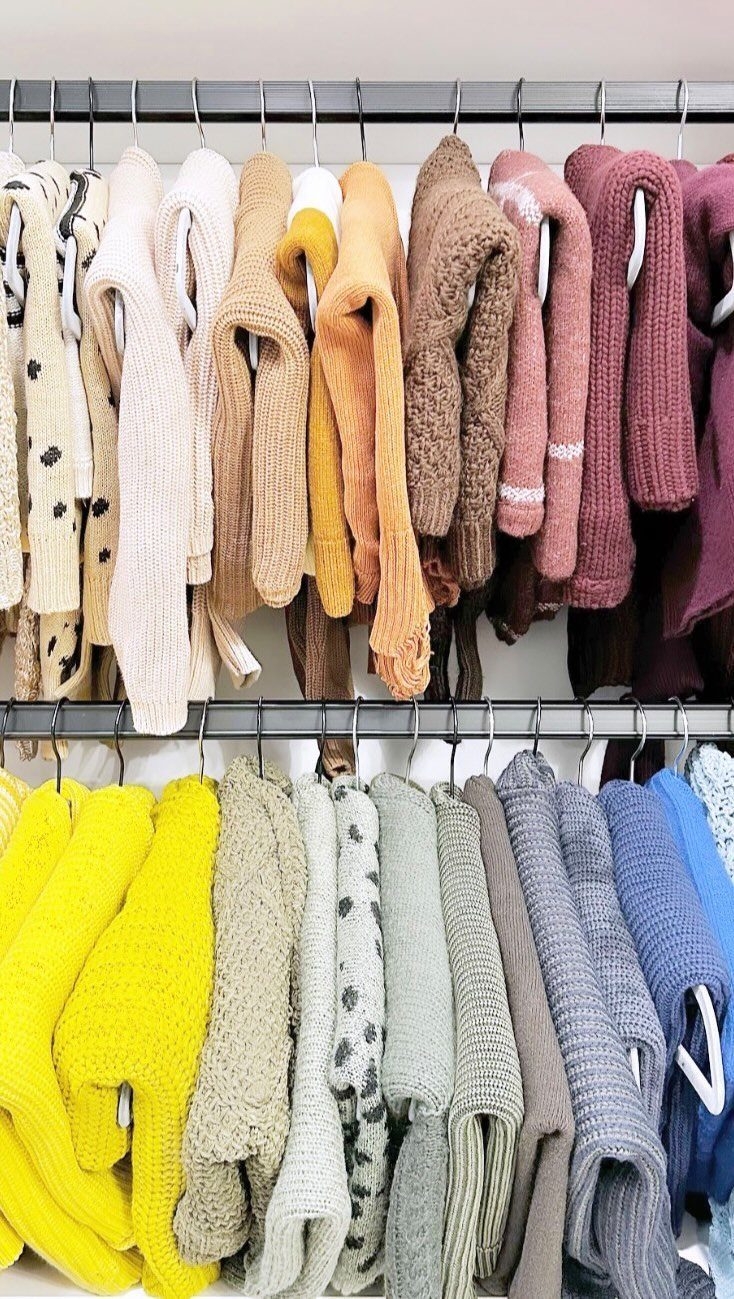
Sweaters folded over the horizontal bar of a hanger, not pierced through the shoulders, line a closet rod without the stretched necks that come from standard hanging.
I would use padded or broad-shouldered wood hangers for anything heavier than a lightweight cotton crewneck; wire dig marks do not steam out.
The fold adds bulk, so rod capacity drops by roughly half against hanging shirts. I would alternate: one rod for hanging knits, another for shirts, rather than mixing and wasting space.
This suits sweaters you wear weekly; the fold line relaxes in an hour on the body, and you skip the shelf restacking that shelf storage demands.
6. Fabric Bins on Closet Shelves
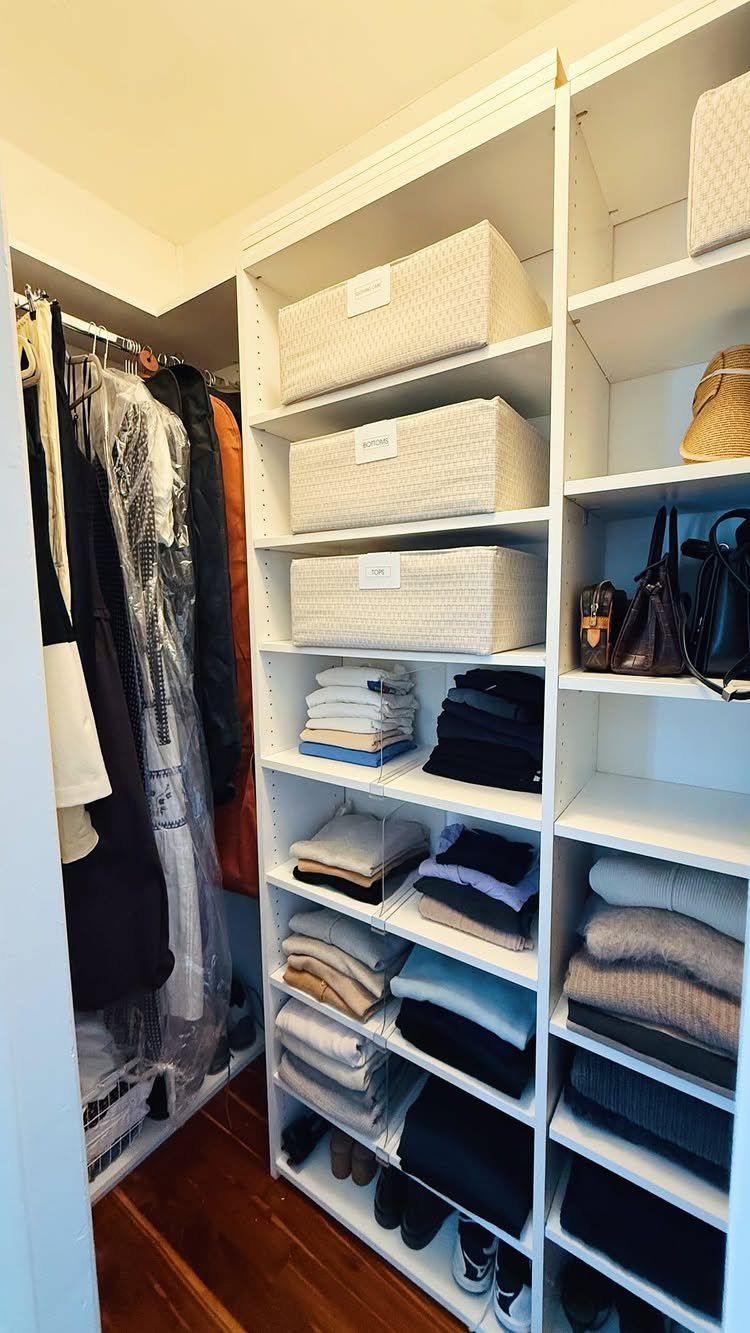
Labeled fabric bins pair with open sweater stacks on the same closet shelving unit, the bins handling accessories or folded T-shirts while the acrylic-divided piles stay visible for daily grabs.
I would reserve bin labels for categories that do not change season to season; re-labeling fabric is a pain, and mismatched handwriting shows.
I would reverse that if you are short or have shoulder issues; the bin contents compress, so a dropped corner bin hurts less than a dropped wool stack.
Patterned fabric hides dust better than clear bins, a small win if you rarely deep-clean the closet interior.
7. Clear Acrylic Storage Bins
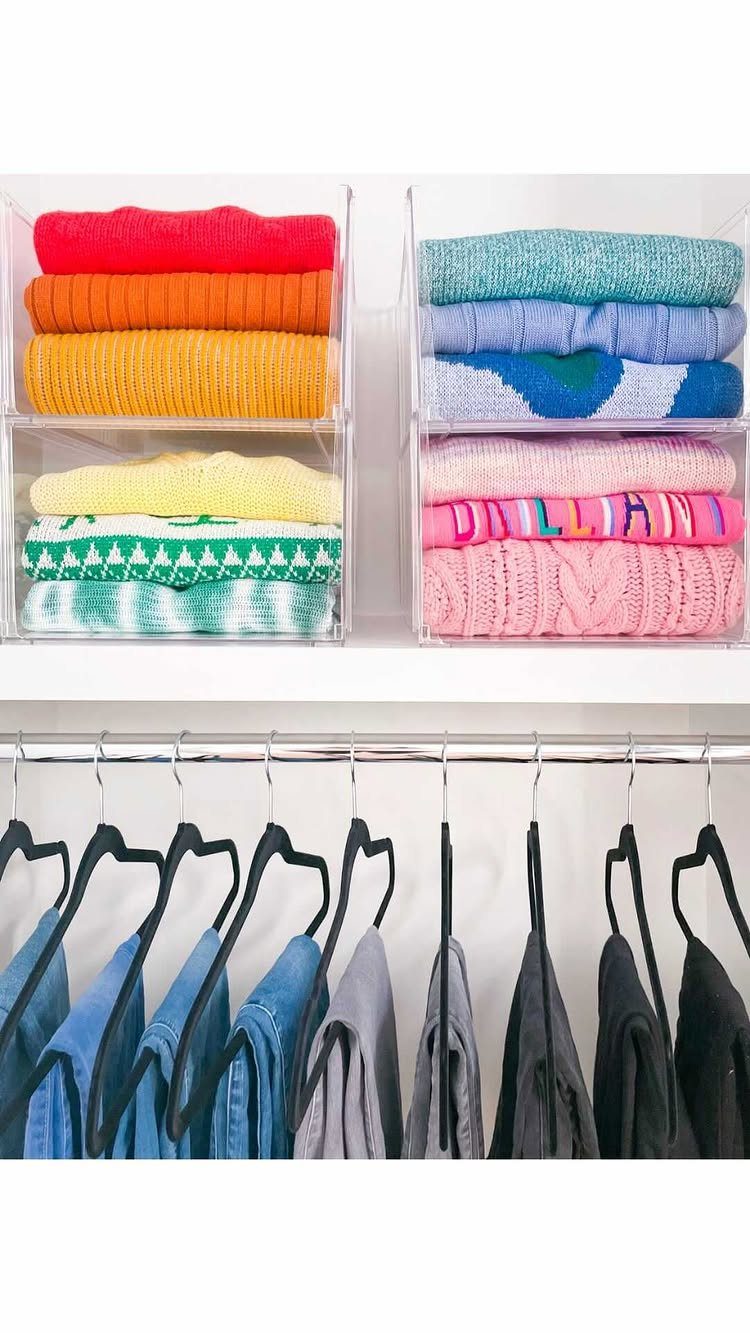
Clear acrylic bins let you scan a full stack without lifting the corner, which saves minutes on rushed mornings when you need the right weight and color fast.
I would buy bin sets that stack into each other when empty so they do not colonize the garage between uses.
Acrylic shows every dust speck, so this suits owners who wipe shelves quarterly, not annually. The "BRILLIANT" print visible on that folded pink sweater reads clearly through the wall, a small pleasure that fabric bins would block.
8. Stackable Plastic Drawer Organizers
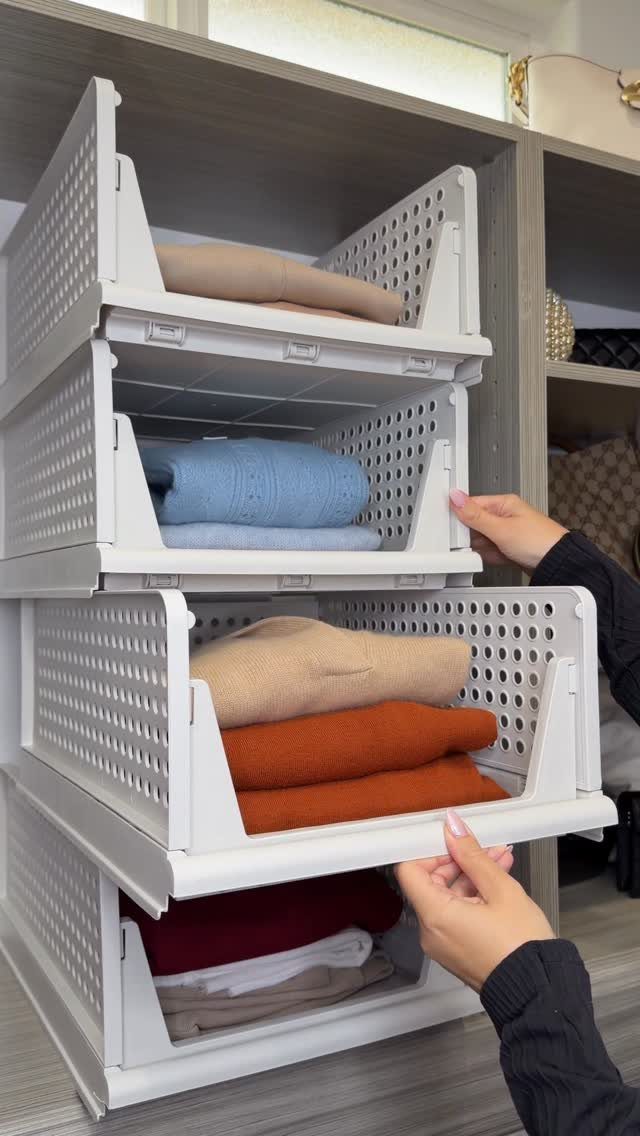
Pull-out drawers on a closet system slide out toward you, so you reach folded knits without the arm-over-head stretch that top shelves demand. That matters if you are short or if shoulder mobility ever limits you.
Grey organizers keep drawer fronts sitting flush, so check your closet system’s slide tracks before you buy to avoid a mismatch. Mis-matched widths rock or jam.
I would line the drawer bottom with a thin layer of acid-free tissue if any sweater blends toward silk; plastic can cling to fine fibers over time and leave a sheen that washing does not fix.
Best Practices for Hanging Knitwear
If you are hanging knits, the hanger bar itself matters as much as the padding. A rounded bar lets the folded sweater drape without a crease; a squared or grooved bar leaves a line that needs steaming out.
I would hang only lightweight knits this way.
The fold-over method still concentrates weight at one point, and a heavy cable knit will sag over weeks even on a padded hanger. For anything over a mid-weight crewneck, flat storage wins.
A hanging sweater organizer with tiered shelves solves the capacity problem if you must hang many.
Rotate what hangs every few weeks. The fold line sets in permanently if a sweater rests in the same position for a full season.
Material Matters in Sweater Care
Cashmere and fine merino need the most protection, but the fiber blend on the label tells you more than the brand name.
Wool sweaters hold their shape better than cotton-wool mixes, which tend to sag; silk blends wrinkle if folded tightly and need tissue between layers.
I would store anything with angora or mohair in a closed container, not open shelves. Those fibers shed and attract dust, and the static pulls hair onto everything nearby.
Check the label for "dry flat" before you choose shelf storage.
Some knits are shaped during manufacturing and will distort if hung or even if folded unevenly. The care symbols matter: a tub with a hand means hand-wash only, and those pieces need fully dry storage with airflow, never sealed plastic.
For cotton knits, I worry less. Cotton stretches but recovers in the wash, so a hanger crease or slight shoulder dimple usually irons out.
Organizing by Color and Type
Color grouping works best within a single storage method. All the navy folded knits on one shelf, all the grays on another; mixing colors across bins and shelves turns "find the blue" into a hunt through three locations.
I would sort by use before color if your mornings are rushed.
Work-appropriate knits in the easiest reach, weekend pieces lower or higher. At 7:00 AM, grabbing the right weight in two seconds beats a rainbow closet.
Weight grouping helps if you store off-season. I would keep a running tally of what left the closet, since a forgotten vacuum bag under the bed in June means a musty sweater in October.
Patterned knits break any system. I would file them with their base color and accept that the fair-isle piece disrupts the solid column.
Frequently Asked Questions
How to best organize sweaters on a shelf?
Stack them horizontally, not vertically, so gravity does not pull the shape out of the knit. I would add acrylic dividers on deep shelves; without a backstop, stacks lean into each other or topple forward when you pull one out.
Cross the arms behind the back, not folded across the chest, and the stack stays even without bulging at the shoulder line.
What’s the best way to store summer clothes?
I would store off-season items in fabric containers with clear tops under a lift-up bed frame, or in 45- to 65-quart clear or fabric-front bins at the top of the closet.
Cedar blocks in each bin repel pests, and swapping the drawer and bin when seasons change takes minutes.
Do you fold sweaters or hang them?
Fold anything heavy: wool, cashmere, and cable knits stretch under their own weight on a hanger. Hang only lightweight cotton crewnecks, and fold them in half lengthwise over a padded or broad-shouldered wood hanger bar rather than piercing the shoulders.
Wire hangers dig marks that do not steam out, and the fold-over method still cuts rod capacity by roughly half.
What’s the best way to store sweaters to avoid pilling and fabric wear?
A hanger pulls the weave out of shape where it bears weight; folded layers stay flat and the fibers rub less.
Cashmere slides against cotton and pills fast; keeping weights apart with shelf dividers or cloth pouches cuts that contact cold.
Constant rubbing wears yarn down each time a pile shifts; keeping stacks stable and sorted by texture prevents the lint balls that ruin a surface.
Can I use regular hangers for storing sweaters?
Wire or plastic edges bite into the knit and leave a ridge you cannot steam back out; the shoulder line just stays creased.
I would use padded or thick wooden hangers with a rounded bar if I must hang, and only for lightweight knits.
Folded once down the middle and laid over the bar, sleeves falling free, the sweater hangs by its own weight and skips the bump entirely.
Is it safe to use cedar blocks or sachets directly on sweaters?
Cedar oil wicks into loose weaves and leaves a dark spot; a layer of cotton in between blocks that transfer.
A thin cotton wrap around the block, or the sachet tucked inside a muslin bag, still lets the scent breathe through without touching the yarn.
Lightly sand the cedar surface periodically to refresh the scent, since it fades over time and needs renewal to keep repelling moths.





