
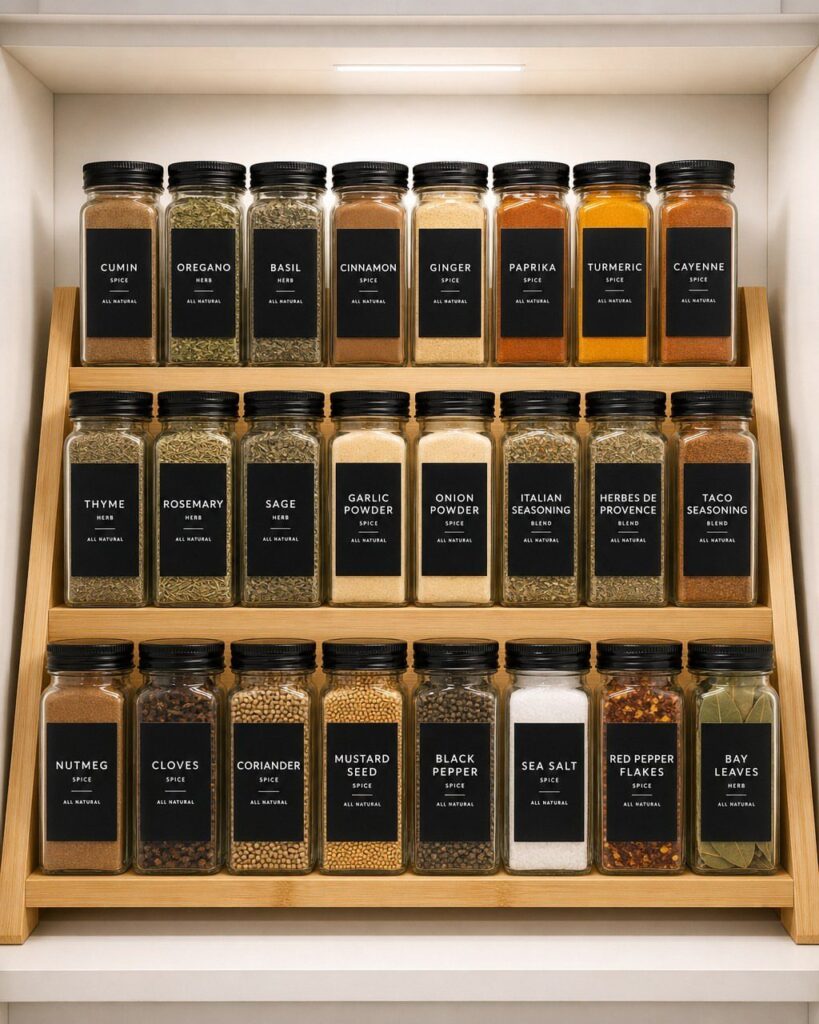
A spice rack can be as simple as a Lazy Susan or as involved as a wall-mounted ledge you drill into tile, and the right pick never comes down to style alone.
It comes down to whether your daily cooking happens at arm’s length from the stove or across a walk to the pantry, and whether you have cabinet depth, door clearance, or wall space to work with.
[link-whisper-related-posts]1. Cabinet Pull-Out Drawer
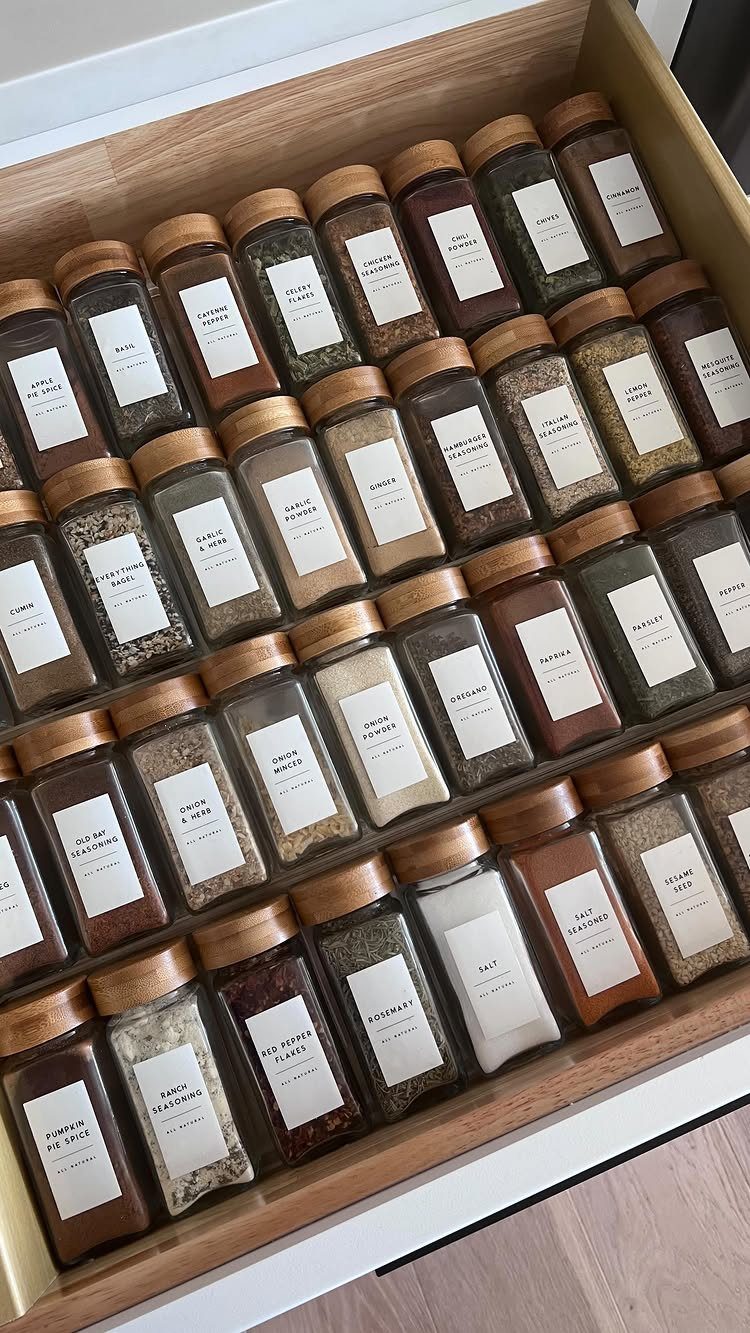
A pull-out drawer keeps spices flat and readable, not stacked where labels hide. Check your cabinet depth before ordering: a standard pull-out fits most lower cabinets, but shallow uppers need a shorter track and a different bracket.
The jars here sit in rows with space to lift one without shifting the rest, which matters more than it sounds when your hands are wet or greasy.
I would skip this if you already own tall bottles you want to keep; decanting everything into matching jars is another project entirely.
2. Lazy Susan
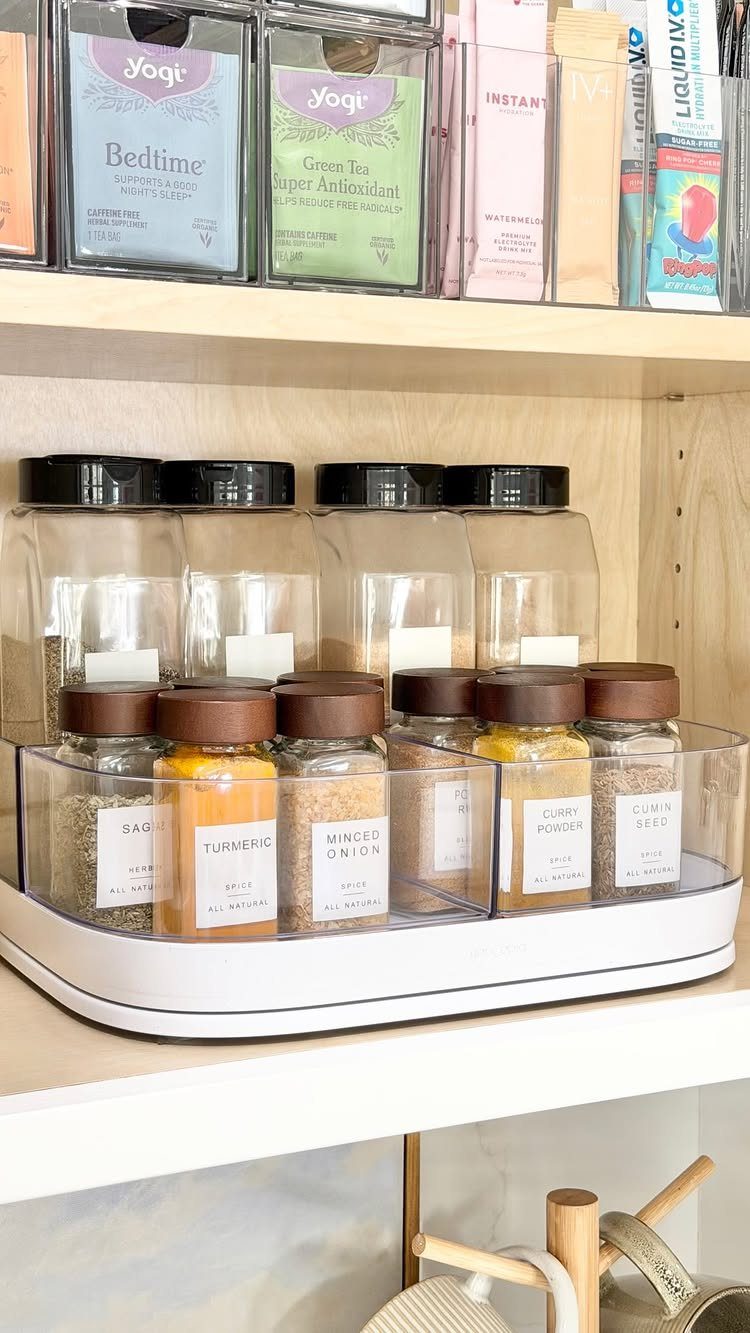
Cabinet corners eat space, but a rotating tray brings every jar forward with a spin.
A tiered version buys extra capacity without raising the reach; the upper level stays visible even when something sits above it, which tells you the height that still works.
Measure your shelf height before buying: a two-tier Lazy Susan that clears one cabinet may scrape another.
These work best for collections under about twenty jars. Past that, the spin gets crowded and jars start tipping.
3. Decanting Spices
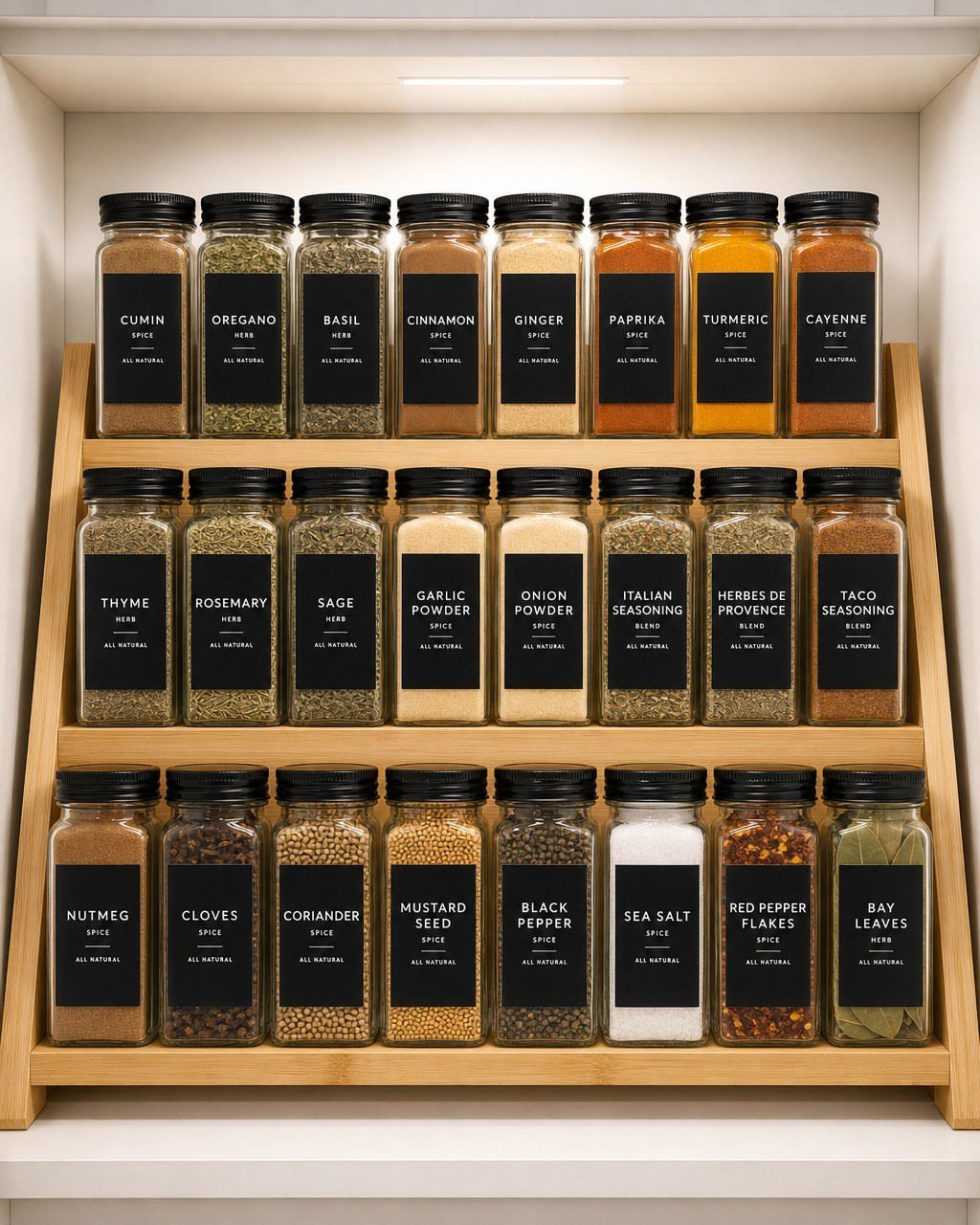
Transferring spices into matching jars is the part people photograph; choosing which spices to keep is the part that actually frees space.
The uniform labels here read across at a glance, which is harder with the factory bottles every brand sizes differently.
You will need a steady hand and a label maker you do not mind owning, or a patient afternoon with a marker and tape.
I would buy the jars first, then decant only what fits. The leftover bulk bags live in a backup box, not on this rack.
4. Over the Door Spice Racks
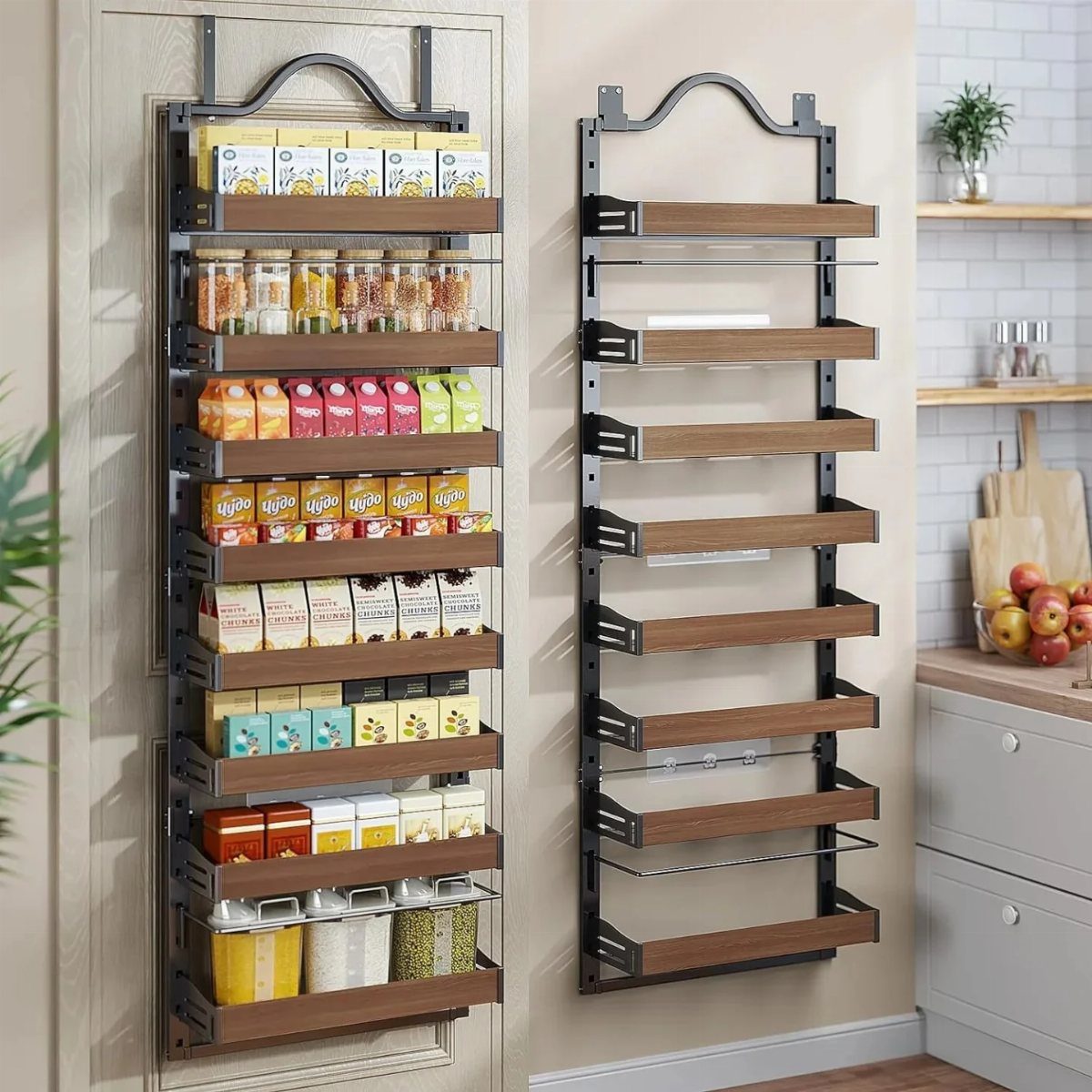
The back of a pantry door is depth you already own, usually wasted. The rack hanging here hangs by hooks; the matching one on the wall uses the same brackets, so you are choosing mount style, not rack style.
Check door swing and handle clearance before you buy: a rack that misses a round knob may still hit a lever handle or sit too far out on a thicker door.
This trades quick scanning for walking distance; spices live farther from the stove. I would reserve this for backups and baking spices, not the garlic powder you reach for daily.
5. Countertop Organizers
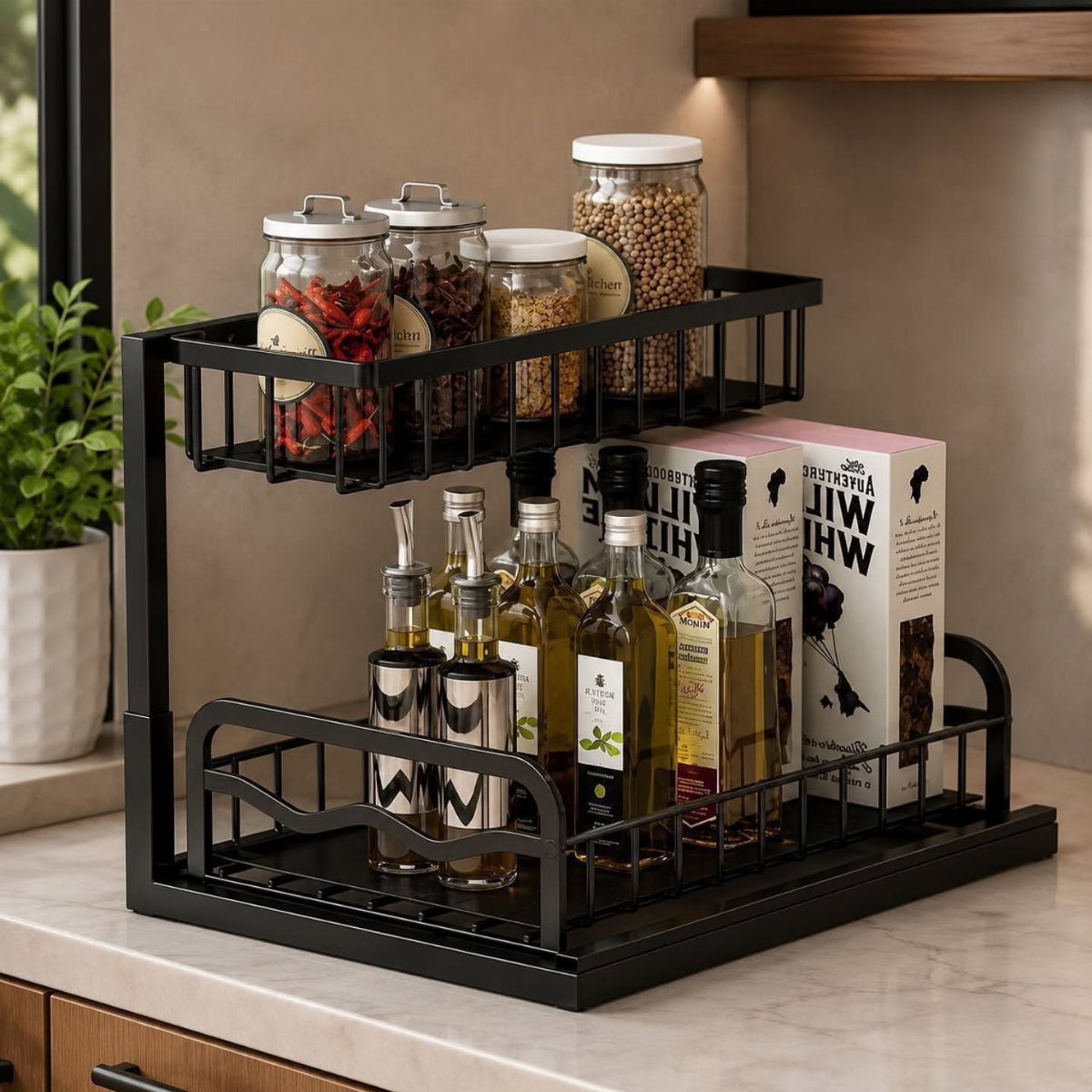
A two-tier stand keeps oil bottles low and spice jars high, which fits how tall each item reads at a glance.
An open wire frame on all sides works on a corner of counter or the middle of an island; a solid-sided version would need wall behind it or a straight run against a backsplash.
The marble surface underneath reads clean, but metal feet can scratch softer stone if they slip.
I would set this where the short walk from stove to counter does not block workflow. The trade is permanent counter space lost for permanent access gained.
6. Wall Mounted Spice Shelves
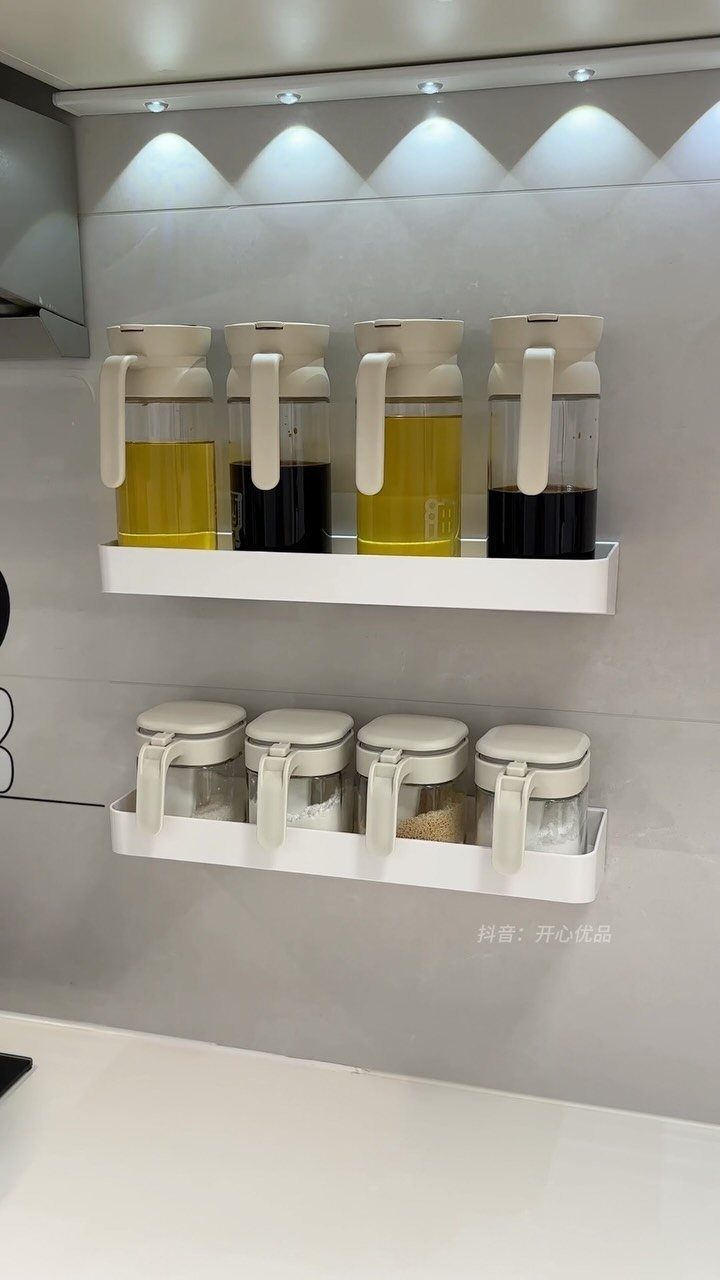
Narrow ledges mount where cabinets end and bare wall begins, often the strip beside a range hood or between windows.
The white shelves here hold 2 sizes of glass: oils on top, shorter spice jars below, which tells you the front-to-back depth that stays safe for each.
Tile backing, like the grey here, gives solid anchor points; drywall needs studs or proper anchors for anything glass-filled.
This puts spices in open air near cooking grease. I would choose this for oils I reach for constantly, and wipe the jars monthly, not yearly.
7. Multi-Drawer Spice Station
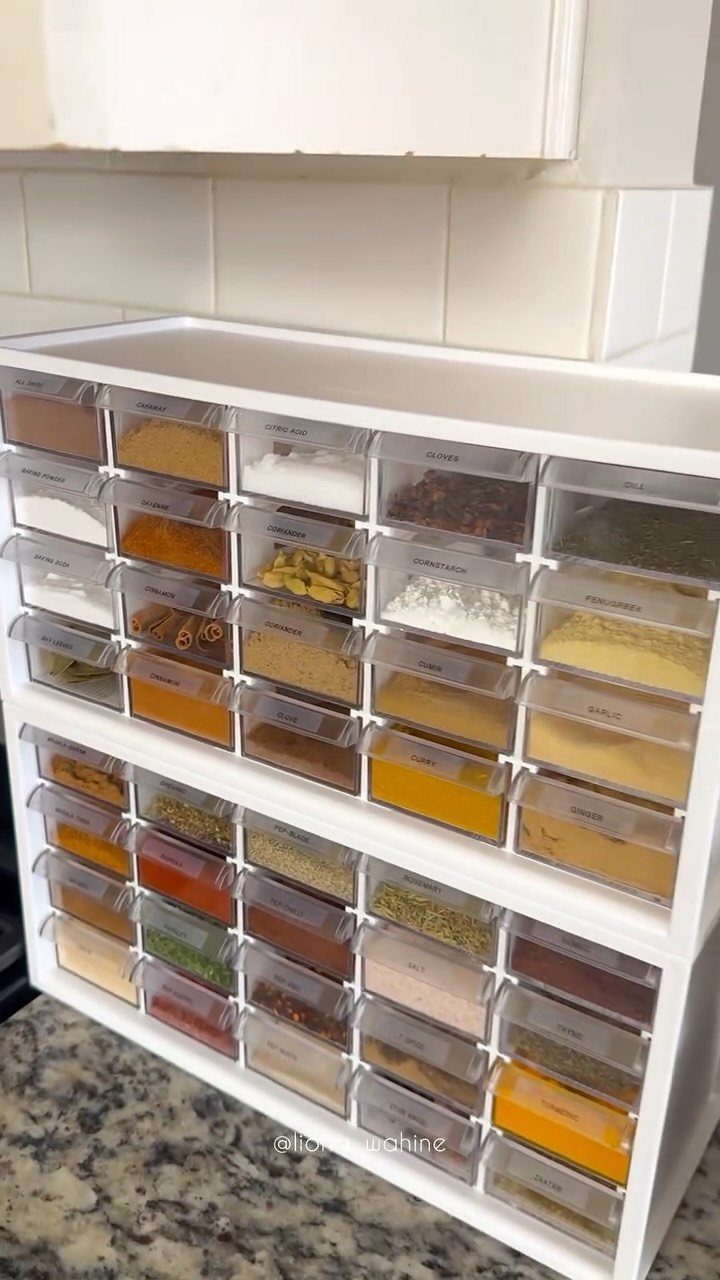
Small drawers keep spices upright and sorted, each its own compartment instead of a row you shuffle through.
The clear fronts here show color and level at a glance, which only works if you label the top edge, not the face; pull the drawer halfway and the label still reads.
These sets run about the footprint of a toaster, so they fit between counter appliances without claiming a whole cabinet.
The trade is height: stacks go taller than this goes wide, so I would count your collection before buying. A compact setup like this wins for smaller collections; once you pass a certain size, cabinet space pulls ahead.
Spice Lifespan Guidelines
Whole spices keep their punch up to 3 years, ground ones about 2, and dried herbs 1 to 2.
The real test is your nose: pinch and rub, then smell. If nothing rises up, the jar is taking space that fresher spices could use.
Ground spices go flat fastest because more surface area meets air.
That is why some cooks buy whole peppercorns or cumin seed and grind as needed. Not everyone owns a spice grinder or wants the extra step, so ground is fine, just bought smaller and replaced sooner.
Storage matters as much as age.
Heat and light speed the fade, so jars living above the stove or in a sunny window lose potency ahead of schedule. A cool cabinet dark inside extends what you already own.
Inventory and Decluttering
Before choosing any rack, pull every spice you own onto the counter at once. Two garlic salts, three half-empty oreganos, a cumin bought for one recipe and forgotten, these duplicates are what make a small collection feel large.
The spare jar in back cost you already. Replacing what hides is the tax of disorganization.
Lay them out, merge the duplicates, and toss anything without scent. What remains is your real collection, and its size tells you which rack idea actually fits.
Labeling Spices
Matched jars only help if you can tell what is inside.
A clear label on top or the side facing out matters more than font choice. I label the name and the month and year I filled the jar, not some vague "best by" copied from the bulk bag.
2 tan powders look the same once they’ve sat on the rack a while: ground cumin and ground coriander sit close together and fool even familiar hands.
The purchase date matters because spices fade gradually, and a jar from last year looks no different from this year’s until you smell it. Knowing which is which lets you use the older first or toss it without guessing.





