
These ideas run from a storage bench with drawers to a weekend build with stacked crates and wall-mounted chairs, so the deciding factor is how much of the room you are willing to give over to storage versus living space.
Someone with one window and a sloped wall gets a different answer than someone with open wall space and a weekend free.
[link-whisper-related-posts]1. Clothing Rack
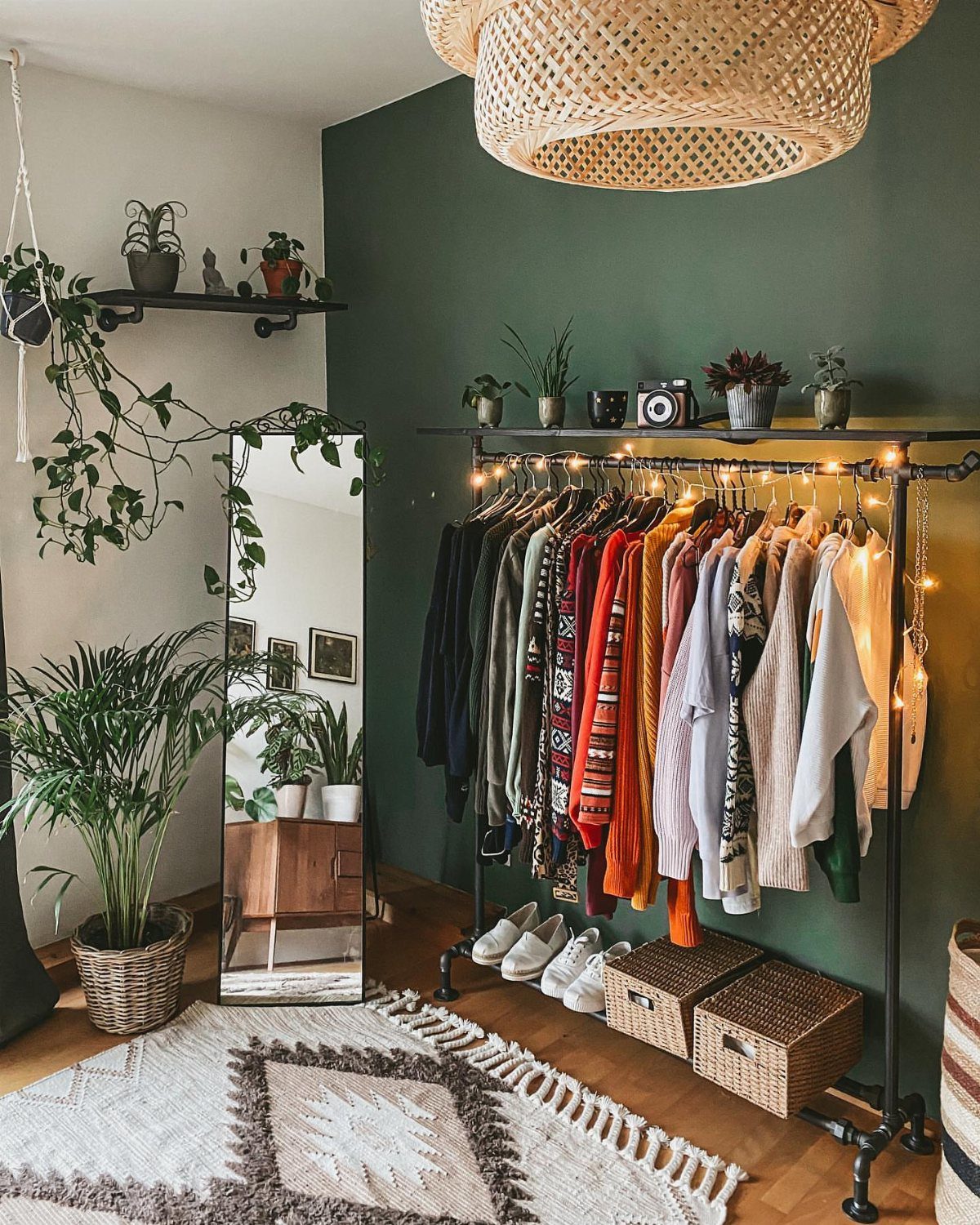
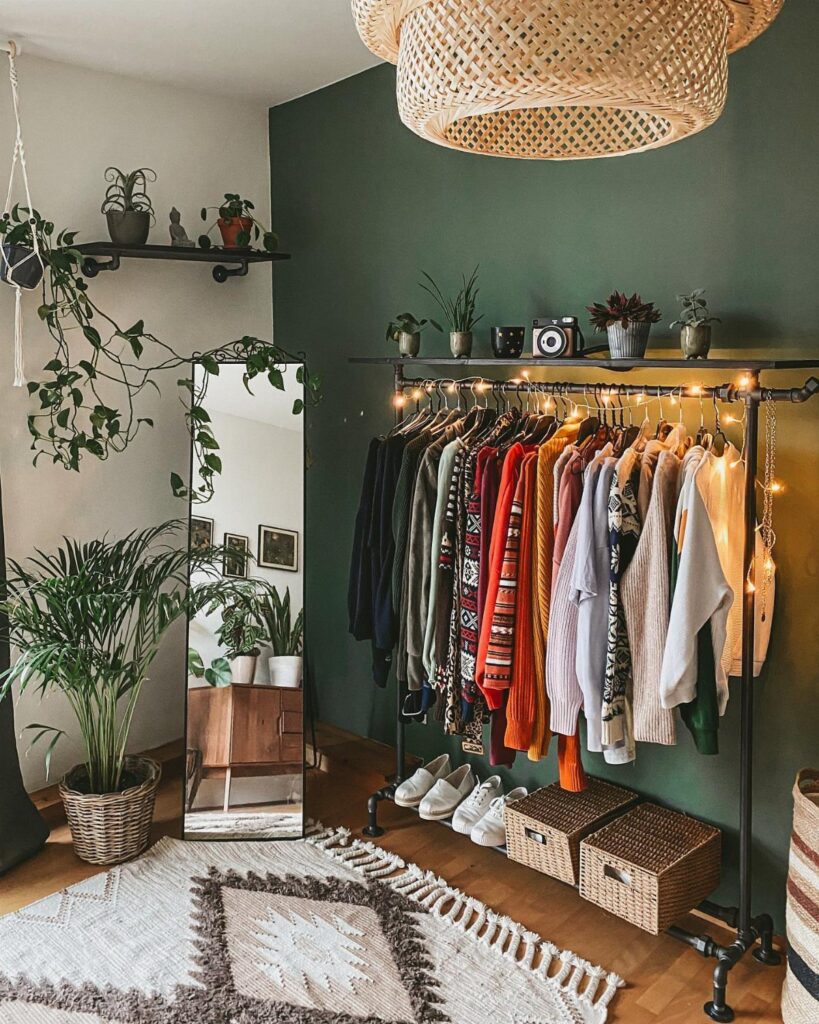
A freestanding clothing rack turns any corner into hanging storage. I would check ceiling height before buying: most racks run about five and a half feet tall, and a pendant light or sloped wall can make that tricky.
The ones worth owning add a bottom shelf for shoes and a top rail for baskets. Metal pipe versions hold more weight than coated wire, which matters once winter coats arrive.
I would set it a few inches from the wall so hangers sit flat. If the room gets morning sun, rotating the rack seasonally keeps favorite pieces from fading.
2. Under-Bed Storage
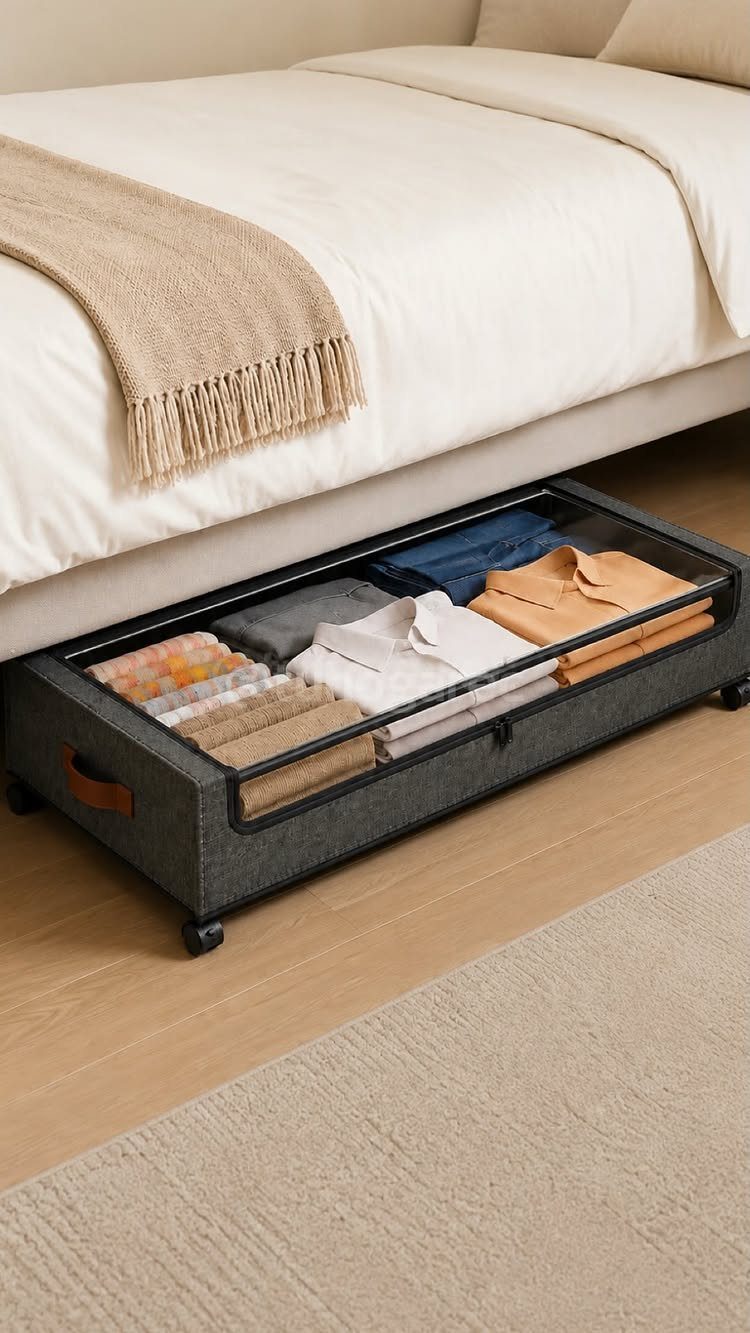
Rolling bins with clear tops let you see what you stored without pulling everything out.
I would measure floor-to-bedframe clearance first; most bins need at least half a foot. The fabric-sided ones slide easier than rigid plastic on carpet, though plastic wipes clean if you store shoes.
I would reserve under-bed space for out-of-season clothes and spare linens, not daily wear, since even with wheels the retrieval is a small chore. A bin wider than half your bed width gets awkward to maneuver alone.
3. Over-the-Door Organizers

A fabric organizer with staggered pockets turns a door’s back side into shelving.
I would weigh what goes in each pocket: a full slot of cleaning supplies, like the wipes and toilet paper shown, can pull cheap hooks out of alignment. Metal over-the-hook hangers handle more than plastic.
I would avoid the version with cardboard-stiffened pockets; they collapse after a few months of use. These work best for items you grab often but do not want cluttering a counter, rolled to fit, not folded flat.
4. Vertical Shoe Rack
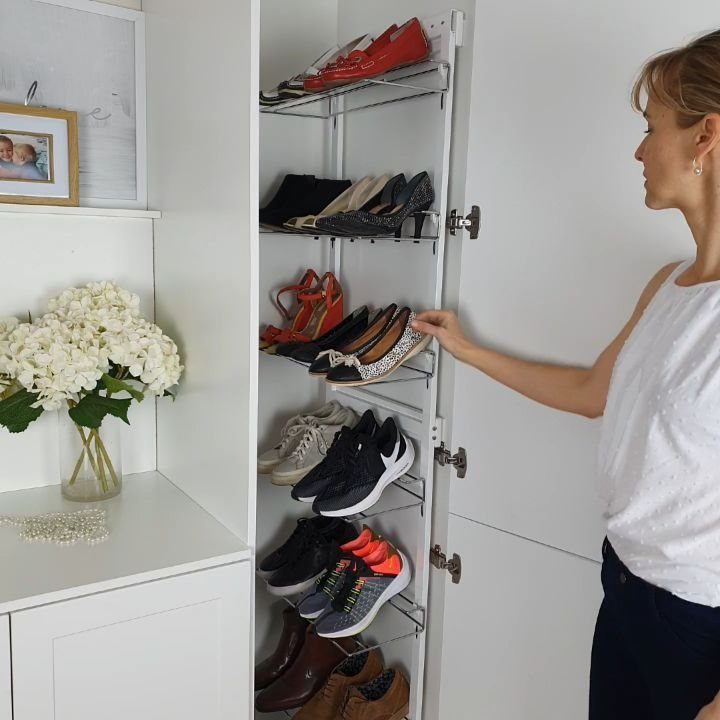
A narrow wire rack inside a cabinet or closet corner stacks shoes heel-to-toe without the footprint of a horizontal shelf. I would count pairs first: most towers hold about two dozen pairs and a width under a foot.
Wire tiers sag less than coated fabric under heeled boots. The cabinet surrounding it, like the tall white one shown, keeps dust off and lets you close the door on the clutter.
I would skip this if your shoes vary wildly in height; ankle boots topple on tiers spaced for flats.
5. Curtains to Conceal Clothing Racks
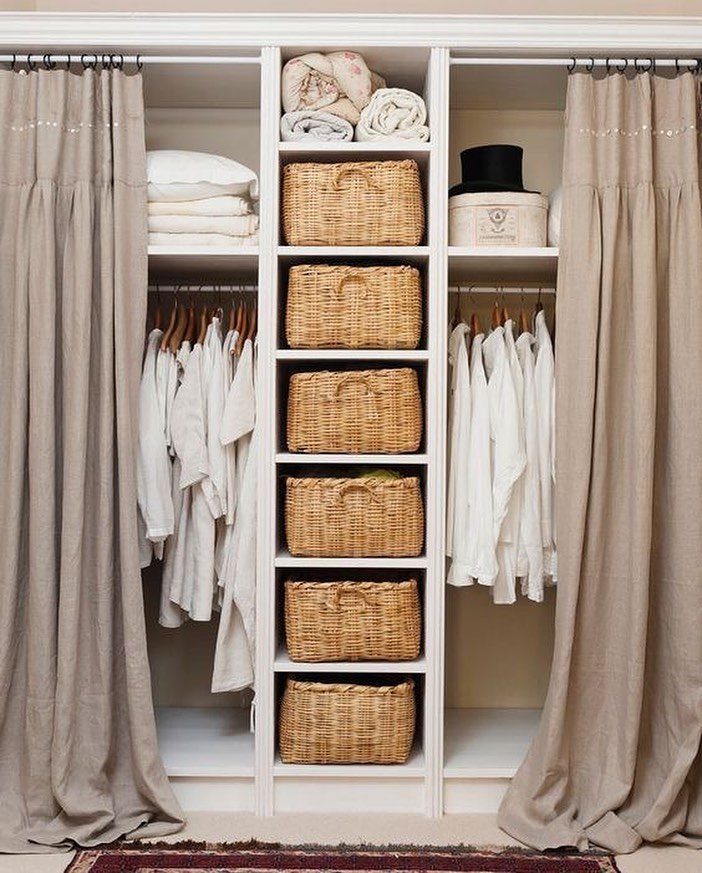
A rod-mounted curtain across an open clothing rack or shelving unit hides what is functional behind what looks calm.
I would hang the rod at ceiling height and let the curtain pool slightly at the floor; anything shorter reads as trying too hard to disguise. Linen hangs cleaner than cotton poplin and lets through enough air to avoid mustiness.
Access is slower than open storage; you give up grab-and-go speed for the cleaner look. I would use this in a room that doubles as workspace, where visual quiet matters.
6. Stacked Storage Boxes

Lidded bins that stack squarely let you build storage up instead of out. I would buy one size across a whole room so the lids load evenly; mixed sizes teeter and waste vertical space.
Woven-texture plastic looks less utilitarian than smooth sides and hides scuff marks. Labels on the short end, not the top, let you read them without unstacking.
I would keep the stack low unless you have a step stool nearby; digging through a toppled tower on carpet is a nuisance I would rather avoid.
7. Create a Makeshift Closet
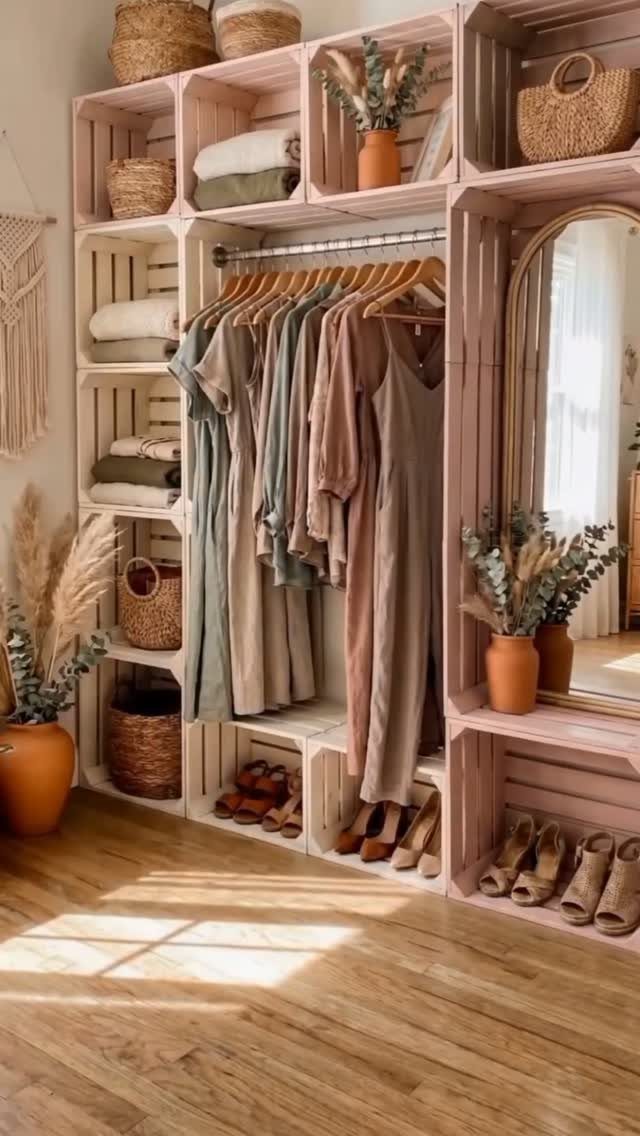
Stacked and painted crates frame a hanging rail, mirror, and shoe shelves into something that reads as furniture rather than storage.
A coat of paint in a tone that matches the wall helps the unit recede instead of shouting for attention.
Securing each crate to the next and the whole to the wall matters, since a winter coat load tips an unsecured stack. Basket cubbies hide what hangs below does not.
8. Wall Mounted Repurposed Chairs
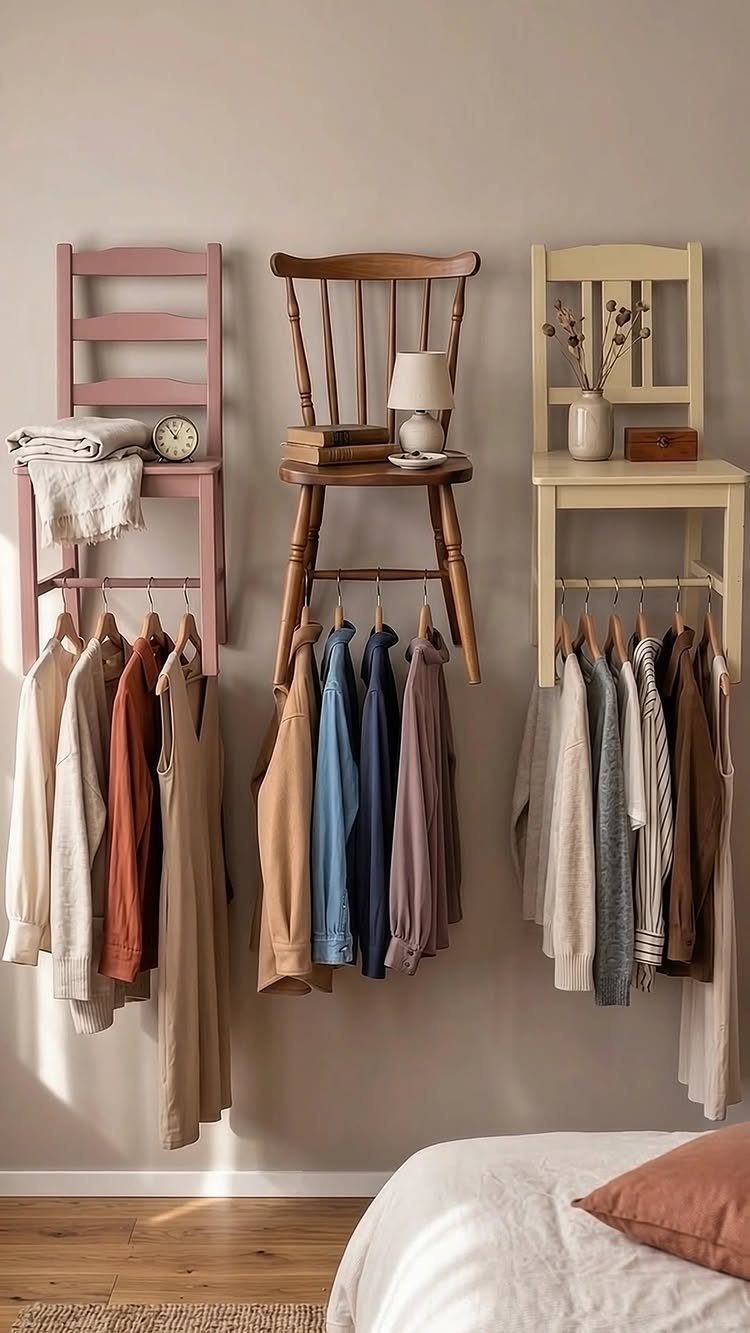
3 vintage chairs mounted flat to a wall turn their seat backs into shelves and their lower rungs into hanging rods.
I would use chairs with solid wood frames; a joint loosened by decades of use can split under a drill bit. Wall-mounted chair seats work for folded linens, small decor, or a few books you want kept in sight.
Hangers slip over the front edge of a rung more easily than from below; I would check the rung profile before buying thrift.
This reads as deliberate only if the chairs share a finish or paint color; mismatched wood looks like mounting hardware failed.
9. Storage Bench with Drawers
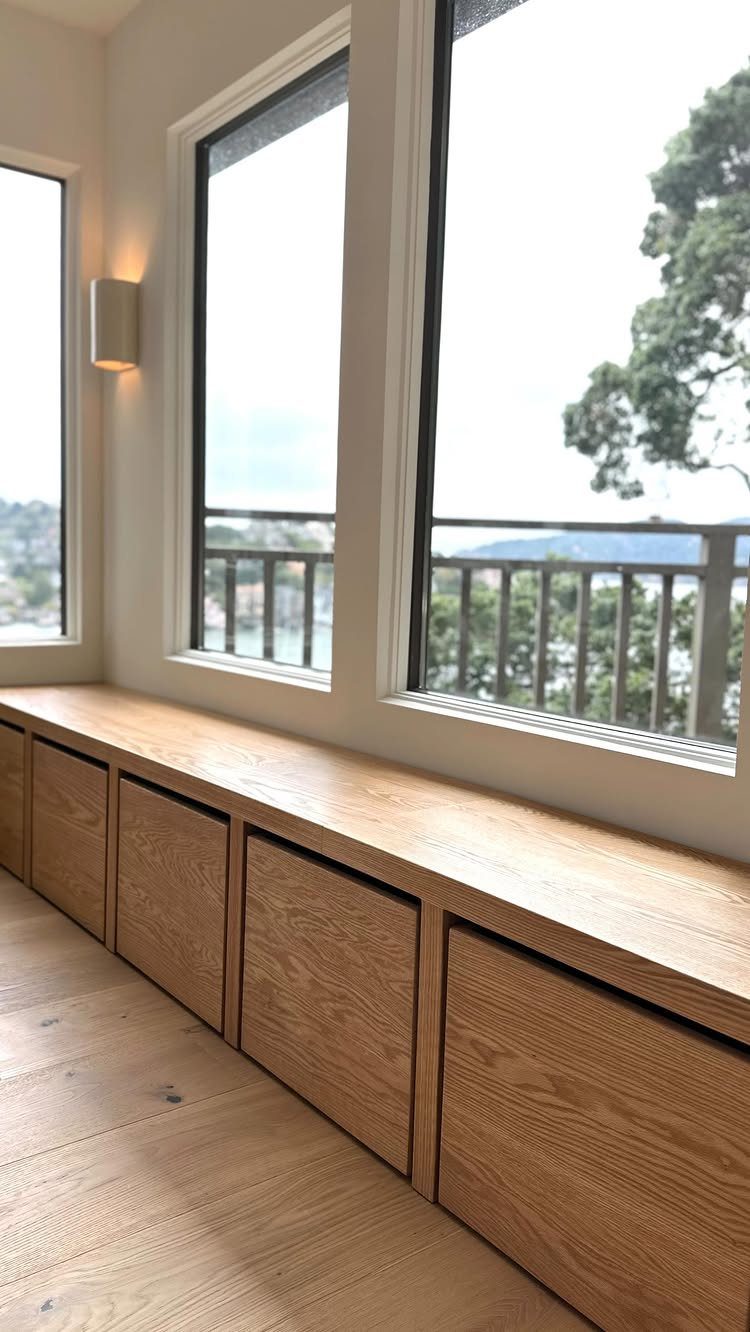
A window bench with pull-out drawers below turns dead wall space into seating and storage both.
I would check window height first; a bench top set too high blocks the lower sash from opening. Drawers on wood runners instead of metal slides move smoothly only if the case stays square.
I would use this for linens and out-of-season clothes, not daily wear; drawers this large encourage layering that forgets what sits at the back. Built-in means measuring twice, since the unit does not move with you.
10. Built-In Drawer and Counter Unit
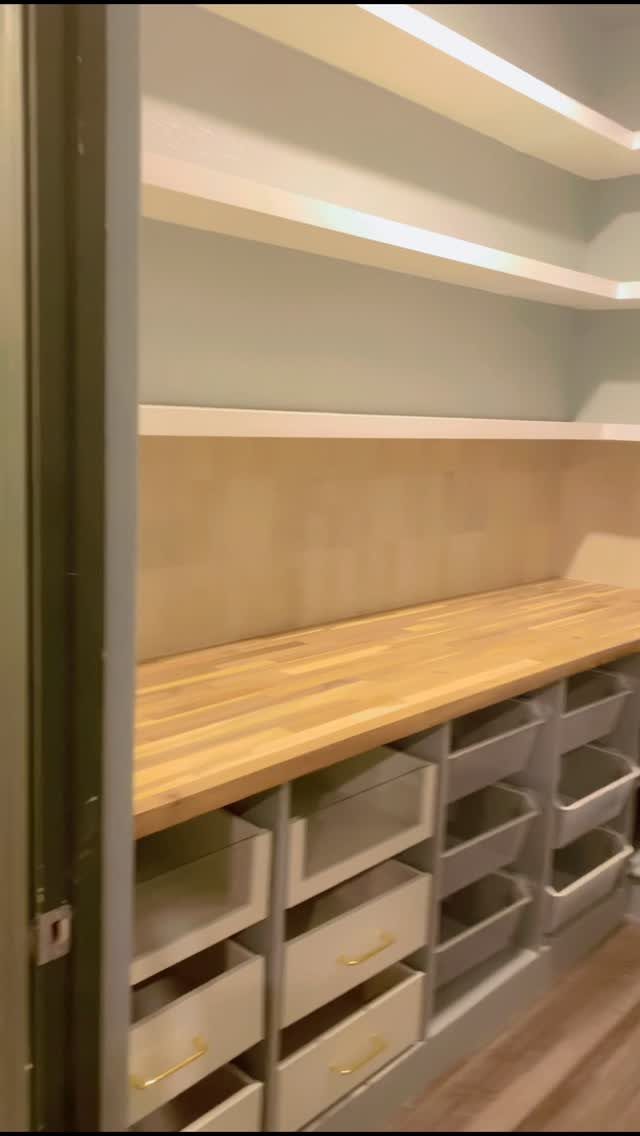
Open shelves above a wood counter with pull-out bins and drawers below give a dressing area its own logic. I would keep the counter clear for folding and sorting; the bins below take what piles up.
Plastic bins that slide forward give full access, unlike fixed drawers where back corners go dark. I would match bin height to what goes inside; shallow for accessories, deeper for folded jeans.
The blue wall behind this unit makes the white shelves read as deliberate; a neutral wall would need the shelf color to carry that intent.
11. Open Display Shelves for Accessories
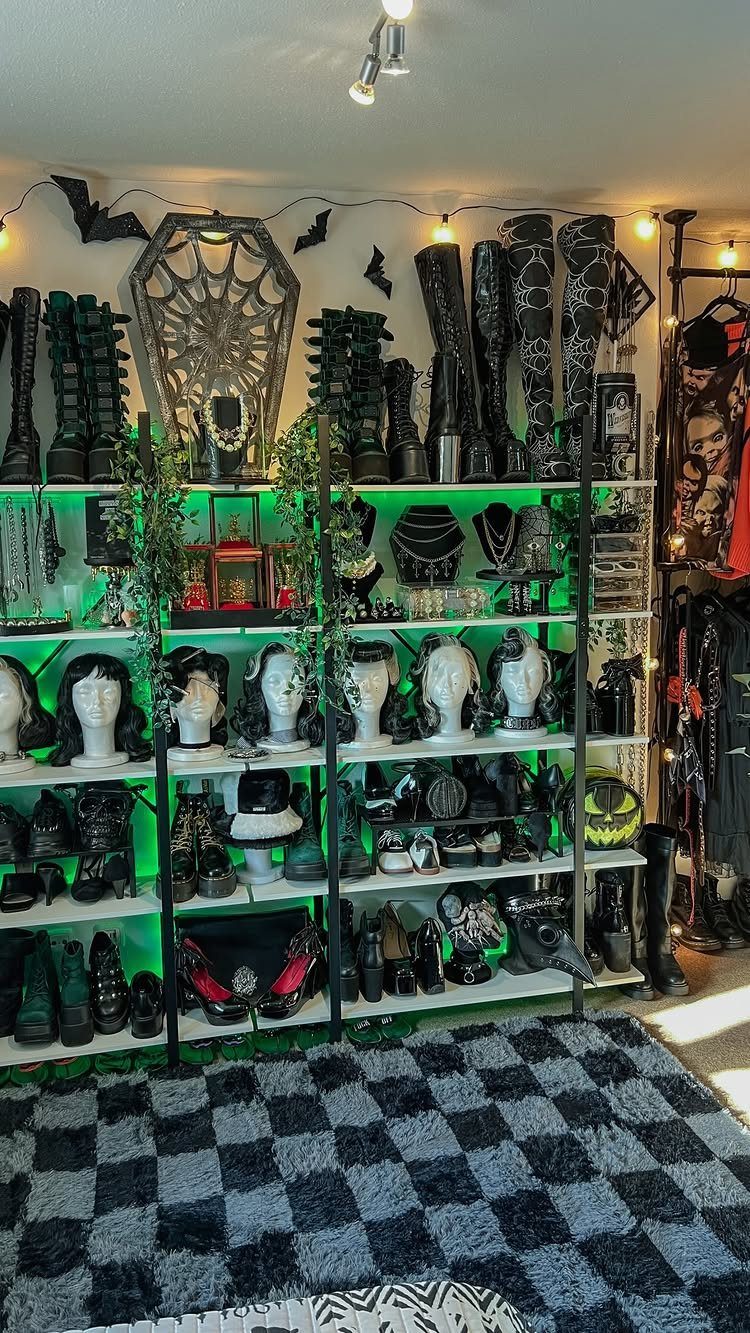
Wall shelves for boots, wigs, and jewelry turn a collection into its own display.
Green LED sets a mood but distorts color; keep it to non-clothing items unless you check outfits in daylight. Boots stand upright only on shelves deep enough for the full shaft; anything less and they topple or lean.
Mannequin heads keep wigs shaped better than stuffing, but they need a shelf height that clears the crown. This idea works when your pieces are the decor and you do not mind the dusting.
Tips for Organizing Without a Closet
Rotate what hangs and what hides twice a year, not once. Summer linen moved to bins in October frees the clothing rack for wool and down; the swap back in April keeps the system honest.
I mark bin sides by season, since anything I have not touched by the time that season rolls around again goes to donation.
One method beats three half-used.
Add over-the-door pockets or a storage bench only after the basics hold steady for a month. Visual clutter grows fastest where 2 systems overlap for the same items.
When there are no closets, you have to start getting creative with your storage spaces.
Choosing the Right Furniture
A bench with a lift-top at the foot of the bed gives somewhere to sit while dressing and swallows extra blankets or summer clothes underneath.
Hinge quality matters more than people think; a lid that slams shut without warning turns a quick grab into a balancing act.
The Carson Carrington Sastamala from Overstock, $170, comes in olive green, salmon orange, or creme. The flat top holds a tray or extra seating when the lid is closed; overstuffing defeats both uses.
A bench on the side wall works when foot-of-bed space is tight, though window height matters if you build one in. Block the lower sash and the bench becomes a problem.
Maintaining a Tidy Space
I would schedule the seasonal swap for a weekend with daylight to spare.
Everything comes out, gets tried on in front of a mirror, and goes back or to a donation bag. 2 skipped seasons means a piece exits; the rule keeps storage from creeping back to full.
Stacked bins work as a tabletop only if the lids load flat and level. A lamp or clock on a teetering stack ends on the floor.
One small room cannot hold everything you own in daily rotation. The discipline is accepting that limit and designing around it, not buying more containers to delay the choice.
Frequently Asked Questions
How do I decorate a bedroom without a closet?
I would start with a freestanding clothing rack and a curtain hung at ceiling height to hide it.
Under-bed bins swallow out-of-season clothes whole, and an over-the-door rack keeps daily items where you actually see them. When every storage spot has one clear purpose, your eye reads the room as tidy instead of crowded.
Can you call a room a bedroom if it has no closet?
Yes. A closet has never been required for a room to count as a bedroom in most codes; the rules focus on egress, ceiling height, and square footage instead.
Plenty of older homes and apartments have bedrooms with no built-in storage at all; the room still functions fine.
How do I store things when I have no storage?
I would build upward before spreading outward.
Stacked lidded bins of one size load evenly and let you read labels on the short end without unstacking. A freestanding clothing rack adds hanging space anywhere, and the back of a door becomes shelving with a fabric pocket organizer.





