
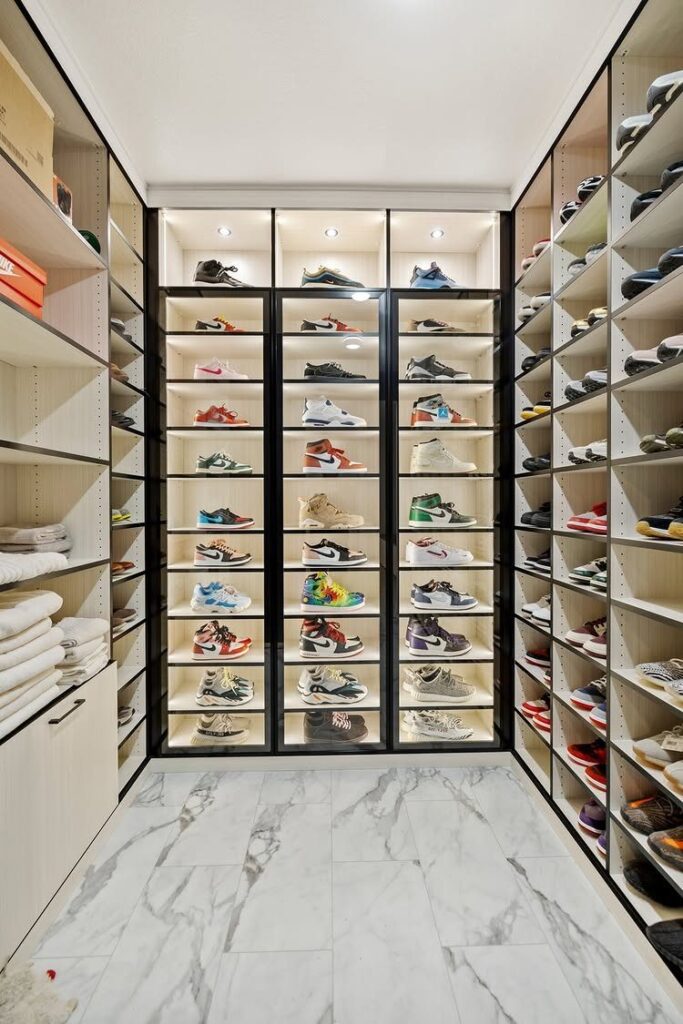
Shoe room ideas run from a zippered mesh bag to a full built-in renovation that swallows a corner TV and weeks of planning.
The one that fits you depends on whether you need the shoes hidden, displayed, or both at once, and whether you are working with a drawer, a closet wall, or an entire room.
[link-whisper-related-posts]1. Under-Bed Shoe Storage
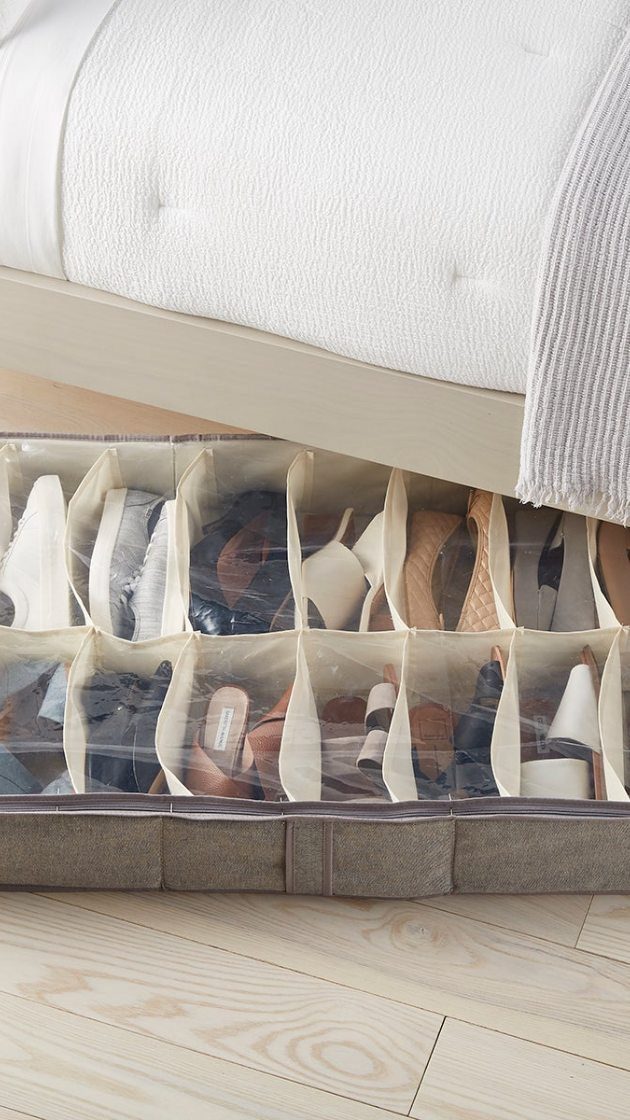
Fabric zippered bags with clear tops slide under most standard bed frames on casters or rugs. I would measure the gap first; anything too shallow rules out the rigid plastic bins and sends you to soft-sided versions that compress flat.
The visible organizers keep pairs together and dust off, but retrieval still means kneeling. I use this method for out-of-season shoes I touch twice a year, not the daily pair.
2. Shoe Storage Bench
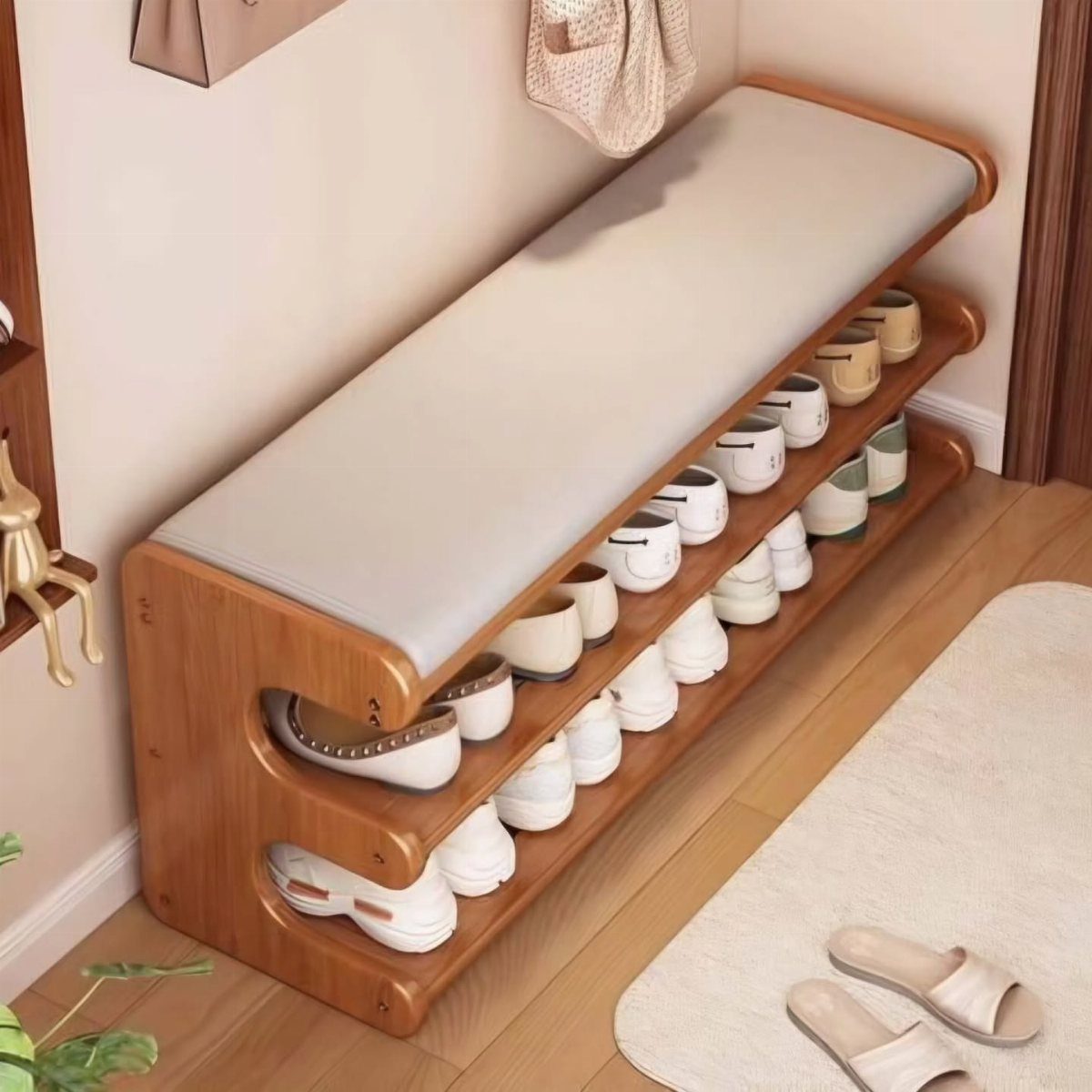
An entry bench with open shelves beneath gives you somewhere to sit while you lace up, and the shoes you wear most stay right there.
The visible versions compete with a slim console table for footprint, so I would place this only where the seating earns its keep.
Cushion fabric matters more than it looks: poly-canvas or vinyl wipe clean, linen soaks in road salt. Budget builds in pine or MDF cost less; solid oak doubles the price and survives boot heels.
3. Shoe Shelves
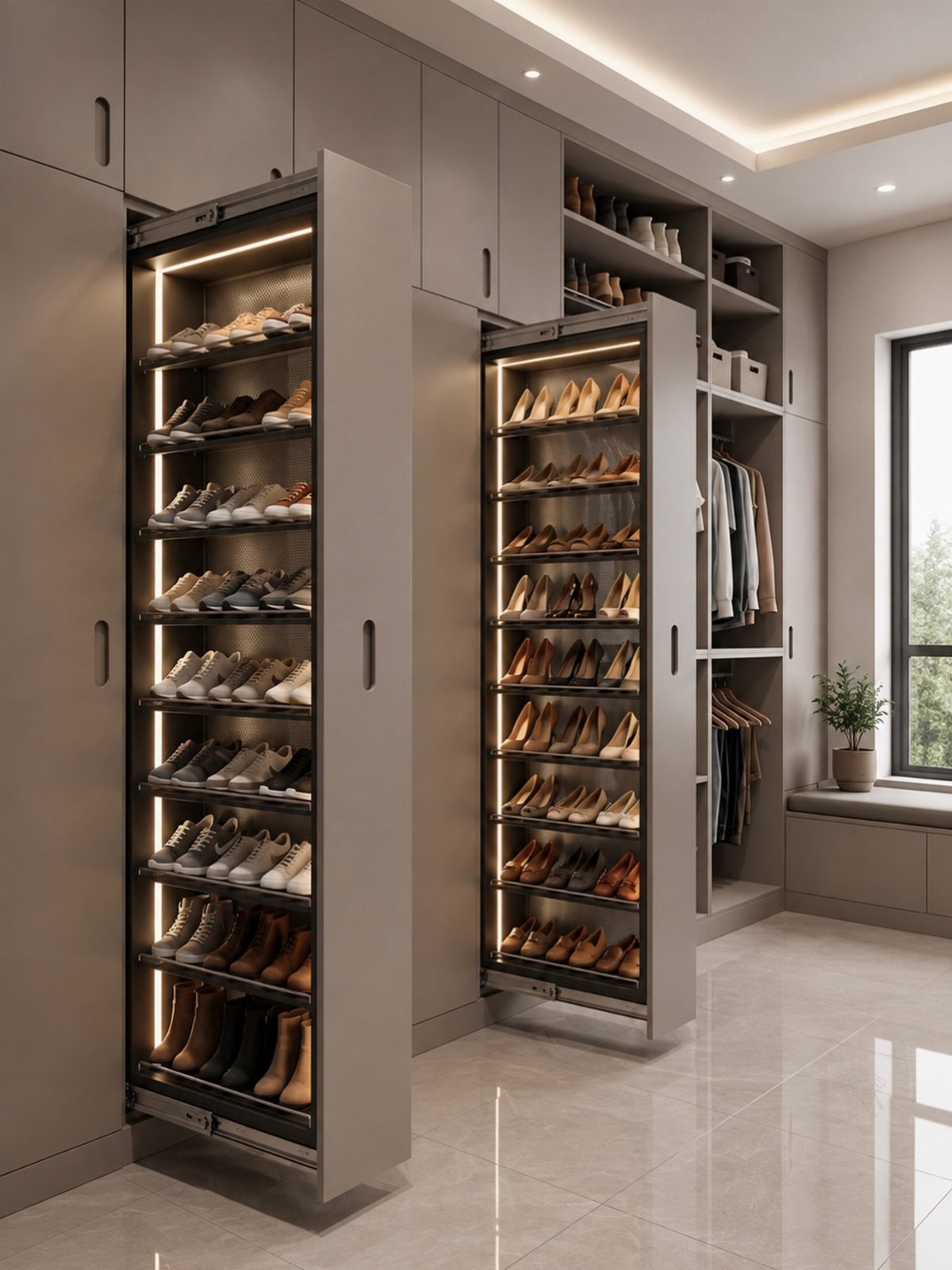
Pull-out vertical shelves with integrated lighting turn shoe storage into something you actually want to look at. The visible setup sits inside a full closet build-out, not a freestanding piece you wheel home.
I would budget this only during a larger renovation; the hardware alone, with full-extension slides and LED strip channeling, runs past what a standalone project justifies before the cabinet box.
The reward is seeing every pair at once without crouching. Custom shops execute this; IKEA does not.
4. Shoe Cabinets
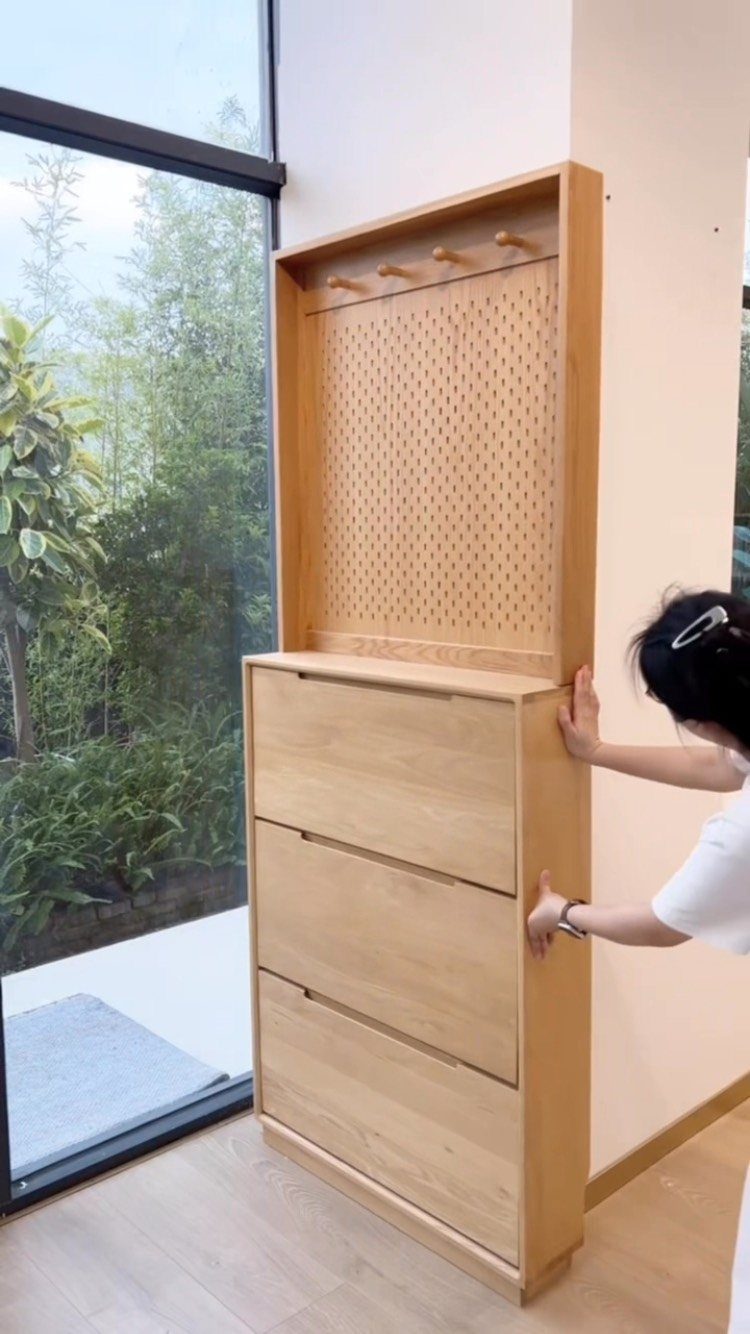
Tall cabinets with drawer fronts hide the clutter entirely.
The visible unit stands on a plinth and reads as furniture, not utility, which I would want near any living space open to guests. Drawer depth matters: standard sizes fit sneakers to men’s 12s; boots need the deeper option.
Check that the face frame clears when opened; tight hallways can trap you against the wall. Most ready-made versions tilt drawers for visibility inside; flat drawers stack more pairs but hide the toe.
5. Vertical Shoe Racks
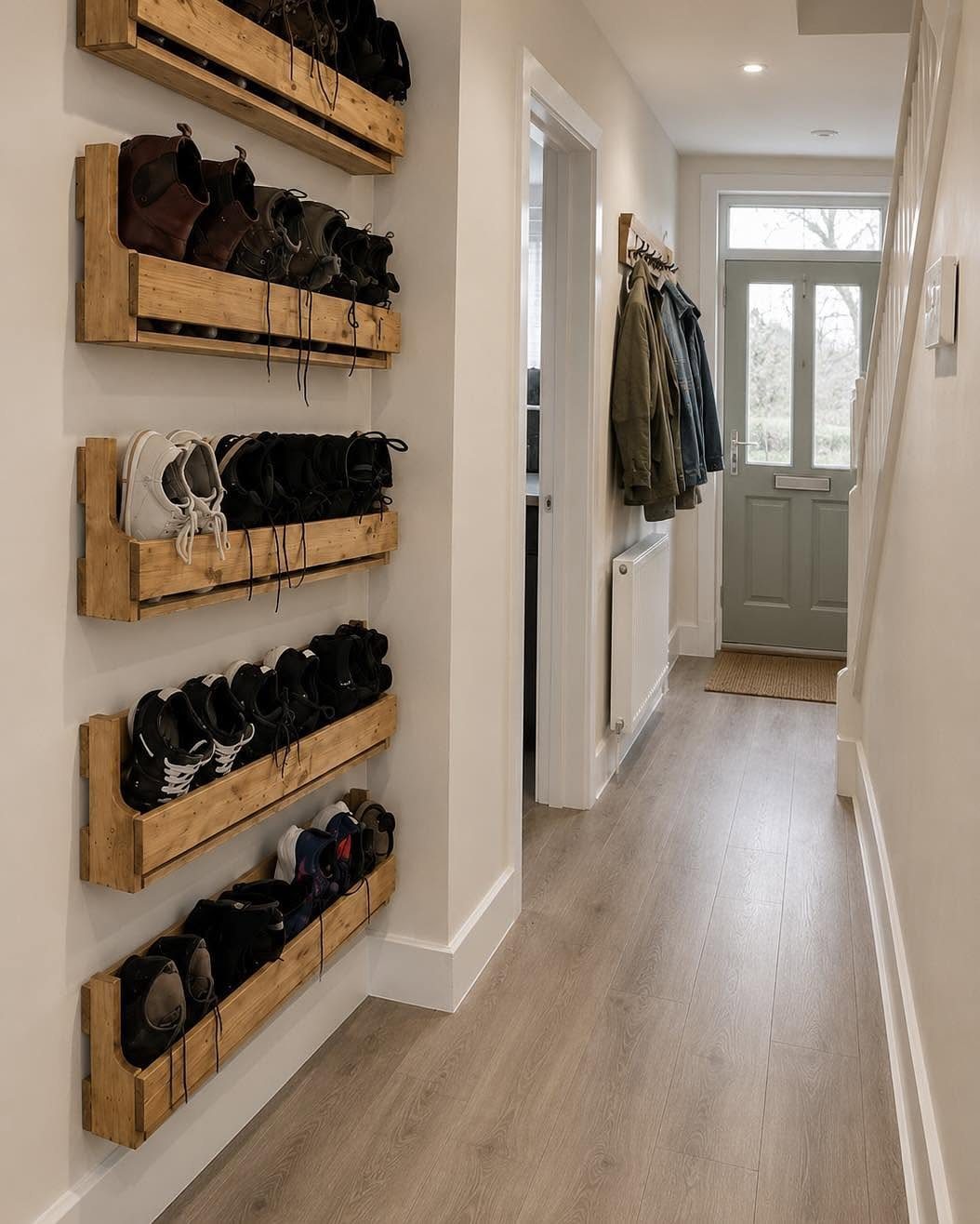
Five narrow wooden racks stacked floor to ceiling in a hallway use wall area that otherwise holds nothing.
The visible installation staggers rack widths, which tells me the builder adjusted for boot height on lower tiers and flats above. I would anchor each rack to a stud; drywall alone ripples under a full load of leather.
The total run here looks shallow enough that traffic passes, but you still turn sideways. This is renter-friendly only if your lease permits 2 holes per rack.
6. Wall-Mounted Shoe Storage

A wall-mounted metal cabinet with tilt-out compartments keeps shoes off the floor and out of the weather, which is why the visible unit lives on a covered patio.
I would not install this unprotected; the powder coat wins against humidity, not direct rain. Each tilt bin holds roughly one adult pair, so count your collection and size the unit before ordering.
The mounting height is the decision that matters: bins low enough for kids to reach put the top where adults bang elbows; I split the difference to keep both groups happy.
7. Shoe Display Cases
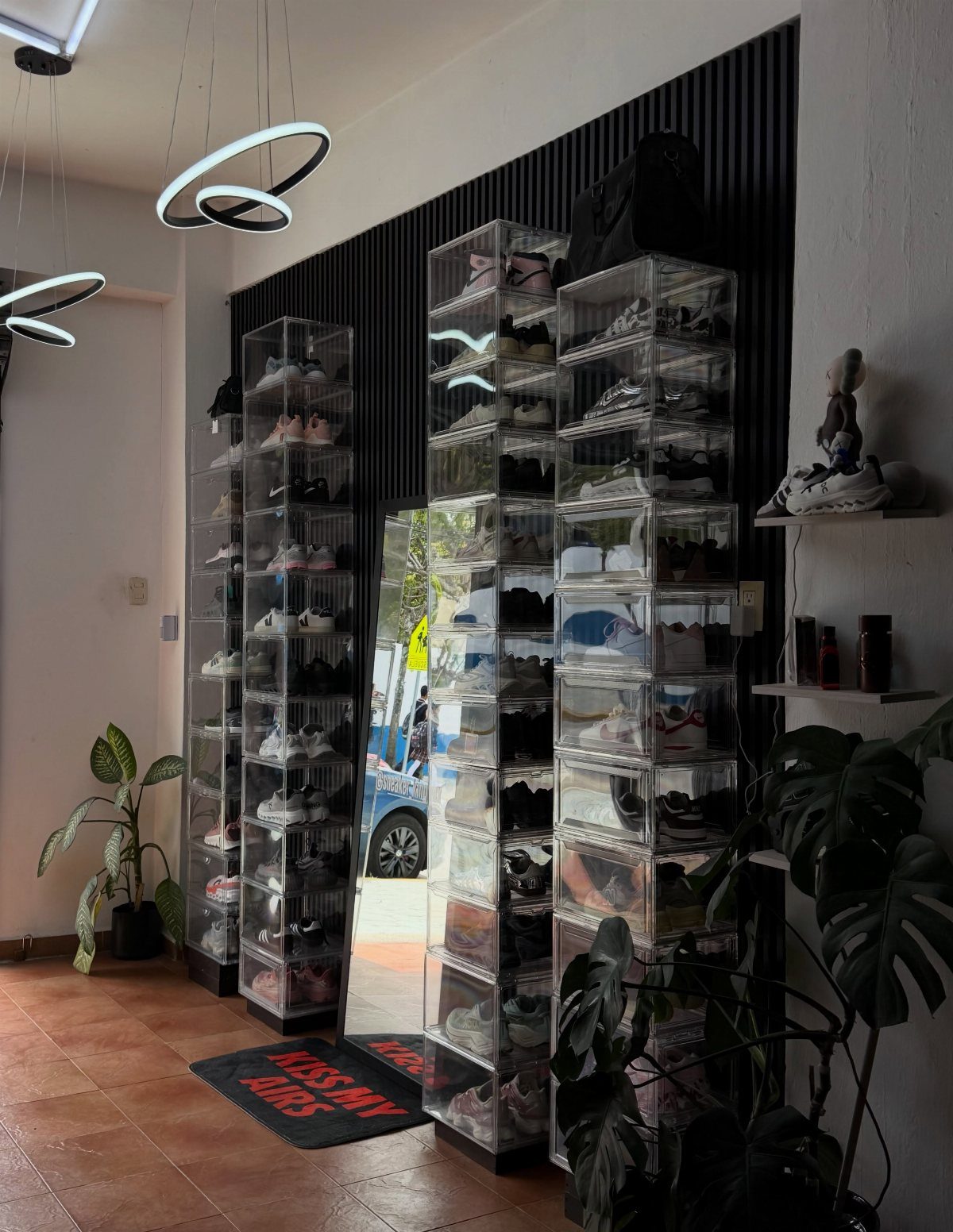
Acrylic display boxes turn a shoe collection into wall-mounted art. The visible stack runs along slatted wall panels that let you rearrange height as pairs change.
I would check the box dimensions against your largest pair before ordering; men’s high-tops need deeper cases than standard. Black backing hides wall clutter, but a painted wall shows through clear acrylic and demands neater mounting.
This suits collectors who rotate pairs seasonally and want the display to read as intentional, not piled.
8. Shoe Cubbies
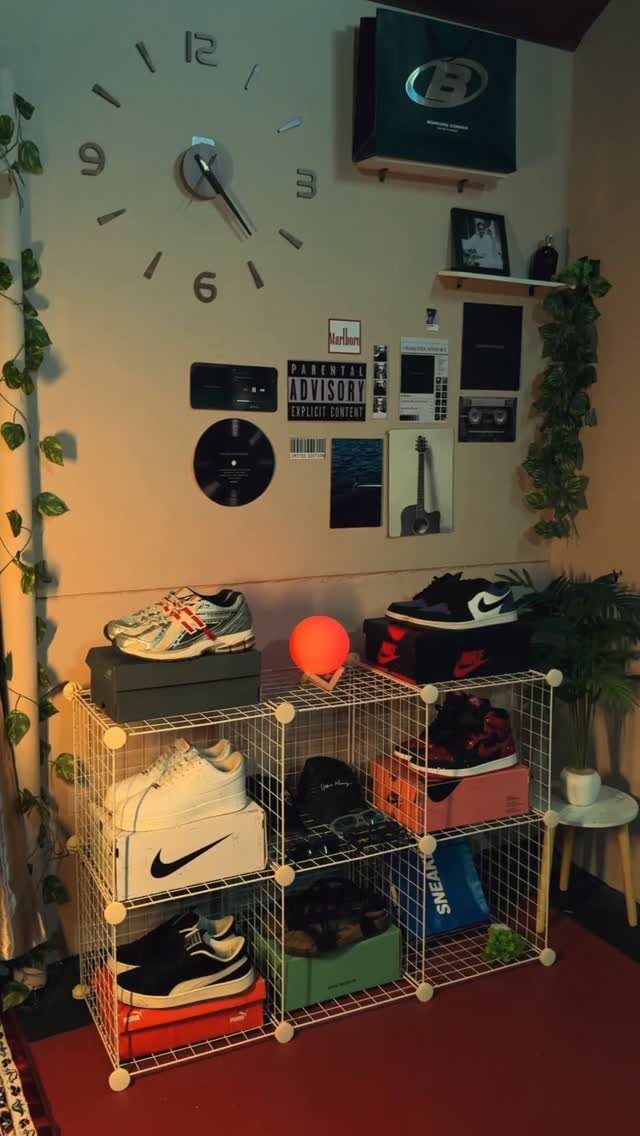
The visible unit holds sneakers flat and boxes upright, which tells me the cubby depth matches low-tops, not boots.
I would measure my tallest pair against the cube height before buying; heels and boxes stand, but ankle boots lean and tip. The white finish here reads clean against posters and vines; black or chrome shift the mood entirely.
This works for renters who can tolerate a few wall anchors and want the storage to feel like part of the room, not furniture shoved against it.
9. Clear Stackable Shoe Boxes
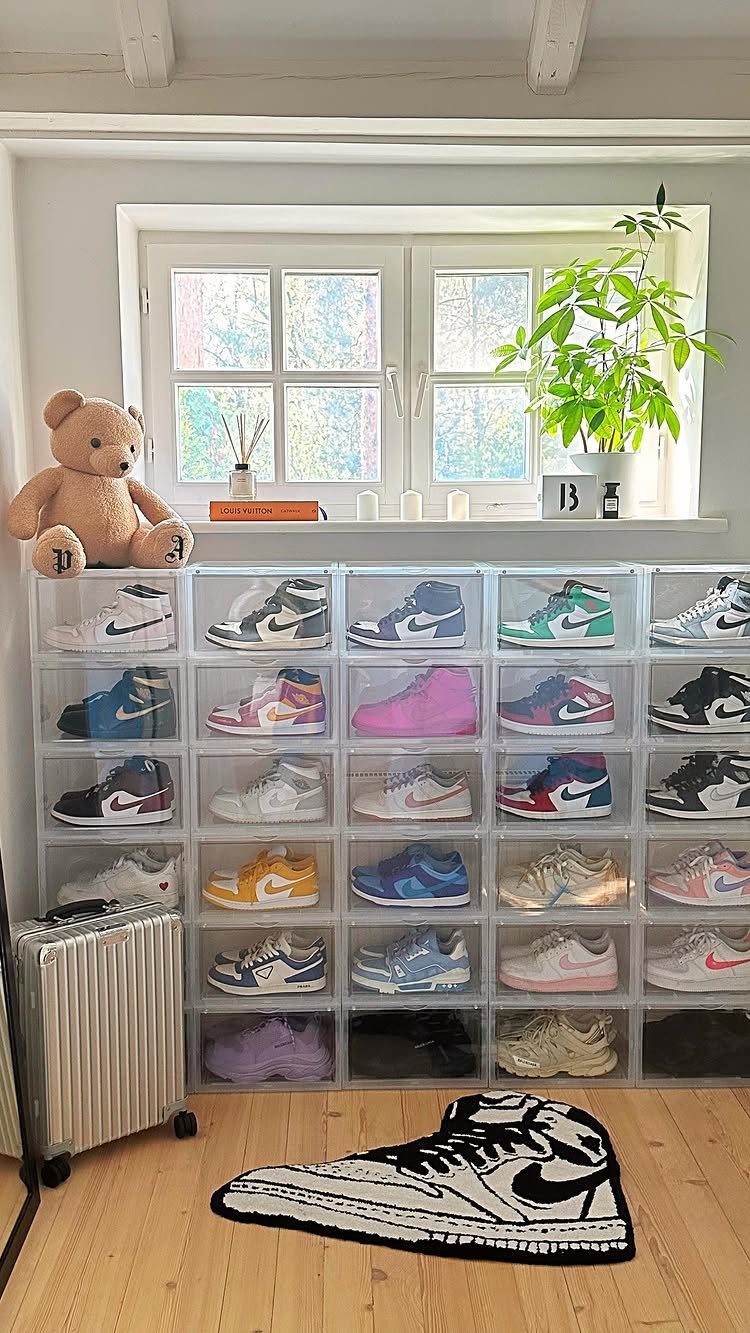
Clear boxes stacked into a grid let you scan every pair at once without opening anything. The visible arrangement runs below a window, which means the stack stays low enough to keep light and sightlines.
I would buy one test box first; brands vary in plastic weight, and flimsy corners crack under stacking.
The drop-front versions cost more but save you from unstacking to reach the bottom row. What you gain in visibility, you trade in footprint; this grid eats floor space that a vertical rack would not.
10. Rotating Shoe Rack Carousel
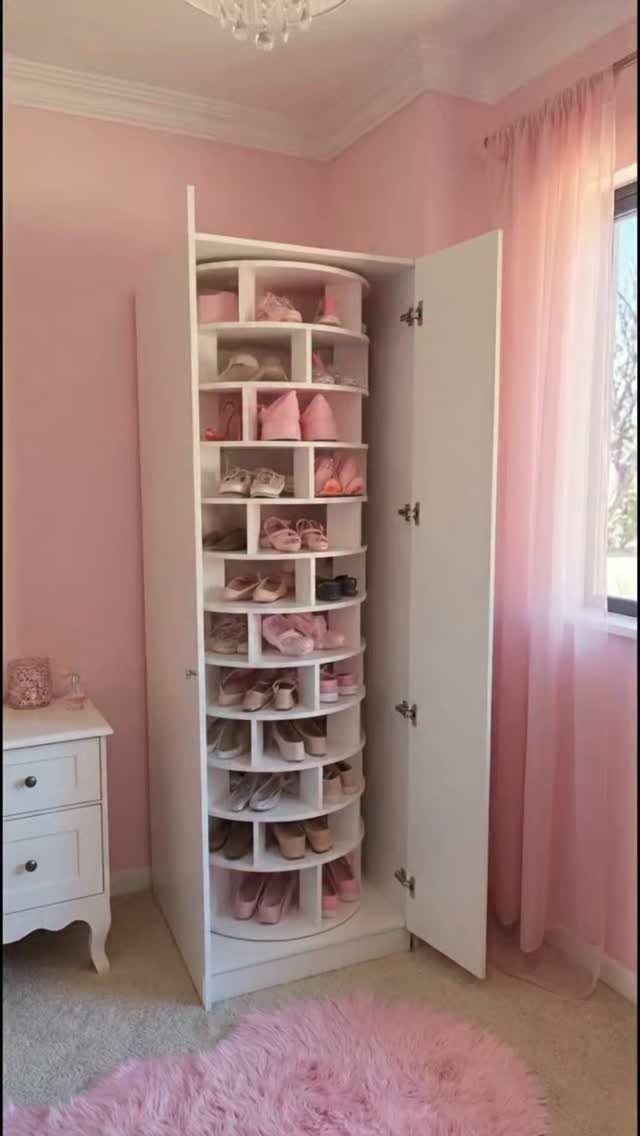
A rotating carousel packs pairs into a cylinder you spin to reach. The visible cabinet is tall and narrow, which fits corners and dead wall space that flat shelving wastes.
I would check the diameter against my closet depth or corner clearance before ordering; the rotation needs inches of sweep you do not see.
Open tiers show everything, but dust settles fast; I would prefer a cabinet with a door for daily wear and save open carousels for special-occasion pairs I handle with care.
11. Fabric Shoe Dividers
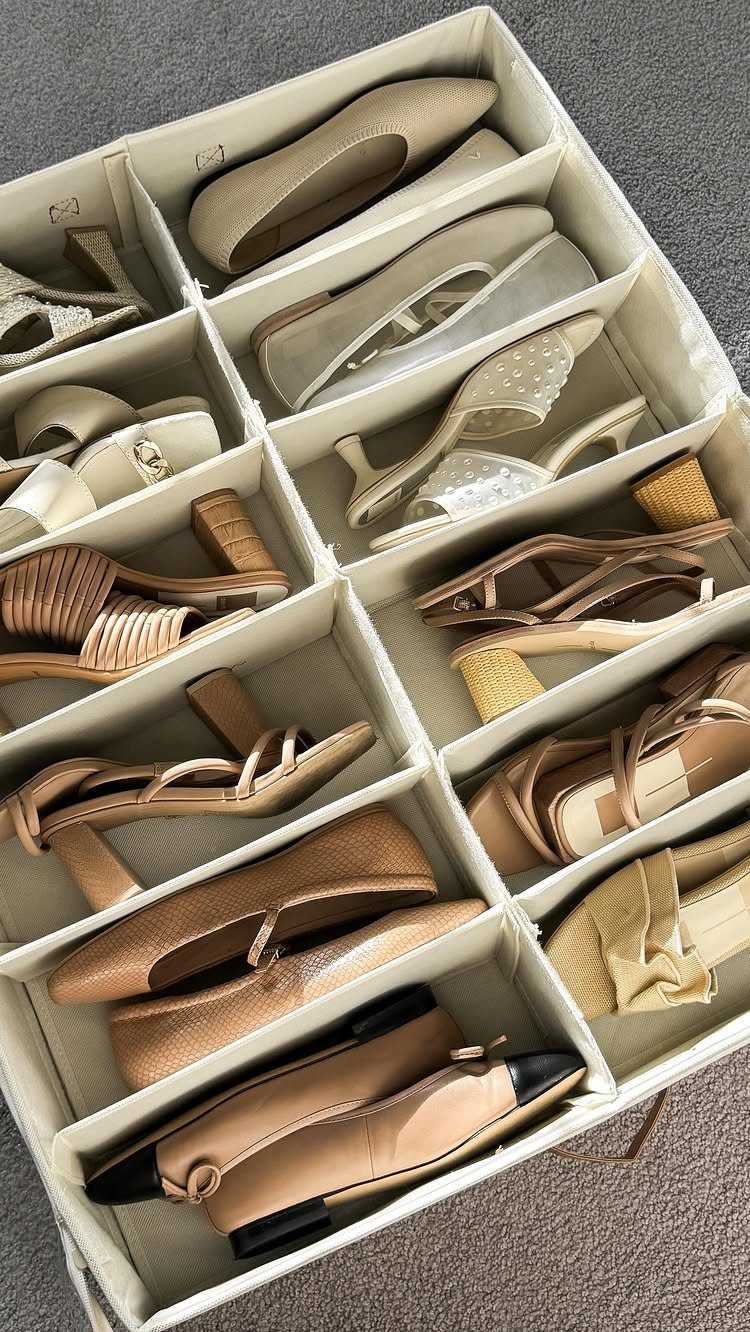
Fabric dividers unfold into soft compartments you lay flat in a drawer or on closet carpet. The visible organizer holds heels and flats in neutral tones that hide dust between cleanings.
I would count my pairs and measure my drawer before picking a size; these come in several slot counts and do not compress well if you buy too large.
The fabric cleans with a lint roller, not a wipe, so road salt and mud are problems this does not solve. This is my choice for carpeted closets where rigid bins would scratch or slide.
12. Giant Sneaker Box Drawers
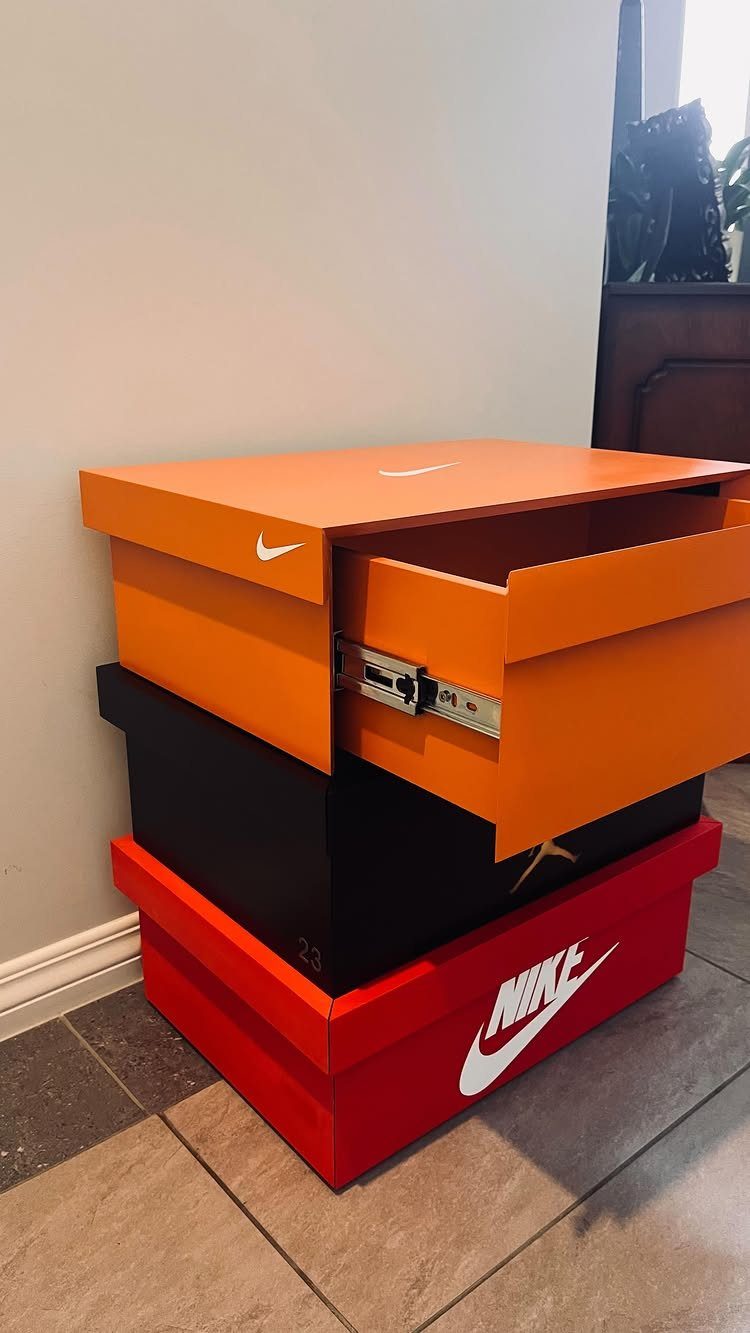
Oversized sneaker boxes with drawer slides stack into storage that quotes the shoe culture it holds. The visible units carry Nike and Jordan branding, which tells me these are licensed or replica pieces, not homemade.
I would check the interior dimensions against my collection; these boxes honor the shoebox shape, which means length for a men’s 13 but tight width for high-tops or bulky runners.
The metal slides look like standard side-mount hardware; I would test the pull with a full load before stacking a third high, since tilt grows with height.
13. Zippered Mesh Shoe Bag
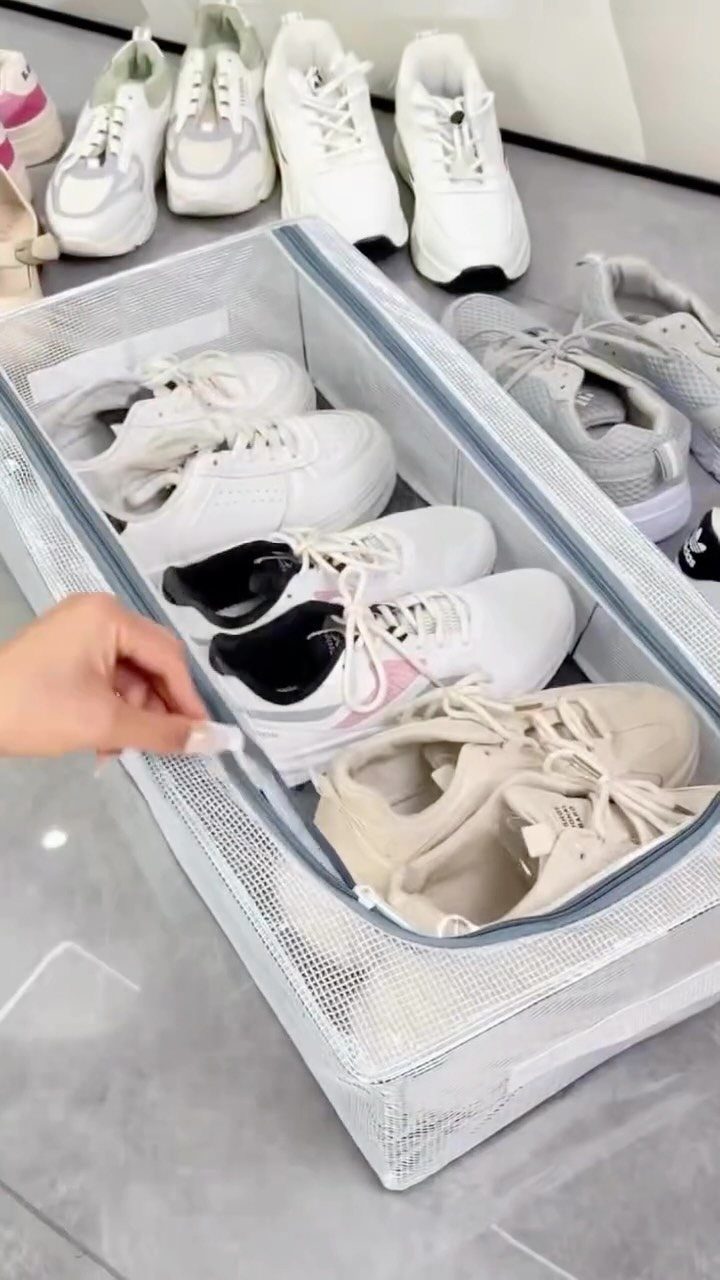
A zippered mesh bag keeps my sneakers visible and ventilated in one soft rectangle, and I can squeeze a second or third pair in if I pack it right.
I would check the zipper gauge before buying; coarse teeth jam on fabric overlaps, fine ones split under airport baggage handling.
The mesh wins against solid fabric for damp running shoes, but road dust filters through and settles on white sneakers just the same. This fits travel more than daily storage, unless your closet floor is already where you land.
14. Shoe Room with TV Setup
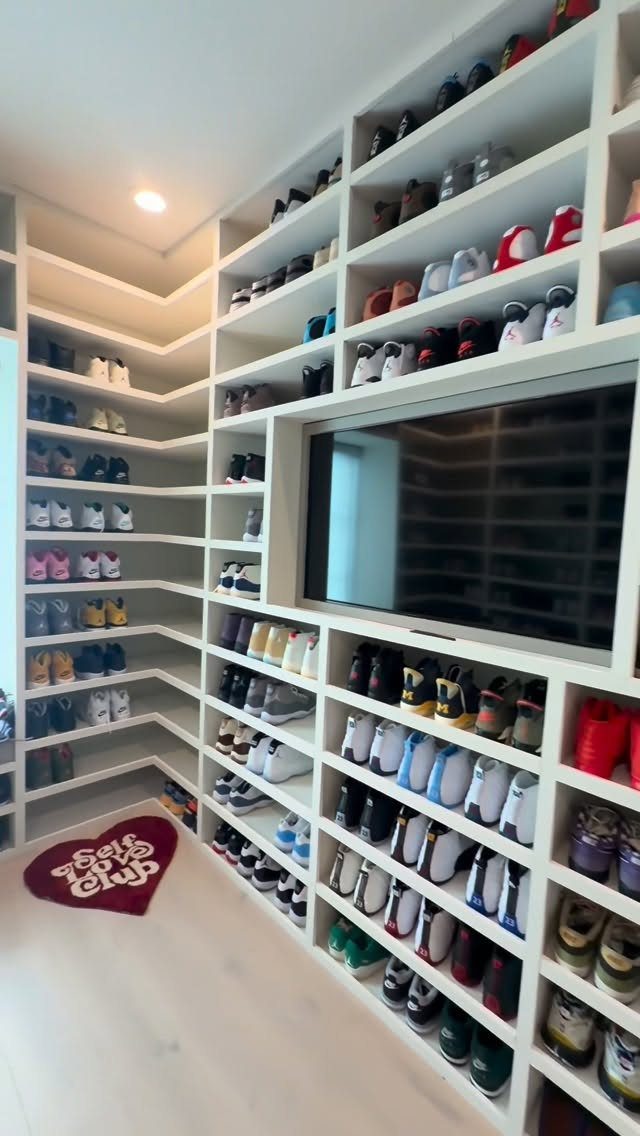
Built-in corner shelving wraps a television into the shoe display itself, turning the collection into the room’s reason for sitting down.
I would plan the screen size against your shelf depth; a TV that protrudes reads as afterthought, one recessed too far loses viewing angle from the doorway. Cable runs need forethought behind white built-ins.
The heart mat in the visible setup signals whose space this is, and that matters more here than in any other entry, because a room built around shoes makes the collection public in a way a closet does not.
15. Walk-In Shoe Closet Room
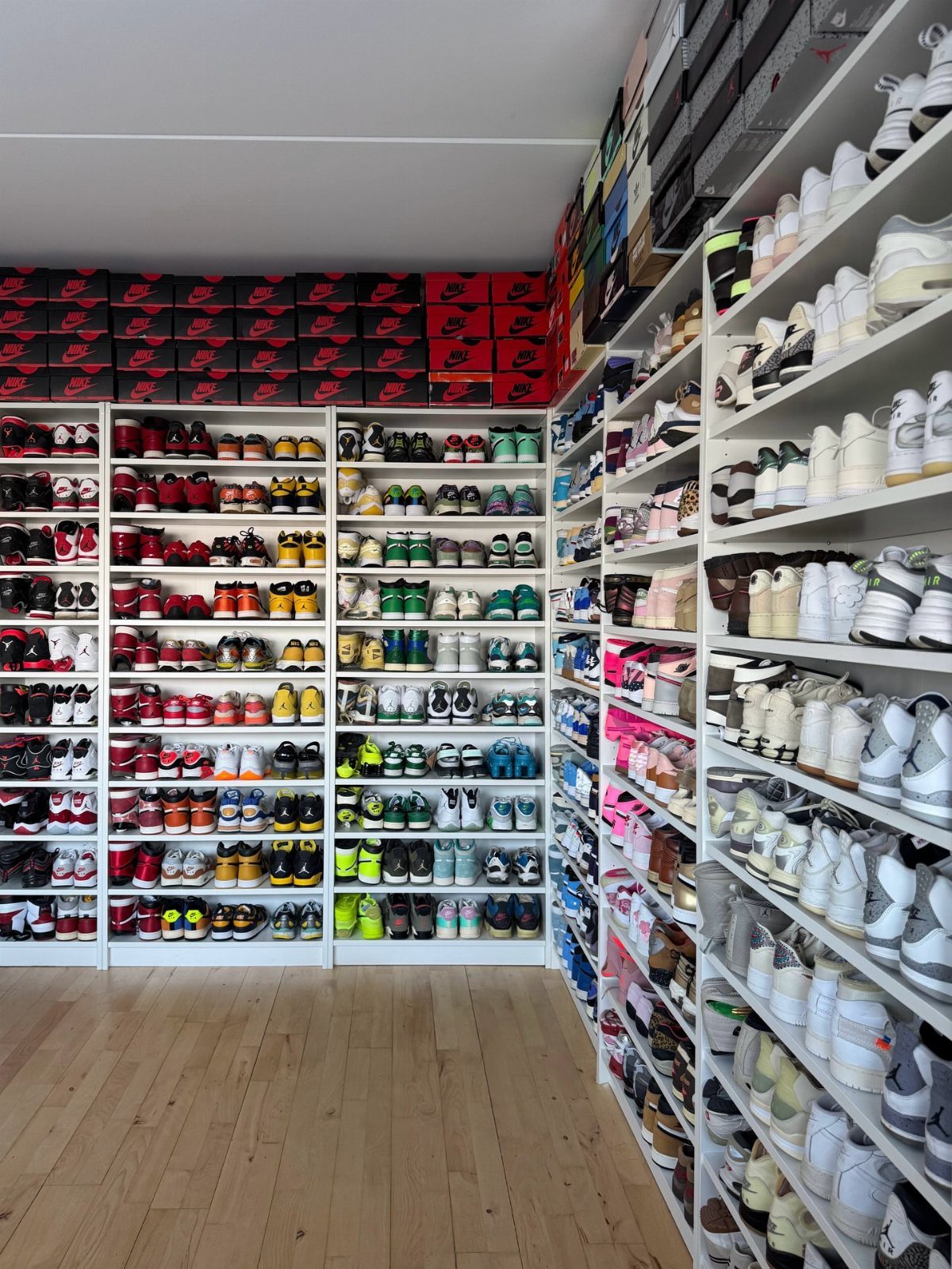
Floor-to-ceiling shelving in a dedicated room shifts shoe storage from problem solved to space inhabited. The visible wood floor and white units keep the room bright; dark finishes would swallow it.
I would leave the top shelf for boxes, not display, since ladders in a shoe room get old fast. The stacked red boxes above the visible units store overflow, which tells me this collection outgrows even this space.
Budget this only when the rest of your home is already organized; a shoe room built while kitchen counters pile up is a priority I do not share.
Pinpointing the perfect storage solution for your shoe collection can be tricky. Any design pro would agree that the goal should be to find a practical—and visually appealing—system to making choosing footwear for an outfit an enjoyable, stress-free process.
Tips for Organizing Shoes
Sort by how you actually reach for shoes, not by abstract category. Athletic versus casual collapses fast when your one reliable pair is a beat-up leather sneaker you grab daily.
I would set a frequency rule: anything worn twice a week stays in arm’s reach, seasonal rotation goes to higher shelves or under-bed bags.
Labels on bins work only if everyone in the household agrees on the words. "Dress shoes" means one thing to me and another to someone who owns one pair of black leather they wear to everything.
I would label by occasion or season, not type, since "winter" and "interview" are harder to misread than "heels."
The Container Store suggests starting with a time estimate, which tells me they know this project stalls at the sorting stage. I would knock it out in one session; half-sorted piles become permanent clutter by Wednesday.
Maintaining Shoe Condition
A cobbler replaces worn heels and soles for less than new shoes cost, which matters most on leather-soled boots or anything resoleable.
Rubber soles glued to sneakers? The repair often nears replacement price; I would judge pair by pair.
Cleaning before storage beats cleaning before wearing. Road salt dried into leather cracks it; I would brush suede and wipe smooth leather the same day, not the night before I need them again.
The mesh bags in the list ventilate damp running shoes, but dust still filters through, so I would not treat ventilation as a substitute for actual drying time.
Polish does not mean shine.
Conditioner on dry leather prevents cracking; colored polish covers scuffs. I keep both and use neither on patent or synthetic materials, which need their own compounds or nothing at all.
Repair early. A worn heel tip ignored becomes a damaged heel block, and the cost curve bends fast.
Frequently Asked Questions
What is the best way to store a lot of shoes?
Wall-height shelves in a room you close off from guests turn the whole surface into storage that actually displays your collection instead of hiding it.
Tilt drawers or a lazy Susan-style carousel squeeze a smaller set into spaces a full closet would swallow.
I sort by how often I reach for a pair, not whether it’s a boot or a heel; the ones worn twice a week sit at shoulder height, the off-season pairs go up top or slide under the bed in flat bins.
Where to put shoes when there is no space in the entryway?
A shoe storage bench against the wall gives seating and keeps daily pairs right there, or slide fabric zippered bags under the bed for out-of-season pairs you touch twice a year.
A low cabinet raised on a base looks like any other sideboard, which matters when your living room is the first thing people see.
Pull the drawer out in the store if you can; in a 36-inch hallway you can pin yourself against the wall when the front swings down.
What to use instead of a shoe rack?
A bench with open shelves underneath gives you a seat to tie your laces, and wall-mounted cubbies keep sneakers horizontal and shoe boxes vertical without touching the floor.
An ottoman with storage inside works if you only need a few pairs handy.





