
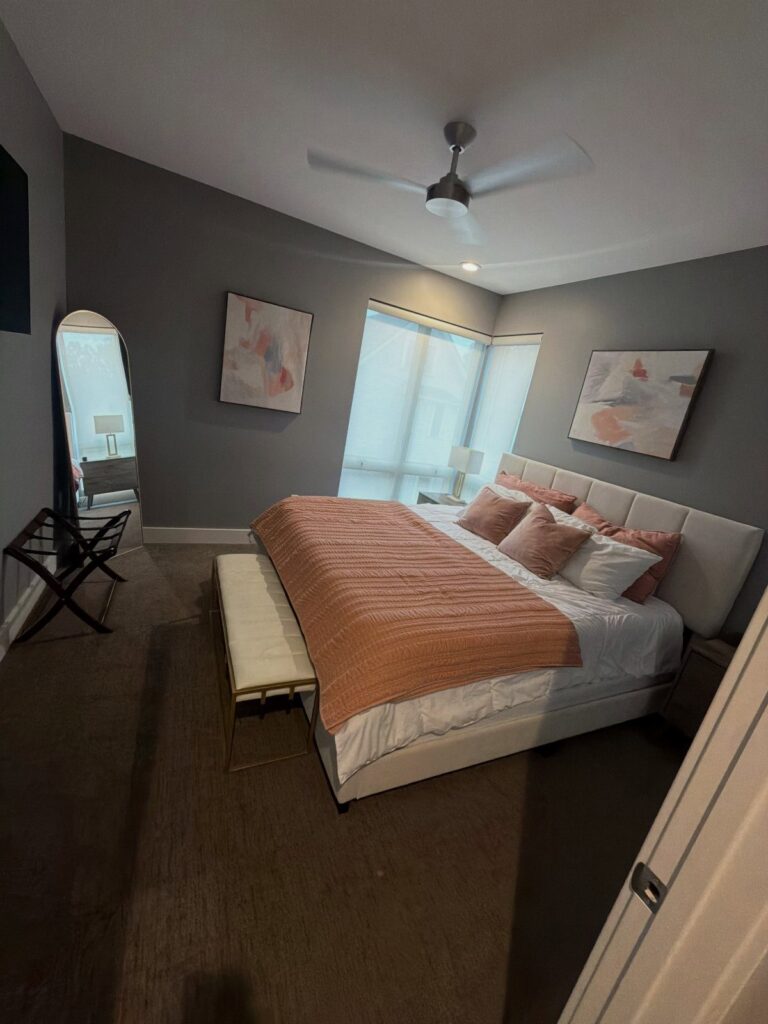
The ideas below run from a weekend sorting drawers into matching containers to a closet reset with everything visible and within reach.
What decides which is yours is whether you need the room to stay functional while you live in it or can strip it back and rebuild.
The calming rhythm of making a bed, the satisfaction of a cleared surface, and the quiet pride of a shelf styled with only what you love are all in here.
[link-whisper-related-posts]1. Minimal Hotel Room Design
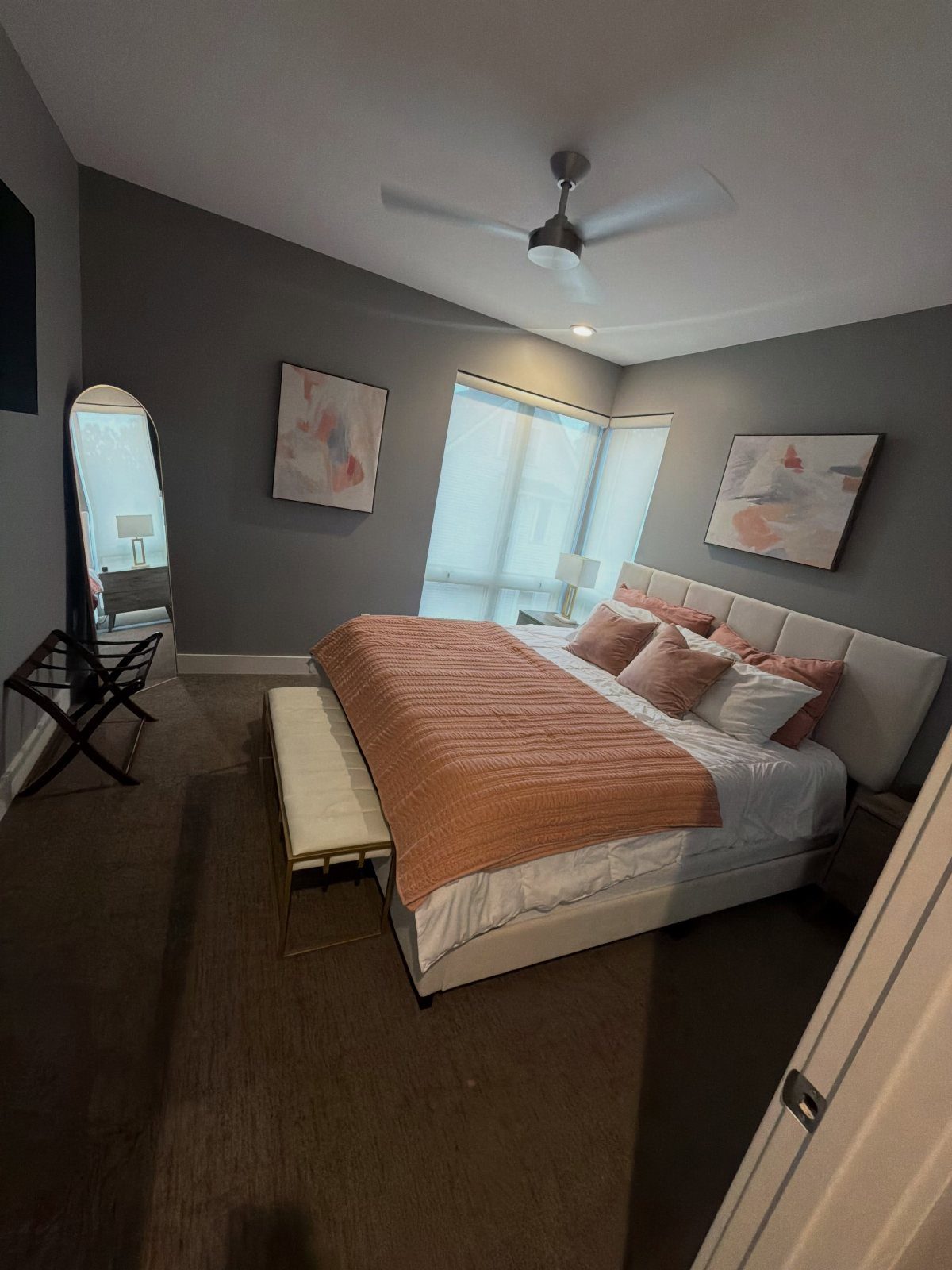
A hotel room look starts with the bed: tight corners, a single throw folded at the foot, nothing on the nightstand but a lamp and maybe a book.
A limited palette of two, maybe three, colors keeps a gray-and-pink room from reading as busy.
Before you try it, walk your bedroom and count every surface that collects clutter. Each one needs a home or a bin before the calm will read as intentional rather than unfinished.
A luggage rack and bench give guests a place to set a bag; I would use that same logic for my own daily catchalls.
2. Drawer Organizers and Matching Containers
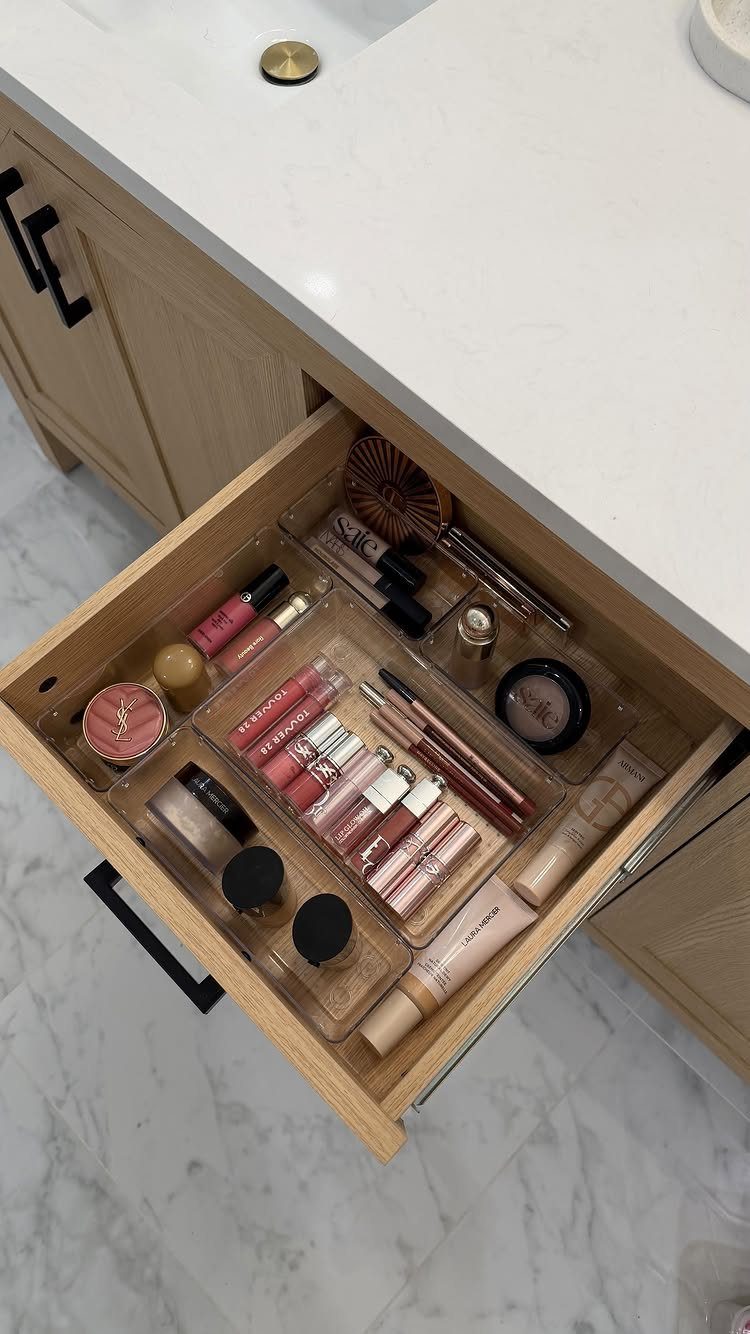
Clear bins let you see what you own without emptying drawers. Acrylic trays inside a wooden vanity mix warm wood and clean plastic to keep the look from feeling too sterile.
I would measure every drawer inside before buying anything. Depth matters as much as width; a bin that lifts when you close the drawer is worse than no bin at all.
The brands visible, Saie and Laura Mercier, are standard tube sizes, so the compartments you see will likely fit what you already own. Buy one set, test the fit, then fill the rest.
3. Curated Display of Attractive Objects
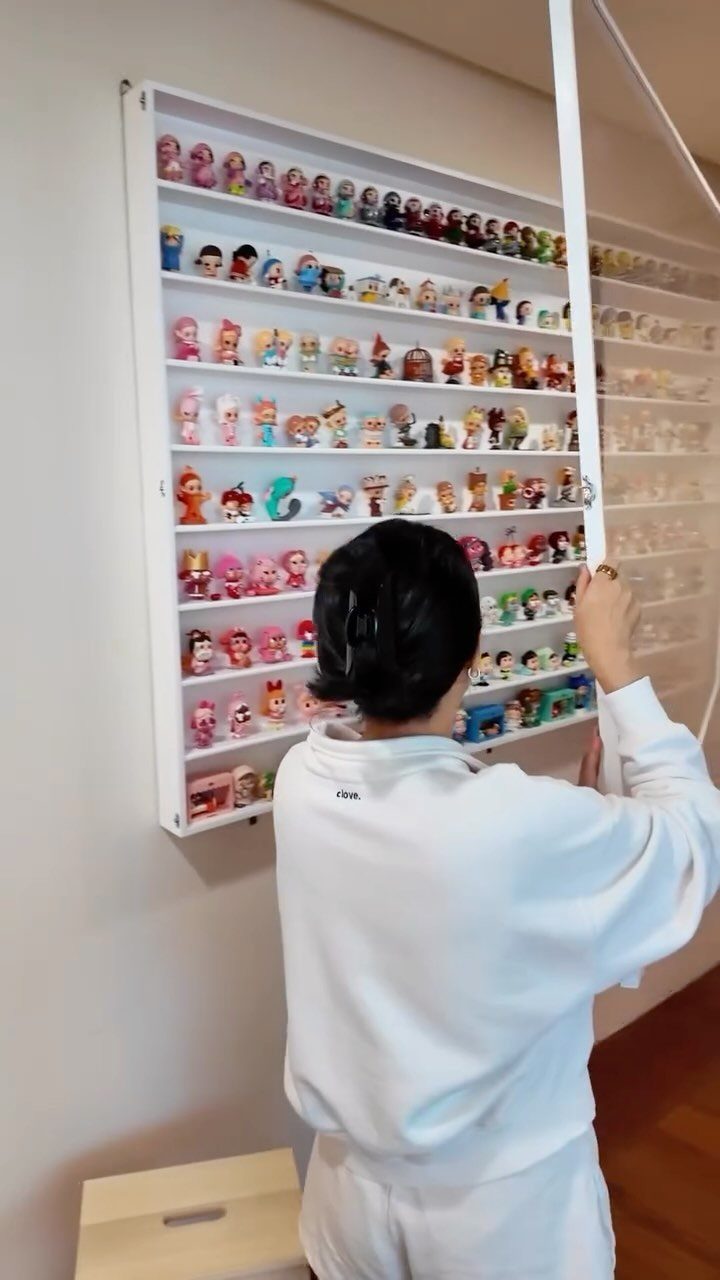
A white frame keeps the focus on what is inside; figurines read as a collection when they sit in rows, not a pile.
Depth is the detail that decides the choice. I would measure my thickest item, add enough space for my fingers to reach in, and shop cases by that depth alone.
A case too shallow crushes the front row every time you open it. Mount at eye level if you want it noticed, higher if the room is small and you need the floor feeling clear.
4. Layered Textures
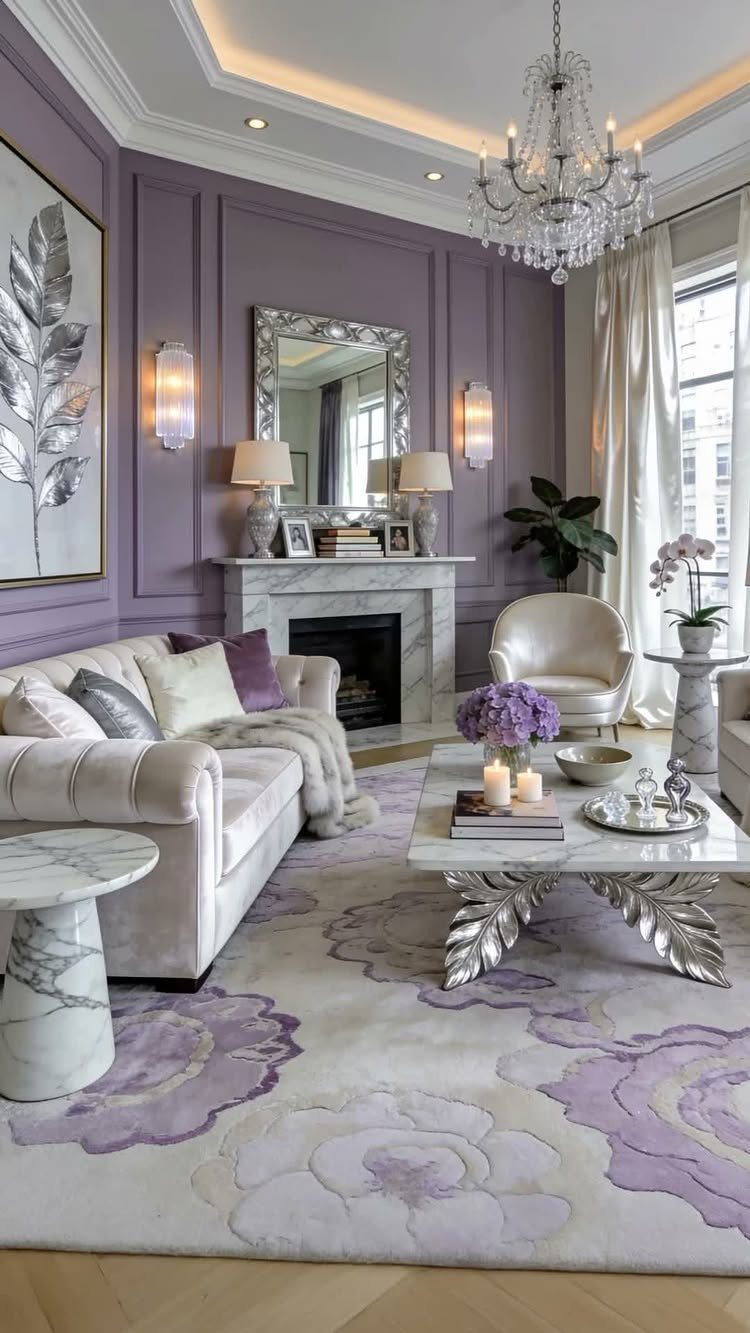
Texture layering works in a clean room because each piece adds interest without adding color. Velvet, carved rug, and fur all stay within purple and cream so the eye moves across surfaces instead of jumping between hues.
I would start with one large textured piece, probably the sofa or the rug, then add one smaller, then stop.
Smooth chandelier and marble by contrast let the textiles read as deliberate. A mix of 3 textures is usually enough; more than that starts to look like you could not decide.
5. Neutral Sofas and Warm Wood Accents
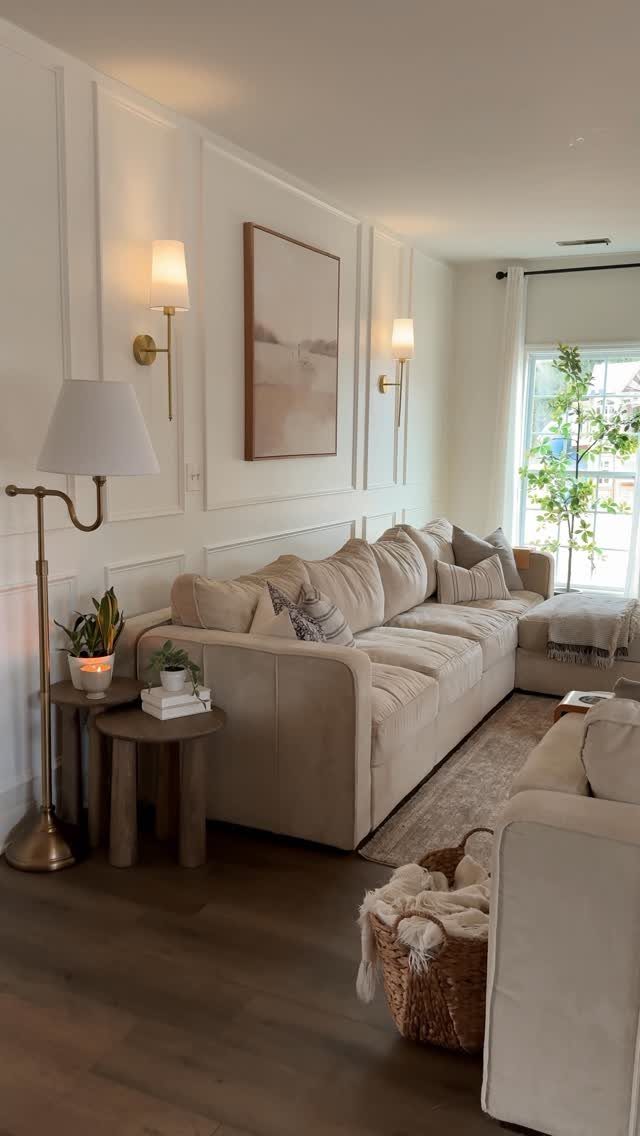
A neutral sofa and wood accents pair well because neither fights for attention.
A beige sectional anchors the room while nesting tables move where you need them; sconces and a floor lamp give you light without the visual weight of a ceiling fixture.
I would check the wood tone against my floor before buying.
Oak reads orange against some grays; walnut can go muddy near beige carpet. Wainscoting painted the same white as the walls lets wood tables be the only warm element and keeps the look from going rustic.
6. Clean Lines and Soft Textiles
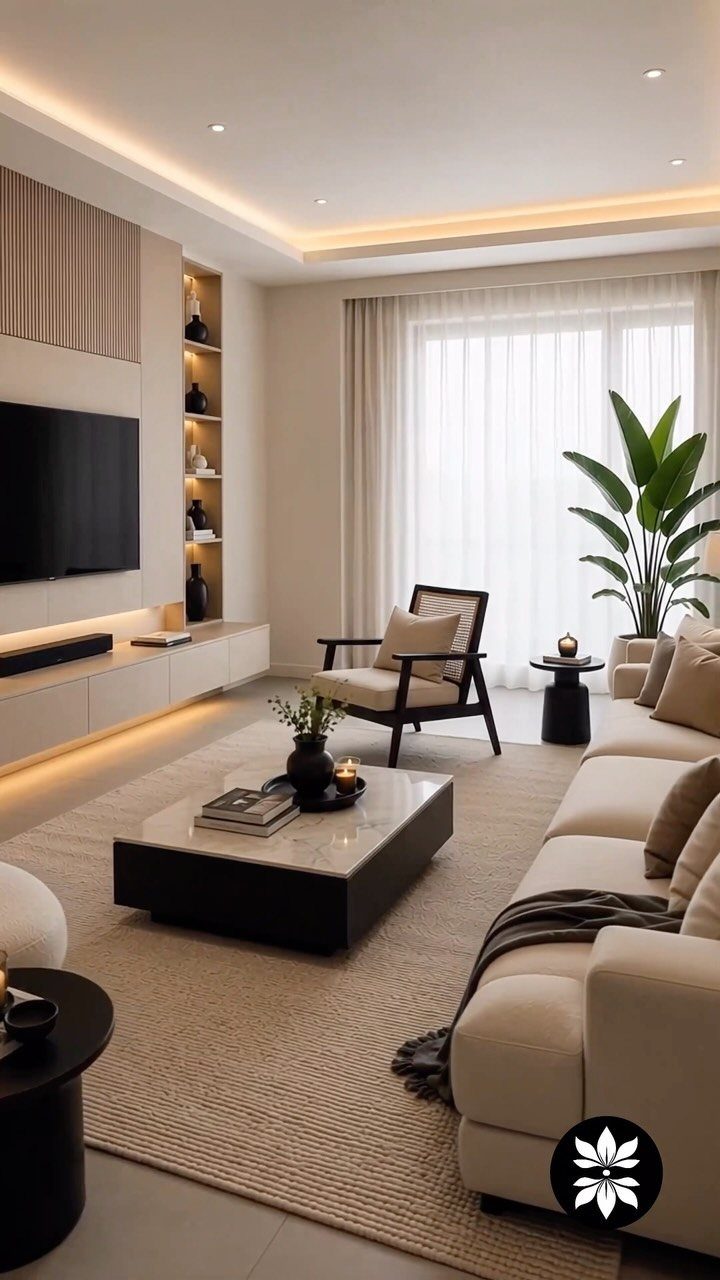
Clean lines stay livable when soft textiles keep the edges from feeling sharp. Straight built-in lines in a sectional and media wall find their counter in sheer curtains, rounded upholstery, and plant leaves.
Marble tops look good but mark with every glass; I would use coasters I actually like seeing, not ones I hide. I would spend my money on the sofa and find the storage secondhand.
7. Neatly Organized Closet Storage
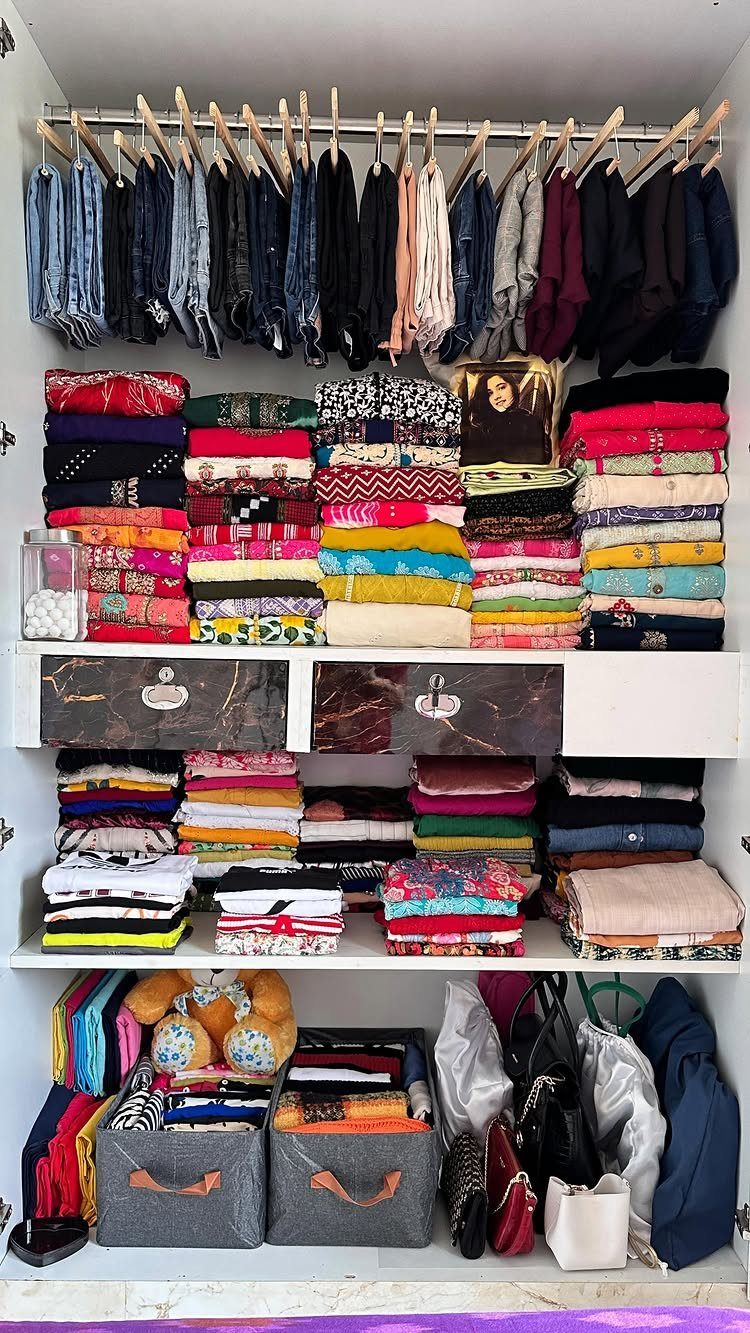
Uniform hangers do more than look neat; they stop clothes from sitting at different heights, which is what makes a closet read as cluttered before you even notice the contents.
Wood hangers in a single tone are worth the swap if your current mix is wire and plastic.
Fabric bins hide what folds awkwardly or sees seasonal use. I would keep them one color; the photo’s neutral bins disappear against white shelving while the folded clothes supply the color.
Check the shelf depth before you buy; bins that slide out every time you reach for them will drive you crazy inside a month.
8. Tidy Bedroom with Accent Wall
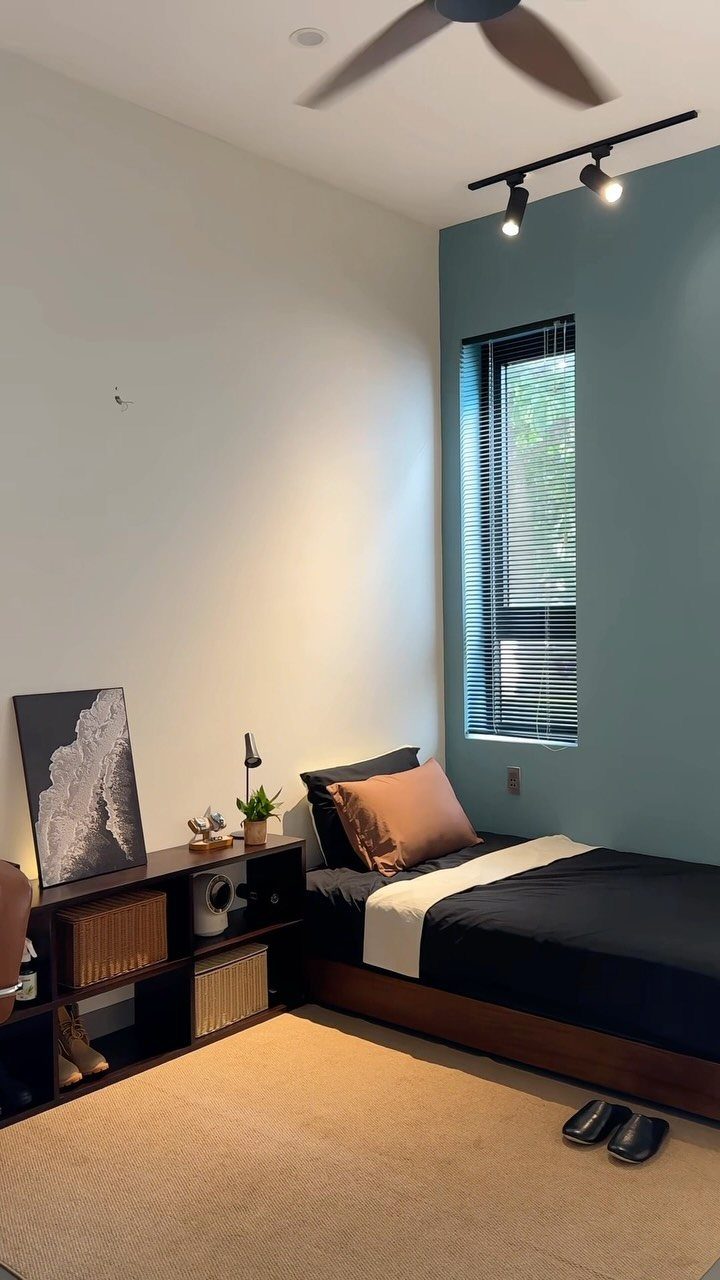
A teal accent wall works in a bedroom because you face it only when you choose to; the color recedes behind you as you sleep.
The photo’s low bed keeps the wall visible and the room feeling open; a taller frame would block half the effect.
I would test the teal against my actual light, morning and evening.
North-facing windows cool every blue-green toward gray; south light warms it toward turquoise. The dark shelf and baskets repeat the bed’s tone so the wall stands alone as the single strong color.
Therapeutic Effects of Cleaning
The videos work because someone else is doing the hard part.
I get the same feeling from watching a room come together: the mess stops being mine and the result feels possible. Cleaning your own space works the same way if you break it into single tasks.
One drawer, one shelf, one corner. Edmund Barr Carissa Byrne Hebert of CBH Interiors puts it accurately: a space in order gives you confidence your life can follow.
The real reward is what happens in your head, not the counter you can see your face in. Krystle Perkins of Perkins on Parkway runs "fresh start Friday" for her family, mixing deep cleaning with self-care.
Her followers report back that the structure alone prompted them to start. I would try a fixed day myself; the ritual matters more than the marathon session.
Instant Gratification in Cleaning
The speed is what hooks you first. Messy room to clean retreat in seconds, no waiting for paint to dry or delivery trucks to arrive.
Our tolerance for delay has dropped alongside shipping and download speeds; the appeal lines up exactly. A real transformation takes longer, though still less than I used to assume.
Working in small tasks keeps the progress visible and prevents the paralysis of facing a whole room. I would set a timer for 20 minutes, pick one surface, and stop there.
The before-and-after still registers even when the after took a half hour instead of a swipe. That visible finish is what feeds the habit; the video version simply compresses the reward into a single click.
Emotional Benefits of Clean Spaces
A clean room in 2026 works when the eye has somewhere to rest: a few surfaces kept clear, objects grouped with purpose, and enough open space that the room feels settled rather than stripped.
Neutral palettes and streamlined furniture do the heavy lifting; the details you add stay deliberate because there is so little competing for attention. I would think of it as editing, not decorating.
The emotional side matches the look. An ordered space signals that your life can be ordered too; the confidence follows directly from what your eyes report.
I find the effect strongest in rooms I use at the end of day, when decision fatigue is highest and visual noise costs most. The clean aesthetic works precisely because it asks nothing extra of you.
A single strong color, like the teal accent noted earlier, carries only when everything else steps back. That restraint is what makes the calm feel earned.
Frequently Asked Questions
How do people with ADHD clean their rooms?
Break it into single tasks, one drawer or one corner at a time, and set a timer for 20 minutes.
The structure matters more than a marathon session; a fixed cleaning day turned into ritual can prompt action where open-ended effort fails. Visible progress on one surface feeds the habit better than staring down a whole room.
What does a clean girl room look like?
A clean room in 2026 keeps to neutral palettes and streamlined furniture that does the heavy lifting, with a few deliberate details added back in.
Your eye needs a place to land: a cleared desk, books stacked by height, a few inches of bare wall between frames so the room feels held together, not emptied out.
A single strong color, teal on one wall or rust in a throw pillow, only speaks when the rest of the room stays quiet in white, gray, or raw wood.
What is aesthetic cleaning?
Aesthetic cleaning is the look of a room that appears calm and polished because every item has a reason for being where it is.
It reads as editing, not decorating: limited color, clean lines, and textures that add interest without adding clutter.
A hotel bed with tight corners and a nightstand holding just a lamp and a paperback shows the same principle; at home, every flat surface needs either a purpose or a bin it feeds into.
What does cleaning your room do mentally?
When the floor is clear and the bed is made, what your eyes take in backs up the story that your schedule can hold together too.
I feel this most in the bedroom, where the last thing I see before sleep and the first thing at waking sets the tone; visual clutter at 10 PM hits harder than at 10 AM.
The calm comes from what you left out, not what you added; that is why the look costs less than it looks like it did.
Why are these clean room videos so popular?
They compress minutes of real work into seconds of visible transformation, matching our lowered tolerance for delay alongside faster shipping and downloads.
Watching someone else manage the mess keeps it therapeutic rather than personal; the before-and-after gives hope a real space could look the same. Breaking actual cleaning into small, timed tasks keeps that same visible progress possible offline.
How do you implement the clean room aesthetic in your own home?
I walk through with a legal pad and list every horizontal surface that attracts mail, keys, or yesterday’s coffee cup; nothing styled reads as intentional until each has a landing zone.
Depth comes first: a drawer organizer an inch too tall lifts, tilts, or jams, and I would rather sort loose socks than fight plastic twice a day.
Test bold colors against your actual morning and evening light before committing, and check wood tones against floors to avoid orange or muddy clashes.





