

You pull this list of cleaning chores out when the Saturday catch-up starts eating your whole weekend, or when you realize you have been wiping the same counter three times because nothing else has a schedule.
Working through the full rhythm takes about two hours weekly if the daily fifteen minutes holds, and closer to four if it breaks.
There is a hidden cost: a clogged gutter in late fall rots the fascia board before you notice, and a furnace tune-up skipped in October always fails on the coldest Saturday in January.
That is why the seasonal section opens with a $30 ladder purchase instead of a service call.
[link-whisper-related-posts]Daily Cleaning Chores

Daily cleaning is the rhythm that keeps the rest of the week from collapsing into catch-up. Six different household guides treat these tasks as non-negotiable, and I agree: skip them and you spend Saturday digging out rather than moving forward.
- Make the beds. Two minutes per bed resets the room visually and keeps bedding from developing that slept-in slump.
- Wash dishes immediately after use or load the dishwasher before food dries on. Same for wiping counters and the stove. The 10–15 minutes after dinner beats an hour of soaking later.
- Tidy shared rooms: return shoes, mail, and dishes to their zones. I do this after the kitchen is clean, while I’m still standing.
- Take out kitchen trash daily. Odor is the signal you waited too long.
A fifteen-minute daily investment adds to nearly two hours weekly, which is more time than most individual weekly chores demand. The math favors the habit.
Weekly Cleaning Chores

The weekly reset is where the house actually gets clean. Most people I know block out Saturday morning or Sunday evening for this, and the time rarely stretches past two hours if you stay consistent.
Vacuum carpets weekly and wipe hard floors with a damp mop in the same pass.
Dust furniture, shelves, and electronics while you’re at it. Asthma + Lung UK recommends this rhythm specifically to cut house-dust-mite allergens before they accumulate.
- Change bed linens
- Clean bathrooms thoroughly
- Do laundry
- Take out trash and recycling
Bathrooms need the full treatment: toilet, sink, shower surfaces, mirror.
Laundry includes folding and putting away, not just washing. Trash and recycling go out before they sit long enough to smell.
I would skip grocery shopping and meal planning on this list.
Those take real hours, and mixing them in makes the weekly split look fairer than it is. Keep the focus on cleaning tasks that reset the space.
Monthly Cleaning Chores
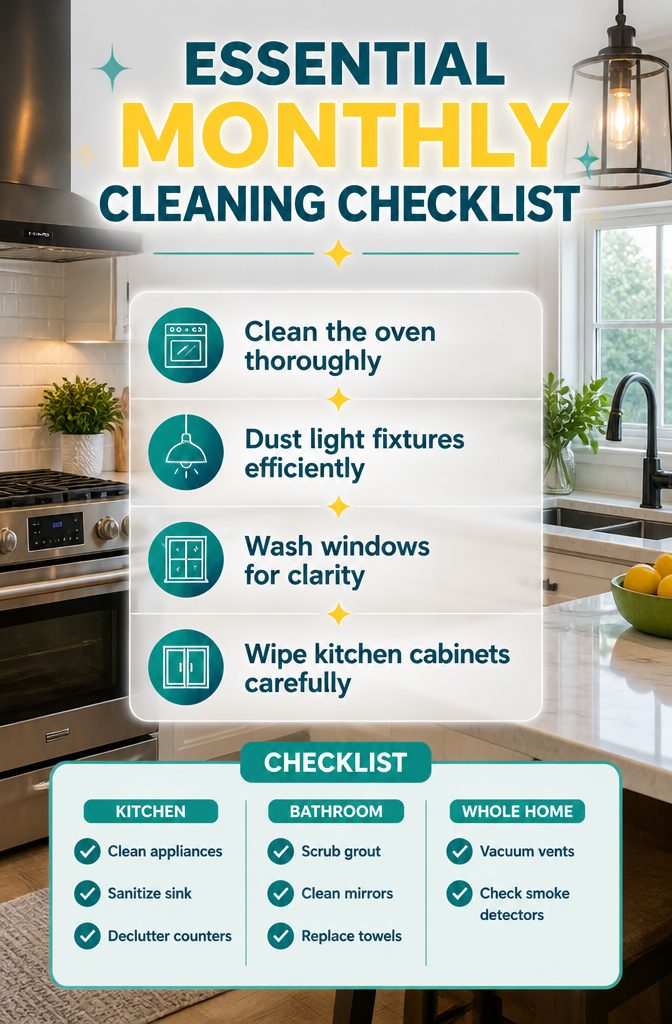
Monthly jobs are where a house either stays clean or starts hiding dirt. I do these four, and I do them in this order.
- Clean the oven before the grime carbonizes. A fresh spill wipes off with hot water and dish soap. Wait a month and you’re scraping with a blade. I run the self-clean cycle if the oven has one, then vacuum the ash when it cools. The alternative is a fume-heavy spray that works but costs an hour of ventilation.
- Dust light fixtures while the bulbs are cold. Cobwebs dull output more than most people notice. A microfiber duster on an extension pole handles ceiling mounts without a ladder; pendants come down for a sink rinse if they’re glass.
- Wash windows on the inside only unless you have ground-floor access outside. The streak-free trick is a squeegee and a drop of dish soap in warm water, pulled top to bottom with overlap strokes. Paper towels leave lint; they are not worth the convenience.
- Wipe kitchen cabinets in sections, top to bottom, with a degreaser cut half with water. Grease settles on uppers near the stove first. The wood or paint finish determines whether you follow with a damp rinse; matte finishes hold residue, gloss sheds it.
Seasonal Cleaning Chores

Most lists of cleaning chores go thin on the tasks that actually protect the house itself.
The seasonal jobs matter because skipping them is how you end up with water damage, a furnace that dies in January, or gutters that pull away from the fascia.
These seasonal jobs are where I would put my time and money:
- Clean gutters twice a year — spring and late fall. Clogged gutters overflow and rot the fascia board, and in cold climates the backup forms ice dams that push water under your shingles. A ladder, gloves, and a gutter scoop run about $30 total if you already own the ladder. I would skip the gutter-guard systems; the fine mesh ones still clog with shingle grit and pollen, and the solid covers let water shoot past them in heavy rain.
- Service the HVAC system — replace filters every 90 days (30 if you have pets), and schedule a professional tune-up for the furnace in early fall and the AC in spring. The $150–$200 annual cost catches refrigerant leaks, cracked heat exchangers, and blower motors before they fail on the worst possible weekend.
- Deep clean carpets — rent a hot-water extractor once a year, not the grocery-store shampooers that leave soap residue. The extraction machines run $40–$60 for a day, plus $20 for solution. I would do this in early fall, when you can open windows for four hours to dry the pile before you close up for winter.
- Prep outdoor spaces — store cushions, drain and cover the grill, and shut off exterior faucets at the interior valve if your setup has one. For renters with a small patio, this means two hours and a $15 faucet cover; for homeowners with a yard, add leaf raking and cutting back perennials before the first hard freeze.
Organizing and Decluttering Tasks
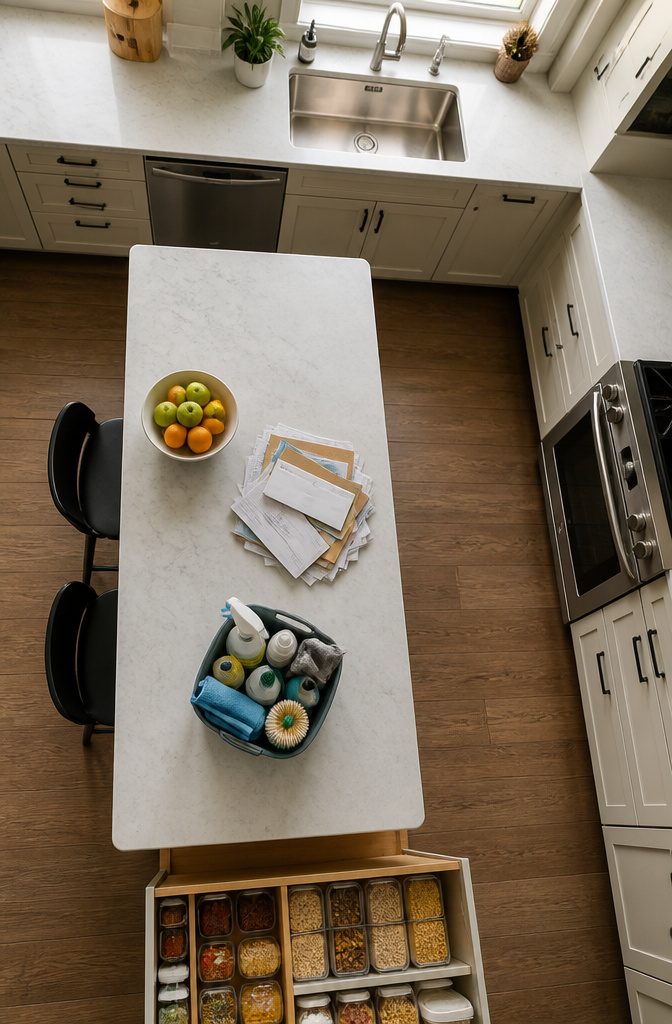
The invisible chores matter as much as the visible ones.
When the dishwasher pods run out mid-cycle or the linen closet becomes a Jenga tower, every surface task takes longer. I keep these running on the same rhythm as the cleaning list itself:
- Check cleaning supply stock before the weekend jobs. Running out of spray mid-wipe turns a twenty-minute counter clean into an hour with a hardware run tacked on. I refill the caddy on Friday so Saturday moves straight to work.
- Declutter the surface that catches daily mail and keys. The kitchen island or entryway table becomes a dumping ground by Wednesday if I do not reset it Tuesday night. A two-minute clear on a weeknight beats a Saturday excavation.
- Audit storage systems monthly. Bins that no longer fit their contents, or lids that have lost their mates, multiply the time every other task takes. I pull one zone per month, not the whole house, and replace what has failed.
- Log the recurring admin as actual chores. The bin schedule, the filter change, the appointment booking: these eat the same evening hours as scrubbing, and they slip more easily. One column on the list, assigned, keeps them from living in my head alone.
You get your speed back. An organized starting point cuts the active cleaning time by half, and I would rather spend that half-hour on something else.
Getting Kids Involved

Kids can start putting toys away and dropping dirty clothes in the hamper at two or three years old.
By four or five, they are ready to set the table, match socks, and water plants. The real shift happens around six to eight, when sweeping, dusting, and sorting laundry become realistic.
Vacuuming, loading the dishwasher, and helping with dinner fit the nine-to-eleven range. Bathroom cleaning and changing bed linen belong to twelve and up, along with running a full wash cycle and cooking a simple meal.
The trap most families fall into is letting the oldest or most capable child carry the load while younger ones never learn.
Assign tasks by name, rotate the bigger jobs, and check them off once a day rather than nagging. A clear system keeps the work distributed and the peace intact.
You see the difference years later. Children who grow up with assigned chores develop the skills to maintain their own space without being managed, and the adult workload in a shared household drops accordingly.
The time invested in teaching a six-year-old to make a bed returns as a teenager who handles it unprompted.
Building a Routine That Sticks
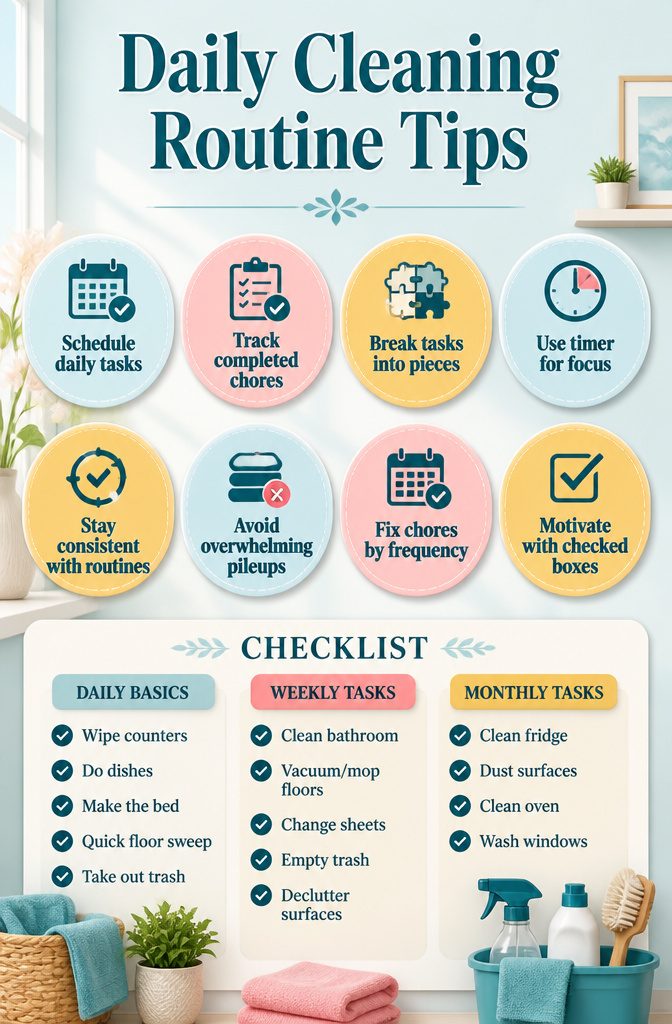
The hardest part of any list of cleaning chores isn’t the scrubbing itself; it’s deciding what to do when you finally have twenty free minutes. That friction is what kills routines.
The fix is scheduling by frequency, not by room. Cooking, dishes, and counters happen every day; floors, the bathroom, sheets, and trash once a week; the fridge, dusting, the oven, and the windows once a month.
A fifteen-minute daily job quietly adds up to almost two hours a week, more than most weekly chores, so the small daily block earns its keep.
A checklist beats memory because it removes the second-guessing.
I would rather track completed tasks on paper or a phone note than run a mental inventory every evening. The visual proof of a checked box keeps motivation intact when the work itself is dull.
Breaking tasks into manageable pieces matters most when energy is low.
Tackling small jobs as they arise, with a timer if focus drifts, prevents the pileup that makes a Saturday feel ruined. Consistency turns the routine into something automatic; the less you decide, the more you finish.
Frequently Asked Questions
What are some daily cleaning tasks?
Daily cleaning tasks include making beds, washing dishes or loading the dishwasher, wiping counters and the stove, tidying shared rooms, and taking out kitchen trash.
A fifteen-minute daily investment adds to nearly two hours weekly, which is more time than most individual weekly chores demand.
How often should I do household chores?
Schedule chores by frequency rather than by room: cooking, dishes, and counters every day; floors, the bathroom, sheets, and trash once a week; the fridge, dusting, the oven, and the windows once a month.
Seasonal jobs like gutter cleaning and HVAC service come twice a year.
How can I get my kids to help with chores?
Assign age-appropriate tasks by name and rotate bigger jobs so one child does not carry the load.
Toddlers can put toys away; ages six to eight can sweep and dust; twelve and up can handle bathroom cleaning and changing bed linens. Check tasks off once a day rather than nagging.
What should a house cleaner include on their cleaning list?
A thorough list covers daily jobs like beds and dishes; weekly jobs like vacuuming, bathrooms, and laundry; monthly jobs like ovens and windows; and seasonal jobs like gutters and HVAC filters.
Also include organizing tasks such as checking supply stock and decluttering catch-all surfaces.





